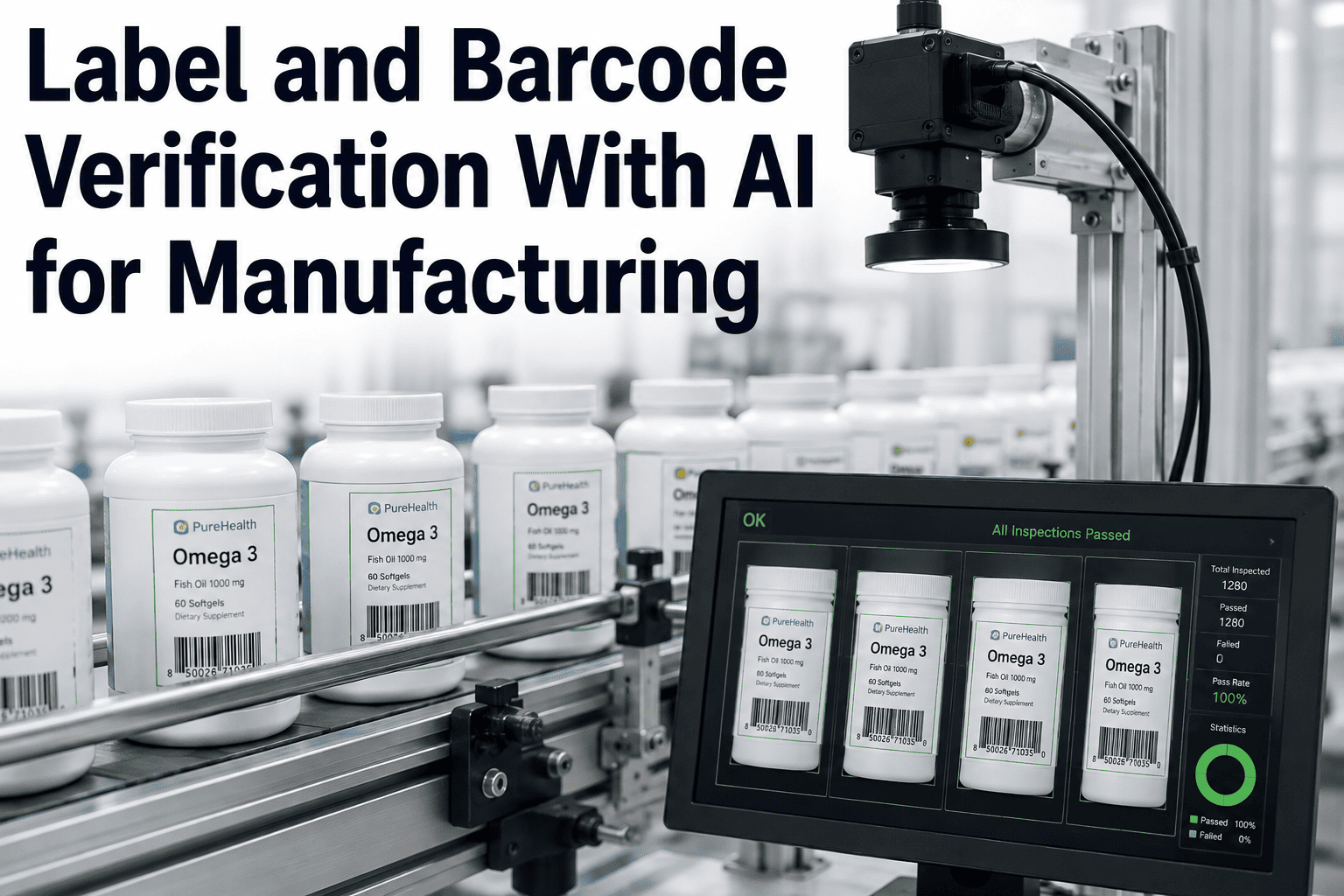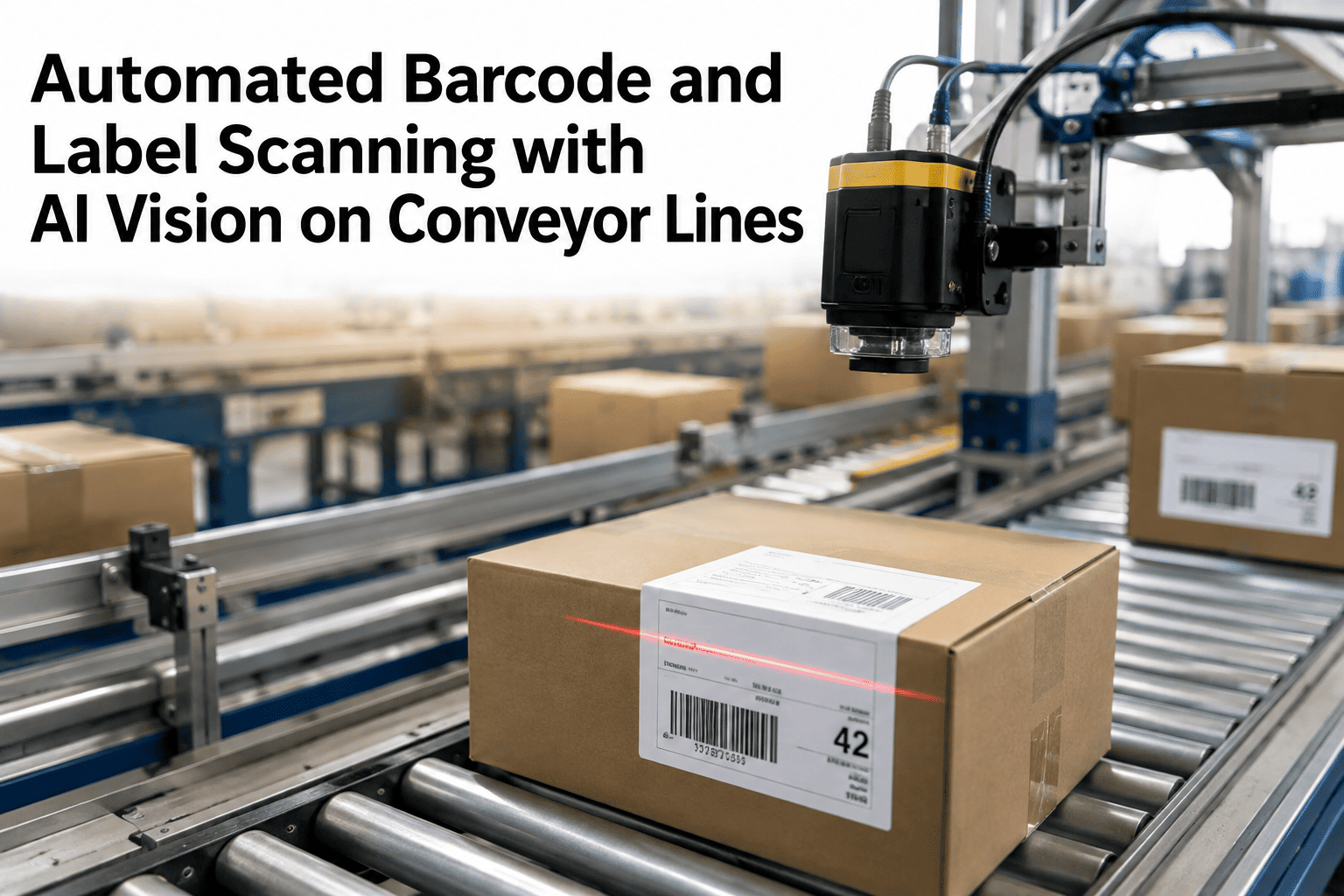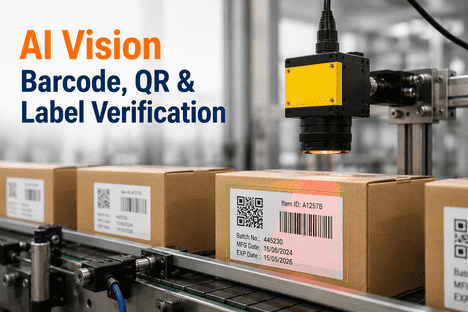
No-reads, misreads, and mislabeled products are among the most operationally costly defect categories in cross-industry manufacturing and logistics — not because they are difficult to detect, but because conventional barcode and label verification systems consistently fail to detect them at the speed, accuracy, and print quality variation range that real production lines demand. A 1D barcode partially obscured by printing inconsistency, a QR code with a corner damaged at point of application, or a label applied at an angle that shifts the code outside the reader's field — each of these events produces either a line stoppage from a no-read, or a mislabeled product that escapes to the customer when the system fails silently. iFactory's Vision OCR Inspection system applies deep learning to read, verify, and grade barcodes, QR codes, and label content at full line speed across all code types, print qualities, and label substrates — eliminating the no-read rate bottleneck and closing the detection gap that lets mislabeled products reach distribution.
Start a 6-Week iFactory Vision Pilot on Your Barcode and Label Verification Line
iFactory's Vision OCR Inspection system reads damaged barcodes, verifies QR codes and 2D symbols, and validates label content at production line speed — cutting no-read rates and eliminating mislabeling events with deep learning accuracy that rule-based readers cannot match.
Why Conventional Barcode and Label Verification Falls Short
Fixed-threshold laser and CCD scanners reject barcodes below a defined grade threshold, generating no-reads on codes that carry complete, readable data but fall outside the scanner's reflectance or contrast tolerance. Production lines with ink-jet or thermal print variability see no-read rates of 3–8% that accumulate into significant throughput loss and manual re-scan labor.
iFactory's deep learning OCR model reads codes that fall below conventional scanner thresholds — recovering data from partial ink dropout, overprinted symbols, damaged label corners, and substrate wrinkle distortion that produces genuine readable content. No-read rates are reduced by 85–95% compared to conventional reader baselines, eliminating the manual re-scan and line stoppage costs those events generate.
Standard barcode readers confirm that a code was decoded — they do not verify that the decoded content matches the expected product identifier, lot number, or destination market labelling requirement for the specific SKU on the current production order. A correctly printed code on the wrong label, or the right code with an incorrect adjacent text field, passes without detection.
iFactory verifies decoded barcode and QR content against production order data, confirms that adjacent human-readable text fields match encoded data, and checks label-level consistency across all variable data elements — product name, batch, expiry, and destination market identifiers — in a single inspection pass. Mislabeling events are detected at the point of application, not discovered during downstream audit or customer returns.
Production lines running mixed code types — GS1-128, ITF-14, Data Matrix, QR Code, PDF417 — across multiple SKUs typically require multiple readers configured for each symbology, with changeover engineering required when product mix shifts. Multi-reader configurations introduce misalignment risk when a code type is present that no reader in the array is configured to handle.
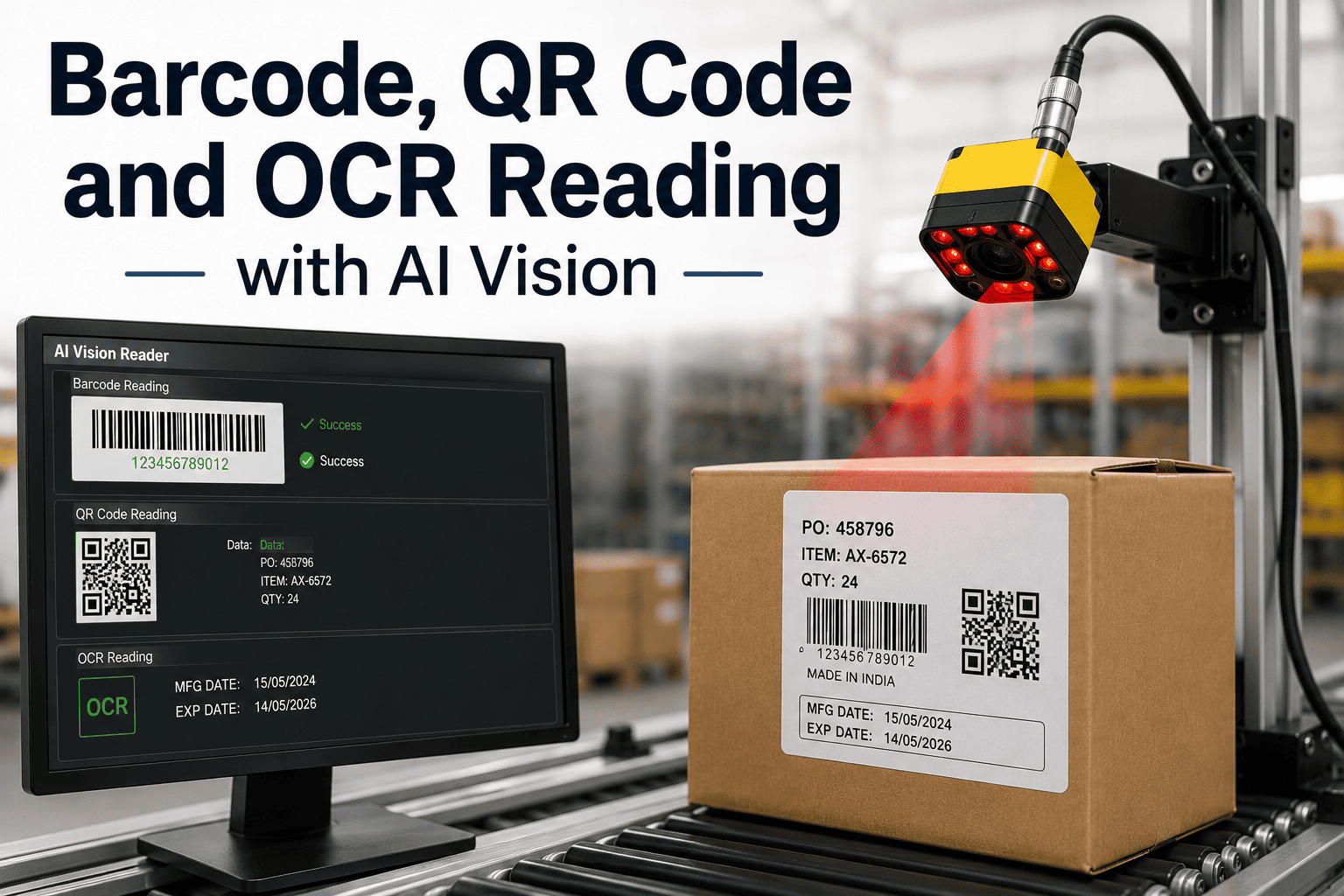
iFactory's Vision OCR system detects, decodes, and verifies all major 1D and 2D code symbologies in a single camera field — GS1-128, EAN, UPC, ITF, Code 39, Code 128, Data Matrix, QR Code, PDF417, and Aztec — without reader changeover. Mixed-SKU lines with variable code types per product are handled within the same inspection zone, eliminating the configuration complexity and misalignment risk of multi-reader arrays.
Seeing no-read rates or mislabeling events on your production line? Book a Demo to see iFactory's Vision OCR Inspection benchmarked against your current reader system on your specific code types and print quality range.
6 Core Capabilities of iFactory's Vision OCR Inspection for Barcode and Label Verification
Damaged and Marginal Barcode Recovery
No-Read EliminationiFactory's deep learning decoder is trained on the full range of print quality degradation modes encountered in production — ink-jet nozzle drop, thermal head stripe, ribbon crinkle, substrate wrinkle, and edge damage from label application. The model recovers data from codes that fall below conventional scanner grade thresholds but contain intact information, converting events that would generate no-reads into successful decodes. Recovery performance is validated during commissioning against the specific printer and substrate combination used on each production line, ensuring the improvement is measured against the actual baseline rather than a vendor benchmark.
Multi-Symbology Decoding in Single Pass
Line FlexibilityiFactory reads and decodes all major 1D and 2D barcode symbologies in a single camera inspection pass without requiring reader changeover for different product types. GS1-128, EAN-13, EAN-8, UPC-A, ITF-14, Code 39, Code 128, Interleaved 2 of 5, GS1 Data Matrix, QR Code, PDF417, and Aztec are all supported within the same field of view. Mixed-SKU production lines running variable code types across different product families are handled within the same inspection zone, reducing configuration complexity and eliminating the multi-reader array management overhead that increases false-pass risk on changeover-intensive lines.
Label Content Cross-Reference Verification
Mislabeling PreventionBeyond decoding, iFactory verifies that the content carried in the barcode or QR code matches the expected values for the current production order — GTIN, serial number, lot code, expiry date, and destination market identifier — and cross-checks these against the human-readable text fields printed on the same label surface. A barcode that decodes correctly but carries data inconsistent with the active batch, or a label where the human-readable lot number does not match the encoded lot, is detected and rejected before the unit proceeds to packaging or dispatch. This content cross-reference layer is the primary control for preventing mislabeling events that pass through purely decode-based reader systems.
Code Quality Grading and Print Trend Analysis
Process Control IntelligenceiFactory grades every barcode and QR code inspected against ISO/IEC 15415 and 15416 quality standards — generating grade scores for modulation, reflectance, print growth, axial non-uniformity, and unused error correction. These grade scores are recorded per unit and aggregated into print quality trend charts that reveal progressive printer degradation before it reaches the no-read threshold. Thermal printer head wear, ink-jet nozzle fouling, and ribbon tension drift all produce characteristic grade trend signatures that iFactory detects weeks before the printer fails to produce readable codes — enabling planned maintenance rather than reactive print failure events.
High-Speed Line Operation Without Throughput Impact
Production Speed CompatibilityiFactory's edge-deployed AI vision system processes barcode and label inspection at production line speeds without introducing latency that reduces throughput or requires line slowdown for inspection accuracy. The edge processing architecture performs deep learning inference locally at the camera installation point, eliminating the round-trip latency of cloud-based processing and ensuring that inspection decisions are available within the cycle time of the production line at speeds from slow secondary packaging lines through high-speed primary filling and cartoning operations exceeding 600 units per minute.
Audit Trail and Traceability Record Generation
Compliance DocumentationEvery unit inspected by iFactory generates a structured record containing the decoded barcode data, verification result, code grade score, label content check outcome, rejection reason if applicable, timestamp, and camera reference. These records constitute the unit-level traceability documentation required by GS1 track-and-trace programs, pharmaceutical serialization mandates, food safety traceability regulations, and retailer compliance programs. Batch-level summary reports — total units inspected, no-read rate, mislabeling event count, average code grade — are generated automatically for quality review and customer-facing certificate of conformance preparation without manual data compilation.
Where iFactory Barcode and Label Verification Delivers Measurable ROI
See iFactory's Vision OCR Inspection on Your Barcode and Label Specification
iFactory's 6-week pilot program deploys the Vision OCR Inspection system on your actual production line — measuring no-read rate improvement, mislabeling detection rate, and code quality grade distribution against your current reader system baseline. Start with your highest-volume or highest-risk line and see measured results before committing to full deployment.
What Industry Leaders Say About AI Vision Barcode and Label Verification
"The no-read problem in high-speed packaging is not a hardware problem — it is a recognition problem. Conventional readers are optimised for ideal print quality and reject everything outside a narrow tolerance band. What AI vision brings is the ability to interpret degraded codes the same way a human expert would — recognising the data structure even when the print quality is marginal — but doing it at machine speed on every unit rather than on a sample. The facilities that have deployed AI vision for barcode and label verification consistently report that the no-read reduction alone justifies the investment, and then the mislabeling prevention and traceability documentation capabilities deliver compounding value that transforms barcode verification from a quality cost centre into a supply chain intelligence asset."
5 Steps to Deploying iFactory Vision OCR Inspection on Your Barcode Verification Line
Line Audit and Baseline No-Read Rate Measurement
The deployment begins with a structured audit of the target production line — capturing the current no-read rate, the distribution of no-read causes (print quality, code placement, substrate variation), the code types and symbologies in use, and the label content verification requirements for each SKU in the production mix. Baseline measurement is conducted using the existing reader system to establish the quantified improvement benchmark against which iFactory's performance will be measured during and after the pilot.
Sample Collection and Model Training
iFactory collects representative image samples from the target line — including good-quality codes, marginal-quality codes across the range of observed degradation modes, and known mislabeling examples where available. The deep learning model is trained on these production-specific samples rather than on generic barcode datasets, ensuring that the recognition capability is calibrated to the specific printer, substrate, and lighting conditions of the installation. Content verification rules are defined in collaboration with the quality team, specifying which data fields require cross-reference and what tolerance is permitted for each field type.
Camera Installation and Edge Hardware Deployment
Cameras and edge processing hardware are installed at the barcode inspection point on the production line during a planned maintenance window without requiring extended downtime. Camera position, field of view, and illumination are optimised for the specific code size, substrate reflectance, and line speed of the installation. The edge hardware is connected to the line PLC for rejection signal output and to the production MES or ERP for production order data retrieval, enabling real-time content cross-reference against the active batch parameters.
Pilot Validation Against Baseline
The 6-week pilot phase runs the iFactory system in parallel with or replacing the existing reader — capturing no-read rate, mislabeling detection events, code grade distribution, and rejection accuracy metrics across a statistically representative production volume. Weekly performance reports compare iFactory results against the pre-deployment baseline, enabling the quality and operations teams to quantify improvement in commercially meaningful terms: throughput recovery from no-read elimination, mislabeled units detected before dispatch, and maintenance cost avoidance from print trend early warning.
Full Production Deployment and SKU Expansion
Following pilot validation, iFactory transitions to full production deployment with the verified model configuration. Additional SKUs and label variants are added to the inspection scope using the same model framework and training pipeline, enabling rapid expansion across the full production mix without restarting the commissioning process. The system is maintained through a continuous improvement cycle — periodic model updates as print quality characteristics evolve, new SKU additions as the product range expands, and threshold refinements based on accumulated production inspection data.
Frequently Asked Questions
Deploy AI Vision Barcode and Label Verification on Your Production Line
iFactory's Vision OCR Inspection system combines deep learning barcode recovery, multi-symbology decoding, content cross-reference verification, ISO code quality grading, and unit-level traceability record generation in a single edge-deployed platform. Start your 6-week pilot on your highest-priority line and measure no-read reduction and mislabeling prevention performance against your current baseline.