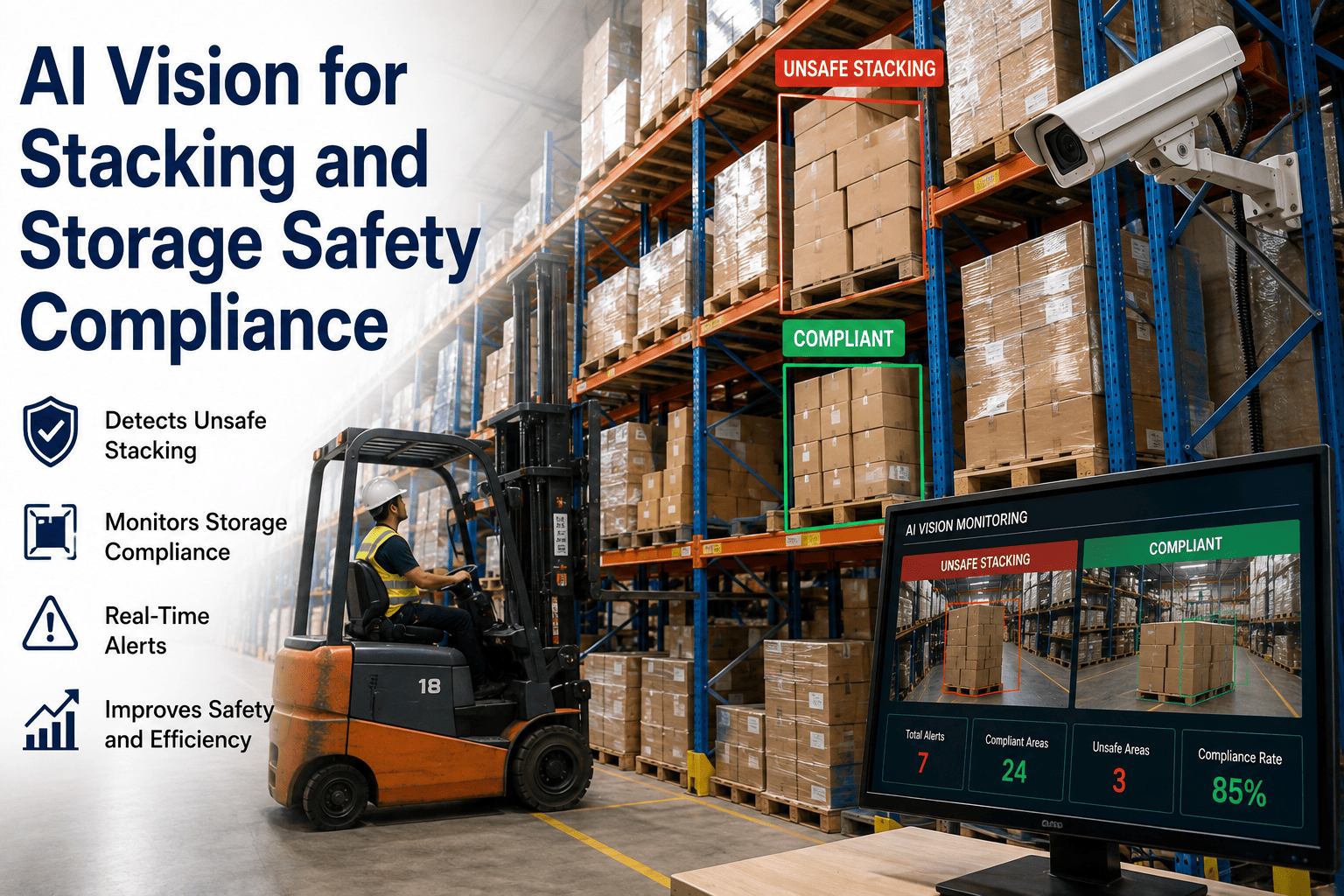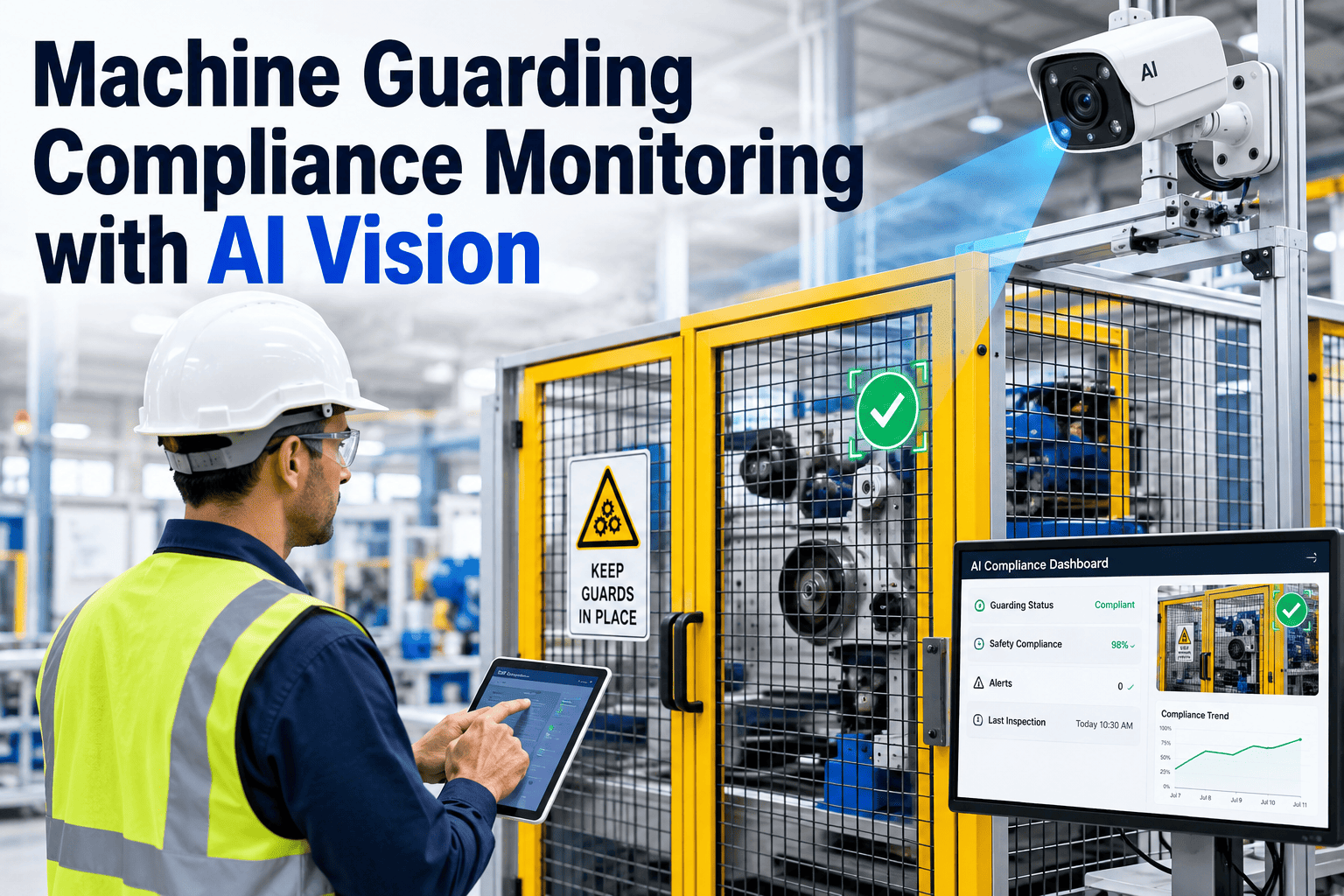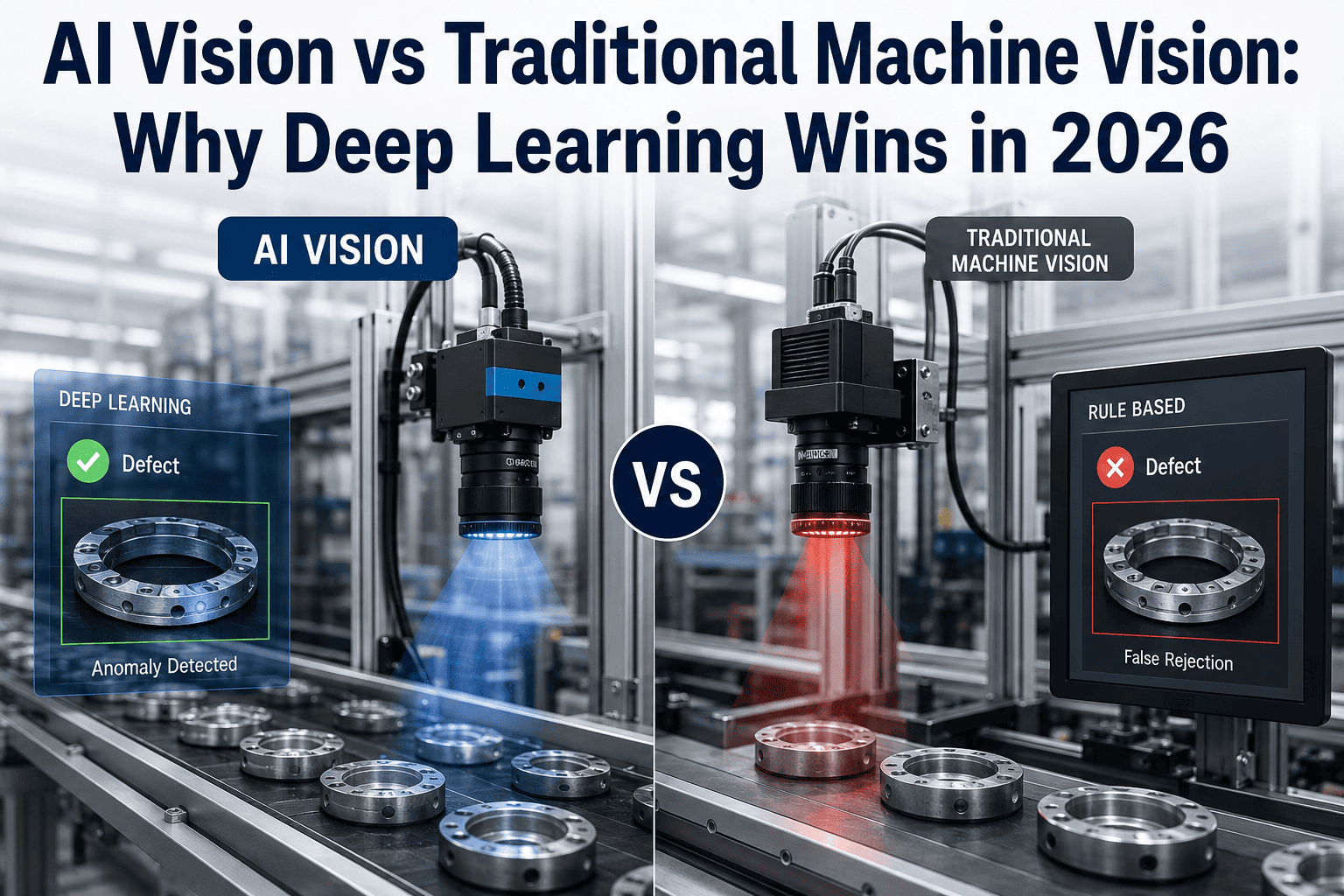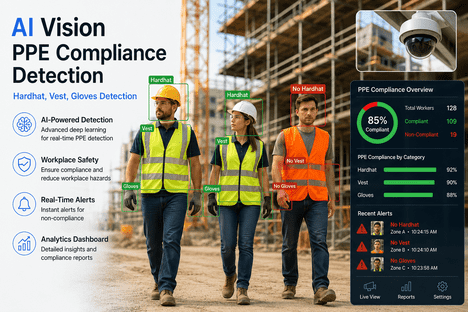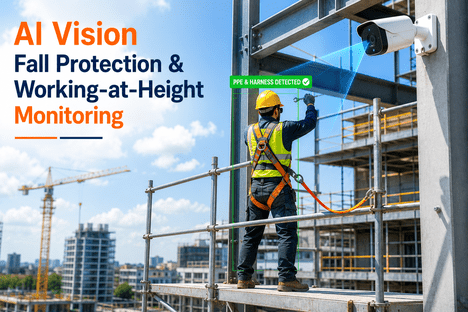
AI vision fall protection and working-at-height monitoring represents a fundamental shift in how industrial facilities prevent the leading cause of workplace fatalities. Falls from height remain the most common cause of death in construction and industrial environments worldwide, with improper or missing fall protection equipment identified as a contributing factor in over 70% of fatal fall incidents. Traditional safety monitoring depends on manual observation by safety inspectors — a method that is inherently intermittent, subjective, and unable to scale across large or complex worksites with multiple elevated work zones operating simultaneously. iFactory's AI vision camera system changes this paradigm by deploying deep learning models directly on edge devices to continuously monitor workers at height, verify harness and lanyard compliance, detect unsafe ladder and scaffold use, monitor edge zone proximity, and generate instant alerts when fall protection violations are identified — all in real time without human intervention and with 99.4% detection accuracy. The platform integrates directly with existing camera infrastructure, processes video on NVIDIA-powered edge hardware, and connects with CMMS systems to automate incident documentation and compliance reporting. For safety managers and operations leaders responsible for working-at-height safety, iFactory's AI vision camera delivers the continuous, objective monitoring capability that transforms fall protection from a periodic inspection exercise into a real-time, data-driven safety assurance function.
Deploy AI Vision Fall Protection Across Your Facility Today
iFactory's edge AI vision cameras detect workers at height without proper fall protection and alert safety teams instantly — reducing the leading cause of industrial fatalities through continuous, automated monitoring. Train on your specific equipment and site layout with deployment in under two weeks.
The Shift from Manual Safety Observation to AI Vision Fall Protection
Safety inspectors patrol sites intermittently. Detection of harness non-compliance, missing guardrails, or unsafe ladder use depends on inspector presence, attention, and line of sight. Fatigue, distraction, and site complexity mean most violations go undetected during unpatrolled hours. Data collection is manual, inconsistent, and rarely produces actionable trend analysis.
iFactory's edge AI cameras monitor every elevated work zone 24/7, detecting harness violations, missing lanyard attachments, scaffold edge proximity, and unsafe climbing behaviour. Deep learning models process video on NVIDIA Jetson hardware with sub-50ms inference latency — no internet dependency, no blind spots, no gaps in coverage. All violations are logged with annotated images for audit and trend analysis.
Violations are typically identified during scheduled safety walks or after an incident has already occurred. The gap between the unsafe act and detection can span hours or days. Near-miss events — workers who trip, slip, or lose balance at height — are almost never captured, leaving critical leading indicators invisible.
The moment a fall protection violation is detected — a worker on a roof without a harness, a ladder placed at an unsafe angle, or a missing scaffold guardrail — iFactory sends instant push notifications, SMS alerts, and automated work orders to safety supervisors. Near-miss events are detected and logged automatically, providing leading indicators that prevent future incidents.
Safety compliance documentation relies on handwritten logs, clipboard checklists, and manually compiled reports. Data quality varies by inspector. Trend analysis requires hours of manual data entry. Regulatory audits demand significant preparation time to gather and organise paper records across multiple sites.
Every AI-detected event — violation, near-miss, or compliance confirmation — is automatically logged with timestamps, camera ID, annotated images, and classification metadata. Reports are generated on demand with trend charts and compliance metrics. Regulatory audit preparation is reduced from days to minutes with searchable, structured data accessible from any device.
5 Core Capabilities of AI Vision for Fall Protection and Height Safety
Harness and Lanyard Compliance Detection
Critical PPE VerificationAI vision models specifically trained to detect full-body harnesses, shock-absorbing lanyards, and anchor point attachments on workers at height. The system verifies that all required fall protection PPE is worn correctly before permitting elevated work. When non-compliance is detected — such as a worker on scaffolding without a harness or with an unattached lanyard — iFactory generates an immediate alert with annotated evidence, enabling safety teams to intervene before a fall occurs. This capability alone addresses the primary contributing factor in over 70% of fatal fall incidents across construction and industrial sites.
Ladder and Scaffold Safety Monitoring
Structure-Specific IntelligenceiFactory's AI distinguishes between different types of elevated structures and applies context-appropriate safety rules. For ladders, the system detects improper climbing angles, missing stabilisers, overloading, and workers climbing without maintaining three points of contact. For scaffolds, the AI monitors guardrail presence, platform loading, and worker positioning relative to unprotected edges. Each detection type triggers specific alerts and corrective recommendations tailored to the structure and violation type, reducing the cognitive load on safety teams managing multiple elevated work zones simultaneously.
Edge Zone and Restricted Area Intrusion Detection
Perimeter Safety AutomationAI vision systems define geofenced edge zones around roof perimeters, open floor edges, mezzanine platforms, and other fall-risk areas. When a worker enters these zones without verified fall protection, the system triggers an escalating alert sequence — first a warning, then a supervisor notification, and finally an automated work order if the violation persists. The same technology monitors restricted access areas where only authorised, trained personnel should be working at height, preventing unqualified workers from entering high-risk zones undetected.
Near-Miss and Slip-Trip-Fall Detection
Leading Indicator CaptureOne of the most valuable capabilities of AI vision for height safety is the automatic detection of near-miss events — workers who slip, trip, lose balance, or experience platform instability without falling. These events are the strongest leading indicators of future fall incidents but are almost never captured by manual observation. iFactory's AI identifies these events by analysing motion patterns, body pose changes, and sudden shifts in worker position relative to stable surfaces. Each near-miss is logged with full contextual data, enabling safety teams to identify hazard patterns and implement preventive measures before a fatality occurs.
Automated Incident Reporting and CMMS Integration
End-to-End Workflow AutomationEvery AI-detected fall protection event flows automatically into iFactory's integrated platform, which creates structured incident records with annotated images, classification data, timestamps, and location metadata. The system generates automated work orders for corrective actions — such as re-tensioning guardrails, replacing damaged lanyards, or scheduling additional safety training — and pushes them directly to connected CMMS platforms including SAP PM and IBM Maximo. This end-to-end automation eliminates manual data entry, ensures consistent documentation, and creates an auditable chain of evidence for regulatory compliance and internal safety reviews.
Transform your fall protection programme from reactive to predictive with continuous AI vision monitoring. Book a Demo to see how iFactory's edge AI cameras detect height safety violations in real time and integrate with your existing safety workflows.
What Safety Leaders Say About AI Vision for Fall Protection
"The most significant advancement in fall protection over the past decade has been the transition from manual observation-based safety to continuous AI vision monitoring. Falls from height remain the leading cause of fatalities in construction and industrial environments, not because effective fall protection equipment does not exist, but because compliance monitoring has been dependent on human inspectors who cannot be everywhere at once. AI vision systems like iFactory's edge cameras close this gap entirely — they detect harness violations, unsafe ladder use, and edge zone intrusions the moment they occur and trigger immediate intervention. Facilities that have deployed AI vision for height safety report 60–80% reductions in fall protection violations within the first quarter and, more importantly, a fundamental shift in safety culture as workers recognise that unsafe behaviour at height will be detected consistently and corrected immediately. The data generated by these systems — violation trends, near-miss patterns, equipment compliance rates — gives safety leaders the evidence they need to target training investment, adjust safety protocols, and demonstrate measurable improvement to regulators and executive stakeholders."
Get Real-Time Visibility into Working-at-Height Safety Across Your Site
iFactory's AI vision platform provides continuous fall protection monitoring with deep learning defect classification, edge deployment, instant alerts, and full CMMS integration — giving safety teams the real-time data they need to prevent falls before they happen.
Frequently Asked Questions
Build Your Fall Protection Strategy with AI Vision Technology
iFactory's AI vision camera combines deep learning defect classification with edge deployment, CMMS integration, and complete audit traceability — giving safety teams the continuous, objective monitoring capability that transforms fall protection from a periodic compliance exercise into a real-time safety assurance system. Train on your specific site conditions and deploy in under two weeks.