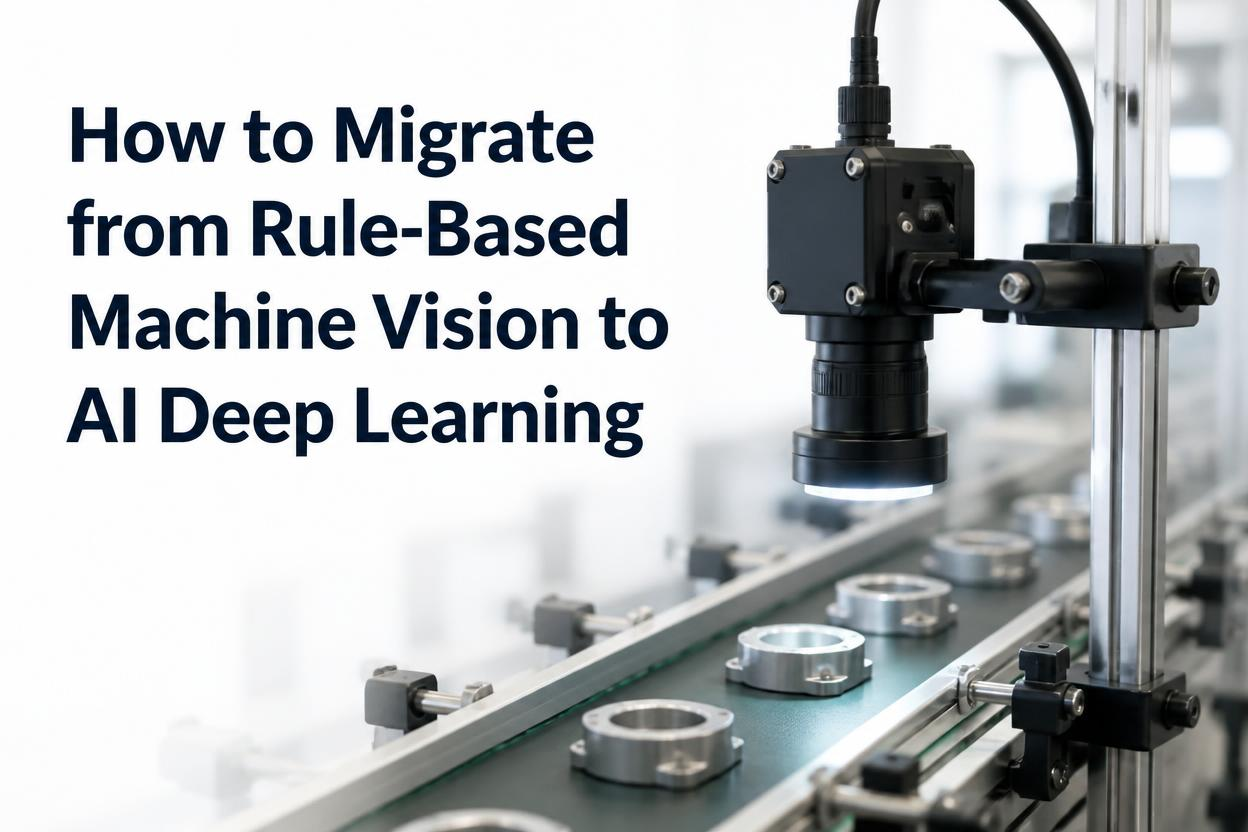
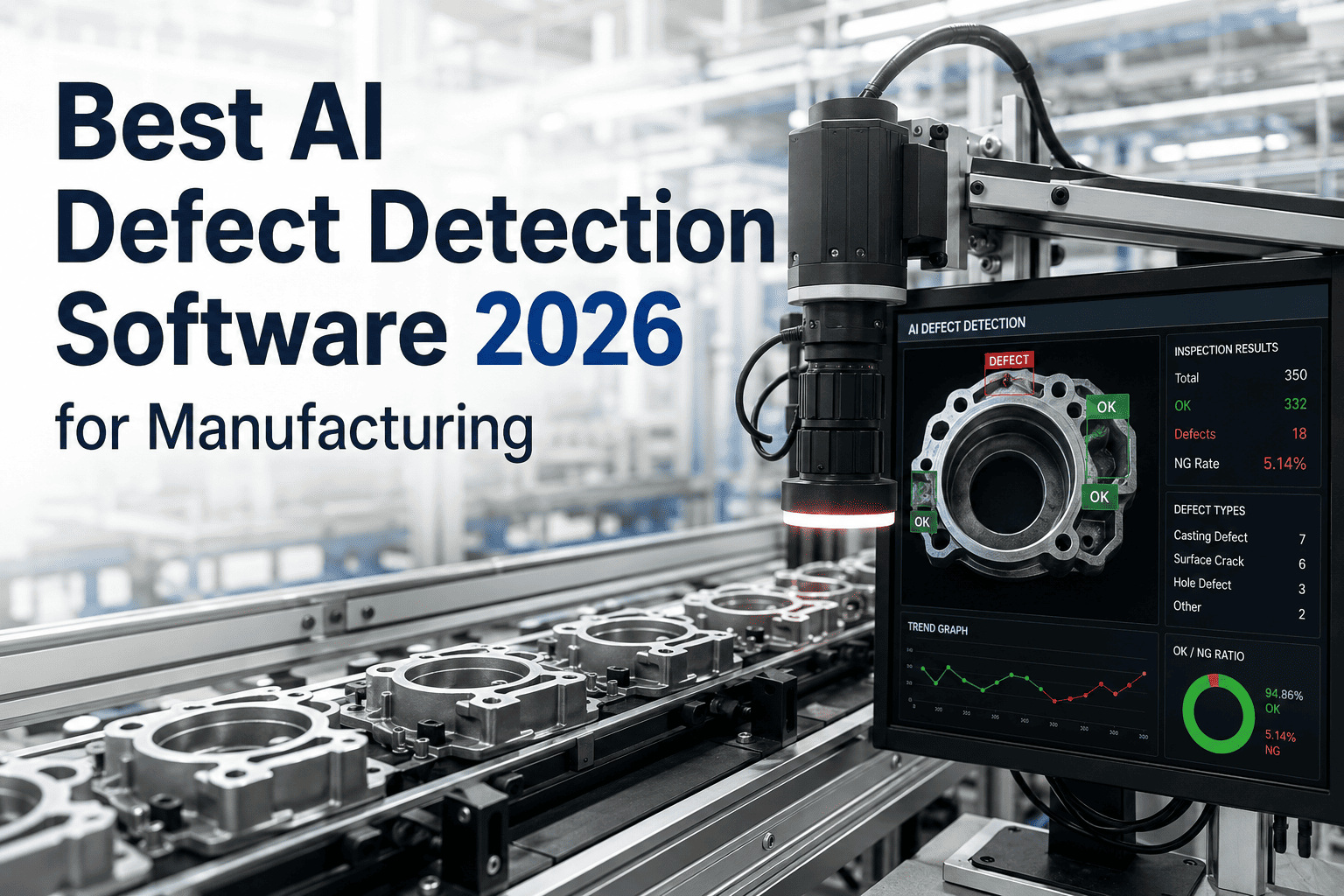
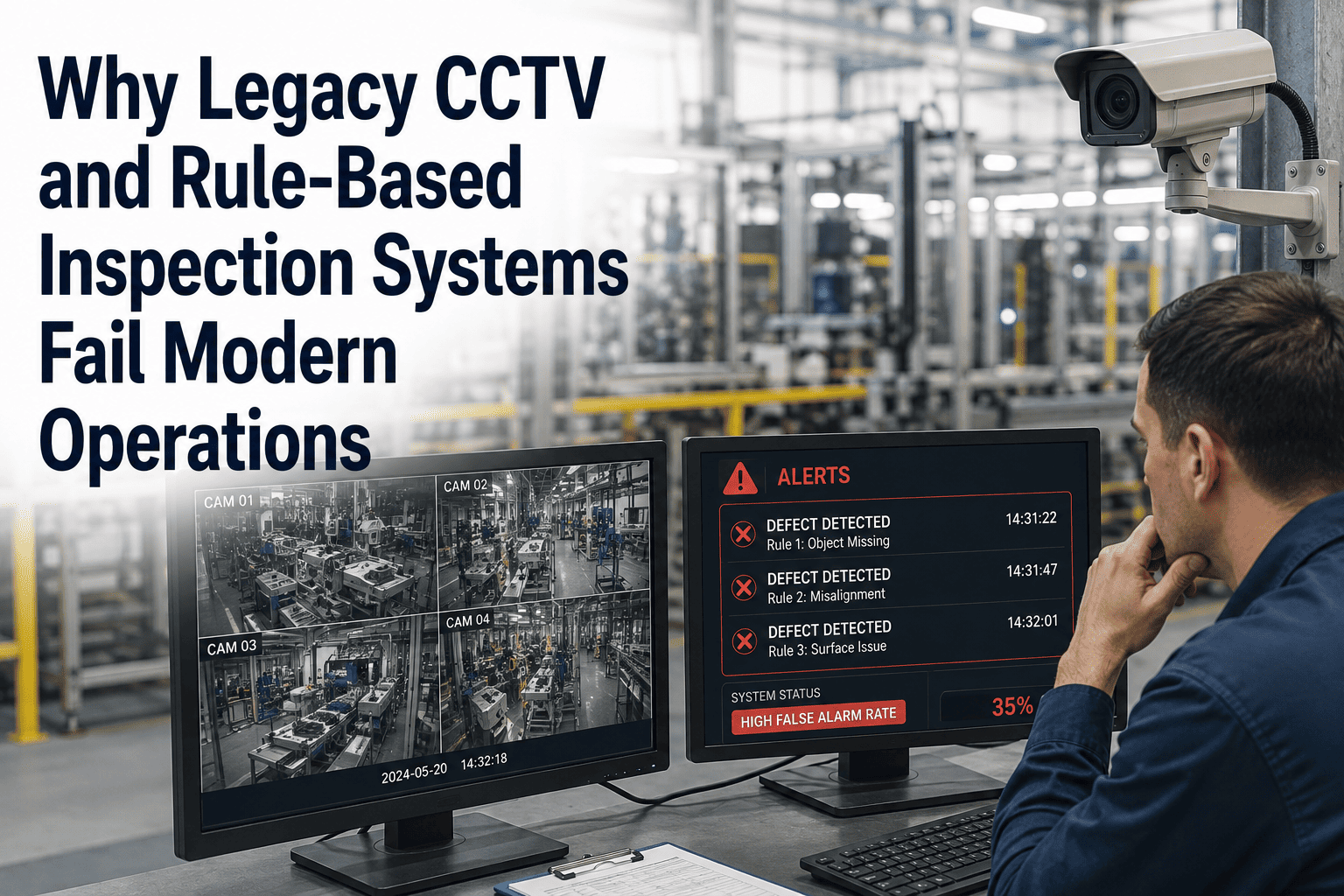
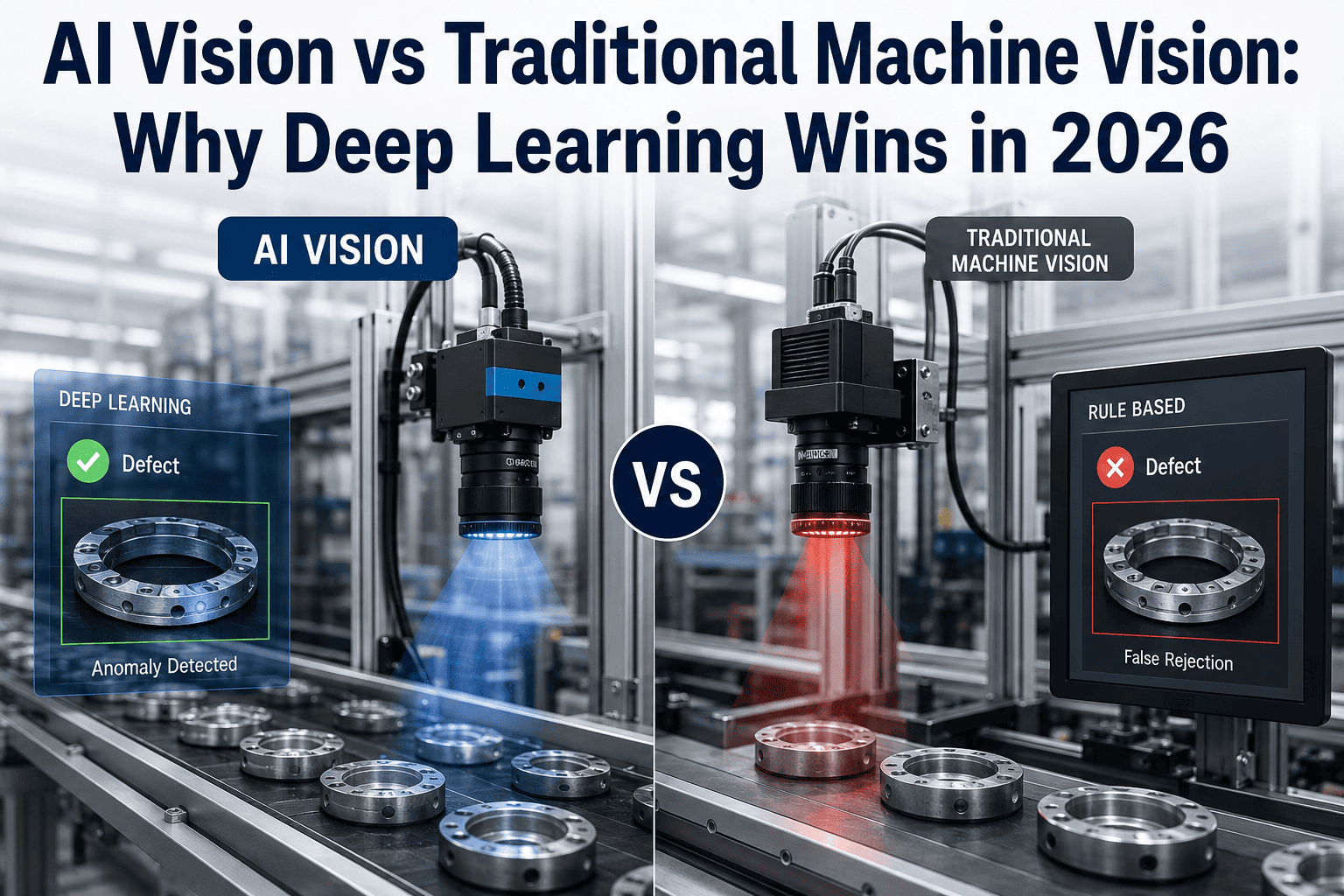
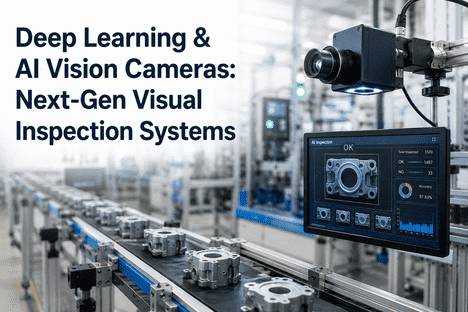
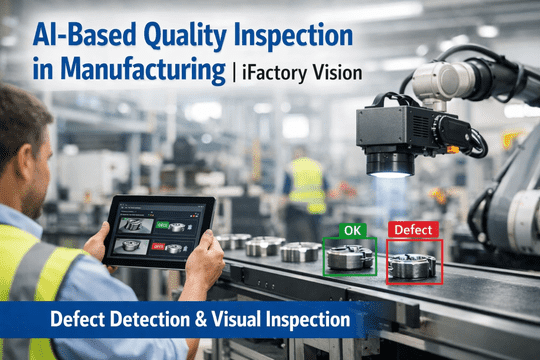
Rule-based machine vision has powered factory inspection for over two decades, but the cracks are showing as products grow more complex and defect types multiply beyond what hand-coded algorithms can handle. Every new SKU or material variation forces an engineer back to the code editor to add another threshold, another exception branch. The result is brittle systems that pass obvious defects and reject good parts while edge cases accumulate. Deep learning replaces only the decision layer with a neural network that learns from examples, keeping your cameras and lighting intact. You can book a demo to see iFactory connect to your hardware and learn your defects within days.
MIGRATION GUIDE · AI VISION · DEEP LEARNING · INDUSTRY 4.0
Stop Rewriting Inspection Rules for Every New Product — Let a Neural Network Learn the Difference Instead
iFactory's AI vision platform sits on top of your existing cameras and lighting, replaces hand-coded threshold algorithms with trained deep learning models, and adapts to new defects without a single line of code.
1
KEEP
Existing Hardware
Industrial Cameras
Lighting Systems
Mounting Fixtures
PLC I/O Triggers
2
ADD
iFactory AI Engine
Image Ingestion Layer
Model Training Module
Real-Time Inference
Result Integration API
3
REPLACE
Deep Learning Models
Neural Network Weights
Learned Features
Adaptive Boundaries
Continuous Refinement
THE MAINTENANCE TRAP
Four Signals Your Rule-Based Vision System Has Become a Liability Instead of an Asset
These metrics emerge consistently across manufacturing facilities still relying on hand-coded inspection logic, and each one represents engineering hours that could be redirected to higher-value work if the decision layer were powered by deep learning instead of conditional rules.
73%
Vision Engineers Cite Threshold Tuning As Top Task
The majority of vision engineering time on rule-based systems goes to adjusting pixel thresholds and edge parameters rather than developing new inspection capabilities or improving yield rates.
40%+
False Reject Rate on Variable Products
Products with natural surface variation such as wood grain or coated metals generate false reject rates above forty percent because fixed thresholds cannot separate variation from defects.
3-6 Weeks
Average New SKU Programming Time
Adding a new product variant to a rule-based station typically requires two to six weeks of iterative programming, controlled image collection, and threshold validation before full line speed.
2.4x
Maintenance Hours vs New Development
Facilities running rule-based vision spend more than twice as many engineering hours maintaining existing inspection programs as they do developing capabilities for new products or processes.
UNDER THE HOOD
What Actually Changes When You Replace Rules With Neural Networks
The physical inspection station looks identical before and after migration. The difference is entirely in the software layer that converts a captured image into a pass or fail decision. The comparison below shows how the same challenge is handled by each approach.
RULE-BASED APPROACH
Feature Definition
Engineer manually specifies pixel intensity ranges, edge gradients, and geometric measurements that define a defect characteristic.
New Defect Handling
New defect type requires writing new code, collecting reference images, and validating thresholds on the production line over multiple shifts.
Lighting Sensitivity
Changes in ambient light or LED degradation shift pixel values outside expected ranges, triggering false rejects until thresholds are recalibrated.
Decision Logic
Binary pass or fail based on fixed thresholds with manual override tables for known exception cases that accumulate over time.
DEEP LEARNING APPROACH
Feature Definition
Neural network automatically learns relevant visual features from labeled training images without manual feature specification by an engineer.
New Defect Handling
New defect type requires adding labeled example images to the training set and retraining the model, with no code changes needed at any point.
Lighting Sensitivity
Model learns lighting-invariant features during training and generalizes across reasonable illumination changes without recalibration effort.
Decision Logic
Probabilistic confidence score with adjustable decision thresholds and explainability overlays showing which image regions influenced each decision.
HARDWARE PRESERVATION
Your Cameras and Lights Stay — Only the Algorithm Layer Gets Replaced
One of the most common misconceptions about AI vision migration is that it requires a complete hardware refresh. In practice, the migration replaces the software decision engine while preserving the entire image acquisition infrastructure you have already invested in.
WHAT YOU KEEP
Industrial Cameras
Area scan, line scan, and 3D profile cameras continue capturing images at their current resolution and frame rate without modification.
Lighting Systems
Bar lights, ring lights, dome lights, and structured light projectors remain in their current positions and configurations.
Mounting and Fixtures
Camera brackets, part positioning fixtures, and protective enclosures stay exactly as installed on the line.
PLC and I/O Triggers
Existing trigger signals from the line controller continue initiating image capture at the same points in the production cycle.
Network Infrastructure
Ethernet, GigE Vision, and Camera Link connections between cameras and processing hardware remain unchanged.
WHAT CHANGES
Threshold Algorithms
Fixed pixel intensity and gradient thresholds replaced by learned feature representations from the neural network.
Edge Detection Filters
Sobel, Canny, and Laplacian filters replaced by convolutional layers that learn edge-like features automatically.
Blob Analysis Modules
Connected component analysis replaced by semantic segmentation networks that classify every pixel in the image.
Decision Trees and Rule Chains
Nested conditional logic replaced by a single neural network forward pass that produces a confidence score.
Manual Calibration Routines
Periodic threshold recalibration replaced by model retraining on new production data collected over time.
Your Existing Vision Hardware Is Already Capturing the Data Needed to Train AI Models
iFactory's platform ingests images from your current cameras, trains deep learning models on your defect library, and deploys those models back to the same inspection points without any hardware changes. Book a demo to see the migration path for your specific vision stations.
MIGRATION FRAMEWORK
Six Stages From Legacy Rules to Production-Ready AI Inspection
iFactory's migration methodology is designed so that each stage produces a measurable deliverable, and the first production-relevant model can be running in shadow mode within the first month of engagement.
01
Vision Station Audit and Data Assessment
Existing inspection stations are catalogued with camera specifications, lighting configurations, current logic, and available historical image data. This audit identifies which stations offer the highest migration ROI based on defect complexity and maintenance burden.
02
Training Data Collection and Labeling
Production images are collected from each target station, and defect examples are labeled using iFactory's annotation tools. Data augmentation techniques expand the training set to cover lighting variation and material differences without requiring additional physical samples.
03
Initial Model Training and Validation
Deep learning models are trained on the labeled dataset and validated against a held-out test set that includes edge cases not seen during training. Performance is measured against the current rule-based system using historical production images.
04
Parallel Deployment in Shadow Mode
Trained models are deployed alongside the existing rule-based system, running on the same images in real time without controlling line decisions. This shadow mode runs one to two weeks and generates a direct performance comparison on live production data.
05
Performance Tuning and Gap Resolution
Any discrepancy between model predictions and expected results during shadow mode is analyzed, and the training dataset is augmented with the gap cases. Iterative tuning continues until the model meets or exceeds rule-based performance across all conditions.
06
Rule Decommission and Full AI Handover
Once validated, the rule-based logic is disabled and the AI model takes over pass or fail control. Legacy rules are archived but accessible, and the model enters a continuous improvement cycle with periodic retraining on new production data.
WHERE AI OUTPERFORMS
Five Inspection Scenarios Where Deep Learning Surpasses Hand-Coded Rules
These scenarios represent the most common migration triggers reported by manufacturing facilities, where rule-based systems have reached their functional ceiling and deep learning delivers an immediate and measurable improvement in inspection accuracy.
Surface Scratches on Reflective Metals
Rule-based: Edge filters generate false positives from normal specular reflections, machining marks, and surface grain patterns within the same pixel gradient range as actual scratches.
Deep learning: Trained on labeled scratch examples across surface conditions, the model distinguishes defect signatures from benign features regardless of reflection angle or lighting variation.
Texture Variation in Natural Materials
Rule-based: Wood grain, fabric weave, and stone patterns exhibit randomness that violates uniformity assumptions in blob analysis and texture filters, producing inconsistent results across batches.
Deep learning: The network learns the acceptable range of natural variation from good-part examples and flags only deviations outside that distribution, eliminating batch-to-batch inconsistency.
Assembly Verification With Positional Tolerance
Rule-based: Geometric matching requires precise part positioning and breaks down when components shift within allowable tolerance ranges, causing false rejects on correctly assembled parts.
Deep learning: Object detection networks identify components within a spatial tolerance zone and verify presence and approximate position without the sub-pixel alignment that rule-based matching demands.
Foreign Object Detection in Food and Pharma
Rule-based: Color and intensity thresholds cannot reliably distinguish foreign materials that share visual characteristics with the product itself or similarly colored packaging surfaces.
Deep learning: Anomaly detection models trained on normal-only images learn the expected appearance distribution and flag any visual deviation, including novel foreign materials never seen during training.
Print Quality on Variable Substrates
Rule-based: Template matching fails when substrate color, texture, or background pattern changes between runs, requiring a new reference template for every product variant.
Deep learning: The model identifies print content features independently of substrate appearance, allowing a single trained model to verify quality across multiple substrate types without reprogramming.
HEAD TO HEAD
Rule-Based Machine Vision vs AI Deep Learning — Full Capability Comparison
This table covers the operational dimensions that matter most when evaluating whether a migration from rules to deep learning will deliver a measurable improvement in your specific inspection environment.
RISK MITIGATION
Four Migration Risks and How iFactory's Methodology Eliminates Each One
Every technology migration carries risk, and ignoring those risks creates more problems than the technology solves. The cards below address the most frequently cited concerns from vision engineers and plant managers, along with the specific mitigation built into iFactory's deployment process.
Insufficient Training Data for Rare Defects
Some defect types occur so infrequently that collecting enough labeled examples to train a reliable model seems impractical within a reasonable timeframe on a healthy production line.
iFactory combines data augmentation, synthetic defect generation, and few-shot learning to build effective models from as few as 50 labeled examples per defect class, supplemented by anomaly detection that requires only good-part images.
Lack of Model Interpretability
Quality teams and auditors need to understand why a part was rejected, and a neural network's internal decision process is not inherently transparent to external review.
iFactory generates explainability overlays highlighting the specific image regions and features that influenced each decision, providing visual evidence that meets audit requirements without exposing raw model weights.
Disruption to Active Production Lines
Deploying unvalidated AI models on a running production line risks shipping defective product or stopping the line with excessive false rejects during the learning period.
Every model runs in shadow mode alongside the existing system for a minimum of one to two weeks, generating a parallel results log reviewed and approved by the quality team before any control handover occurs.
Inference Speed at Line Rate
Deep learning models are perceived as computationally heavy, raising concerns about whether they can process images fast enough to keep up with high-speed production lines.
iFactory optimizes trained models for the specific inference hardware at each station, achieving processing times under 50 milliseconds per image on modern edge AI devices, covering most manufacturing line speeds.
FREQUENTLY ASKED QUESTIONS
Questions From Vision Engineers and Plant Managers About AI Vision Migration
Do we need to replace our existing industrial cameras and lighting systems to use iFactory's AI vision platform?
No. iFactory's platform is designed to ingest images from your existing industrial cameras through standard interfaces including GigE Vision, USB3 Vision, and Camera Link. Your current lighting configuration, mounting hardware, and trigger infrastructure remain unchanged. The platform sits as a software layer on top of your existing image acquisition hardware, replacing only the decision-making algorithm that converts each captured image into a pass or fail result.
Contact our support team for a compatibility assessment of your current vision hardware.
How many labeled images do we need to train an effective deep learning model for our inspection task?
The requirement varies by defect complexity, but most inspection tasks can be addressed with 200 to 500 labeled examples per defect class, supplemented by a larger set of good-part images. For rare defects where collecting hundreds of examples is impractical, iFactory uses data augmentation, synthetic defect generation, and few-shot learning to reduce the real-sample requirement to as few as 50 examples. The platform's annotation tools streamline the labeling process during onboarding.
Book a demo to discuss your specific defect library and data availability.
What happens if the AI model makes a wrong decision on the production line — how is liability managed?
During the initial deployment period, every model runs in shadow mode without controlling line decisions, so no product is at risk while the model's performance is validated against live production data. After validation, the quality team sets confidence thresholds that determine how predictions are applied, including options to flag low-confidence results for manual review rather than automatic reject. All decisions are logged with full explainability data, creating an auditable record.
Contact our support team to discuss deployment safety protocols for your facility.
Can the AI model handle multiple product types on the same inspection station, or do we need a separate model for each SKU?
iFactory supports both single-model and multi-model deployment strategies depending on your product mix and changeover frequency. For similar products with minor variations, a single model can often handle multiple SKUs by including examples from each variant in the training set. For significantly different products, the platform manages model switching automatically based on line signals or barcode reads, with hot-loaded weights that switch in under one second.
Book a demo to see how multi-SKU inspection is configured for your product range.
How long does a complete migration take from initial assessment to full AI-controlled inspection?
Most migrations are completed within six to ten weeks from the initial station audit to full AI handover, with the first trained model entering shadow mode within three to four weeks. The timeline depends on the number of stations being migrated, the complexity of the defect library, and the availability of historical production images. High-priority stations with well-documented defect histories can move through the full pipeline faster, while stations with limited historical data may require additional collection time.
Book a demo to get a migration timeline estimate for your specific vision stations.
Every Week You Spend Tuning Thresholds Is a Week Your Competitors Spend Training AI Models
iFactory's AI vision platform connects to your existing cameras, learns your defect library from labeled production images, and replaces brittle rule-based logic with adaptive deep learning models that improve over time. Book a demo and see the migration path for your vision stations.