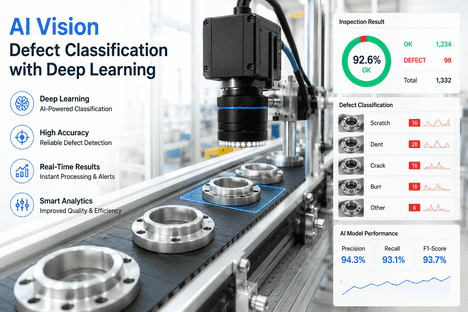
AI Vision Defect Classification with Deep Learning is transforming how manufacturers identify, categorize, and respond to product defects across production lines. Traditional machine vision classification relies on hand-engineered feature extraction and rule-based thresholds that struggle with natural variation in industrial environments. Deep learning classification — using convolutional neural networks and vision transformer architectures — eliminates this limitation by learning hierarchical feature representations directly from production image data. iFactory'sAI Vision Defect Classification platform enables manufacturers to classify defect types and severity levels with deep learning models trained in under an hour, driving automated disposition decisions, root cause analysis, and process control adjustments without manual inspection intervention. Quality engineers and production managers responsible for defect management programs can Book a Demo to see how deep learning classification performs against their specific defect taxonomy and production environment.
How Deep Learning Defect Classification Works
CNN and Vision Transformer Models for Automated Defect Grading
Deep learning classification models for defect detection operate through several stages. First, the model is trained on labeled images where each defect type is annotated — scratch, dent, contamination, misalignment, missing component, and acceptable product. The CNN or vision transformer learns distinctive visual features for each category directly from pixel data, building a hierarchical representation that captures both broad structural patterns and fine-grained surface details. At inference, the trained model assigns a classification label and confidence score to every inspection image, with the option to route low-confidence predictions to human review for verification. Severity classification adds an additional output dimension — each defect is graded on a severity scale such as minor, major, or critical based on learned visual characteristics associated with each severity level in the training data. The entire training cycle typically completes in under an hour for most production defect taxonomies, and models can be iteratively refined as new defect types emerge or production parameters change. To explore how deep learning classification maps to your specific defect categories and quality workflows, Book a Demo with our machine vision engineering team.
Key Applications Across Manufacturing Industries
Where Deep Learning Classification Delivers Measurable Quality Impact
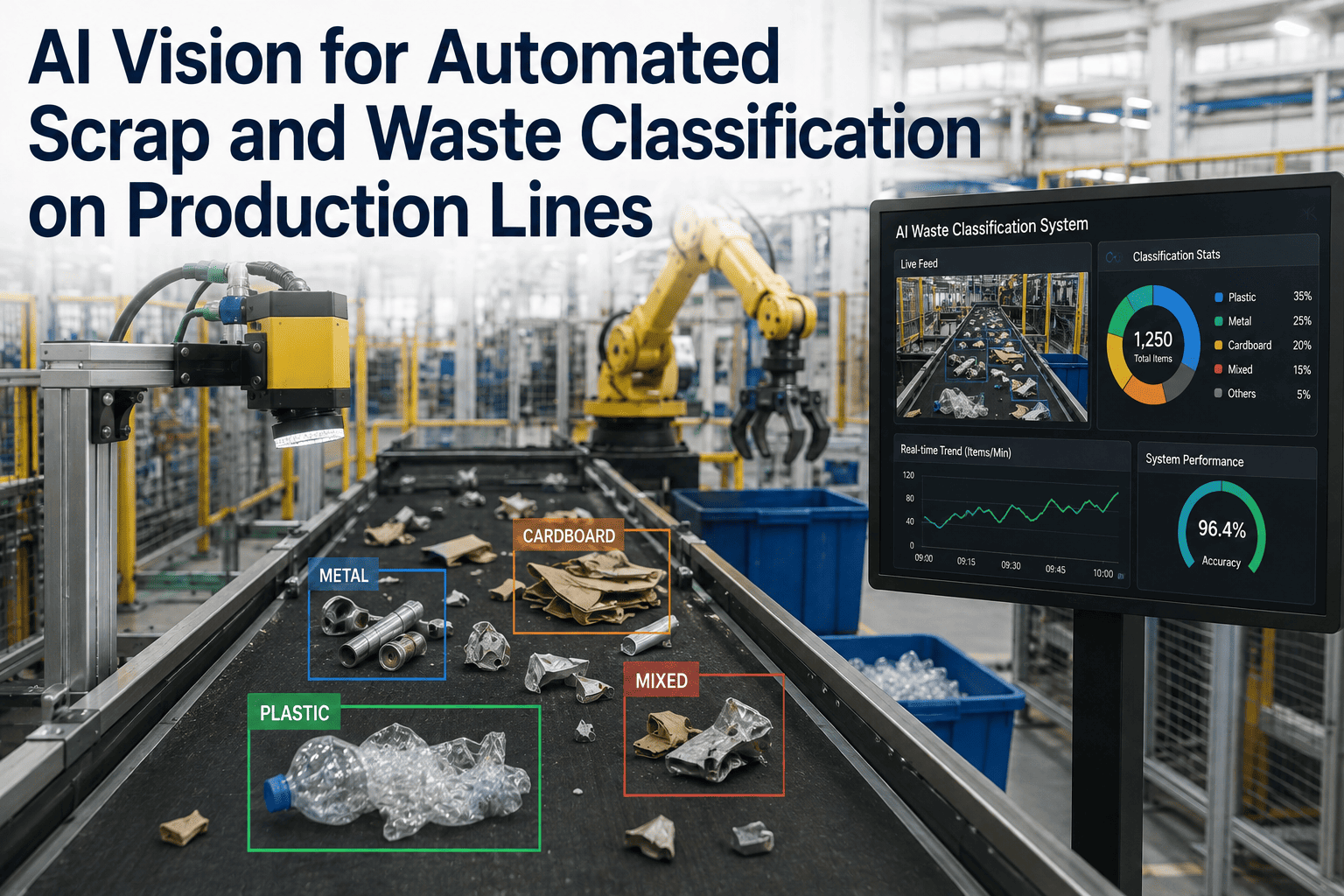
Automotive manufacturers classify surface defects on painted body panels, cast components, and machined surfaces — distinguishing between acceptable cosmetic variations and quality-critical defects that require rework or scrap. The classification output feeds directly into automated sorting systems that direct acceptable parts to assembly and route defective parts to rework or rejection stations without operator intervention. Electronics producers classify PCB assembly defects by type and severity, enabling targeted rework workflows for solder joint defects, component placement errors, and trace damage. High-speed production lines running thousands of boards per hour benefit from edge-native inference that classifies every board at line speed with sub-10 millisecond latency. Pharmaceutical and medical device manufacturers classify defects in blister packs, vial inspection, and assembled devices, with severity grading that determines whether a defect triggers rejection, rework, or process adjustment. Food and beverage producers identify contamination, seal integrity failures, and packaging defects across diverse product formats running on shared production lines. Quality directors evaluating cross-industry classification deployments can Book a Demo to assess iFactory's classification accuracy against their current inspection data.
Deep Learning Classification vs. Traditional Machine Vision
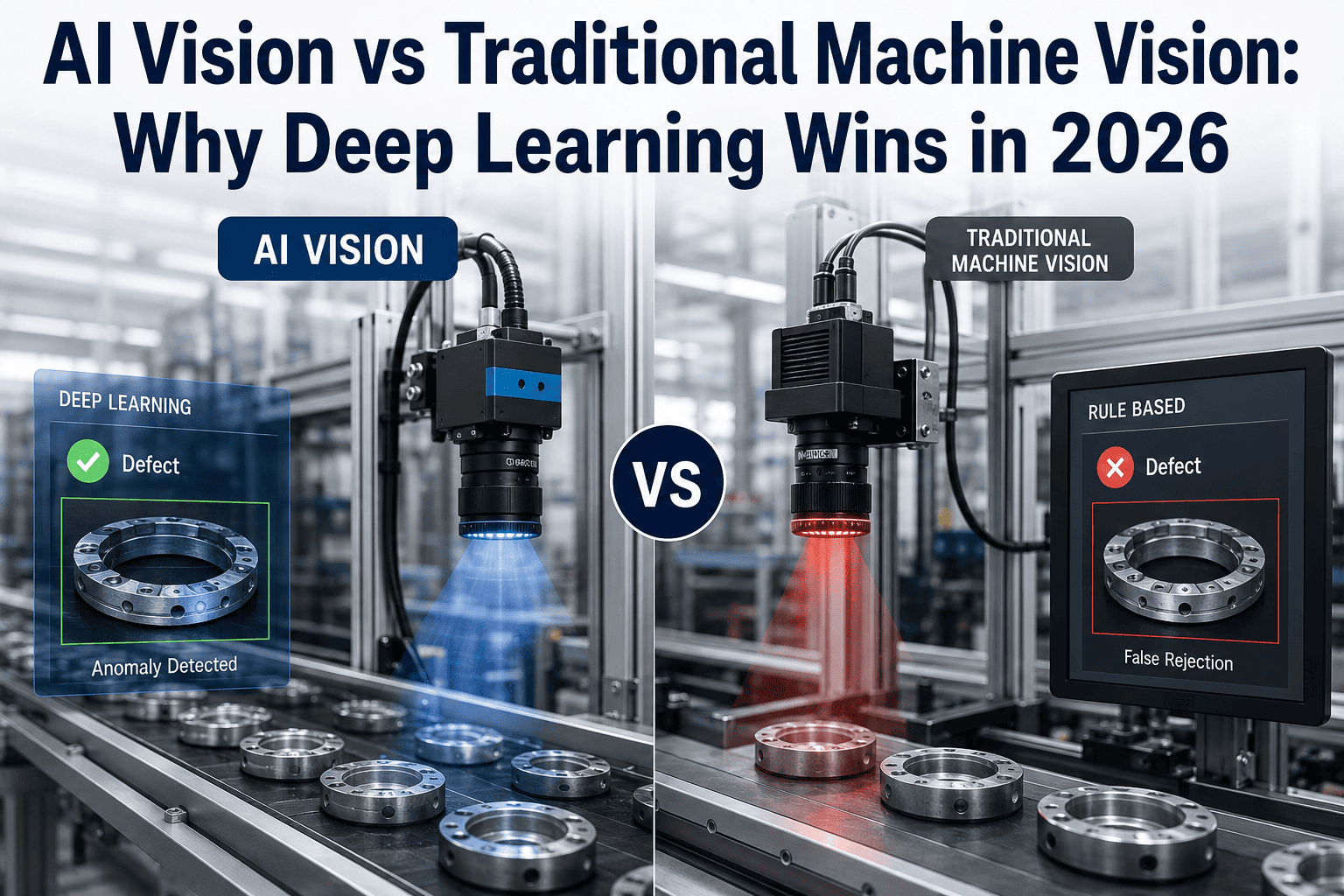
Understanding the capability gap between traditional machine vision classification and deep learning approaches is essential for quality organizations evaluating their inspection technology roadmap. The comparison below highlights the key differences that determine inspection accuracy, deployment speed, and long-term maintainability.
| Capability | Traditional Machine Vision | Deep Learning Classification (iFactory) | Impact |
|---|---|---|---|
| Feature extraction | Hand-engineered by domain experts — edges, thresholds, filters | Learned automatically from pixel data by CNN or vision transformer | Eliminates feature engineering bottleneck |
| Classification accuracy | 85–92% for well-defined, stable defects | 95–99% across diverse defect types and product variation | Fewer escapes, less manual re-inspection |
| New defect category addition | Requires algorithm redesign and parameter tuning | Add labeled examples to training set, retrain model | Hours vs. weeks for new defect types |
| Severity grading | Binary pass-fail only — no within-defect severity | Multi-class severity classification per defect type | Automated disposition without secondary inspection |
| Model training time | N/A — rule-based, no training required | Under one hour for most production defect taxonomies | Deploy same day data is collected |
| Deployment latency | Typically requires cloud or high-performance GPU inference | Edge-native inference on existing camera hardware | Sub-10ms latency at line speed |
Why Deep Learning Classification Transforms Quality Operations
Automated Defect Taxonomy and Severity Grading
Classify defects by type and severity in a single inference pass. Multi-output classification models assign both defect category and severity level simultaneously, enabling automated disposition decisions — pass, rework, or reject — without secondary inspection or manual grading by quality technicians.
Under-One-Hour Model Training
Train classification models on your defect data in under 60 minutes using transfer learning from pre-trained backbone networks. This dramatically reduces data requirements and training time compared to training from scratch, making deep learning classification accessible to facilities without dedicated data science teams.
Continuous Model Improvement Pipeline
Production data with technician-verified classifications is fed back into the training pipeline, progressively improving model accuracy and expanding the defect taxonomy over time. The system flags low-confidence predictions for human review, and those verified labels become training data for the next model iteration — no manual data curation required.
Root Cause Analysis and Process Control Integration
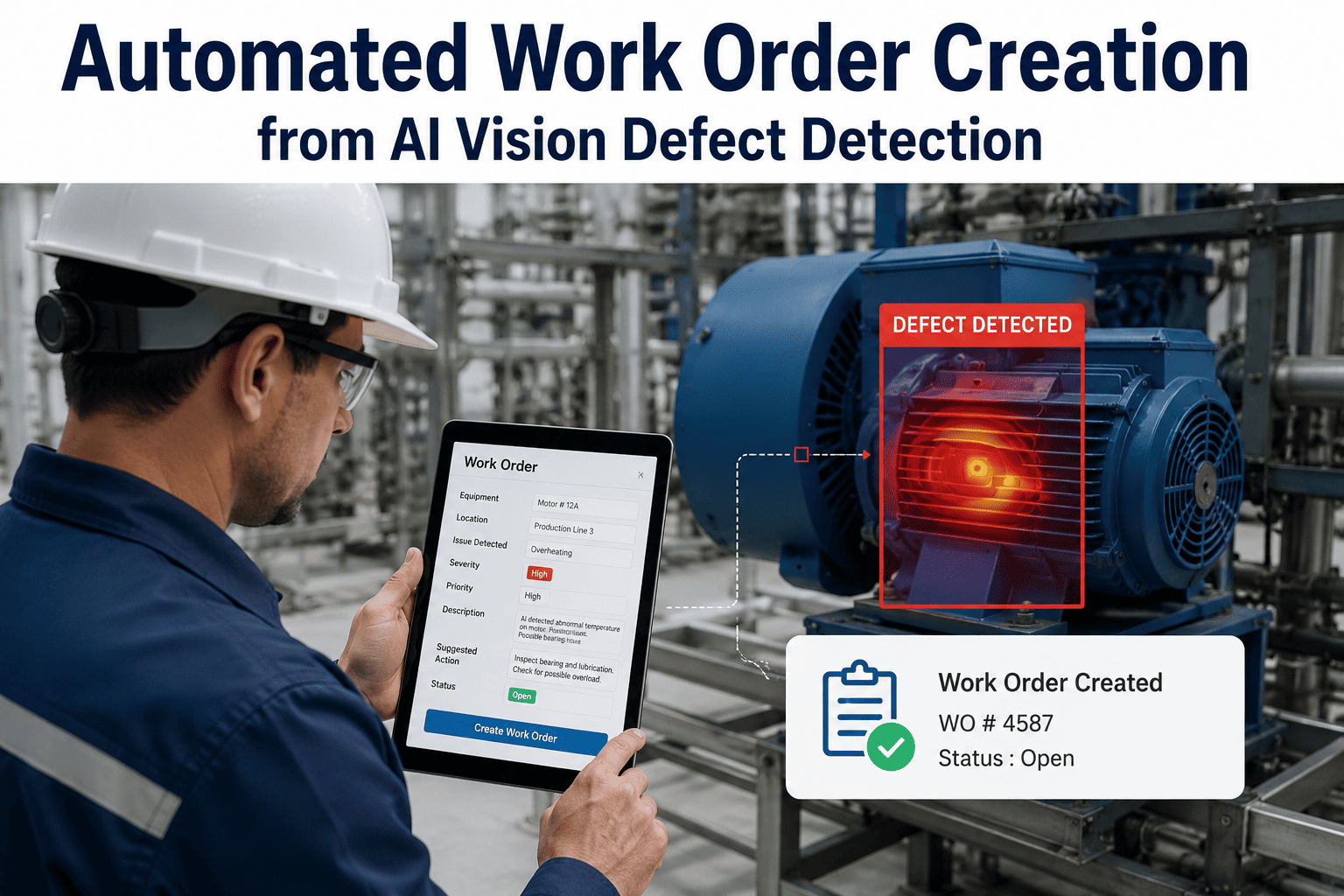
Classification results are timestamped and linked to asset ID, production batch, and camera view in the CMMS layer. Trend analytics identify recurring defect types, severity distributions, and correlation with production parameters — enabling data-driven root cause analysis and automated process control adjustments that reduce defect rates at the source.
Frequently Asked Questions
Deep learning classification models deployed on iFactory's platform can handle 10 to 50 distinct defect categories per model, with multi-output architectures that classify both defect type and severity simultaneously. For facilities with larger defect taxonomies, hierarchical classification approaches can be deployed — where broad defect families are classified first, followed by fine-grained sub-type classification in a second stage, scaling to hundreds of distinct categories without sacrificing inference speed.
iFactory's transfer learning approach requires 50 to 200 labeled images per defect category to achieve production-ready classification accuracy, depending on defect visual distinctiveness and production variation. This is dramatically lower than the thousands of images required when training from scratch. The platform also supports semi-supervised and active learning workflows that minimize labeling effort by prioritizing the most informative unlabeled images for human review.
Yes — iFactory's classification models support multi-output architectures that classify defect type and severity in a single inference pass. For example, a scratch on a painted surface is classified as scratch-minor, scratch-major, or scratch-critical based on learned visual characteristics such as depth, length, location, and proximity to functional features. This severity classification enables automated disposition decisions without requiring a secondary manual inspection step.
Yes — all classification inference runs on edge hardware colocated with existing camera infrastructure, supporting GigE Vision and USB3 Vision camera interfaces. Inference latency is consistently under 10 milliseconds per image, enabling real-time classification at line speeds exceeding 600 parts per minute. Edge deployment ensures that classification decisions are made locally with no cloud dependency, meeting the data security and reliability requirements of production environments.
When a new defect type is identified in production — either discovered through manual inspection or flagged as a low-confidence prediction by the classification model — the platform captures the image evidence and supports rapid model retraining. New labeled examples are added to the training set, transfer learning retraining completes in under an hour, and the updated model is deployed to edge inference nodes without interrupting production. The continuous learning pipeline ensures the classification model evolves with your production environment without requiring data science intervention. Quality teams implementing this capability can Book a Demo for a guided walkthrough of the model retraining workflow.