Industrial infrastructure — bridges, pressure vessels, pipelines, concrete structures, and welded assemblies — degrades over time through cyclic loading, thermal stress, corrosion, and environmental exposure. Cracks and structural defects that start at microscopic scale can propagate into catastrophic failures if undetected. Traditional visual inspection relies on manual walk-downs with flashlights and magnifying glasses, a process that is slow, subjective, and limited to surface-visible flaws. AI vision crack and structural defect detection changes this paradigm entirely. By deploying deep learning models on edge cameras positioned at critical inspection points, manufacturers and infrastructure operators can detect cracks, spalling, delamination, and surface fatigue down to 50 microns — in real time, on the production line or in the field. The result is a shift from periodic manual inspection to continuous automated monitoring, with defect data flowing directly into maintenance workflows for prioritised, data-driven repair decisions.
Deploy AI Vision for Crack and Structural Defect Detection on Your Production Line
iFactory's deep learning edge AI cameras detect cracks, spalling, and structural defects down to 50 micron resolution — delivering real-time classification data that integrates with your CMMS for prioritised repair workflows and predictive maintenance scheduling.
Why AI Vision for Crack and Structural Defect Detection Matters
Manual inspectors can typically detect cracks wider than 100–200 microns under ideal lighting conditions. Micro-cracks, fatigue fractures in early stages, and subsurface spalling are routinely missed until they propagate to visible size. Detection accuracy depends heavily on inspector experience, fatigue, and lighting conditions at the time of inspection.
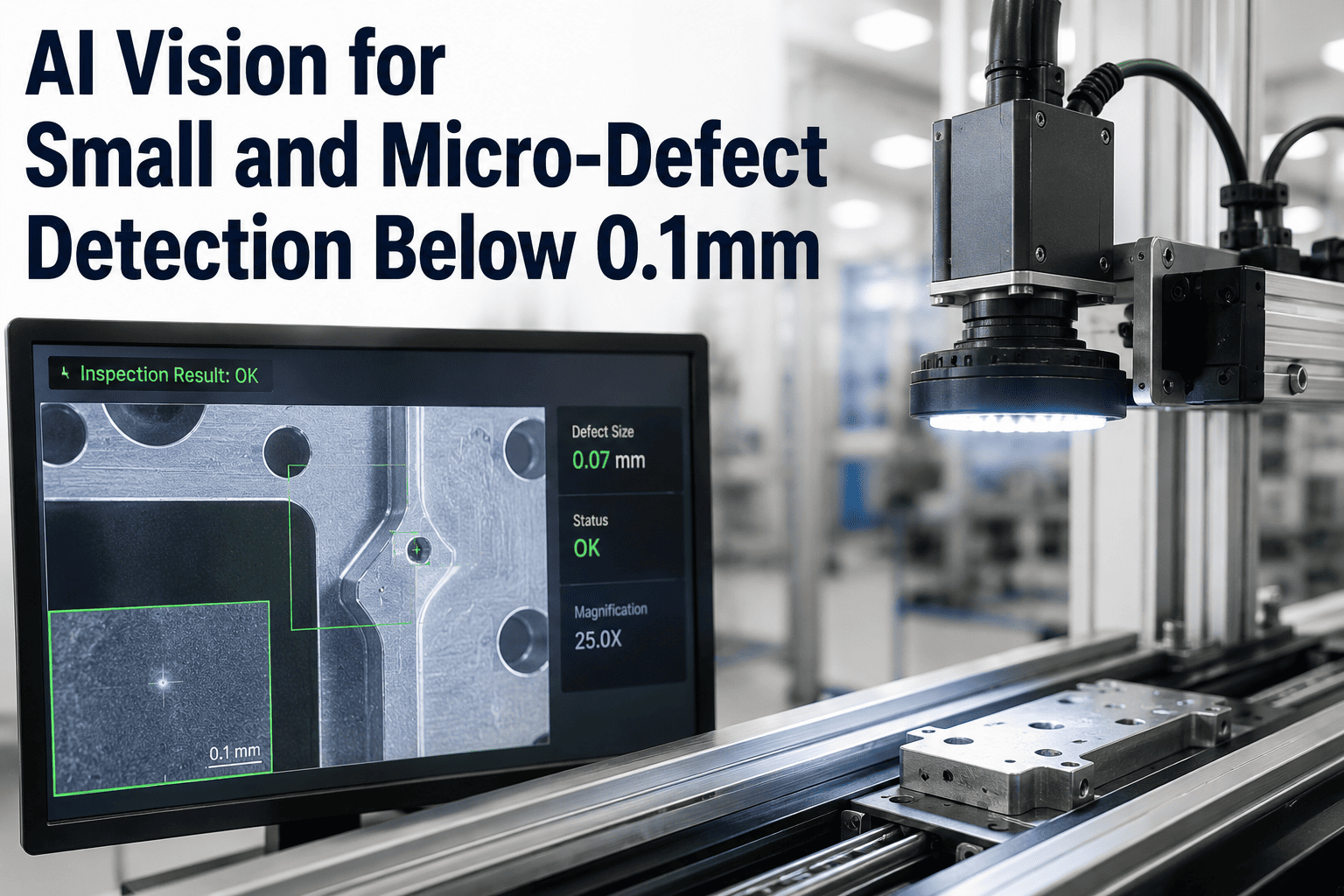
iFactory's edge AI cameras apply production-trained deep learning models that detect cracks, spalling, and structural defects at resolutions down to 50 microns. The system identifies sub-millimetre fatigue cracks on welds, hairline fractures on concrete surfaces, and early-stage spalling on vessel linings that manual inspection would miss until the next scheduled outage.
Manual inspections follow fixed schedules — weekly walk-downs, monthly structural surveys, annual shutdown inspections. Between scheduled inspections, cracks can initiate and grow undetected. Defects that appear hours after an inspection may go unnoticed for days or weeks, increasing the risk of unplanned failure and secondary damage.
AI vision cameras run 24/7, inspecting every cycle or at configurable intervals. The system detects defects as they appear — whether on a production line weld station, a pressure vessel surface, or a concrete support column. Real-time alerts enable maintenance teams to intervene at the earliest possible moment, preventing crack propagation and reducing downtime costs.
Manual inspection findings are recorded on paper checklists or basic spreadsheets. Defect location, size, and progression are described in subjective terms — "small crack," "moderate spalling" — making trend analysis and quantitative comparison across inspection cycles difficult. Historical data is rarely structured enough to feed predictive maintenance models.
iFactory's AI vision system outputs structured classification data — defect type, severity score, pixel-level location, timestamp, and captured image — that integrates directly with your CMMS platform. This machine-readable data enables trend analysis, defect growth rate calculation, and predictive model training. Maintenance teams prioritise repairs based on quantitative severity rather than subjective assessment.
Ready to move from periodic manual crack inspections to continuous AI-powered structural defect monitoring? Book a Demo to see how iFactory's edge AI vision cameras detect cracks and structural defects down to 50 microns with real-time CMMS integration for prioritised repair workflows.
Key Applications of AI Vision for Crack and Structural Defect Detection
Weld Crack Detection
Fatigue & Surface CracksWelded joints are among the most fatigue-prone locations in any structure or production line. Cyclic loading, thermal expansion mismatch, and residual stress from the welding process create conditions for crack initiation at microscopic scale. iFactory's AI vision cameras inspect weld surfaces at line speed, detecting longitudinal and transverse fatigue cracks, crater cracks, and toe cracks down to 50 micron width. Each detection is classified by crack type and severity, timestamped, and logged with an image capture for audit trail and trend analysis. The system flags critical cracks immediately for maintenance intervention while logging sub-critical cracks for growth monitoring over successive inspection cycles.
Concrete Crack & Spalling Detection
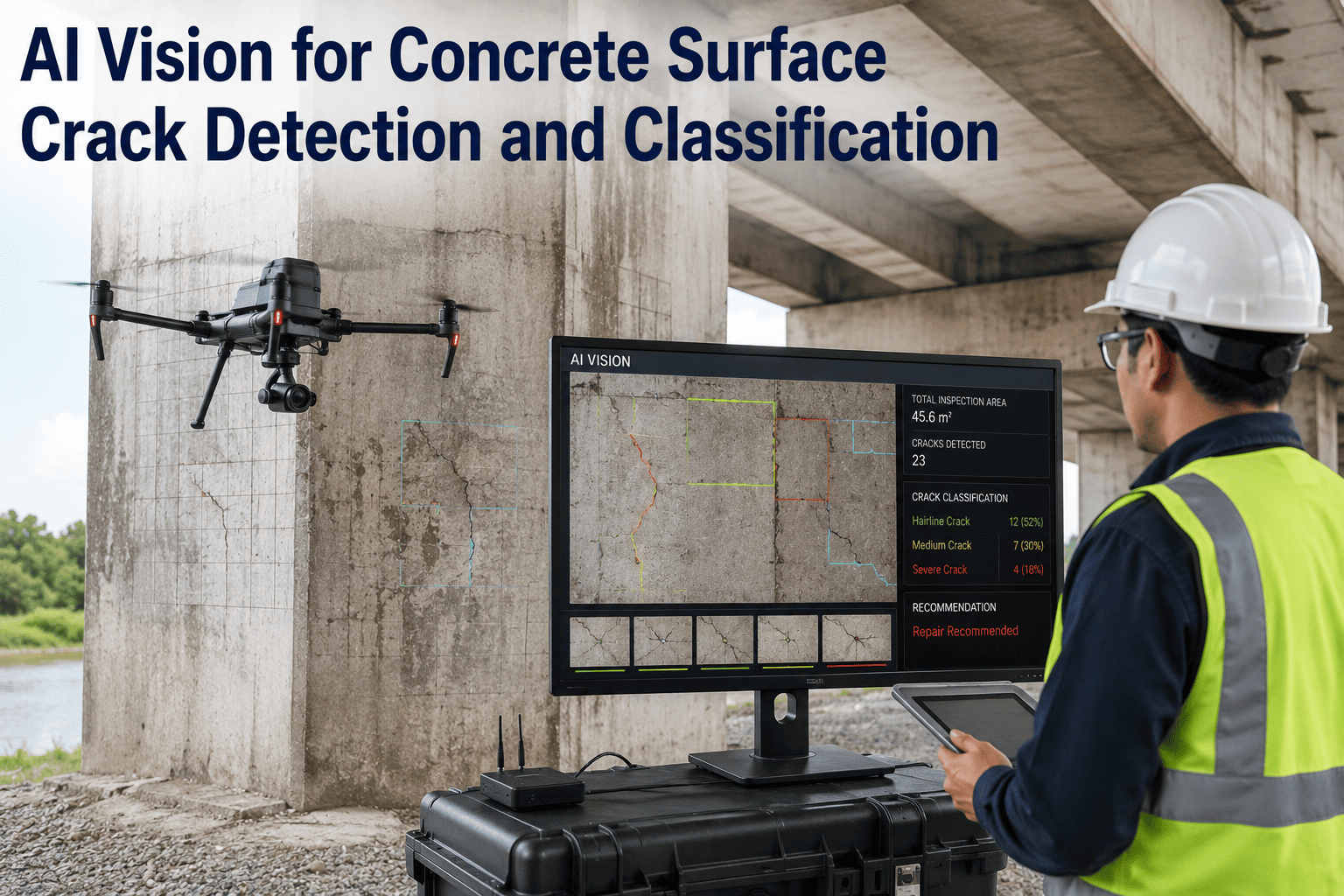
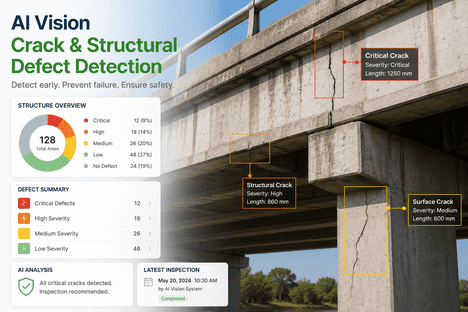
Infrastructure IntegrityConcrete structures in industrial environments — foundations, supports, floors, and containment walls — develop cracking from shrinkage, settlement, overloading, and chemical attack. Spalling exposes reinforcement steel to corrosion, accelerating structural degradation. Manual concrete inspection is time-intensive and inconsistent. iFactory's AI vision system mounted on fixed infrastructure or mobile platforms inspects concrete surfaces systematically, classifying crack patterns (hairline, map cracking, longitudinal), measuring crack width and length, and detecting spalled areas with pixel-level boundary mapping. Defect data feeds directly into risk-based inspection schedules and repair priority matrices.
Pressure Vessel & Pipe Surface Inspection
Critical Asset MonitoringPressure vessels, storage tanks, and process piping operate under constant stress from internal pressure, thermal cycling, and corrosive media. Surface cracks, hydrogen-induced cracking, and stress corrosion cracking can develop between scheduled non-destructive testing intervals. iFactory's edge AI cameras provide continuous surface monitoring of vessel walls and pipe runs, detecting surface-breaking defects and coating failures that precede structural degradation. The system integrates detection data with asset registers in your CMMS, enabling maintenance teams to correlate crack occurrence with operating conditions and adjust inspection intervals based on actual defect progression rates rather than calendar-based schedules.
Fatigue Crack Monitoring on Dynamic Structures
Moving Equipment IntegrityCranes, hoists, conveyor systems, robotic arms, and other dynamic industrial equipment experience cyclic loading that drives fatigue crack growth at joints, attachment points, and geometric stress concentrations. Traditional fatigue monitoring relies on scheduled non-destructive testing that may miss cracks that initiate and grow between inspections. iFactory's AI vision cameras positioned at critical fatigue locations on dynamic equipment capture images synchronised with the equipment cycle, applying deep learning models trained on fatigue crack morphologies. The system tracks crack length progression across cycles, calculates growth rates, and generates predictive alerts when cracks approach critical length thresholds defined by fracture mechanics analysis.
See how iFactory's AI vision crack detection applies to your specific structural defect challenges. Book a Demo to discuss a pilot deployment on your weld lines, concrete structures, or pressure vessel surfaces with real-time defect classification and CMMS integration.
Real-World Impact: AI Vision Crack Detection Results
Start Your AI Vision Crack Detection Pilot Today
Deploy iFactory's edge AI cameras on your most critical weld lines, concrete structures, or pressure vessel surfaces. Within weeks, your maintenance team will receive structured defect data — crack type, severity, location, and growth trend — integrated directly into your CMMS for prioritised, data-driven repair scheduling.
How iFactory AI Vision Detects Cracks and Structural Defects
Edge Camera Deployment at Critical Inspection Points
iFactory's compact edge AI cameras mount directly at weld stations, conveyor lines, structural supports, vessel surfaces, and other critical inspection locations. Each camera runs a production-trained deep learning model locally on the edge processor, performing inference at line speed without cloud dependency. Cameras capture high-resolution images synchronised with production cycles or at configurable intervals for continuous structural monitoring.
Deep Learning Classification of Defect Type and Severity
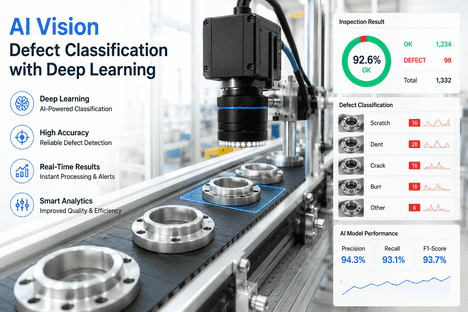
The onboard AI model classifies each detected defect by type — fatigue crack, weld crack, hairline concrete crack, spalling, delamination, coating failure — and assigns a severity score based on crack dimensions, morphology, and location context. Models are trained on thousands of labelled defect images from industrial environments and can be fine-tuned on your specific asset types and surface conditions through iFactory's model customization pipeline.
Structured Data Output with Full Audit Trail
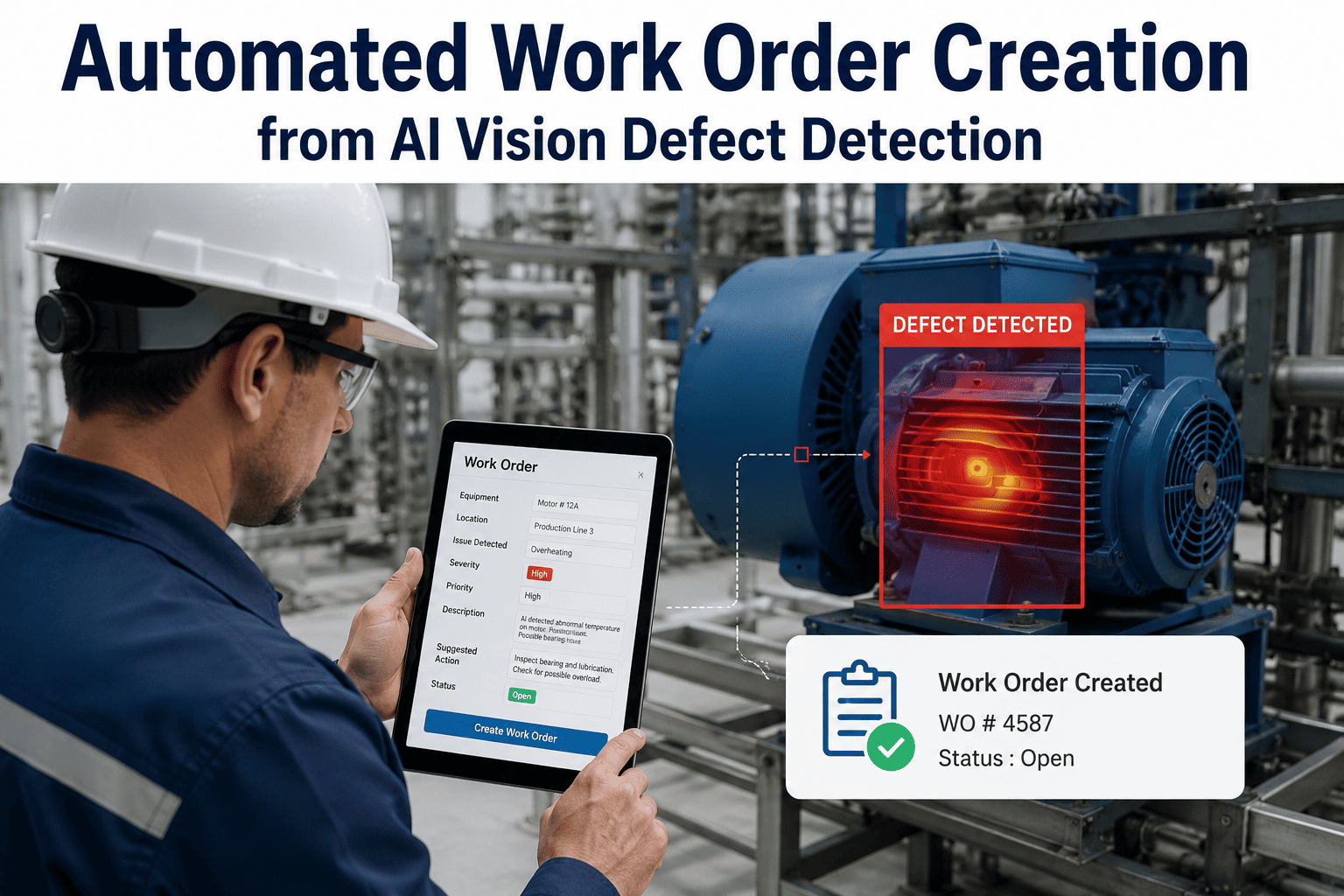
Each detection event generates structured data: defect classification, severity score, pixel-level boundary coordinates, crack width and length measurements, captured image, and timestamp. This machine-readable output is formatted for direct integration with your CMMS platform, enabling automated work order creation, defect history tracking, and trend analysis across inspection cycles and asset populations.
Predictive Alerting and Repair Prioritisation
iFactory's platform aggregates defect data across cameras and inspection points, calculating crack growth rates, defect density trends, and criticality scores based on severity and asset criticality. Maintenance teams receive ranked repair recommendations with supporting defect images and progression data. The system alerts on defects approaching critical thresholds, enabling intervention before propagation leads to unplanned downtime or structural failure.
Frequently Asked Questions
Deploy AI Vision Crack Detection on Your Critical Assets
iFactory's deep learning edge AI cameras give your maintenance team the ability to detect cracks, spalling, and structural defects down to 50 microns — continuously, in real time, with structured data flowing directly into your CMMS for prioritised, data-driven repair decisions. Learn more about iFactory's AI vision camera technology and start building your continuous structural defect monitoring programme.