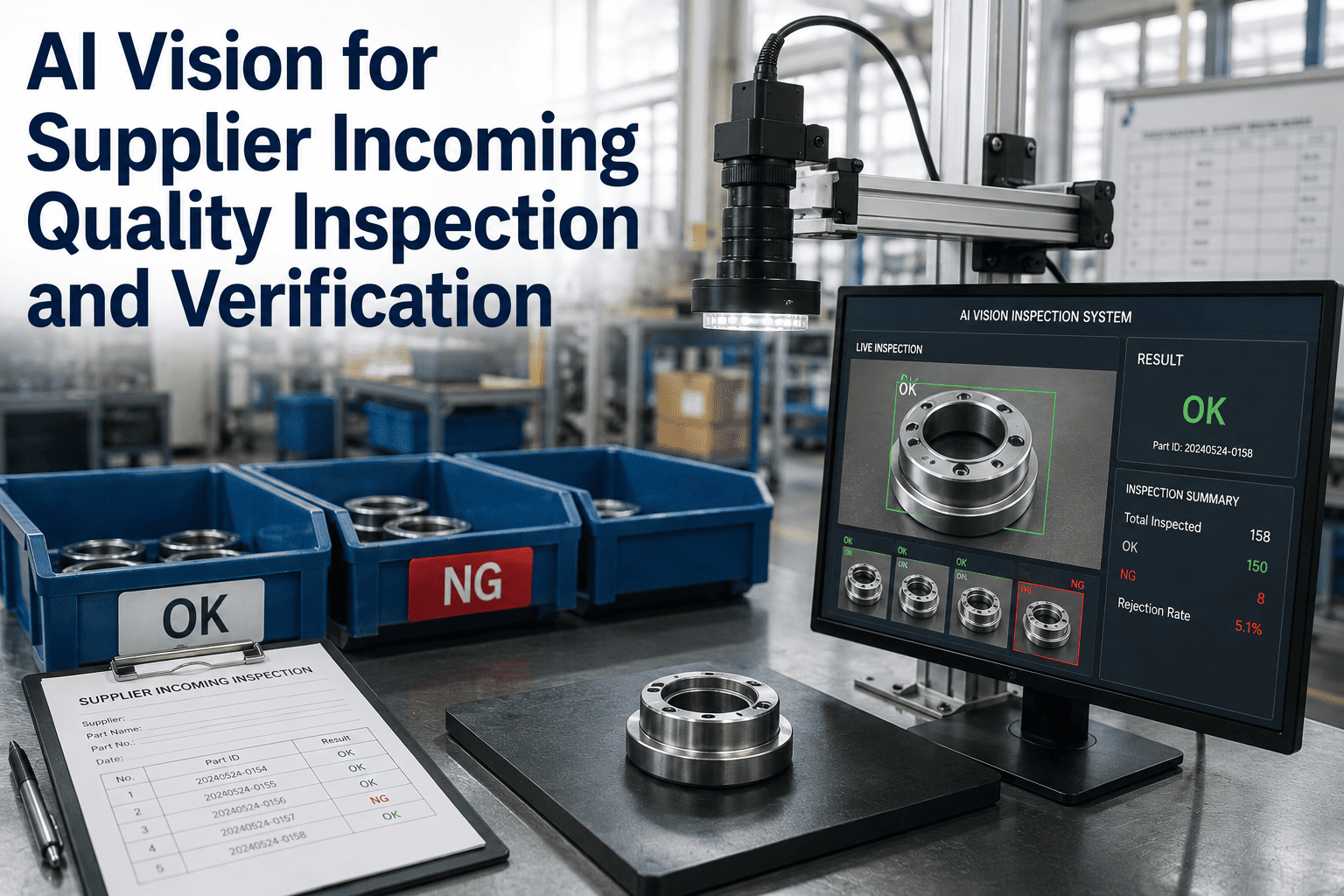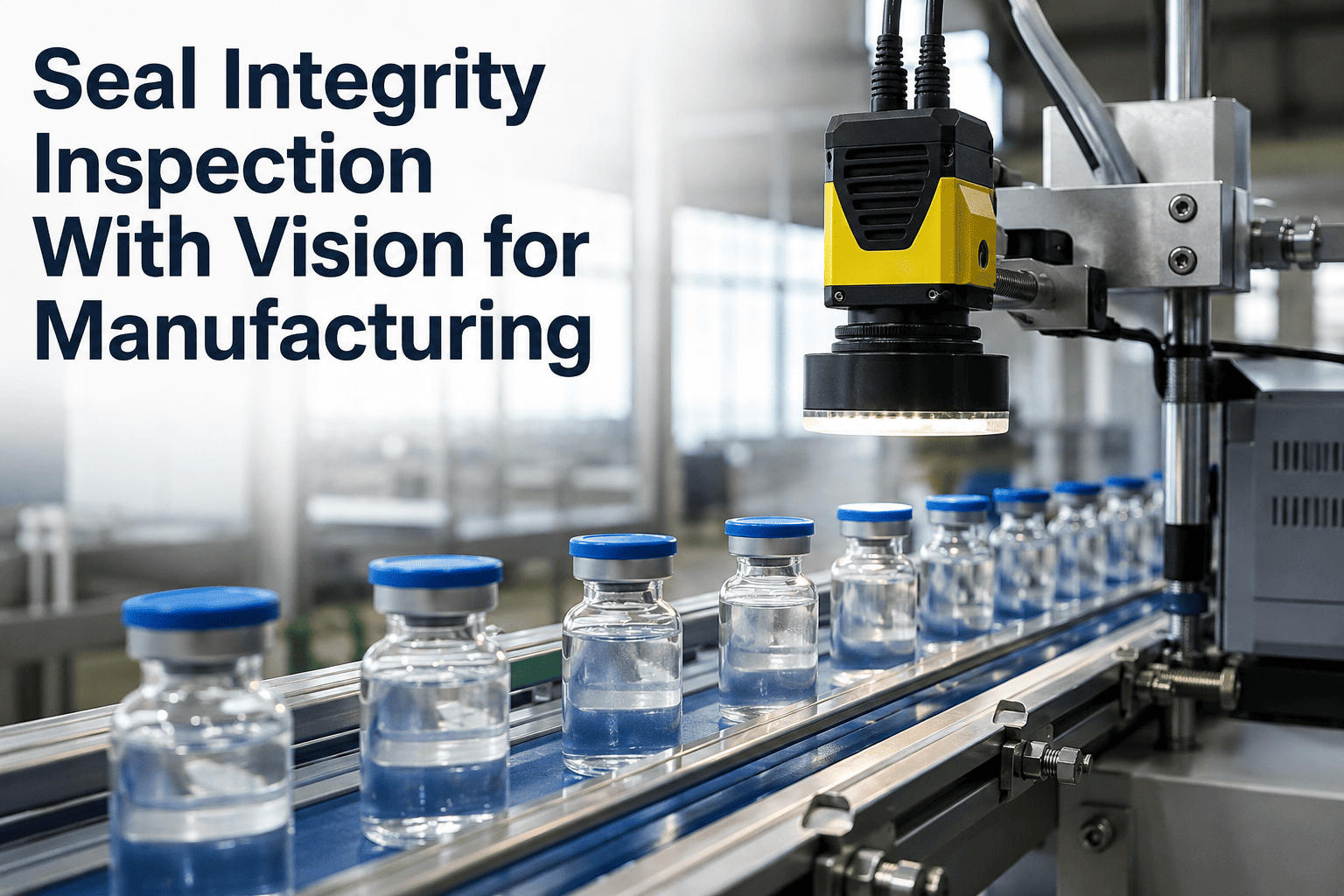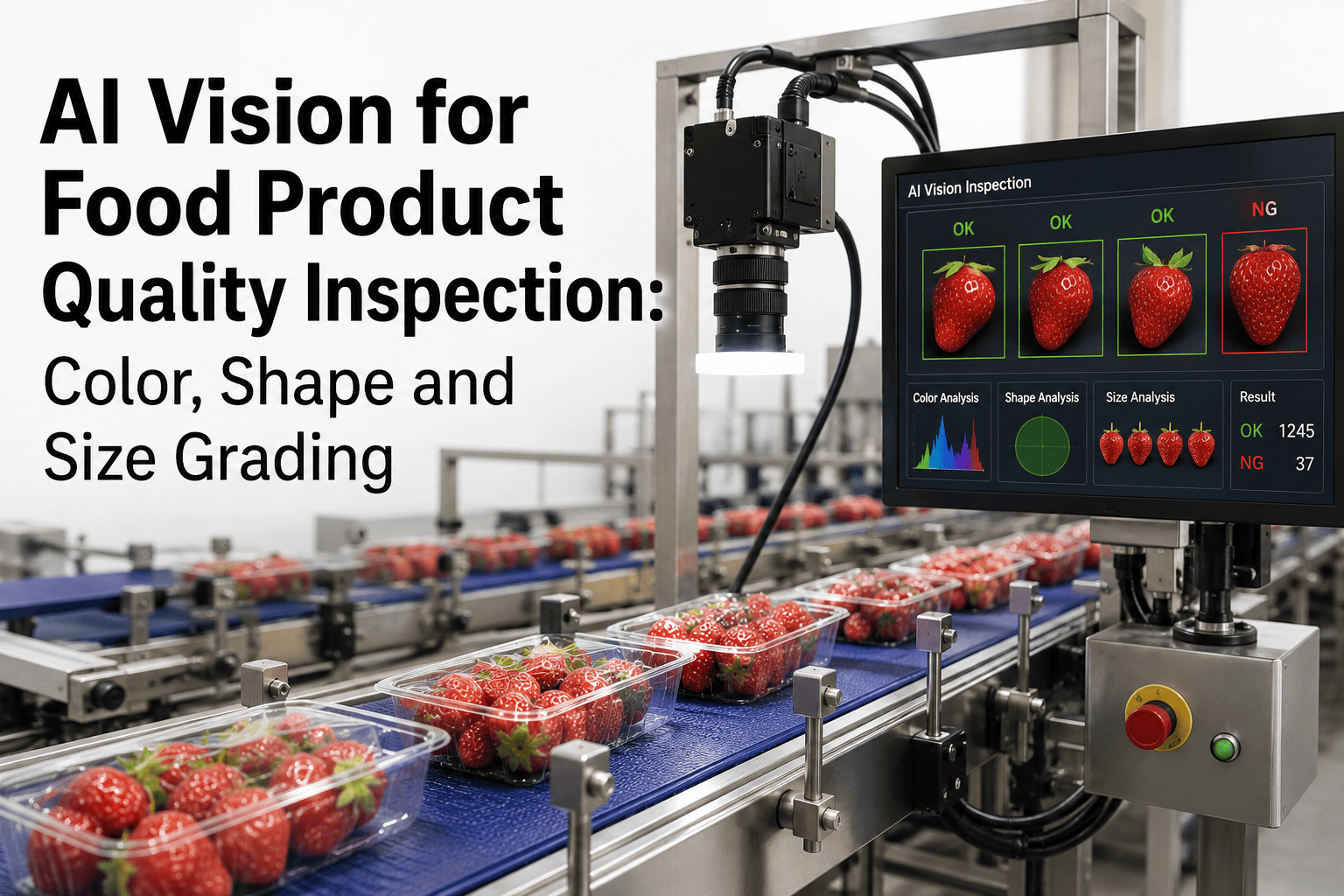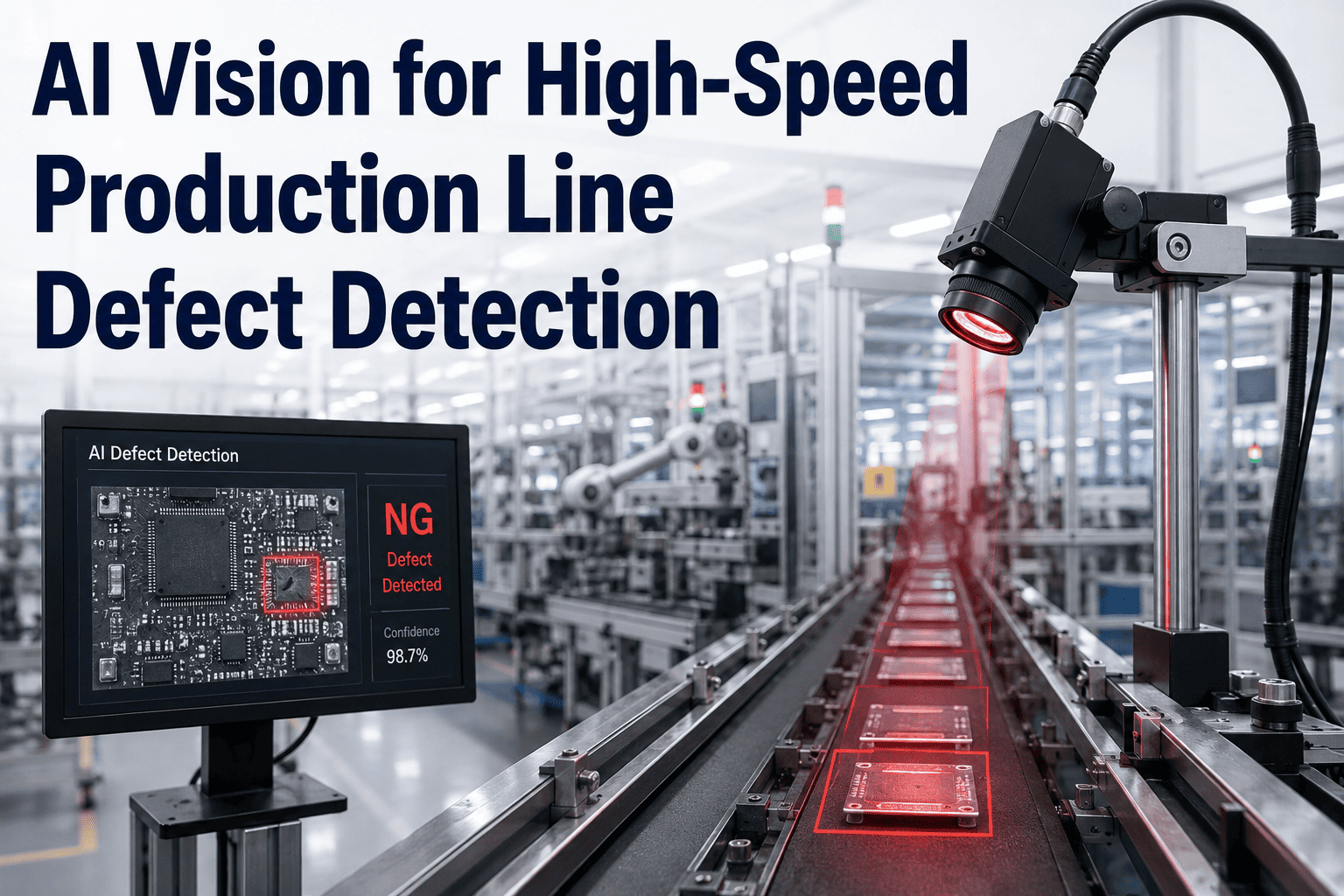
More than 60 percent of FMCG recalls trace back to packaging defects rather than core product quality failures — a missing date code, a misaligned label, a compromised seal, an under-filled bottle that a human inspector waved through on a line moving 600 units a minute. None of these defects are exotic or hard to define, which is exactly what makes them so costly to miss: they are simple, predictable failure modes that a fatigued inspector or a worn rule-based sensor lets through in enormous volume before anyone notices a pattern. AI vision inspection closes this gap by checking every single unit rather than a sample, at full line speed, with detection sensitivity that consistently exceeds what manual inspection has ever been able to sustain across a shift. This page covers exactly how AI vision inspection works across label, fill, and seal defects on an FMCG line, and how to see it running against your own packaging formats.
What a Human Inspector Catches vs. What AI Vision Catches
Manual inspection was never a bad idea — it was simply built for a line speed and defect volume that most FMCG plants left behind years ago. A trained inspector working under good lighting can still catch obvious label defects and gross fill errors reliably, and for decades that level of coverage was genuinely sufficient for the throughput most plants operated at. What breaks down is consistency at speed and sensitivity to the smaller deviations that add up to real cost across a production run: a label skewed by a fraction of a millimeter, a fill level a few millimeters under tolerance, a seal that looks intact but has a microscopic gap along one edge. None of these individual misses feels significant in the moment, which is exactly why they accumulate into a real problem — by the time enough of them add up to trigger a retailer complaint or a chargeback, the run that caused it has usually already shipped in full. AI vision inspection was built specifically to close that sensitivity gap without slowing the line down.
- Catches roughly 85% of obvious label defects under good conditions
- Misses fill-level variations under a few millimeters reliably
- Cannot verify seal integrity on 100% of units at line speed
- Accuracy degrades measurably as shift fatigue sets in
- Sampling-based checks leave gaps between inspected units
- Detects misaligned labels within fractions of a millimeter of tolerance
- Verifies fill level to within 1% of target on every unit
- Inspects 100% of seals for gaps, wrinkles, and incomplete fusion
- Maintains constant sensitivity regardless of shift length or speed
- Every single unit checked, no sampling gap between inspections
The Four Defect Classes That Drive Most FMCG Recalls
Packaging defects are not evenly distributed across every possible failure mode — a small number of recurring categories account for the overwhelming majority of retailer chargebacks, customer complaints, and recall events. Knowing where the risk actually concentrates is what lets a plant prioritize camera placement and inspection logic instead of trying to catch everything with equal weight from day one. Most facilities find that concentrating detection effort on these four categories first, before expanding to more specialized checks, delivers the fastest measurable reduction in escapes for the deployment effort involved.
Label Verification
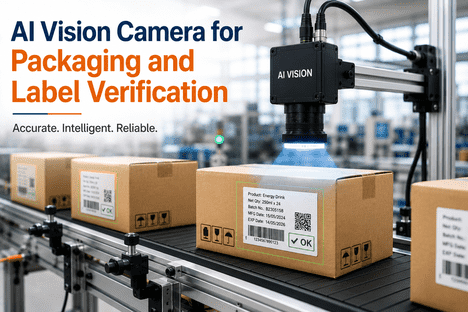
Position, skew angle, print clarity, barcode legibility, and date code accuracy are checked against a reference template on every pass — catching misregistration and print defects invisible at line speed.
Fill Level Accuracy
Contour and depth analysis confirms liquid, powder, or granule fill height falls within the approved tolerance band, catching under-fill and over-fill conditions a human eye cannot reliably judge at speed.
Seal Integrity
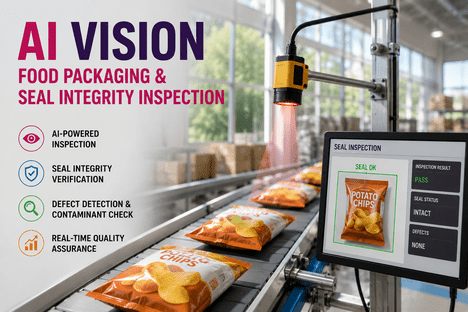
High-resolution imaging scans seal edges for gaps, wrinkles, incomplete heat fusion, and contamination on the seal surface — the leading cause of shelf-life complaints and retailer rejections.
Cap & Closure Defects
Cap placement, torque anomalies, tamper-evident band position, and induction seal presence are verified in the same pass, confirming closure integrity before a unit ever reaches distribution.
Inside the Inspection Cycle: Capture, Classification, and Reject
AI vision inspection on a packaging line is a continuous cycle running many times per second rather than a single checkpoint — every unit passes through the same sequence of steps, and the entire cycle from image capture to reject decision typically completes in milliseconds, fast enough to keep pace with lines running well over a thousand units per minute.
High-Speed Image Capture
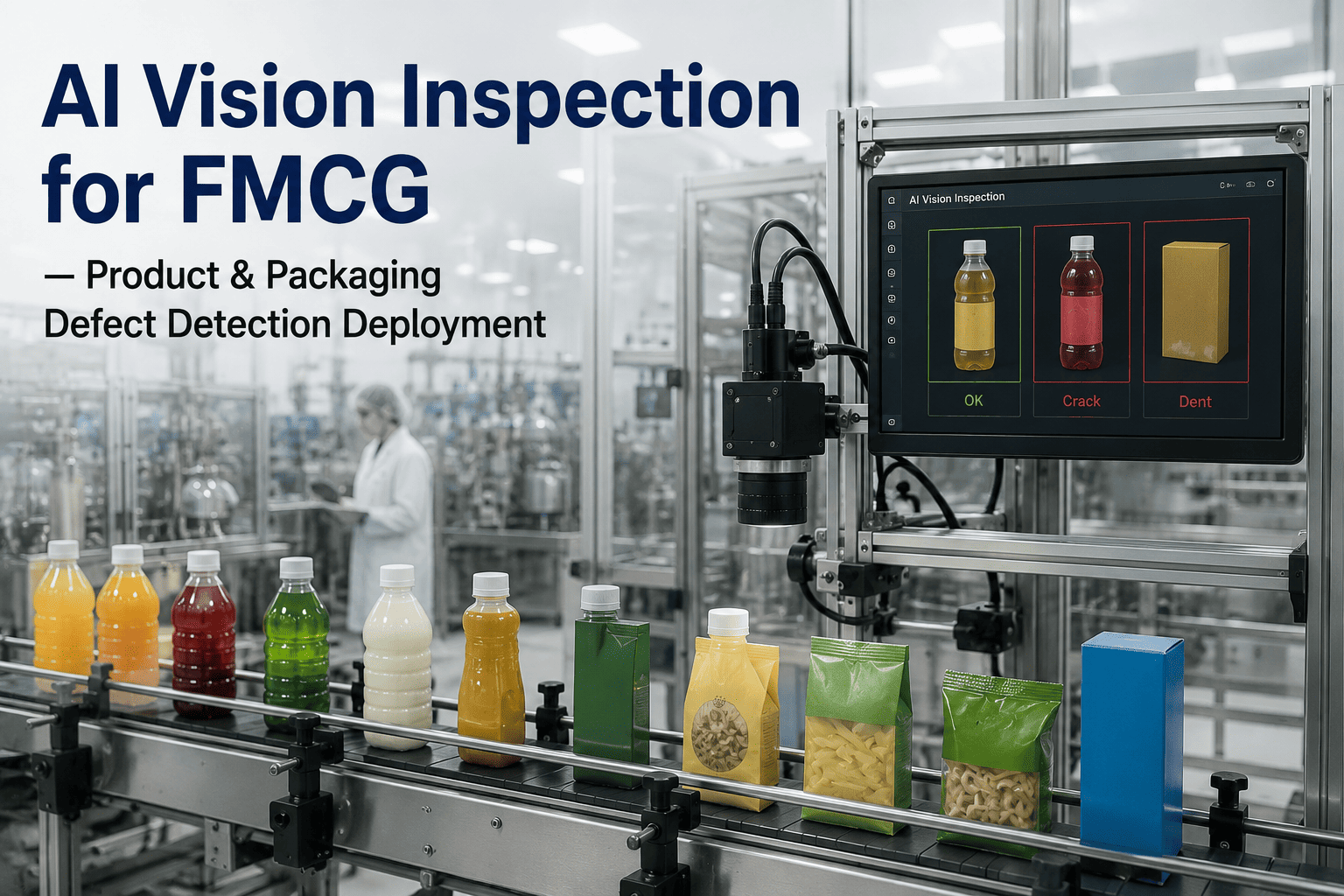
High-resolution cameras with specialized lighting capture thousands of images per second as each unit passes, covering label, seal, fill, and cap zones in a single pass.
Deep-Learning Classification
Models trained on millions of labeled defect examples classify each captured image against every defect category simultaneously, distinguishing acceptable variation from genuine rejects.
Automated Reject Signal
A pass or reject decision is sent to the downstream diverter within milliseconds, removing non-conforming units from the line without operator intervention.
Traceable Logging
Every inspection event, defect image, and classification code is logged automatically, building the traceability record retailers and auditors expect on demand.
Why Older Machine Vision Cameras Miss What AI Vision Catches
Many FMCG plants already run some form of automated inspection — photoelectric sensors, contrast-based cameras, or rule-based vision systems tuned to a fixed reference. These systems work reasonably well until something in the environment changes, and on a real production floor something is always changing: a new supplier lot with slightly different film optical properties, seasonal ink viscosity variation, a lighting shift from ambient conditions. Deep-learning AI vision is specifically built to handle that variability rather than breaking down every time a input parameter drifts from its original calibration point.
Handles Material Variation
Detects seal and label defects reliably even when packaging film color, texture, or optical properties shift between supplier lots — a common failure point for rule-based systems.
Fewer False Rejects
Reduces false-reject rates well below the 3 to 5 percent typical of legacy rule-based cameras, cutting unnecessary scrap and the operator override behavior it drives.
Continuous Model Improvement
Site-specific edge cases captured during live production are added to the training set over time, improving accuracy without requiring a large labeled image collection upfront.
No Upstream Equipment Changes
Integration uses standard PLC communication protocols and existing reject mechanisms, avoiding the need to replace fillers, sealers, or labeling equipment already on the line.
How iFactory Deploys AI Vision Inspection on Your Packaging Line
A turnkey deployment means your operations team is not left assembling cameras, lighting, and inference hardware on its own, or waiting months for a fully custom model before seeing any value. iFactory's approach starts with pre-trained models for standard defect categories and refines them against your specific products as the system runs in production, so the line sees benefit from day one rather than after a lengthy training phase.
Line Assessment & Camera Placement
Engineers assess your conveyor, filler, sealer, and labeling equipment to determine optimal camera and lighting placement for each defect category in scope.
Pre-Trained Model Deployment
Standard defect models for label, fill, seal, and cap inspection are deployed immediately, giving the line working detection coverage from the first day of production.
Live Calibration
Detection thresholds are refined against your specific packaging formats and supplier materials, reducing false rejects while maintaining full sensitivity on genuine defects.
Scale Across Additional Lines
Once validated on the first line, the same model architecture and integration pattern extends to additional packaging lines and product formats across the facility.
What This Looks Like in Practice
An FMCG manufacturer running high-speed beverage packaging lines had relied on end-of-line sampling checks supplemented by legacy photoelectric sensors, catching gross label and cap defects but missing the smaller fill-level deviations and seal wrinkles that drove a steady stream of retailer chargebacks. After deploying AI vision inspection across label, fill, and seal checkpoints, the facility moved from sample-based checking to full inline coverage on every unit, and the operations team reported the change converted directly into fewer defective units reaching distribution centers, a meaningful drop in scrap from earlier and more accurate defect detection, and a documented reduction in the manual end-of-line inspection headcount the facility had previously needed to maintain.
The facility's quality director noted that the most valuable part of the deployment was not any single dramatic catch, but the shift in how quality data was used across the plant. With every unit generating an inspection record rather than a sampled subset, trend analysis across shifts and supplier lots became possible for the first time — surfacing a recurring seal wrinkle pattern traced back to a specific film supplier lot months before it would have accumulated into a retailer complaint pattern large enough to investigate under the previous sampling-based process.
We used to find out about a packaging issue when a retailer sent back a pallet. Now the system flags the pattern in the data before it ever leaves our own line, and we can trace it straight back to the shift and the supplier lot.
Building the Record Retailers and Auditors Will Ask For
A vision system that catches defects but produces no usable record does not fully solve the problem FMCG quality teams actually face, because retailer audits and internal quality reviews increasingly expect a documented answer to how a batch was inspected, not just an assurance that it was. Every unit inspected by iFactory's platform generates an event record automatically, which means the traceability work that used to require manual log compilation before an audit is already built by the time anyone asks for it. Quality teams who have made this shift describe it less as an added feature and more as a change in what an audit day actually looks like — pulling a report rather than reconstructing one from partial records and institutional memory.
Per-Unit Inspection Records
Every inspected unit generates a timestamped record with classification result and defect image where relevant, replacing manual sampling logs with a complete dataset.
Batch & Shift Trend Analysis
Full-coverage inspection data enables trend analysis across shifts, lines, and supplier lots that a sampling-based process could never support with statistical confidence.
Retailer Audit Readiness
Inspection records are structured to answer common retailer compliance questions directly, cutting the manual preparation time quality teams spend before scheduled audits.
Root-Cause Support
When a defect pattern does emerge, the complete per-unit record makes it possible to trace the issue back to a specific shift, line, or supplier lot rather than guessing from a partial sample.
Frequently Asked Questions
See Your Own Packaging Formats Run Through the Model
iFactory deploys AI vision inspection built around your specific packaging line, product formats, and defect history — moving quality control from sampling to true 100% inline coverage, at full line speed, with the traceability record your next retailer audit will ask for.