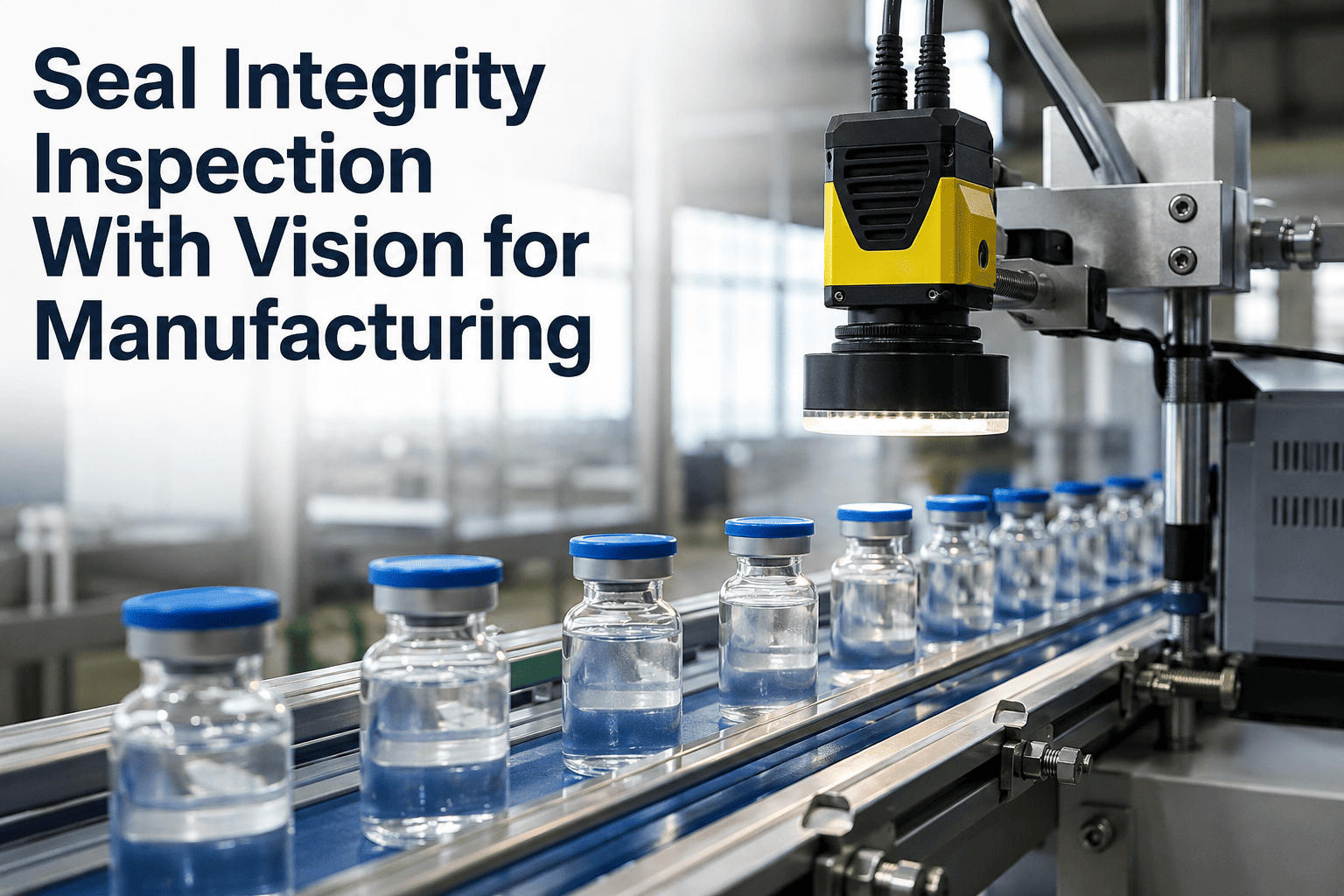
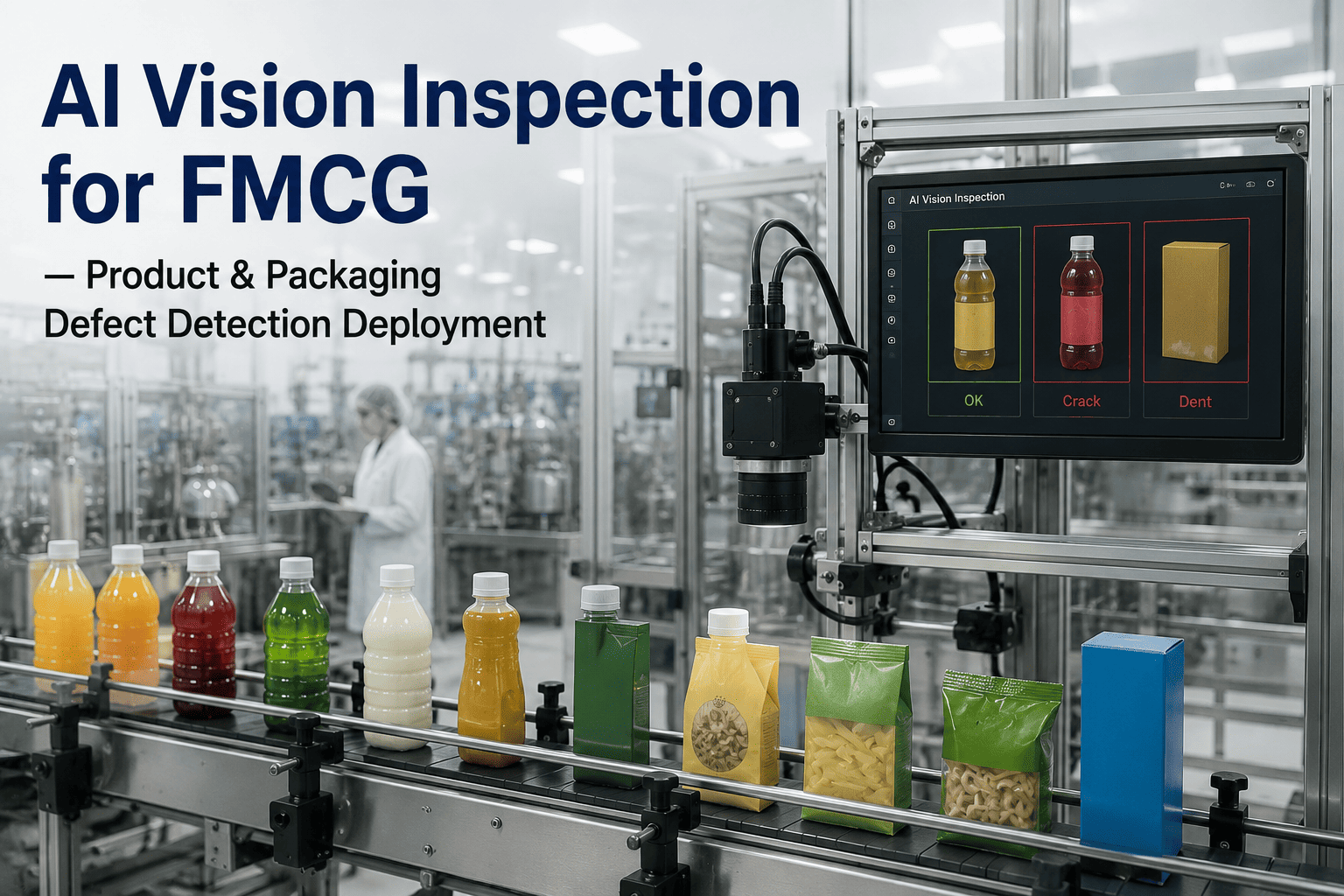
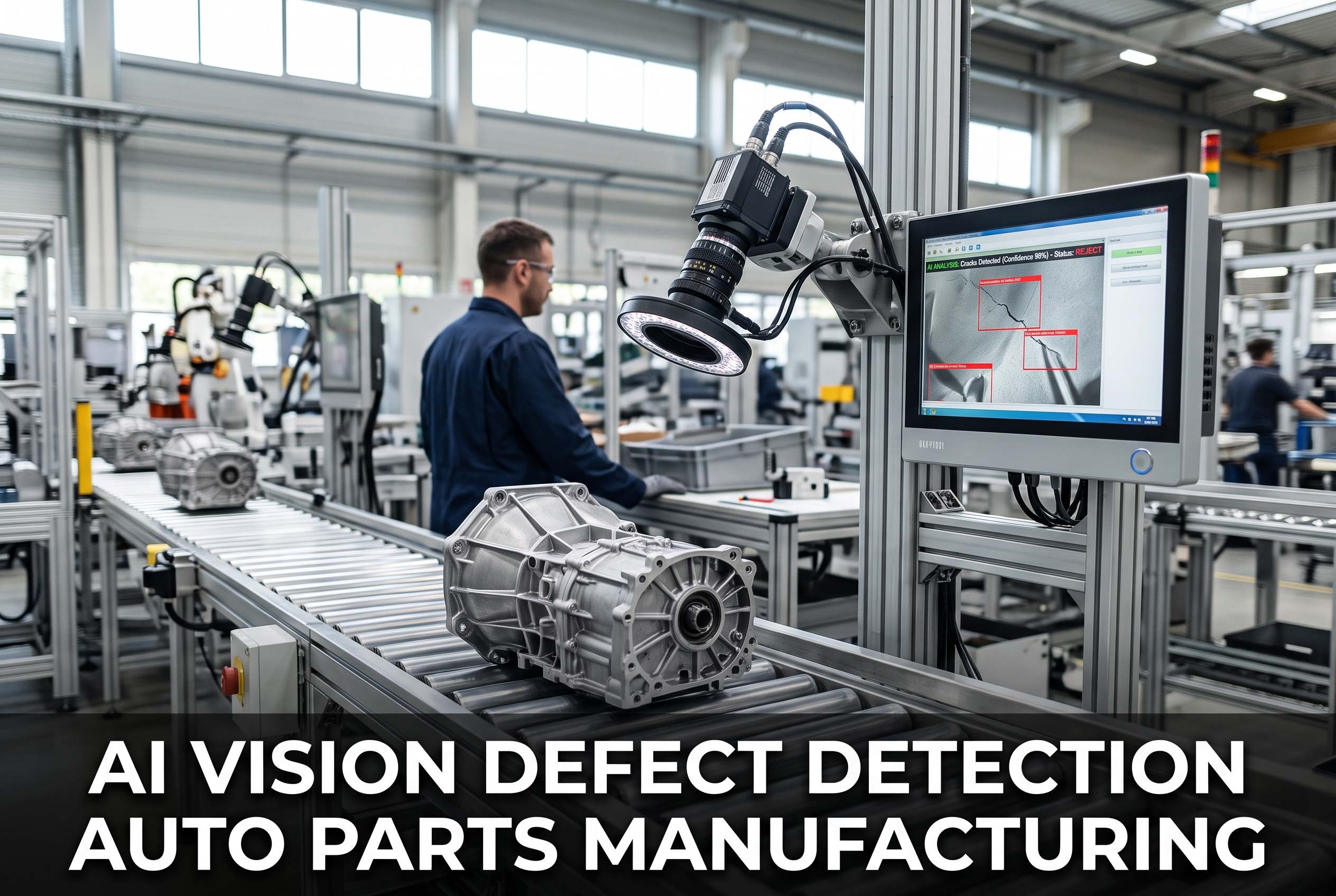
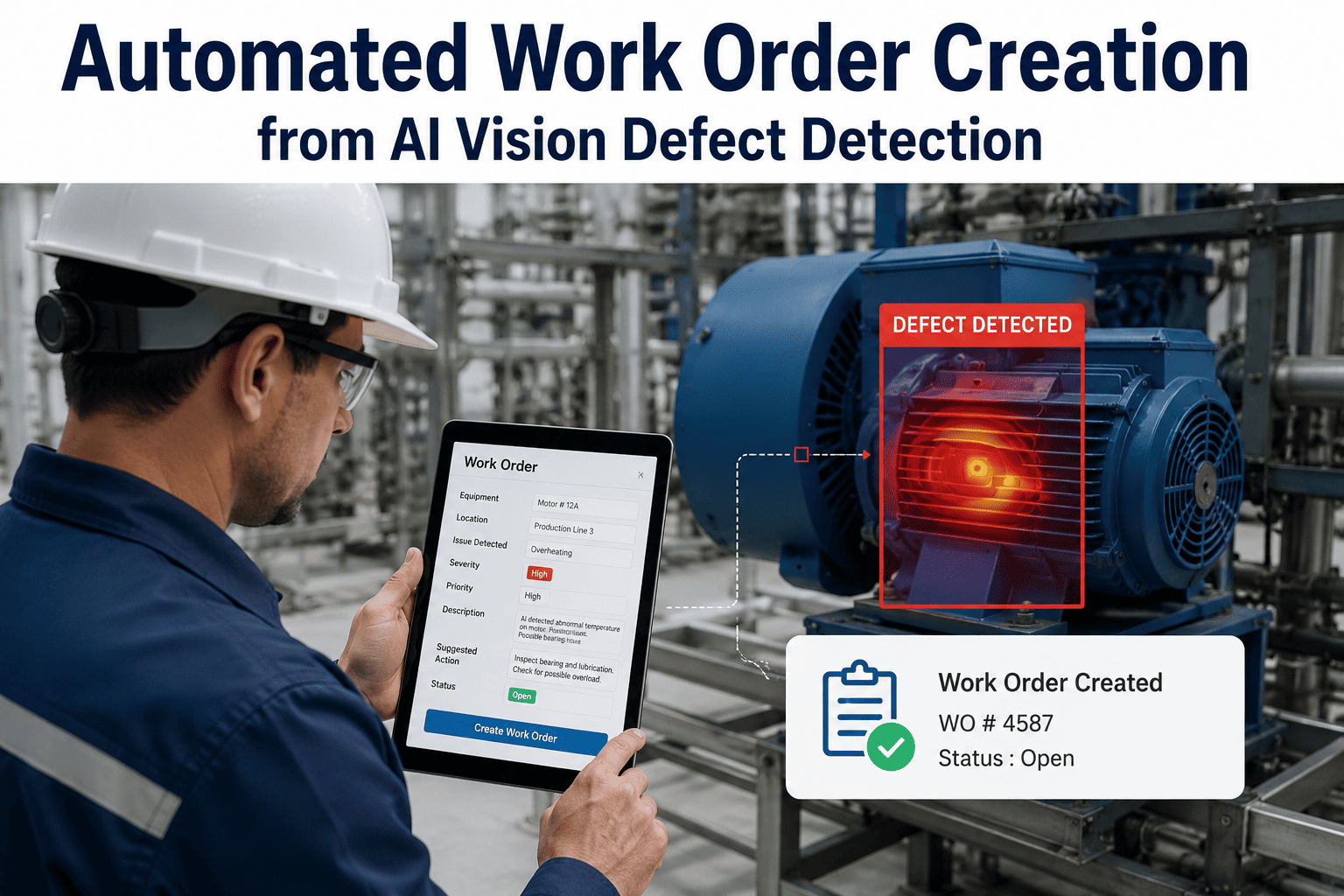
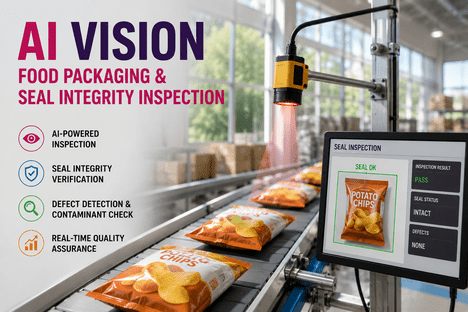
A compromised package seal is one of the most expensive defects in manufacturing precisely because it is one of the hardest to see. A channel leak, a trapped fiber, or a seal that formed a fraction of a millimeter too narrow rarely looks wrong to a person glancing at the package on a moving line, yet any one of them can let in oxygen, moisture, or bacteria long before the product ever reaches a customer. Seal integrity is also one of the leading sources of quality-related recalls and CAPA investigations across food, pharmaceutical, and medical device manufacturing, precisely because the failure is invisible until the product has already failed in someone's hands. iFactory brings AI vision inspection to the seal area itself, checking width, contamination, wrinkles, and channel leaks on every single package at full line speed, catching what a manual check would miss. You can book a demo to see your own seal defects flagged on live footage.
SEAL INTEGRITY · VISION INSPECTION · PACKAGE QUALITY
The Defect That Costs the Most Is the One Nobody Can See
A seal can look complete and still fail. iFactory's AI vision inspects the seal plane itself, backlit and top-down, at full line speed, catching contamination, channel leaks, and width defects before a single compromised package reaches a customer.
99.97%
Detection accuracy achievable with AI seal inspection
1 in 12,000
Typical miss rate after AI vision deployment
$10M+
Average direct cost of a single food recall event
80-600
Pouches per minute vision inspection must keep pace with
THE SIX DEFECTS THAT COMPROMISE A SEAL
What "Seal Failure" Actually Looks Like Under Inspection
Seal integrity is not a single pass-or-fail characteristic, it is a set of distinct failure modes, each with its own visual signature and its own consequence if it reaches a customer. Understanding the taxonomy is the first step to inspecting for it properly, since a system tuned to catch one defect type will not automatically catch the others. Packaging engineers who have characterized these failure modes across food, pharmaceutical, and medical device lines consistently find that the same six categories reappear regardless of material or package format, even though the specific tolerance for each varies enormously depending on what the seal is protecting.
Product-in-Seal Contamination
Fibers, grease, crumbs, or hair trapped in the seal plane create a microscopic channel that lets air and moisture pass long before the seal visibly fails.
Channel Leaks
A continuous, often microscopic gap through the width of the seal that allows gas exchange without any visible tear or opening.
Insufficient Seal Width
A seal that formed narrower than specification may hold initially but fails under the pressure and handling stress of shipping and shelf life.
Wrinkles & Folds
Material folded within the seal band creates an uneven bond, weakening seal strength at the exact point of the wrinkle.
Incomplete or Void Seals
A section of the seal that never fully bonded, often invisible from the outside but structurally the weakest point on the package.
Zipper & Closure Misalignment
On resealable pouches, a misaligned zipper track compromises the reclosure function even when the primary seal itself is intact.
WHY THE HUMAN EYE MISSES IT
The Seal Can Look Perfect and Still Be Compromised
Manual seal inspection depends on a person recognizing a defect that, in many cases, is not visible under normal lighting at normal viewing distance. A trapped fiber the width of a human hair, a channel leak measured in microns, or a seal that is two millimeters narrower than specification will not register to an inspector glancing at packages moving past on a line running hundreds of units per minute. This is why manual inspection and simple pass-fail sensors consistently under-detect seal defects, and why the packaging industry has moved toward specialized illumination and imaging techniques specifically built to reveal what the unaided eye cannot. The economics reinforce the point rather than argue against it: the specialized lighting and imaging hardware required to reveal these defects is a modest, one-time investment compared with the recurring cost of shipping product with a hidden seal failure, yet plants without dedicated seal inspection continue to rely on a human glance because that is what the line has always done.
Backlit Transmitted Light
Light passed through the seal from behind reveals contamination and channel gaps as dark or irregular patches invisible under standard front lighting.
Top-Down Seal Width Mapping
Precise measurement of seal band width and position across the full package perimeter, flagging any point that falls outside tolerance.
UV-Assisted Leak Detection
Ultraviolet illumination highlights micro-leaks and pinholes by making them fluoresce or contrast sharply against the surrounding seal material.
HOW AI VISION INSPECTS A SEAL
From Package to Pass/Reject in Five Steps
Inspecting a seal accurately at line speed requires more than pointing a camera at the package. It requires a defined imaging and analysis sequence built specifically around the seal geometry and the defect types that matter for the product being packaged.
1
Package Stabilization & Trigger
Flexible packages are stabilized or precisely triggered as they pass the camera station, since non-rigid materials move and flex differently than rigid containers.
2
Multi-Angle Image Capture
Backlit, top-down, and where needed UV illumination each capture a different view of the seal plane, since no single lighting angle reveals every defect type.
3
Seal Region Isolation
The model identifies the exact seal band across the full package perimeter, distinguishing it from print, texture, and material variation elsewhere on the pack.
4
Defect Classification
Each anomaly within the seal region is classified by type and severity, distinguishing a cosmetic wrinkle from a genuine width or contamination defect.
5
Reject & Traceability Logging
Failed packages are automatically diverted from the line, and every inspection result is logged with a timestamp and image for audit and trend review.
RULE-BASED VISION VS AI-BASED SEAL INSPECTION
Why Fixed Rules Struggle With Real Seal Variation
Seal appearance varies naturally with material, sealing temperature, humidity, and even the specific batch of packaging film in use, which means a rigid, rule-based vision system faces a persistent no-win choice: set the tolerance tight and reject good product on cosmetic variation, or set it loose and let genuine defects through. AI-based inspection, trained on the actual range of acceptable and defective seals, is built specifically to make this distinction the way an experienced quality inspector would. This is the same problem that has quietly frustrated packaging operations for years, where an operator or quality manager becomes the informal final arbiter of borderline seals precisely because a fixed threshold cannot tell the difference between a batch that sealed slightly differently for benign reasons and a batch that is genuinely defective.
| Capability |
Rule-Based Vision |
AI-Based Seal Inspection |
| Handling batch-to-batch seal variation |
Requires manual threshold retuning per batch |
Learns acceptable variation range automatically |
| Cosmetic vs functional defect distinction |
Cannot reliably distinguish, tends to over-reject |
Classifies severity and functional impact |
| Detecting subtle contamination |
Misses low-contrast or irregular contamination shapes |
Trained on diverse contamination patterns and sizes |
| New packaging format changeover |
Requires re-programming fixed thresholds |
Retrained on the new format's seal characteristics |
| False reject rate over time |
Tends to drift upward as material sources change |
Stays stable through periodic model refinement |
Stop Choosing Between Over-Rejecting and Missing Defects
iFactory can show how AI-based seal inspection performs against your current false-reject and miss rate using your own historical inspection data.
WHAT A MISSED SEAL DEFECT ACTUALLY COSTS
The Economics Behind Every Undetected Seal Failure
A seal defect that escapes inspection does not stay contained to a single unit. It travels through distribution, sits on a shelf, and surfaces as a customer complaint, a regulatory finding, or in the worst case a full product recall, at which point the cost is measured in orders of magnitude beyond what the inspection system would have cost to catch it at the source. The gap between when a defect enters production and when it is finally detected, sometimes called the defect-escape interval, is consistently the single most controllable variable in recall economics, and it is exactly the variable that continuous, 100 percent vision inspection at the seal station is designed to shrink to nearly zero.
$10M
Average direct cost of a single food recall, before litigation and lost contracts
3-5x
Total economic impact of a recall relative to direct recall cost alone
49%
Share of total recall cost attributable to business interruption alone
WHERE SEAL INTEGRITY MATTERS MOST
Industries Where a Compromised Seal Is Never a Minor Defect
Seal inspection requirements scale with what the seal is protecting. A cosmetic tube and a sterile medical device pouch both depend on seal integrity, but the consequence of failure, and therefore the inspection rigor required, differs enormously between them, which is why the right inspection specification always starts with what happens downstream if a specific seal defect is missed rather than a generic quality target applied uniformly across every product line.
Food & Beverage Packaging
Modified atmosphere packaging depends entirely on seal integrity to control oxygen exposure and extend shelf life.
Pharmaceutical Blister & Pouch
Moisture ingress through a compromised seal can degrade active ingredients before the expiration date is reached.
Sterile Medical Device Packaging
A microscopic channel leak in a Tyvek seal can compromise sterility without any visible sign on the package itself.
Cosmetics & Personal Care
Tube crimps and cap seals must prevent leakage during shipping and extended shelf storage under variable conditions.
Industrial & Automotive Sealant
Bead volume and coverage inspection on gasket and sealant applications where an incomplete bead leads to leaks in the field.
FMCG Flexible Pouch Packaging
High-speed pouch lines running hundreds of units per minute where manual inspection cannot keep pace with the throughput.
GETTING FROM PILOT TO PRODUCTION
How a Seal Inspection Deployment Actually Rolls Out
Seal inspection is deployed against a specific packaging format and defect library first, then expanded, because seal appearance and defect tolerance both vary meaningfully across product lines and package types.
PHASE 1
Defect Library & Requirements
Characterize the specific defect types, sizes, and tolerances that matter for the product and package format being inspected.
PHASE 2
Camera & Illumination Setup
Install and calibrate the backlit, top-down, and UV imaging stations required to reveal the identified defect types reliably.
PHASE 3
Validation & Live Deployment
Validate detection accuracy against the characterized defect library before the system takes over automated reject decisions at full line speed.
FREQUENTLY ASKED QUESTIONS
What Packaging and Quality Teams Ask Before Deploying
Can vision inspection actually detect a leak, or only visible seal defects?
Vision-based inspection excels at detecting the visual signatures that correlate strongly with leaks, including contamination trapped in the seal plane, insufficient seal width, and channel-shaped irregularities revealed under backlit or UV illumination, and modern systems achieve very high correlation between these visual indicators and actual leak presence. For applications requiring absolute leak confirmation, vision inspection is often paired with a pressure decay or tracer gas test on a sampling basis, with vision providing 100 percent coverage and the physical test providing periodic validation. This combined approach gives both full-line coverage and physical confirmation where it matters most. You can
book a demo to see how vision and physical leak testing work together on a comparable line.
How does the system handle flexible pouches that move and flex differently than rigid containers?
Flexible packaging requires either a stabilization mechanism that briefly flattens or holds the package steady at the imaging station, or a high-speed triggering system precise enough to capture a consistent image despite the package's natural movement, and the right approach depends on line speed and package material. Both methods are established and widely used in flexible packaging inspection, and the choice is typically made during the initial camera and illumination setup phase based on your specific package geometry and line speed. Our team can
assess your specific packaging format and recommend the appropriate stabilization approach.
How does the system tell the difference between a cosmetic wrinkle and a defect that actually compromises the seal?
This distinction is exactly where AI-based classification outperforms simple rule-based detection, because the model is trained on a characterized library of both acceptable cosmetic variation and genuine functional defects, learning the visual patterns that correlate with actual seal compromise versus those that are purely aesthetic. During the validation phase, this classification is checked against known good and known defective samples before the system is trusted to make automated reject decisions on live production. This is also why the initial defect library and requirements phase matters so much, since it defines exactly what counts as acceptable for your specific product. You can
book a demo to see the classification accuracy on sample seals from your own line.
What happens when we change packaging film suppliers or materials?
A change in packaging film can shift the baseline appearance of an acceptable seal, since different materials seal at slightly different temperatures and produce subtly different visual characteristics even when the seal itself is perfectly sound. AI-based systems handle this more gracefully than rule-based thresholds because the underlying model can be retrained or fine-tuned on a sample set from the new material rather than requiring a full manual re-threshold. Planning for a validation pass whenever a material change is introduced is good practice regardless of inspection method. Our support team can
walk through your specific material change process to minimize disruption during a supplier transition.
Is this inspection method acceptable for regulated industries like pharmaceutical or medical device packaging?
Vision-based seal inspection is widely used and accepted across regulated packaging environments, and systems are designed to produce the validated, audit-ready inspection records that regulatory frameworks require, including timestamped images, pass and fail determinations, and full traceability back to the specific production lot. Validation against a characterized defect library, with documented detection rates, is exactly the kind of evidence quality and regulatory teams need to support container closure integrity requirements. The specific validation protocol should be structured around your applicable regulatory framework from the outset. You can
book a demo to discuss validation documentation for your specific regulatory environment.
Catch the Seal Defect Before It Becomes a Recall
The seal that looks fine on the line is the one that fails on the shelf. iFactory inspects every package, every seal, every cycle, so the defect nobody could see gets caught before it ever leaves the plant.