A consumer electronics manufacturer shipped 22,000 units of a flagship product across three continents before a pattern of hairline solder cracks triggered a wave of field failures. The root cause was a reflow oven temperature drift of just 3°C — a deviation that created micro-fractures invisible to human inspectors and legacy AOI systems at production speed. The cost: a $4.2 million recall, six months of customer trust erosion, and a competitor who filled the gap. Every factory floor has a version of this story. AI visual inspection ensures it never happens again.
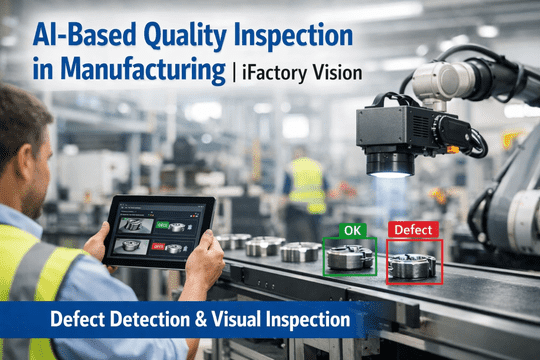
Defect Detection & Visual Inspection
AI-Based Quality Inspection in Manufacturing
How deep learning vision systems detect the defects your inspectors miss — at full production speed, 24/7, with zero fatigue
$24.1B
Global AI visual inspection market (2024)
Growing 25% YoY
95–99%
Defect detection accuracy with AI vision
vs 60–70% Manual
Why Human Inspection Can No Longer Keep Up
Your quality inspectors are not the problem — the job has outgrown human capability. Modern production lines move at speeds where a new product passes the inspection point every fraction of a second. At that pace, across complex surfaces, shifting lighting, and cumulative fatigue, even experienced inspectors miss the subtle defects that matter most to your customers and your bottom line.
How Inspection Gaps Become Million-Dollar Quality Escapes
1
The Detection Ceiling
Human inspectors detect 60–70% of surface defects under ideal conditions. Sub-0.5mm anomalies at production line speeds are physiologically invisible to the naked eye — meaning 30–40% of defects pass through undetected on every batch.
2
The Fatigue Decay
Inspector accuracy degrades 15–25% after just 2 hours of continuous observation. Miss rates peak in the final hours of each shift — the exact window when consistency matters most for outgoing quality.
3
The Propagation Effect
A missed defect is never just one unit. A developing tool wear pattern, a drifting process parameter, or a recurring material flaw propagates across hundreds or thousands of units before anyone notices — turning a minor issue into a batch-wide quality event.
4
The Cost Multiplier
A defect caught on the production line costs you the unit. The same defect found at the customer site costs 10–100x more in warranty claims, sorting, premium freight, penalties, and irreversible reputation damage.
How many defects are slipping past your current inspection? Book a demo to see what AI vision reveals on your production line.
What AI Vision Actually Detects Across Manufacturing
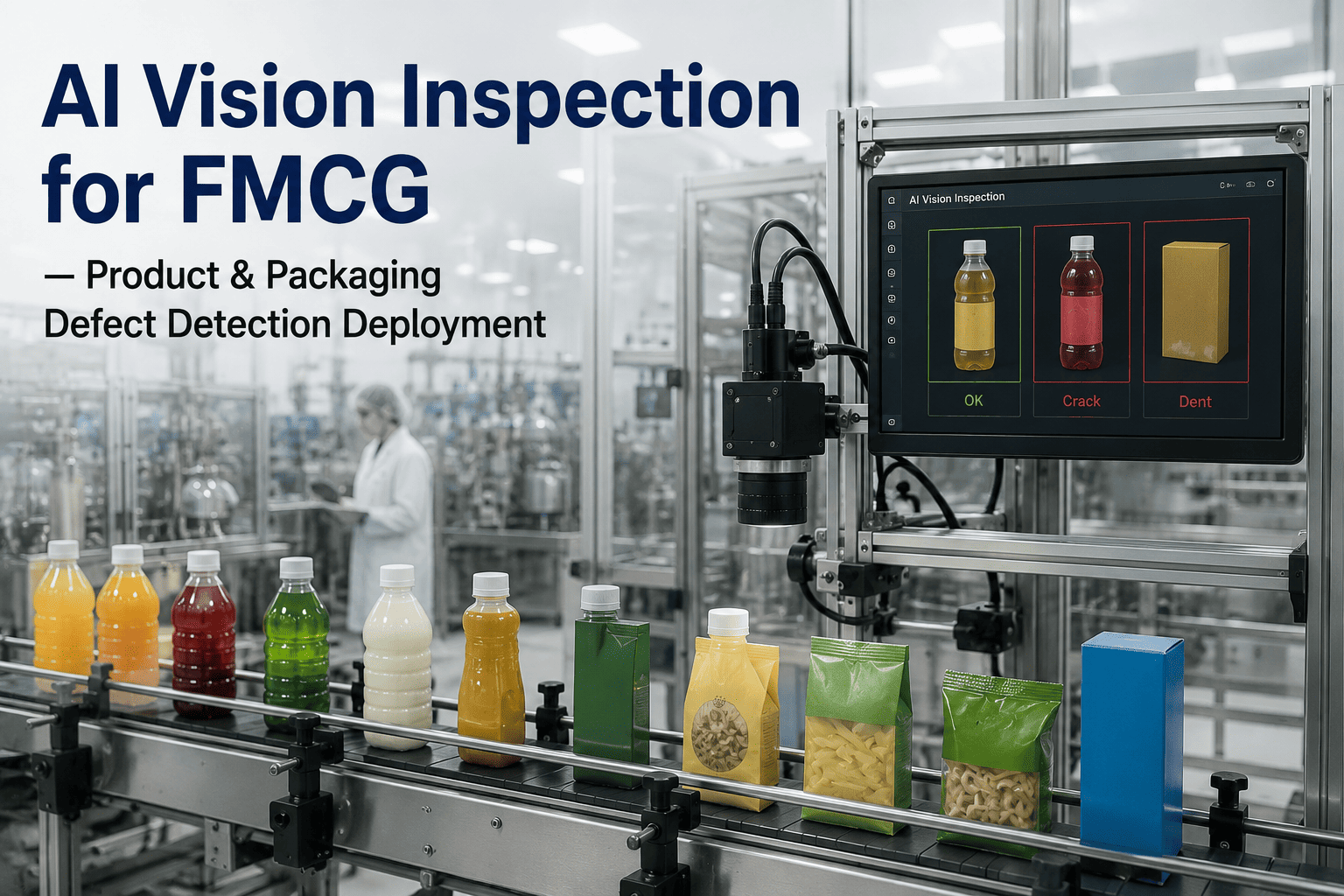
Deep learning models trained on millions of labelled product images can classify hundreds of defect types by category, severity, and size — in real time, at full production speed, 24/7 without fatigue or subjectivity. Here are the most critical defect families that AI catches consistently where human inspection and legacy AOI systems fail.
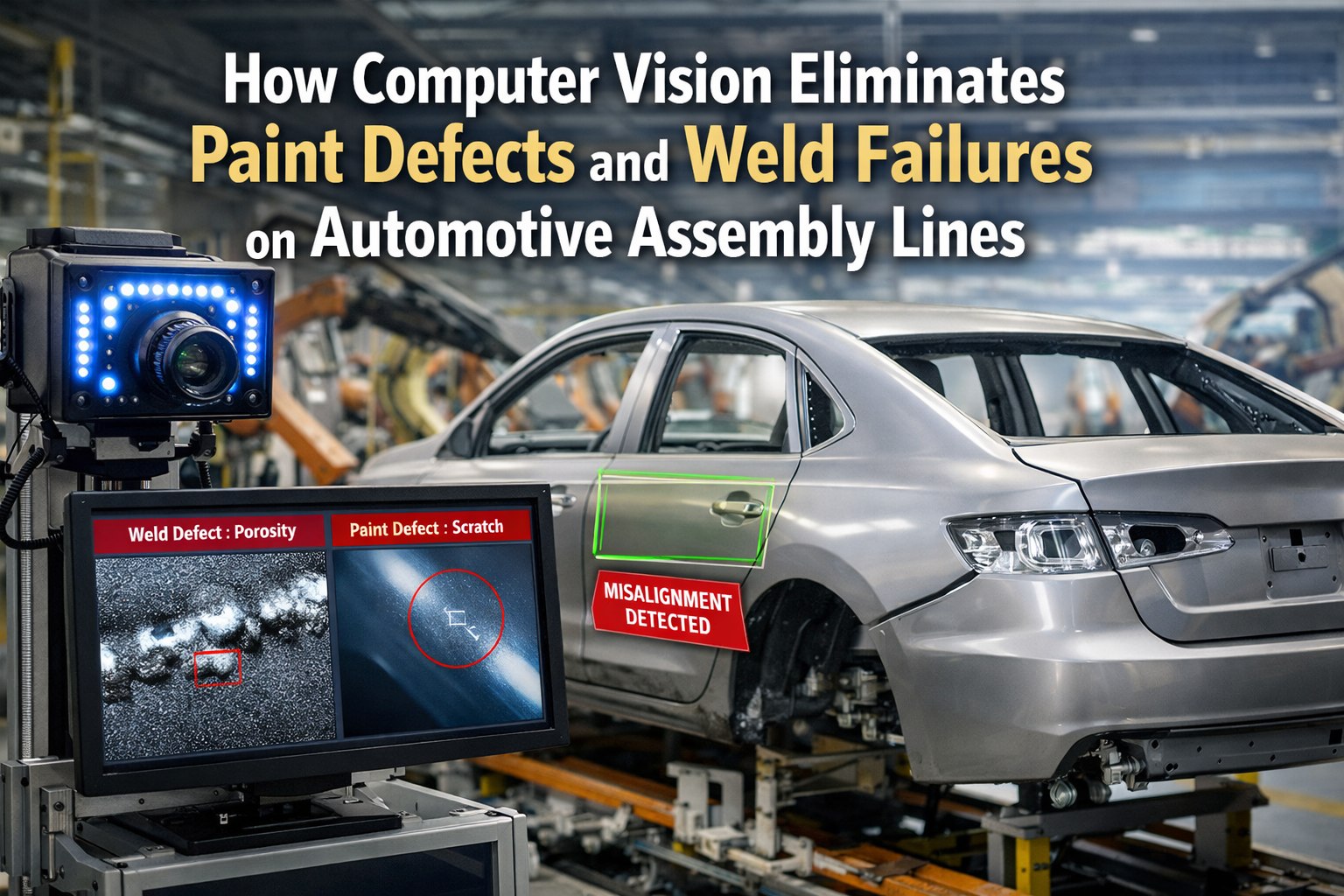
Scratches
Dents
Pits
Stains
Burrs
Industries Affected
Automotive body panels, steel coils, machined components, glass, consumer electronics housings
AI Advantage
Detects sub-0.01mm surface anomalies invisible to human eye at production speed
Hairline cracks
Micro-fractures
Fatigue cracks
Stress cracks
Weld cracks
Industries Affected
Aerospace castings, automotive stampings, semiconductor wafers, ceramic components, turbine blades
AI Advantage
98%+ detection with true crack vs. surface line discrimination
Missing components
Misalignment
Wrong orientation
Solder bridges
Incomplete insertion
Industries Affected
PCB assembly, electronics manufacturing, medical device assembly, consumer goods packaging
AI Advantage
Validates 100% of assembly points per unit — zero sampling risk
Warping
Thickness variation
Gap measurement
Profile deviation
Edge irregularity
Industries Affected
Precision machining, injection molding, sheet metal forming, extrusion, 3D printing
AI Advantage
Real-time measurement triggers immediate process correction before drift compounds
Bare spots
Orange peel
Runs & sags
Colour variation
Contamination
Industries Affected
Automotive paint shops, galvanizing lines, powder coating, pharmaceutical coatings, packaging printing
AI Advantage
Catches colour and texture variations imperceptible to naked eye that cause downstream rejection
Particulate matter
Embedded debris
Oil residue
Cross-contamination
Label errors
Industries Affected
Food & beverage, pharmaceutical packaging, cleanroom electronics, medical devices, cosmetics
AI Advantage
Detects foreign particles and contamination patterns that trigger regulatory compliance failures
From Detection to Prevention: The AI Quality Loop
Detection alone saves money. Prevention transforms operations. The real power of AI vision is not just finding defects — it is correlating defect patterns with upstream process parameters to stop them at the source before they propagate across the next production run.
AI Inspect-to-Prevent Pipeline
Capture
High-Speed Image Acquisition
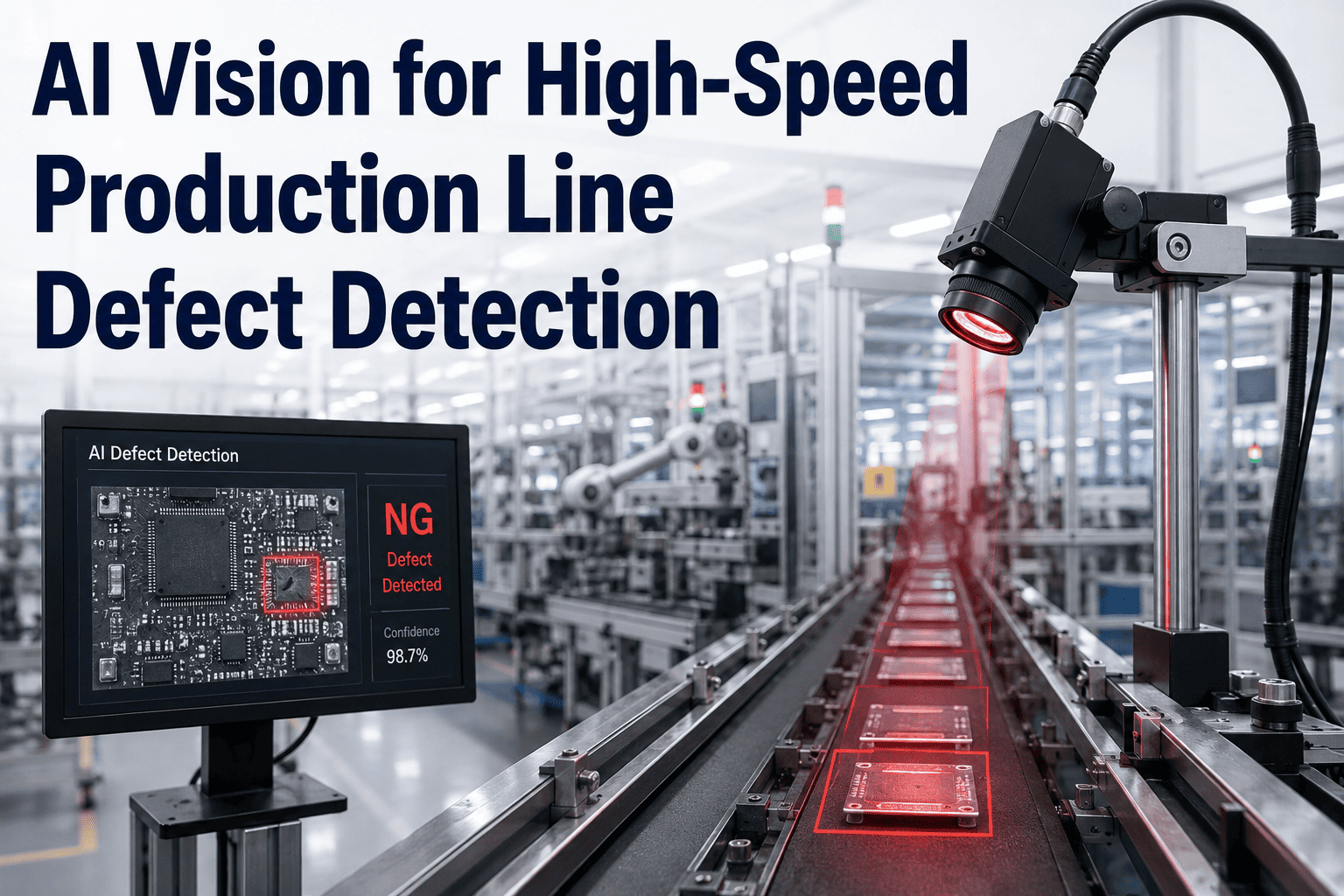
Industrial cameras capture 40,000+ lines per second under precision lighting arrays. Every unit, every surface, every angle — no sampling, no gaps.
Classify
Real-Time Defect Classification
Deep learning models classify defects by type, severity, and exact location in under 50 milliseconds — before the unit leaves the inspection zone.
Correlate
Root Cause Pattern Matching
AI links defect clusters to process drift — temperature shifts, tool wear, material variation — identifying the upstream cause, not just the downstream symptom.
Prevent
Automated Corrective Action
System triggers operator alerts, generates maintenance work orders, adjusts process parameters, and updates quality disposition — all before the next batch starts.
Stop Finding Defects at Your Customer's Door
iFactory's AI vision platform detects, classifies, and traces defects in real time — turning your quality control from reactive sorting into proactive prevention.
The True Cost of Missed Defects
Quality losses typically consume 15–20% of total sales revenue for the average manufacturer. Most of this is hidden — scattered across scrap reports, rework logs, warranty ledgers, and lost customer accounts that nobody consolidates into a single number. Here is what that number actually looks like.
Scrap & Rework
Material wasted on defective units plus labour and machine time spent fixing repairable parts. For a $50M manufacturer, this alone consumes $1.5–3M annually.
30–40% of COPQ
Warranty & Returns
Defects discovered after shipment trigger claims, replacements, sorting at customer site, premium freight, and contract penalties — each event costing 10–100x the in-plant catch cost.
$500K–$5M per event
Inspection Labour
Manual inspection teams running multiple shifts to achieve coverage that still misses 30–40% of defects. AI replaces repetitive scanning, not your quality engineers.
$200K–$800K/year
Total Hidden Quality Cost
Combined direct and indirect costs from inspection gaps — before accounting for lost contracts and reputation damage that never shows on a balance sheet.
15–20% of Revenue
How the Technology Works
A production-grade AI visual inspection system combines industrial-hardened hardware with deep learning software specifically trained on manufacturing defect data. Here is the five-layer architecture that delivers 95–99% accuracy at full line speed.
Layer 1
Industrial Image Capture
High-speed line-scan and area-scan cameras in ruggedized housings capture every unit at 40,000+ lines per second. Thermal, visible-spectrum, and 3D imaging options adapt to your product type and environment — from cleanrooms to foundries.
Layer 2
Precision Lighting
Custom LED arrays using bright-field, dark-field, and structured lighting maximise defect contrast. Different defect types require different lighting geometries — scratches need low-angle illumination, cracks need dark-field, and dimensional checks need structured light.
Layer 3
Edge Computing
GPU-accelerated edge servers process 2–8 GB of image data per second in real time. Inference latency under 50 milliseconds ensures classification happens before the product exits the inspection zone. Redundant architecture prevents data loss.
Layer 4
Deep Learning Models
Convolutional neural networks trained on millions of labelled images classify hundreds of defect types. Transfer learning adapts pre-trained models to your specific products with as few as 50–100 images per defect class. Continuous learning improves with every unit inspected.
Layer 5
MES/ERP Integration
Direct connections to your Level 2 automation, MES, and ERP systems correlate defects to exact production parameters, trigger operator alerts, generate maintenance work orders, and update quality disposition — all in real time without manual entry.
See the full technology stack in action on live production data. Schedule a live demonstration.
Proven Results from AI Inspection Deployments
Where AI Inspection Creates Impact Across Industries
AI visual inspection is not a niche solution. It is transforming quality control across every manufacturing sector where defect cost, production speed, or regulatory compliance makes manual inspection insufficient.
Automotive & Aerospace
Inspect body panels, stampings, castings, weld seams, and turbine components for surface defects, dimensional deviations, and structural cracks at full production speed.
37% fewer defects and 22% OEE increase documented in automotive deployments
Electronics & Semiconductors
Detect solder defects, missing components, micro-cracks on wafers, and misalignments at resolutions that legacy AOI cannot match — with false positives cut to 4–10%.
50% throughput increase documented at semiconductor manufacturers
Steel, Metals & Heavy Industry
Monitor hot and cold rolling surfaces at 900+ m/min for cracks, scale, inclusions, and roll marks — catching defects that propagate across thousands of tonnes if missed.
98.5% detection accuracy with 65% fewer customer quality complaints
Pharma, Food & Packaging
Validate label accuracy, detect foreign particles, verify seal integrity, and ensure fill-level consistency across high-speed packaging lines with full traceability.
100% inspection coverage meeting regulatory compliance at full throughput
Frequently Asked Questions
How much training data does AI visual inspection need?
Modern AI platforms using transfer learning achieve production-ready accuracy with as few as 50–100 labelled images per defect class. Pre-trained models that have already learned from millions of industrial images adapt quickly to your specific products. Initial deployment typically takes 2–4 weeks, with continuous improvement happening automatically as quality engineers validate edge cases.
Can AI inspection integrate with our existing production line?
Yes. AI vision systems are designed to integrate into existing lines with minimal disruption. Cameras mount at current inspection stations, edge computing sits alongside the line, and the software connects to your MES, ERP, and Level 2 automation. Most deployments require no line stoppage and go live within weeks.
What is the typical ROI for AI visual inspection?
Manufacturers consistently document full ROI within 6–12 months. Returns come from reduced scrap, fewer customer claims, lower inspection labour costs, and higher first-pass yield. High-volume applications often achieve payback in under 6 months. Full AI inspection infrastructure delivers 200–300% ROI through defect reduction and faster inspection cycles.
Does this replace our quality inspectors?
AI vision augments rather than replaces your quality team. Inspectors shift from the physically demanding and error-prone task of visual scanning to higher-value work: analysing defect trends, investigating root causes, and driving process improvements. The system handles 100% surface coverage at production speed — something no human team can achieve.
What happens when the system detects a critical defect?
For critical defects exceeding rejection thresholds, the system triggers immediate operator alerts, automatically rejects or marks the defective unit, and updates quality disposition in real time. For trending issues, it sends predictive alerts to both quality and maintenance teams with root cause correlation — enabling corrective action before the next batch is affected.
See Every Defect. Trace Every Root Cause. Prevent Every Escape.
Your factory is producing defects right now that no one is seeing. AI vision catches them all — in real time, at full speed, 24/7. Find out what your current inspection is missing.