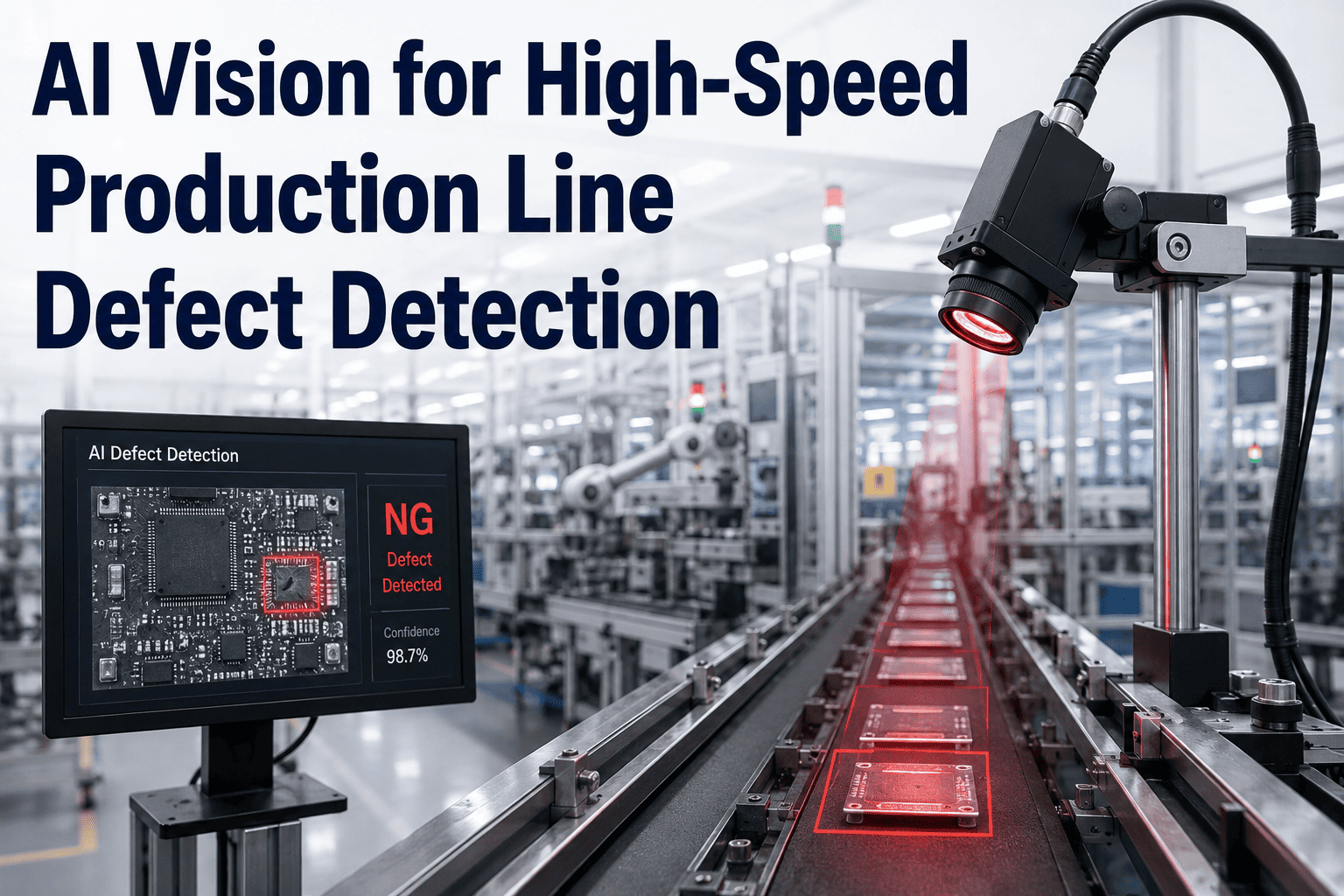
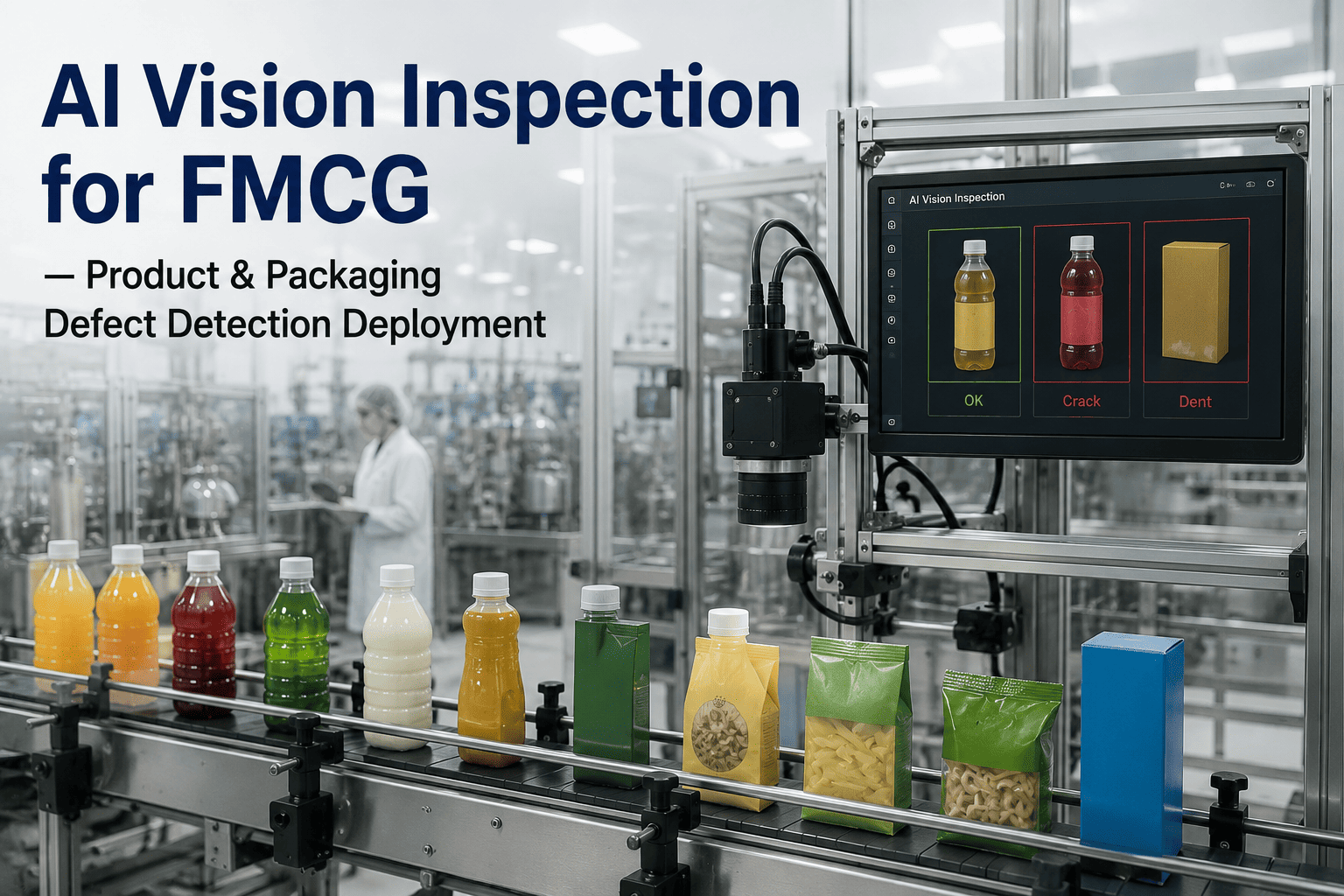
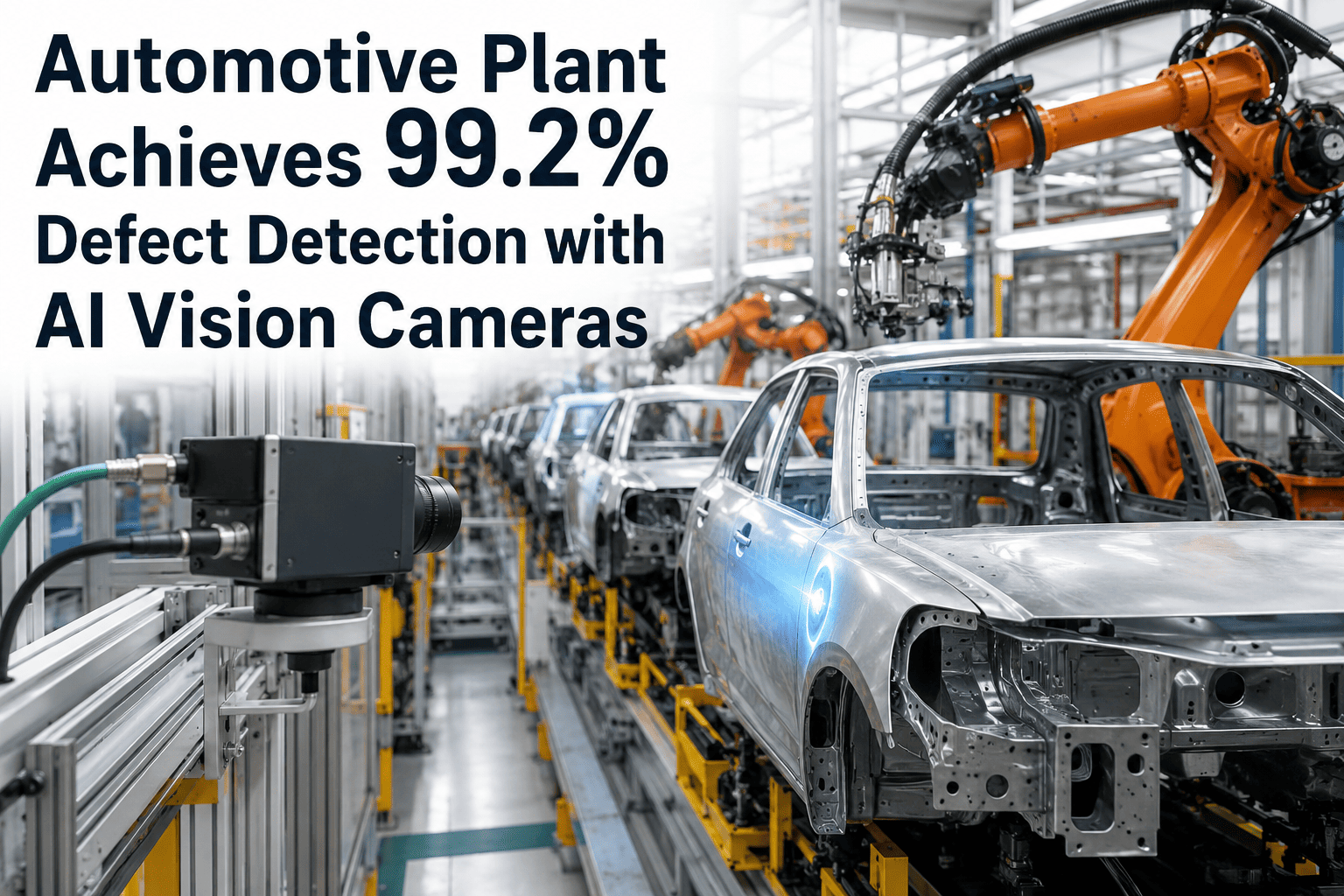
In modern manufacturing, the margin between a conforming product and a defective one is measured in milliseconds at line speed. Traditional manual visual inspection — which depends on human attention span, visual acuity, and fatigue management — consistently allows defects to escape the production floor, particularly during extended runs where inspector concentration naturally degrades. AI vision cameras fundamentally change this dynamic by continuously monitoring every unit on the production line and identifying defects with a consistency and speed that manual inspection cannot match. For quality managers and production engineers responsible for outgoing quality standards and throughput targets, understanding the ten most common manufacturing failures that AI vision systems automatically detect is a critical step toward building the business case for automated visual inspection deployment.
AI VISION · MANUFACTURING QUALITY · AUTOMATED INSPECTION
See How AI Vision Cameras Automatically Detect Manufacturing Defects
iFactory's
AI vision camera platform automates defect detection across ten common manufacturing failure modes — purpose-built for quality managers who cannot afford defects reaching their customers.
FAILURE DETECTION
10 Common Manufacturing Failures AI Vision Cameras Detect Automatically
AI vision cameras trained on acceptable product appearance can identify a wide range of manufacturing defects at line speed — without requiring contact, interrupted production flow, or additional operator attention. The following ten failure modes represent the most common defect categories that AI-powered visual inspection systems detect automatically in production environments across industries including automotive, electronics, food and beverage, pharmaceutical, and consumer goods manufacturing. Each failure mode carries distinct implications for product quality, customer satisfaction, regulatory compliance, and brand reputation when it escapes detection.
For a live demonstration of how AI vision cameras detect these failure modes in your specific production environment, Book a Demo with iFactory's AI vision engineering team.
01
Surface Cracks and Fractures
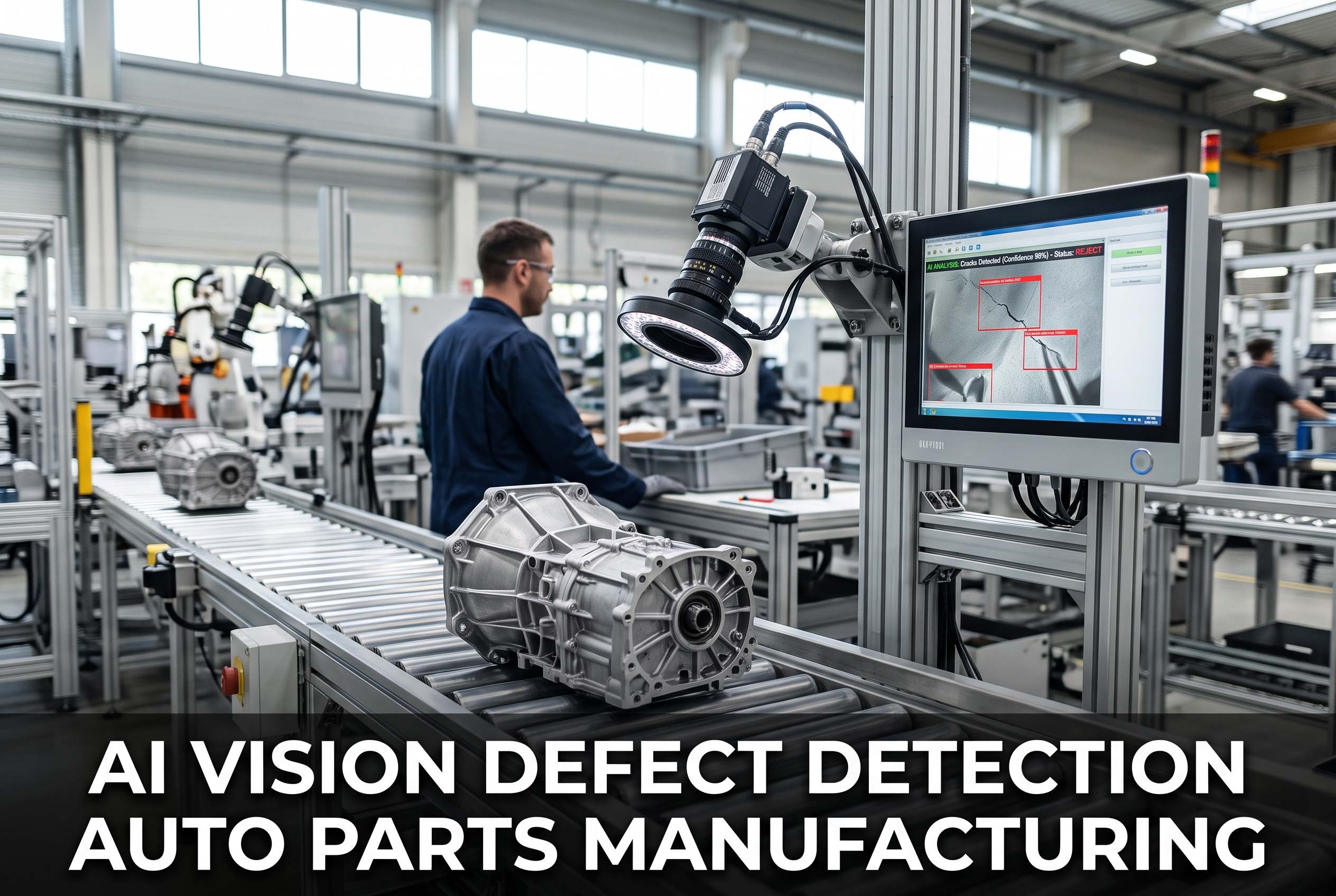
AI vision cameras detect micro-cracks, surface fractures, and stress lines that are invisible to the human eye at line speed. These defects occur during forming, stamping, molding, or heat treatment processes and can compromise structural integrity, leading to field failures and safety incidents. AI systems identify cracks as small as 0.1 mm on complex geometries and reflective surfaces that challenge traditional machine vision approaches.
02
Missing or Incorrect Components
Assembly operations frequently produce units with missing parts — a missing fastener, an absent label, an omitted sub-component. AI vision systems verify the presence, correct positioning, and proper orientation of every component in real time by comparing each assembled unit against the trained acceptable configuration. Detection occurs within milliseconds, enabling immediate rejection before additional value is added downstream.
03
Mislabeling and Packaging Errors
Label misapplication, incorrect packaging, wrong barcode printing, and mismatched SKU labeling are among the most costly packaging failures. AI vision systems verify label presence, position, content accuracy, barcode readability, and package configuration against production order specifications — catching errors that human inspectors miss under the repetition of high-volume packaging operations.
04
Dimensional Tolerance Violations
Parts produced outside specified dimensional tolerances may pass manual gauging checks but fail in customer application. AI vision cameras measure critical dimensions — length, width, diameter, concentricity, flatness — with sub-millimeter accuracy at full line speed. Unlike contact measurement methods, vision-based dimensional inspection does not slow production or risk damaging the part during measurement.
05
Color and Finish Inconsistencies
Batch-to-batch color variation, surface finish defects, coating irregularities, and texture inconsistencies are reliably detected by AI vision systems trained on acceptable color and finish ranges. These systems identify deviations in hue, saturation, gloss, and surface texture that indicate process drift in painting, coating, or finishing operations — enabling corrective action before large quantities of out-of-spec product accumulate.
06
Seal and Package Integrity Defects
Incomplete seals, pinhole leaks, crimp defects, and package breaches compromise product freshness, sterility, and safety. AI vision systems detect seal defects that pressure testing and manual inspection miss by analyzing seal width, uniformity, and the presence of inclusions or voids. In food and pharmaceutical applications, this capability directly reduces the risk of contamination and regulatory action.
07
Foreign Object Contamination
Foreign material entering the product stream — metal fragments, plastic flash, dust, lubricant droplets, or biological contaminants — is one of the most serious manufacturing failures. AI vision cameras detect foreign objects by identifying visual anomalies against the expected product appearance, operating alongside traditional metal detection and X-ray systems to provide a comprehensive contamination detection layer.
08
Assembly and Fastener Errors
Incorrect fastener positioning, missing screws, misaligned components, and improper assembly sequences are detected by AI vision systems trained on correct assembly appearance. These systems verify that every fastener is present, properly seated, and correctly oriented — catching assembly errors that can lead to product failure, warranty claims, and safety recalls in automotive and aerospace applications.
09
Print and Code Quality Defects
Inkjet codes, laser marks, labels, and direct-part marks must be legible, correctly positioned, and accurately formatted for traceability and regulatory compliance. AI vision systems verify print quality, code readability, and data accuracy against production records — detecting smudged, missing, or incorrectly coded marks that manual inspection routinely misses on high-speed lines.
10
Surface Contamination and Residue
Lubricant residue, dust accumulation, moisture spots, and process chemical residues on product surfaces are detected by AI vision systems using trained visual models that identify deviations from expected surface appearance. In food, pharmaceutical, and electronics manufacturing, surface contamination detection prevents product quality complaints and protects brand reputation by ensuring only visually clean products reach customers.
ROOT CAUSE ANALYSIS
Four Reasons Traditional Visual Inspection Fails in High-Speed Production
Understanding why manual inspection consistently fails to catch manufacturing defects is the prerequisite to building an effective automated quality control program. Quality managers who have investigated defect escapes across production environments consistently identify four structural limitations of manual visual inspection that account for the overwhelming majority of undetected failures. AI vision systems are specifically designed to address each of these limitations systematically — not through additional training or procedural documentation, but through continuous, consistent, automated inspection that eliminates the human error vector entirely.
01
Human Attention Fatigue and Inconsistency
The human visual system is not designed for sustained defect detection at line speed. Research consistently demonstrates that inspector accuracy degrades measurably within the first 20 minutes of an inspection shift and continues to decline as fatigue accumulates. AI vision cameras maintain 99.4% detection accuracy continuously across every shift — the same at 2 AM as at 10 AM — without breaks, rotation, or performance variation.
02
Sampling-Based Inspection Coverage Gaps
Manual inspection is almost always sampling-based — inspecting a percentage of units rather than every unit. Statistical sampling plans accept a predictable defect escape rate as a cost of operation. AI vision cameras inspect 100% of units passing through the production line at full line speed, eliminating the sampling coverage gap that allows defects to reach customers between manual inspection intervals.
03
Subjective Defect Classification Standards
Different inspectors apply different standards when classifying marginal defects as pass or fail — and the same inspector may apply different standards at different points in a shift. This subjectivity creates uncontrolled variation in outgoing quality that is invisible to quality management until customer complaints or returns reveal the inconsistency. AI vision systems apply the identical classification standard to every unit, every shift, eliminating subjectivity from the inspection decision.
04
Inability to Detect Subtle or Rapid Defects
Many manufacturing defects — hairline cracks, micro-contamination, rapid surface anomalies — occur at speeds and scales that the human eye cannot register at line speed. These defects pass through manual inspection stations invisible to the inspector, accumulating in shipped product until a field failure or customer complaint reveals the pattern. AI vision cameras capture and analyze images at frame rates that match or exceed production speed, detecting defects at the moment they occur rather than after they have accumulated.
AI VISION · QUALITY CONTROL · AUTOMATED INSPECTION
Ready to Replace Manual Inspection with AI Vision?
iFactory's AI vision platform deploys in weeks, integrates with your existing camera infrastructure, and reaches 99%+ detection accuracy within the first week of active learning on your production line.
PERFORMANCE BENCHMARK
AI Vision vs. Manual Inspection: 2026 Performance Comparison
The following benchmark reflects operational data from manufacturing facilities operating manual, semi-automated, and fully AI-driven visual inspection programs. The performance gap between manual inspection and AI vision platforms has widened considerably as deep learning models have matured and deployment methodologies have standardized. Facilities using iFactory's purpose-built AI vision cameras report accuracy and throughput metrics that manual and traditional machine vision systems cannot match at comparable operating costs.
Inspection Performance Benchmark — 2026
IMPLEMENTATION ROADMAP
Deploying AI Vision Inspection: A Strategic Implementation Guide
Deploying an AI vision inspection program requires a sequenced implementation approach that delivers measurable quality improvement at each phase. Quality managers who attempt to deploy every capability simultaneously across all production lines consistently encounter adoption challenges that slow ROI realization. The following roadmap reflects implementation patterns validated across manufacturing operations ranging from single-line facilities to multi-plant production networks deploying iFactory AI vision cameras. To discuss which implementation approach fits your facility, Book a Demo with iFactory's AI vision implementation team.
Phase 1
Line Assessment and Defect Baseline (Weeks 1–3)
Conduct a comprehensive quality assessment across target production lines. Document current defect rates by failure mode, inspection coverage levels, and escape patterns identified through customer complaints and internal quality data. Identify the highest-impact inspection points where manual detection gaps are most costly. This baseline assessment defines the configuration blueprint for AI camera placement, model training requirements, and acceptance criteria for the deployment phase.
Outcome: Defect baseline, high-impact inspection point map, AI model training plan
Phase 2
AI Camera Deployment and Model Training (Weeks 4–8)
Install AI vision cameras at identified inspection points using existing camera infrastructure where possible — ONVIF and RTSP protocols integrate with most IP cameras without additional hardware investment. Train AI models on production data collected from the target line, using a combination of acceptable product images and known defect examples. AI reaches 95%+ detection accuracy within the first week of active learning on live production data, with accuracy continuing to improve as more production data is processed.
Outcome: Cameras installed, AI models trained, detection accuracy >95% validated
Phase 3
Production Integration and Threshold Calibration (Weeks 9–14)
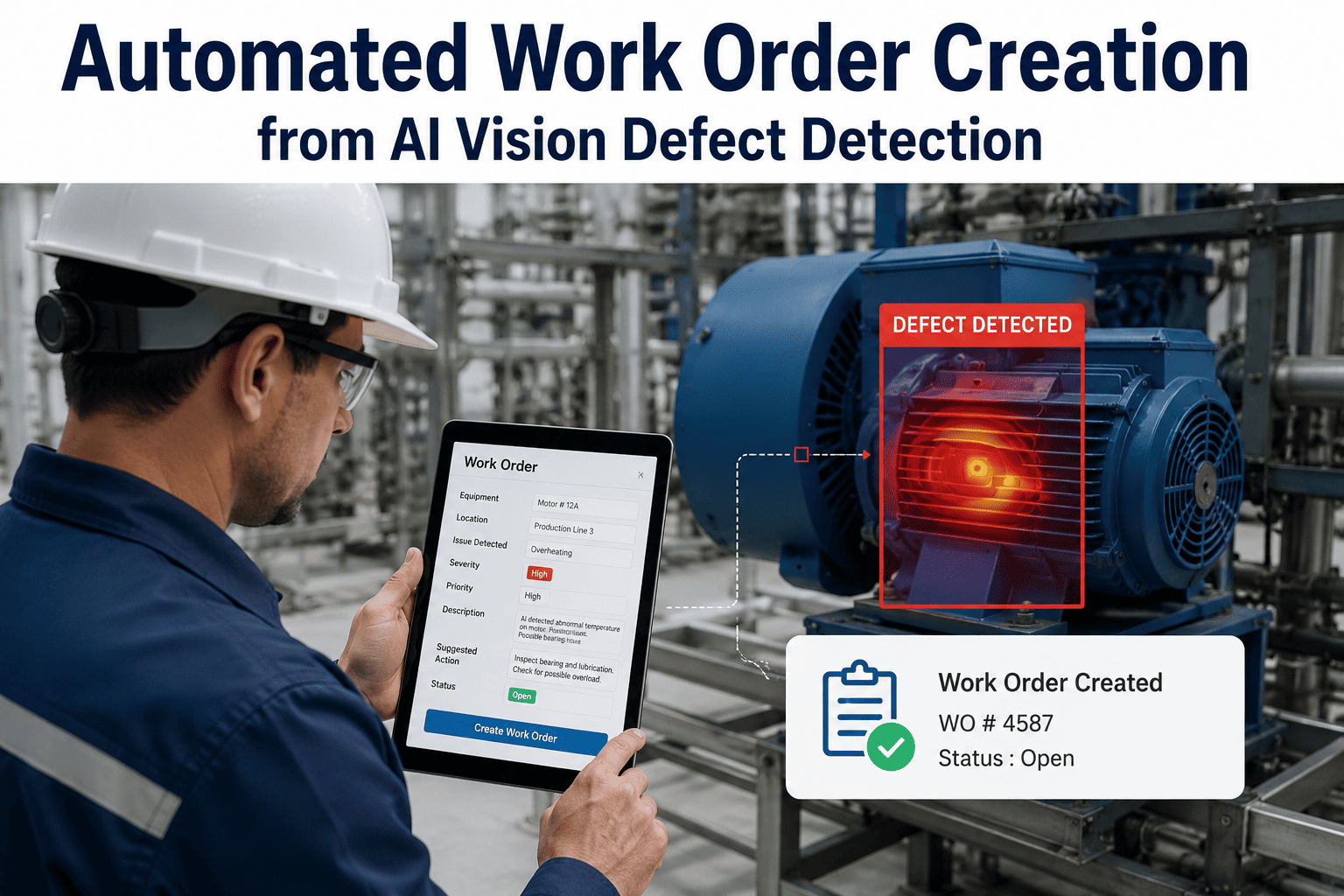
Integrate AI vision inspection results into production workflows — configuring rejection mechanisms, operator notifications, and quality data recording. Calibrate detection thresholds to balance sensitivity and false rejection rate based on the specific quality requirements of each product line. Connect the vision platform to existing MES, ERP, and CMMS systems through OPC-UA, MQTT, and REST APIs to enable automated data exchange and work order generation for detected defects.
Outcome: Integrated rejection workflows, calibrated thresholds, ERP/MES connectivity active
Phase 4
Enterprise Rollout and Continuous Improvement (Week 15+)
With pilot lines validated and ROI demonstrated, extend AI vision inspection across remaining production lines and facilities using the validated deployment template. Establish a continuous improvement program using platform analytics to track defect trends, detection accuracy, false rejection rates, and inspection coverage across the network. Conduct quarterly quality performance reviews to identify new defect patterns and update AI models as product configurations evolve.
Outcome: Enterprise-wide AI vision inspection, continuous improvement program active, full ROI realized
FREQUENTLY ASKED QUESTIONS
AI Vision Camera Defect Detection — Frequently Asked Questions
How accurate are AI vision cameras at detecting manufacturing defects?
AI vision cameras achieve 99.4% detection accuracy in production environments after initial training and active learning. Accuracy starts at 90–95% within the first week and improves continuously as the model processes more production data. This compares to 75–85% accuracy for manual inspection under typical production conditions.
Can AI vision systems integrate with our existing camera infrastructure?
Yes. iFactory's AI vision platform works with existing IP cameras via ONVIF and RTSP protocols. Edge AI processing runs on NVIDIA Jetson or L4 GPU — no cloud dependency required, sub-50ms inference latency, all data remains on-premise. For specialized inspection requirements, iFactory also provides purpose-configured camera hardware.
How quickly can an AI vision inspection system be deployed?
Most deployments go live within 2–4 weeks. Camera setup and data collection occur in week one, model training and shadow-run validation in week two, and go-live with team training by weeks three to four. Starting with a single high-impact inspection station to prove ROI before scaling is the recommended approach.
What defect types can AI vision cameras detect that manual inspection misses?
AI vision systems detect micro-cracks, hairline fractures, rapid surface anomalies, subtle color variations, micro-contamination, and other defects that occur at speeds and scales below the threshold of human visual perception at line speed. These are precisely the defect types that most frequently escape manual inspection and reach customers.
Does AI vision inspection work for all manufacturing industries?
Do AI vision cameras work for all manufacturing industries?
AI vision inspection is applicable across automotive, electronics, food and beverage, pharmaceutical, consumer goods, metals, and general manufacturing. Industry-specific AI models are trained for unique inspection requirements — from weld quality in automotive to blister pack integrity in pharma to label verification in food processing.
What ROI can manufacturers expect from AI vision inspection deployment?
Manufacturers typically achieve full ROI within 6–14 months through labor cost reduction, scrap and rework reduction, warranty claim avoidance, and throughput improvement. Per-line labor savings alone average $500K–$700K annually, with additional savings from scrap reduction of $300K–$500K and warranty claim reduction of $1M–$2M for high-volume production environments.
AI VISION · DEFECT DETECTION · QUALITY AUTOMATION 2026
Deploy AI Vision Camera Inspection Across Your Manufacturing Lines
iFactory's purpose-built
AI vision camera platform automates defect detection across ten common failure modes — giving quality managers the continuous, consistent inspection coverage they need to eliminate defect escapes and protect brand reputation.