Surface quality failures are among the most commercially damaging defect categories in cross-industry manufacturing — not because they are technically difficult to prevent, but because the inspection methods used to detect them are fundamentally inconsistent. Human visual inspection of coated and textured surfaces produces acceptance decisions that vary between operators, shifts, and lighting conditions, creating quality standards that are subjective in practice regardless of how precisely they are defined in specification documents. A scratch that one inspector rejects, another passes. Gloss variation that appears obvious under direct lighting disappears under diffuse illumination. Orange peel texture that accumulates gradually over a spray gun service interval escapes notice until a customer return forces a line investigation. iFactory's Vision Defect Detection system replaces subjective surface quality assessment with deep learning models trained to detect scratches, coating irregularities, gloss variation, texture defects, blemishes, and surface finish anomalies to a consistent, quantified standard — at production line speed, across every part, on every shift.
AI VISION · SURFACE DEFECT DETECTION · COATING INSPECTION · EDGE AI
Standardize Surface Quality Inspection Across Every Line and Every Shift
iFactory's Vision Defect Detection system detects scratches, coating defects, texture irregularities, and gloss variation to a consistent standard at production speed — replacing the subjective, shift-dependent surface quality judgments that let defects escape to customers.
The Detection Gap
Why Human Visual Inspection Cannot Standardize Surface Quality — and Where AI Vision Closes the Gap
Surface and coating inspection failures share a common root cause: the detection method is as variable as the defects it is trying to catch. Human inspectors are skilled, but their acceptance decisions are influenced by fatigue, ambient lighting, personal experience, and the pressure of production throughput targets. The result is a quality standard that exists in documentation but not in practice. iFactory's AI Vision Camera applies the same trained detection model to every part on every shift — delivering the consistent, documented surface quality standard that manual inspection cannot sustain. Manufacturers looking to quantify their current escape rate can Book a Demo and run a detection comparison against their existing inspection method.
1Scratch and Mark Detection
Lighting-Dependent, Inconsistent
Fine scratches and handling marks on gloss surfaces are only visible at specific lighting angles. Inspectors working under fixed overhead lighting miss scratches that would be clearly visible under raking light, creating a systematic detection gap for the defect category most likely to generate customer returns.
Structured Light Detection at Any Angle
iFactory's illumination configuration is optimized during commissioning to maximize contrast for the specific defect types and surface finish of each part. Scratches, handling marks, and tool traces below 0.1mm width are detected consistently across every part regardless of ambient lighting variation in the inspection environment.
2Coating Uniformity and Coverage
Bare Eye Only, No Quantification
Thin spots, skip areas, and edge coverage deficiencies in applied coatings are assessed visually without measurement — producing acceptance decisions that vary between operators and cannot be correlated to coating performance or customer complaint data to improve the process.
Area-Based Coverage Quantification
iFactory classifies coating coverage across the full part surface, identifying thin spots, skip areas, runs, and sag formations with area-based severity scoring. Defect location maps are generated per part, enabling coating process engineers to correlate detection data with spray parameters and gun positioning to eliminate root causes rather than simply rejecting parts.
3Texture Uniformity and Orange Peel
Gradual Drift Undetected
Texture irregularities that develop gradually — orange peel accumulation as spray equipment ages, fish-eye formation from contamination, grain pattern inconsistency across a part surface — are difficult for human inspectors to detect because they have no reference baseline for gradual change. Texture drift goes unnoticed until it crosses a threshold visible to a customer.
Texture Baseline Comparison and Drift Detection
iFactory establishes a visual baseline for the correct texture profile of each surface type and monitors every part against that baseline. Progressive texture drift — orange peel development, grain depth change, gloss variation — is detected through statistical comparison to the reference standard, with trend data that identifies equipment maintenance requirements before texture defects reach the reject threshold.
4Consistency Across Shifts and Lines
Inspector-Dependent Variation
Customer complaint analysis in manually inspected surface quality operations consistently reveals shift-to-shift and line-to-line variation in defect escape rates that reflects inspector variation rather than production process variation. Night shift escapes exceed day shift escapes not because the process is different but because supervision is thinner.
Same Standard, Every Shift, Every Line
iFactory applies the same trained detection model on every shift, every line, and every facility — eliminating the inspector-to-inspector and shift-to-shift variation that creates systematic defect escape patterns in manually inspected operations. Shift comparison reports immediately reveal process variation that was previously hidden by inspection variation, enabling targeted process improvement rather than blanket tightening of acceptance criteria.
Result
Lighting-dependent scratch detection, unquantified coating assessment, gradual texture drift undetected, shift-dependent escape rates — customer complaints driven by inspection variability
Consistent sub-0.1mm scratch detection, area-mapped coating coverage, texture baseline trending, same standard every shift — surface quality escapes eliminated at the source
Core Capabilities
6 Surface and Coating Defect Categories iFactory's Vision Defect Detection System Identifies
iFactory's Vision Defect Detection system is trained to identify and classify the specific surface and coating defect categories that drive customer returns, warranty claims, and retailer chargebacks across automotive, consumer electronics, appliance, industrial equipment, and building products manufacturing. Each defect generates a structured record with classification, severity score, area measurement, location on the part surface, and timestamped image evidence. Manufacturers who want to see detection performance on their specific surface finish and defect profile can Book a Demo with iFactory's surface inspection application team.
01
Scratch, Mark, and Abrasion Detection
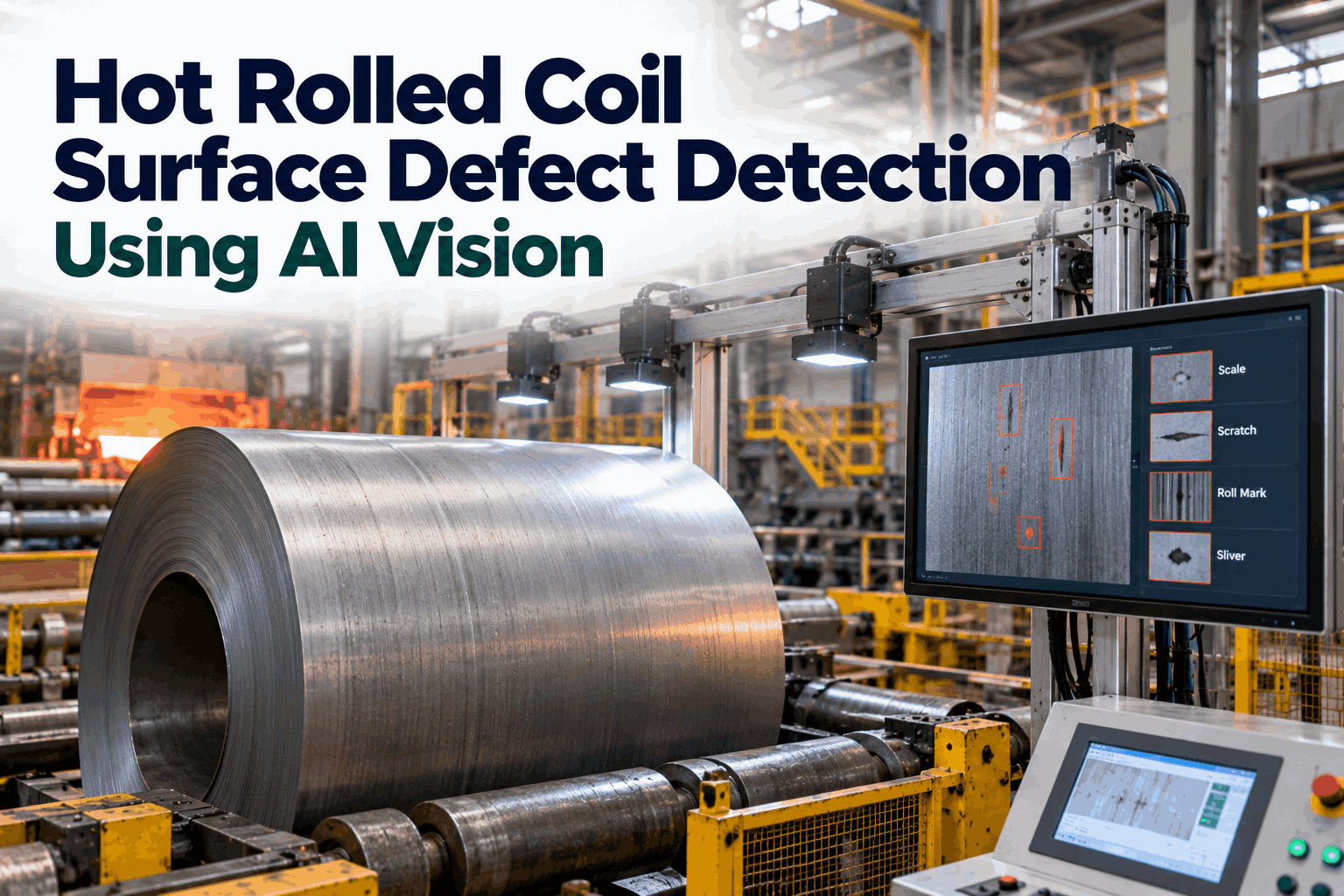
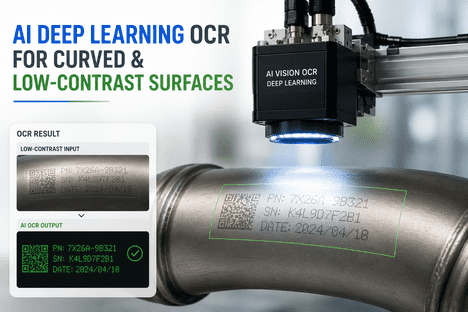
iFactory detects scratches, tool marks, handling damage, and abrasion tracks on gloss, semi-gloss, matte, and textured surface finishes across metal, plastic, glass, and composite substrates. Detection sensitivity is calibrated during commissioning to distinguish defects within the specification rejection threshold from surface characteristics that are within acceptable tolerance — eliminating both the false rejects that increase cost and the missed rejects that reach customers. The system detects scratches below 0.1mm width on high-gloss surfaces using structured illumination configurations that maximize contrast for each surface finish type.
02
Coating Coverage and Thin Spot Detection
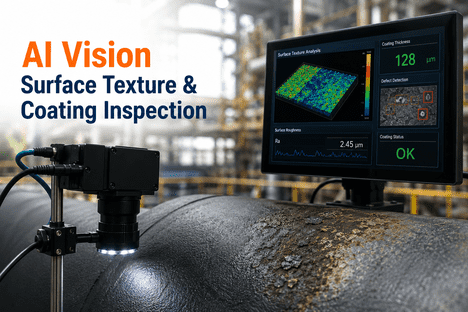
iFactory maps coating coverage across the full part surface area, detecting thin spots, skip areas, holiday defects, and edge coverage deficiencies that compromise coating performance, appearance, and corrosion protection. The system generates area-based severity scores for each coverage deficiency, enabling acceptance decisions based on defect area and location zone rather than binary pass/fail thresholds that cannot distinguish a critical defect in a visible zone from a minor defect in a non-critical area. Coverage data is output per part and aggregated into process trend reports that correlate thin spot frequency with spray equipment condition.
03
Runs, Sag, and Coating Build-Up Detection
Excess coating application producing runs, sags, curtains, and build-up at edges, recesses, and horizontal surfaces generates surface defects that are visually prominent in the finished product. iFactory detects these coating application defects by classifying the visual texture signature of over-applied coating against the expected surface profile baseline — distinguishing genuine coating defects from surface geometry features that create similar visual patterns. Defect severity is scored based on run length and height departure from the specified coating profile, enabling operators to distinguish cosmetic irregularities from structural coating failures that affect product performance.
04
Orange Peel, Fish-Eye, and Texture Defect Detection
Texture defects in applied coatings — orange peel from solvent evaporation rate mismatch, fish-eye cratering from substrate contamination, pinholes from outgassing, and crater formation from spray booth contamination — produce surface quality failures that are specification-defined but difficult to quantify consistently through visual inspection. iFactory's texture analysis models detect these defect types by comparing the spatial frequency characteristics of the part surface against the reference texture profile established during baseline commissioning, classifying deviations by defect type, area, and severity. Progressive texture degradation trends that indicate spray equipment service requirements are identified before they cross the rejection threshold.
05
Gloss and Finish Uniformity Verification
Gloss variation across a part surface — dull spots, over-polished areas, finish mismatch between panel sections — is one of the most frequent surface quality complaints in automotive, consumer electronics, and appliance manufacturing. iFactory detects gloss variation by analyzing the reflectance characteristics of the part surface across defined measurement zones, classifying regions that fall outside the specified gloss tolerance for the part designation. Gloss trend data per part enables identification of process root causes — material batch variation, temperature excursions, flash time inconsistency — that drive gloss uniformity failures at a process control level rather than a rejection level.
06
Blemish, Inclusion, and Contamination Detection
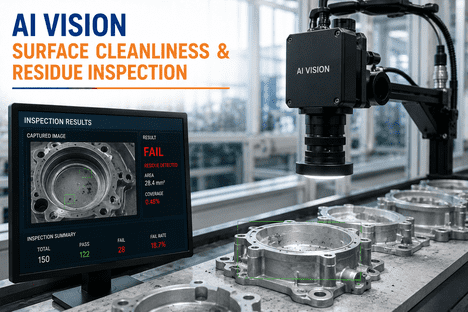
Particle inclusions, dust nibs, lint embedment, and substrate contamination events that become entrapped under applied coatings produce surface blemishes that are structurally embedded in the coating and cannot be reworked without stripping and recoating. iFactory detects these inclusions at the inspection stage before any subsequent coating layers are applied — enabling part rejection or sanding intervention before the defect is locked in. Detection is sensitive to inclusions above the specified nib count threshold per defined area, enabling zone-based acceptance criteria that differentiate critical visible surfaces from non-critical structural areas within the same part.
Performance Data
Measured Outcomes from AI Vision Surface and Coating Inspection Deployments
The following performance metrics reflect operational outcomes from automotive finishing, consumer electronics assembly, industrial equipment coating, and building products manufacturing facilities that deployed iFactory's Vision Defect Detection system on surface and coating inspection applications.
96%
detection rate for scratch and mark defects at or above the specification rejection threshold, compared to 61% average detection rate for manual visual inspection under standard inspection lighting
82%
reduction in surface-defect-related customer returns within 9 months of iFactory deployment, driven by elimination of shift-dependent inspection variation and increased detection of marginal defects
3–4 Wks
advance warning of coating process drift — spray equipment degradation, material batch variation, booth contamination — from texture and gloss trend data before defect rates cross rejection thresholds
Zero
shift-to-shift variation in surface quality acceptance criteria — the same trained detection standard applied on every shift, eliminating the inspection variability that was the primary driver of customer escape patterns
These outcomes reflect the structural advantage of AI vision over human inspection for surface quality: the detection model does not vary with fatigue, lighting angle, or shift timing. Manufacturers ready to quantify their current inspection escape rate and start a turnkey surface quality pilot can Book a Demo to see iFactory's detection performance benchmarked against their existing inspection process.
AI VISION · SURFACE QUALITY · COATING INSPECTION · TURNKEY PILOT
Start a Turnkey Surface Quality Inspection Pilot on Your Production Line
iFactory's Vision Defect Detection system is specified, trained, and deployed as a turnkey pilot — covering illumination design, defect model training on your surface finish and defect types, edge hardware installation, and inspection performance validation against your specification. Start on your highest-escape surface inspection station and measure performance against your current method.
Implementation Roadmap
From Surface Specification to Full AI Vision Coverage: iFactory's Deployment Approach
iFactory's surface and coating inspection deployment follows a structured commissioning process that matches the detection capability to the specific surface finish, defect specification, and production throughput requirements of each application. The process is designed to produce a validated, production-ready inspection system rather than a generic out-of-box configuration that requires months of field tuning to perform reliably.
Phase 1
Surface Specification Review and Defect Category Definition
The deployment begins with a structured review of the surface quality specification for each part in scope — defining the defect categories, minimum detectable dimensions, severity thresholds, and zone-based acceptance criteria that the system must enforce. iFactory's application engineers work with the quality team to translate specification documents into machine-vision terms: what visual contrast signature does each defect type produce, under what illumination conditions, and at what spatial scale relative to the camera and field of view geometry. This specification translation step is critical for surface inspection systems because the same defect description can correspond to very different visual detection challenges depending on substrate, coating type, and finish level.
Outcome: Machine-vision defect specification, illumination configuration design, camera geometry layout
Phase 2
Reference Part Collection and Illumination Optimization
Representative production parts are collected across the full range of acceptable surface variation — including parts that represent the edges of the acceptance specification in both directions — along with representative defect samples for each defect category in scope. Illumination configuration is optimized on the actual part geometry using iFactory's structured light design process, maximizing contrast for each defect type while minimizing false response to surface features and substrate characteristics that should be accepted. This illumination optimization step is the primary determinant of detection sensitivity and specificity for surface inspection applications.
Outcome: Reference part library, optimized illumination configuration, false-positive baseline established
Phase 3
Model Training and Sensitivity Calibration
iFactory's deep learning defect detection models are trained on the collected part images, learning the specific visual appearance of each defect category on the target surface finish and substrate. Detection sensitivity thresholds are calibrated to achieve the target false-reject rate agreed with the quality team — balancing detection completeness against production throughput impact from false rejections. Separate models are trained for each surface zone where different acceptance criteria apply, enabling the system to apply tighter detection thresholds on premium visible surfaces than on non-critical structural areas within the same part.
Outcome: Production-calibrated detection models, zone-specific threshold configuration, validation test plan
Phase 4
Production Validation and Pilot Performance Measurement
The validated system runs in parallel with or replacing existing inspection during a production pilot period — capturing detection rate, false-reject rate, defect type distribution, and shift-to-shift consistency data across a representative production volume. Weekly pilot reports compare iFactory results against the pre-deployment escape rate baseline established from customer return data and internal rework records. Pilot data provides the evidence base for the acceptance decision and defines any model refinements needed before full production deployment. Process trend data from the pilot period typically reveals coating equipment condition issues or material variation patterns that were invisible to the previous inspection method.
Outcome: Validated detection performance, pilot comparison report, production deployment recommendation
Industry Applications
Where iFactory Surface and Coating Inspection Delivers the Highest Value
01
Automotive Body and Trim Components
Automotive exterior surfaces operate under the most demanding cosmetic inspection standards in manufacturing — with defect visibility requirements defined by customer perception at viewing distances of 0.5 to 3 metres under various lighting conditions. iFactory's surface inspection system detects scratches, coating defects, gloss variation, and texture irregularities on painted metal and plastic automotive components to a consistent standard across all shifts and all production cells — eliminating the inspector-dependent acceptance variation that creates systematic quality gaps between day and night production.
02
Consumer Electronics and Appliance Enclosures
Consumer electronics and major appliance surfaces are subject to premium finish expectations where scratches, blemishes, and gloss variation generate disproportionately high return rates and brand damage relative to their structural significance. iFactory detects surface defects on gloss, matte, brushed metal, and soft-touch polymer surfaces at the sub-millimetre scale required to prevent the customer-perceptible defects that these markets cannot tolerate — and does so at the throughput rates required for high-volume consumer product assembly without creating a bottleneck at the inspection station.
03
Industrial Equipment and Protective Coatings
Industrial equipment coatings serve both cosmetic and functional purposes — protecting against corrosion, chemical exposure, and abrasion. Coverage deficiencies, thin spots, and adhesion failures that are not detected at application stage compromise both coating performance and product warranty. iFactory maps coating coverage across the full surface area of industrial components, detecting coverage deficiencies and adhesion indicators before parts proceed to assembly — preventing the corrosion failures that generate warranty claims and reputation damage disproportionate to the detection investment required to prevent them.
04
Architectural and Building Products
Architectural metal cladding, window profiles, door systems, and decorative surface products are manufactured to finish specifications where consistency across production batches matters as much as the quality of individual parts — because mismatched surface appearance between installation components generates on-site rejection that is far more costly to resolve than the original manufacturing defect. iFactory's texture and gloss uniformity monitoring ensures that surface finish consistency is maintained across production runs, detecting batch-to-batch variation before product reaches the jobsite and providing the process trend data needed to maintain consistency as raw material batches and coating equipment conditions change.
Frequently Asked Questions
AI Vision Surface and Coating Inspection — Frequently Asked Questions
What surface finishes and substrate types can iFactory's Vision Defect Detection system inspect?
iFactory's Vision Defect Detection system is applicable across the full range of industrial surface finishes — high-gloss paint, semi-gloss, matte, satin, textured powder coat, anodized, brushed metal, plated, and soft-touch polymer surfaces — on metal, plastic, glass, composite, and ceramic substrates. The illumination configuration and detection model are optimized during commissioning for the specific surface finish of each application, ensuring that the contrast conditions required for the target defect types are achieved regardless of surface reflectance characteristics. Each surface type requires a purpose-built illumination setup and detection model rather than a generic configuration, and iFactory's commissioning process delivers this surface-specific setup as part of the standard deployment.
How does the system handle the natural surface variation that exists within an acceptable production batch?
iFactory's detection models are trained on production samples that represent the full range of acceptable surface variation — including parts at the edges of the specification tolerance in both directions. The model learns to classify within-tolerance variation as acceptable and defects at or above the rejection threshold as failures, rather than applying a rigid template that rejects acceptable parts for natural surface characteristics. False-reject rate performance is validated during commissioning against a representative sample of known-good parts, and detection thresholds are calibrated to achieve the target false-reject rate agreed with the quality team. This calibration process is the key step that distinguishes a production-ready surface inspection system from a laboratory prototype that cannot sustain throughput in real production conditions.
Can iFactory detect subsurface coating defects such as delamination or adhesion failures?
iFactory's Vision Defect Detection system detects surface-visible manifestations of coating adhesion and substrate preparation deficiencies — including blistering, fish-eye cratering, peeling initiation, and delamination at edges — that produce detectable visual signatures at the coating surface. Subsurface adhesion failures that have not yet produced surface-visible symptoms are beyond the scope of optical surface inspection and require alternative characterization methods such as adhesion pull-off testing or cross-hatch adhesion evaluation for their detection. Where surface-visible indicators of adhesion risk are the primary concern, iFactory's system provides earlier detection than manual inspection by identifying the subtle texture and gloss changes that precede visible delamination.
How does iFactory's system output defect location information so operators can identify which part zones contain defects?
iFactory generates a defect location map for every inspected part — overlaying detected defect locations on a reference image or schematic of the part surface, classified by defect type and severity. The location map identifies which surface zone each defect falls within, enabling the system to apply zone-specific acceptance criteria and providing operators with the spatial information needed to guide rework operations to the specific defect location without additional manual inspection. Defect maps are stored per part in the inspection record database and can be retrieved for warranty investigation, rework instruction generation, and process root cause analysis — linking defect location patterns to specific process variables such as spray gun position, conveyor position, or fixture orientation.
What inspection throughput rates can the system sustain without becoming a production bottleneck?
iFactory's surface inspection system is specified and configured during commissioning to match the throughput rate of the production line — ensuring that inspection processing time does not exceed the available cycle time at the inspection station. For high-volume continuous flow applications, multi-camera configurations covering different surface zones simultaneously are used to achieve the required throughput. For lower-volume batch applications where cycle time is less constrained, single-camera sequential inspection provides comprehensive coverage across all surface zones. The throughput specification is defined during the Phase 1 assessment and is a primary input into camera quantity and edge processing hardware selection — ensuring the delivered system meets production rate requirements from the first day of operation.
How does iFactory's process trend reporting help prevent surface defects rather than just detecting them?
iFactory aggregates per-part defect detection data into process trend reports that reveal patterns not visible in individual inspection results — increasing defect frequency at specific production times indicating spray equipment wear, defect clustering at specific part zones indicating fixture positioning drift, gloss variation trends correlating with material batch changes, and texture deterioration trends indicating spray booth contamination buildup. These process trends are typically detectable two to four weeks before defect frequency crosses the production rejection threshold, enabling maintenance and process engineering teams to intervene at the root cause level rather than simply increasing inspection frequency. This predictive process control value compounds over time as the trend database accumulates — continuously improving the ability to anticipate and prevent surface quality failures rather than detecting and rejecting them.
AI VISION · DEFECT DETECTION · SURFACE QUALITY · INDUSTRY 4.0
Deploy AI Vision Surface and Coating Inspection Across Your Production Lines
iFactory's Vision Defect Detection system delivers a consistent, documented surface quality standard across every part, every line, and every shift — detecting scratches, coating defects, texture irregularities, gloss variation, and contamination inclusions to a specification-calibrated standard that manual inspection cannot sustain. Start with a turnkey pilot on your highest-escape surface inspection application.