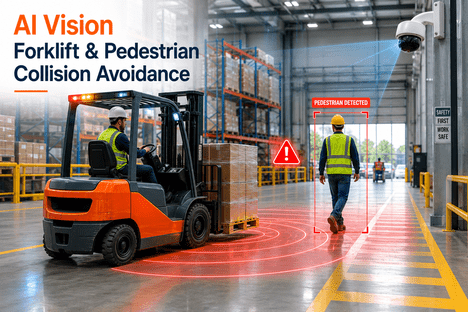
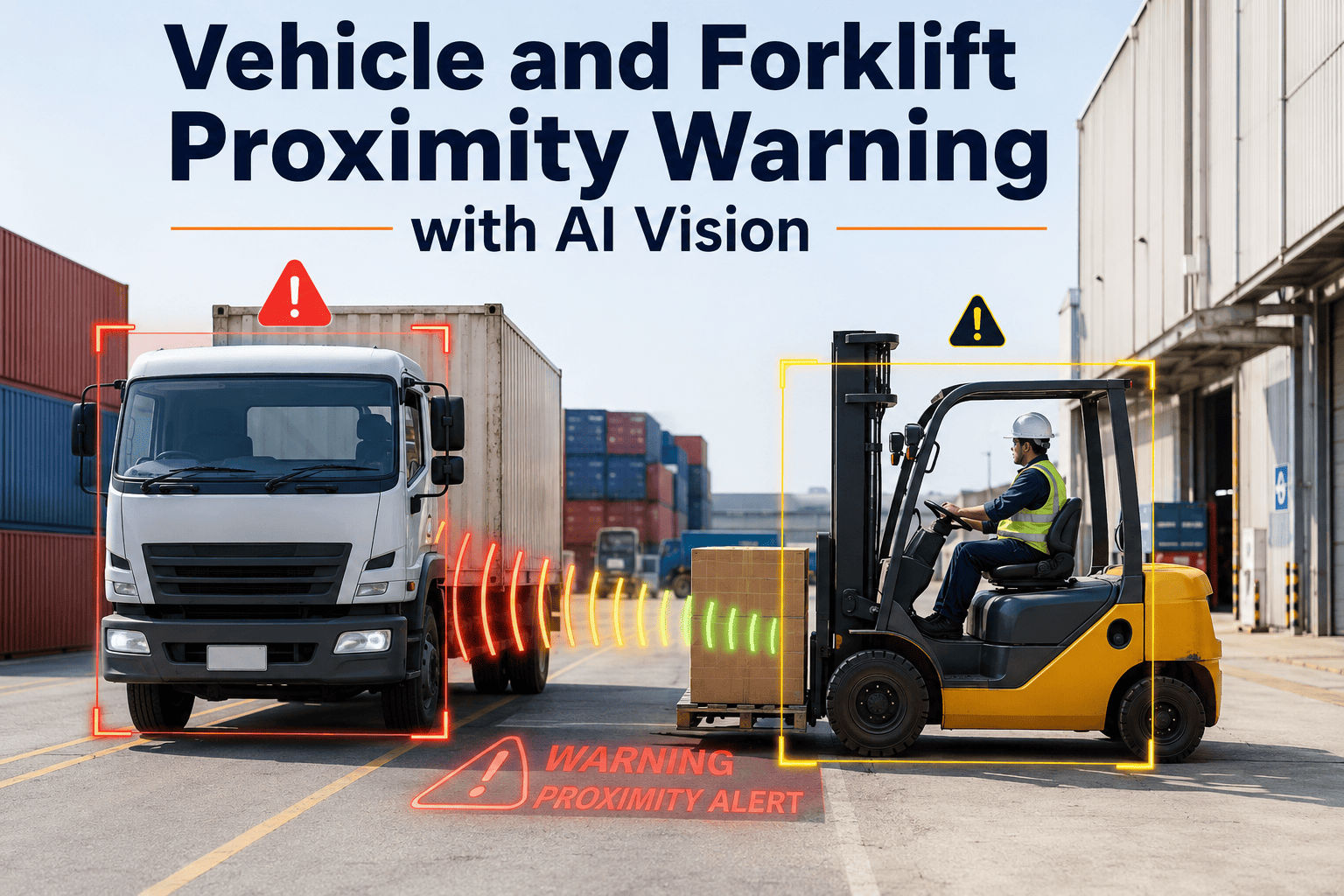
In industrial environments, the proximity between forklifts and pedestrian workers represents one of the most persistent and severe safety challenges in modern operations. According to OSHA, forklift-pedestrian incidents account for a significant percentage of annual workplace injuries, with blind spots, distracted driving, and high-density traffic zones being primary contributors. Traditional safety measures such as floor markings, audible alarms, and procedural training rely entirely on human compliance and offer no real-time intervention capability. iFactory's AI Vision Safety Monitoring system transforms forklift and pedestrian collision avoidance by deploying computer vision models directly onto existing facility cameras and edge devices. The system continuously monitors vehicle-pedestrian proximity, detects blind-spot encroachment, and flags near-miss events in real time, creating an automated safety layer that operates independently of operator attention or pedestrian awareness. Unlike sensor-based systems that require expensive hardware installation on every vehicle, iFactory's vision-based approach uses existing surveillance infrastructure to deliver comprehensive coverage across loading docks, warehouse aisles, and production floor intersections — deployable in days without interrupting operations.
Eliminate Forklift-Pedestrian Incidents with AI Vision
Deploy computer vision collision avoidance across your facility in days using existing cameras. No hardware retrofits required.
Why Forklift & Pedestrian Collision Avoidance Demands AI Vision
Forklift-pedestrian incidents remain the leading cause of serious injury in warehousing, manufacturing, and logistics environments. OSHA data consistently ranks struck-by-forklift and pedestrian-struck incidents among the top cited safety violations, with costs ranging from medical expenses and OSHA fines to production stoppages and increased insurance premiums. The fundamental challenge is that traditional safety systems — flashing lights, horn alerts, painted walkways, and speed limits — depend entirely on human awareness and compliance. A distracted pedestrian stepping into a blind aisle or a forklift operator navigating a congested dock creates a hazard window that no procedural control can address. AI vision-based collision avoidance closes this gap by providing continuous, automated monitoring that detects every proximity event, categorizes its severity, and alerts safety personnel before a near-miss escalates into a recordable incident. Book a Demo to see how iFactory maps to your specific facility layout and operational workflow.
85%
Reduction in near-miss incidents after AI vision deployment
60%
Lower pedestrian injury risk through real-time proximity alerts
3–5x
ROI within first year from incident reduction and insurance savings
Core Capabilities of AI Vision Safety Monitoring for Collision Avoidance
Real-Time Pedestrian Detection
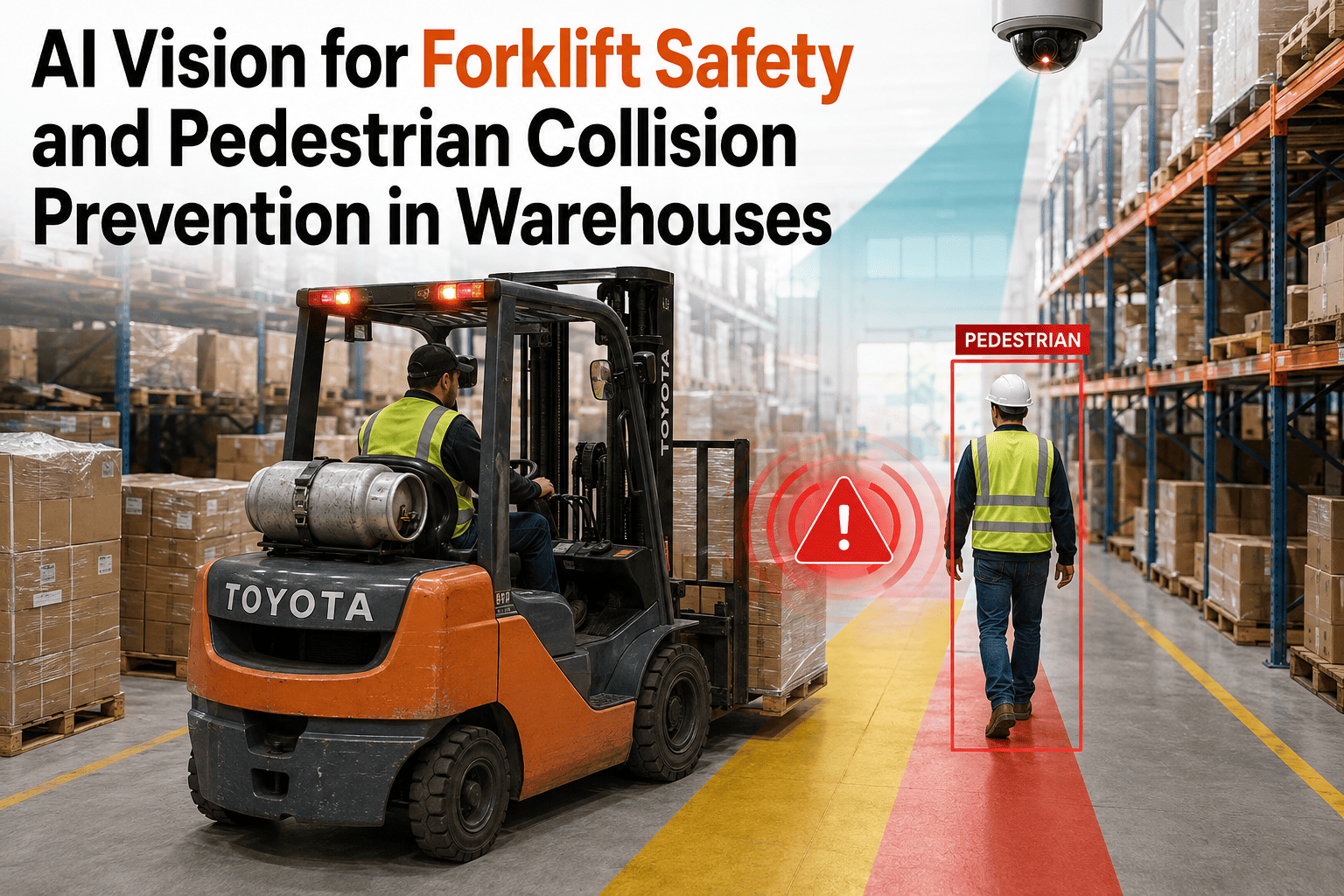
Deep learning models identify workers, their direction of travel, and proximity to vehicle paths in real time, triggering alerts when pedestrians enter defined hazard zones around forklifts and moving equipment.
Blind Spot & Near-Miss Detection
Continuous coverage of blind corners, intersection crossings, and dock doorways where line-of-sight is obstructed. Every near-miss event is logged with timestamp, location, and severity classification for trend analysis and safety planning.
Vehicle-Pedestrian Proximity Tracking
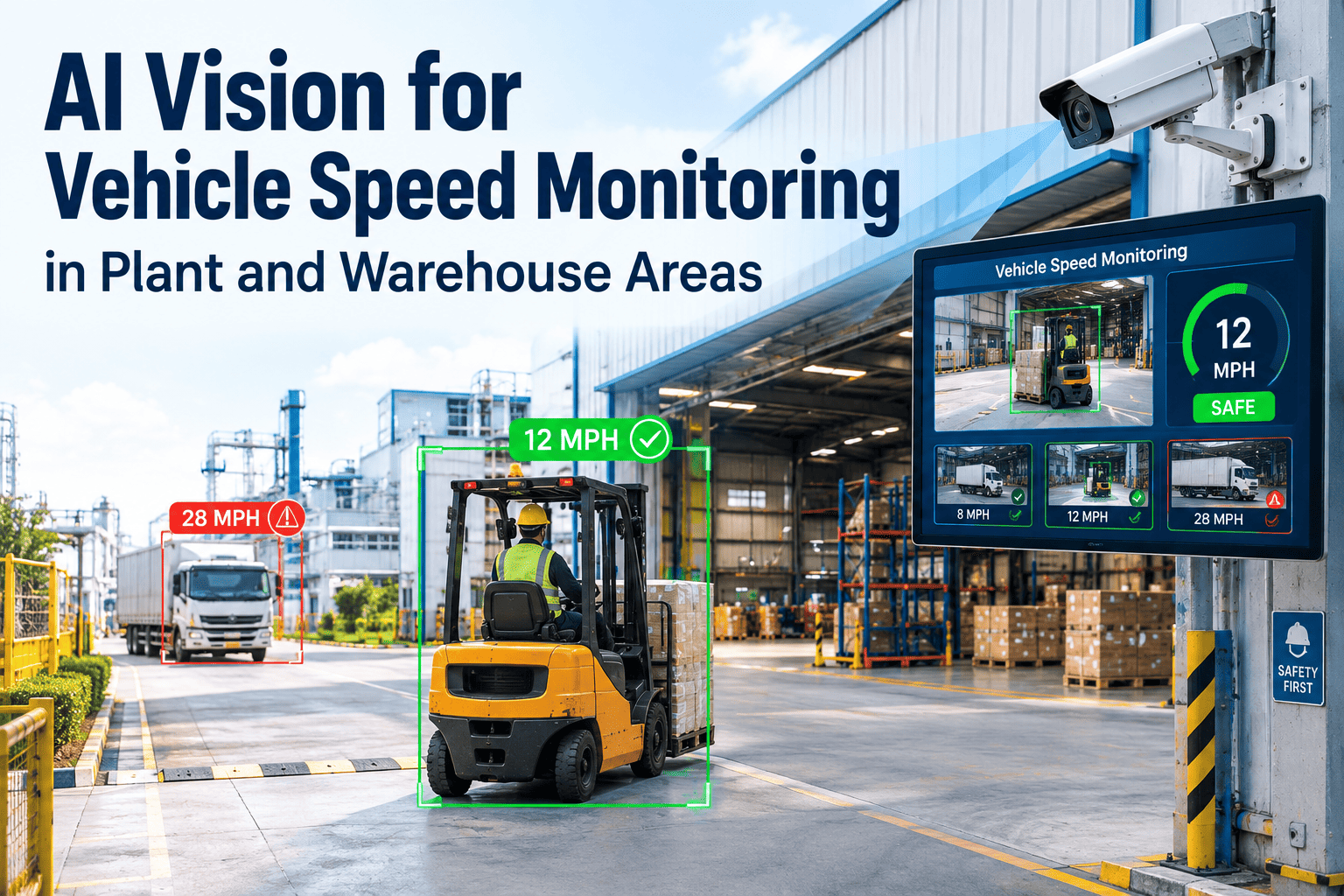
Vision-based distance measurement between forklifts and nearby personnel with configurable alert thresholds. Alerts escalate from visual indicators to supervisor notifications based on proximity severity and zone rules.
Edge AI Deployment Architecture
All computer vision processing runs on edge devices connected to existing facility cameras, eliminating network latency and preserving bandwidth. No cloud dependency for real-time safety decisions, ensuring sub-second alert delivery.
Automated Incident Reporting
Every proximity event and near-miss generates timestamped visual evidence with bounding box overlays, supporting OSHA recordkeeping, root cause analysis, and safety training material creation without manual effort.
Multi-Zone Safety Configuration
Define distinct safety zones per area type — loading docks, storage aisles, production floors, pedestrian walkways — with zone-specific alert rules, speed thresholds, and escalation policies tailored to operational risk levels.
Before vs. After: AI Vision Collision Avoidance Impact
The operational safety gap between facilities relying on traditional procedural controls and those operating with AI vision-based collision avoidance is measurable across every key safety metric — from near-miss frequency and incident severity to compliance confidence and insurance exposure.
| Safety Area |
Traditional Safety Approach |
iFactory AI Vision Safety |
Measurable Impact |
| Collision Prevention |
Reactive — incidents logged after injury occurs |
Predictive — real-time proximity alerts prevent impact |
85% near-miss reduction |
| Blind Spot Coverage |
Mirrors and spotters — human limitations, coverage gaps |
Continuous AI monitoring of all blind zones 24/7 |
100% blind spot visibility |
| Incident Documentation |
Paper forms, delayed reporting, incomplete records |
Automated visual evidence with every proximity event |
90% faster reporting |
| Safety Compliance |
Audit gaps, manual training tracking, no data trail |
Continuous monitoring data, audit-ready reports |
Eliminated compliance gaps |
| Insurance & Liability |
High premiums, claim disputes, no objective evidence |
Verifiable incident data, reduced claim exposure |
15–25% premium reduction |
Deploy AI Vision Safety Across Your Facility
iFactory connects to your existing security cameras and edge infrastructure to deploy collision avoidance AI in days — not months. Start with a single high-risk zone and scale facility-wide.
Frequently Asked Questions: AI Vision Forklift & Pedestrian Collision Avoidance
What infrastructure is needed for AI vision collision avoidance?
iFactory's
AI vision system works with your existing IP cameras and edge computing devices. No specialized sensors, vehicle-mounted hardware, or facility modifications are required. The platform connects via standard RTSP streams and supports PoE cameras, PTZ units, and existing surveillance infrastructure.
Book a Demo to review your camera layout and compatibility.
How does AI vision differ from traditional proximity sensors?
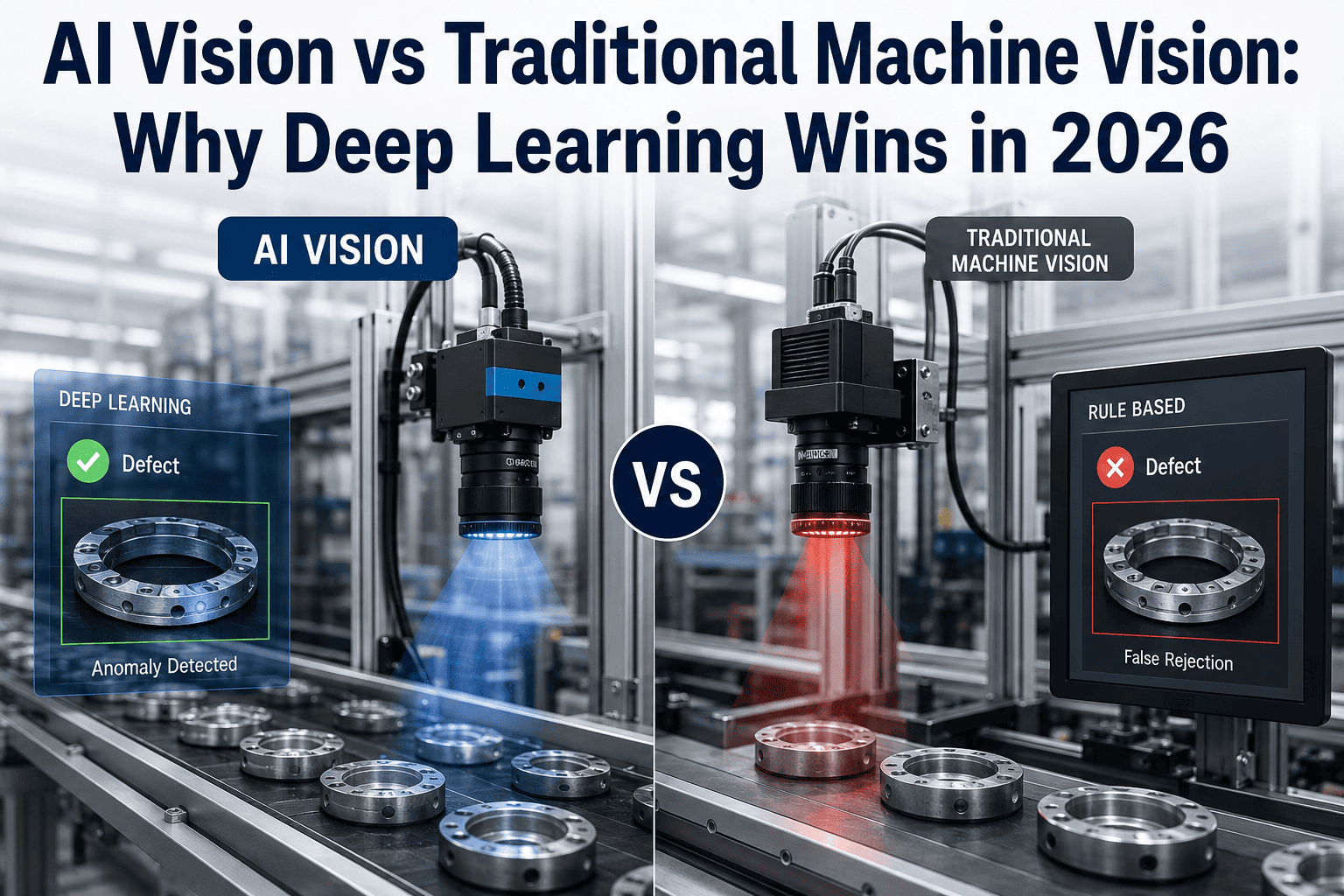
Traditional proximity systems require RFID tags, UWB beacons, or LiDAR sensors on every vehicle and every worker, creating high hardware costs and ongoing maintenance burdens. AI vision uses existing cameras to detect and track all objects in the field of view without wearables or vehicle modifications, providing comprehensive coverage at a fraction of the total cost of ownership.
Can the system distinguish between forklifts and other vehicles?
Yes. The deep learning model is trained on multiple vehicle classes including forklifts, pallet jacks, reach trucks, order pickers, AGVs, and pedestrian workers. Each object class triggers zone-specific alert rules, so a pedestrian near a forklift produces a different response than two forklifts in proximity or a pallet jack in a restricted aisle.
How does the system handle privacy and compliance requirements?
All video processing occurs on edge devices with no cloud upload requirement. The system uses real-time analysis without storing continuous footage; only near-miss events and triggered alerts generate recorded visual evidence. This architecture supports GDPR, CCPA, and internal privacy policies while maintaining full safety functionality.
What is the typical deployment timeline for a facility?
Most facilities deploy the AI vision safety system across their first zone within one week, including camera connectivity configuration, zone definition, and model calibration. Full facility rollout typically completes within 30 days depending on the number of zones and integration complexity.
Book a Demo for a timeline specific to your facility.
Predict. Prevent. Protect.
iFactory's
AI Vision Safety Monitoring platform gives your team the ability to detect proximity risks, prevent pedestrian incidents, and maintain verifiable safety compliance — all from a single operational dashboard using your existing camera infrastructure.