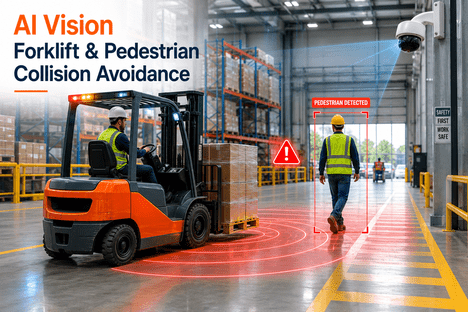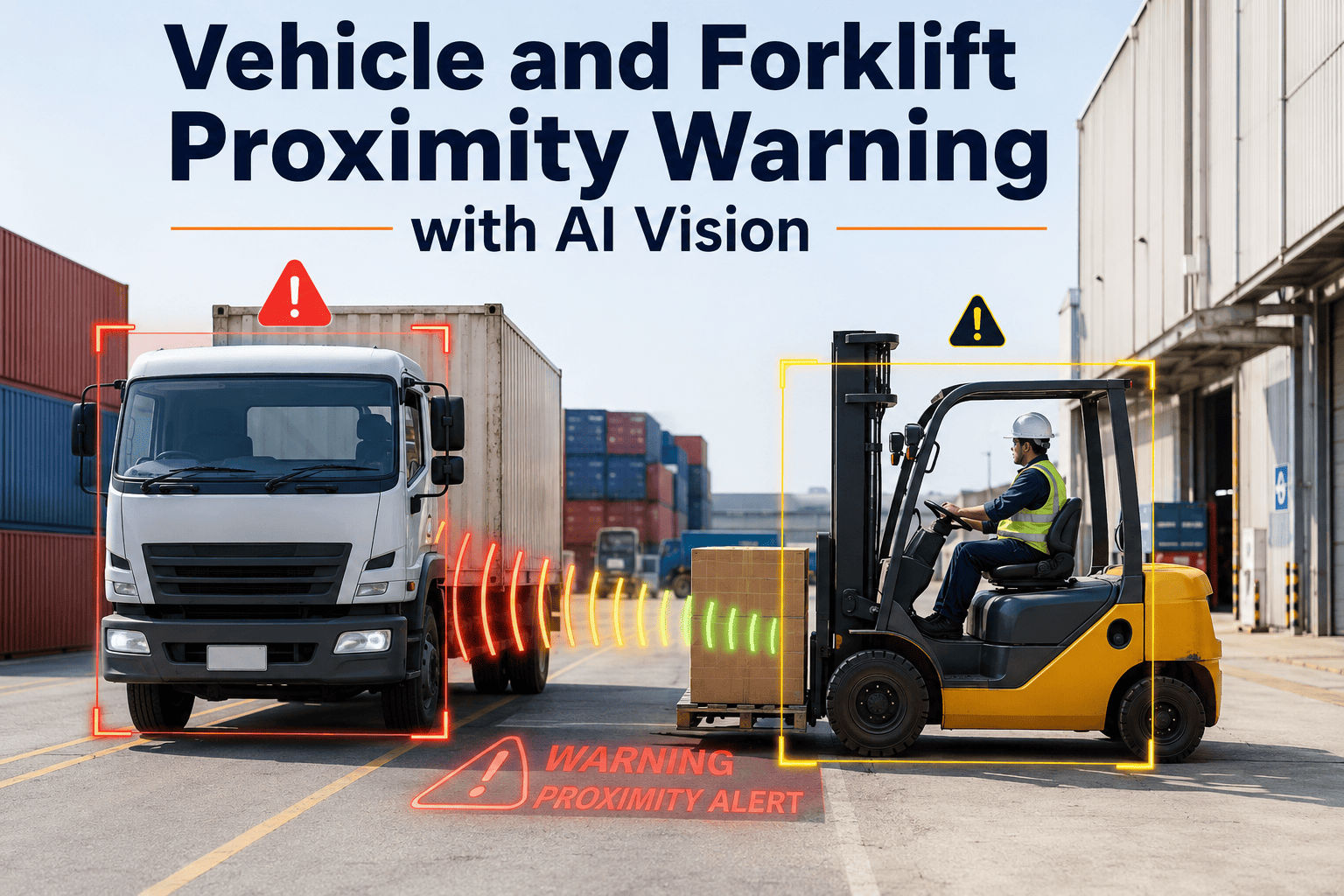
Somewhere in the United States today, a warehouse worker will step around a rack corner at the exact moment a forklift comes the other way, and neither of them will see the other in time. OSHA's own estimates put forklift-related injuries between 35,000 and 62,000 a year, and pedestrians account for a disproportionate share of the fatalities among them. iFactory's AI vision watches every blind corner and aisle intersection continuously, and you can book a demo to see it running in a facility layout like yours.
36 Percent of Forklift Fatalities Involve a Pedestrian Nobody Saw Coming
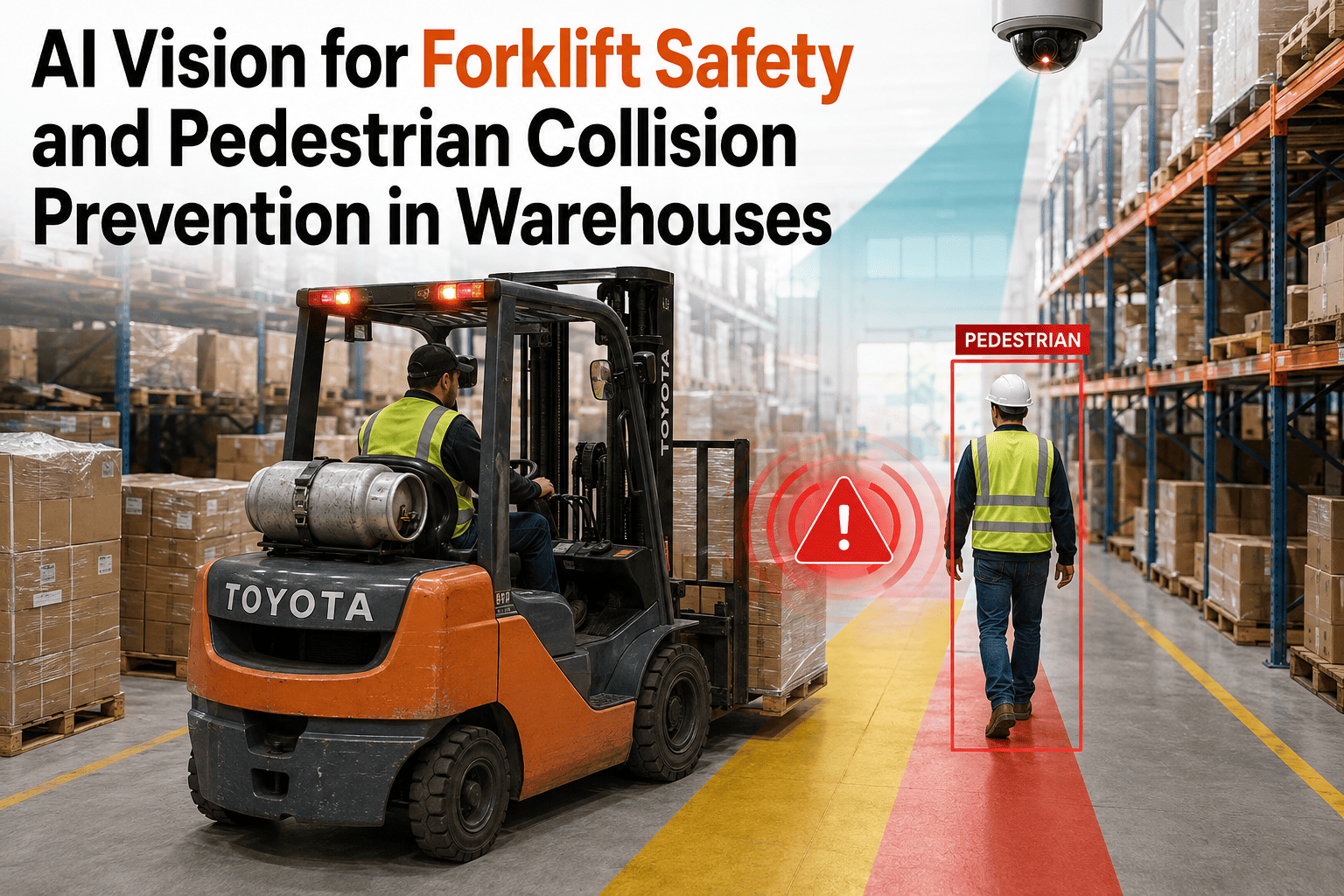
iFactory's AI vision detects dangerous proximity between forklifts, vehicles, and pedestrian workers in real time, triggering automated warnings before a near-miss becomes an incident report.
Forklifts and Pedestrians Share the Same Aisles Every Single Shift
Warehouses are dynamic environments where forklifts and foot traffic constantly cross paths, and the physics of a loaded forklift make the outcome of a collision far more severe than most other workplace hazards. Blind corners, narrow aisles, and dock areas remain the highest-risk points on almost every floor plan.
From Camera Feed to a Real-Time Proximity Alert
iFactory's AI vision distinguishes forklifts, vehicles, and pedestrians in real time from fixed or vehicle-mounted cameras, generating warnings before proximity becomes contact.
Continuous Video Monitoring
Cameras mounted on forklifts, at blind corners, and in high-traffic aisles capture a live view of both vehicle and pedestrian movement.
Object Detection and Classification
The AI distinguishes pedestrians from vehicles, racking, and other equipment in real time, even in partial occlusion or low-visibility zones.
Proximity and Speed Scoring
Distance, closing speed, and approach angle are calculated continuously to assess collision risk in the current moment.
Operator and Pedestrian Alerts
Audible and visual warnings trigger for the forklift operator and, where applicable, nearby pedestrians before a dangerous encounter develops.
The Four Locations Where Forklift-Pedestrian Incidents Concentrate
Incidents rarely happen in open floor space. They cluster at specific, predictable points in a facility layout, which is exactly where continuous AI monitoring delivers the most value.
Blind Rack Corners
Tall racking blocks sightlines for both operators and pedestrians, making intersections the single highest-risk point in most warehouses.
Dock and Loading Areas
High vehicle density, reversing trucks, and foot traffic combine in a confined space with limited maneuvering room.
Cross-Aisle Intersections
Multiple forklift travel paths converge at these points, and simultaneous approaches from different directions raise collision risk.
Pedestrian Walkway Crossings
Marked walkways that intersect active forklift lanes require constant vigilance from both sides to stay safe.
The Near-Miss You Never Documented Is the Incident You Are Due For
iFactory's AI watches your highest-risk zones continuously, flagging dangerous proximity before it becomes a recordable incident.
Physical Barriers vs AI Proximity Detection
Physical barriers and floor markings remain useful, but they are static and cannot adapt to real-time conditions. The table below compares the two approaches directly.
| Factor | Physical Barriers Only | AI Proximity Detection |
|---|---|---|
| Blind Corner Coverage | Limited, fixed position | Continuous, real-time |
| Incident Documentation | Manual reporting only | Automatic event logging |
| Adapts to Layout Changes | Requires physical rework | Reconfigurable by zone |
| Near-Miss Visibility | Usually undocumented | Captured and reported |
Results From AI-Driven Proximity Warning Deployments
The figures below reflect outcomes reported from warehouse and distribution facilities that deployed AI-driven forklift and pedestrian proximity detection.
Common Questions From Warehouse Safety Teams
The Best Safety Program Catches the Near-Miss, Not Just the Incident
Every serious forklift-pedestrian collision was preceded by dozens of near-misses that nobody documented, because human observation simply cannot watch every blind corner on every shift. That gap between an undocumented close call and a reportable incident is exactly where AI proximity monitoring adds value.
iFactory's AI watches the intersections, dock areas, and blind corners where your facility's risk actually concentrates, turning invisible near-misses into a documented, actionable safety record. The result is fewer incidents, better audit readiness, and a workforce that can trust the aisles they walk every day. Book a demo to see iFactory's AI monitoring a layout similar to your own facility.
The Next Blind Corner Incident Is Preventable — If You See It Coming
iFactory's AI detects dangerous forklift and pedestrian proximity in real time, with automated warnings and full incident documentation.