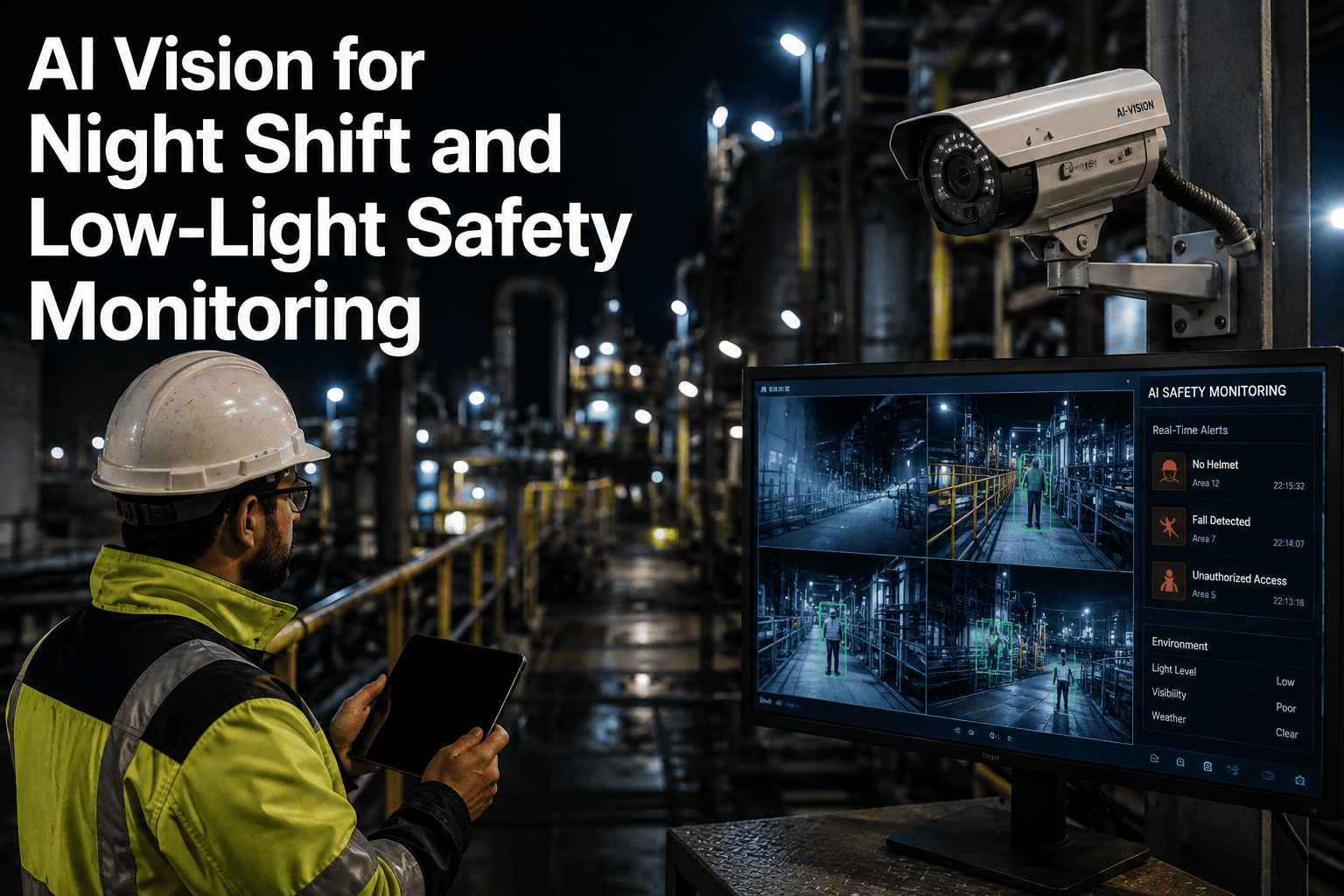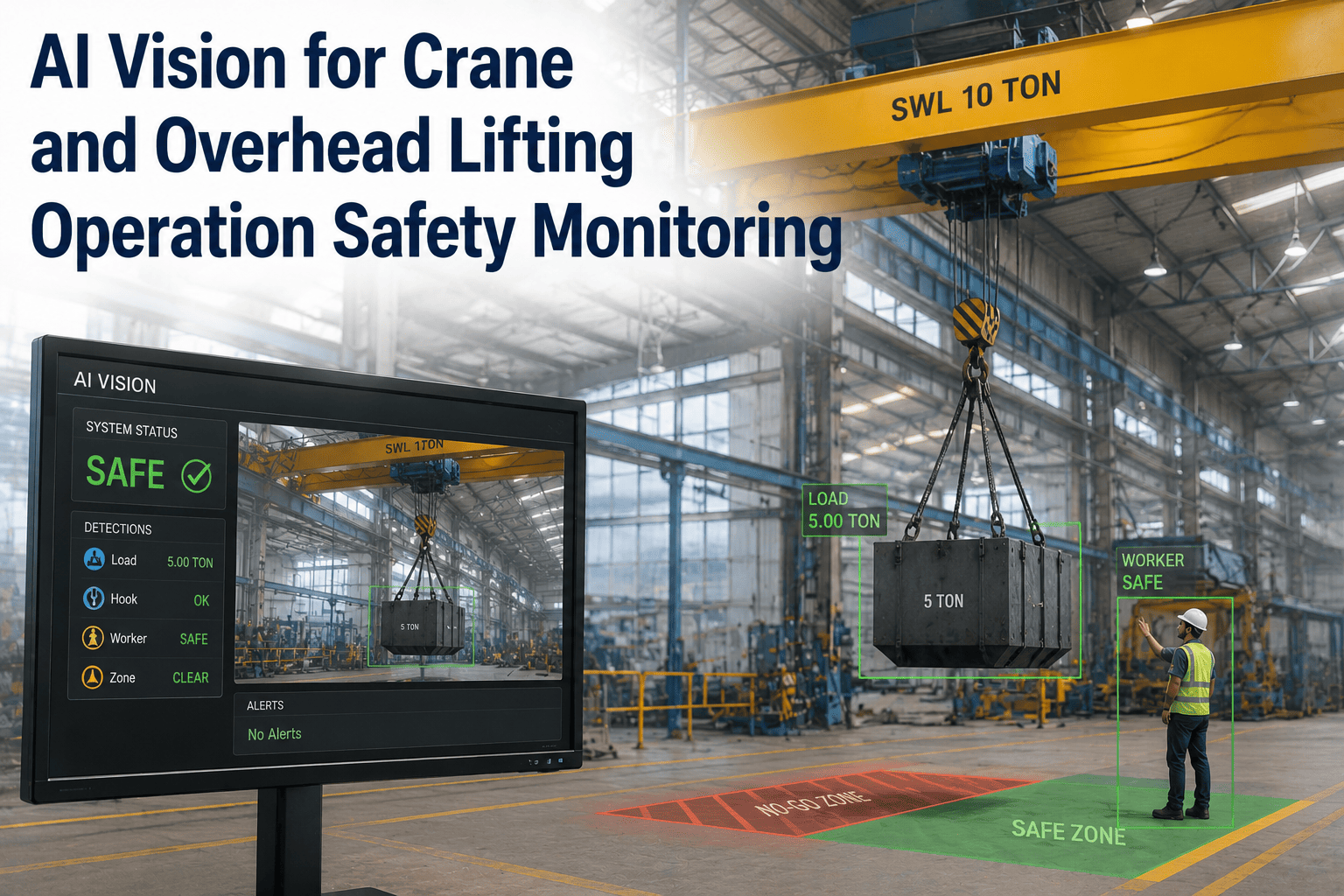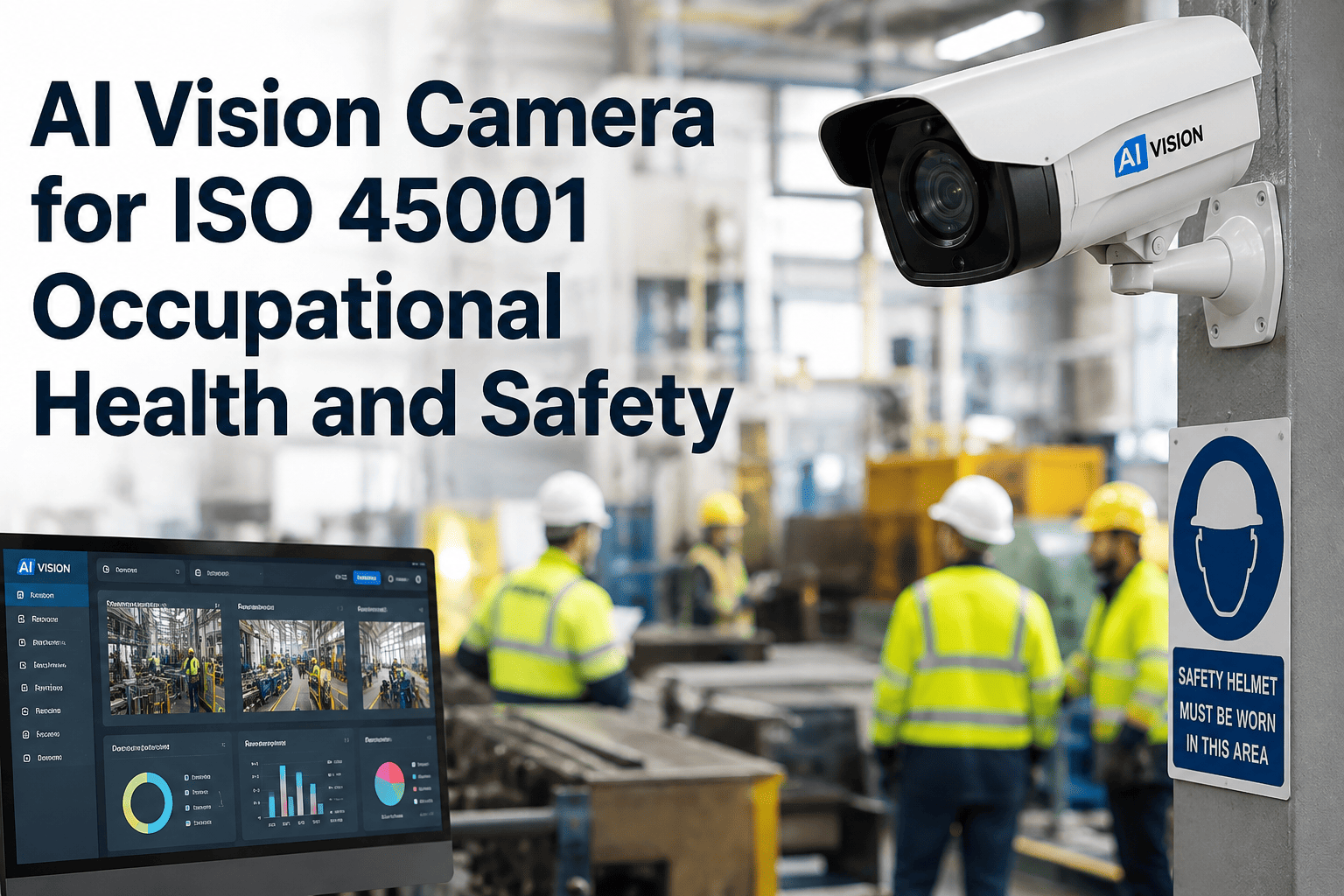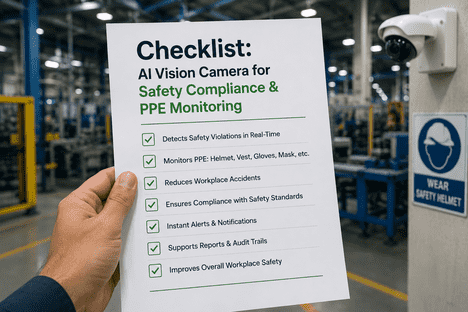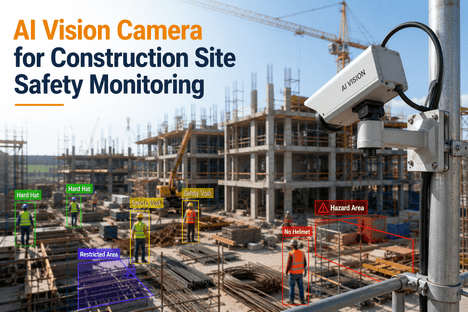
Construction remains one of the most hazardous industries in terms of workplace fatalities, and the core safety problem is not a lack of rules — OSHA's 29 CFR 1926 standards are detailed and well established — it is the gap between when a rule is written and when a violation is actually observed. A safety officer walking a site can only be in one place at a time, and conventional safety audits routinely miss a significant share of transient violations simply because of the scale, pace, and complexity of an active job site. A missing hard hat, a worker stepping past a barrier into an exclusion zone, a person standing too close to a swinging crane load — these moments often last seconds, and by the time a periodic walkthrough reaches that area, the risk has already passed or, worse, already become an incident. AI Vision changes this by giving every camera on site a continuous, never-blinking set of eyes: deep learning models trained to recognize PPE compliance, exclusion zone boundaries, fall hazards, and equipment proximity risk in real time, every shift, across every monitored zone simultaneously. To see how iFactory's AI Vision Camera applies this to your specific site conditions, Book a Demo with our safety technology team.
Why Periodic Safety Walkthroughs Cannot Catch Most Violations
Construction sites are dynamic by nature — crews move between trades, equipment relocates throughout the day, and the layout of hazards shifts as the build progresses. A safety officer conducting scheduled walkthroughs can reasonably cover only a fraction of the site at any given moment, which means the majority of PPE lapses, exclusion zone breaches, and proximity hazards occur and resolve themselves — sometimes safely, sometimes not — entirely outside the inspection window. This is compounded by the inherent difficulty of visually tracking workers on a cluttered site: a worker can be fully compliant when last observed and then become partially obscured behind equipment or material stacks moments later, a problem commonly described as occlusion, which conventional spot-check methods have no way to account for.
AI Vision addresses both limitations directly. Continuous camera coverage means there is no inspection window to miss a violation within, and models trained with temporal tracking remember a worker's PPE status and position even when they are briefly obscured behind a load or piece of equipment, rather than treating every reappearance as a fresh, unverified observation. This shifts site safety oversight from a sampling problem — catching whatever happens to be visible during a scheduled pass — to a continuous monitoring problem, where every zone under camera coverage is observed at all times rather than intermittently.
What the AI Vision Camera Monitors on an Active Construction Site
Before vs. After: Site Safety Oversight with AI Vision
The difference between a site relying on scheduled safety walkthroughs and one running continuous AI Vision monitoring is measurable across detection speed, coverage completeness, and incident response time — the three factors that most directly determine whether a hazard is caught before or after it causes harm.
| Performance Area | Scheduled Walkthroughs | iFactory AI Vision Camera | Measurable Impact |
|---|---|---|---|
| Violation Detection Coverage | Periodic — misses violations between scheduled passes | Continuous — every camera zone monitored at all times | Up to 70% of transient violations caught |
| PPE Compliance Verification | Visual spot checks — inconsistent, inspector-dependent | AI-detected — consistent criteria applied every time | 95%+ detection accuracy |
| Exclusion Zone Enforcement | Manual observation — breach may go unnoticed | Automated — real-time alert on unauthorized entry | Immediate supervisor notification |
| Fall Hazard Identification | Reactive — observed during scheduled inspection only | Proactive — flagged the moment exposure begins | Intervention before a fall occurs |
| Compliance Documentation | Manual notes — incomplete, time-consuming to compile | Automated — time-stamped video and log evidence | Audit-ready records with no manual effort |
How AI Vision Handles Site Clutter, Occlusion, and Connectivity Limits
Construction sites pose detection challenges that controlled indoor environments do not. Equipment, material stacks, and shifting crews routinely block a camera's line of sight to a worker, and a model that loses track of a person every time they pass behind a load is of limited practical value. iFactory's AI Vision Camera addresses this with multi-angle camera coverage and temporal tracking, so a worker's PPE status and position carry forward through brief obstructions rather than resetting to an unknown state every time visibility is interrupted. High-angle placement on tower cranes or temporary masts is used where possible to reduce occlusion and maintain the clearest available view of exclusion zone boundaries and elevated edge hazards.
Remote and large-footprint infrastructure sites often lack reliable fiber connectivity, which is why processing runs on edge compute hardware located on-site rather than depending on a constant high-bandwidth cloud connection. Video is analyzed locally, and only compressed alert data and supporting metadata are transmitted over standard LTE or 5G connections — keeping detection responsive even on sites where network infrastructure is limited. Alert logic is similarly tiered to avoid the alert fatigue that undermines trust in any monitoring system: a minor, low-urgency observation is logged for a shift-end summary or supervisor coaching session, while an active fall risk or proximity hazard triggers an immediate, site-wide alert.