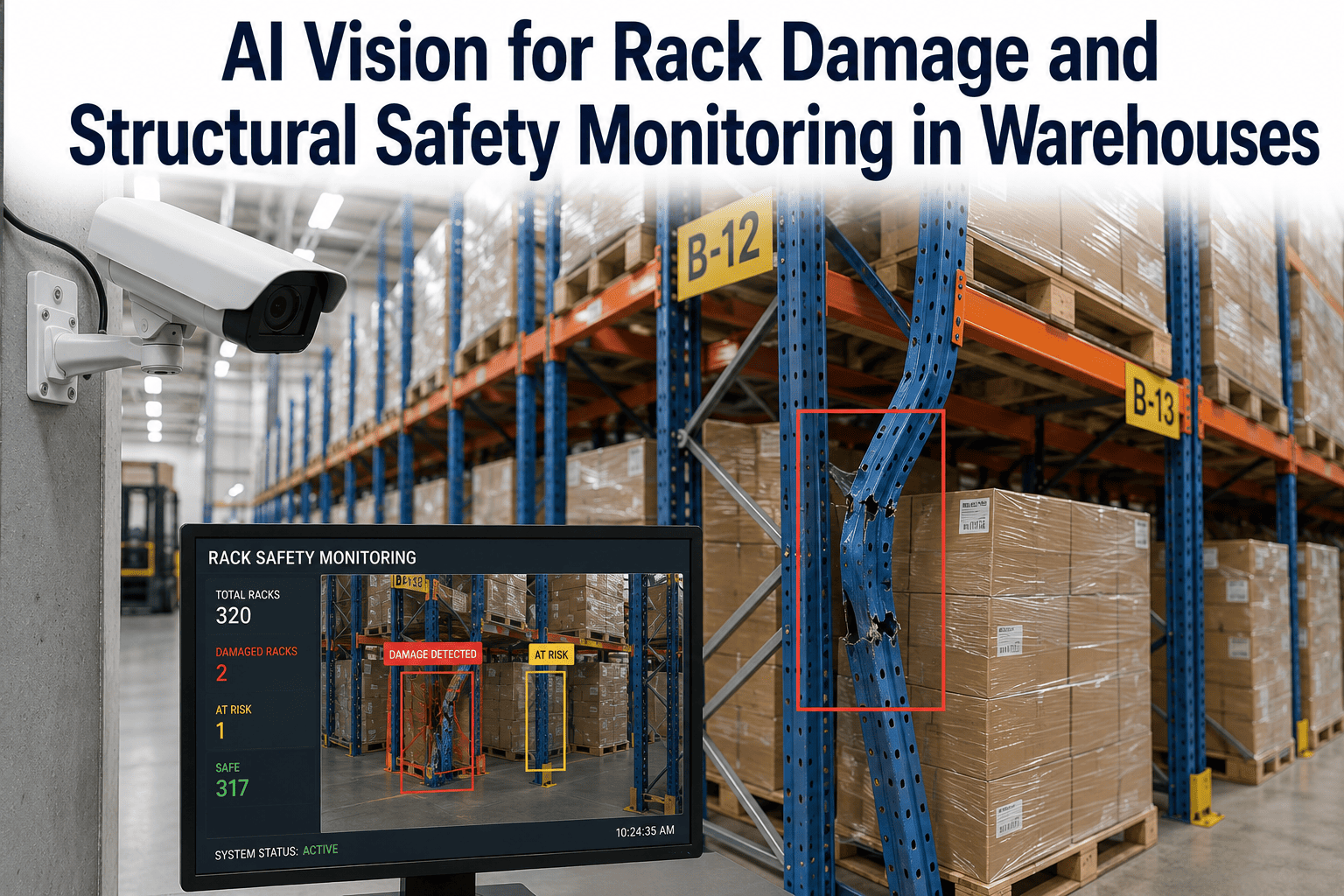
A bent upright doesn't announce itself. It sits there, quietly carrying less load than it was designed for, until the day a forklift clips it again, or a picker loads one more pallet than the beam was ever meant to hold, and the whole bay comes down. Rack inspection is legally required and routinely skipped, because walking every aisle with a checklist is slow, subjective, and easy to deprioritize when the warehouse is already behind on picking targets. iFactory's structural vision system watches racking continuously so damage gets caught the day it happens, not the week of the annual audit.
Rack Collapse Doesn't Start With the Collapse. It Starts With an Impact Nobody Reported.
Most damaged racking has been hit before it fails — the gap is almost always between the impact and anyone actually inspecting or reporting it before the next load goes up.
Why Manual Rack Inspection Consistently Falls Behind
Formal rack inspection programs exist at most warehouses on paper. In practice, a scheduled quarterly walk-through covers a snapshot in time, and everything that happens between inspections — the daily forklift contact, the slow accumulation of overloading on a popular SKU location, the beam that got clipped on a Tuesday and never got reported — goes unrecorded until the next scheduled pass, or until it fails outright. The inspection frequency isn't the real gap; the real gap is the days or weeks of exposure between damage occurring and damage being noticed.
What the Camera Is Actually Trained to Catch
Rack damage detection isn't a single problem — it's several distinct visual patterns, each with a different failure mechanism and a different urgency level. A trained vision model separates these rather than flagging every visual irregularity as equally urgent, which is what makes the alert stream usable instead of another source of fatigue for the safety team.
Upright & Frame Deformation
Continuous visual comparison against a healthy baseline for each frame identifies bowing, bending, or twisting in vertical uprights — the component most directly tied to catastrophic collapse risk.
Beam Connector Integrity
Detects partial disengagement or damage at beam-to-upright connection points, which frequently precede a beam dropping under load with little other visible warning.
Forklift Impact Events
Logs contact events in real time, tying each impact to a specific rack location and timestamp so a bay gets flagged for inspection immediately rather than relying on the driver to self-report.
Overloading Indicators
Visual sag and deflection patterns in beams under load can indicate approaching or exceeded capacity limits, particularly relevant where SKU mix or pallet weight has shifted since the racking was originally specified.
The Real Cost of Rack Damage Going Unnoticed
Rack collapse is among the more severe injury categories in warehousing, and the majority of collapse incidents trace back to damage that existed, visibly, for some period before failure.
A collapsed bay doesn't just damage the structure — product on and around it is frequently destroyed or rendered unsellable, compounding the direct repair cost.
A failed or condemned bay takes the surrounding aisle out of service for repair, disrupting picking flow and slotting well beyond the footprint of the damaged rack itself.
Regulatory frameworks generally require documented, periodic rack inspection — continuous monitoring produces the audit trail manual walk-throughs alone often can't reliably demonstrate.
Every Unreported Forklift Bump Is a Data Point You're Currently Missing
iFactory logs impact events and structural changes continuously, so a damaged bay gets flagged the day it happens instead of the next time someone happens to look up.
Manual Walk-Through vs. Continuous Monitoring
| Factor | Scheduled Manual Inspection | Continuous AI Monitoring |
|---|---|---|
| Coverage frequency | Typically weekly to quarterly | Continuous, every shift |
| Impact event capture | Relies on driver self-reporting | Logged automatically at time of contact |
| Consistency | Varies by inspector experience and time pressure | Consistent detection criteria across every bay |
| Documentation | Paper or spreadsheet checklist | Timestamped image history per rack location |
| Time-to-flag | Days to weeks after damage occurs | Near-immediate, tied to a work order |
A Composite Scenario: Catching Beam Deflection Before Failure
Consider a mid-size distribution center running high-throughput selective racking across a beverage SKU set where pallet weights had crept up over several years as packaging changed, without a corresponding review of rack load ratings. Six weeks into a monitoring deployment, the system flagged progressive beam deflection on a single bay in a fast-moving aisle — a gradual sag pattern building over eleven days rather than a single sudden event.
The bay was pulled from rotation and inspected before the next restock cycle, and the beam was found to be operating close to its rated capacity limit given the actual pallet weights being stored there, not the weights the racking had originally been specified for. The fix was a targeted reslotting of that SKU to a heavier-duty bay elsewhere in the facility — a straightforward operational change once the underlying issue was visible, rather than a structural failure discovered the hard way during a routine restock.
Setting Up a Monitoring Rollout: Priorities That Matter Most
Not every aisle carries the same risk, and a rollout that tries to cover an entire facility on day one usually moves slower than one that starts where the exposure is highest. High-traffic aisles with frequent forklift movement, racking storing the heaviest or highest pallets, and any bay with a documented history of prior impact or near-miss reports are the natural starting points — the locations where continuous monitoring closes the largest gap between current risk and current visibility.
Start With Incident History
Aisles with a documented history of prior rack damage or forklift contact carry a materially higher likelihood of recurrence, making them the highest-value first deployment zone.
Weight by Traffic Density
High-throughput aisles see proportionally more forklift passes per shift, and impact frequency tends to track closely with how often equipment moves through a given zone.
Factor in Load Severity
Racking storing the heaviest pallets or operating closest to rated capacity carries a higher consequence if damage goes unnoticed, even where traffic volume is moderate.
Expand in Stages
A phased rollout across highest-risk zones first lets the safety team validate alert accuracy and workflow before extending coverage facility-wide.
Metrics That Confirm the Program Is Reducing Risk
A rack monitoring program is worth judging on outcomes, not just on how many cameras got installed. These are the indicators that show whether continuous monitoring is actually changing behavior and reducing exposure on the floor, rather than just producing a bigger archive of images.
Whether logged forklift contact events decline over time as drivers become aware their movements near racking are being tracked and reviewed is often the clearest early behavioral signal.
How quickly a flagged bay gets pulled from active use after a severe or critical alert reflects whether the alert routing and floor response process are actually working together.
Bays that generate repeated damage alerts point to a structural or layout issue — a blind corner, a tight aisle turn — worth addressing at the root rather than repairing the same rack repeatedly.
Continuous, timestamped documentation typically cuts the time a safety team spends assembling records ahead of an internal or regulatory rack safety audit compared with reconstructing history from paper checklists.
Frequently Asked Questions
Does this replace our formal periodic rack inspection program?
It complements rather than replaces a formal inspection program — continuous monitoring catches impact events and developing damage between scheduled inspections, while a qualified inspector still performs periodic structural assessments against the relevant standard. Many facilities use the continuous monitoring history to make those periodic inspections faster and better targeted. Visit support for guidance on integrating both.
How does the system distinguish minor cosmetic damage from something structurally significant?
Detection models are trained to classify damage type and severity rather than flagging any visual change equally — a scuff or paint scrape is logged differently than a measurable bow or connector displacement, and severity classification drives how urgently a given event gets routed to the safety or maintenance team.
Can this identify which forklift or operator caused a specific impact?
The system logs the location, time, and severity of an impact event tied to the rack structure itself; correlating that with a specific vehicle or operator typically depends on what other fleet or access tracking systems a facility already has in place, and can be configured as part of a broader deployment where that data exists.
How is this installed across an existing warehouse without disrupting operations?
Camera placement is typically planned around existing aisle layouts and can be staged by zone, starting with the highest-traffic or highest-value racking areas, without requiring operations to pause. Most installations are scheduled during normal shift changes or planned maintenance windows rather than requiring dedicated downtime.
What kind of documentation does this produce for compliance purposes?
Every flagged event generates a timestamped image and classification record tied to a specific rack location, building a continuous, auditable history that's generally more complete than a periodic paper checklist. Book a demo to see example documentation output for a facility your size.
The Bay That Fails Was Damaged Long Before It Collapsed
iFactory turns racking into continuously monitored structure, not a once-a-quarter checklist item — catching the impact before it becomes the incident.