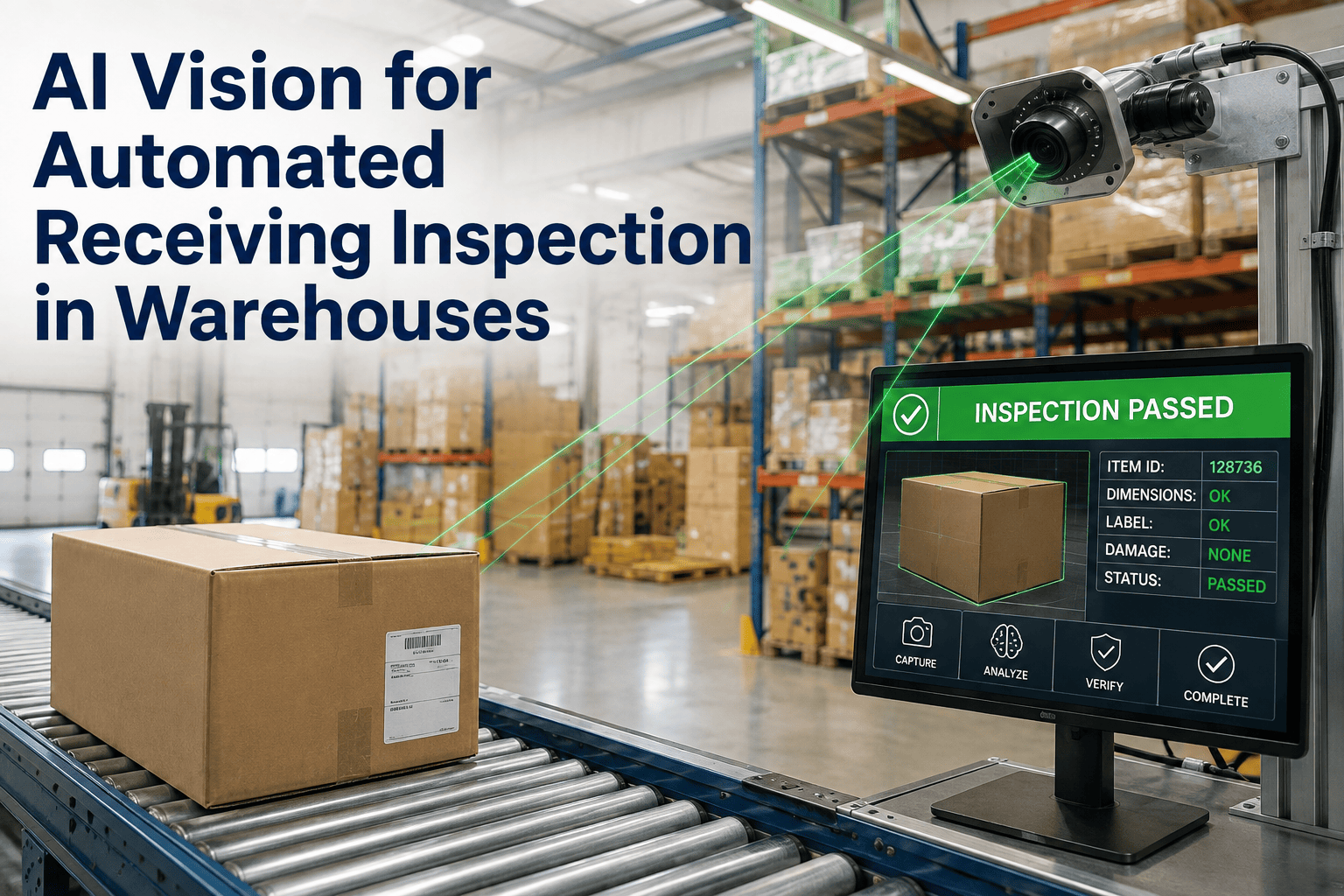
A pallet comes off the truck, the driver hands over a packing slip, and a receiving associate has maybe ninety seconds to count cartons, check for damage, and match everything against a purchase order before the next truck backs into the dock. Multiply that by forty or fifty receipts a day, across a rotating crew, and it becomes obvious why receiving is the single largest source of inventory discrepancies in most warehouses — not because people are careless, but because the process asks a human eye to do a machine's job at a machine's pace. See how iFactory's AI cameras verify inbound shipment contents, quantities, and condition against the purchase order automatically before goods ever reach the pick face.
AI Vision for Automated Receiving Inspection in Warehouses
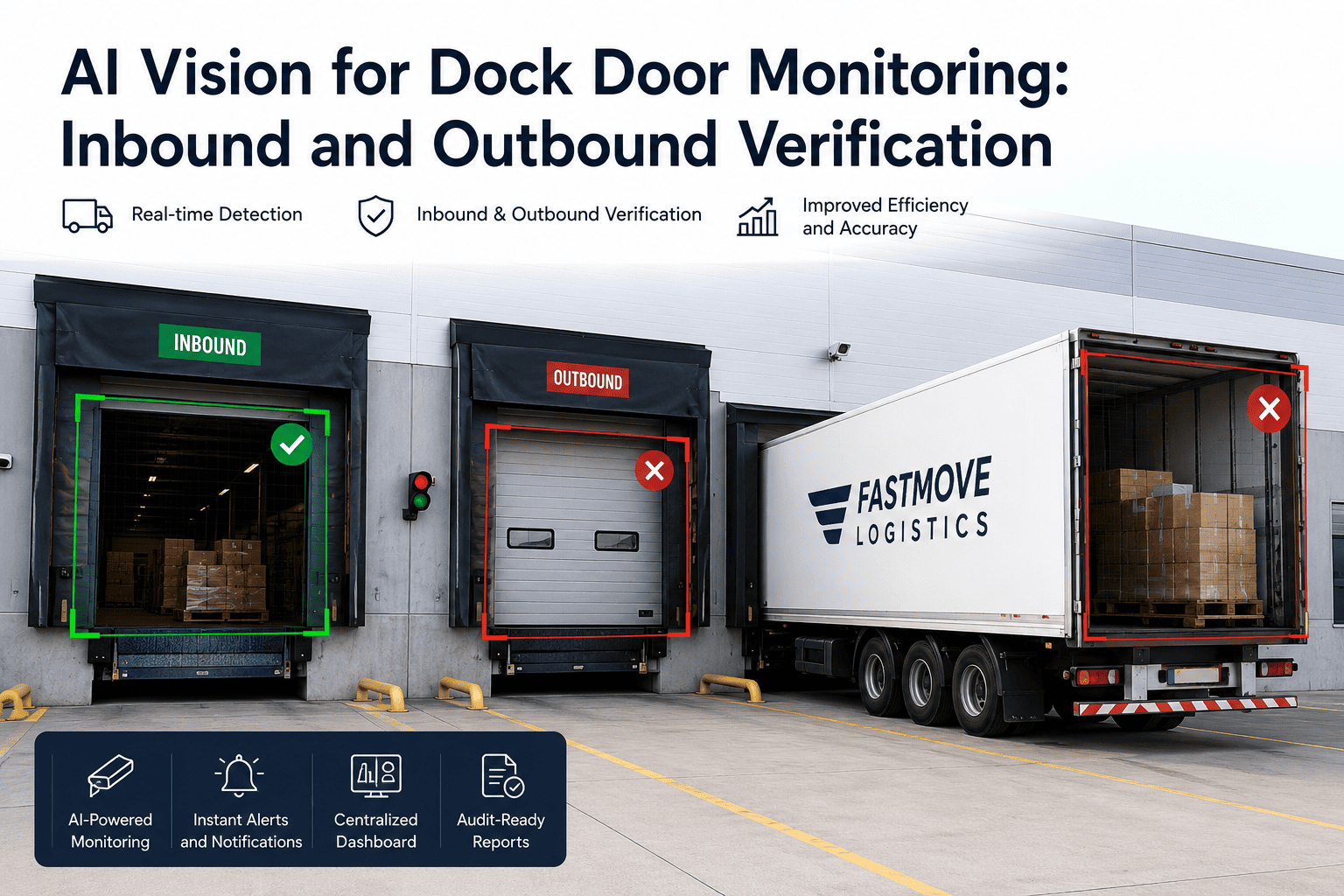
Cameras at every receiving dock verify item counts, SKU identity, and package condition against the purchase order in real time — flagging shortages, overages, and damage before a single unit is scanned into inventory.
Receiving Creates the Record Everything Else Trusts
Inventory discrepancies get discovered during cycle counts, but they are rarely created there — cycle counting only detects the symptom, weeks or months after the actual error entered the system. The originating defect is almost always upstream: a miscount at the dock, a missed damage note, a mislabeled pallet scanned as the wrong SKU. Once that flawed count becomes the opening inventory record, every downstream process — allocation, picking, fulfillment, reordering — inherits an error nobody catches until a customer gets the wrong shipment or a shelf comes up short.
Operators track this as First-Pass Receiving Accuracy — the percentage of receipts processed without any exception — and a widely used benchmark is that anything below roughly 96 to 98% signals that receiving itself is introducing errors that will surface later as cycle count variance, picking mistakes, or fulfillment delays. Getting receiving right isn't a nice-to-have process improvement. It's the control point that determines whether every downstream number in the warehouse means anything at all.
The discrepancy doesn't have to be dramatic to matter. A count that's off by two units on a five-hundred-unit pallet looks close enough to correct in the moment, and it usually is what happened — not fraud, not negligence, just a fast count under a deadline. But that small gap compounds. Multiply it across dozens of receipts a week and hundreds of SKUs, and small, individually forgivable miscounts become the chronic variance that inventory teams spend hours every month trying to explain, without ever being able to trace it back to the specific pallet where it actually started.
What Changes When a Camera Does the Counting
Catch Discrepancies at the Dock, Not Three Weeks Later
iFactory verifies every inbound shipment against the purchase order the moment it hits the dock, so the inventory record starts accurate instead of getting corrected after the fact.
From Truck to Verified Record in Five Stages
The system pulls the advanced shipping notice or open PO for the incoming carrier and pre-loads the expected SKUs, quantities, and pack structure before the truck is even unloaded.
As pallets or cartons pass the dock camera, the system counts units and cases automatically, catching split cases and mixed pallets that a quick manual glance would miss.
Every unit is scanned visually for crushed corners, tears, leaks, and broken seals, flagging damaged goods for a hold area before they're mixed in with sellable inventory.
Counted quantity and identified SKUs are compared against the purchase order in real time, generating an exception the instant a shortage, overage, or wrong item appears.
Only reconciled, undamaged inventory releases to putaway — anything flagged routes to a hold area with a documented reason, so nothing questionable reaches a pick face unchecked.
Four Discrepancy Types AI Vision Flags Automatically
Fewer units on the pallet than the purchase order specifies — one of the most common and most expensive discrepancies, since it silently reduces available stock the system still believes is on hand.
Extra units beyond what was ordered, which inflate inventory records if received without question and complicate accounts payable when invoice quantities don't match what actually arrived.
A visually similar item received and counted as the correct SKU — a common failure mode when supplier labeling is inconsistent or barcodes are faded, and one that quietly corrupts inventory accuracy at the source.
Crushed cartons, torn packaging, leaking containers, and broken seals identified before goods are shelved, rather than discovered by a customer or during a later pick.
Each of these discrepancy types shares the same underlying pattern: they are all things a human would catch reliably given unlimited time, and all things a human misses under the actual time constraints of a busy dock. That gap between "would catch with enough attention" and "catches under real conditions" is exactly where AI vision adds value — not by outperforming human judgment on any individual inspection, but by applying the same level of scrutiny to the four hundredth pallet of the shift that it applied to the first.
Every Receipt Becomes Supplier Performance Data
Repeated discrepancies from a single supplier are an early warning sign, but only if someone is tracking them consistently — and in most warehouses, that tracking happens informally at best, dependent on a receiving clerk remembering to note a pattern across dozens of shipments a week. Because every AI-verified receipt is automatically logged with the specific discrepancy, timestamp, and photo evidence, that data accumulates into a supplier scorecard without anyone having to build one manually.
That record becomes real leverage in supplier conversations. Instead of an anecdotal complaint about a vendor who "always seems to short-ship," procurement teams get a documented discrepancy rate, tied to specific purchase orders and photo evidence, that supports claims, chargebacks, and contract renegotiations with the kind of evidence a supplier can't easily dispute.
The same record also protects the warehouse from the reverse problem — a carrier or supplier disputing a shortage claim after the fact. With a timestamped photo of exactly what arrived on the dock, receiving teams no longer have to rely on a memory of what a pallet looked like three weeks ago when a dispute finally reaches resolution. That evidentiary record often shortens claim cycles considerably, since suppliers have far less room to push back against a documented count with photo backup than against a handwritten note on a packing slip.
Why Even Careful Receiving Teams Still Miss Discrepancies
It's tempting to treat receiving errors as a training problem — hire more carefully, train more thoroughly, slow the process down. In practice, the constraint isn't diligence, it's throughput. A receiving associate working a busy dock is asked to count accurately, inspect for damage, verify labels, and keep the queue moving, often while a supervisor is watching the clock on the next truck. Under that kind of sustained time pressure, even a genuinely careful worker will occasionally round a count, skip opening a case, or glance past a barcode that looks close enough to correct.
This is precisely the kind of error a camera doesn't make. It doesn't feel time pressure, doesn't get less attentive by the end of a shift, and counts the fortieth pallet with the same precision as the first. That doesn't make the receiving team less capable — it means the verification step no longer has to compete with the throughput goal, because the two happen simultaneously instead of one being sacrificed for the other.
The Real Cost of an Unverified Shortage
A short shipment that goes unnoticed at the dock doesn't cost the warehouse anything visible that day — it costs something three weeks later, when a pick fails because the system says stock is available and it isn't, or when a customer order ships incomplete because nobody caught the shortage at the point where it would have been cheapest to fix. By the time that error surfaces, it has already generated a failed pick, a customer service escalation, an expedited reshipment, and an investigation to figure out where the number went wrong — costs that dwarf the few seconds it would have taken a camera to flag the discrepancy on arrival.
The same logic applies to damaged goods received without inspection. A crushed case that reaches the pick face looks fine on the shelf until a picker opens it to fulfill an order, at which point the damage becomes the warehouse's problem rather than a supplier claim filed the same day the pallet arrived. Catching that damage at the dock — while there is still time to document it, quarantine it, and file a claim — is worth considerably more than catching it after it has already been shelved, picked, and shipped.
The Ripple Effect of Accurate Receiving
Frequently Asked Questions
Give Your Inventory Record a Trustworthy Starting Point
iFactory's AI vision verifies every inbound shipment against the purchase order — quantity, SKU, and condition — before goods ever enter your inventory system.