Every dock door in your facility is a moment of truth most warehouses still leave to a clipboard. A driver backs in, a team member counts cartons off a pallet by eye, and whatever number gets written down becomes the system of record for everything that follows. When that count is wrong, nobody finds out at the dock — they find out three steps downstream, when a pick comes up short or a customer disputes an invoice. iFactory's AI Vision Cameras put a second set of eyes at every dock door that never loses count.
The dock door is where inventory accuracy is won or lost — before a single item reaches the floor
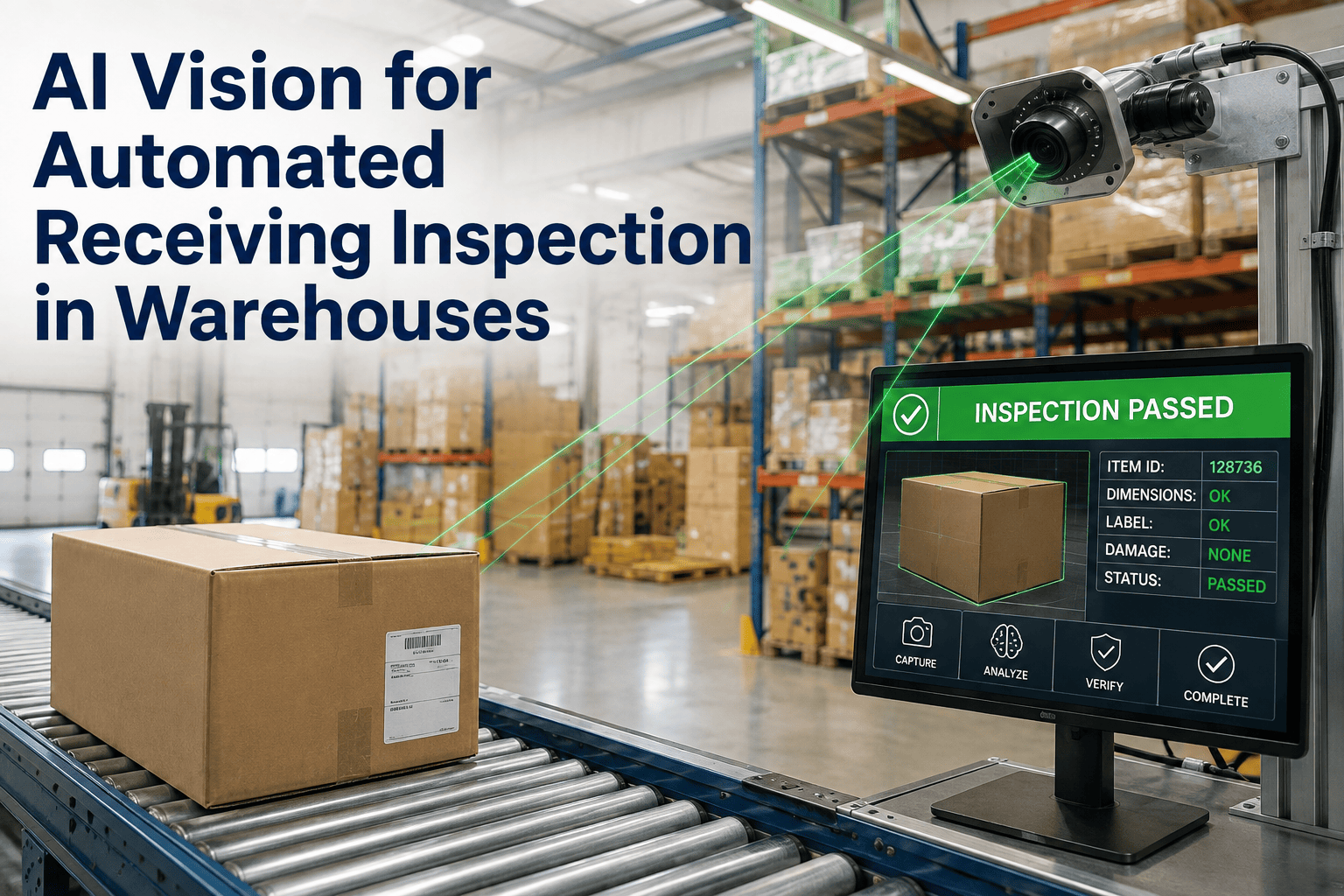
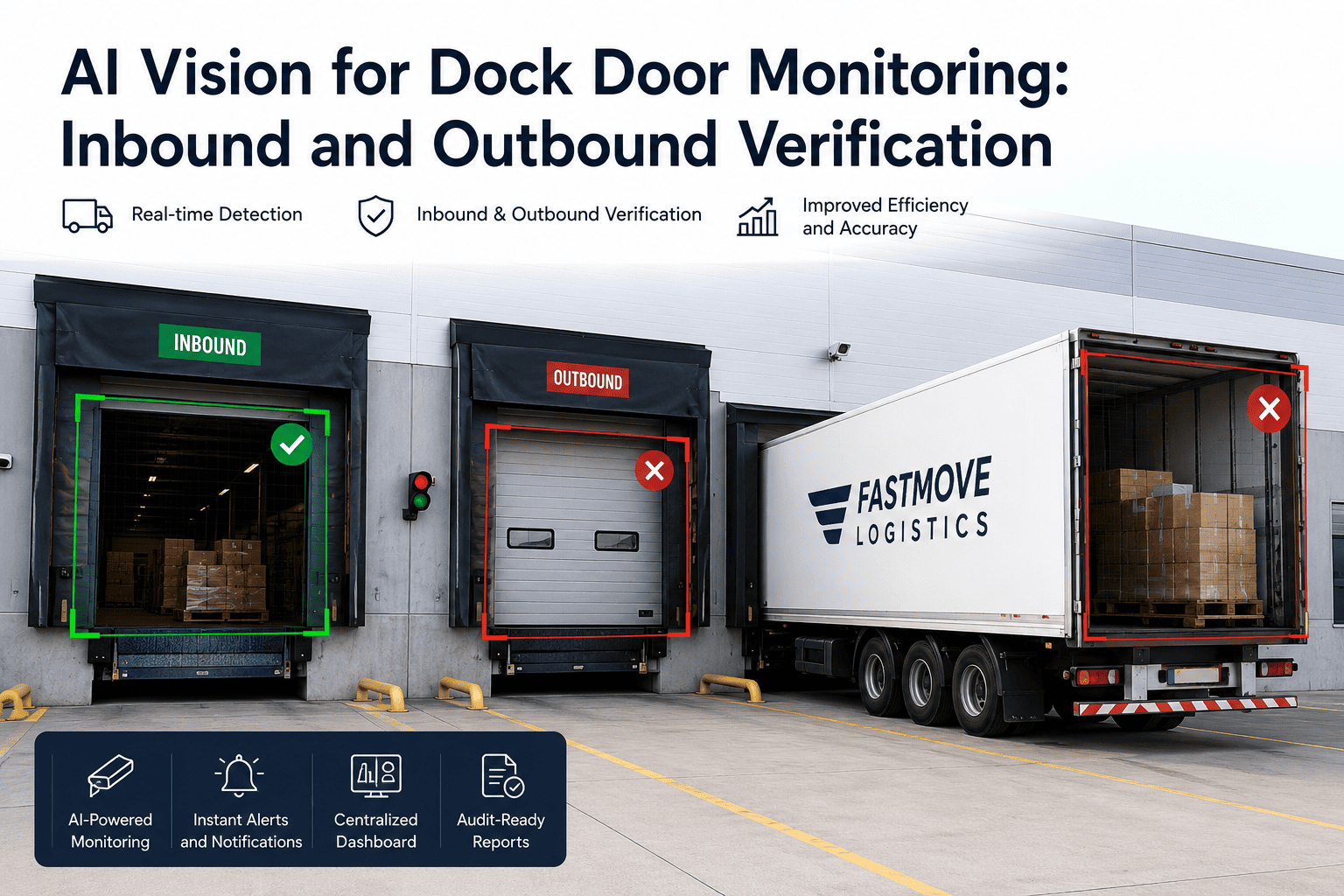
AI cameras count and verify every inbound and outbound shipment against purchase orders and pick lists in real time, catching discrepancies at the truck instead of three moves downstream.
Most warehouses are running on 85-90% inventory accuracy — and the dock is where it breaks
Industry benchmarking consistently puts typical warehouse inventory accuracy in the 85-90% range, with the missing share showing up later as phantom inventory: stock the system believes is on hand but isn't physically where it should be. A large share of that gap traces back to the first transaction in the chain — the receiving count — where a rushed manual tally at a busy dock door becomes the foundation every downstream system builds on.
Receiving accuracy benchmarks typically target 98-99.5%, and the gap between that target and reality is rarely a training problem. It's a volume and fatigue problem. A single trailer can carry hundreds of cartons across dozens of SKUs, and a person manually counting and cross-checking each one against a purchase order, one carton at a time, is working against both the clock and the driver waiting to pull out of the bay.
The pressure compounds during peak periods. Inefficiencies at receiving and putaway can cut productivity by as much as a quarter during high-volume windows — exactly when the temptation to wave a shipment through on a visual estimate is strongest, and exactly when the cost of a miscounted pallet is highest, because every downstream process is already running at capacity with no slack to absorb a bad number.
What happens without verification
What changes at the dock door
A miscount that costs $50 to fix at the dock can turn into a $400-500 problem once it reaches a customer's assembly line or a picker's error report — the cost of an error grows the further downstream it travels before anyone catches it. Book a 30-minute session and we'll show you how many of those miscounts your dock doors are currently absorbing.
Inbound and outbound both need the same discipline — most facilities only apply it to one
Receiving gets more attention because the errors are more visible, but outbound verification is where mistakes turn directly into customer-facing costs: wrong shipments, retail chargebacks, and disputes your team has no visual evidence to resolve. A verification layer that only watches one direction leaves the other half of the dock exposed, and outbound errors are often the more expensive of the two, since they've already traveled past every internal checkpoint by the time anyone notices.
Retail chargebacks in particular carry costs that extend well beyond the disputed invoice amount. Every dollar formally deducted through a chargeback typically drags a multiple of indirect operational cost behind it — the labor spent researching the claim, the paperwork trail, the strained relationship with a retail customer who now audits every subsequent shipment more closely. A visual record settles the dispute the moment it's raised, instead of turning it into a weeks-long back-and-forth with no hard evidence on either side.
Receiving verification
Shipping verification
From truck backing in to verified record, without slowing the dock down
The workflow is designed to disappear into the existing dock routine rather than sit on top of it as an extra task. Nobody has to remember to run a scan or fill out a separate count sheet — the camera does the counting as freight naturally moves through the door, and the verification happens in the background while the crew keeps working.
Camera images the load as it moves
Fixed dock-mounted cameras capture the shipment as cartons and pallets are unloaded or loaded, working at the natural pace of the dock crew.
AI counts and identifies visually
The model recognizes and counts units the way a person does, without needing a readable barcode on every carton or a clean line-of-sight scan.
Count is checked against the record
The verified count is compared against the purchase order for inbound freight or the pick list for outbound freight, automatically and in seconds.
Match confirmed or discrepancy flagged
A clean match logs and closes automatically. A mismatch triggers an immediate alert with photo evidence while the truck and paperwork are still at the dock.
Scanning works until it doesn't — and a full trailer is where it usually doesn't
Barcode scanning is reliable when every item has a readable, unobstructed label and the operator has time to scan each unit individually. In practice, that ideal condition breaks down constantly. Labels get damaged in transit, wrapped in shrink film, printed on curved surfaces that deflect a laser scanner, or simply buried inside a mixed pallet where reaching every carton means partially unstacking the load first.
Scanning a full pallet of two hundred boxes means two hundred individual scan events, and each one carries a small failure probability that compounds across the load. Under time pressure — with a driver waiting and three more trucks queued in the yard — the practical choice most teams make is to scan a sample and estimate the rest, or skip scanning entirely and count by eye. Vision-based counting doesn't depend on a label being present or readable at all. It counts the way a person does, visually, but does it consistently across every carton on every pallet without fatigue or the incentive to move fast and estimate.
There's also a data-quality argument that barcode-only systems can't fully address. A scan confirms that a code was read; it doesn't confirm that the physical count of units on the pallet matches what the code implies, especially when a single scan is used to represent an entire case or pallet quantity. Visual counting verifies the physical reality directly — the actual number of units the camera can see and count — which closes a gap that scan-based systems structurally can't, no matter how well the scanning process is run.
A verified dock door is also a faster one
Accuracy and speed at the dock are usually framed as a trade-off — count carefully or count fast, pick one. In practice, the manual counting step is often the slowest part of the whole dock cycle, which means removing it as a bottleneck improves both dimensions at once rather than forcing a choice between them.
Dock door utilization is typically healthiest in the 60-75% range. Push much higher and the door has no slack left to absorb a late truck or a problem receipt without disrupting the next several appointments in the queue, which is exactly the condition that pushes teams toward cutting corners on the count just to keep trucks moving. A verification layer that runs at the natural pace of unloading — instead of adding a separate counting step — keeps dwell time down without asking dock crews to choose between speed and accuracy in the first place.
What dock verification delivers within the first quarter
The same error costs more every step it travels
An error caught at the dock is cheap to fix. The same error caught during a pick, a cycle count, or a customer delivery is not, because by then it has already influenced decisions that have to be unwound — a replenishment order placed against a phantom quantity, a pick confirmed against a location that was never actually full, a shipment that left the building with the wrong count already baked into the paperwork.
This is the practical reason receipt-point verification delivers outsized value relative to its cost. It doesn't just catch more errors — it catches them at the one point in the process where correction is nearly free: the driver is still there, the paperwork is still open, and nothing downstream has been built on top of the bad number yet. Every dock door without that layer of verification is a place where a cheap fix quietly becomes an expensive one, one shipment at a time.
See your own dock doors verified in a live walkthrough
Bring your current receiving and shipping process and we'll show you exactly where a camera catches what a manual count misses.
What a dock verification rollout actually involves
None of this requires ripping out your existing dock infrastructure or pausing operations to install it. The deployment is scoped around your current camera setup, door count, and WMS integration, not a generic template, and the rollout is designed so dock crews never have to learn a new manual process — the system observes what's already happening rather than adding a step to it.
Works with existing cameras where possible
Many facilities can reuse current dock-mounted or security cameras, adding purpose-built units only where coverage or resolution gaps exist, which keeps hardware cost proportional to what's actually missing rather than assuming a full replacement everywhere.
Connects to your PO and pick list data
Verification runs against your actual purchase orders and pick lists, not a separate system your team has to maintain in parallel, so there's no duplicate data entry or reconciliation step added to anyone's workload.
Shadow-mode validation before go-live
Counts run alongside your current manual process first, so accuracy is proven against real freight before alerts start driving action.
Door-by-door rollout
Start with your highest-volume or highest-discrepancy dock doors and expand once the model is calibrated to your freight mix.
No added steps for dock crews
The camera works at the natural pace of loading and unloading — there's no extra scanning step or manual entry added to the process.
24x7 managed monitoring
iFactory's operations team monitors model performance and accuracy trends so your team isn't managing software on top of the dock.
Dock verification, explained plainly
Every unverified dock door is a gap in your inventory accuracy
Close it before the next miscounted pallet turns into a downstream pick error or a customer dispute.