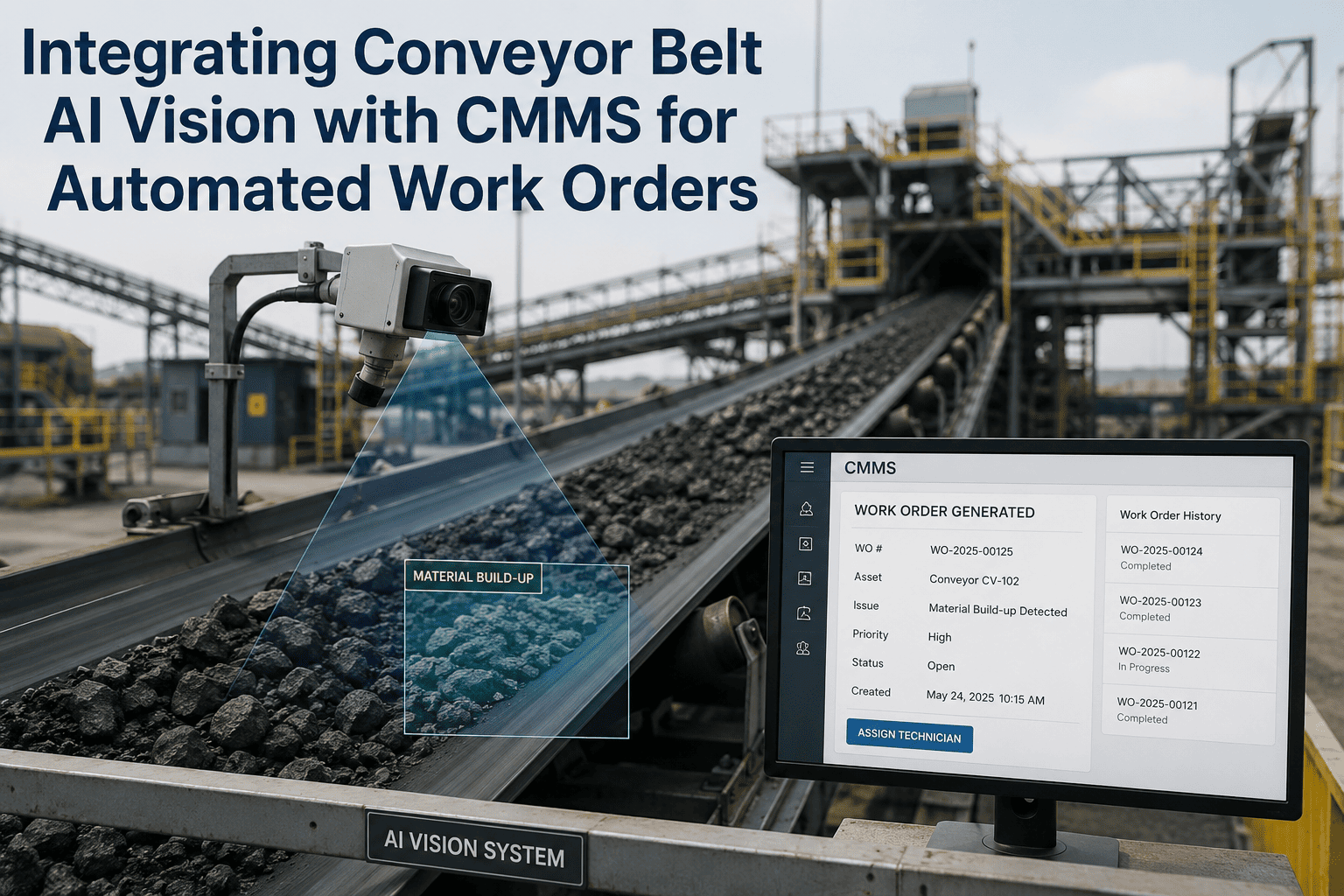
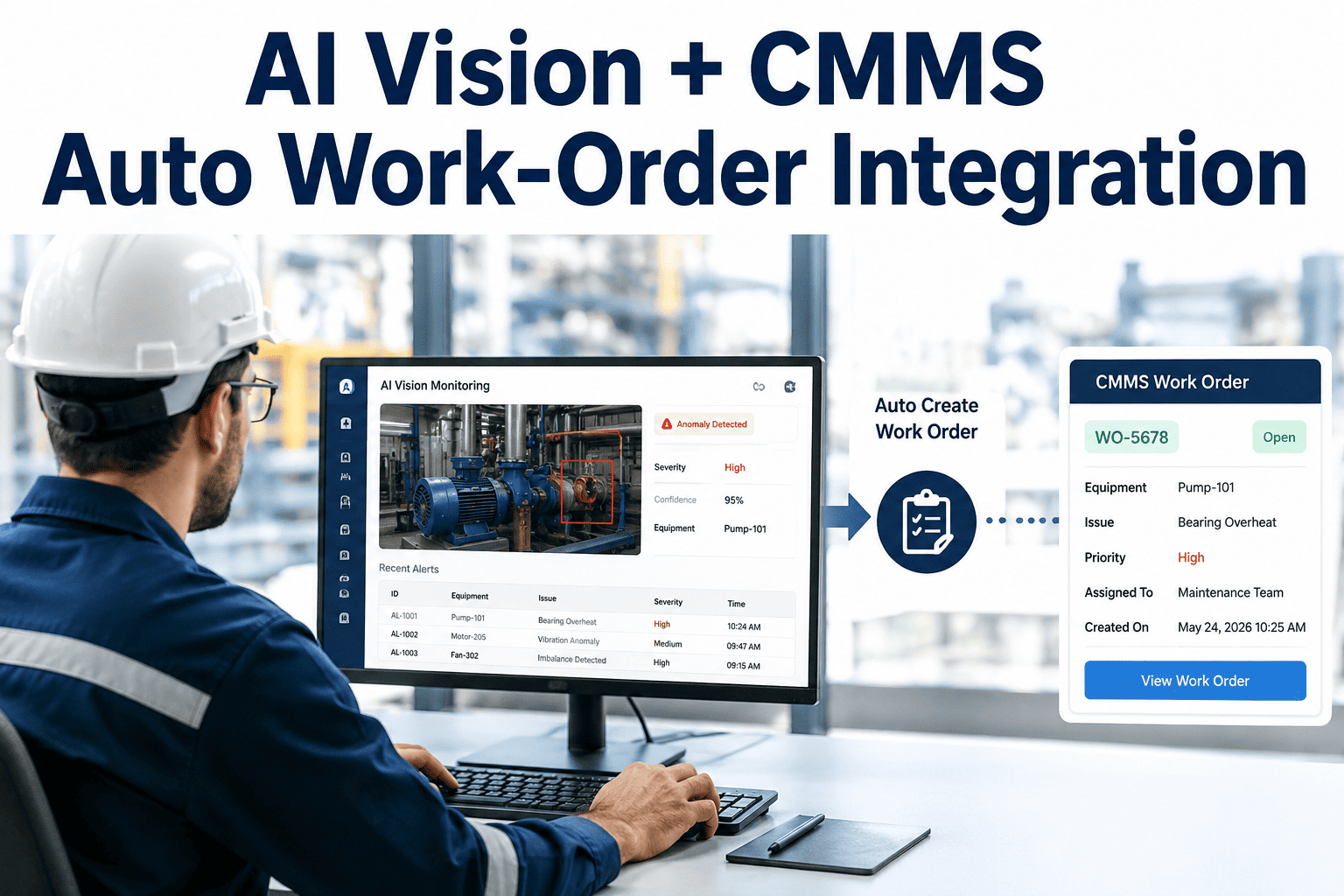
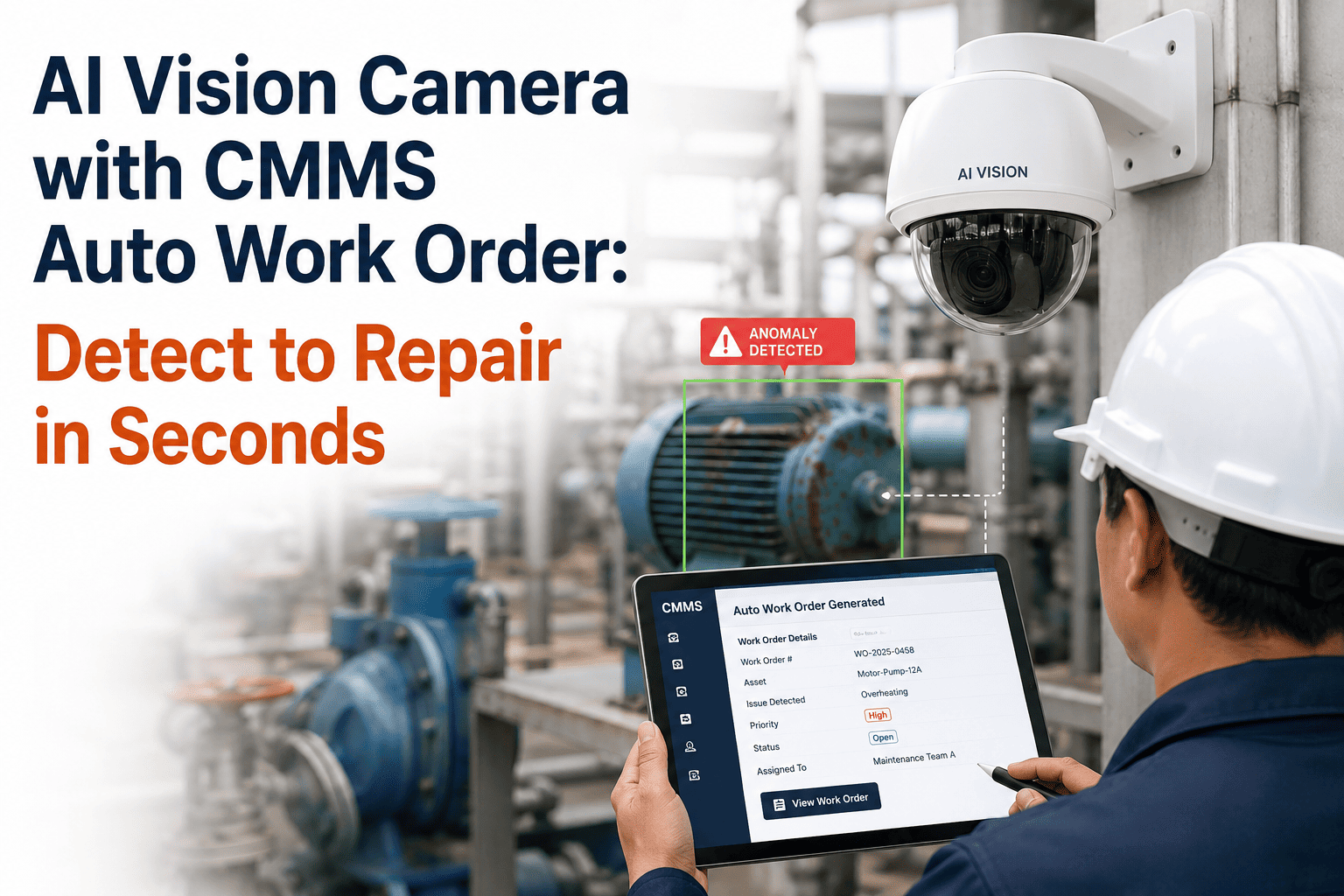
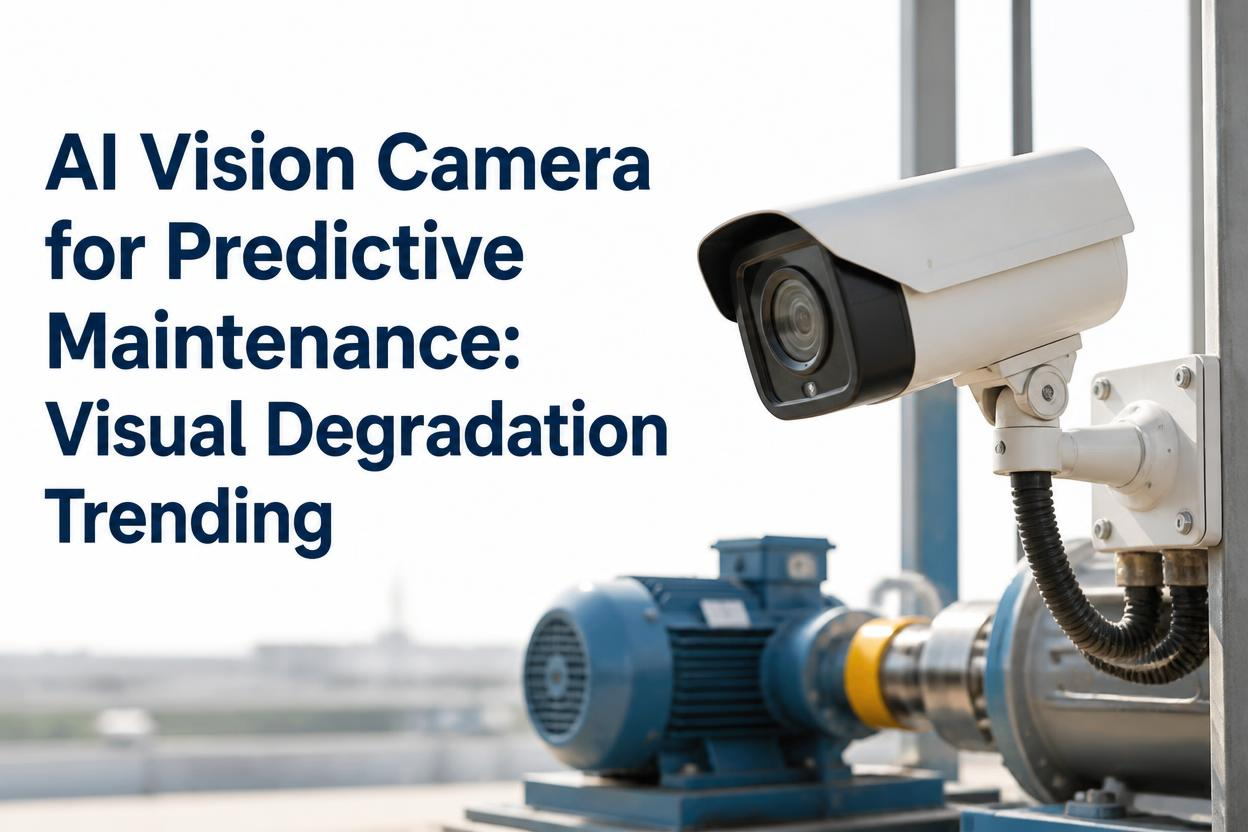
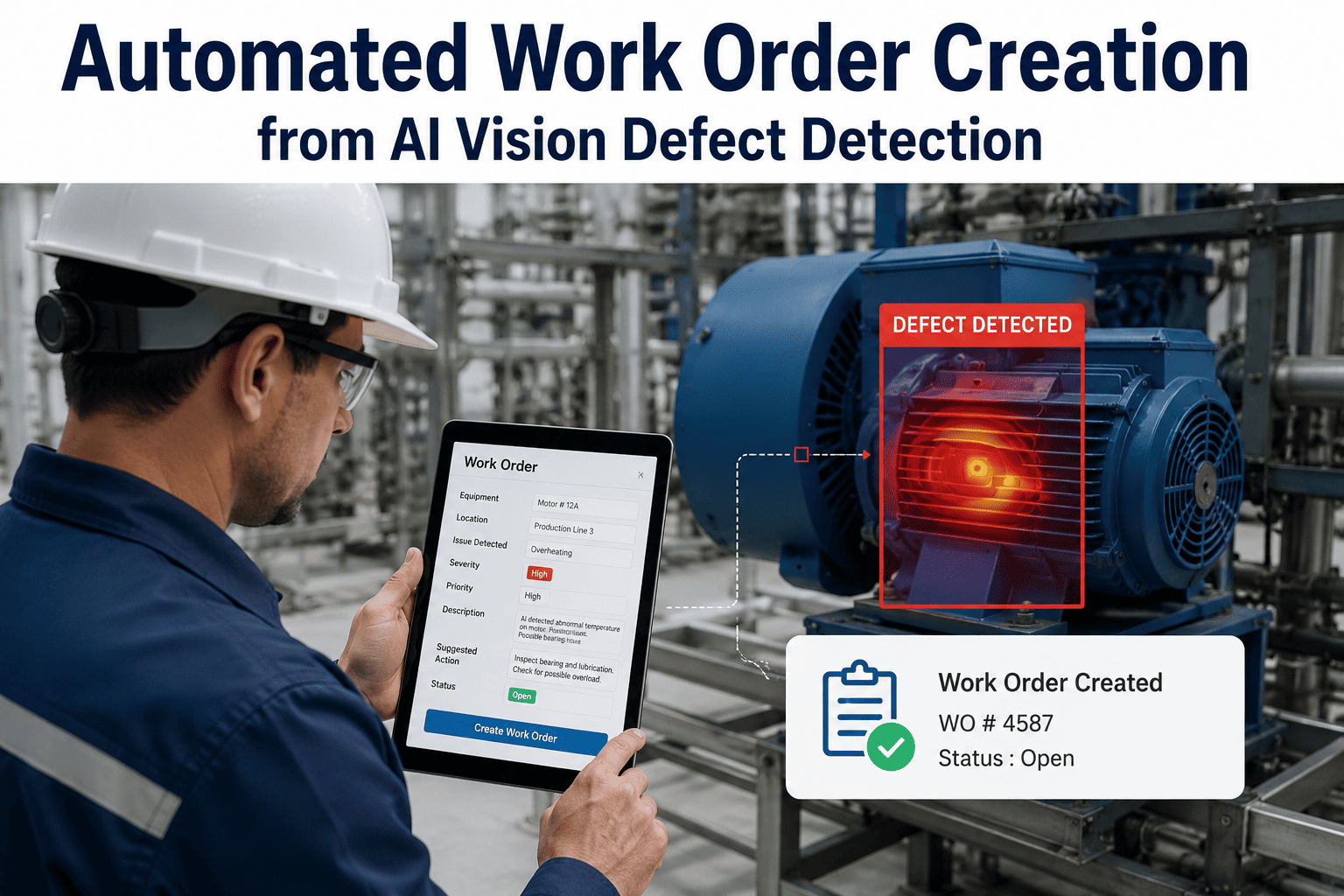
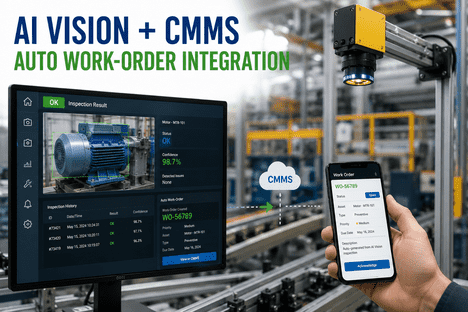
The single most expensive gap in modern conveyor maintenance isn't the detection layer and it isn't the technician skill layer — it's the sixty-second window between an AI camera spotting a developing belt tear and a technician arriving at the belt with the right parts and the right context. That window has historically been filled by a supervisor's phone, a paper log entry, a hand-off to a maintenance planner, another phone call, a parts room walk, and a verbal briefing that misses half the detail the camera actually captured. Integrating AI vision directly with the CMMS collapses that entire chain into a single automated sequence: detection triggers a structured work order with the annotated image, severity classification, belt location, and recommended action already attached, routed to the right technician's mobile device before the belt has moved another meter. iFactory's integration engineering team maps the API pipeline, severity thresholds, and technician skill matching to each plant's specific CMMS environment.
Conveyor Monitoring · CMMS Automation
Integrating Conveyor Belt AI Vision with CMMS for Automated Work Orders
AI detects the defect. The work order appears in the CMMS with photo evidence, severity, and location attached. The technician is notified. Parts are pre-staged. Zero manual handoffs, zero missed details, zero minutes wasted on phone calls between detection and dispatch.
Detection to Dispatch
↓
↓
↓
<60s
Parts staged, dispatch
The Latency Problem
The Manual Handoff Chain That Kills Predictive Maintenance ROI
Every plant that has deployed AI vision on its conveyors and not seen the predicted downtime reduction has run into the same underlying issue: the detection layer works, but the workflow layer between detection and technician dispatch is still manual, and the manual chain leaks time, context, and accountability at every handoff. A camera catches a belt tear precursor at second zero. A control room operator reviews the alert at minute two. A supervisor confirms severity at minute six. The supervisor calls the maintenance planner at minute nine. The planner writes a work order at minute fourteen. The technician gets notified at minute twenty. The technician walks to the parts room at minute twenty-eight. The technician arrives at the belt at minute forty-five, without the specific severity classification, without the exact belt zone, and without knowing which failure mode the AI actually detected.
By the time the technician arrives, most of the context that made the AI detection valuable has been stripped away in verbal telephone-game handoffs. What the technician usually has is "there's something wrong on belt three, go check it out" — which is exactly what a walk-around inspector would have delivered without any AI in the system at all. The plant paid capital for camera coverage, edge processors, and deep learning models, and the workflow around them delivers information at the same fidelity as the old walk-around routine. That's not a technology failure. It's an integration failure, and it's why serious predictive maintenance programs have moved to fully orchestrated API pipelines that eliminate the manual chain entirely.
The integrated model works differently at every step. The camera detects, the edge model classifies severity, the API pushes a structured payload to the CMMS, the CMMS matches technician skill and availability, and the technician receives a mobile notification with the annotated image, belt zone, past maintenance history, and pre-populated parts list before anyone has picked up a phone. Detection to dispatch runs under sixty seconds, and the technician arrives with full context instead of a vague verbal summary. That's the shift that finally delivers the downtime numbers the predictive maintenance business case was built on.
The Automated Pipeline
What Happens Between Camera and Technician
The full detection-to-dispatch pipeline runs through eight distinct stages, each handled by a specific component of the integrated stack. The value of the integration is that all eight stages fire automatically in sequence — no operator confirmation, no supervisor approval, no planner intervention — while still leaving human review at the two points where human judgment genuinely adds value: technician diagnosis on arrival and quality signoff on repair completion.
01
Camera Detection at Edge
Deep learning model on the edge processor classifies the anomaly in real time — belt tear, mistracking, splice separation, hot material, foreign object. Classification runs at sub-second latency, no cloud round-trip required.
02
Severity Scoring
Severity assigned based on defect type, belt criticality, and historical failure signature. Critical severity triggers immediate work order plus belt stop command. Major severity triggers immediate work order. Minor severity queues for next planned inspection.
03
Payload Construction
Structured payload built with asset ID, belt zone location, defect classification, severity, camera frame image at moment of detection, time-series data from the preceding thirty seconds, and recommended maintenance action.
04
API Push to CMMS
REST API or OPC-UA transaction posts the payload to the CMMS. Idempotent handling prevents duplicate work orders on repeated detection frames of the same event. Failure retries and dead-letter queuing ensure no detection is silently dropped.
05
Work Order Creation
CMMS creates a structured work order with all payload data attached. Priority assigned from severity. Asset lookup pulls the belt's maintenance history, past failure signatures, and asset criticality rating for the technician's mobile view.
06
Technician Skill Matching
CMMS matches the work order to an on-shift technician with the required skill certification for the specific repair type. Belt splicing routes to certified splicers. Idler alignment routes to conveyor mechanics. Skill matching happens automatically from technician records.
07
Inventory Check and Parts Staging
Recommended parts list checked against inventory in real time. If parts are in stock, the work order includes staging location. If not, procurement receives an urgent request and the work order flags the parts constraint for planner review.
08
Mobile Dispatch to Technician
Push notification and SMS alert delivered to the assigned technician's mobile device with full work order context — annotated image, belt location, severity, parts staging location, and past maintenance history for that asset.
Inside the Work Order
What the Technician Actually Sees on Their Mobile Device
The value of the integration is visible in the work order the technician receives — not a vague "check belt three" but a complete diagnostic packet that eliminates the diagnosis-on-arrival phase entirely. The elements below are what a well-configured integrated pipeline actually pushes into every automated work order.
P1
Annotated Camera Frame
The exact camera image at the moment of detection, with the defect boundary highlighted by the AI model. The technician sees what the camera saw before they leave the control room — no verbal description that loses fifty percent of the visual detail.
P2
Belt Zone Location Reference
Belt segment identifier, GPS or plant zone coordinate, and distance from the nearest reference point. The technician walks straight to the location instead of scanning the full belt length searching for the reported condition.
P3
Defect Classification and Severity
Specific failure mode — tear, mistrack, splice degradation, hot material, foreign object — with severity rating that already justifies the work order priority. No debate about whether the condition is "serious enough" to warrant response.
P4
Recommended Corrective Action
Standard operating procedure for the specific defect type, linked directly in the work order. New technicians and cross-trained crews get the correct procedure without having to look it up in a separate reference system.
P5
Parts List and Staging Location
Required parts already checked against inventory. Staging bin location included so the technician makes one parts room stop en route rather than realizing partway through the repair that a specific splice kit is needed.
P6
Asset Maintenance History
The last several work orders on this specific belt segment, including any recurring issues or recent repairs. Recurring failures at the same location are flagged for the technician to consider a root-cause review, not just another repair.
See the Integration in Action
Watch a Live Detection Become a Dispatched Work Order in Under a Minute
Book a walkthrough with iFactory's integration engineering team and see the full pipeline running — camera detection, severity classification, CMMS work order creation, skill matching, parts staging, and mobile technician notification, end to end.
Integration Architecture
The Protocols That Connect Vision to CMMS in Real Plants
Plant IT and OT environments come in every possible configuration, and the integration architecture has to work with the CMMS, DCS, SCADA, and PLC infrastructure that already exists rather than requiring a rip-and-replace. The architecture below is the standard pattern that mature vision-to-CMMS integrations follow, and the protocols that make it portable across plant environments.
| Layer |
Protocol |
Role |
Failure Behavior |
| Edge Camera to Edge Processor |
Direct video stream |
Frame-by-frame AI inference |
Local buffer and reconnect |
| Edge Processor to Plant Network |
MQTT or HTTPS |
Alert publishing, telemetry |
Store-and-forward on disconnect |
| Alert Broker to CMMS |
REST API |
Structured work order creation |
Retry with exponential backoff |
| CMMS to DCS / SCADA |
OPC-UA |
Belt stop and control feedback |
Redundant channel path |
| CMMS to PLC |
Modbus TCP |
Direct control actions |
Watchdog timer supervision |
| CMMS to Mobile Devices |
Push + SMS fallback |
Technician notification |
Escalation to next-on-shift |
| CMMS to ERP / Procurement |
REST API or EDI |
Urgent parts requisition |
Manual planner approval |
The architecture is deliberately protocol-diverse because different components in the plant stack speak different languages. The CMMS acts as the orchestration hub — receiving structured alerts from the vision layer, dispatching to technicians, coordinating with control systems, and requesting parts from procurement. That orchestration role is what turns AI vision from a monitoring novelty into a maintenance execution engine, and it's why the choice of CMMS platform matters as much as the choice of vision hardware.
The Metrics That Actually Change
What Integrated Vision-to-CMMS Delivers on the KPI Dashboard
The value of the integration shows up in specific reliability KPIs that plant leadership tracks month over month. The metrics below are where mature deployments consistently deliver measurable improvement, and they're the numbers to hold vendors accountable to when evaluating an integrated platform against a monitoring-only alternative.
94%
Detection-to-Dispatch Latency Reduction
Fully orchestrated API pipelines cut detection-to-dispatch latency by an order of magnitude compared to manual notification workflows. What used to take forty-five minutes runs in under sixty seconds.
30–50%
Conveyor-Related Production Loss Reduction
In high-throughput environments, the latency reduction translates directly to conveyor-related production loss reduction, because faster dispatch means more incidents caught before they become full shutdowns.
41%
Unplanned Downtime Reduction
Plants with fully integrated vision-to-CMMS pipelines consistently report unplanned downtime reduction in this range within the first year of operation, driven by faster response and higher planned-versus-unplanned repair ratio.
4–8 mo
Typical Payback Horizon
Full payback horizon for the integration itself typically lands in this window for plants running heavy conveyor duty cycles. Payback is driven by unplanned downtime avoidance rather than inspection labor displacement.
Field Perspective
"
Every plant I've deployed integrated vision-to-CMMS in has told me the same thing about six weeks after go-live: the surprise wasn't the detection quality, it was how much time the maintenance team stopped losing to the workflow around detection. Before integration, my technicians spent a huge fraction of every event on the phone getting context, walking to the parts room to figure out what they needed, and driving around trying to find the actual belt zone that had the problem. After integration, the same event is a mobile notification with the annotated image, the exact location, the pre-staged parts, and the past maintenance history — and the technician goes straight to the site with everything they need. That's the shift that finally makes the AI vision investment pay back the way the business case predicted. The technology is important, but the pipeline around the technology is what actually moves the KPI numbers, and plants that skip the integration step wonder six months later why they're not seeing the payback other plants report. The integration isn't optional — it's the whole product.
Rasmus Chen-Delacroix
Conveyor Reliability Systems Architect · 20 years in CMMS integration, AI vision deployment, and industrial IoT orchestration
Common Questions
Frequently Asked Questions
Does the integration require replacing our existing CMMS?
No, in most cases. The integration is designed to work with major CMMS platforms via REST API or OPC-UA, so plants running established CMMS systems can typically add the vision-to-CMMS pipeline without changing their maintenance management platform. The integration engineering phase maps the specific work order structure, asset hierarchy, and technician skill records of the existing CMMS to the alert payload from the vision layer. In cases where the existing CMMS lacks a modern API surface, a lightweight orchestration layer sits between vision and CMMS to handle the translation.
Talk to integration engineering about your specific CMMS environment.
What happens if the CMMS or network is temporarily unavailable when a detection fires?
The edge processor buffers alerts locally and retries with exponential backoff until the CMMS is reachable again. No detection is silently dropped. Critical severity alerts also trigger local actions — such as belt stop commands via PLC — that don't depend on CMMS availability, so safety-critical response continues even in a network outage scenario. Dead-letter queuing catches any alerts that fail all retries for downstream investigation, and a separate audit log records every detection event with timestamp, ensuring full traceability regardless of transient connectivity issues. The architecture is designed for graceful degradation rather than single-point failure.
Can the pipeline handle multiple detection events on the same belt without creating duplicate work orders?
Yes, and this is handled through idempotent event handling and configurable deduplication windows. When the AI model detects the same anomaly across multiple consecutive frames — which is normal for any real condition that persists longer than a few seconds — the pipeline correlates the frames into a single event and creates one work order rather than a work order per frame. Deduplication windows are configurable per belt and per defect type. New independent events on the same belt still generate their own work orders — the deduplication is about consolidating frames of the same condition, not suppressing legitimate additional events.
How does the technician skill matching actually work in practice?
Technician records in the CMMS include skill certifications — belt splicing, idler replacement, hot work, confined space, and so on. When a work order is created, the CMMS matches the required skill for the specific defect type against on-shift technician availability and assigns to the best match. Fallback rules handle scenarios where no ideally matched technician is available — the work order routes to the next-best skill match with the constraint flagged, or escalates to the shift supervisor for manual assignment. The skill matching is what turns a vague dispatch into a targeted assignment, and it's what enables the pipeline to scale across large maintenance teams with diverse skill mixes.
Book a demo to walk through skill matching logic.
Can the CMMS also correlate vision alerts with DCS or SCADA process signals?
Yes, and this is one of the highest-value use cases of the integration. When the DCS reports a motor overload on a conveyor drive at the same moment the vision layer detects belt mistracking, the CMMS correlates both signals into a single root-cause work order rather than generating two separate dispatches for what is really one event. Cross-signal correlation reduces duplicate crew dispatch, produces a more accurate root-cause picture for the technician on arrival, and enables the plant to see multi-modal failure signatures that neither vision nor process control alone would catch. The correlation logic is configurable per asset and defect type, and it's a standard part of mature deployments.
Close the Detection-to-Dispatch Gap
Turn Every AI Vision Detection Into a Dispatched Work Order in Under a Minute
iFactory's integrated vision-to-CMMS platform is built for the specific realities of industrial conveyor operations — heterogeneous plant IT environments, remote sites with limited connectivity, and the tight economics of detection-to-dispatch latency. The full orchestration pipeline is where the AI vision investment finally starts paying back the way the business case predicted.