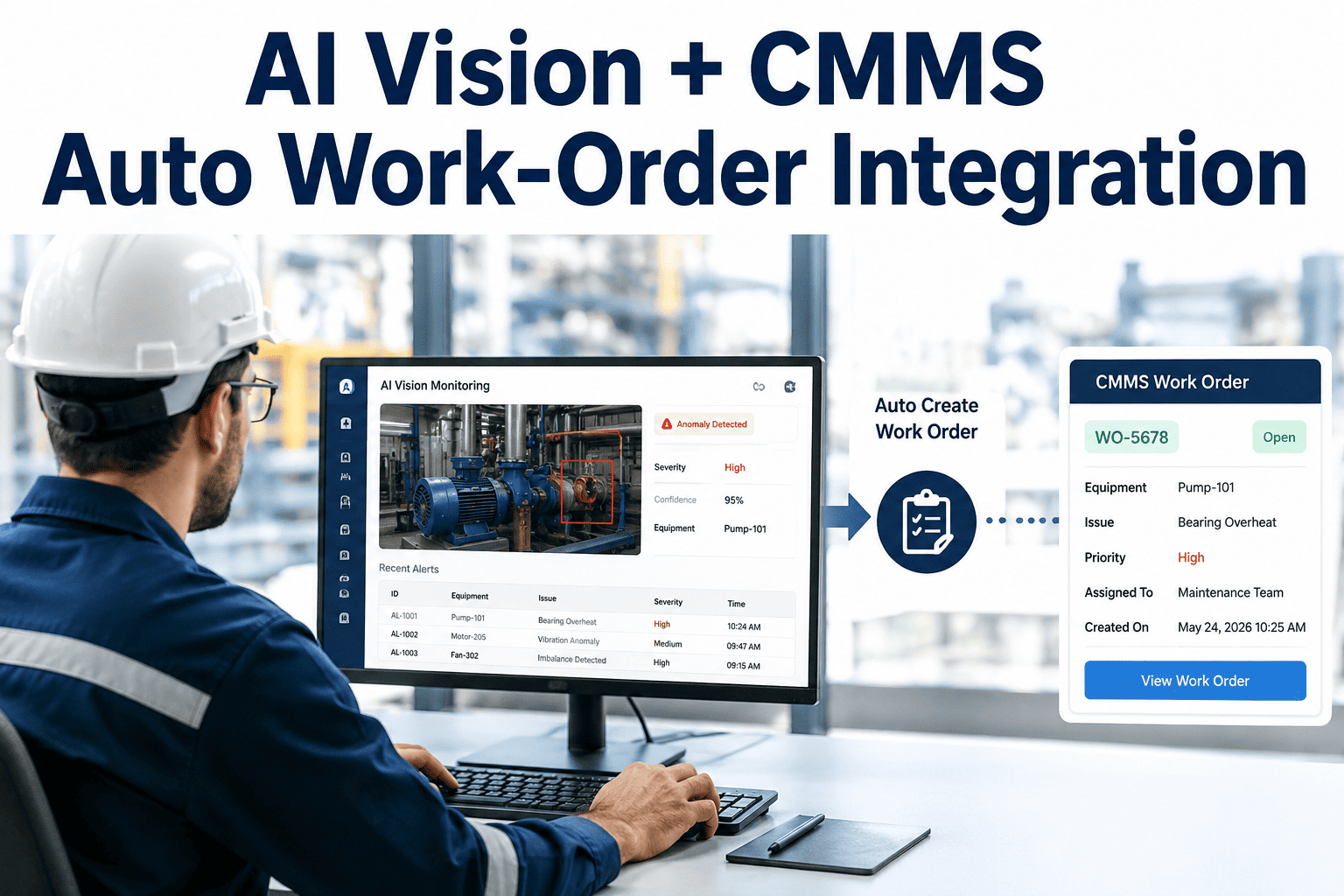
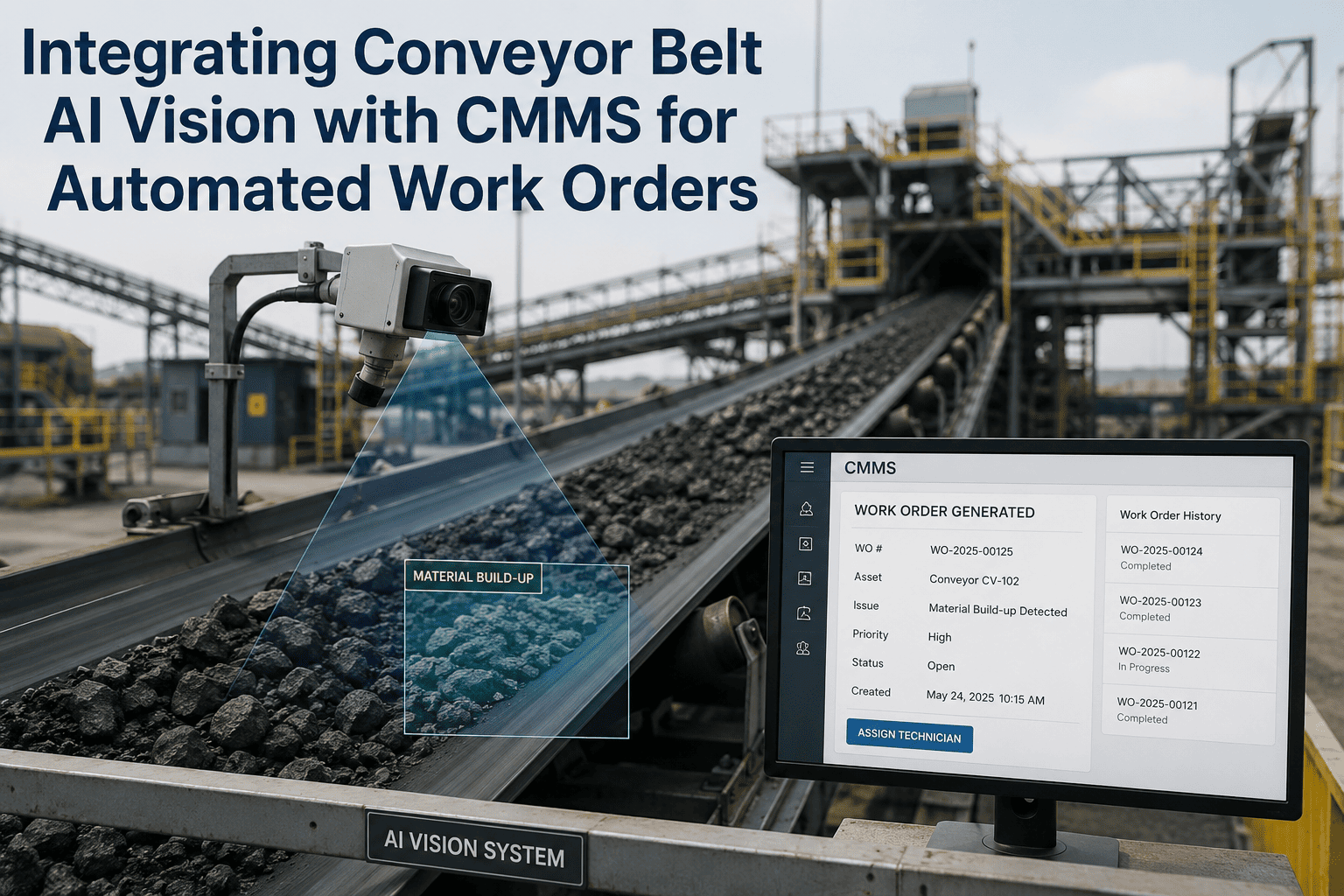
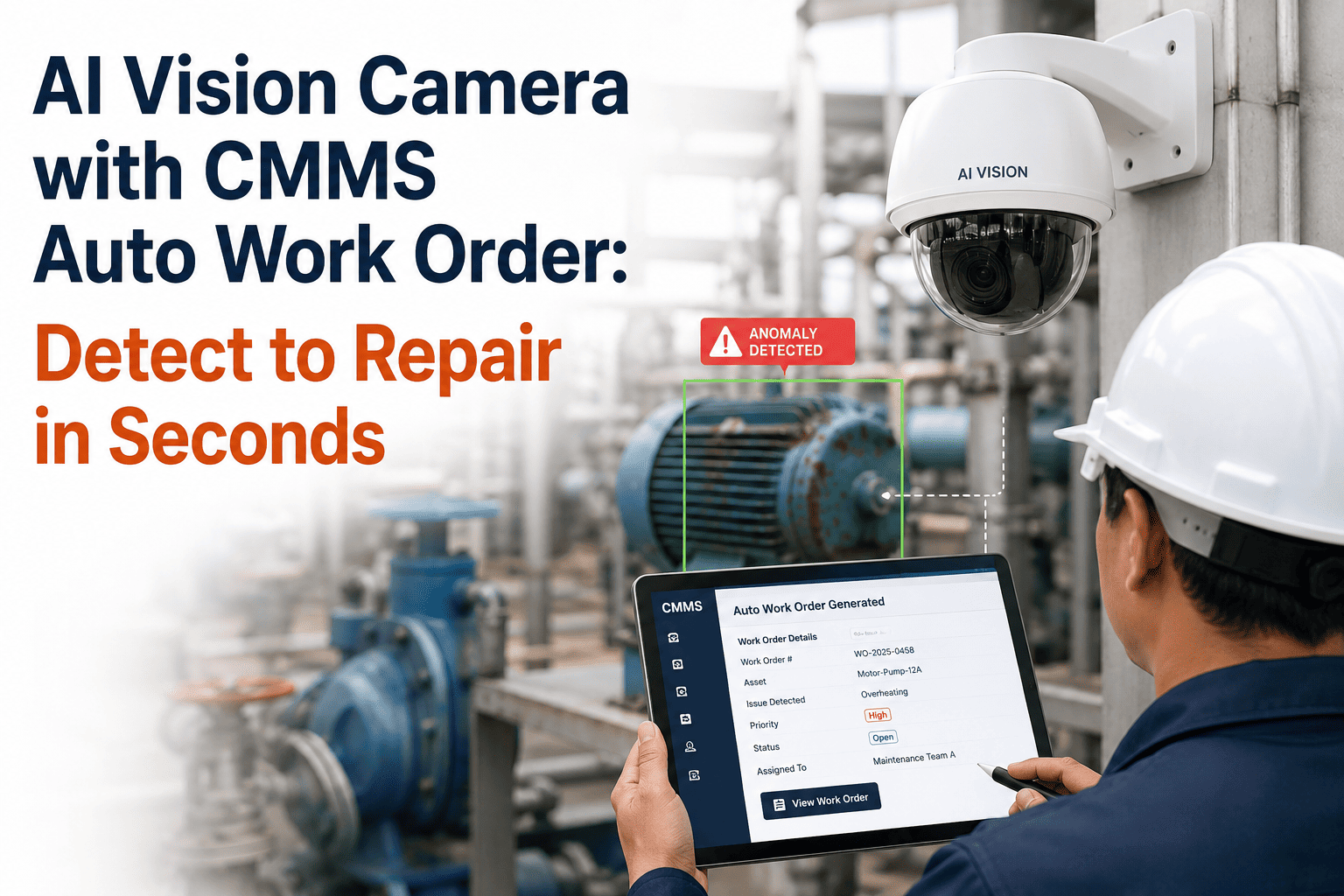
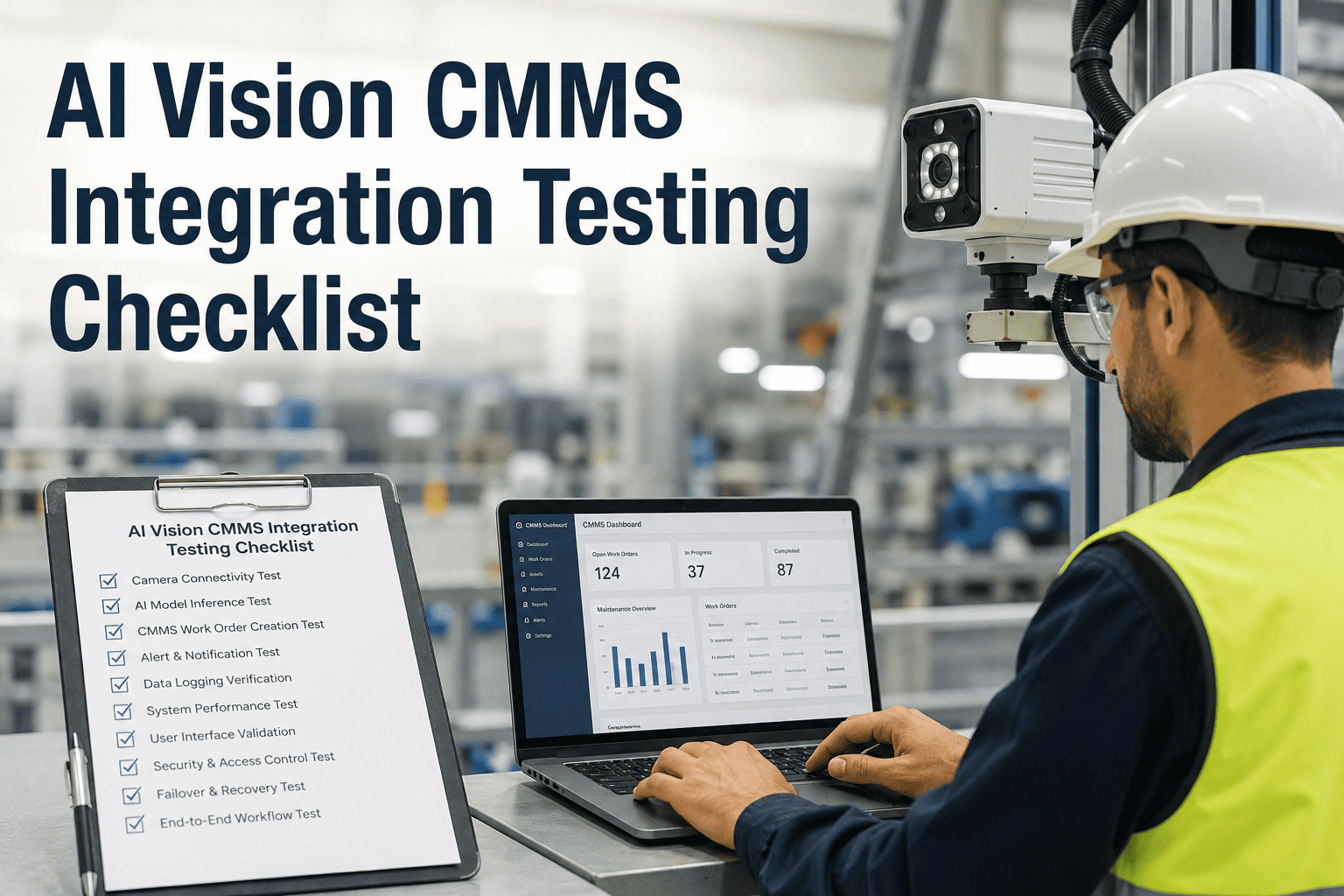
A camera on the production floor can now see a bearing wearing thin, a pipe corroding, or a panel misaligned — and act on it faster than any technician walking a route ever could. Research on manual visual inspection shows it catches only 60 to 80 percent of defects, and that number falls further as a shift wears on and attention drifts. Deep learning-based vision systems close that gap, running detection in under 200 milliseconds at accuracy levels above 95 percent. But detection alone changes nothing if the finding sits in a dashboard nobody opens. The real shift happening across manufacturing right now is vision output flowing directly into the CMMS or EAM as a structured, prioritized work order — no technician re-typing what the camera already knows. Book a Demo to see iFactory turn a live camera detection into a work order in your CMMS in real time.
Stop Losing Defects Between the Camera and the Work Order Queue
Every unlinked inspection is a maintenance signal that dies in a folder. iFactory's Vision Workflow Automation connects detection directly to correction — no manual handoff, no missed defect, no audit gap.
95%+
Deep learning defect detection accuracy vs. 60–80% manual inspection
<200ms
Time from image capture to defect classification and severity score
Zero
Manual re-entry steps between vision detection and CMMS work order
Why Vision Detections Without Work Order Automation Waste Their Own Value
Plants that install AI vision cameras but stop at a dashboard alert are only solving half the problem. A defect flagged on a screen still depends on someone noticing it, understanding it, and manually creating a work order — the exact chain of human steps that vision was supposed to replace. The gap between "detected" and "acted on" is where most of the ROI leaks out.
01
Vision system flags a defect on a monitor. No one is watching that screen at 2 AM on the night shift.
02
A supervisor sees it hours later, writes a note, and forwards it — details and severity context get lost in translation.
03
A work order is eventually created manually, without the original image, timestamp, or defect classification attached.
04
By the time a technician arrives, the defect has progressed, and the audit trail connecting quality to maintenance is broken.
How iFactory's Vision-to-Work-Order Pipeline Actually Works
iFactory's Vision Workflow Automation removes every manual step between the moment a camera sees a problem and the moment a technician holds a fully-scoped work order. The pipeline runs continuously, on-premise, without waiting for a person to interpret the alert. See the exact API and CMMS field mapping our team configures during setup.
1
Capture
Industrial or IP cameras (ONVIF/RTSP compatible) capture continuous or triggered images at the inspection point, using diffuse, coaxial, or structured lighting matched to the surface type.
2
Classify
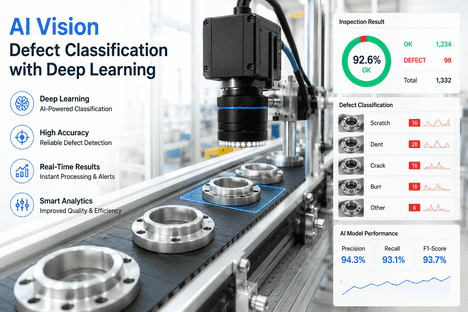
CNN and vision transformer models trained on your specific asset and defect types analyze each frame in under 200 milliseconds, assigning a defect category and confidence score.
3
Score
Each detection is scored for severity and mapped against historical degradation velocity, so a hairline crack and a structural fracture never get treated the same way.
4
Generate
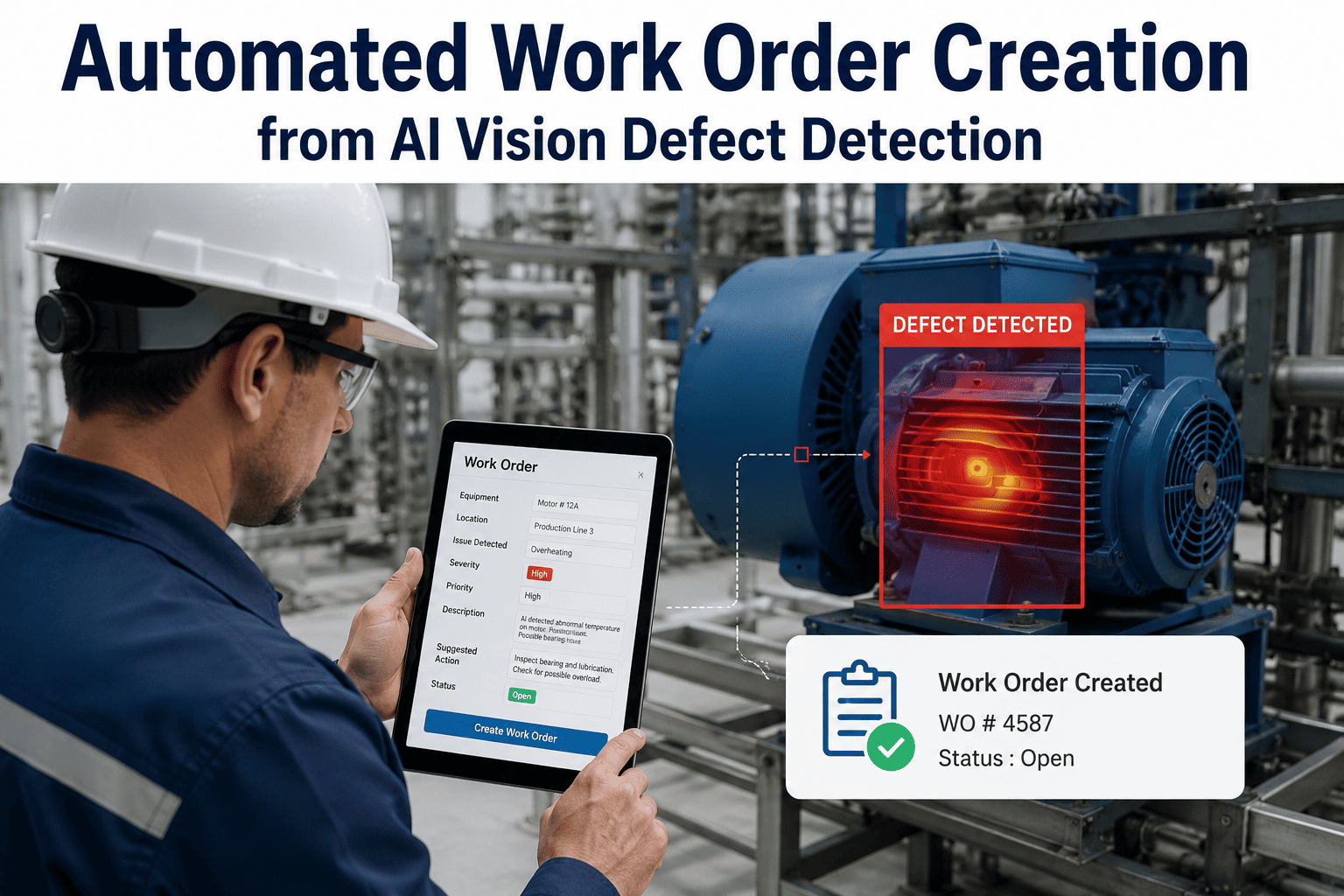
iFactory auto-creates a CMMS/EAM work order with asset ID, annotated image, defect classification, severity tier, and recommended corrective action — no manual data entry.
5
Route
The work order is routed to the right technician or crew based on skill, location, and urgency, with mobile push notification and full defect context attached.
6
Record
Completion, parts used, and corrective notes feed back into the audit trail, closing the loop between detection, correction, and compliance documentation.
45% of Defects Noted During Manual Inspections Never Become a Work Order. iFactory Makes That Number Zero.
When vision and CMMS are disconnected, maintenance depends on a clipboard, a memory, or a hallway conversation. iFactory removes that dependency entirely, converting every qualifying detection into a tracked, auditable work order automatically.
What Changes on the Ground: Before vs. After Vision-CMMS Integration
The difference between a vision system that only alerts and one that closes the loop into maintenance shows up in daily operations, not just in a quarterly report. This is what reliability teams typically report shifting within the first month of automated work order generation.
Where This Pipeline Matters Most Across Your Plant
Vision-to-work-order automation applies wherever a visual defect signals an equipment or process problem, not just a rejected part. These are the inspection points where the connection between detection and maintenance action carries the most operational weight.
Surface & Structural
Corrosion, Cracking & Surface Wear
Sub-millimetre surface anomalies on metal panels, welds, and coated components are flagged and compared against prior captures to calculate how fast the wear is progressing.
Alignment & Fit
Dimensional & Assembly Deviation
Sub-millimetre measurement of hole positions, part dimensions, and assembly alignment catches drift that leads to premature mechanical failure downstream.
Thermal & Fluid
Leaks, Steam Breaches & Hot Spots
Continuous camera monitoring detects fluid leaks and thermal anomalies in real time, generating a work order before the loss becomes a safety or environmental incident.
Safety Compliance
PPE & Safety Zone Violations
Vision monitoring of restricted zones and PPE compliance generates corrective and preventive action records automatically, supporting OSHA and internal EHS documentation.
Deployment Timeline: From First Camera to Fully Automated Work Orders
iFactory's vision workflow deployment is scoped, not open-ended. Most plants move from a single pilot station to a fully connected CMMS pipeline in a matter of weeks, with ROI evidence visible well before full rollout.
Week 1
Camera & Station Setup
Position cameras at the highest-impact inspection point using existing IP cameras or new industrial units — roughly 30 minutes of setup per camera.
Week 2
Data Collection & Labeling
Capture a working set of images across normal, marginal, and defective conditions, using active learning to minimize manual labeling effort.
Week 3
Model Training & Shadow Run
Train the detection model on your labeled dataset and shadow-run it alongside manual inspection to compare outputs before full handover.
Week 4
CMMS Integration & Go-Live
Connect the vision pipeline to your CMMS or EAM, enable automated work order generation, and expand coverage to additional stations as ROI is proven.
Frequently Asked Questions
Which CMMS or EAM platforms can receive automated work orders from iFactory's vision system?
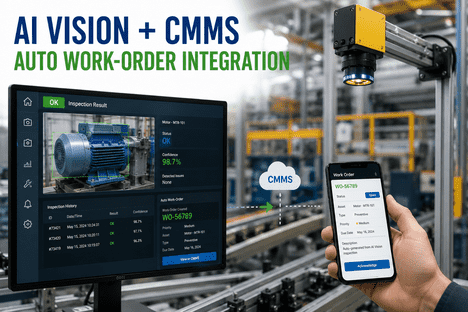
iFactory connects to major CMMS and EAM platforms through open API integration, including systems already used for SAP PM-style and Maximo-style work order management, and it also runs natively inside iFactory's own maintenance module. Field mapping between defect classification, asset ID, severity tier, and work order priority is configured during the integration phase, so the maintenance team receives a ticket that matches the format they already work in, not a new tool to learn.
Confirm your specific CMMS integration scope with our support team.
Does every camera detection automatically create a work order, even minor ones?
No. Severity thresholds are configured per asset and defect type during setup, so only detections above the agreed risk level trigger an automatic work order. Lower-severity findings are still logged and tracked for degradation velocity, which means a small surface mark that is progressing quickly can still raise a flag before it becomes urgent, while a stable, low-risk observation stays in the record without generating unnecessary maintenance traffic.
How accurate is the defect detection, and does it improve over time?
Deep learning models typically start around 90 to 92 percent accuracy during the initial shadow-run phase and reach 99 percent or higher within the first few weeks of live operation, as the system continues learning from confirmed outcomes on your specific equipment and defect types. This active learning approach means accuracy is not fixed at deployment — it keeps refining itself against your actual production data rather than a generic industry model.
Can this work with cameras we already have installed, or do we need new hardware?
Most existing IP cameras that support ONVIF or RTSP protocols can be integrated directly into the vision pipeline without replacement. Where lighting or resolution gaps exist at a specific inspection point, our team recommends targeted upgrades only for that station rather than a full camera network overhaul, keeping the hardware investment proportional to the actual detection requirement.
What happens to the audit trail once a work order is closed?
Every step from initial detection through technician assignment, corrective action, and closure is retained as a linked record, including the original annotated image, timestamp, and severity score. This creates a continuous compliance-ready history per asset, which is particularly valuable during OEM warranty reviews, internal quality audits, or regulatory inspections where the connection between a quality event and the maintenance response needs to be demonstrated clearly.
Turn Every Vision Detection Into a Tracked, Actioned Work Order
iFactory's Vision Workflow Automation closes the gap between what your cameras see and what your maintenance team does about it — with a scoped deployment, real CMMS integration, and an audit trail that holds up under scrutiny.
95%+ detection accuracy, improving continuously through active learning
Under 200ms from image capture to classified, scored defect
Automatic CMMS/EAM work order generation with zero manual entry
Full audit trail from detection through corrective closure