Your factory floor has two kinds of invisible problems: what your products look like — scratches, misalignments, label errors — and what your machines feel like — bearing wear, temperature spikes, motor fatigue. AI vision cameras solve the first. Smart sensors solve the second. Both are reshaping manufacturing in 2026. But choosing the wrong one (or skipping one entirely) is costing factories millions in defects, downtime, and missed maintenance windows. This guide breaks down exactly how each technology works, where each wins, where each falls short, and why the highest-performing factories are deploying both on a single sovereign edge platform. Book a free iFactory consultation to see which fits your operation.
Not sure which technology your factory needs?
iFactory deploys AI vision and smart sensor intelligence inside your firewall — IEC 62443-aligned, air-gap ready, zero cloud dependency.
Get Your Free Factory Audit →
Quick Verdict: It's Not Either/Or
AI vision cameras catch what sensors can't see — surface defects, cosmetic flaws, assembly errors. Smart sensors detect what cameras can't feel — bearing wear, overheating, mechanical failure weeks before it happens. The smartest factories in 2026 deploy both, unified on a single edge platform inside their firewall.
$41.6B
Global machine vision market projected by 2033
MarketsandMarkets, 2025
90%
Defect reduction with AI vision vs. manual inspection
Cognex / Keyence Industry Data, 2025
85–98%
Smart sensor fault detection accuracy for predictive maintenance
Deloitte Manufacturing Report, 2026
70%
Maintenance cost reduction with combined sensor + vision deployment
McKinsey Industry 4.0 Report, 2025
What Each Technology Actually Does
Before comparing, it helps to be precise. These two technologies are not competing to do the same job — they're built for fundamentally different problems on the factory floor.
Visual AI
AI Vision Cameras
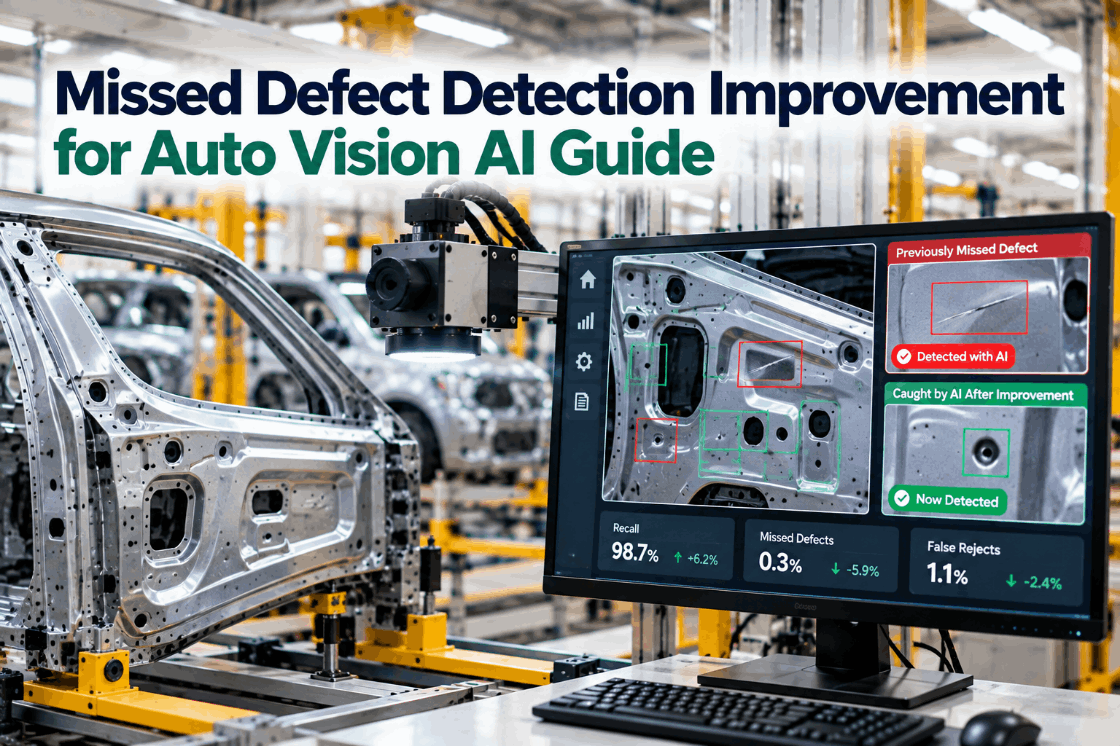
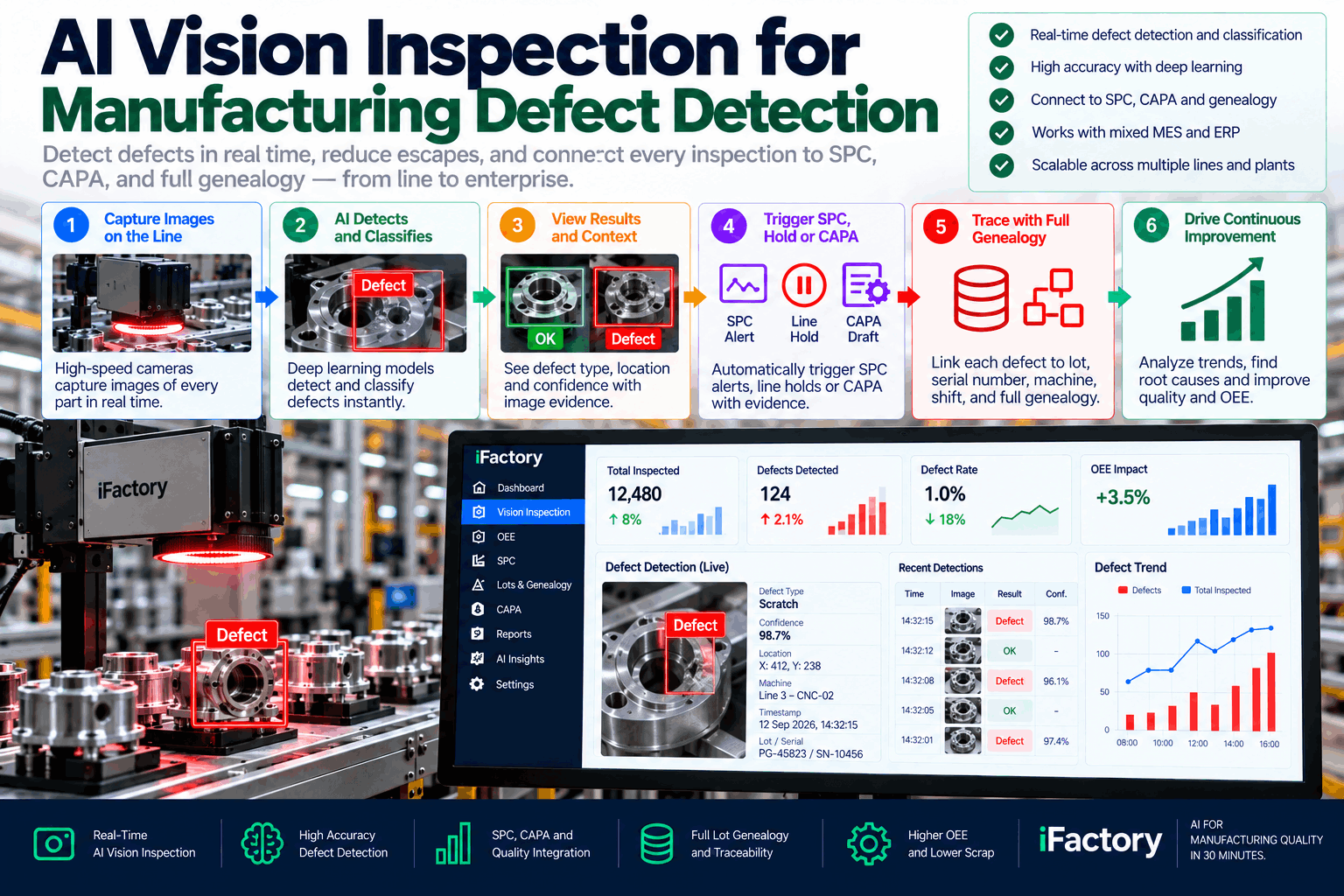
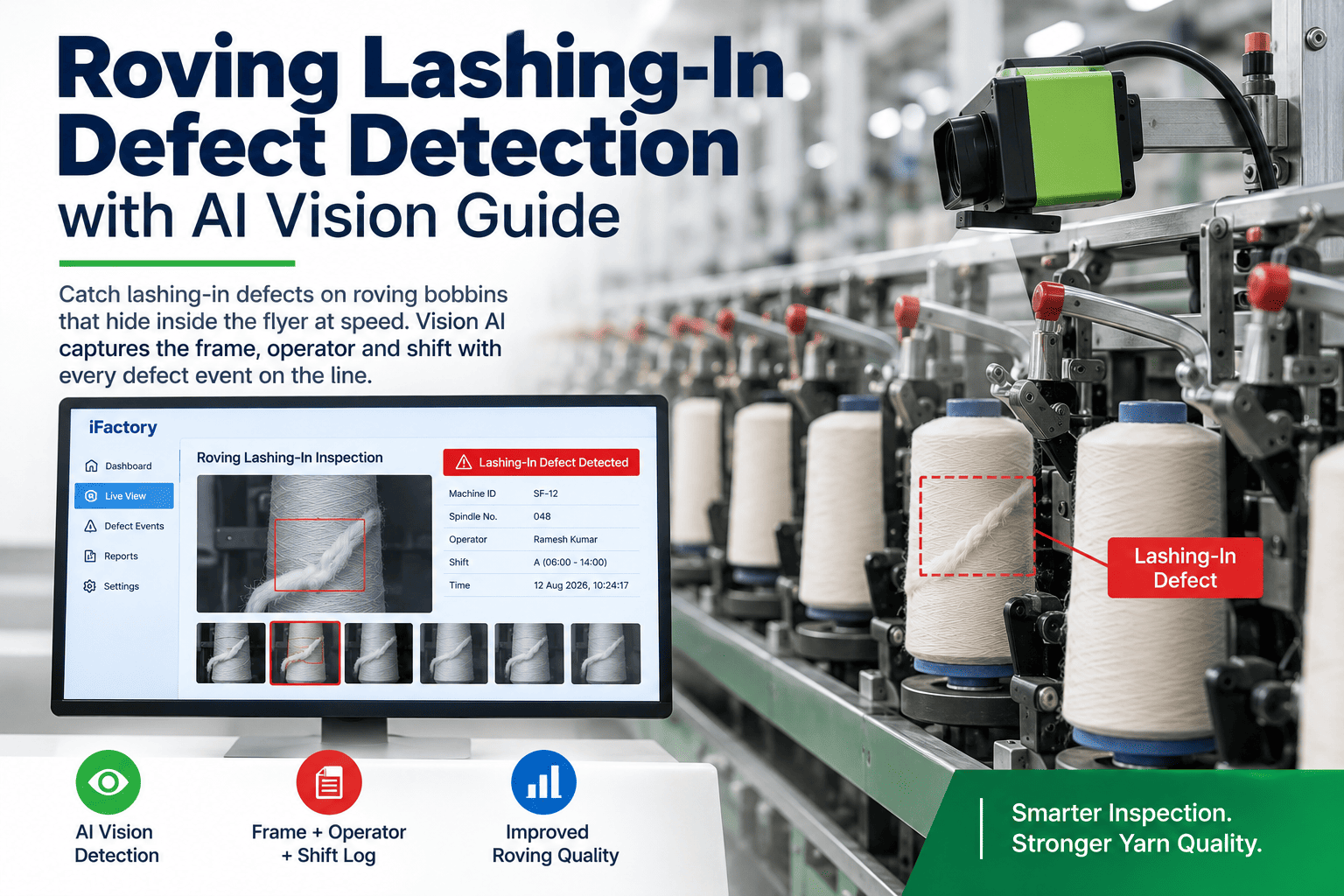
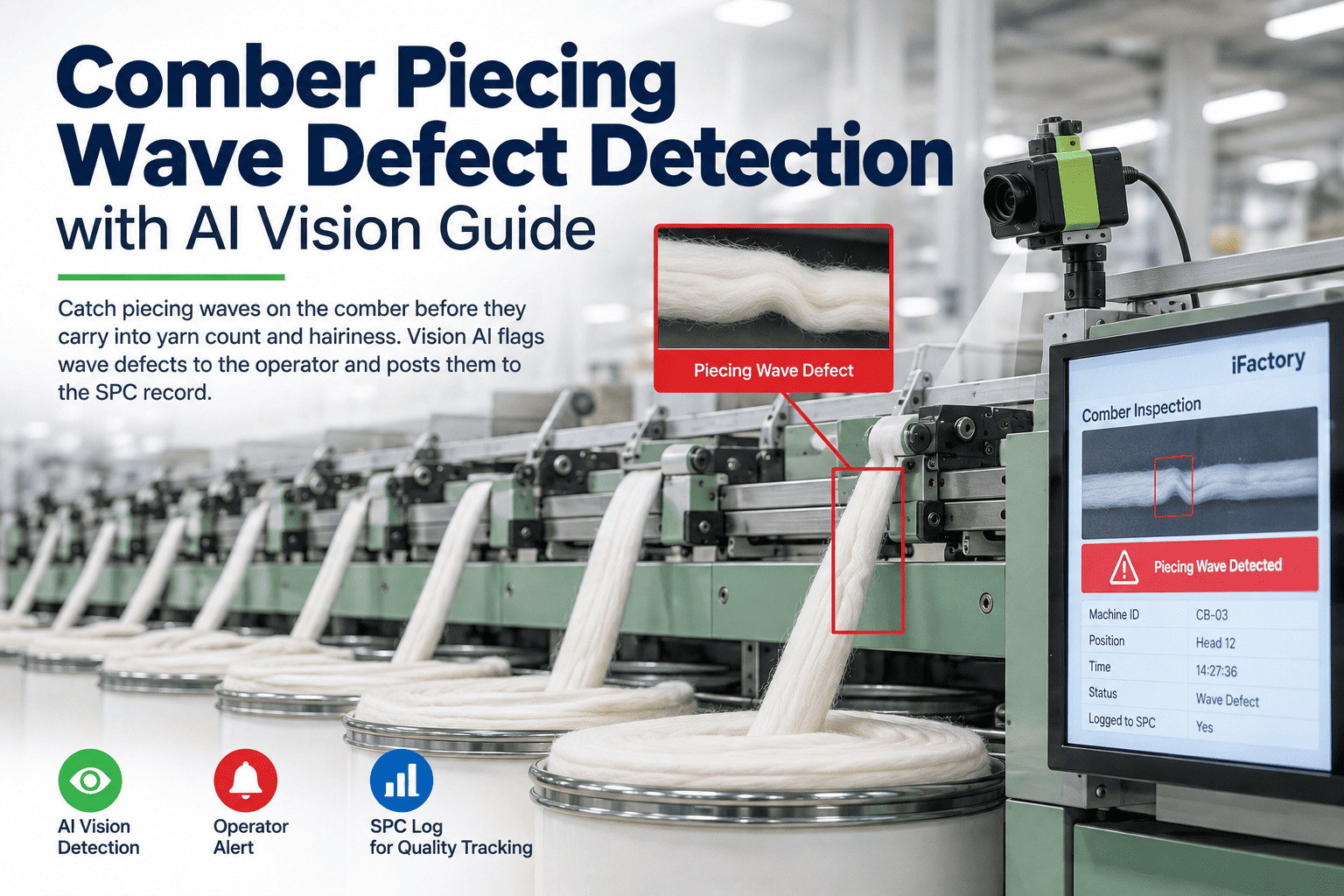
High-resolution cameras paired with deep-learning models that analyze images or video in real time — detecting surface scratches, cracks, misalignments, missing components, label errors, and dimensional deviations at machine speed.
Core Strength: Inspects what something looks like — surface quality, dimensional accuracy, label and barcode verification, color conformance, assembly completeness.
Automotive paint & body
PCB assembly
Pharma labeling
Food packaging
Precision machining
IIoT / Edge
Smart Sensors
Vibration, temperature, pressure, and acoustic sensors embedded in machines that stream continuous telemetry. AI models analyze this data stream to detect anomalies and predict failures — weeks before any visible symptom appears.
Core Strength: Detects what's happening inside a machine — bearing wear, rotor imbalance, overheating, pressure anomalies, electrical faults.
CNC spindles
Compressors & pumps
Conveyor motors
HVAC systems
Industrial furnaces
Head-to-Head: 8 Dimensions That Matter
Here's how both technologies compare across the metrics factory managers, quality engineers, and maintenance teams actually care about.
Defect Detection
Surface cracks, scratches, misalignment — up to 90% reduction in escaped defects
Internal/mechanical faults only — not suited for surface or visual defects
Predictive Maintenance
Limited — can only monitor visible wear signs like corrosion or physical damage
Detects bearing failure 60–90 days early with 85–98% fault accuracy
Response Latency
Sub-5ms edge inference on NPU hardware — real-time quality rejection
Millisecond alert response — continuous streaming at machine level
Setup Complexity
Moderate — requires lighting design, camera positioning, and model training
Lower — bolt-on installation, pre-trained models, faster commissioning
Cost Profile
Higher upfront (cameras + edge compute + software + training)
Lower per-unit cost — scales affordably across hundreds of assets
Harsh Environments
Needs sealed enclosures — dust, steam, and vibration affect lens performance
IP67+ rated — designed for extreme heat, oil, coolant, and vibration
Data Output
Rich visual data — images, video, dimensional measurements, pass/fail logs
Numerical telemetry — vibration Hz, temperature °C, pressure bar, RPM
AI Training Needs
Needs labeled defect image datasets — self-supervised options now emerging
Pre-trained on standard failure signatures — faster to deploy out of the box
When to Use Which: Real Factory Scenarios
The right technology depends entirely on the problem you're solving. Here's a practical breakdown of where each excels in real production environments.
Choose AI Vision Cameras When…
Your problem is visual
- Surface finish & cosmetic inspection for automotive, consumer goods
- PCB assembly — missing components, solder bridges, polarity errors
- Label accuracy, barcode readability, date code & lot verification
- Dimensional measurement without physical contact or gauges
- Robot guidance for pick-and-place and assembly tasks
- 100% inline inspection replacing manual spot-checking
Choose Smart Sensors When…
Your problem is mechanical
- Predicting bearing, gear, and motor failure weeks before breakdown
- CNC spindle health monitoring and tool life optimization
- Compressor and pump condition — vibration signature analysis
- Energy consumption anomaly detection across the facility
- Temperature runaway detection in ovens, furnaces, dryers
- Eliminating unplanned downtime and emergency repair costs
Not sure which your factory needs first?
iFactory's free factory audit maps your biggest risk areas — quality or maintenance — and recommends the right deployment sequence.
Book Your Free Audit →
The Convergence Advantage: How Top Factories Combine Both
The manufacturers winning on quality and uptime in 2026 aren't choosing one technology — they're building layered intelligence. Here's the four-layer architecture the best factories deploy:
01
Foundation · Smart Sensors
Machine Health Baseline — Always On
Vibration and temperature sensors stream continuous telemetry from every motor, pump, and CNC machine. AI flags anomalies before operators notice any visible symptoms — predicting failures 60–90 days in advance.
Continuous vibration monitoring
Predictive failure alerts
60–90 day advance warning
Works in any harsh environment
02
Quality Gate · AI Vision
100% Inline Output Inspection
Every part produced passes through AI vision inspection — surface defects, dimensional checks, assembly verification. Defective parts are rejected in milliseconds, not discovered by customers downstream.
Sub-5ms inspection cycle
Up to 90% defect reduction
Zero escaped defects
Full visual audit trail
03
Data Fabric · Unified Namespace
One Internal Bus — No Cloud Required
A single internal event bus connects sensor telemetry and vision data inside your firewall. No external cloud brokers, no data silos, no vendor lock-in. Both intelligence streams talk to each other in real time.
No external cloud
OT + IT connected securely
Zero vendor lock-in
Real-time data context
04
Intelligence · Edge AI
On-Prem Inference — Fully Air-Gap Capable
NPU-equipped edge gateways run all AI models locally — vision and sensor analytics both. Sub-5ms latency, zero cloud API calls, fully operational even with no internet. Your AI runs when the cloud doesn't.
Sub-5ms local inference
Air-gap ready
IEC 62443 compliant
10–20x less power than GPU cloud
The manufacturers who stay ahead on quality and uptime aren't running two separate systems with two separate dashboards. They're running one sovereign edge platform that unifies sensor intelligence and vision intelligence — behind their firewall, in real time, with zero cloud dependency. That's iFactory.
50–70%
Maintenance cost reduction combining both technologies on edge
<5ms
vs 200ms+ cloud
Edge AI inference latency — vision and sensor analytics both
90 days
to production
iFactory audit to full sovereign edge deployment timeline
100%
air-gap ready
Full AI functionality with zero internet dependency — sovereign by design
Deploy Vision AI + Smart Sensors — Inside Your Firewall
iFactory's sovereign edge platform unifies both technologies on one IEC 62443-aligned architecture. No cloud dependency, no data leaving your factory, production-ready in 90 days.
Frequently Asked Questions
Can AI vision cameras completely replace human quality inspectors?
For high-volume, repetitive inspection tasks — yes. AI vision systems are significantly faster and more consistent than humans, reducing defect escapes by up to 90% compared to manual inspection. For novel defect types or subjective aesthetic judgments, human oversight remains valuable. The practical model: AI handles 100% inline inspection 24/7, while humans review flagged edge cases and approve new defect categories.
How long does it take to train an AI vision system on my products?
Modern self-supervised systems like iFactory's can begin learning your quality standards automatically without manual image labeling. Traditional supervised approaches need several hundred labeled images per defect class and a few weeks of initial training. Either way, models improve continuously — accuracy typically reaches target levels within 2–4 weeks of live deployment.
Do smart sensors need internet connectivity to send alerts?
Not with edge-native architectures. iFactory processes all sensor telemetry on-premises using local edge computing — no internet required for inference or alerting. This is critical for OT/IT security and means your predictive maintenance system keeps running even during network outages. Cloud connectivity is optional, never required.
What is the ROI timeline for deploying both vision cameras and smart sensors?
Facilities using smart sensor predictive maintenance typically report 50–70% reductions in maintenance costs within 12–18 months. AI vision inspection delivers ROI within 6–12 months through reduced scrap, rework, and warranty claims. Combined on iFactory's unified edge platform, most customers see full payback within 6–12 months from go-live.
Does iFactory support both AI vision cameras and smart sensors on one platform?
Yes. iFactory's Unified Namespace connects both AI vision inspection data and smart sensor telemetry on a single internal event bus — no external cloud, no separate dashboards. Everything runs on NPU-equipped edge gateways inside your factory walls, with IEC 62443 security zones built in from day one.
Book a consultation to see the architecture live.
See Vision AI + Smart Sensors Working Together — Live Demo
iFactory unifies both technologies in one sovereign edge platform. IEC 62443-aligned, air-gap capable, zero cloud dependency. Book your 30-minute demo and see it running on real factory data.