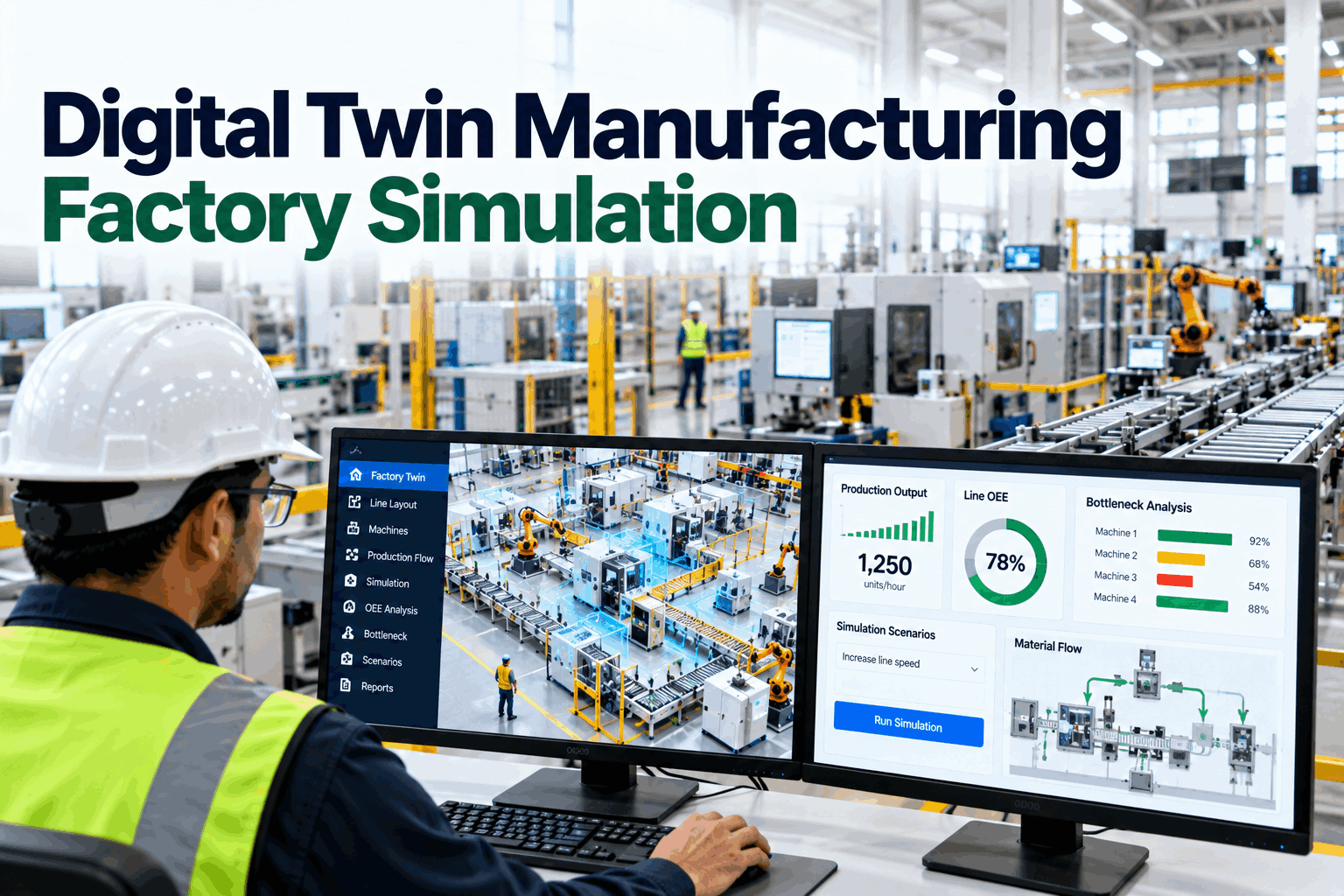
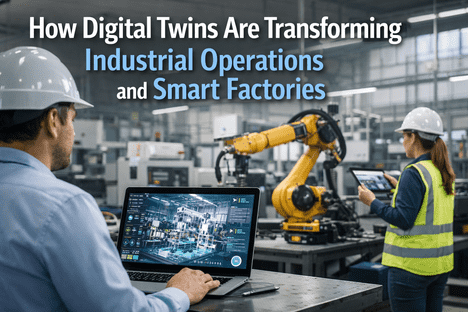
The global digital twin market grew from $24.48 billion in 2025 to $33.97 billion in 2026 and is racing toward $384.79 billion by 2034 at 35.4% CAGR — making it the fastest-growing technology category in industrial operations. In manufacturing specifically, digital twins in manufacturing surged from $3.6 billion in 2024 and are projected to reach $42.6 billion by 2034 at 28.1% CAGR. The reason is simple: digital twins deliver results that no other technology can match. McKinsey research shows digital twins cut development times by up to 50%, deliver 20% improvement in consumer promise fulfillment, reduce labor costs by 10%, increase revenue by 5%, and reduce carbon emissions by 7%. Manufacturers report 15-30% ROI within the first few years, with payback periods often under 24 months for targeted pilot projects. A digital twin is not a static 3D model — it is a living, data-driven simulation that mirrors real-time equipment behavior, production line dynamics, and factory-wide operations, enabling you to simulate changes, predict failures, and optimize processes before touching a single physical asset. iFactory deploys digital twin technology across production lines, equipment assets, and entire factory operations — creating virtual replicas that enable what-if scenario planning, bottleneck identification, predictive maintenance, energy optimization, and continuous process improvement.
What a Manufacturing Digital Twin Actually Does
A digital twin operates on three planes simultaneously: a data plane (sensor readings, historical records, ERP transactions), a model plane (physics-based simulation of equipment and process behavior), and a decision plane (AI-driven recommendations for optimization). Together, they create a virtual factory you can interrogate, experiment with, and optimize — without risking production.
Asset Digital Twin
Virtual replica of a single machine — motor, pump, compressor, CNC. Mirrors real-time condition using sensor data. Predicts failures with 88-97% accuracy. Calculates Remaining Useful Life (RUL) for every monitored component.
Process Digital Twin
Virtual replica of an entire production line or process flow. Simulates throughput, cycle times, bottlenecks, and energy consumption. Enables what-if testing: "What happens if we add a second press?" or "What if demand increases 20%?"
System / Factory Digital Twin
Virtual replica of the entire facility — all lines, utilities, logistics, staffing. Optimizes production scheduling, energy management, material flow, and factory layout. Supports CapEx planning with simulation-validated ROI projections.
Proven ROI: What Digital Twins Deliver
Digital twin ROI is documented across McKinsey, Deloitte, and hundreds of manufacturing case studies. The returns come from six distinct value streams — each independently justifiable, but compounding when deployed together.
Faster Development
Product design validation and process testing in virtual environments eliminates physical prototypes. Engineers iterate in hours instead of weeks.
Less Unplanned Downtime
Predictive maintenance powered by digital twin models detects degradation patterns and predicts failures before they cause line stoppages.
Fewer Quality Incidents
Real-time process simulation identifies parameter drift before it produces defective product — catching quality issues at the source.
Labor Cost Reduction
Optimized production scheduling, staffing simulation, and automated decision support reduce manual planning overhead and idle time.
Carbon Emission Cut
Energy optimization embedded in the digital twin recommends operating parameters that reduce energy waste and carbon footprint simultaneously.
Revenue Lift
Faster product launches, higher OEE, and improved customer fulfillment rates translate directly to top-line revenue improvement.
Five Use Cases That Drive Demo Requests
Digital twins deliver value across the entire manufacturing lifecycle. These five applications represent the highest-impact starting points — each independently justifying a pilot deployment.
Production Line Simulation
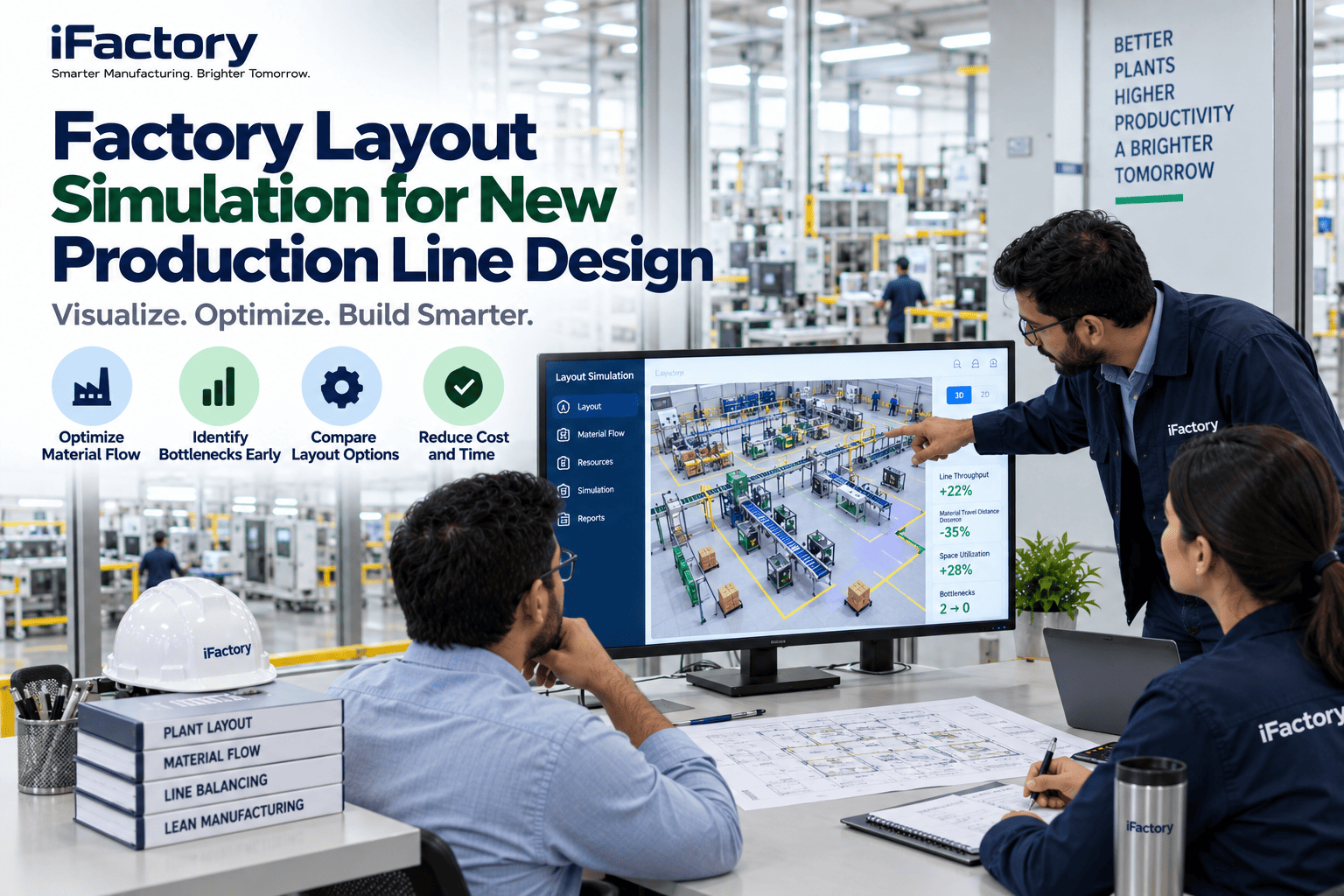
Simulate entire production lines before physical commissioning. Test new layouts, equipment additions, and process changes in the virtual environment. Identify bottlenecks, validate cycle times, and optimize material flow — reducing commissioning time by 30-50% and eliminating costly on-floor trial-and-error.
Predictive Maintenance
Digital twins of critical assets integrate vibration, thermal, and electrical sensor data with physics-based degradation models. The twin predicts Remaining Useful Life (RUL) with 88-97% accuracy — scheduling maintenance during planned windows, extending equipment lifespan 20-40%, and reducing maintenance costs 18-25%.
What-If Scenario Planning
Test production scenarios without disrupting operations: "What if demand increases 30%?", "What if we lose Supplier A?", "What if we run a third shift?" The twin simulates throughput, staffing, energy, and cost impacts of each scenario — replacing gut-feel planning with data-driven decisions.
Energy & Sustainability Optimization
The twin models energy consumption across every process stage — identifying waste, optimizing operating parameters, and projecting carbon impact. Companies using digital twins for energy optimization report 7-15% reduction in energy costs and measurable ESG reporting improvements for sustainability compliance.
Factory Layout & CapEx Planning
Before spending $5M on a new line or $500K on equipment relocation, simulate the change in the digital twin. Validate throughput projections, material flow patterns, utility capacity, and workforce requirements. CapEx decisions backed by simulation data — not PowerPoint estimates.
How iFactory Digital Twin Works
iFactory creates digital twins by connecting to your existing sensors, PLCs, SCADA, MES, and ERP systems — ingesting real-time operational data and building a continuously-updated virtual model of your assets and processes.
Connect
Integrate with existing IoT sensors, PLC data, SCADA, MES, and ERP via OPC-UA, MQTT, REST APIs. No equipment modification. Edge gateway handles protocol translation for legacy systems.
Model
Build physics-based and data-driven models of equipment behavior, process dynamics, and material flow. AI learns normal operating patterns and establishes performance baselines per asset.
Simulate
Run what-if scenarios, test process changes, simulate failure modes, and project production outcomes. All testing in the virtual environment — zero risk to live production.
Optimize
AI recommends optimal operating parameters, maintenance schedules, production sequences, and energy settings. Recommendations pushed to operators via dashboard, alerts, and auto work orders.
Industry Applications
Digital twins deliver value across every manufacturing sector — with industry-specific models trained on the unique equipment, processes, and KPIs that matter most in each vertical.
Assembly line simulation, robotic cell optimization, paint shop energy modeling, body-in-white welding sequence validation. Virtual commissioning reduces new line startup by 30-50%.
Rolling mill simulation, reheating furnace optimization, cooling line modeling, coil quality prediction. Energy optimization across continuous casting and rolling operations.
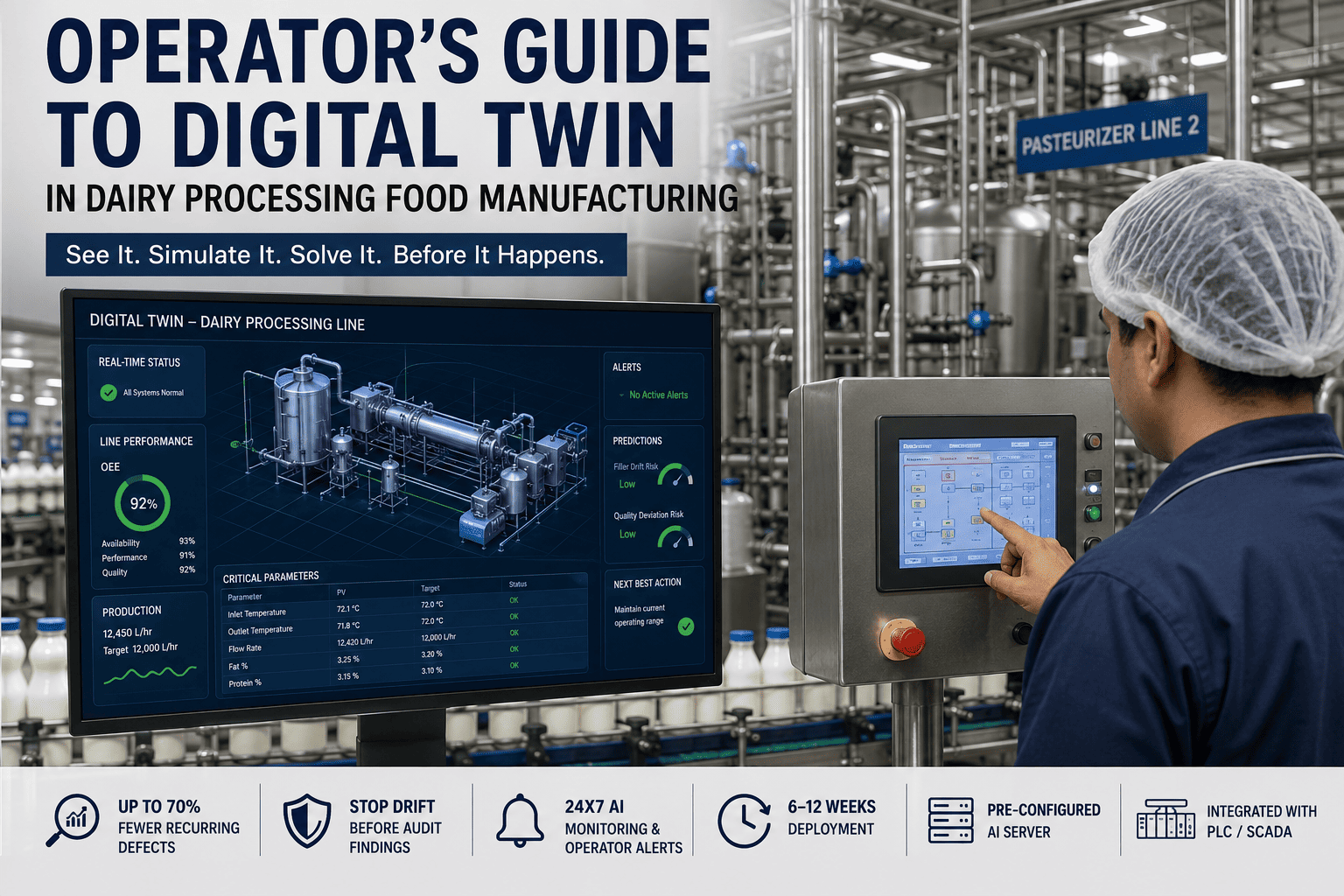
Packaging line throughput simulation, CIP cycle optimization, cold chain modeling, batch recipe simulation. HACCP compliance validated through process twin verification.
Batch process simulation, clean room environment modeling, equipment qualification validation, scale-up simulation from lab to production. FDA 21 CFR Part 11 audit trail.
Kiln thermal modeling, grinding circuit optimization, conveyor network simulation, stockpile management. Energy-intensive processes benefit most from twin-driven optimization.
Turbine performance modeling, boiler efficiency simulation, grid connection optimization, renewable integration planning. Plant-wide heat balance and efficiency mapping.
Start Small, Scale Fast: 3-Phase Deployment
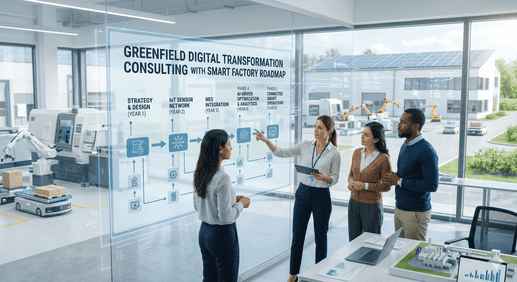
Begin with a single high-value asset or bottleneck process. Prove ROI in one quarter. Then scale the twin across your facility. Cloud-based platforms and modular architecture make this practical for plants of any size.
Foundation Twin
Select one critical asset or bottleneck line. Connect sensors, establish data pipelines, build initial twin model. AI learns normal operating baselines. First anomaly detection and what-if simulation capability within 30 days.
Process Twin
Expand to entire production line or process area. Integrate MES, quality, and energy data. Enable throughput simulation, bottleneck analysis, and predictive maintenance across connected assets. Validate ROI against Phase 1 projections.
Factory Twin
Full-facility digital twin covering all lines, utilities, logistics, and workforce. CapEx scenario planning, energy optimization, and continuous improvement powered by AI recommendations. Complete OEE, sustainability, and financial reporting.
Frequently Asked Questions
Build Your Factory's Digital Nervous System.
iFactory deploys digital twin technology across your production assets — creating virtual replicas that simulate, predict, and optimize operations. Start with one machine, prove ROI, and scale to a complete factory twin.