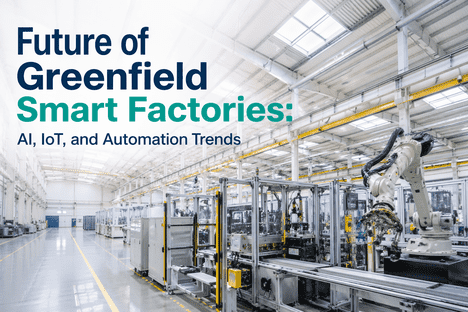
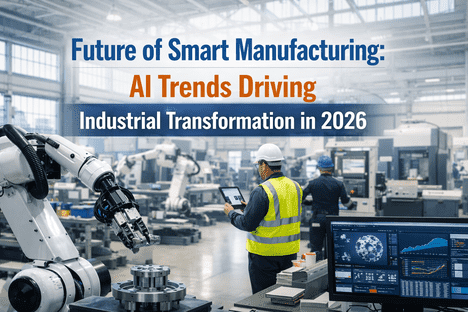
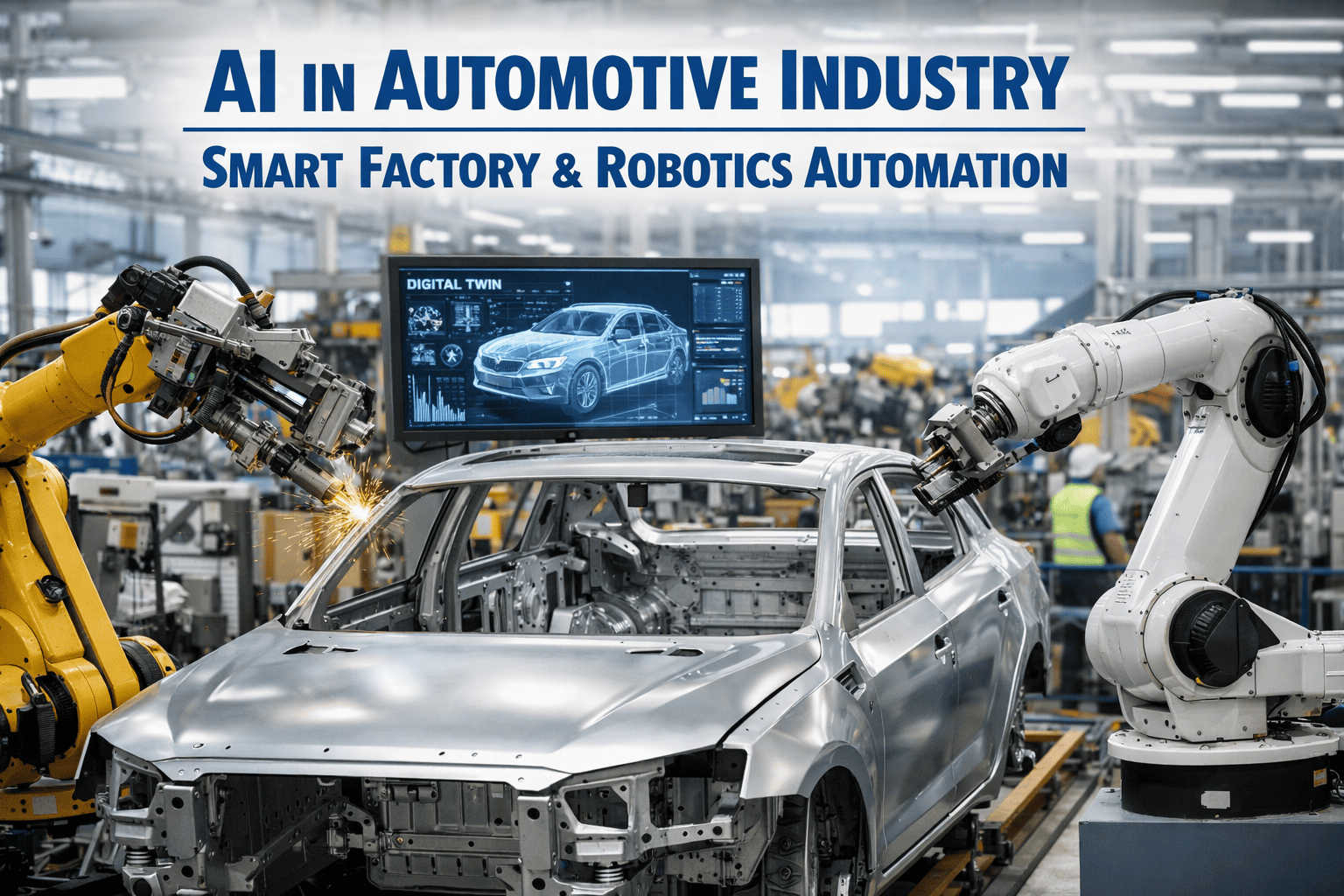
A $200 million greenfield factory without an AI-ready digital backbone is a $200 million legacy plant on day one. That is not a provocative headline — it is the consensus finding from nearly every major manufacturing analyst tracking the 2026 capital wave. The global smart factory market is projected to grow from $185 billion in 2026 to $384 billion by 2034, and the Industry 4.0 market is expected to climb from $172.5 billion in 2026 to $1.2 trillion by 2035 at a 24% CAGR. The physics of this shift are simple: embedding digital infrastructure during design costs three to five times less than retrofitting the same capability later, and AI-powered operational technology — predictive maintenance, quality inspection, energy optimization — is now a baseline requirement for any new facility competing for investment. The real strategic question is no longer whether to build a smart factory. It is whether your greenfield project will be AI-native from the first kilowatt, or a traditional plant with digital bolted on two years too late. A greenfield digital transformation partner helps answer that question before the concrete is poured — which is the only time it can be answered cheaply.
Greenfield Consulting Intelligence
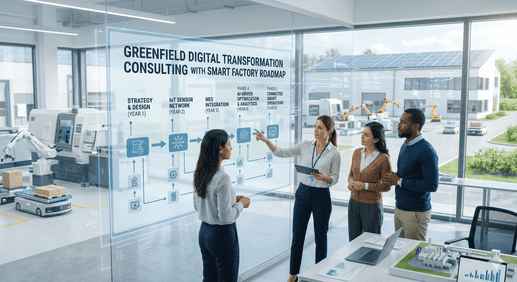
Greenfield Digital Transformation Consulting with AI Smart Factory Roadmap
Design future-ready plants where AI, IoT, MES, analytics, and connected automation are architected into the blueprint — not bolted on after commissioning. A roadmap that turns your next capital project into a competitive asset for the next two decades.
$384B
Smart factory market by 2034
24%
Industry 4.0 market CAGR 2026-35
26%
Higher profitability at digital maturity
3-5x
Retrofit cost vs build-in-from-day-one
The Cost of Getting Greenfield Digital Wrong
Every greenfield project promises a clean slate. But a clean slate is only valuable if the right architecture is drawn on it. When digital infrastructure is treated as a Phase 2 consideration — something to figure out after equipment arrives — the factory is already technically obsolete on opening day. The gap between a well-architected smart plant and a conventional plant compounds every quarter in energy waste, quality escapes, unplanned downtime, and operator productivity.
Retrofit penalty of 3-5x to embed sensors and conduits after build — months of rework, production downtime, and incompatible protocols
Stranded OT/IT silos where PLC, SCADA, MES, and ERP data cannot meet in a unified lake — analytics projects stall for years
20-35% energy waste from HVAC overcooling, compressed air leaks, and unmonitored loads that a sensor-first design would have exposed
70% of commissioning delays traced to software errors discovered too late — without virtual commissioning, debugging happens on live equipment
VS
Sensors in the blueprint — conduits, mounting points, and edge compute nodes specified before foundations pour, delivering value from startup day
Unified data fabric connecting PLC, SCADA, MES, ERP, and AI platforms via standardized protocols (OPC UA, MQTT) from day one
20-40% lower energy consumption through AI forecasting and automated load-balancing architected into the utility design
Virtual commissioning validates control logic in a digital twin before equipment arrives — startup risk compressed, operators trained pre-go-live
Want a side-by-side model of your greenfield plan with and without a digital-first architecture? Book a 30-minute strategy review with our consulting team.
The Six-Layer AI Smart Factory Stack
A greenfield smart factory is not one technology — it is a stack of six tightly integrated layers that together form the digital thread. Each layer depends on the one below it. Get the foundation wrong and the top layers never deliver. A proper consulting engagement specifies every layer in the design phase, aligned to your product mix, volume forecast, and automation strategy.
06
Autonomous Operations & Agentic AI
AI agents manage routine production decisions, continuously retrain models, and orchestrate self-optimizing production — up to 50% of routine decisions projected to be autonomous by 2028
05
Advanced Analytics, AI & Digital Twin
Predictive maintenance, AI vision inspection, energy optimization, and full-plant digital twin — the fastest-growing segment of the smart factory market
04
MES & Manufacturing Intelligence
Real-time production scheduling, genealogy, OEE tracking, and shop-floor-to-top-floor data flow — the MES segment leads Industry 4.0 adoption globally
03
Industrial IoT & Edge Compute
Sensors, gateways, and edge nodes across every critical asset — IIoT now holds a 42% share of smart factory technology investment in 2026
02
Connectivity & Network Architecture
Private 5G, industrial Ethernet, standardized protocols (OPC UA, MQTT, Modbus) — designed for deterministic control at the edge and elastic analytics in the cloud
01
Physical Infrastructure & Utilities
Building shell, MEP, power distribution, cleanroom controls — specified to support sensor placement, edge racks, and future expansion without structural rework
A Phased Greenfield Digital Transformation Roadmap
Greenfield projects typically run three to five years from strategy to stable production. A digital transformation consulting engagement maps every phase against a parallel digital workstream — so technology decisions are made in lockstep with construction, equipment, and hiring decisions, not after them.
Months 0-6
Strategy & Digital Maturity Assessment
Business case, product mix forecast, automation level strategy, CAPEX/OPEX model, and digital technology scope — all aligned before site selection finalizes
Months 6-12
Architecture & Detailed Design
Sensor placement matrix, network topology, MES blueprint, data model, and AI use-case prioritization — embedded in facility and process engineering drawings
Months 12-24
Construction & Systems Integration
Conduits, mounting points, edge racks, and cabling installed during build; FAT at vendor sites; virtual commissioning in the digital twin before equipment arrives on-site
Months 24-30
Commissioning & Startup
Systems brought online in sequence, AI models trained on initial production data, MES integrated with ERP and quality systems, operators trained in the live environment
Months 30+
Ramp, Optimize & Scale
OEE targets of 75-85%+ achieved, AI models retrained with production data, continuous improvement engine identifies the next wave of optimization opportunities ranked by ROI
Already in strategy, design, or construction phase? Talk to our consultants about where digital can still be embedded without reopening the build plan.
The Outcomes That Justify the Investment
A digital-first greenfield factory is not a cost line item — it is a compounding asset. The measurable returns fall into four categories, each of which starts delivering from the first quarter of production and accelerates as AI models mature on your specific data.
Unplanned Downtime Reduction
AI-powered predictive maintenance catches degradation weeks before failure — proven across greenfield and brownfield deployments
Energy Consumption Savings
AI forecasting and automated load-balancing across HVAC, compressed air, and process utilities from production day one
Labor Productivity Gains
Documented at World Economic Forum Lighthouse sites using AI and advanced analytics across production floors
Shorter Lead Times
Achieved by advanced factories applying maturity-based digital transformation roadmaps end-to-end
The Digital Maturity Ladder — Where Is Your Greenfield Design Today?
Every greenfield project sits somewhere on a five-rung maturity ladder. Each rung represents a fundamental capability jump. The goal of a consulting engagement is to land your facility at Rung 4 or 5 on opening day — not Rung 1 with a multi-year climb ahead.
Rung 5
Autonomous & Self-Optimizing
Agentic AI manages routine production decisions; digital twin continuously retrains; factory improves itself month over month
Rung 4
Predictive & Prescriptive
AI predicts failures, quality escapes, and demand shifts; prescriptive analytics recommend the best action; human approves and executes
Rung 3
Integrated & Analytical
MES, ERP, quality, and maintenance data unified; dashboards surface root-cause insights; OEE tracked in real time across the plant
Rung 2
Connected & Digitized
Sensors and PLCs feed cloud platforms; paper replaced with digital workflows; data exists but lives in siloed systems
Rung 1
Manual & Reactive
Paper records, reactive maintenance, human visual inspection, quarterly reporting — a traditional plant with digital bolted on later
What a Greenfield Consulting Engagement Actually Delivers
A consulting engagement is not a slide deck. It is a set of technical artefacts that flow directly into your facility design, equipment procurement, and construction specifications — so every digital capability has a physical home in the building.
Digital Strategy & Business Case
ROI model, automation level strategy, technology scope, and phased investment plan tied to production volume forecast
Reference Architecture
Six-layer stack blueprint covering physical infrastructure through agentic AI, with vendor-agnostic protocol selection
Sensor & Network Design
Asset-by-asset placement matrix, conduit routing, edge compute node locations, private 5G or industrial Ethernet layout
MES & Integration Blueprint
Functional requirements, data model, workflow mapping, and integration specs for ERP, quality, CMMS, and warehouse systems
AI Use-Case Portfolio
Prioritized use cases across predictive maintenance, vision inspection, energy, and scheduling with ROI and data requirements
Virtual Commissioning Plan
Digital twin test procedures that compress startup risk — control logic validated before equipment leaves the vendor floor
See a sample deliverable package from a recent greenfield engagement. Book a discovery call and we will walk you through it.
Frequently Asked Questions
When in the greenfield timeline should digital transformation consulting start?
As early as possible — ideally during the strategy phase, before site selection finalizes. The highest-leverage decisions about data architecture, sensor placement, MES scope, and AI use cases must flow into the facility and process engineering drawings. Once foundations pour and equipment is ordered, the cost of changing digital scope climbs sharply. Most projects benefit from engaging 18 to 24 months before the planned opening date.
Why does retrofit cost 3-5x more than building digital infrastructure in from day one?
Retrofit means pulling conduit through existing walls, drilling into finished floors for sensor mounting, running new power and data to equipment already on foundations, and integrating wireless workarounds where wired infrastructure would have been cleaner. It also typically means months of production downtime or restricted shift patterns while the work happens. Greenfield lets you specify conduit runs, mounting plates, edge compute rooms, and cable trays during build — at a fraction of the labor and zero production impact.
Can we start with a leaner digital scope and expand later?
Yes, and this is often the right phasing — but only if the reference architecture and physical infrastructure are designed for the full-scale vision from the start. The mistake to avoid is under-specifying conduits, network capacity, or edge compute space based on the Phase 1 scope, then needing a costly infrastructure upgrade when Phase 2 expands. A proper consulting engagement sizes the physical and network backbone for your 5-year vision even if software and AI roll out in waves.
How does a consulting engagement interact with our EPC contractor and equipment vendors?
The consulting team sits between your internal program leadership and external EPC and equipment vendors, translating digital requirements into specifications those partners can bid and deliver against. This includes writing OT network requirements into electrical drawings, specifying protocol compliance (OPC UA, MQTT) in equipment purchase orders, coordinating FAT and virtual commissioning test plans, and managing the digital twin build in parallel with physical construction. Vendors do the work — consulting ensures what they deliver adds up to an integrated system, not a collection of islands.
What is the minimum facility size that justifies this level of digital investment?
The digital-first approach scales down more than most executives assume. Smaller greenfield facilities — even those under $50 million total CAPEX — benefit from the same core architecture, just with lighter sensor density, smaller edge compute footprint, and fewer initial AI use cases. What does not scale down is the importance of the reference architecture and the decision to build infrastructure in rather than retrofit. A $30 million greenfield plant built digital-first will outperform a $50 million plant built traditional-first within three years.
Architect Intelligence Into the Blueprint
Turn Your Next Greenfield Project Into a 20-Year Competitive Asset
iFactory's greenfield consulting team helps you specify the six-layer AI smart factory stack during design — so sensors, networks, MES, analytics, and AI use cases flow directly into your facility engineering drawings and equipment POs. Build digital in. Do not bolt it on.
3-5x
Retrofit premium avoided
6
Integrated stack layers
75-85%
OEE target on startup
Rung 4-5
Maturity on day one