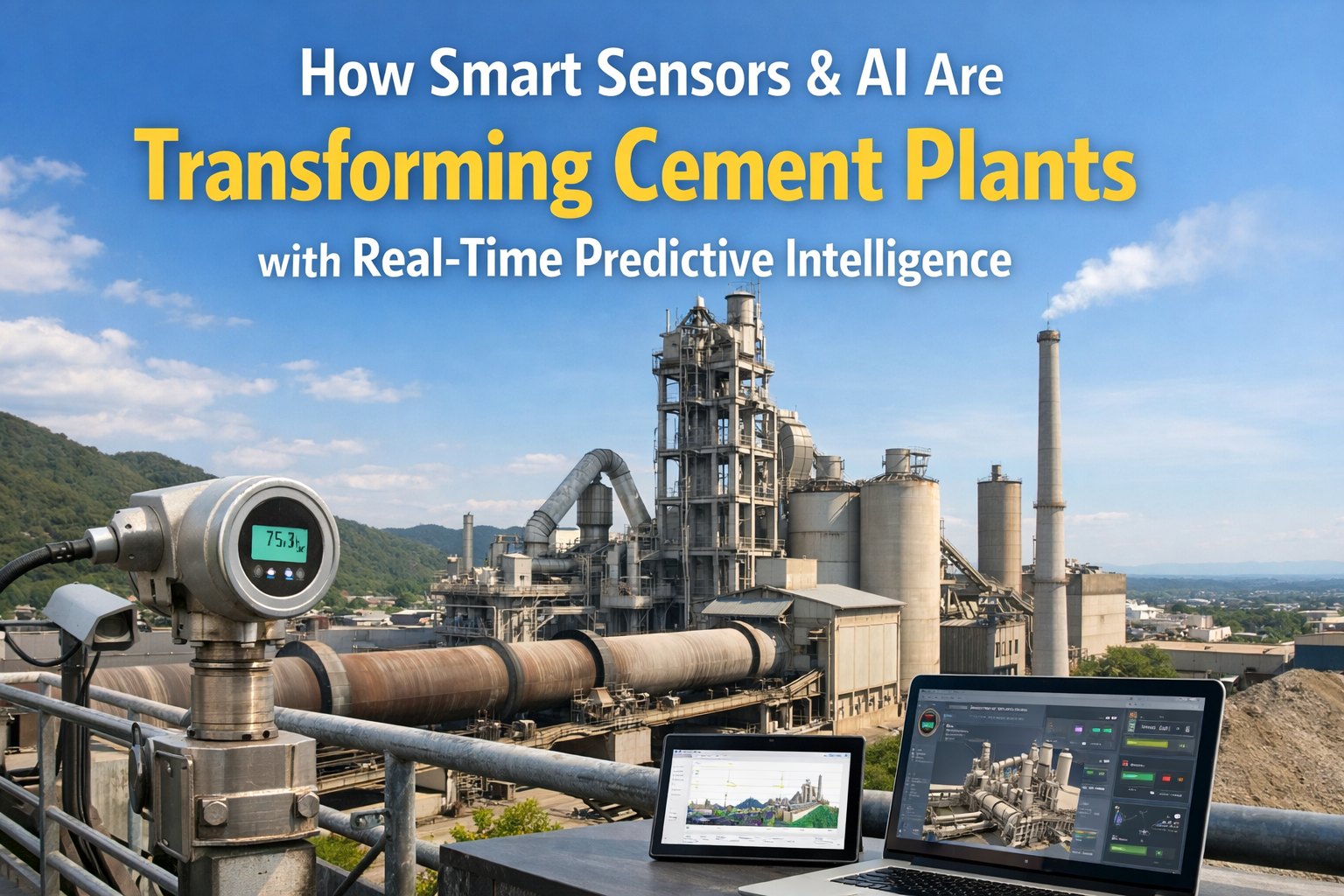
A compressor in a petrochemical plant begins drawing 3.2% more current than its 90-day average. The change is invisible on standard threshold alarms — well within the acceptable range. But the AI monitoring system recognizes this as the exact same pattern that preceded a catastrophic bearing seizure on an identical unit eight months ago. A work order generates automatically. Maintenance replaces the bearing during a planned window on Saturday. Total cost: $1,200 in parts and two hours of labor. Had the anomaly gone undetected, the failure would have caused 72 hours of unplanned downtime, $340,000 in lost production, a potential safety incident and an EPA reportable release. This is what AI anomaly detection does — it hears what your machines are whispering before they start screaming. The global anomaly detection market reached $6.9 billion in 2025 and is projected to hit $28 billion by 2034 at a 16.8% CAGR — because industries everywhere are learning that the most expensive failures are the ones you did not see coming.
AI-Powered Detection
AI-Based Anomaly Detection in Industrial Systems Explained
Detect invisible deviations in vibration, temperature, current, pressure, and acoustic signatures — before they become failures, safety incidents, or unplanned stops.
$28B
Anomaly detection market projected by 2034 at 16.8% CAGR
52%
Of anomaly detection now powered by ML and AI technologies
48%
Of new platforms will feature self-learning anomaly detection by 2026
50%
Productivity increase targeted by Siemens AI Anomaly Assistant
Sources: Precedence Research · SNS Insider · ResearchIntelo · Siemens AG · Research Nester
What Is Anomaly Detection — and Why Thresholds Fail
Traditional industrial monitoring uses fixed thresholds: if temperature exceeds 180°F, alarm. If vibration exceeds 4.5 mm/s, alarm. The problem? Most failures do not announce themselves by crossing a threshold. They announce themselves through subtle pattern changes — a gradual drift, an unusual combination of readings, a deviation from the machine's learned behavior. By the time a threshold triggers, damage is already underway. AI anomaly detection replaces static thresholds with dynamic behavioral baselines — learning what "normal" looks like for each specific asset under each specific operating condition, and flagging any deviation the moment it begins.
Fixed limits set by humans
Same threshold for all operating conditions
Cannot detect slow drift or pattern changes
High false alarm rate erodes operator trust
Catches failure — not the warning signs before it
Requires manual tuning per asset
Dynamic baselines learned per asset
Context-aware — adapts to load, shift, ambient
Detects subtle multi-variable pattern shifts
Reduces false positives by learning normal variation
Catches degradation signatures days before failure
Self-calibrating — improves with every data cycle
The Three Types of Industrial Anomalies AI Catches
Not all anomalies look the same. AI systems are trained to recognize three distinct anomaly patterns — each requiring different detection approaches and each carrying different risk profiles for your operation.
Type 1
Point Anomalies
A single data point that deviates sharply from the expected range. Example: a sudden 40°C temperature spike on a motor bearing that normally operates at 65°C. These are the easiest to detect but often indicate a failure already in progress.
Risk: Immediate — may indicate active failure
Type 2
Contextual Anomalies
A reading that is normal in one context but anomalous in another. Example: a pump drawing 12 amps is expected at full load — but anomalous at 40% load. AI correlates sensor data with operating context (load, product, shift, ambient) to distinguish true anomalies from normal variation.
Risk: Developing — signals degradation under specific conditions
Type 3
Collective Anomalies
A sequence of data points that individually appear normal but collectively form an abnormal pattern. Example: vibration readings that slowly drift upward by 0.1 mm/s per week — each reading within limits, but the trend signals bearing wear that will cause failure in 6 to 8 weeks. These are the hardest to detect and the most valuable to catch early.
Risk: Strategic — slow degradation with catastrophic endpoint
How AI Anomaly Detection Works: The Five-Stage Pipeline
AI anomaly detection is not a single algorithm — it is a multi-stage intelligence pipeline that transforms raw sensor noise into actionable maintenance and safety decisions.
1
Data Ingestion
Continuous streams from vibration sensors, thermocouples, current transformers, pressure transducers, acoustic monitors, and flow meters — sampled at sub-second intervals across every monitored asset.
2
Baseline Learning
ML models build unique behavioral fingerprints for each asset — mapping normal operating signatures across all load conditions, product types, shifts, and ambient environments. No generic thresholds.
3
Multi-Dimensional Correlation
AI analyzes relationships between variables that human operators cannot track simultaneously — correlating vibration with temperature with current with pressure with acoustic emission to detect compound anomaly signatures.
4
Classification & Severity Scoring
Detected anomalies are classified by type (point, contextual, collective), probable root cause, affected asset, and severity score — delivering prioritized alerts instead of undifferentiated alarm floods.
5
Action & Feedback Loop
High-severity anomalies auto-generate work orders in your CMMS. Every maintenance outcome feeds back to refine the model — confirming predictions, adjusting baselines, reducing false positives with every cycle.
Want to see how AI anomaly detection maps to your specific asset fleet? Book a free detection assessment.
What AI Anomaly Detection Monitors
AI anomaly detection is multi-modal — it listens to your equipment through every available sensor channel simultaneously. Here are the six signal domains that AI monitors and the failure modes each one catches.
Vibration
Bearing wear, shaft misalignment, rotor imbalance, gear tooth damage, structural looseness, foundation problems
Motors, pumps, compressors, turbines, gearboxes, fans
Temperature
Electrical resistance faults, friction from degradation, insulation breakdown, overheating, coolant failures
Transformers, switchgear, motors, heat exchangers, furnaces
Electrical Current
Stator winding faults, rotor bar defects, power quality issues, load imbalances, phase failures
All motor-driven equipment, VFDs, generators, electrical panels
Acoustics
Compressed air leaks, steam trap failures, partial discharge, cavitation, early-stage bearing defects
Pneumatic systems, steam systems, high-voltage equipment, pumps
Pressure
Filter blockages, valve failures, seal degradation, pipe obstructions, hydraulic system leaks
Hydraulic systems, process lines, HVAC, boilers, filtration units
Oil & Fluids
Metal particle contamination, viscosity degradation, water ingress, oxidation, additive depletion
Gearboxes, hydraulic units, turbines, compressors, engines
Industries Where Anomaly Detection Prevents Catastrophic Failure
Anomaly detection delivers value everywhere — but in certain industries, the consequences of missed anomalies are measured not just in dollars, but in safety incidents, environmental releases, and regulatory penalties.
Oil, Gas & Petrochemicals
Equipment failures risk explosions, toxic releases, and EPA-reportable incidents. AI monitors compressor health, pipeline integrity, and valve performance — catching anomalies that prevent catastrophic process safety events.
Power Generation
Turbine bearing failures can take weeks to repair and cause grid-level disruptions. AI vibration and thermal anomaly detection extends turbine life by years while preventing forced outages worth millions per event.
Pharmaceutical Manufacturing
Anomalous process conditions can compromise entire drug batches worth millions. AI monitors reactor temperatures, mixing speeds, and environmental conditions — ensuring every batch meets specifications and regulatory requirements.
Automotive Assembly
A single robotic welder anomaly can propagate defects across thousands of vehicles before detection. AI catches welding current deviations, torque anomalies, and vision system drift — preventing costly recalls.
Food & Beverage
Temperature anomalies in cold chain equipment risk product contamination and public health incidents. AI monitors refrigeration, pasteurization, and sterilization parameters — ensuring food safety compliance continuously.
Mining & Heavy Industry
Remote locations make emergency repairs extremely costly. AI monitors crusher bearings, haul truck engines, and conveyor systems — enabling planned maintenance cycles that eliminate expensive emergency fly-in repairs.
$6.9B
Global anomaly detection market in 2025
$28B
Projected market size by 2034
68%
Of Fortune 500 manufacturers deploying AI predictive maintenance
Deploy AI Anomaly Detection in 8 Weeks
iFactory layers AI anomaly detection on top of your existing sensor infrastructure and CMMS — no PLC reprogramming, no equipment modifications, and no production disruption required.
Week 1–2
Sensor Audit & Data Connection
Identify your highest-risk assets by failure history and consequence. Connect existing sensors — or deploy wireless IoT sensors where gaps exist — to iFactory's analytics platform via OPC-UA, MQTT, or REST API.
Week 3–4
Behavioral Baseline Learning
AI learns each asset's unique operating fingerprint across all conditions — load states, product types, shifts, ambient temperatures. Baselines are per-asset and per-context, not generic industry thresholds.
Week 5–6
Detection Activation & CMMS Integration
Activate multi-dimensional anomaly detection with classified alerts and severity scoring. Connect to your CMMS for automatic work order generation when high-severity anomalies are detected. Your maintenance team uses the same interface they know.
Week 7–8
Validation & Fleet Expansion
Validate detected anomalies against maintenance outcomes. Measure false positive rate, detection lead time, and avoided downtime costs. Refine models and expand to additional asset classes based on proven results.
Ready to hear what your machines are telling you? Schedule your free anomaly detection assessment.
Frequently Asked Questions
What is AI-based anomaly detection in industrial systems?
AI-based anomaly detection uses machine learning algorithms to continuously analyze sensor data from industrial equipment — vibration, temperature, current, pressure, acoustics — and identify deviations from learned normal behavior. Unlike fixed threshold alarms, AI detects subtle pattern shifts that indicate developing faults days or weeks before they cause failure, enabling planned intervention instead of emergency repair.
Book a demo to see it in action.
How is AI anomaly detection different from traditional threshold alarms?
Traditional alarms trigger when a single reading crosses a fixed limit — by which point damage is often already occurring. AI anomaly detection learns dynamic baselines per asset, adapts to operating context (load, product, ambient conditions), correlates multiple sensor streams simultaneously, and detects collective pattern shifts that no single threshold can catch. This dramatically reduces both missed detections and false alarms.
What types of equipment benefit most from AI anomaly detection?
Rotating equipment delivers the highest ROI — motors, pumps, compressors, turbines, gearboxes, and fans. Beyond rotating assets, AI anomaly detection is highly effective for transformers, heat exchangers, hydraulic systems, boilers, process reactors, and any asset where unplanned failure carries high safety, environmental, or financial consequences.
How far in advance can AI detect anomalies before failure?
AI typically detects anomaly signatures 48 to 96 hours before forced failure for acute degradation, and weeks to months in advance for slow-developing faults like bearing wear or insulation degradation. The detection lead time depends on failure mode, sensor coverage, and data quality. Most manufacturers see actionable early warnings within the first 30 days of system activation.
Schedule a demo to model detection windows for your assets.
Does AI anomaly detection integrate with our existing CMMS?
Yes. iFactory connects to SAP PM, Maximo, eMaint, Fiix, and any CMMS with REST API support. When a high-severity anomaly is detected, iFactory auto-generates a condition-based work order in your CMMS with fault classification, severity score, and recommended action. Your maintenance team continues working in their familiar system while AI adds the intelligence layer.
Your Machines Are Already Warning You. Are You Listening?
Every Undetected Anomaly Is a Future Failure Waiting to Happen
iFactory deploys AI anomaly detection across your existing sensor infrastructure — turning subtle signal deviations into prioritized, actionable alerts that prevent failures, protect safety, and eliminate emergency maintenance.
48–96h
Early warning before forced equipment failure
3 Types
Point, contextual, and collective anomalies detected
6 Signals
Vibration, thermal, current, acoustic, pressure, oil
8 Weeks
From sensor connection to validated detection