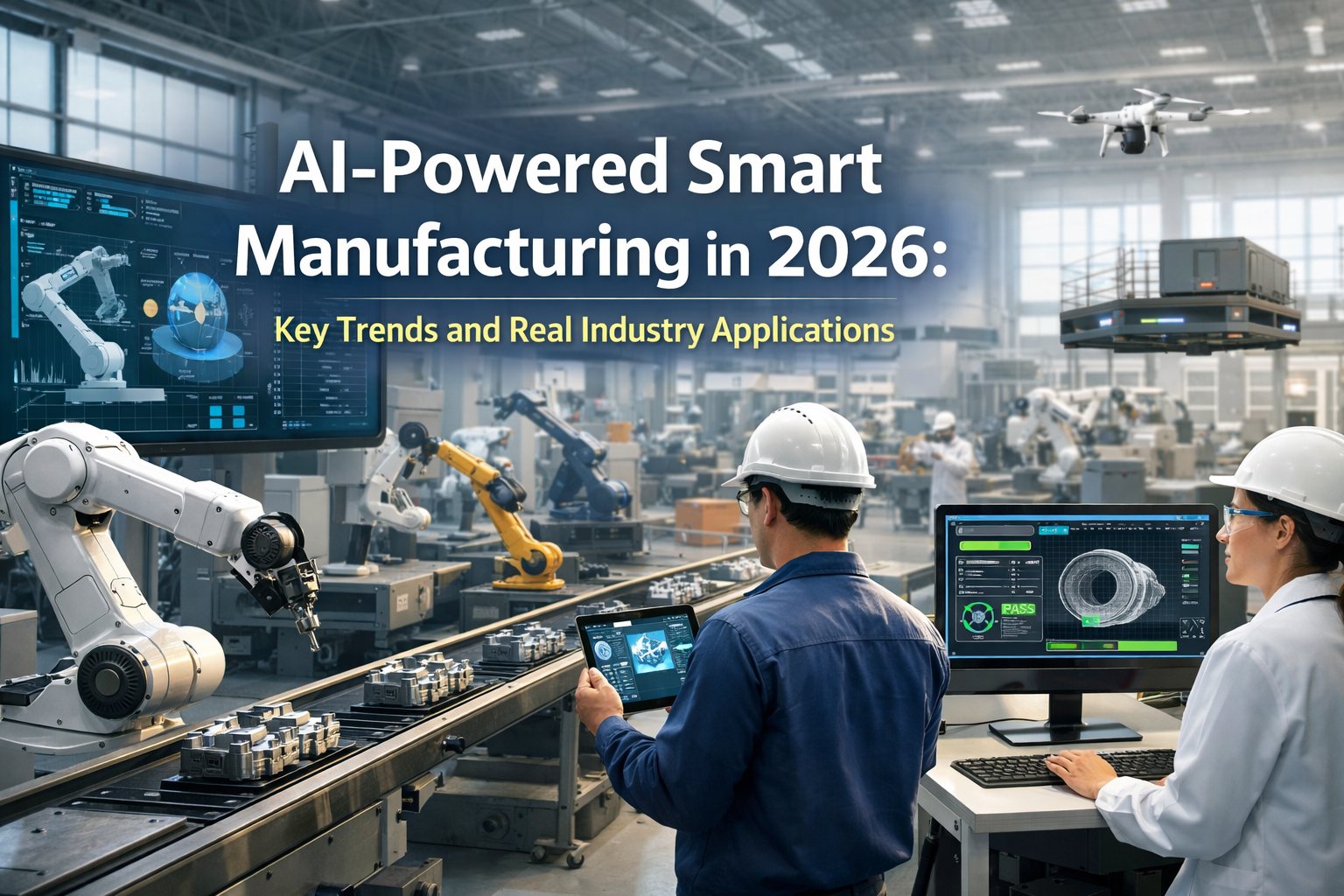
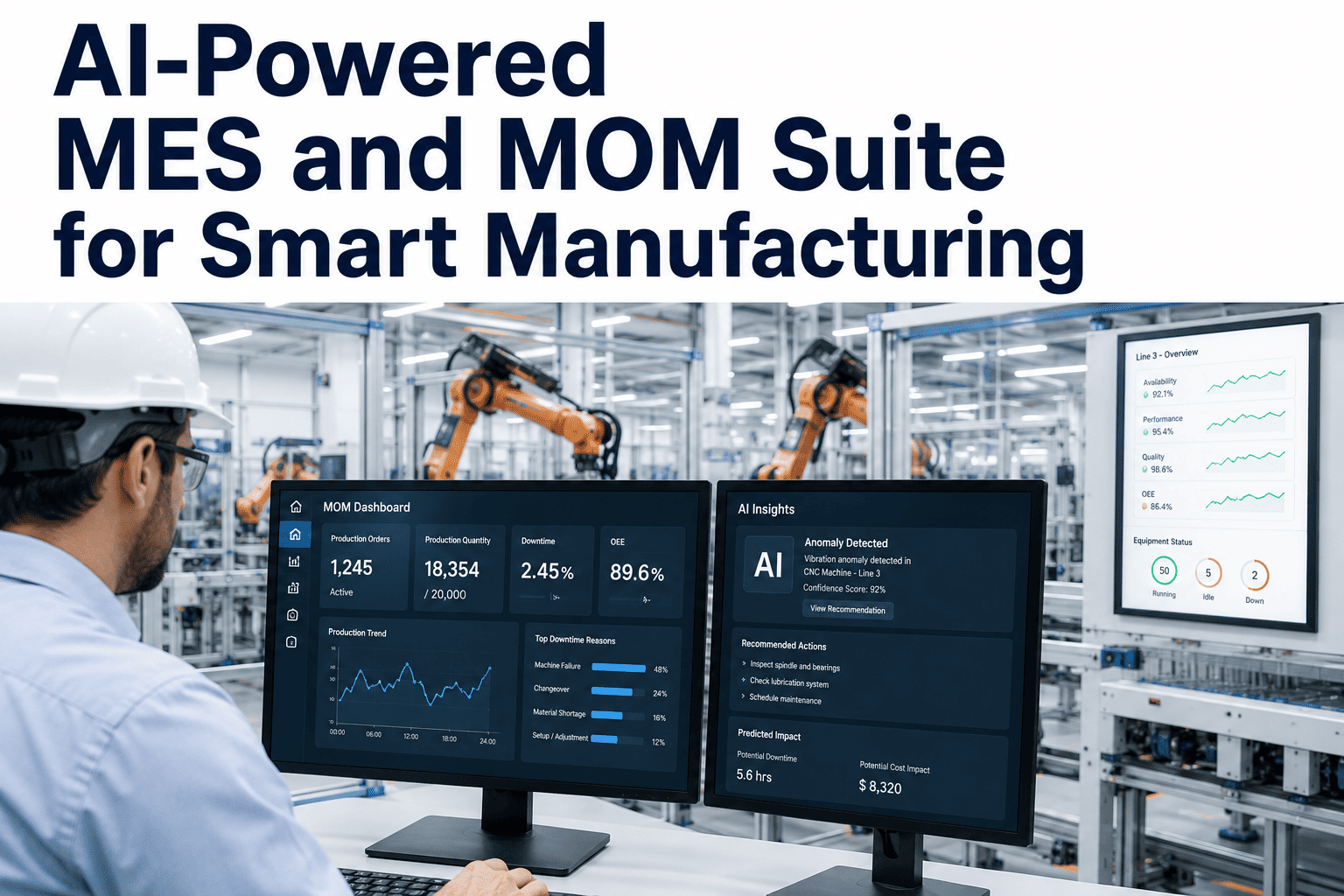
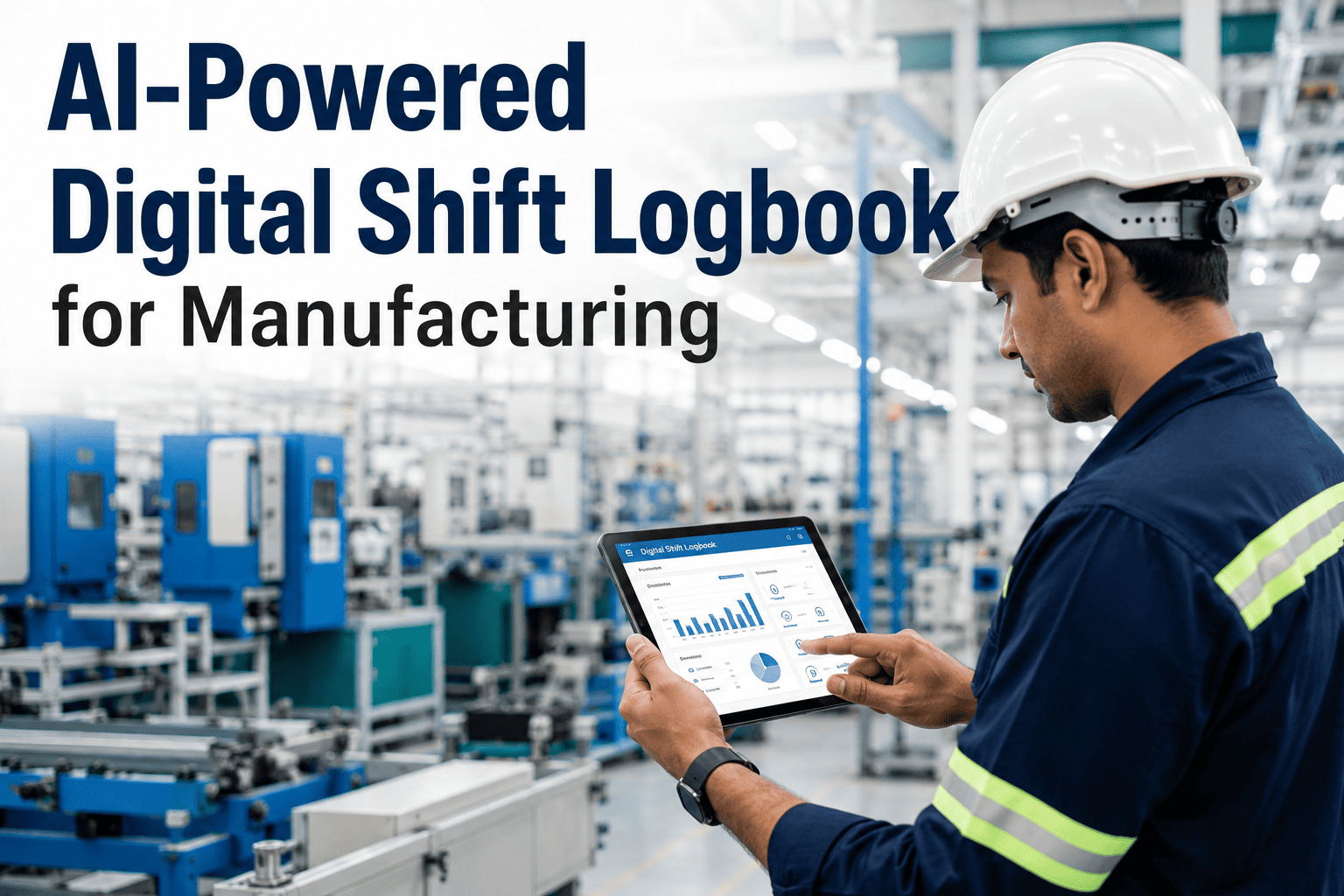
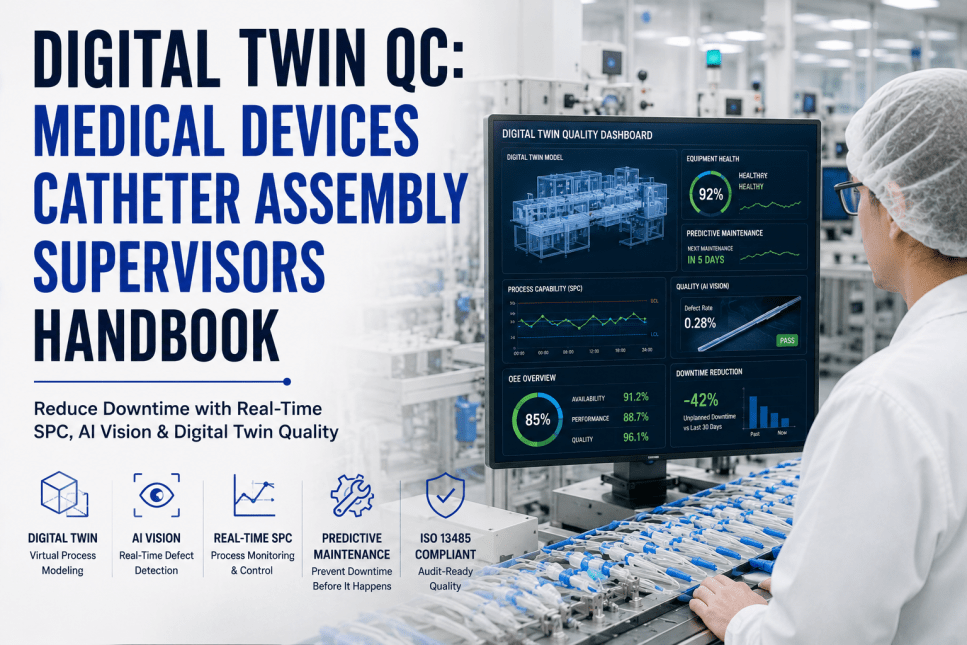
In 2026, manufacturing isn't just getting smarter — it's thinking for itself. Artificial intelligence now powers everything from the machines on the factory floor to the decisions made in the boardroom. With a market projected to reach $155 billion by 2030 and 98% of manufacturers actively exploring AI, the question isn't whether to adopt — it's how fast you can move. Here's what's actually happening inside the world's smartest factories right now.
AI in Manufacturing
The 2026 Reality Check
From pilot programs to production-scale intelligence
That gap between interest and readiness is where the real opportunity lives. Manufacturers who close it first will dominate their sectors. Those who wait will find themselves competing against AI-optimized rivals with 30% less downtime, 40% lower maintenance costs, and near-perfect quality rates.
The Market Explosion Nobody Can Ignore
The numbers tell a story that every manufacturing executive needs to hear. AI in manufacturing isn't a niche technology anymore — it's the fastest-growing segment in industrial tech, expanding at a pace that rivals the early days of the internet.
Growing at 35.3% CAGR — outpacing nearly every industrial technology sector
According to IDC's 2026 Manufacturing FutureScape, over 40% of manufacturers with production scheduling systems will upgrade to AI-driven capabilities this year alone. The Smart Factory market itself is valued at $374 billion in 2026, with AI serving as the central nervous system connecting machines, data, and decisions.
Wondering where AI fits into your production line? Book a free consultation with our manufacturing AI specialists to identify your highest-ROI starting point.
7 AI Trends Reshaping Factories Right Now
Forget the hype cycle. These are the technologies delivering measurable results on real factory floors in 2026 — backed by data from Deloitte, McKinsey, and IDC.
01
Agentic AI — The Biggest Shift of the Year
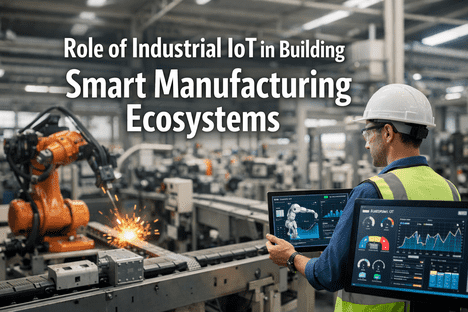
Unlike traditional AI that responds to commands, agentic AI acts autonomously — making decisions, executing tasks, and adjusting workflows without waiting for human approval. Deloitte predicts a fourfold increase in agentic AI adoption in manufacturing this year, jumping from 6% to 24%. These AI agents are already scheduling maintenance, renegotiating supplier contracts in real-time, and orchestrating entire production lines.
4x
increase in agentic AI adoption predicted for 2026
02
Predictive Maintenance Goes Prescriptive
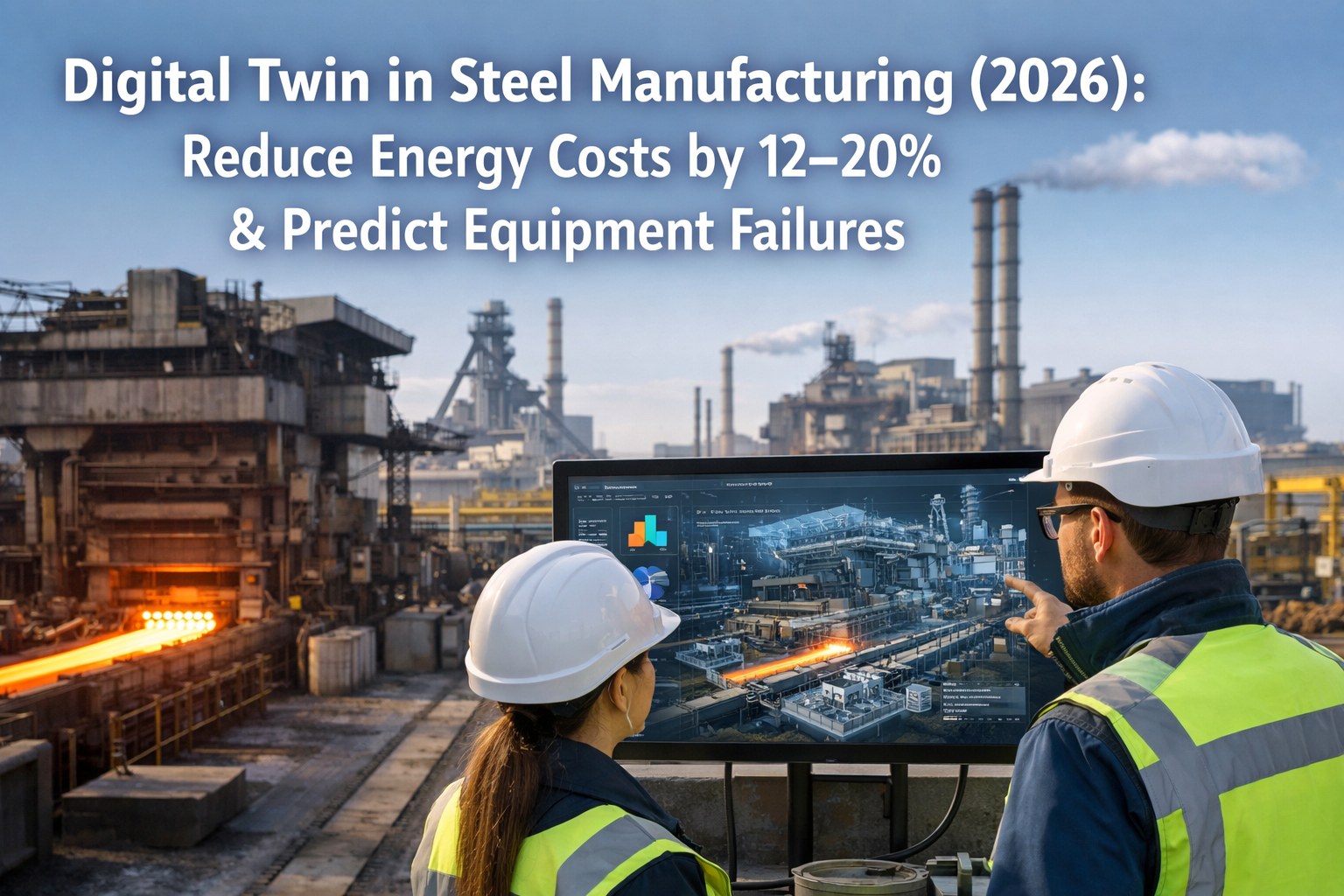
AI doesn't just predict when a machine will fail — it now tells you exactly what to do about it, orders the parts, and schedules the technician. Manufacturers using AI-driven predictive maintenance report 30-50% reduction in unplanned downtime and 25-40% lower maintenance costs. The ROI? A consistent 250-300% return within two years.
03
Physical AI and Humanoid Robots Enter the Floor
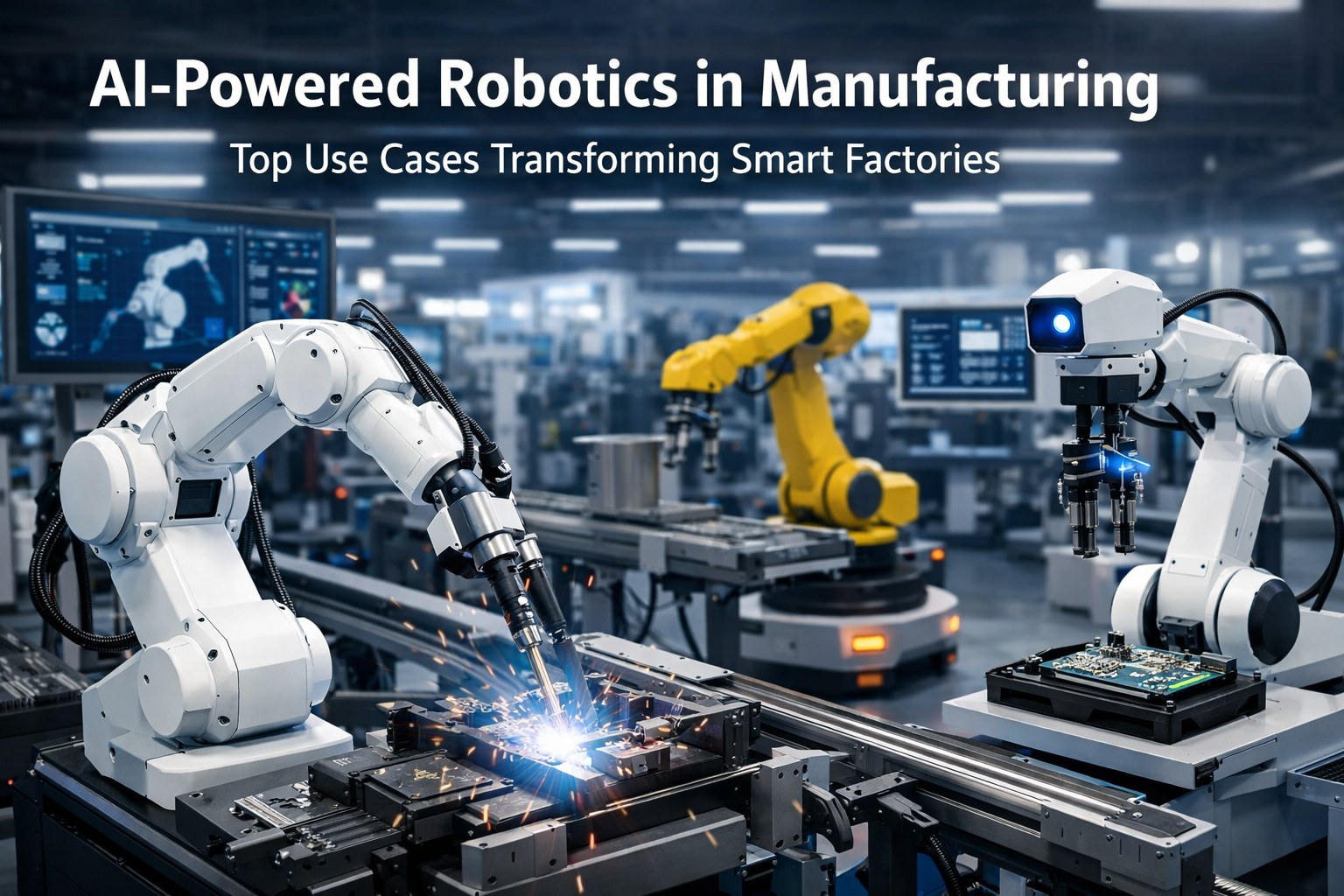
Boston Dynamics' Atlas robot is now running field tests at Hyundai's Georgia plant, autonomously sorting roof racks without human assistance. According to Deloitte, 58% of business leaders are already using physical AI to some extent. By 2028, Hyundai plans full humanoid deployment. The age of thinking robots has arrived — not in labs, but on production lines.
58%
of business leaders already using physical AI in operations
04
Computer Vision Achieves Near-Perfect Quality
AI visual inspection systems now detect defects as small as 0.1mm with 99.8% accuracy — far surpassing human inspectors who typically miss 15-30% of defects. In automotive manufacturing, these systems have cut defect escape rates by up to 83% while inspecting over 1,000 units per minute around the clock.
05
Digital Twins Become Standard Infrastructure
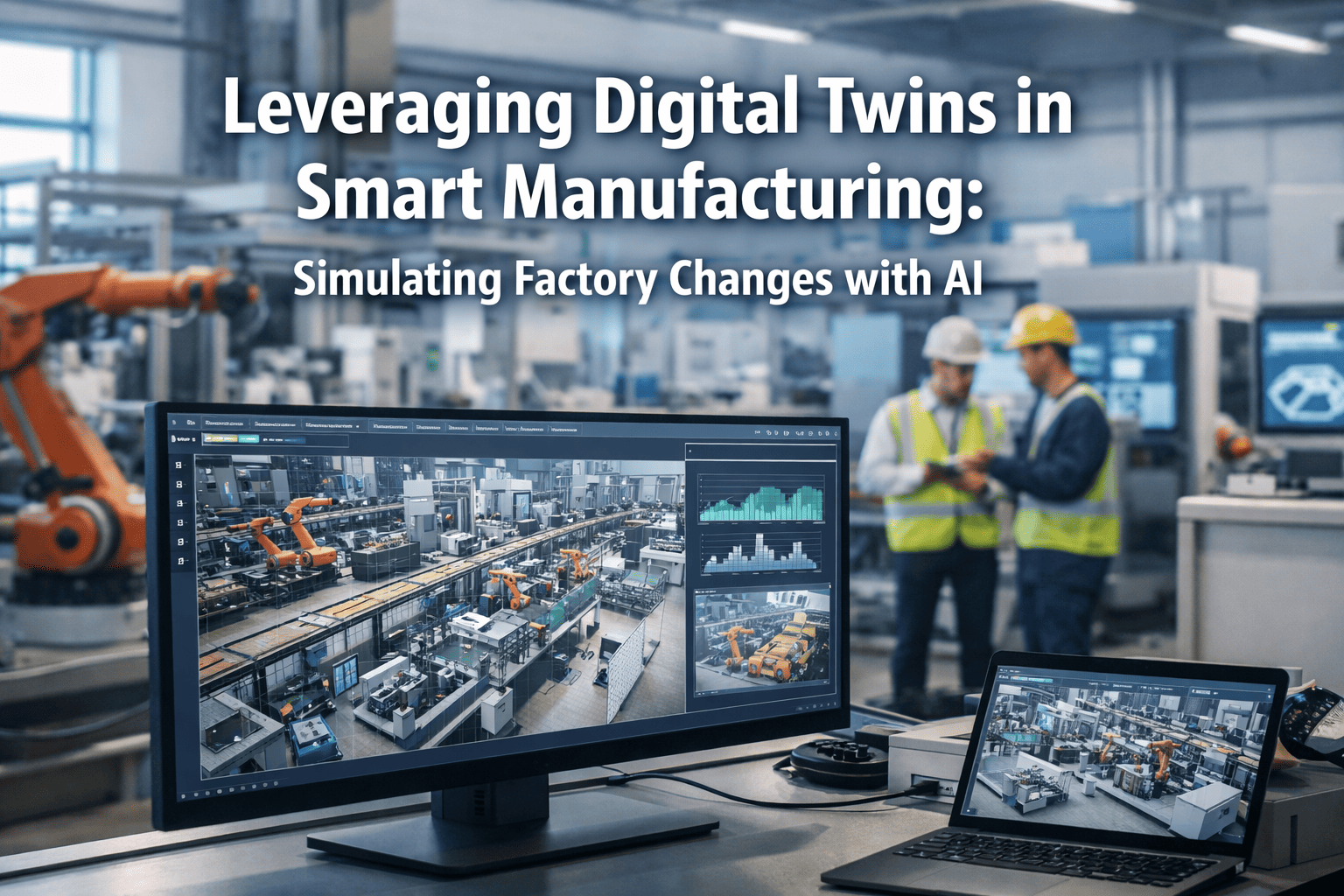
By 2028, IDC predicts 65% of G1000 manufacturers will use AI agents alongside design and simulation tools. Digital twins now go beyond visualizing a factory — they simulate changes, test optimizations, and validate decisions before a single bolt is turned. NVIDIA's Omniverse platform is training thousands of robot replicas simultaneously in virtual environments.
65%
of G1000 manufacturers expected to use AI simulation tools by 2028
06
AI-Powered Cybersecurity Becomes Non-Negotiable
Manufacturing has been the most targeted industry for cyberattacks four years running. Jaguar Land Rover's 2025 breach halted production for five weeks, costing $260 million. By 2029, IDC predicts 75% of large manufacturers will deploy AI-enabled cyber defense, cutting detection times by 60%. In 2026, cybersecurity isn't optional — it's survival.
60%
faster threat detection with AI-powered cyber defense
07
Generative AI Accelerates Product Development
Engineers are using GenAI to shrink product development cycles dramatically — optimizing designs by drawing on past launches, customer feedback, and quality data simultaneously. Siemens' Industrial Copilot, built with Microsoft, reduces automation code simulation from weeks to minutes. This isn't replacing engineers — it's giving them superpowers.
Weeks → Minutes
simulation time reduction with Siemens Industrial Copilot
The Readiness Gap: Where Most Manufacturers Get Stuck
Here's the uncomfortable truth: while 98% of manufacturers are exploring AI, only 20% feel fully prepared to deploy it at scale. Seven in ten have automated just half or less of their core operations. The gap between ambition and execution is where billions of dollars in value are being left on the table.
Exploring or Considering AI
98%
Running Pilot Projects
56%
Fully Prepared for Scale
20%
The biggest barriers? Fragmented data systems, lack of skilled talent, and the inability to unify data across the manufacturing process chain.
According to Redwood Software's 2026 report, only 40% of manufacturers have automated exception handling — despite citing it as one of their most disruptive processes. The factories pulling ahead aren't necessarily the biggest — they're the ones with unified data, clear governance, and a phased implementation strategy.
Not sure where your factory stands on AI readiness? Talk to our team — we help manufacturers move from pilot to production with a clear, phased roadmap.
Industry Impact: AI Across Manufacturing Sectors
AI isn't a one-size-fits-all solution. Different sectors are applying it in ways that address their specific challenges — and the results vary dramatically by industry.
Automotive
AI-driven assembly lines, weld inspection, and EV production optimization. Hyundai is piloting humanoid robots while BMW tests autonomous quality systems.
83% fewer defect escapes
Semiconductors
Wafer-level defect detection using AI vision systems. Intel and Micron leverage computer vision for contamination identification at microscopic scale.
99.95% detection accuracy
Pharmaceuticals
Pill inspection, batch tracking, and compliance automation. AI ensures near-perfect accuracy in packaging verification and regulatory documentation.
Near-perfect quality rates
Food & Beverage
Contamination detection, freshness monitoring, and packaging inspection. AI systems catch what human inspectors simply cannot see at production speed.
78% fewer product recalls
Aerospace
Composite material inspection, weld verification, and surface analysis for safety-critical components where zero-defect tolerance is the standard.
Safety-critical precision
Electronics
PCB inspection, solder joint verification, and component placement accuracy. AI detects microscopic defects invisible to human inspectors.
Microscopic defect detection
The ROI Reality: What Smart Factories Actually Deliver
The financial case for AI in manufacturing isn't theoretical anymore. These are verified results from companies that have moved past pilots into full production deployment.
10:1
Average ROI within 2 years of AI-driven predictive maintenance implementation
Deloitte Research
5-15%
OEE improvement commonly reported across manufacturing facilities using AI optimization
McKinsey 2025
78%
of facilities using AI report measurable waste reduction in their operations
Industry Benchmark
60%
reduction in unplanned downtime reported by manufacturers using AI-powered automation
Redwood Software 2026
The manufacturers seeing the fastest returns share three traits: they start with high-impact use cases like predictive maintenance, they invest in unified data infrastructure, and they scale methodically rather than trying to transform everything at once.
Your 90-Day Path from Pilot to Production
The factories winning with AI didn't try to boil the ocean. They followed a focused, phased approach that proves value quickly and scales intelligently.
Weeks 1-4
Targeted Pilot
Pick one high-impact use case — predictive maintenance on critical machines or quality inspection. Define 3 clear KPIs. Connect existing sensor data. Prove the concept with real results, not PowerPoints.
Weeks 5-8
Validate & Build the Case
Measure actual cost savings, downtime reduction, and quality improvements. Document everything. Build the business case for broader deployment with real numbers your CFO will believe.
Month 2-3
Production Line Deployment
Expand to full production lines. Integrate with your MES, ERP, and CMMS systems. Train your operators on AI-driven insights. This is where pilot becomes permanent value.
Month 4+
Scale Across the Enterprise
Roll out across facilities. Add use cases. Build continuous improvement loops where AI insights feed back into operations — creating a factory that literally gets smarter every day.
Frequently Asked Questions
What is AI-powered smart manufacturing?
AI-powered smart manufacturing refers to the integration of artificial intelligence technologies — including machine learning, computer vision, and natural language processing — into factory operations. These systems analyze real-time data from sensors, machines, and production lines to autonomously optimize processes, predict equipment failures, detect quality defects, and make intelligent decisions that improve efficiency, reduce costs, and minimize downtime.
What are the biggest AI trends in manufacturing for 2026?
The dominant trends for 2026 include agentic AI systems that make autonomous decisions without human oversight, physical AI and humanoid robots entering production floors, AI-powered cybersecurity to counter rising threats, generative AI for product design acceleration, digital twins becoming standard infrastructure, computer vision achieving near-perfect quality inspection, and predictive maintenance evolving into prescriptive maintenance that not only forecasts failures but also recommends and initiates corrective actions.
How much does AI in manufacturing cost to implement?
Implementation costs vary significantly based on scope and complexity. A focused pilot project on predictive maintenance or quality inspection can start showing results within 4-8 weeks with moderate investment. Cloud-based AI platforms have significantly reduced upfront costs compared to custom-built solutions. The key metric is ROI — manufacturers consistently report 250-300% returns on predictive maintenance and 10:1 average ROI within two years, making the investment self-funding in most cases.
What is agentic AI and why does it matter for factories?
Agentic AI refers to autonomous AI systems that can perceive their environment, make decisions, and execute complex tasks without human supervision. Unlike traditional AI that requires human prompts, agentic AI proactively manages workflows — scheduling maintenance before failures occur, adjusting production plans in real-time, and renegotiating supplier terms during disruptions. Deloitte predicts adoption will quadruple in manufacturing during 2026, from 6% to 24% of facilities.
Will AI replace manufacturing workers?
The evidence points to augmentation rather than replacement. According to Deloitte, more than 81% of task hours in manufacturing are expected to remain human-driven. AI handles repetitive, data-intensive tasks while humans focus on creativity, problem-solving, and complex decision-making. The most successful factories are building hybrid "human + AI" models where technology amplifies human capabilities rather than eliminating roles. Companies like Rockwell Automation report that 48% of manufacturers plan to redeploy workers into higher-value roles enabled by AI.
How long does it take to see results from AI implementation?
A focused pilot project targeting predictive maintenance or quality inspection can deliver measurable results in 4-8 weeks. Full production line deployment with MES and ERP integration typically takes 2-3 months. Enterprise-wide rollout with multiple AI use cases is an ongoing process starting from month 4 onwards. The key is starting with a single high-impact use case, proving ROI with real data, and then scaling systematically.
What industries benefit most from AI in manufacturing?
AI delivers strong results across all manufacturing sectors, but the highest-impact applications vary by industry. Automotive sees 83% fewer defect escapes with AI vision systems. Semiconductors achieve 99.95% detection accuracy on wafer inspection. Food and beverage manufacturers report 78% fewer product recalls. Pharmaceuticals benefit from near-perfect compliance accuracy. Aerospace relies on AI for safety-critical precision inspection, while electronics manufacturers use it for microscopic defect detection on PCBs and solder joints.
What is the market size for AI in manufacturing?
The global AI in manufacturing market is projected to grow from $34 billion in 2025 to $155 billion by 2030, at a compound annual growth rate of 35.3%. The broader smart factory market is valued at approximately $374 billion in 2026. Investment in AI specifically for manufacturing operations is expected to reach $16.7 billion in 2026 alone, with 98% of manufacturers actively exploring or considering AI-driven automation.
The Bottom Line
2026 is the year AI moves from manufacturing experiment to manufacturing essential. The technology is proven. The ROI is documented. The market is exploding. The only variable left is execution speed. Manufacturers who act now — starting with focused pilots and scaling with purpose — will build competitive advantages that late adopters may never close. The gap between AI-ready and AI-lagging will only widen from here.
Ready to Build Your Smart Factory?
iFactory helps manufacturers implement AI-powered maintenance, quality inspection, and production optimization — starting with quick wins that deliver results in weeks. See what's possible for your operation.