Two years ago, a major beverage plant in the Midwest ran three shifts of forty people just for packaging inspection and rework. Last month, that same line ran autonomously for sixty-two hours straight, with a single humanoid robot performing continuous visual quality checks, adjusting filler speeds in real time, and flagging a worn-out pump seal on a pasteurizer before it caused a shutdown. The plant director now reviews exception reports on a tablet instead of walking the floor with a clipboard. The shift supervisor's title changed to "automation coordinator." The rework rate dropped from 1.8 percent to 0.3 percent. This is not a pilot. It is production reality in 2026, and by 2030, it will be the baseline for every food and beverage manufacturer serious about staying competitive.
Humanoid Robots & Embodied AI Are Reshaping Food Manufacturing — Here's What Production Looks Like at Scale
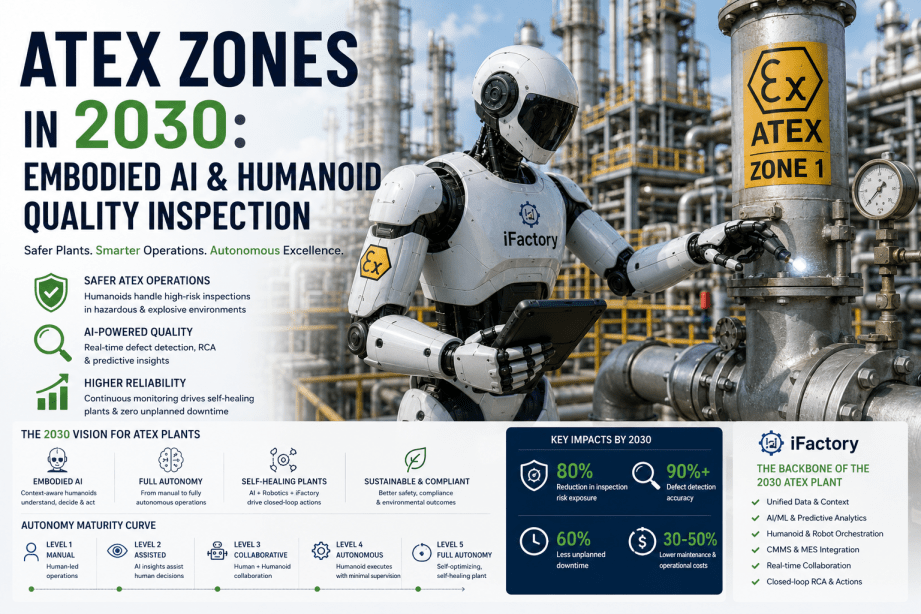
By 2030, humanoid robots running embodied AI will be standard equipment in food and beverage plants. They'll handle autonomous inspections, predictive maintenance, and quality control — without cloud dependency, without data egress, and without forklift reconfiguration.
What Humanoid Robots Deliver in Food & Beverage Plants Today
Early adopters running embodied AI on production floors are reporting measurable, auditable results that compound as the fleet learns. These are not projections — they are averages from live deployments across dairy, beverage, and protein processing lines.
What Humanoid Robots Actually Do on Your Floor
These are not glorified forklifts. Humanoid robots with embodied AI combine vision, hearing, touch, and motion to perform tasks that previously required human dexterity and judgment — all running on an on-premise NVIDIA appliance with zero cloud dependency.
Autonomous Visual Inspection
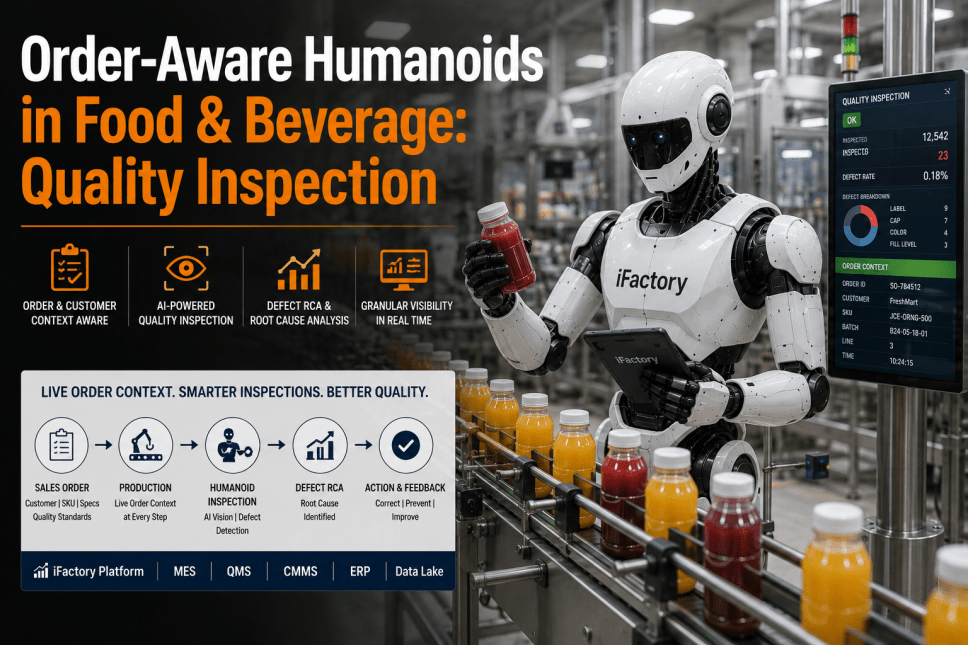
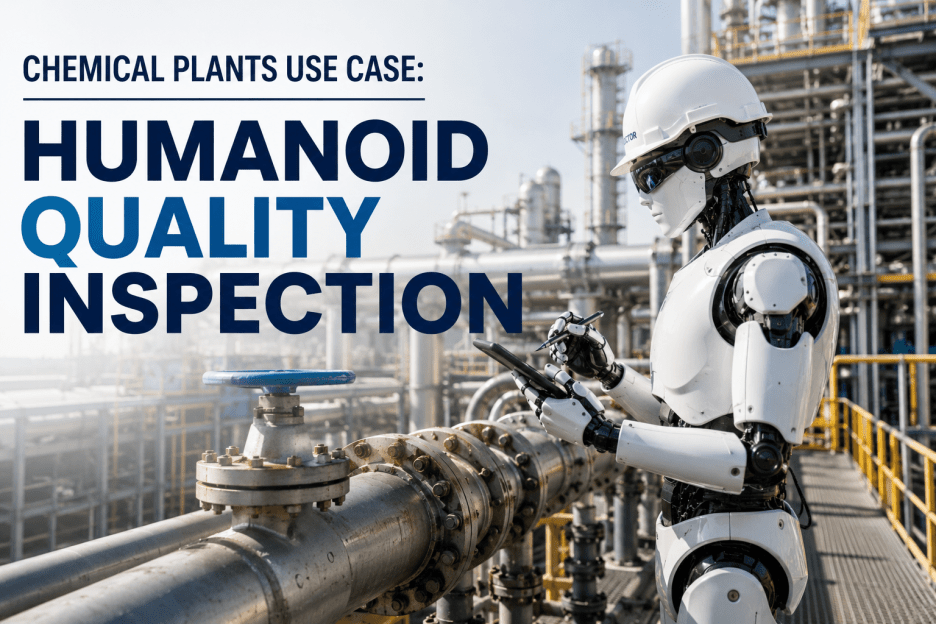
Humanoids walk every line and zone, inspecting packaging seals, fill levels, label alignment, and foreign material at 360 frames per second. They compare every unit against your spec library and flag deviations in real time — no cameras to mount, no conveyor rework.
Predictive Condition Monitoring
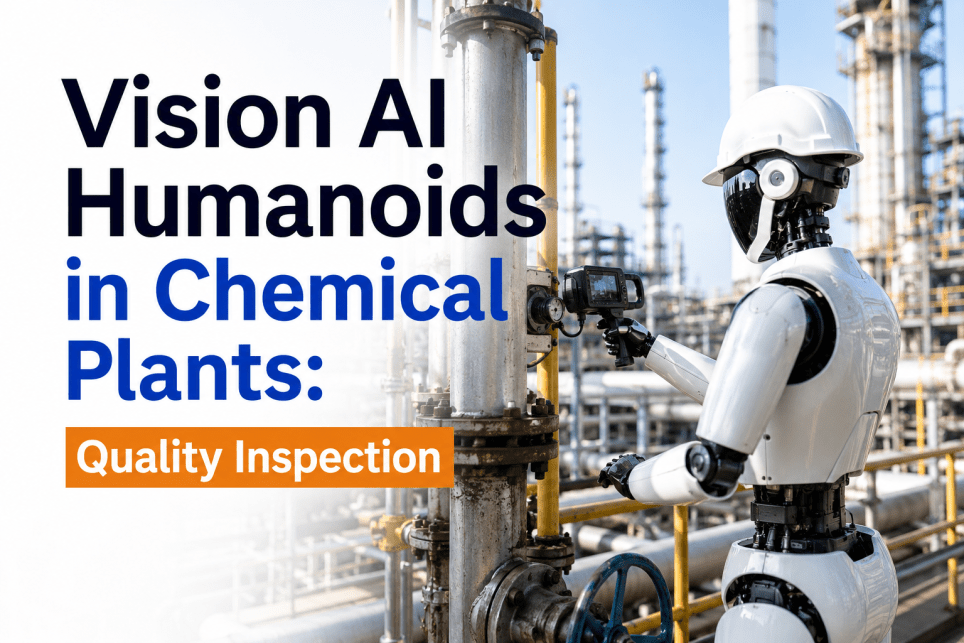
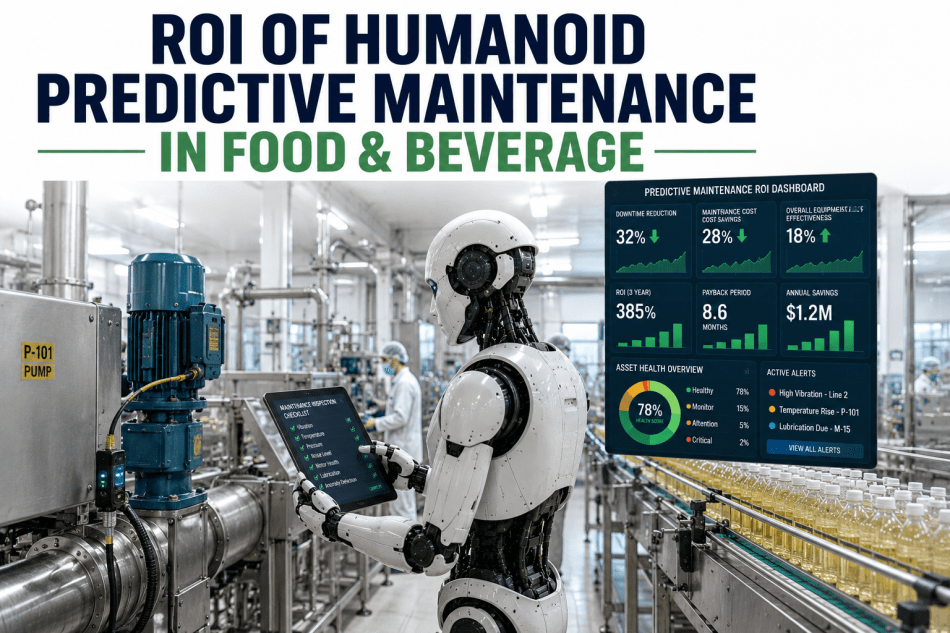
Using onboard microphones and thermal sensors, humanoids listen for pump cavitation, motor bearing wear, and conveyor misalignment. When a signature matches a pre-failure pattern, the robot alerts the CMMS and places a parts order — before the line stops.
Material Handling & Tote Management
Humanoid robots lift, carry, and place totes, bins, and cases at heights and angles that fixed automation cannot reach. They adapt to layout changes overnight — no programming, no safety cage reconfiguration.
Sanitation Zone Patrolling
During washdown cycles, humanoids patrol wet zones, verify chemical concentrations via onboard sensors, and confirm that all surfaces meet ATP swab thresholds before production restarts. They log every cycle to the MES automatically.
Real-Time Recipe Adjustment
When a humanoid detects a viscosity or temperature drift in a mixing vessel, it adjusts the batch recipe parameters in the MES — no operator intervention needed. The change is logged, validated, and traceable for regulatory audit.
Exception Response & Escalation
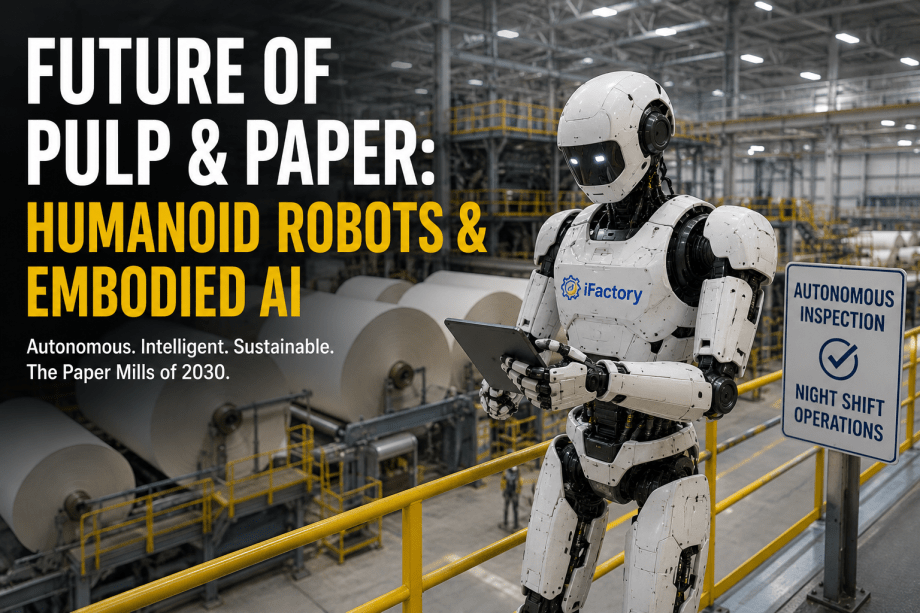
If a humanoid encounters a situation it cannot resolve — a jammed conveyor, a broken seal — it pages the nearest available human via wearable or tablet, shows them the exact location and issue, and resumes patrol once the fix is confirmed.
Three Reasons Your Plant Will Be Running Humanoids by 2030
Every food and beverage executive we talk to agrees on the trajectory. The only question is whether your plant leads or follows. Here is what the laggards will face.
Labor Availability Collapses Further
By 2030, the food industry will need 2.6 million additional workers to meet demand. The available pool of people willing to work repetitive, wet, cold, or hot production jobs is shrinking 6 percent per year. Humanoids fill the gap without competing for the same labor pool.
Quality Failures Become Uninsurable
One foreign-material recall costs a mid-size processor $8 million in direct costs plus 12 percent market share loss. Humanoid inspection catches every contaminant that a human would miss. Plants without autonomous inspection will face premium hikes or coverage denial.
Fixed Automation Cannot Keep Pace
Conveyor-mounted cameras and gantry robots cost $150,000 per station and take 18 weeks to engineer, build, and validate. A humanoid robot can be deployed in 72 hours, moved overnight, and reprogrammed by plant engineers in minutes. The flexibility gap widens every year.
Every humanoid robot running on iFactory ships with embodied AI that learns your plant in 72 hours. Book a 30-min walkthrough and we'll show you a live deployment at a plant just like yours.
Four Steps to a Fleet of Autonomous Humanoids
iFactory is the only platform that delivers humanoid robot orchestration on an on-premise NVIDIA appliance — no cloud, no data egress, no IT security review. Here is exactly how it works.
Deploy the Appliance
We ship a hardened NVIDIA appliance that connects to your plant network. Plug it in, point it at your data sources — PLCs, CMMS, MES, vision systems — and it begins mapping your floor in under four hours.
Unpack & Train the Humanoids
Humanoid robots arrive pre-configured with iFactory's embodied AI. They walk your aisles, learn your equipment, memorize your spec library, and calibrate to your lighting and acoustics. Full autonomy in 72 hours.
Assign Zones & Tasks
Your plant engineers use a tablet to assign patrol zones, inspection frequencies, and escalation rules. No coding. No robotics expertise required. The humanoids begin their rounds immediately.
Monitor & Optimize
iFactory's dashboard shows every inspection result, every anomaly, every intervention. The fleet learns collectively — what one humanoid discovers, all humanoids know within seconds. Your team shifts from firefighting to optimization.
Everything You Need to Go Live in One Quarter
iFactory delivers the complete stack — hardware, software, orchestration, and 24x7 support — as a single managed service. No integration partners. No multi-vendor finger-pointing. No cloud risk.
End-to-End Deployment
We handle everything from appliance installation to humanoid calibration to MES integration. Your team owns the outcomes, not the integration work.
Turnkey 6–12 Week Pilot
From handshake to first autonomous patrol in six to twelve weeks. We guarantee a working pilot that demonstrates measurable ROI before you commit to scale.
On-Premise, Zero Cloud
All AI processing stays on your plant network. No data leaves your floor. No internet dependency. No cloud subscription. Your data remains your asset.
Pilot to ROI in One Quarter
We structure the pilot so that quality savings alone cover the cost of the deployment within the first 90 days. After that, every efficiency gain is pure margin improvement.
Questions Operations Executives Ask
Your Plant's Autonomous Future Starts in 12 Weeks
We will deploy a humanoid robot on your floor, integrate it with your MES and CMMS, and demonstrate measurable quality and uptime improvements — all within one quarter. No cloud. No data egress. No risk.