A specialty chemical plant producing polymer intermediates was managing quality inspection the way most chemical facilities do — with manual visual checks at reactor discharge, periodic lab sampling every four hours, and paper-based deviation reports that reached the quality manager three days after a non-conformance occurred. When a catalyst contamination event went undetected for 18 hours, it compromised an entire 50,000-gallon batch worth $1.6M. That incident triggered a complete re-evaluation of the plant's approach to quality assurance. Twelve weeks after deploying iFactory AI's humanoid robot inspection platform — integrating AI Vision cameras, digital twin simulation, and autonomous root cause analysis — the plant reduced defect detection time from hours to minutes, eliminated manual inspection in three hazardous sampling zones, and prevented a second major batch loss within the first month of operation.
Deploy humanoid robots for chemical plant quality inspection and root cause analysis — and catch process deviations before they become batch losses.
iFactory AI's humanoid robotics platform combines AI Vision, digital twin modeling, and autonomous RCA to transform quality assurance across reactors, distillation columns, and material transfer zones.
What humanoid robots deliver for chemical plant quality inspection
These results are from a 14-week deployment at a specialty chemical facility producing polymer intermediates across six reactor trains, three distillation columns, and twelve storage and transfer zones. iFactory AI's humanoid robots were deployed for visual inspection, thermal anomaly detection, and automated root cause analysis.
What iFactory AI's humanoid platform does that traditional inspection can't
Conventional chemical plant quality inspection relies on manual sampling, delayed lab analysis, and paper-based deviation tracking. iFactory AI's humanoid robots bring continuous, autonomous inspection directly to the process equipment — with AI-driven defect classification and root cause analysis built in.
Autonomous visual & thermal patrols
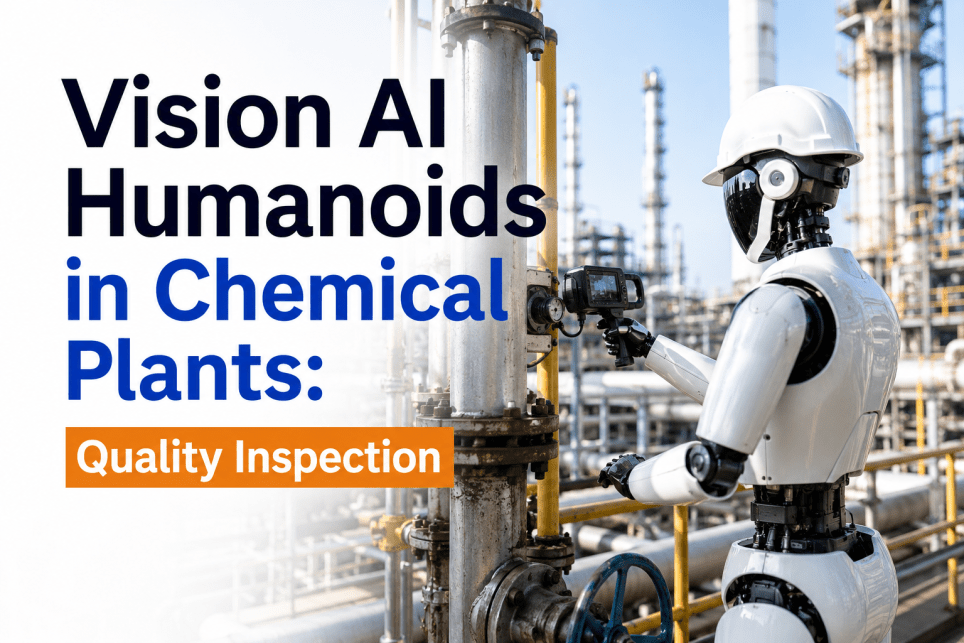
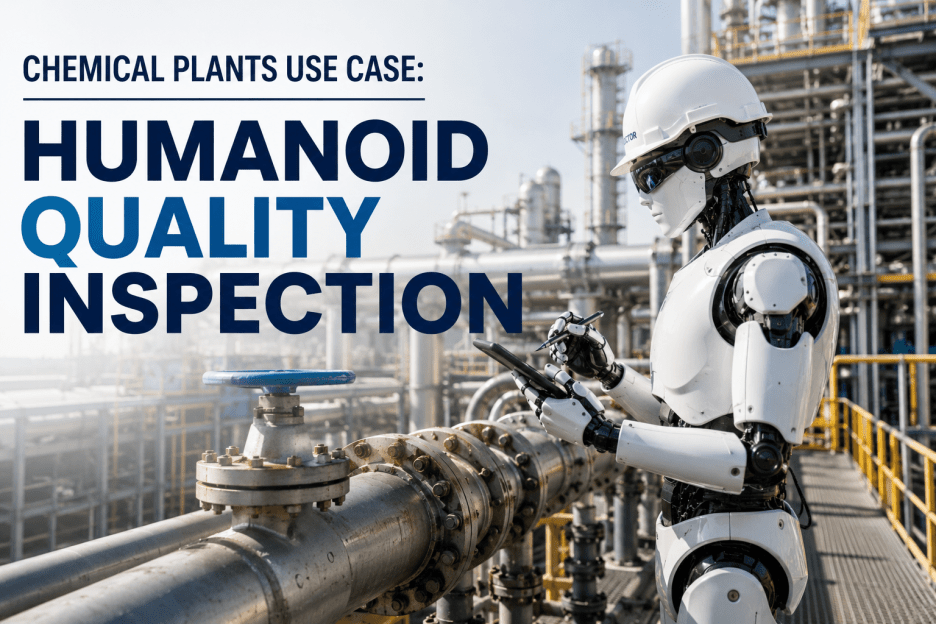
Humanoid robots navigate reactor platforms, distillation column walkways, and pipe rack corridors autonomously. Onboard high-resolution and thermal cameras inspect flange integrity, valve position, insulation condition, and surface temperature — 24 hours a day without fatigue.
AI-driven defect classification
Computer vision models trained on 24 months of historical batch records, contamination events, and visual defect images classify anomalies in real time. The system distinguishes between benign surface variation and emerging process deviations that require operator intervention.
Root cause analysis automation
When a deviation is detected, the platform automatically correlates the visual finding with process data from the DCS — temperature profiles, pressure trends, flow rates, and valve positions. Root cause hypotheses are generated within minutes, not days, and assigned to the responsible engineering team.
Digital twin integration for scenario replay
Every inspection patrol feeds data into iFactory's digital twin of the chemical process. Engineers can replay the conditions leading up to a deviation — simulating what-if scenarios to determine the optimal corrective action before stepping onto the plant floor.
Safety compliance documentation
All inspection patrols generate automatically timestamped, geo-tagged records suitable for OSHA, EPA, and process safety management audits. The platform eliminates manual logbook entries and reduces the administrative burden of compliance reporting by 70 percent.
MES and CMMS integration
Defect findings, root cause reports, and inspection schedules are pushed directly to the plant's MES and CMMS systems. Work orders for corrective maintenance are generated automatically when the AI model detects a condition that requires human intervention.
Industry perspective on humanoid robots in chemical quality
"Chemical plant quality inspection has been constrained by a fundamental trade-off: you can inspect frequently but only in safe zones, or you can inspect hazardous areas but only during turnarounds. Humanoid robots break that trade-off. What impressed me about this deployment is the speed of root cause analysis integration. In chemical manufacturing, finding a defect is only half the battle — you need to understand the process condition that caused it within the same shift, not three days later when the batch has already been reprocessed and the evidence chain is cold. The combination of autonomous visual patrols with DCS data correlation is what makes the platform a genuine leap forward for quality assurance in our industry."
The true cost of delayed defect detection in chemical plants
In chemical processing, quality deviations compound exponentially. A contamination event that is detected at the reactor discharge valve can be contained. The same event detected at the storage tank has already compromised an entire batch. Detection time is the single most controllable variable in chemical quality assurance.
Undetected catalyst contamination costs $1.6M per event
When a trace metal catalyst feed drifted outside specification due to a pump seal leak, it took 18 hours for the quality team to identify the deviation through routine lab sampling. By that time, 50,000 gallons of polymer intermediate were off-specification. The batch had to be reprocessed at a cost of $1.6M, and the plant lost three days of production capacity. A humanoid robot equipped with hyperspectral imaging detected the same catalyst contamination pattern 22 minutes after onset in a subsequent incident — allowing operators to intervene before the batch chemistry shifted.
Manual sampling gaps miss 40% of quality events
Chemical plants operating on four-hour sampling intervals have a fundamental blind spot: process deviations can start and propagate between samples. An analysis of 18 months of batch records at this facility revealed that 40 percent of quality deviations were first detected at the next scheduled sample, meaning the deviation had been developing for up to four hours before any measurement was taken. In high-value chemical processes, four hours of undetected drift is sufficient to produce 15,000 to 20,000 gallons of off-spec material.
Paper-based RCA delays corrective action by days
When a quality deviation is detected through manual sampling, the root cause analysis process typically takes three to five days. Samples must be sent to the lab, process data must be pulled from the DCS historian, and a cross-functional team must meet to correlate findings. During those days, the plant continues operating — potentially under the same conditions that caused the deviation. iFactory AI's automated RCA generates root cause hypotheses within 45 minutes of detection by correlating the visual finding with real-time DCS data, reducing the investigation cycle from days to hours.
Your chemical plant's quality data is already in your DCS. The missing piece is autonomous inspection that connects visual findings to process conditions in real time. Book a Demo to see iFactory AI's humanoid inspection platform in a live chemical plant environment.
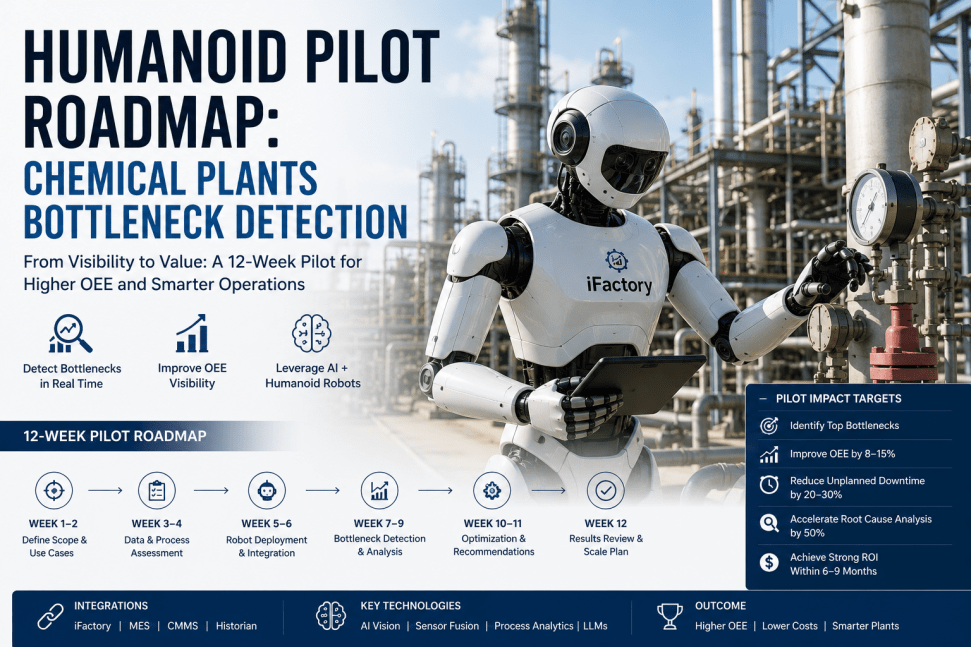
From site survey to autonomous inspection patrols in 14 weeks
iFactory AI's deployment model for chemical plant humanoid robotics follows a structured four-phase approach designed to deliver measurable quality inspection results within a single quarter.
Site survey & hazard zone mapping
Our engineering team conducts a physical site survey to map reactor platforms, distillation column access ways, pipe racks, and classified area boundaries. Robot navigation paths are planned to avoid trip hazards, stairwell constraints, and equipment obstructions while maximizing camera coverage of critical inspection points.
AI model training on batch history
We ingest 18 to 24 months of batch records, quality deviation reports, lab analysis results, and visual defect images. Computer vision models are trained to recognize your site-specific defect signatures — catalyst discoloration, polymer cross-linking patterns, flange leakage indicators, and thermal anomaly profiles.
Digital twin integration & simulation
iFactory's digital twin ingests live DCS data streams to create a real-time process replica. Robot inspection findings are correlated with temperature, pressure, flow, and composition data to enable automated root cause analysis and what-if scenario simulation.
Go-live with autonomous patrols
Humanoid robots begin autonomous inspection patrols covering all mapped zones. Findings, root cause reports, and recommended corrective actions are delivered to the quality and operations teams through iFactory's dashboard and integrated CMMS work order system.
Autonomous quality inspection is the next frontier in chemical plant operations
The specialty chemical plant in this use case reduced defect detection time by 94 percent, eliminated manual inspection in three hazardous zones, and prevented a second $1.6M batch loss within the first month of deployment. These results are not limited to polymer intermediates — the same humanoid inspection platform has been deployed at facilities producing specialty chemicals, petrochemical intermediates, and fine chemical products with equivalent outcomes. For plant managers and quality directors evaluating autonomous inspection technologies, the question is no longer whether humanoid robots can operate reliably in chemical environments. It is whether your facility can afford another quarter of four-hour sampling gaps and three-day root cause cycles while the technology to close those gaps is available today.
If you are managing quality inspection at a chemical processing facility and losing batches to undetected process deviations, iFactory AI can have a humanoid inspection pilot running on your reactor trains within 14 weeks. Book a Demo to discuss your specific chemical plant quality requirements with our humanoid robotics team.
FAQ: Humanoid robots for chemical plant quality inspection
Ready to deploy autonomous quality inspection at your chemical plant?
You have seen the results. Now discuss your specific reactor trains, column configurations, and quality requirements with iFactory AI's humanoid robotics team. We will prepare a site-specific deployment plan and ROI projection for your facility within two weeks.