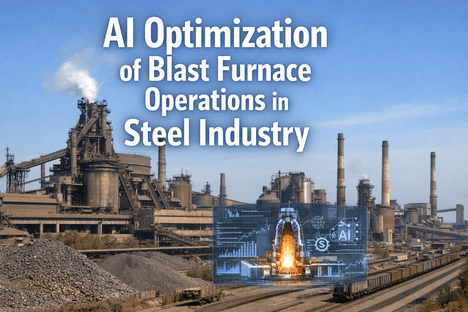
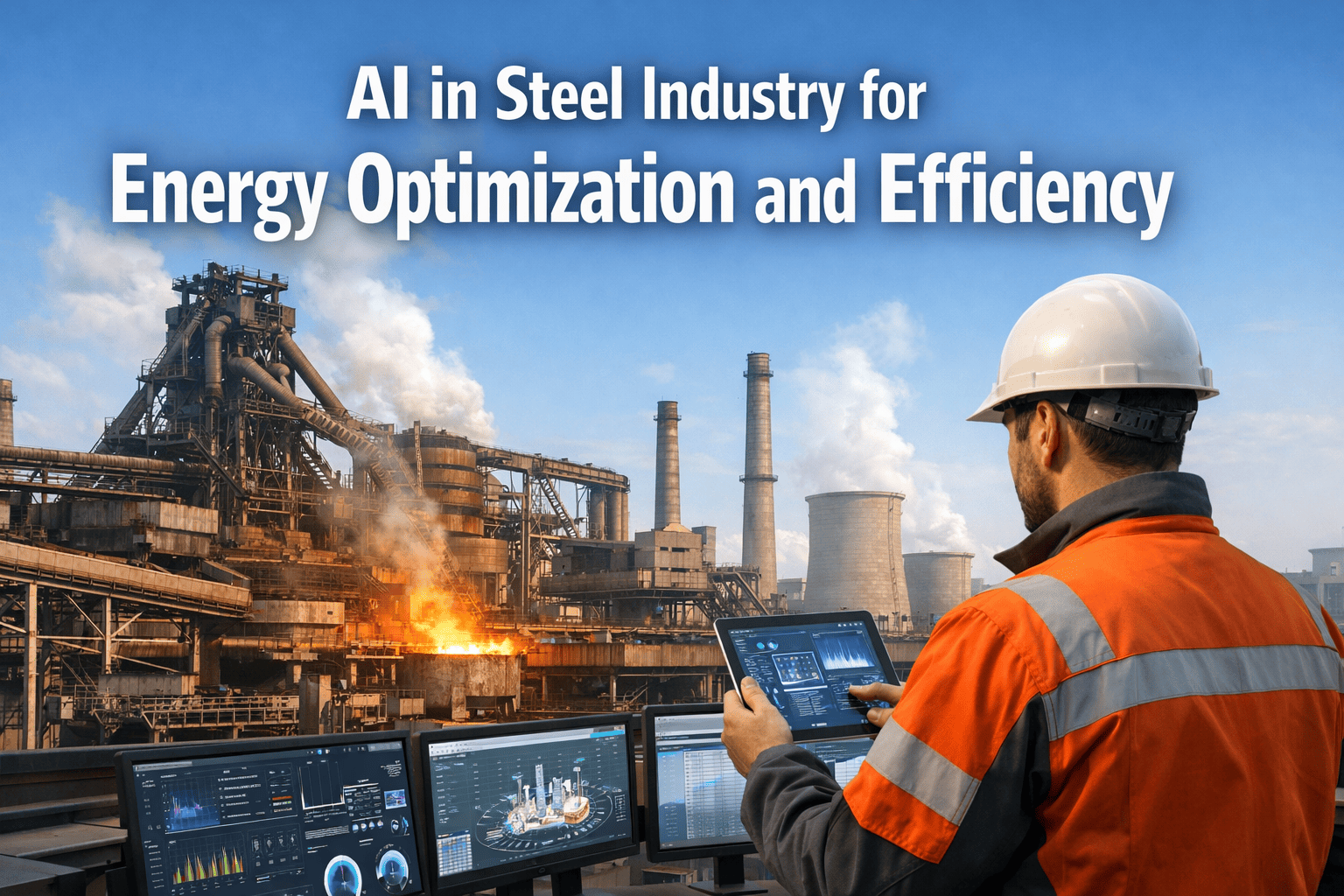
In 2024, an integrated steel plant in eastern India was running its 4,000 m³ blast furnace at a coke rate of 385 kg/tHM. The operators — experienced, skilled, and diligent — were managing over 200 variables by intuition, spreadsheets, and 6-hourly lab samples. They had no way to see what was happening inside the furnace in real time. After deploying AI-driven process optimization, the coke rate dropped to 375 kg/tHM within four months. That 10 kg/ton reduction — invisible on any single shift — translated to ₹45 crore in annual fuel savings on a single furnace. The blast furnace didn't change. The raw materials didn't change. What changed was that AI could see patterns across 200+ variables simultaneously and adjust parameters every 60 seconds — something no human operator, however experienced, can do.
Steel Optimization
The Blast Furnace Is a Black Box.
AI Opens It.
Blast furnace ironmaking accounts for 70% of a steel plant's total energy consumption and emissions. Temperatures exceed 2,000°C, thousands of chemical reactions occur simultaneously, and there's a 6–8 hour lag between input changes and output results. AI doesn't replace operators — it gives them superhuman visibility into a process they've never been able to see.
70%
Of total steel plant energy consumed by blast furnace
$1.89T
Global steel market size in 2025
260+
AI algorithms deployed by leading Asian steel producers
85%
Reduction in unplanned downtime with AI maintenance
Sources: IEA 2025 · World Steel Association · Industry Smart Factory Reports 2025 · iFactory Steel Platform Data 2026
Why Blast Furnace Optimization Is the Highest-Leverage Problem in Steel
A blast furnace is the single most expensive asset in an integrated steel plant — and the hardest to control. Raw materials enter from the top, hot blast enters from the bottom, and somewhere in between, iron ore becomes molten iron through a chain of chemical reactions that no one can directly observe. Operators rely on delayed measurements, experience-based rules of thumb, and occasional lab samples to manage a process that shifts faster than they can measure it.
The Blast Furnace Black Box Problem
6–8 hrs
Lag between charging ore/coke at top and hot metal appearing at hearth — operators are always reacting to the past
2,000°C+
Internal temperatures make direct measurement impossible in most zones — the cohesive zone, raceway, and deadman are invisible
200+
Process variables interact simultaneously — burden composition, blast temperature, PCI rate, oxygen enrichment, moisture, slag chemistry
6 hrs
Typical interval between lab samples for hot metal silicon and temperature — problems develop and compound in between
0%
Direct visibility into cohesive zone shape, gas flow distribution, or burden descent patterns during operation
What AI Makes Visible
Every 60s
AI recalculates optimal setpoints for blast volume, PCI rate, oxygen enrichment, and moisture based on real-time sensor fusion
8 hrs ahead
Predictive models forecast hot metal temperature and silicon content hours before tap — enabling proactive adjustments, not reactions
3D Real-Time
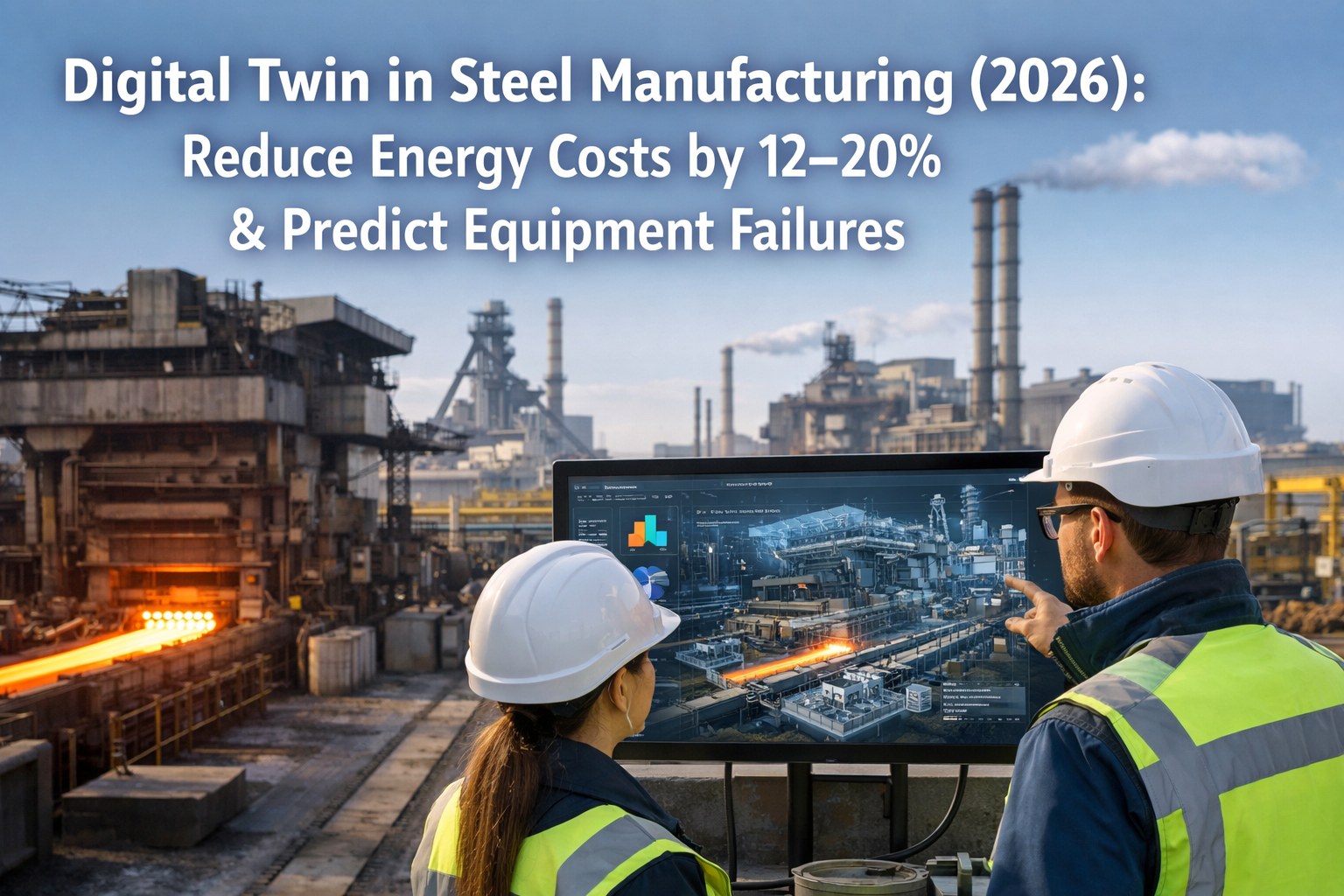
Digital twin visualizes cohesive zone, thermal profile, gas flow distribution, and burden descent — operators can "see inside" the furnace
24/7
Continuous anomaly detection flags slips, hangs, channeling, and scaffold formation before they impact production
Cross-Shift
AI maintains consistent optimization across all shifts — eliminating performance variance between experienced and junior operators
Running your blast furnace on 6-hourly lab samples and operator intuition? See what AI-driven real-time optimization looks like in a live demo.
The Five Levers AI Controls to Optimize Blast Furnace Performance
Blast furnace optimization isn't a single adjustment — it's the simultaneous balancing of multiple competing objectives. AI models analyze hundreds of variables to find the sweet spot between maximum productivity, minimum fuel consumption, target hot metal quality, and furnace stability. Here are the five key levers where AI delivers the highest impact.
01
Coke Rate Optimization
2–4% reduction
Coke is the most expensive input. AI optimizes burden distribution, PCI injection rate, and blast parameters to minimize coke consumption while maintaining furnace stability. Every 1% reduction in coke rate saves millions annually.
Documented result: 2.5% coke reduction = ₹45 Cr/yr savings per furnace
02
Hot Metal Temperature Control
±5°C precision
Too low risks hearth freeze; too high wastes reducing agents. AI uses 8-hour-ahead predictive models to maintain HMT within tight bands — reducing thermal variability that manual control cannot eliminate.
RMS control deviation reduced by 1.6°C vs. manual operation
03
Burden Distribution Control
Uniform gas flow
AI monitors radar probes and stockline data to optimize charging sequences — ensuring even distribution of ore and coke layers. Prevents channeling, scaffolding, and uneven descent that cause instability and yield loss.
Digital twins visualize burden landing in real time for precise adjustment
04
Hot Metal Silicon Prediction
Hours-ahead forecast
Silicon content in hot metal directly affects downstream BOF operations and steel quality. AI predicts HM silicon hours before tap, enabling preemptive corrections to blast parameters and burden composition.
Reduces off-spec heats and downstream quality rejects by 15–25%
05
Throughput Maximization
5–8% increase
AI balances blast volume, oxygen enrichment, and charging speed to push production closer to the furnace's true capacity — without crossing stability limits that cause slips, hangs, or chilled hearth conditions.
Documented result: 8% throughput increase + 12% energy reduction
How AI Optimizes a Blast Furnace — The Technical Pipeline
Traditional blast furnace control is reactive — operators see a problem in lab results and adjust parameters manually, hoping the 6–8 hour lag doesn't compound the issue. AI-driven optimization works proactively, continuously ingesting sensor data, predicting outcomes, and recommending (or executing) adjustments before problems manifest.
Thermocouples across shaft, bosh, hearth, and staves stream temperature data. Pressure sensors track blast and top gas pressure. Gas analyzers measure CO, CO₂, and H₂ in top gas. Radar probes monitor burden descent. Tuyere cameras capture raceway conditions. All data is timestamped, validated, and fused into a unified process model in real time.
OPC-UA · Modbus TCP · MQTT · 4-20mA · HART
Hybrid models combine first-principles thermodynamic equations with machine learning trained on your furnace's specific operational history. Physics ensures the model respects metallurgical constraints. ML captures the plant-specific patterns — burden quality variations, seasonal changes, equipment aging — that pure physics models miss.
LSTM · Random Forest · Genetic Algorithms · Thermodynamic Models
The digital twin runs continuous forward simulations — predicting hot metal temperature, silicon content, slag viscosity, gas utilization rate, and furnace thermal state hours ahead of actual tap. Operators see the future state of the furnace and can intervene before problems develop, not after they've already caused damage.
Hot Metal Temp · HM Silicon · Slag Chemistry · Gas Utilization · Thermal Index
Every 60 seconds, the optimizer recalculates optimal setpoints for blast volume, oxygen enrichment, moisture, PCI rate, and burden composition. It balances competing objectives — maximize throughput while minimizing coke rate — with constraints on hot metal quality, furnace stability, and equipment limits. Operators receive specific, time-bound recommendations — not dashboards.
Blast Volume · O₂ Enrichment · PCI Rate · Moisture · Burden Ratio
Your Blast Furnace Generates 10,000+ Data Points Per Hour. What Are You Doing With Them?
iFactory connects to your existing sensors, SCADA systems, and Level 2 automation — and transforms raw blast furnace data into real-time optimization recommendations. No rip-and-replace. First insights within 30 days.
Documented Results: What AI Delivers in Steel
These aren't pilot program projections — they're documented production-grade results from leading global steelmakers that have deployed AI and digital twin technology on blast furnace operations.
Integrated Steel Producer — Asia
₹45 Cr/yr
Annual savings per furnace
10,000+
Data streams integrated
Digital twin pilot on blast furnace with AI-driven coke optimization and predictive maintenance. 20% reduction in unplanned downtime across steel operations.
Global Steelmaker — Europe
30%
Less unplanned downtime
AI-driven process optimization across European blast furnace operations with a smart-steel digital twin strategy launched in 2025.
Smart Factory Operator — East Asia
5%
Production efficiency gain
10%
Energy consumption reduction
260+
AI algorithms deployed
Intelligent factory platform with AI furnace control systems, edge inference across rolling mill assets, and real-time hot-rolled yield improvement of 3%.
AI-Native Steel Complex — North America
50,000
Sensors feeding AI platform
Smart Mill
One of the first AI-native steel plants
One of the world's first "smart" steelmaking complexes with AI integrated directly into the process — a "learning mill" concept where AI continuously learns from production data.
Why iFactory for Blast Furnace Optimization
01
Unified MES + CMMS + Process Analytics
Most platforms treat blast furnace process optimization and maintenance as separate systems. iFactory unifies them. When vibration data on a tuyere cooler crosses threshold, the system simultaneously adjusts blast parameters to compensate AND creates a maintenance work order — one platform, zero silos.
02
Hybrid Physics + ML Approach
Pure ML models can hallucinate metallurgically impossible recommendations. Pure physics models can't capture plant-specific patterns. iFactory's hybrid approach constrains machine learning within thermodynamic reality — recommendations are always physically valid and operationally practical.
03
Edge-First Architecture
Blast furnace optimization can't depend on cloud connectivity. iFactory deploys AI inference models on edge gateways at the plant for sub-second response times. Cloud infrastructure provides long-term analytics, model retraining, and multi-plant benchmarking — but the furnace never goes blind during a network outage.
04
Multi-Furnace Portfolio Benchmarking
Operating 2 blast furnaces or 10? iFactory normalizes performance data across every furnace — comparing coke rates, gas utilization, thermal efficiency, and productivity. Best practices from your top-performing furnace are automatically identified and recommended to underperformers.
Your Blast Furnace Runs 24/7. Your Optimization Should Too.
iFactory transforms your blast furnace from a black box into a transparent, predictable, and continuously optimizing operation. Connect your existing sensors and Level 2 systems to one AI-powered platform — and start seeing what you've been missing inside the furnace.
Frequently Asked Questions
How does AI optimize a blast furnace differently than Level 2 automation?
Level 2 automation systems use fixed rule-based logic — if temperature exceeds X, adjust parameter Y. AI goes beyond rules by analyzing 200+ variables simultaneously, learning plant-specific patterns, and predicting outcomes 6–24 hours ahead. Level 2 reacts to measurements. AI anticipates future states and recommends proactive adjustments. The two systems complement each other — iFactory works on top of your existing Level 2 infrastructure.
What data does iFactory need from a blast furnace?
At minimum: thermocouple readings (shaft, bosh, hearth, staves), blast parameters (volume, temperature, pressure, moisture, oxygen enrichment), top gas analysis (CO, CO₂, H₂), PCI rate, burden composition, and hot metal quality data (temperature, silicon, sulfur). For full digital twin capability, add radar stockline probes, tuyere camera feeds, cooling water flow/temperature, and casting data. iFactory integrates via OPC-UA, Modbus, or direct SCADA connection.
How long does it take to see results?
Data integration and baseline establishment typically takes 30 days. First predictive models for hot metal temperature and silicon are operational within 60 days. Full multi-objective optimization — coke rate reduction, throughput improvement, stability enhancement — reaches production maturity within 90–120 days as the models train on your furnace's specific behavior. Most plants see measurable coke rate reduction within the first quarter.
Can AI handle the variability in raw material quality?
This is exactly where AI excels. Raw material quality — iron content, gangue composition, coke strength, sinter reducibility — varies by shipment, by supplier, and by season. AI models learn how your specific furnace responds to each type of variation and adjust burden composition and blast parameters preemptively. The system adapts continuously, improving accuracy with every operating hour as it builds a richer dataset of cause-and-effect relationships specific to your plant.
What ROI can we expect from blast furnace AI optimization?
Documented results from major steelmakers show 2–4% coke rate reduction, 5–8% throughput improvement, and 20–30% reduction in unplanned downtime. For a typical 3,000–5,000 m³ blast furnace, coke savings alone range from $2–5 million annually. Combined with throughput gains, reduced maintenance costs, and improved quality consistency, total ROI typically reaches 200–400% within 12–18 months. The biggest single-item saving is almost always coke reduction.