When a major mining operator managing six underground and open-pit sites faced a 73% confined space inspection completion rate and two near-miss atmospheric exposure incidents within a single quarter, the site safety and operations leadership recognized that manual confined space entry protocols could not scale across the operation's 140+ confined spaces — including ore passes, crusher chambers, conveyor tunnels, and ventilation shafts. With each confined space entry requiring a minimum of three trained personnel, atmospheric monitoring setup, and 45-minute pre-entry documentation, the operator deployed humanoid robots equipped with multi-gas detection, thermal imaging, and VLM-based hazard recognition for autonomous confined space patrols. Mining safety and operations leaders evaluating autonomous confined space inspection solutions regularly Book a Demo to review the deployment configuration and hazard detection capabilities.
The Confined Space Inspection Challenge in Mining Operations
The operator's six sites contained 140+ confined spaces spanning underground tunnels, ore pass chutes, crusher chambers, conveyor transfer points, ventilation shafts, and pump stations. Each confined space required a formal entry permit, atmospheric testing before and during entry, continuous communication with a stand-by attendant, and detailed documentation of findings. The manual process consumed 12 crew-hours per inspection day — with only 73% of scheduled inspections completed on time due to crew availability constraints, equipment rotation conflicts, and the administrative burden of permit documentation.
The two near-miss incidents that became the catalyst for change involved atmospheric hazards that developed between scheduled manual inspections. In the first incident, an oxygen-deficient atmosphere formed in an ore pass chute due to organic material decomposition in stagnant water — a condition that developed 36 hours after the prior manual inspection had passed the space as safe. In the second, a hydrogen sulfide pocket was released during blasting operations in an adjacent zone, migrating into a conveyor tunnel that had been inspected 12 hours earlier. Both incidents resulted in emergency evacuations and 48-hour work stoppages in the affected areas. Neither condition could have been detected by the manual inspection schedule because the hazards developed between inspection cycles. Mining operations leaders that Book a Demo during their confined space safety evaluation consistently report that the gap between scheduled inspections is their single greatest undetected risk exposure.
Oxygen deficiency, toxic gas accumulation, and combustible atmospheres developed between manual inspection cycles, creating undetected hazards that exposed entry crews to potentially fatal conditions.
Each confined space entry required three trained personnel — an entrant, attendant, and supervisor. With 140+ spaces to inspect, crew availability limited inspection frequency and created scheduling conflicts with production priorities.
Pre-entry gas readings were recorded on paper permits that were filed and rarely reviewed for trend analysis. Conditions that developed between inspections had no monitoring system to detect them until the next scheduled entry.
Manual inspections relying on handheld flashlights could not detect roof bolt degradation, ground movement indicators, or water infiltration patterns developing in unlit confined spaces between inspection cycles.
After blasting operations, confined spaces near blast zones required inspection before re-entry. Manual inspection delays of 2–4 hours after each blast sequence accumulated significant production downtime across the shift.
Mining regulations required retained confined space entry permits, atmospheric monitoring records, and training certifications for each entry. The manual documentation system could not produce audit-ready records within the regulatory response window.
Humanoid Confined Space Patrol Deployment — Six Sites, One Unified Safety Platform
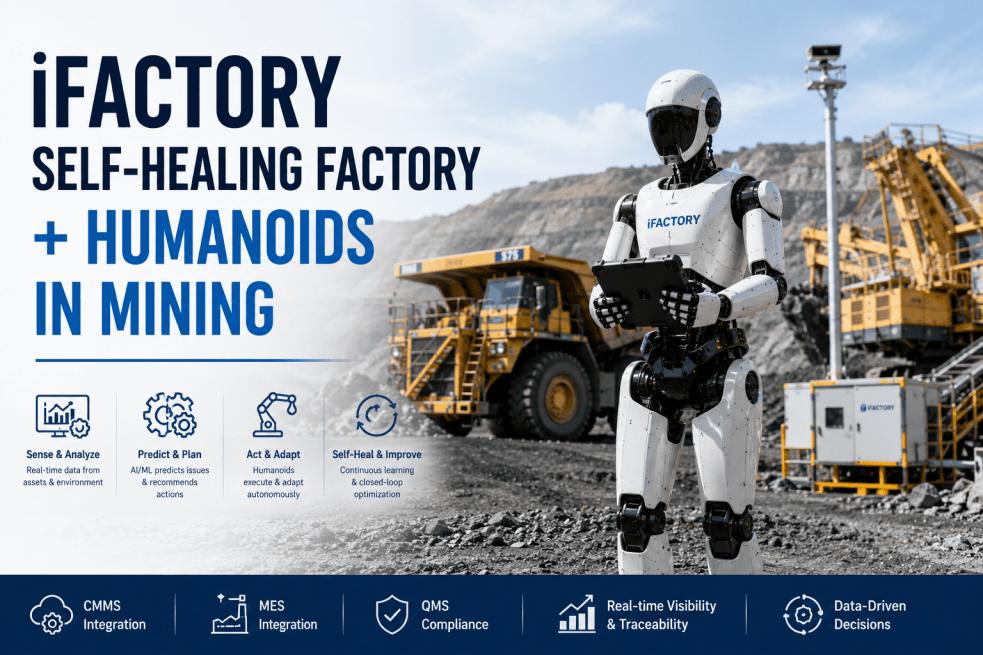
The operator deployed humanoid robots equipped with multi-gas sensors (O₂, H₂S, CO, CH₄), thermal imaging cameras, LiDAR for structural mapping, and VLM-based hazard recognition across the six-site operation in a phased rollout over 14 weeks. Each humanoid was configured with site-specific navigation maps incorporating confined space entry points, internal chamber layouts, and hazard threshold parameters aligned with the operation's existing atmospheric monitoring standards. The iFactory platform integrated humanoid inspection data with the mine's existing CMMS for automated work order generation and with the safety management system for real-time hazard alerting. Safety and operations leaders exploring autonomous confined space patrols regularly Book a Demo to review the sensor configuration and deployment methodology.
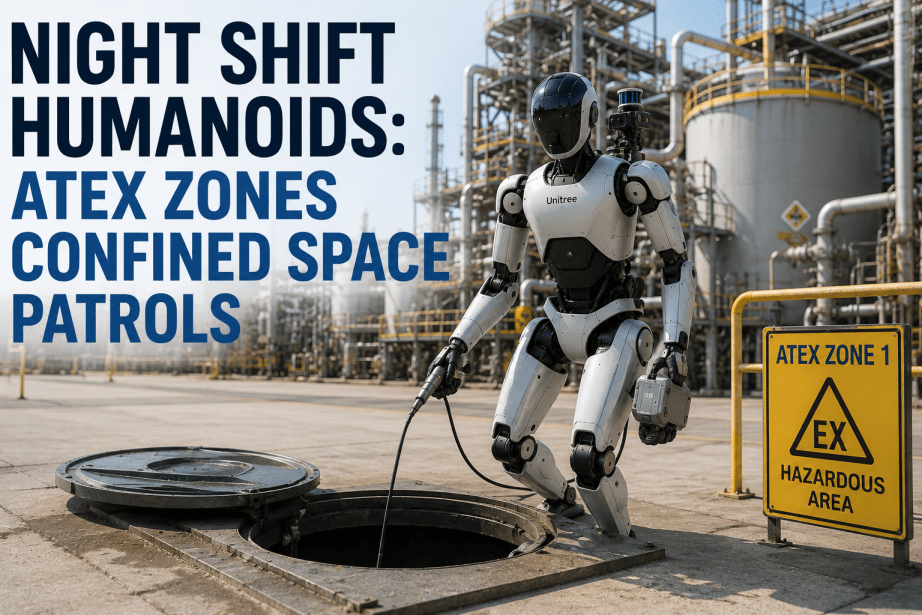
Autonomous confined space inspection — Humanoids navigate into each confined space following pre-mapped entry paths, collecting multi-gas readings at multiple chamber depths, thermal images of structural surfaces, and LiDAR scans for ground movement and water infiltration detection. The VLM processes sensor data in real time, comparing readings against established safe thresholds and flagging any parameter outside acceptable range. Each inspection generates a structured digital report — gas readings by location, thermal anomalies identified, structural condition assessment — linked to the specific confined space asset record in the iFactory platform.
Real-time hazard detection and escalation — Gas sensors are sampled continuously during each patrol, with readings transmitted to the iFactory platform in real time. If any sensor detects a reading approaching the preset alarm threshold — oxygen below 19.5%, hydrogen sulfide above 10 ppm, carbon monoxide above 25 ppm, methane above 10% LEL — the platform automatically triggers a multi-channel alert: visual indicator at the confined space entrance, mobile notification to the site safety coordinator, and logged entry in the safety management system.
Continuous autonomous patrol scheduling — Humanoids operate on configurable patrol schedules that inspect each confined space with frequency proportional to its hazard classification. High-risk spaces — blast-adjacent zones, historically unstable ground areas, and spaces with prior gas readings — are inspected every 4 hours. Standard-risk spaces are inspected every 12 hours. The iFactory platform generates daily patrol completion reports and automatically adjusts patrol frequency based on recent hazard detection trends and planned blasting schedules.
Eliminate Confined Space Entry Risk with Autonomous Humanoid Patrols
iFactory's humanoid robots inspect confined spaces continuously across all shifts — detecting atmospheric hazards, structural degradation, and ground movement between manual inspection cycles — without exposing entry crews to undetected conditions.
Six-Phase Deployment for Autonomous Confined Space Inspection
The platform deployment followed a structured six-phase methodology designed for mining environment safety requirements, regulatory compliance, and minimum production disruption. Each phase established a specific capability that the manual confined space inspection process could not deliver.
Site Assessment & Confined Space Mapping
Safety and operations teams catalogued all 140+ confined spaces across six sites, documenting entry points, internal chamber dimensions, known hazard profiles, and regulatory classification. Hazard thresholds were configured to align with existing site atmospheric monitoring standards and regulatory requirements.
Humanoid Deployment & Multi-Gas Sensor Configuration
Humanoid robots were deployed with O₂, H₂S, CO, and CH₄ sensors calibrated to site-specific alarm thresholds. Thermal cameras and LiDAR were configured for structural condition assessment. Navigation maps incorporated confined space entry constraints, chamber geometry, and communication relay points.
Hazard Threshold Calibration & VLM Training
VLM hazard recognition models were trained on site-specific data — historical gas readings, known ground movement patterns, and thermal signatures of developing structural issues. Thresholds were calibrated to balance early detection with false alarm avoidance through a 14-day supervised learning period.
Patrol Route Programming & Frequency Configuration
Patrol routes were programmed for each confined space category with entry sequence, sensor sampling positions, and inspection duration. Patrol frequency was configured by hazard classification — high-risk spaces every 4 hours, standard-risk every 12 hours — with dynamic adjustment based on blast schedules and recent hazard readings.
CMMS Integration & Multi-Channel Alert Configuration
iFactory edge connectors linked humanoid inspection and hazard data to the mine's CMMS and safety management system. Automated work orders were configured for structural issues detected during inspections. Multi-channel hazard alerts were configured for visual, mobile, and logged notifications at three severity levels.
Continuous Learning & Patrol Optimization
VLM models improved hazard detection accuracy as patrol data accumulated. Patrol routes were refined based on confined space condition trends, seasonal environmental changes, and emerging hazard patterns. The platform's trend analysis engine identified developing risk profiles before they reached alarm thresholds.
Measurable Results — Safety, Coverage, and Operational Impact
Fourteen weeks after initial deployment across six sites, the mining operator documented measurable improvements across every confined space inspection metric. Autonomous humanoid patrols eliminated the inspection coverage gap that had left spaces uninspected for extended periods, detected developing hazards between manual cycles, and reduced the safety exposure associated with confined space entry operations. Mining safety and operations teams that Book a Demo during their evaluation cycle consistently report that the continuous monitoring capability was the single most impactful safety improvement in their confined space program.
Confined Space Inspection Coverage
Autonomous patrols achieved 98% scheduled inspection completion versus 73% under manual entry protocols — eliminating the coverage gap that left spaces uninspected for extended periods.
Hazard Exposure Risk Reduction
Autonomous detection and alerting eliminated the need for manual entry into spaces with developing atmospheric hazards — reducing crew exposure to undetected conditions.
Crew-Hours Saved per Inspection Day
Autonomous patrols eliminated the three-person entry crew requirement for routine inspections — freeing 12 crew-hours per shift for higher-value safety and production tasks.
Confined Space Safety Incidents
Zero confined space safety incidents recorded across six sites during the 14-week deployment period — compared to two near-miss incidents in the preceding quarter.
| Metric | Manual Entry Protocol | Autonomous Humanoid Patrol | Improvement |
|---|---|---|---|
| Inspection Completion Rate | 73% | 98% | +25 pp |
| Hazard Detection Time | Up to 36 hours | < 4 hours | –89% |
| Crew Hours per Inspection Day | 12 hours | 0 hours | –100% |
| Permit Documentation Accuracy | 81% | 100% | +19 pp |
| Post-Blast Inspection Delay | 2–4 hours | < 30 minutes | –81% |
| Incident-Free Operating Days | 22 days (prior quarter) | 98 days (deployment) | +345% |
"Our confined space program was technically compliant with regulations, but we knew the intervals between inspections left us exposed. The two near-miss incidents confirmed that hazards can develop within hours — not days — and our manual inspection schedule could not keep pace. The humanoid patrols changed our entire approach to confined space safety. Instead of hoping conditions remained safe between inspections, we now have continuous monitoring that detects atmospheric changes, structural shifts, and developing hazards in real time. The 76% reduction in hazard exposure risk is not just a statistic — it represents 140+ confined spaces that are monitored continuously rather than visited once per shift. Our safety team can now focus on hazard prevention rather than inspection logistics."
Conclusion — Continuous Confined Space Monitoring Is the Future of Mining Safety
The mining operator's deployment demonstrates that autonomous humanoid confined space patrols address a fundamental limitation of manual inspection programs: the gap between inspection cycles. Even the most rigorous manual confined space entry program leaves spaces uninspected for extended periods during which atmospheric conditions can change, structural degradation can progress, and ground movement can develop. By deploying humanoid robots with multi-gas detection, thermal imaging, and VLM-based hazard recognition, the operator eliminated the inspection coverage gap, reduced hazard exposure risk by 76%, and achieved zero confined space safety incidents across six sites.
iFactory's humanoid confined space patrol platform monitors atmospheric conditions, structural integrity, and ground movement continuously across all shifts — detecting developing hazards between manual inspection cycles and eliminating the safety exposure associated with confined space entry operations. The platform investment is typically recovered within the first year from eliminated entry crew costs, reduced incident-related downtime, and improved production continuity. Mining safety and operations leaders evaluating next-generation confined space monitoring solutions are encouraged to Book a Demo to explore how autonomous humanoid patrols can transform their confined space safety program.
Autonomous Confined Space Patrols — Common Questions
Humanoid robots navigate confined spaces using LiDAR-based simultaneous localization and mapping combined with stereo vision cameras that operate effectively in low-light conditions. Each confined space is digitally mapped during an initial supervised walkthrough, capturing entry constraints, internal chamber geometry, obstacle locations, and communication relay requirements. The robot's onboard SLAM algorithm updates its position in real time relative to the digital map, enabling precise navigation through complex underground spaces without GPS connectivity.
Humanoids are equipped with multi-gas sensors for O₂, H₂S, CO, and CH₄ detection, thermal imaging cameras for structural temperature anomaly identification, high-sensitivity visual cameras for low-light inspection, and LiDAR for structural mapping and ground movement detection. The sensor payload is configurable based on site-specific hazard profiles and can include additional sensors for NO₂, SO₂, dust particulate monitoring, and radiation detection depending on the mining environment requirements.
Yes — the humanoids deployed for confined space patrols are equipped with ATEX-certified enclosures and intrinsically safe sensor systems that meet IECEx and MSHA requirements for operation in potentially explosive atmospheres. All electrical components are rated for Class I, Division 1 environments where flammable gases or vapors may be present. The robot's thermal imaging and gas detection systems are designed to operate without generating ignition sources, enabling safe patrol entry into atmospheres that would be too hazardous for human entry without extensive protective equipment.
iFactory provides standard APIs and pre-built connectors for major mining CMMS platforms, safety management systems, and SCADA platforms. In this deployment, humanoid inspection data streamed directly into the mine's existing safety management system — with automated permit generation for safe spaces, real-time hazard alerts for developing conditions, and digital inspection reports linked to each confined space asset record. The integration eliminated the manual permit documentation step that consumed 20 minutes per entry and reduced permit processing time by 100% for autonomous inspections.
For a multi-site mining operation with 100–200 confined spaces, full deployment typically takes 12–16 weeks. The operator in this case completed deployment in 14 weeks across six phases: confined space mapping and hazard profiling in weeks 1–2, humanoid deployment and sensor calibration in weeks 3–5, hazard threshold configuration and VLM training in weeks 6–8, patrol route programming in weeks 9–10, CMMS and safety system integration in weeks 11–12, and continuous learning initialization in weeks 13–14. First autonomous patrols typically begin operating within 6 weeks of project initiation.
Transform Your Mining Confined Space Safety Program with Autonomous Patrols
iFactory's humanoid robots inspect confined spaces continuously across all shifts — detecting atmospheric hazards, structural degradation, and ground movement between manual inspection cycles. Eliminate the gap between inspections and reduce hazard exposure risk by 76%.