Steel plants operate continuously under extreme conditions — molten metal at 1600°C, rolling mills generating intense vibration, and overhead cranes moving multi-ton loads through limited-visibility environments. Night shift inspections are critical for detecting equipment degradation before it causes unplanned downtime, but manual rounds during reduced-staffing periods are limited in frequency, consistency and coverage area. Humanoid robots — Figure AI, Tesla Optimus, Unitree H1, and Agility Digit — are transforming night shift inspection by performing autonomous patrols that collect visual, thermal, acoustic, and vibration data from every critical asset, enabling earlier anomaly detection, reducing labor costs, and improving worker safety by removing personnel from high-risk inspection routes. iFactory's Robotics integration platform connects any humanoid robot's inspection data directly to your CMMS, MES, and predictive maintenance systems — enabling autonomous night shift patrols that generate actionable equipment health insights without requiring changes to your process control infrastructure.
Steel plant night shifts operate with reduced staffing — typically 40-60% of day shift personnel — yet the same critical assets require continuous monitoring: blast furnace refractory condition, caster mold oscillation, rolling mill bearing temperatures, cooling water system pressure, and overhead crane rail alignment. Manual inspection rounds during night shifts are less frequent, often completed by fewer operators covering larger areas, and subject to the inherent variability of human fatigue during overnight hours. The result is a structural gap in equipment health monitoring during the hours when many developing faults — bearing wear, refractory degradation, hydraulic leakage — first become detectable. Book a Demo to discuss how autonomous humanoid inspection addresses these night shift monitoring gaps in your steel plant.
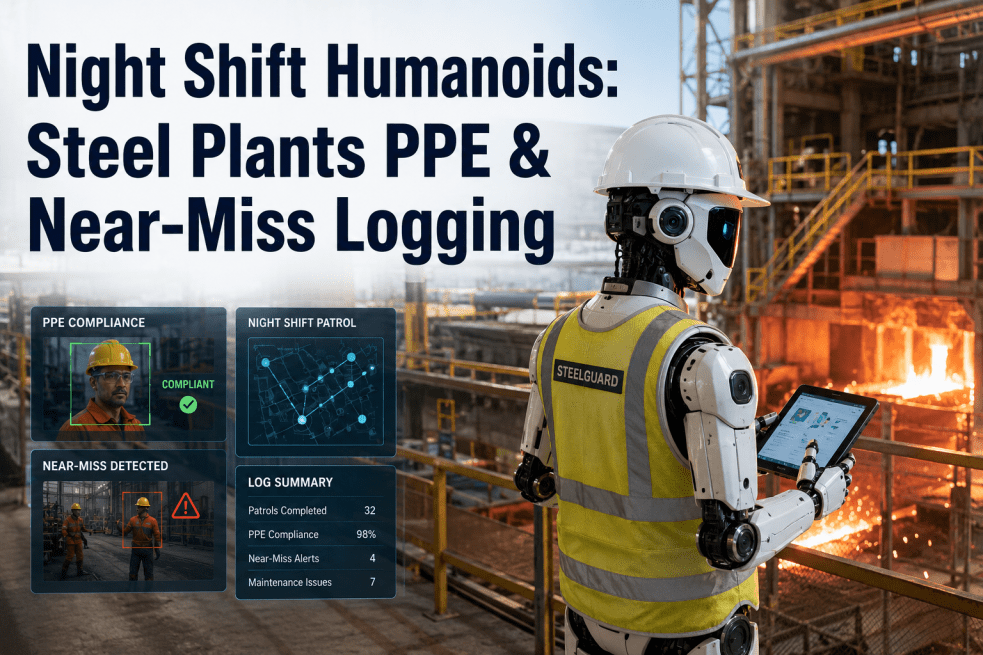
Humanoid robots deployed for night shift inspection perform autonomous patrols that follow programmed routes through the steel plant, stopping at each inspection point to collect visual, thermal, acoustic, and vibration data using integrated sensor payloads. The robots navigate plant floor environments independently, using LiDAR and camera-based localization to maintain position awareness and avoid obstacles. Inspection data is processed onboard or transmitted to the iFactory platform for anomaly classification and equipment health record updates. Book a Demo to explore the autonomous inspection workflow for your steel plant layout.
Autonomous Route Navigation: Humanoid robots follow pre-programmed inspection routes that cover all critical assets in each plant area — blast furnace tap hole area, caster mold and torch cut zone, rolling mill stand groups, cooling bed and inspection area, and finished product storage. The robot navigates using onboard sensors, stopping at each inspection point for a configurable dwell time to capture thermal images, visual condition records, and equipment status readings.
Thermal Anomaly Detection: Integrated thermal cameras capture surface temperature data from refractory panels, bearing housings, electrical cabinets, and hydraulic systems. The iFactory platform compares each thermal reading against historical baselines for the same asset under similar operating conditions, flagging temperature deviations that exceed configurable thresholds. Early thermal anomaly detection enables maintenance teams to schedule refractory repairs, bearing replacements, or electrical component servicing before failure occurs — typically 24-72 hours of advance warning compared to the 4-12 hour detection delay of manual night shift rounds.
Acoustic Emission Detection: Humanoid robots carry ultrasonic microphones that capture acoustic emissions from steam leaks, compressed air leaks, valve passing, and bearing degradation. Steel plants lose significant energy through undetected steam and compressed air leaks — a single steam leak in a blast furnace steam system can waste $50,000-100,000 annually in energy costs. Night shift autonomous patrols detect these leaks during the quietest operating hours when ambient noise is lowest, enabling repair scheduling during planned maintenance windows rather than emergency shutdowns.
Vibration Trend Monitoring: Accelerometers on the robot or the equipment itself capture vibration data from rotating assets — rolling mill stand bearings, cooling water pumps, overhead crane wheels, and conveyor drives. The platform analyzes vibration signatures for frequency shifts that indicate bearing wear, imbalance, misalignment, or looseness. Continuous vibration trend data from nightly patrols enables predictive maintenance modeling that schedules bearing replacement based on actual condition degradation rather than fixed calendar intervals, reducing both unplanned bearing failures and premature bearing replacements.
Automated Work Order Generation: When the autonomous inspection system detects an anomaly — bearing temperature exceeding threshold, acoustic emission indicating steam leak, vibration signature showing bearing degradation — it automatically creates a work order in the connected CMMS system. The work order includes the asset identifier, anomaly type, sensor data attachments (thermal image, acoustic recording, vibration spectrum), severity classification, and recommended maintenance action. This automation eliminates the manual data entry and notification steps that delay response to night shift inspection findings.
Equipment Health Dashboard: All inspection data from each night shift patrol is consolidated into an equipment health dashboard that displays current condition status, trend charts for critical parameters, and predictive maintenance recommendations for every asset in the inspection program. Day shift maintenance teams start their shift with a complete picture of equipment condition at 5:00 AM — including any anomalies detected during the overnight autonomous patrols — enabling them to prioritize work orders and schedule corrective actions before production targets are affected.
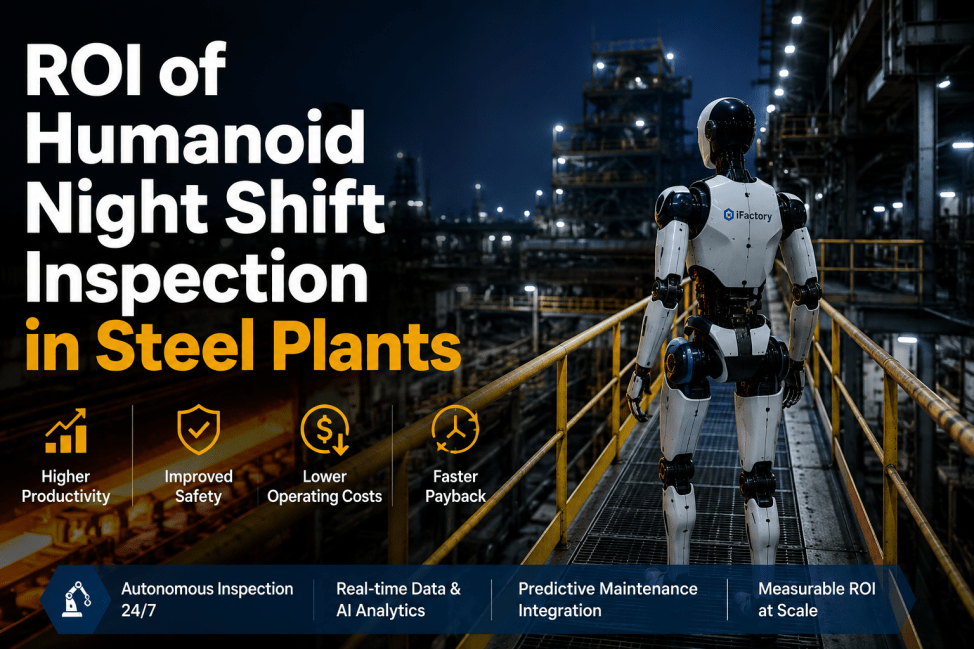
The business case for humanoid robot night shift inspection in steel plants is built on four measurable value drivers: labor cost reduction, safety incident avoidance, unplanned downtime reduction, and predictive maintenance optimization. The following comparison presents documented outcomes from steel plant deployments using the iFactory integration platform. Book a Demo to receive a customized ROI projection for your steel plant's night shift inspection program.
The business case for humanoid robot night shift inspection in steel plants is built on four interconnected value drivers that compound over time: labor cost reduction of 60-70% by replacing 2-3 night shift inspectors with autonomous patrols, safety improvement by removing personnel from high-risk inspection routes during low-visibility hours, unplanned downtime reduction through 8-12x faster fault detection, and predictive maintenance optimization enabled by consistent, comparable sensor data collected on every patrol cycle. The documented outcomes from early-adopter steel plants demonstrate 12-18 month payback periods with 200-400% ROI over five years. The iFactory platform integrates with existing CMMS, MES, and predictive maintenance systems — no changes to process control infrastructure or production scheduling are required. Book a Demo to schedule a night shift inspection ROI assessment for your steel plant and determine the specific savings achievable with autonomous humanoid patrols on your production floor.