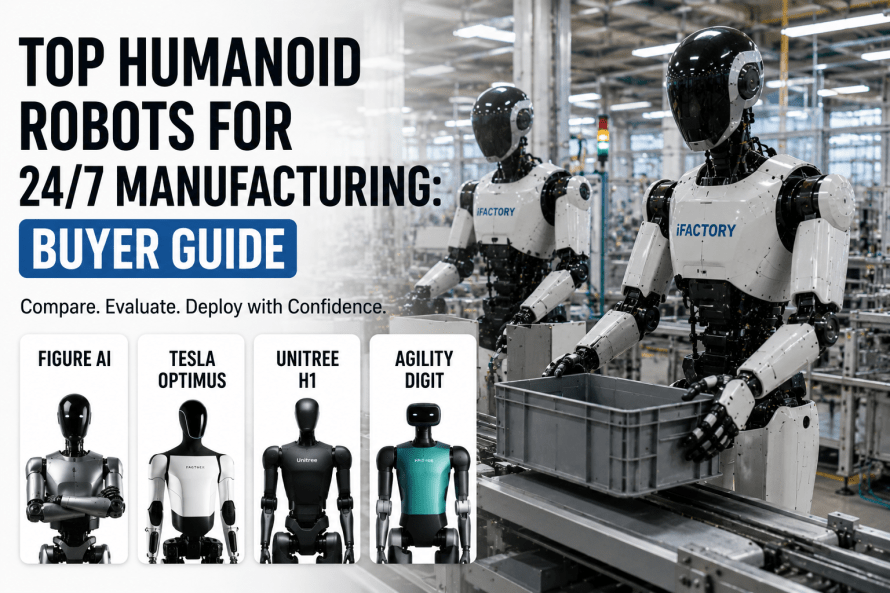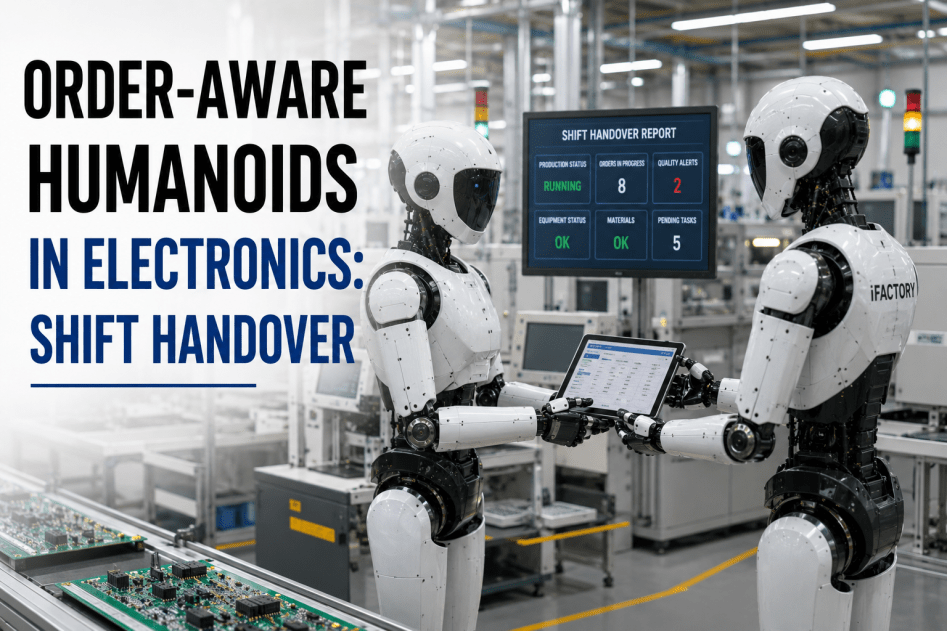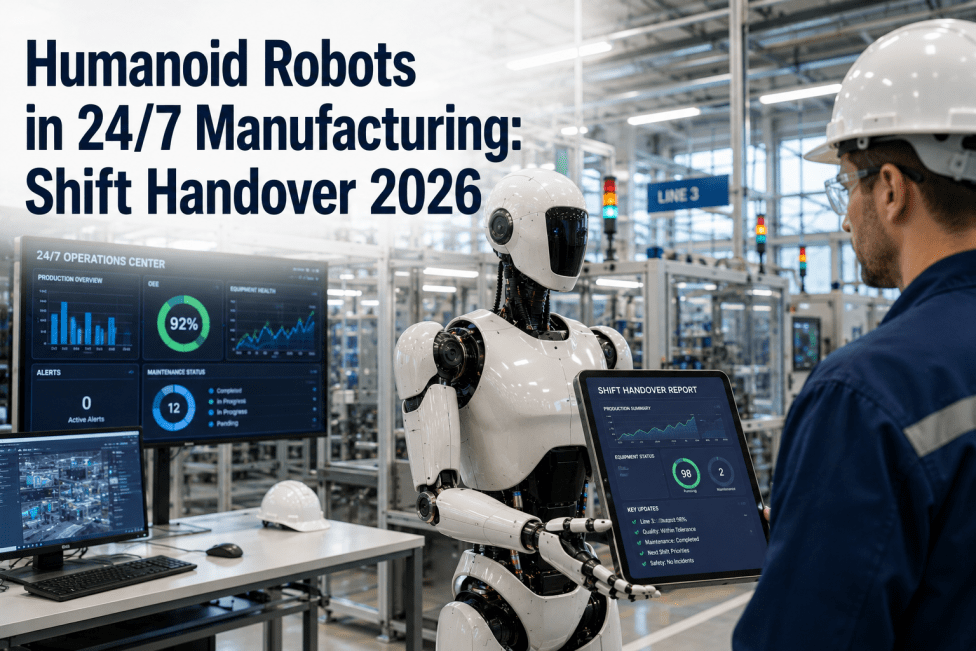
A manufacturing operations manager walks into the morning production meeting and faces the same question every shift change brings: "What happened overnight?" The night shift report is a handwritten log with three temperature readings, an estimated downtime figure, and a note about "a noise" on line 4 that nobody flagged for escalation. By the time the day shift confirms the issue, an hour of diagnostic time is lost, and a bearing replacement that could have been completed during the night shift now steals two hours from peak production. This gap — between what occurred during unstaffed or lightly staffed overnight periods and what the day team can act on at shift start — is the difference between a facility that loses 4.2% of weekly capacity to handover friction and one that recovers that time as productive output. iFactory's humanoid robot shift handover platform closes that gap. To see how your night shift data gap compares, Book a Demo for a facility assessment.
Eliminate Shift Handover Blind Spots with Humanoid Robots and AI-Powered Reporting
iFactory's embodied AI platform deploys humanoid robots for autonomous overnight patrols, equipment monitoring, and shift handover reporting — giving every incoming shift a complete, verified, and prioritized picture of what happened, what changed, and what needs attention.
Why the Night Shift Gap Costs Manufacturers Millions in Lost Capacity
In facilities operating 24/7, the night shift represents up to 40% of weekly production hours but receives a fraction of the supervision, data collection, and reporting rigor applied during day shifts. Security rounds, temperature checks, and equipment log readings are delegated to a skeleton crew or performed by operators juggling production duties. Shift handover reports are handwritten, inconsistent, and often incomplete. A 2025 industry survey of U.S. discrete manufacturers found that 73% of unplanned downtime events occurring during night shifts were first detected during the day shift handover — meaning the facility paid for 6-8 hours of unproductive runtime before any corrective action was initiated. The humanoid robot shift handover model eliminates this latency by ensuring that every overnight event is detected, logged, and reported before the day shift arrives.
Six Capabilities That Close the Night Shift Information Gap
iFactory's humanoid robot shift handover platform combines autonomous robotic patrols with AI-driven data correlation and automated shift report generation. Every capability is deployed on-prem and operational within 8 weeks.
Humanoid Robot Night Shift Rounds
Humanoid robots perform autonomous patrols across production zones during night shifts, unstaffed periods, and weekends. Each robot follows pre-mapped routes that mirror operator inspection rounds, collecting thermal, visual, acoustic, and environmental data at every checkpoint with sub-second precision.
Multi-Sensor Shift Data Collection
Each robot carries an integrated sensor suite including thermal cameras, visible-spectrum HD cameras, microphones for equipment sound signature analysis, gas detectors, and environmental sensors. A single 8-hour patrol captures over 1,200 data points versus approximately 100 from a manual operator round.
Real-Time Event Classification and Escalation
Onboard AI models classify every detected anomaly by type, severity, and equipment impact. Critical events — temperature excursions, vibration spikes, gas leaks — trigger immediate escalation to on-call personnel via iFactory's alert engine. Non-critical events are logged for morning handover review.
Automated Shift Summary Generation
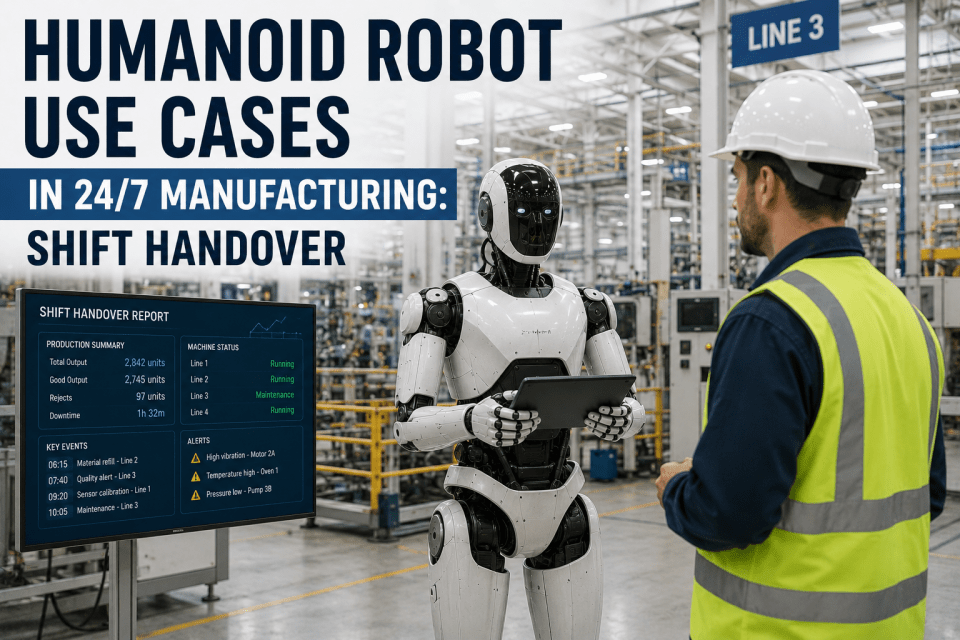
At shift end, iFactory's platform automatically generates a comprehensive shift handover report that includes all patrol findings, detected anomalies, equipment status changes, maintenance actions taken, and a prioritized action list for the incoming shift. Reports are accessible via web dashboard, mobile app, or printed summary.
Cross-Shift Equipment Health Trending
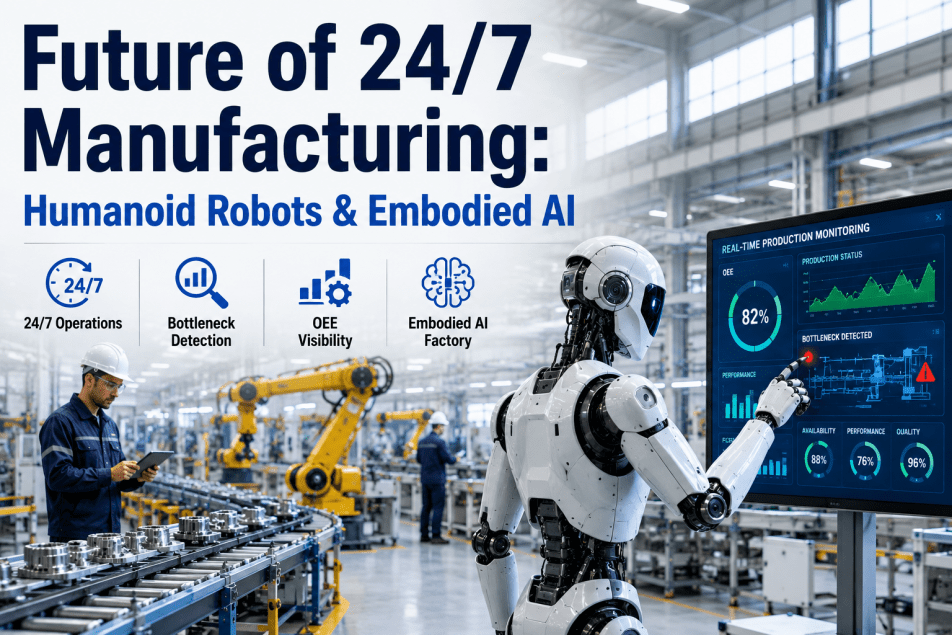
All sensor data collected during robot patrols feeds into iFactory's equipment health models, which track parameter drift across shifts, days, and weeks. The platform correlates overnight data with day-shift production metrics to identify developing failure modes before they cause downtime.
MES and CMMS Integration
Robot patrol data flows directly into iFactory's integrated MES and CMMS modules. Detected anomalies automatically generate work orders with attached sensor evidence. Shift reports are linked to production records, equipment histories, and quality data for complete traceability.
From Night Shift Patrol to Morning Handover in Four Steps
iFactory connects to your facility's existing infrastructure — no process equipment modifications required. The platform deploys on your plant network with the robots operating on the factory floor alongside production personnel.
Map & Deploy
Production zones, patrol routes, and inspection checkpoints are mapped in iFactory's robot control console. Humanoid robots are deployed on night shift patrol schedules with zone-specific inspection parameters and anomaly thresholds.
Patrol & Sense
Robots execute autonomous patrols throughout the night shift, collecting thermal, visual, acoustic, and environmental data at each checkpoint. Onboard AI models process sensor streams in real time, classifying every reading as normal, marginal, or critical.
Alert & Escalate
Critical anomalies trigger immediate push notifications to on-call personnel with the robot's GPS location, sensor evidence, and recommended response. Marginal readings are logged with trend context for morning review. Normal readings are archived to the equipment health database.
Report & Handover
At shift end, iFactory's AI engine compiles all patrol data into a structured shift handover report. The report includes a zone-by-zone status summary, prioritized action items, equipment health trend snapshots, and a complete audit trail of all events.
What Poor Shift Reporting Costs a Typical 24/7 Manufacturing Facility
Delayed Downtime Response
Equipment anomalies detected during the night shift but not escalated until morning handover average 4.7 hours between occurrence and corrective action. At $380 per hour of unplanned downtime for a mid-size facility, each delayed response costs $1,786 in lost production.
Handover Report Preparation
Night shift operators spend 35-45 minutes per shift compiling handover logs, transcribing gauge readings, and documenting events. At $42 per hour loaded labor cost across 3-4 night shift personnel, the facility spends $25,200 annually on manual report preparation alone.
Diagnostic Friction at Shift Start
Day shift teams spend an average of 28 minutes per handover verifying night shift logs, rechecking equipment status, and clarifying ambiguous entries. Across 250 operating days per year, this diagnostic friction consumes 117 hours of production supervisor time valued at $9,360 annually.
Four Reasons Humanoid Robots Are Transforming Shift Handover Operations
Autonomous Patrols Eliminate the Night Shift Data Deficit
The most significant structural limitation of manual shift handover is the fundamental data deficit created by reduced night shift staffing. Humanoid robots operating 24/7 eliminate this deficit by collecting 12x more data points per shift than manual rounds, with consistent frequency, calibrated sensors, and automated accuracy verification. The handover report the day shift receives is not a subjective account of what a tired operator remembers — it is a complete, timestamped, sensor-verified record of every zone and every piece of equipment.
Real-Time Escalation Compresses the Detect-to-Correct Cycle
Under the manual model, a leaking pneumatic fitting detected at 2:00 AM might not appear on a supervisor's radar until the 6:00 AM handover — a 4-hour delay that could escalate a $400 repair into a $4,000 bearing replacement. Humanoid robots with real-time escalation compress this detect-to-correct cycle from hours to minutes, enabling on-call maintenance personnel to respond to critical events during the night shift rather than discovering them at shift start.
Structured Reports Replace Anecdotal Handover Logs
The handwritten shift log — the backbone of most facilities' handover processes — is inherently limited by operator subjectivity, time pressure, and documentation fatigue. iFactory's automated shift reports eliminate this variability by capturing every patrol finding in a structured, standardized format that is immediately actionable for the incoming shift. Supervisors no longer spend the first 30 minutes of their shift interpreting handwriting or filling in data gaps.
Cross-Shift Trend Data Enables Predictive Rather Than Reactive Operations
When handover reports are inconsistent, equipment trend analysis across shifts is impossible. iFactory's platform correlates every patrol reading across the full 24-hour operating window — building continuous equipment health baselines that span day, night, and weekend shifts. This cross-shift visibility is the foundation of predictive maintenance, enabling facilities to detect parameter drift patterns that develop over multiple shifts long before they would trigger alarm thresholds or cause downtime.
Shift Handover Transformation: From Information Gap to Competitive Advantage
This facility's deployment of humanoid robots for night shift patrol and automated handover reporting eliminated the structural information asymmetry that had silently eroded overnight productivity for years. iFactory's embodied AI platform gave the operations team continuous, verified visibility into every production zone across every shift — and the automated shift reporting engine converted that visibility into actionable intelligence that arrived at the morning meeting before the first question was asked.
The 4.2% weekly capacity recovery is a direct productivity outcome. The elimination of handwritten shift logs and manual data transcription is an operational efficiency outcome. The cross-shift equipment health baselines are a predictive maintenance foundation that compounds in value as the trend history grows. For manufacturing leaders seeking to close the night shift information gap and transform shift handover from a friction point into a strategic advantage, Book a Demo with iFactory's embodied AI team.
Real Answers from Operations Leaders Adopting 24/7 Robotic Patrols
Stop Losing 4% of Weekly Capacity to Night Shift Blind Spots.
Your night shift is running without you knowing what is happening on your production floor. iFactory's humanoid robot patrol platform gives every incoming shift a complete, verified, and prioritized account of what occurred overnight. Deployed in 8 weeks, on-prem, no disruption. Book a Demo and we will show you on your facility data.