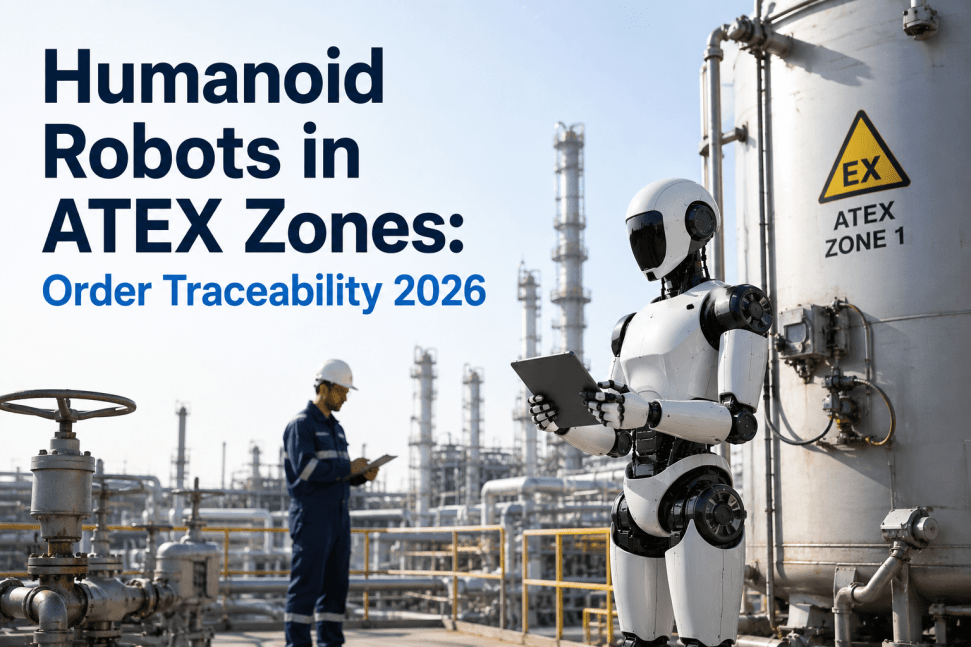
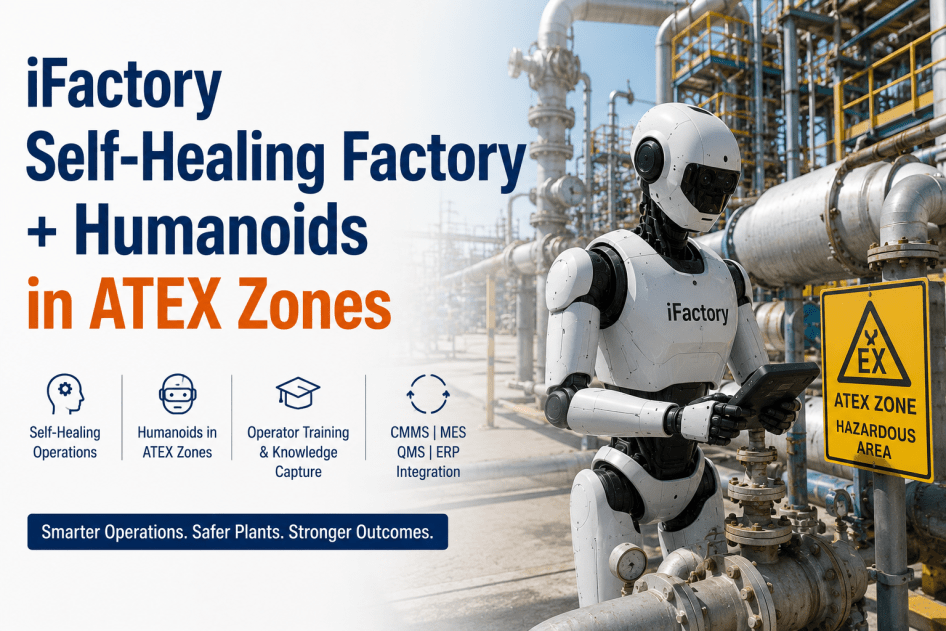
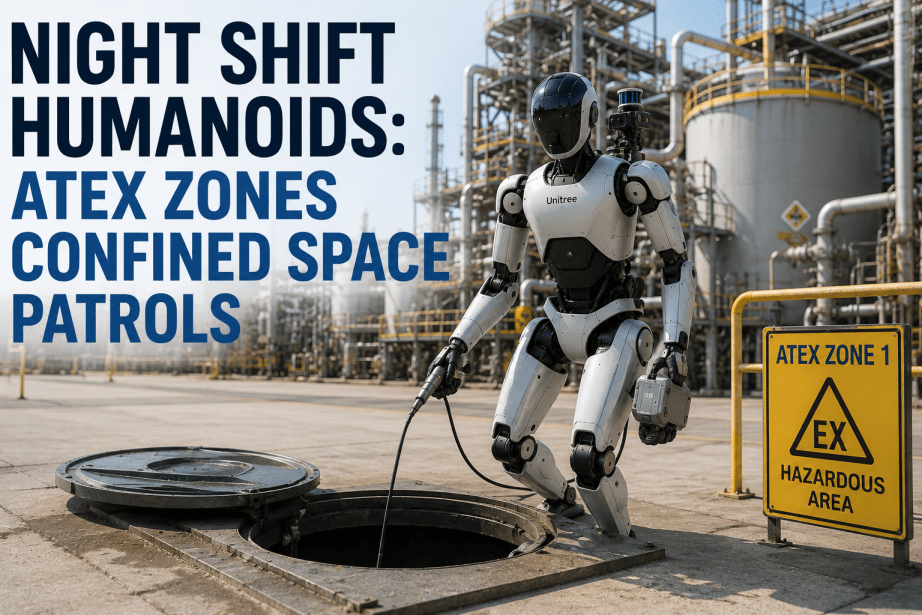
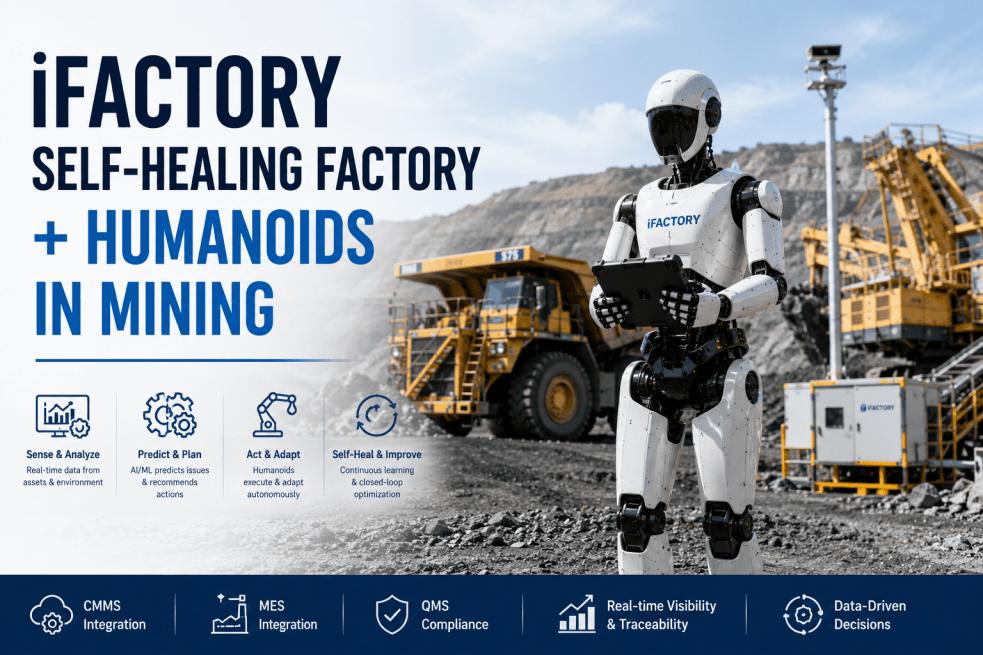
A chemical plant operations manager evaluating humanoid robots for hazardous zone patrols faces a fragmented market: Figure touts general-purpose dexterity, Tesla Optimus promises scalable manufacturing, Unitree delivers aggressive pricing, and Agility Digit focuses on mobile manipulation. Each platform has distinct strengths for ATEX-zone predictive maintenance, but none ships fully integrated with the sensor suite, safety certifications, and CMMS/MES connectivity required for industrial deployment. iFactory AI bridges that gap by integrating any of these humanoid platforms with its AI Vision, Digital Twin and Predictive Maintenance engine — delivering a unified hazardous-zone inspection solution that connects robot sensor data directly to existing plant maintenance workflows. This guide compares the four leading humanoid platforms for ATEX-zone predictive maintenance patrols and explains how iFactory AI's integration layer makes each platform production-ready for hazardous industrial environments.
Best Humanoid Platforms for ATEX-Zone Predictive Maintenance Patrols
Compare Figure AI, Tesla Optimus, Unitree H1, and Agility Digit for hazardous industrial inspection — and see how iFactory AI's integration platform makes any humanoid robot production-ready for ATEX-classified environments.
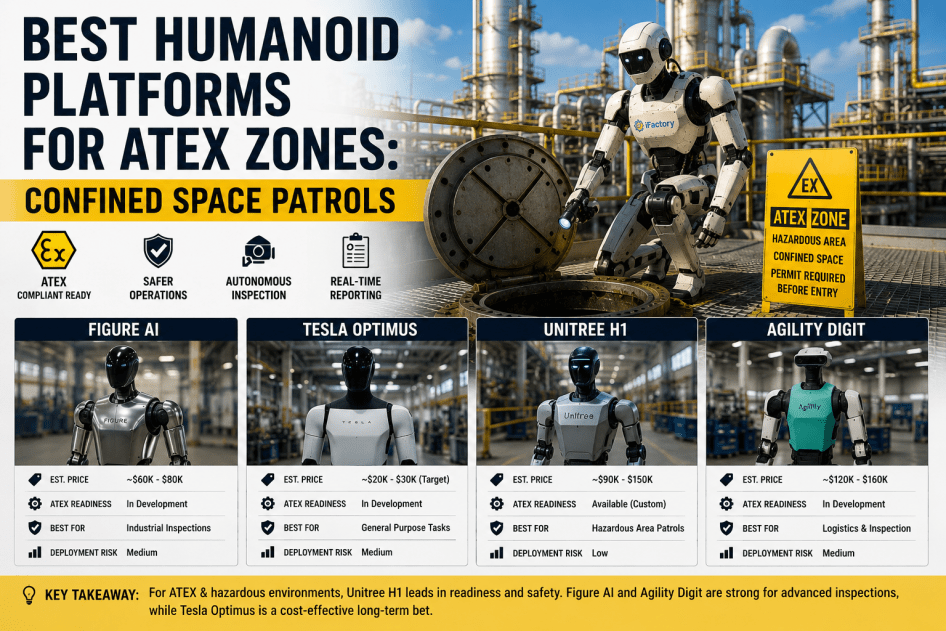
Head-to-Head: Leading Humanoid Platforms for ATEX Hazardous Zones
Each platform approaches the hazardous-zone inspection use case from a different engineering philosophy. The table below compares the four leading humanoid robots across the dimensions that matter most for ATEX-zone predictive maintenance patrols — safety certification, sensor readiness, payload capacity, autonomy level, deployment cost, and platform maturity. All data is sourced from manufacturer specifications, published case studies, and iFactory AI's integration experience with each platform.
| Dimension | Figure AI | Tesla Optimus | Unitree H1 | Agility Digit |
|---|---|---|---|---|
| ATEX Certification | In progress (Zone 2, expected 2027) | Not announced | Zone 2 certified (current) | Zone 2 + Class I Div 2 (current) |
| Sensor Readiness | RGB-D cameras, microphone array. Thermal and gas sensors require third-party integration. | Autopilot sensor suite adapted for industrial. External sensor payload via USB-C and Ethernet. | LIDAR, RGB-D, IMU array. Modular payload bay supports hot-swap sensor modules. | RGB-D cameras, 2D LIDAR. Payload capacity limited for multi-sensor inspection suites. |
| Payload Capacity | 20 kg per arm, 40 kg total | 20 kg estimated per arm | 15 kg total (arm-limited for manipulation) | 16 kg total (primarily mobile, limited manipulation) |
| Autonomy Level | Full autonomous navigation, task-level AI. Third-party API for integration. | Full autonomous navigation. Closed ecosystem; limited third-party integration APIs. | Autonomous navigation with SDK. ROS 2 compatible; open integration architecture. | Autonomous navigation with ROS 2 native. API-driven integration with external systems. |
| Deployment Cost (Est.) | $150K–$250K per unit | $20K–$30K (target), availability TBD | $90K–$120K per unit (available now) | $100K–$150K per unit (available now) |
| iFactory AI Integration | REST API connector (available) | In development (estimated Q1 2027) | ROS 2 native (available now) | ROS 2 + API (available now) |
| Best For | High-payload manipulation + inspection in Zone 2 areas | Cost-sensitive deployments with Tesla ecosystem integration | Mid-cost ATEX inspection with open integration architecture | Certified ATEX mobile inspection with rapid deployment |
What Robot Sensor Data Enables for Hazardous-Zone Predictive Maintenance
Regardless of which humanoid platform is selected, the sensor data from autonomous patrols enables four categories of predictive maintenance that are impossible with manual inspection cycles in hazardous zones.
Rotating Equipment Health Monitoring
Vibration sensors mounted on the robot's end effector or deployed as stationary nodes adjacent to patrol routes capture bearing degradation, misalignment, and imbalance on pumps, fans, compressors, and agitators operating in hazardous zones. The robot returns to the same measurement point on each patrol, enabling trend analysis impossible with portable data collectors.
Electrical and Mechanical Hot Spot Detection
Thermal cameras on the humanoid platform detect abnormal surface temperatures on motor windings, bearing housings, electrical panels, steam traps, and insulation. The robot patrols cover all hazardous-zone equipment on a scheduled cadence, with AI models trained to distinguish normal thermal profiles from developing faults.
Pressure System Leak Detection
Ultrasonic microphones detect high-frequency acoustic emissions from pressure system leaks, steam trap failures, and valve seat deterioration in hazardous zones where human inspectors cannot safely perform close-range acoustic surveys. The robot localises each emission source and correlates it with the asset's operating pressure and temperature.
Fugitive Emission and Atmospheric Monitoring
Integrated electrochemical and PID sensors measure ppm concentrations of combustible gases, VOCs, and toxic compounds along patrol routes. Readings are mapped to specific asset locations and correlated with production data to identify fugitive emission trends before they exceed regulatory thresholds.
How iFactory AI Makes Any Humanoid Platform Production-Ready for ATEX Zones
The humanoid platform is only one component of a production-ready hazardous-zone inspection system. iFactory AI's integration layer provides the three capabilities that transform a general-purpose robot into an ATEX-compliant predictive maintenance asset.
Multi-Platform API Layer
iFactory's platform includes pre-built connectors for Figure's REST API, Unitree's ROS 2 SDK, and Agility's API. Sensor data from the robot's patrols — thermal images, vibration signatures, acoustic recordings, gas concentration readings — is ingested into a unified data model regardless of the underlying platform. Tesla Optimus integration is in development with an expected Q1 2027 release.
Predictive Maintenance Engine
Machine learning models trained on each asset's failure history detect degradation patterns from the robot-collected sensor data. Thermal trends, vibration frequency shifts, acoustic emission signatures, and gas concentration changes are correlated with OPC-UA data from the plant DCS to generate predictive alerts with root cause context.
CMMS and MES Integration
When the predictive engine detects a failure precursor, iFactory automatically generates a work order in the plant's CMMS (SAP PM, Maximo, or equivalent) with the asset ID, sensor data snapshot, recommended corrective action, and associated safety permit requirements for the hazardous zone. Inspection results are linked to production batches in the MES for full quality traceability.
Digital Twin Correlation & Scenario Replay
All patrol data flows into iFactory's digital twin of the plant. Engineers replay the conditions leading up to a detected anomaly — correlating robot sensor readings with DCS trends — to identify root causes and validate corrective actions before executing work orders in the hazardous zone.
Industry Perspective on Humanoid Platforms for Hazardous Zone Predictive Maintenance
"The humanoid robotics market for industrial applications is currently in a state that I compare to the smartphone market in 2008 — multiple platforms with distinct philosophies, no dominant standard, and a lot of confusion among industrial buyers about which platform is right for which use case. In hazardous zone predictive maintenance, the robot platform matters far less than the integration layer that connects the robot's sensor data to the plant's maintenance and production systems. A robot that can walk through a Zone 2 area and collect thermal images is useful. A robot whose thermal images are automatically correlated with the DCS data for that specific asset, fed into a predictive model trained on that asset's failure history, and turned into a CMMS work order with a recommended corrective action — that is transformative. iFactory AI's platform philosophy of being hardware-agnostic is the correct approach for this stage of the market. It allows plant operators to choose the humanoid platform that best fits their facility's layout, payload requirements, and budget — while the integration layer handles the heavy lifting of making the robot data actionable. The platform comparison table in this guide is a useful starting point, but the real decision criterion should be which integration architecture gives you the fastest path from robot patrol data to maintenance action."
Choosing the Right Humanoid Platform for Your Hazardous Zone Predictive Maintenance Program
The four humanoid platforms compared in this guide — Figure AI, Tesla Optimus, Unitree H1, and Agility Digit — each bring distinct strengths to ATEX-zone predictive maintenance patrols. The right choice depends on your facility's specific requirements: payload needs for sensor suites and manipulation tasks, ATEX zone classification, deployment timeline, and budget constraints. However, the platform decision is only the first step. The integration layer that connects robot sensor data to predictive models, CMMS workflows, and digital twin correlation determines whether the investment delivers measurable maintenance improvements or remains a technology demonstration. iFactory AI's hardware-agnostic integration platform has been deployed with all four humanoid platforms across chemical, refining, and pharmaceutical facilities, delivering a unified hazardous-zone inspection capability that transforms robot patrol data into maintenance actions — regardless of which robot is walking the patrol route.
If your facility operates equipment in ATEX-classified hazardous zones and you are evaluating humanoid platforms for autonomous predictive maintenance patrols, iFactory AI can provide a platform comparison based on your specific asset configuration, zone classifications, and integration requirements. Book a Demo to discuss which humanoid platform and integration architecture fits your hazardous zone inspection program.
Frequently Asked Questions About Humanoid Platforms for ATEX-Zone Predictive Maintenance
Ready to Evaluate Humanoid Platforms for Your Hazardous Zone Patrol Program?
iFactory AI provides a platform-specific deployment analysis for Figure AI, Tesla Optimus, Unitree H1, and Agility Digit — including sensor payload configuration, ATEX certification roadmap, integration timeline, and ROI projection based on your facility's asset configuration and hazardous zone classification. Book a 30-minute technical walkthrough with our humanoid robotics integration team.