
Only 30% of cement plants worldwide have begun implementing Industry 4.0 technologies — and most of those are still in the early stages. Yet the pioneering manufacturers who have fully embraced AI, IoT, digital twins, and MES integration are reporting 40–60% less unplanned downtime, 35–50% energy savings, and positive ROI within 18 months. The gap between leaders and laggards is widening fast. Start Your Cement Plant Digital Transformation and close that gap before your competitors do.
Industry 4.0 in Cement Manufacturing
From Connected Sensors to Autonomous Operations — A Practical Roadmap for Cement Plant Digital Transformation
What Industry 4.0 Actually Means for Cement Plants
It's not just automation — it's a complete shift from reactive to predictive, from isolated to connected, from manual to intelligent.
Where Most Plants Are Today
Where Leaders Are Heading
The Four Pillars of Cement 4.0
Each technology amplifies the others — the real power comes from integration, not isolated deployment.
Industrial IoT Sensor Networks
Wireless vibration, thermal, gas, and power sensors deployed across kilns, mills, crushers, and conveyors — collecting thousands of data points per second. IP68-rated hardware survives the extreme dust, heat, and vibration of cement environments. Edge gateways aggregate and pre-process data locally before transmitting to the cloud.
AI & Machine Learning Analytics
ML models trained on historical sensor data detect bearing degradation, kiln refractory wear, grinding inefficiency, and combustion anomalies. AI predicts equipment failures 3–6 weeks in advance, optimizes kiln firing parameters to reduce fuel consumption by up to 7%, and ensures clinker quality without waiting for lab results.
Digital Twin Simulation
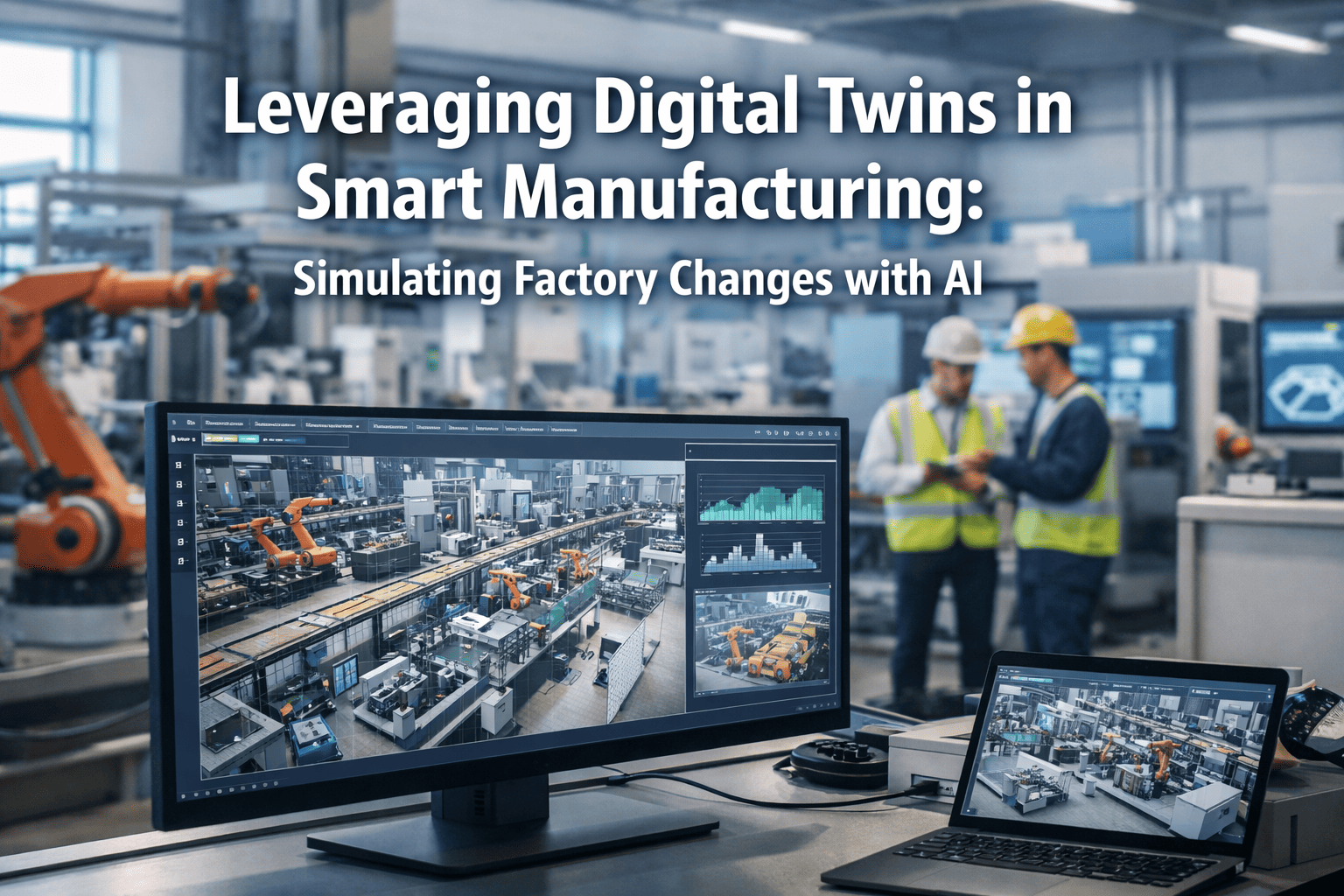
Virtual replicas of kilns, mills, and entire production lines — fed by real-time sensor data. Digital twins enable process engineers to test fuel mix changes, temperature adjustments, and maintenance scenarios without touching the physical plant. Holcim launched the world's first digital twin cement plant as part of its "Plants of Tomorrow" program.
MES & ERP Integration
Manufacturing Execution Systems bridge the gap between shop floor operations and enterprise planning. MES captures real-time production data — throughput, quality, energy, equipment status — and feeds it into ERP for financial planning, procurement, and compliance reporting. The result is end-to-end visibility from quarry to dispatch.
How Everything Connects in a Smart Cement Plant
The real value of Industry 4.0 isn't individual technologies — it's how they work together as a unified intelligent system.
IoT Sensors
Vibration, thermal, gas, power data from every critical asset streams into the platform continuously.
AI Analytics
ML models process sensor data, detect anomalies, predict failures, and generate automated maintenance work orders.
Digital Twin
Virtual plant model mirrors real-time operations, enables process simulation, and validates optimization decisions.
SCADA / DCS
Existing control systems feed process data and receive optimized setpoints from AI-driven recommendations.
SAP / ERP
Financial planning, spare part procurement, and compliance records update automatically from maintenance actions.
MES / LIMS
Production execution data and lab quality results integrate for real-time product quality tracking and traceability.
Real Cement Plant Industry 4.0 Use Cases
Not theoretical possibilities — actual implementations delivering measurable results in cement plants today.
AI-Optimized Kiln Firing
Self-adaptive AI controllers analyze gas composition, shell temperature, and feed rate to continuously optimize combustion parameters — reducing fuel consumption while maintaining clinker quality without operator intervention.
Predictive Mill Maintenance
Vibration sensors on VRM rollers and ball mill bearings feed ML models that detect gearbox faults, roller wear, and separator issues — providing 30-day advance warnings that let maintenance teams plan repairs during scheduled stops.
Real-Time Clinker Quality Prediction
AI models predict free lime content in real time using kiln sensor data — eliminating the 40-minute wait for lab analysis. Operators adjust parameters instantly instead of producing off-spec clinker while waiting for results.
Grinding Circuit Optimization
AI analyzes clinker hardness, mill speed, separator settings, and power draw to achieve target cement fineness with minimum energy input — eliminating over-grinding that wastes electricity without improving product quality.
Automated Weighbridge & Dispatch
RFID-enabled vehicle tracking, automated weighment, kiosk-based slip printing, and real-time ERP integration eliminate manual data entry from dispatch operations — reducing truck turnaround time and improving logistics accuracy.
Vision AI for Plant Safety
Camera-based AI systems monitor restricted zones, detect unauthorized access, identify PPE compliance violations, and spot equipment anomalies like smoke or overheating — alerting operators instantly before incidents escalate.
77% of Digital Projects in Cement Report Positive ROI Within 18 Months.
iFactory bridges your existing SCADA, PLC, and ERP systems with AI analytics, IoT sensors, and digital twin intelligence — delivering a unified smart plant platform without ripping out your existing infrastructure.
Implementation Roadmap — From Assessment to Autonomous
A phased approach that delivers ROI at every stage while building toward full Industry 4.0 maturity.
Assess & Connect
Audit existing automation maturity (PLC, SCADA, DCS). Deploy IoT sensors on top 20% critical assets — kilns, primary mills, ID fans. Establish edge gateways and data connectivity. Build baseline equipment health profiles.
Predict & Integrate
Train AI predictive maintenance models on baseline sensor data. Integrate iFactory CMMS with existing SCADA/DCS for unified monitoring. Connect to SAP/ERP for automated work orders and spare part procurement. Launch digital twin pilot on kiln operations.
Optimize & Scale
Expand sensor coverage to all critical and semi-critical assets. Deploy AI energy optimization for kiln, grinding, and cooler operations. Roll out MES integration for full production visibility from quarry to dispatch. Implement quality prediction models.
Autonomous Operations
AI controllers autonomously adjust kiln firing, mill parameters, and cooler airflow. Digital twin drives coverage optimization and scenario planning. Multi-plant analytics benchmarks performance across sites. Continuous learning AI improves over time.
The Measurable Business Impact
What cement manufacturers are actually achieving with Industry 4.0 — not projections, but reported results.
77% of digital transformation projects in cement report positive ROI within the first 18 months — driven by prevented downtime, energy savings, and maintenance optimization.
Continuous condition monitoring with AI alerting shifts maintenance from emergency repairs to planned interventions during scheduled stops.
Kiln firing optimization, grinding efficiency AI, and cooler management collectively reduce the single largest operating cost in cement production.
AI pinpoints exact failure modes — bearing, liner, gearbox — so maintenance crews fix the correct component first time with parts pre-ordered.
Automated monitoring, AI-driven alerts, and digital workflows reduce manual supervision requirements while improving decision quality across all shifts.
Frequently Asked Questions
Do we need to replace our existing PLC, SCADA, and DCS systems?
No. Industry 4.0 solutions layer on top of your existing infrastructure. IoT sensors connect via OPC-UA, Modbus, and MQTT gateways. iFactory CMMS integrates through standard REST APIs — wrapping your current systems without requiring rip-and-replace upgrades.
What is the realistic timeline and budget for Industry 4.0 implementation?
A phased approach delivers measurable results within 3–6 months. Start with critical asset monitoring (Phase 1), expand to AI analytics and CMMS integration (Phase 2), then scale plant-wide (Phase 3). Most cement plants achieve full ROI within 12–18 months. Budget depends on plant size and scope, but 77% of projects report positive returns.
How does a digital twin actually work in a cement plant?
A digital twin is a virtual replica of your physical plant — kiln, mills, coolers — fed continuously by real-time sensor data. It enables operators to simulate process changes, test fuel mix adjustments, and predict equipment behavior without touching the physical plant. Holcim and Heidelberg Materials are already running production digital twins across their global operations.
What about cybersecurity with all these connected systems?
Industrial cybersecurity is built into every layer — encrypted sensor communication, segmented OT/IT networks, role-based access controls, and continuous monitoring for anomalies. Cloud platforms use enterprise-grade security with SOC 2 compliance. Data sovereignty controls ensure plant data stays within your chosen region.
Our plant operators aren't IT experts — will they be able to use these systems?
Industry 4.0 platforms are designed for plant operators, not IT teams. Dashboards show equipment health in simple green/yellow/red status. AI alerts are delivered in plain language with recommended actions. Training programs use tablet-based modules and peer mentoring to bridge the digital literacy gap — many Indian cement companies are already doing this successfully.
What role does iFactory play in Industry 4.0 for cement?
iFactory CMMS serves as the intelligent hub that connects IoT sensor data, AI analytics, digital twin insights, and enterprise systems into one unified platform. It automatically converts anomaly detections into maintenance work orders, tracks spare part inventory, generates compliance reports, and provides multi-plant performance benchmarking — purpose-built for cement manufacturing operations.
Your Cement Plant's Industry 4.0 Journey Starts Here
See how iFactory connects IoT sensors, AI analytics, digital twins, and your existing enterprise systems into one intelligent platform — purpose-built for cement manufacturing's digital transformation.



.jpeg)