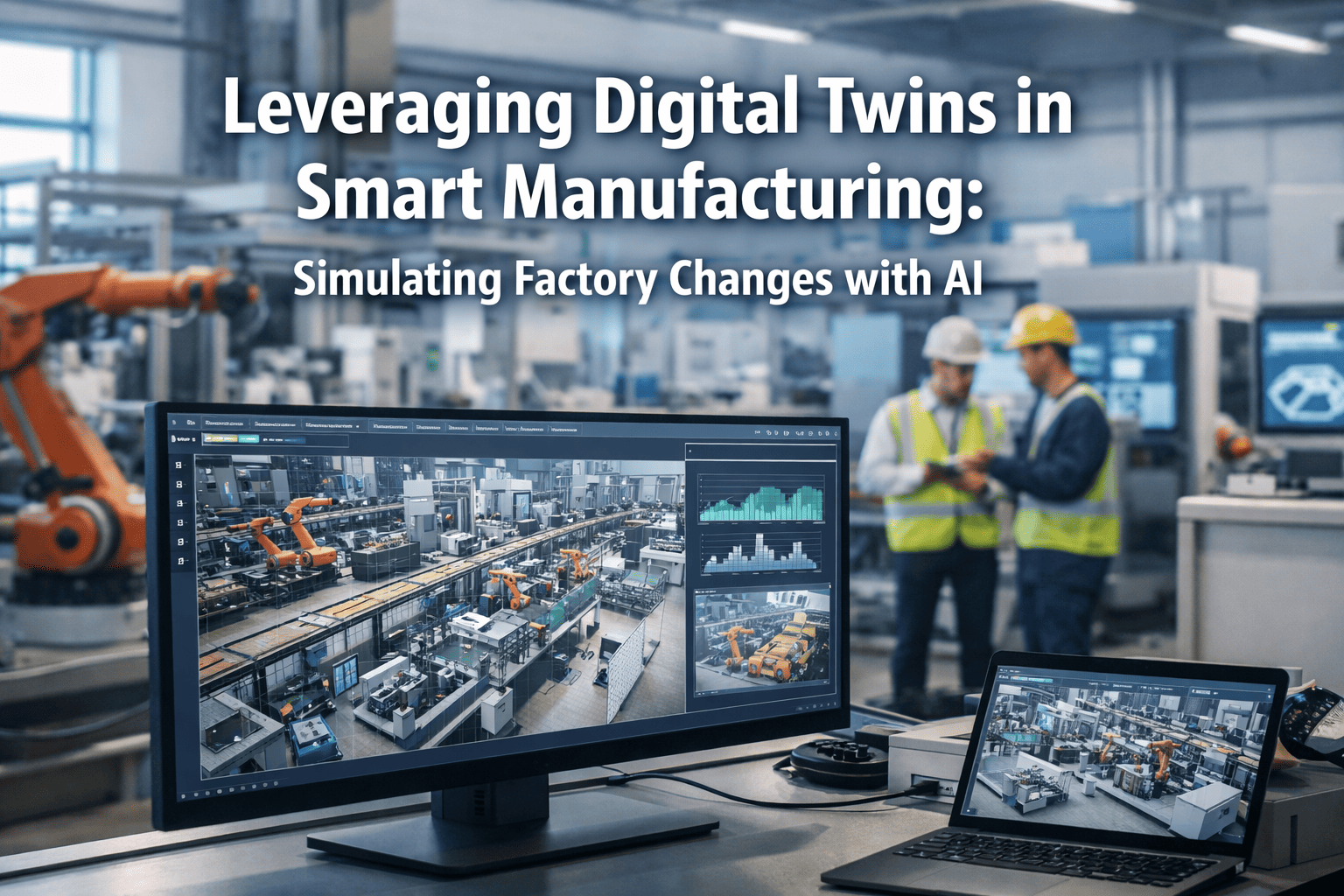
Samsung is deploying 50,000 NVIDIA GPUs to build factory digital twins that simulate entire fab operations before a single physical change is made. BMW runs virtual replicas of complete production lines to test layout changes risk-free. Yet most manufacturers still shut down production to test process changes — losing $260,000 per hour in unplanned downtime. Digital twin technology has crossed the tipping point from experimental to essential. The global digital twin market hit $36 billion in 2025 and is growing at 36% CAGR. The question isn't whether your factory needs a digital twin — it's how fast you can deploy one.
AI-Native Digital Transformation for Smart Manufacturing
Join iFactory's expert-led session on how AI-native architecture — including digital twin integration, predictive maintenance, and real-time factory intelligence — is reshaping how manufacturers plan, operate, and optimize production. Learn how leading facilities are using cloud-native CMMS as the operational data backbone for factory-scale digital twins.
Digital twins in manufacturing have grown over 1,000% in adoption between 2020 and 2025, according to PwC. Manufacturing holds the largest market share at 35% of all digital twin deployments. And McKinsey reports that manufacturers using digital twins are cutting monthly operational costs by up to 7% by compressing overtime requirements and optimizing production schedules. The manufacturers who deploy digital twins now are building competitive moats that late adopters will struggle to cross.
What Is a Digital Twin in Manufacturing?
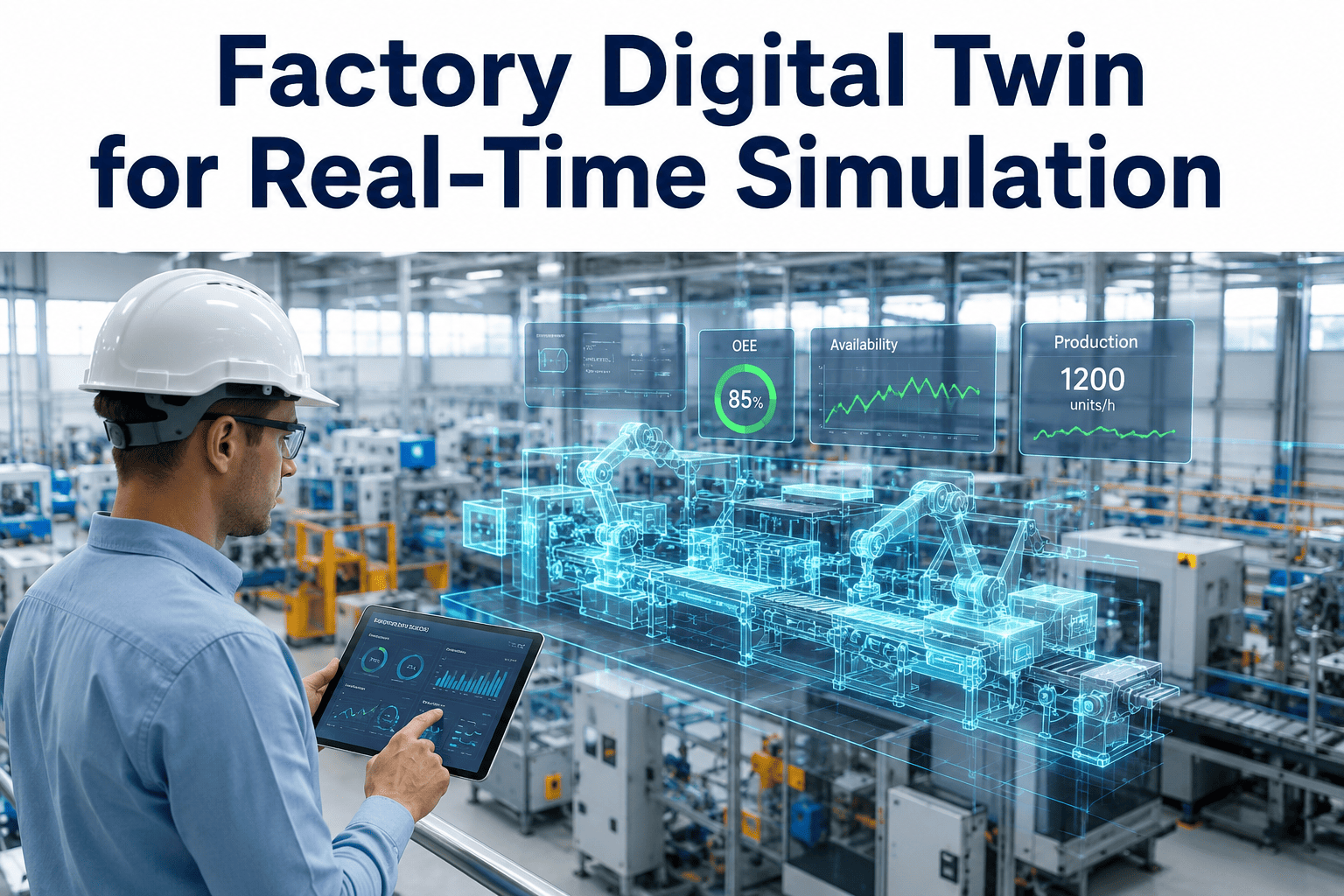
A digital twin is a dynamic virtual replica of a physical asset, production line, or entire factory that mirrors real-world conditions in real time using data from IIoT sensors, edge computing, and AI models. Unlike static 3D models or one-time simulations, a digital twin continuously updates — it breathes live data, learns from operational patterns, and evolves as the physical environment changes.
In smart manufacturing, digital twins operate at three levels, each delivering escalating value:
A virtual replica of a single asset — a CNC machine, compressor, or motor. Monitors vibration, temperature, and performance in real time. Predicts failures before they happen and triggers maintenance work orders automatically through platforms like iFactory.
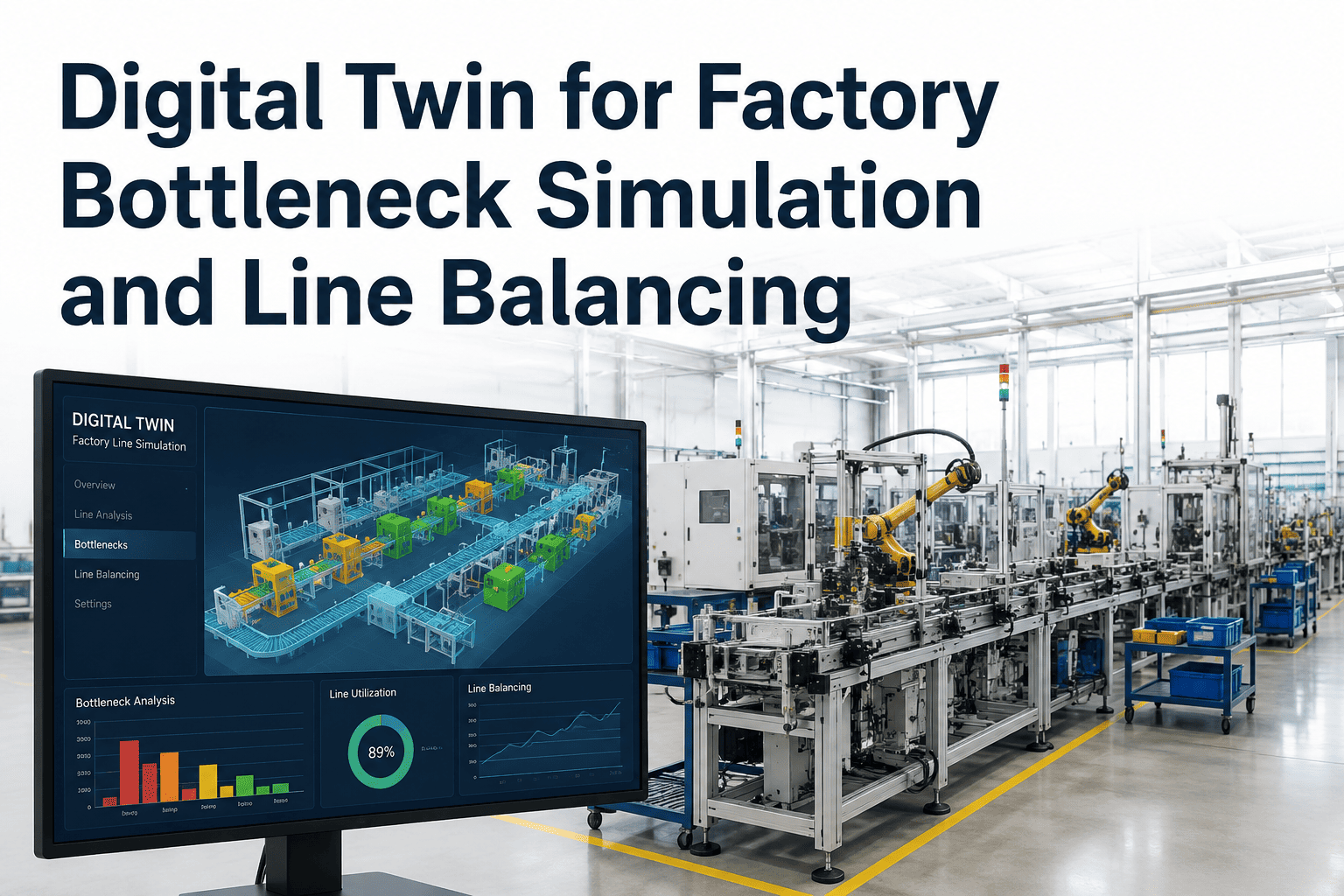
Models an entire production line or workflow. Simulates what happens when you change line speed, swap a machine, or adjust material flow — without touching the physical line. Identifies bottlenecks before they cost you throughput.
A complete virtual factory — every machine, every conveyor, every HVAC system, every operator workflow. Samsung and BMW operate at this level using NVIDIA Omniverse. This is where layout optimization, energy management, and enterprise-wide "what-if" scenarios deliver transformational ROI.
iFactory provides the real-time data foundation that powers every level of digital twin. Without clean, unified machine data, digital twins are just static 3D models. See how iFactory makes digital twins actionable — book a demo →
How Digital Twins Simulate Factory Changes Without Impacting Live Operations
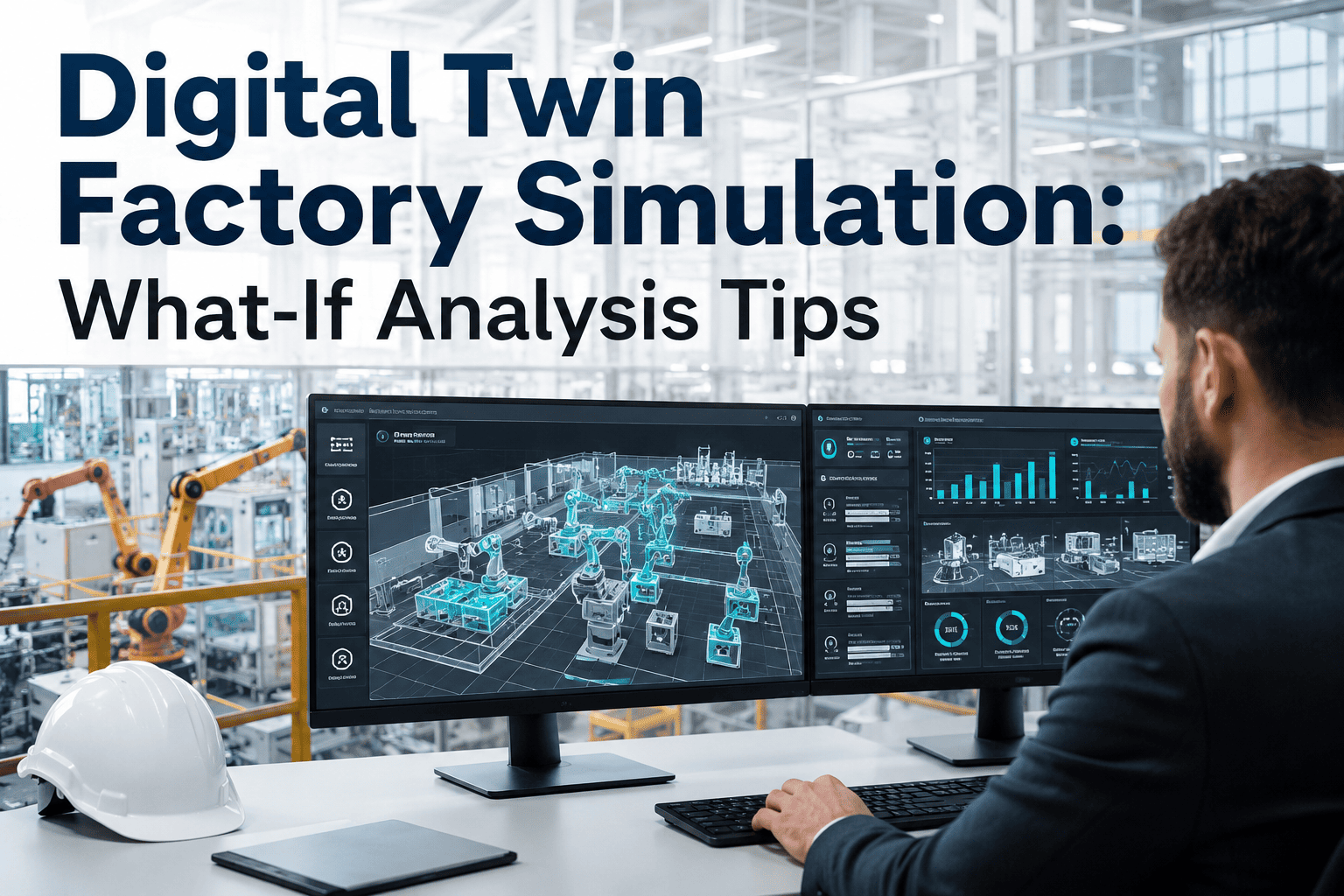
This is where digital twins deliver their highest-value capability: "what-if" scenario simulation. Instead of shutting down a line to test a new layout, reconfiguring equipment to test throughput changes, or gambling on a new production schedule — manufacturers simulate everything in the digital twin first. Changes are validated virtually, optimized through AI, and only deployed physically once the data proves they'll work.
- Test layout changes virtually — zero production impact
- Simulate new equipment before purchasing — validate ROI first
- Run 100+ scheduling scenarios in minutes, not weeks
- Predict maintenance needs months in advance with AI
- Optimize energy usage across entire facility in real time
- Shut down production to test changes — $260K/hr lost
- Buy equipment hoping it fits — expensive mistakes
- Trial-and-error scheduling — weeks of suboptimal output
- Reactive maintenance — fix machines after they break
- Energy waste invisible until quarterly utility bills arrive
7 High-Impact Digital Twin Use Cases in Smart Manufacturing
Digital twin technology isn't a single-use tool — it's a platform that delivers compounding value across every operational dimension. Here are the use cases driving the strongest ROI in 2026, backed by real-world data:
iFactory: The Real-Time Data Engine Behind Every Digital Twin Use Case
A digital twin is only as good as the data feeding it. iFactory's AI-powered CMMS provides the unified sensor data, automated work order triggers, and predictive maintenance intelligence that turn digital twin insights into measurable operational improvements.
The Digital Twin Technology Stack: Edge AI Meets Cloud Intelligence
A production-ready digital twin isn't a single piece of software — it's an architecture where physical sensors, edge computing, AI models, and cloud platforms work as one system. Here's how the stack works, and where iFactory fits as the operational intelligence layer:
Key insight: The biggest reason digital twin projects fail isn't the simulation software — it's poor data quality from disconnected operational systems. iFactory solves this by providing the unified, clean, real-time data pipeline that digital twins require to be accurate and actionable.
Real-World Digital Twin ROI: What the Data Shows
Digital twins aren't theoretical anymore. Across industries, the financial returns are documented, measurable, and accelerating. Here's what manufacturers are actually achieving — and what you're leaving on the table without one:
A mid-sized manufacturer's digital twin paid for itself in 14 months — saving $85K in reduced scrap, $120K in lower emergency maintenance, $70K in avoided overtime, and $30K in energy savings against a $215K implementation cost. What would those numbers look like for your plant? Find out in a 30-minute demo →
Who's Leading: Digital Twin Deployments Redefining Manufacturing
The world's most advanced manufacturers are already operating factory-scale digital twins. Here's what the leaders are doing — and the pattern is clear: every one of these deployments depends on a robust real-time data infrastructure at the core.
Samsung is building digital twins with NVIDIA Omniverse across global semiconductor fabs. Virtual environments identify anomalies, perform predictive maintenance, and optimize production before changes are applied physically. Plans extend AI Factory infrastructure to manufacturing hubs worldwide.
BMW runs complete digital twins of production facilities to simulate new vehicle line introductions, test layout changes, and optimize logistics flow — all before committing physical resources. R&D simulation eliminates expensive real-world prototyping cycles.
Partnering with U.S. manufacturing facilities to prove that digital twin implementation drives measurable operational transformation. Real-time monitoring and energy optimization across connected factory environments.
You Don't Need Samsung's Budget to Start With Digital Twins
iFactory gives mid-sized manufacturers the same data foundation that powers enterprise-scale digital twins — cloud-native, AI-driven, and deployable in weeks. Start with predictive maintenance on your critical assets and scale from there.
The Digital Twin Adoption Timeline: Where Is Your Factory?
Digital twin technology is accelerating faster than most manufacturers realize. Here's the trajectory — and the cost of waiting:
Expert Perspectives: What Industry Leaders Say About Digital Twins in Manufacturing
The shift to digital twin-powered manufacturing isn't just a technology trend — it's a strategic imperative recognized by the world's leading industrial voices. Here's what executives, analysts, and practitioners are saying about the future of factory simulation:
Everything that moves will be simulated before it's built. The factory of the future will be designed, tested, and optimized as a digital twin first — then the physical version is simply the deployment. NVIDIA Omniverse makes this possible at industrial scale today.
Digital twins are enabling manufacturers to fully revamp production schedules and cut monthly costs by up to 7%. The technology's impact on supply chain optimization delivers 20% improvement in consumer fulfillment, 10% labor cost reduction, and 5% revenue increase.
How to Start: A Practical Digital Twin Roadmap for Manufacturers
You don't need to build a Samsung-scale digital twin on day one. The most successful implementations start focused and scale from proven value. Here's the proven 4-phase approach that iFactory supports at every stage:
Start with iFactory as your cloud-native CMMS. Connect IIoT sensors to your 5-10 most critical assets. Establish the real-time data pipeline that every digital twin requires. Most teams are operational within weeks, not months.
Build individual machine twins using iFactory's sensor data. Start predicting failures before they happen. Automate maintenance work orders based on AI-driven insights. This phase typically delivers ROI within 3-6 months.
Expand to full production line modeling. Simulate scheduling changes, test equipment reconfigurations, and optimize material flow — all virtually. iFactory provides the continuous data feed that keeps simulations accurate.
Connect every asset, line, and system into a unified factory twin. Run whole-plant "what-if" scenarios for layout changes, energy optimization, and capacity planning. This is where the compounding value of your data investment reaches its full potential.
Phase 1 starts with a 30-minute demo. We'll show you exactly how iFactory connects to your equipment, what data you'd see from day one, and how fast your maintenance team starts benefiting from AI-driven insights. Book your demo and start building your digital twin foundation →
Frequently Asked Questions
A traditional simulation is a one-time model built with assumptions — you set parameters, run it, and get results for that specific scenario. A digital twin is a living model that continuously ingests real-time sensor data, adapts to actual operating conditions, and evolves as your factory changes. It's the difference between a photograph and a live video feed. iFactory provides the real-time data pipeline that keeps your digital twin alive and accurate.
Yes — this is one of the most common challenges and it's completely solvable. Retrofit IoT sensor kits attach to legacy machines to monitor vibration, temperature, and power draw. Edge computing gateways digitize analog signals and send structured data to your CMMS. iFactory connects to both modern and legacy equipment through IIoT sensors, effectively giving older machines a digital voice. We'll show you exactly how this works in your demo.
A focused pilot on a single production line or critical asset set typically ranges from $50,000 to $200,000, including sensors, integration, and software licensing. One documented mid-sized manufacturer implementation cost $215K and paid for itself in 14 months through $305K in combined savings. The key is starting with the right data platform — iFactory's cloud-native approach eliminates expensive on-premise infrastructure costs that inflate legacy digital twin deployments.
iFactory serves as the operational data backbone that digital twins require. It provides: unified real-time data from IIoT sensors across all equipment, AI-driven predictive maintenance that converts twin insights into automated work orders, cloud-native architecture that scales without on-premise infrastructure, and asset management intelligence that feeds simulation models with accurate operational data. Think of iFactory as the layer that makes digital twin insights actionable — turning simulation into operational results.
With iFactory as your foundation, initial predictive maintenance value typically appears within weeks of deployment. Asset-level digital twin insights — failure prediction, performance optimization, automated work orders — start delivering ROI within 3-6 months. Full production line and factory-scale twins take longer to build, but the incremental value compounds at each phase. Book a demo and we'll map out a realistic timeline for your specific operation.
Your Factory's Digital Twin Journey Starts with a 30-Minute Conversation
iFactory gives manufacturers the AI-powered data foundation that makes digital twins work. Whether you're starting with predictive maintenance on critical assets or planning a full factory twin, this demo shows you the fastest path from sensor data to operational intelligence. No commitment. No pressure. Just a live walkthrough of the platform powering the next generation of smart manufacturing.