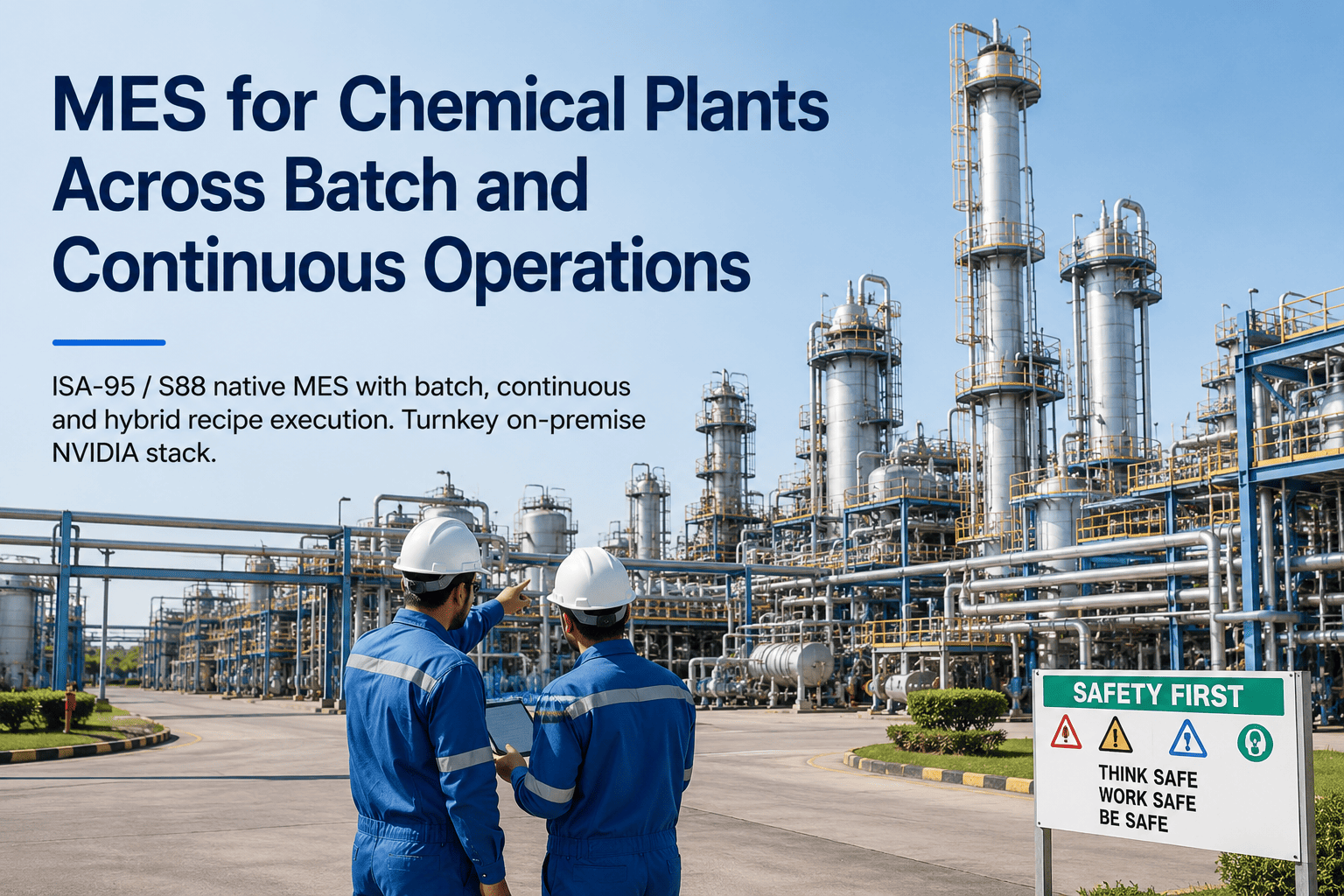
Most MES platforms are built for one rhythm. They assume discrete units moving down a line, or they assume a batch reactor cycling through phases — and then a chemical plant arrives with both running at once: a continuous distillation train feeding a batch crystallizer feeding a packaging line, all under one quality system and one audit. Bolt a batch MES onto a continuous process, or stretch a discrete MES across a reactor suite, and the seams show up exactly where they cost the most — in the electronic batch record, in genealogy, in the validation package an auditor actually opens. iFactory MES Core is ISA-95 and ISA-88 native across batch, continuous, and hybrid execution, so recipe management, eBR, genealogy, and OEE share one model regardless of how the material actually moves. It ships as a turnkey on-premise NVIDIA stack — inside your firewall, GAMP 5-ready from day one.
iFactory MES Core · Chemical
One MES for Batch, Continuous, and the Hybrid in Between.
ISA-95 / S88-native execution: governed recipes, electronic batch records, and full genealogy across batch reactors, continuous trains, and hybrid lines — on a turnkey on-premise NVIDIA stack, validation-ready under GAMP 5.
ISA-95
Levels 0-4, native model
S88
recipe & equipment hierarchy
GAMP 5
CSV, Part 11, Annex 11 ready
On-prem
turnkey NVIDIA stack
The Standards, Stacked Correctly
A chemical MES lives at ISA-95 Level 3, between the control layer below and the enterprise above. S88 governs how recipes and equipment are structured at the levels beneath it. iFactory MES Core implements both as a single object model rather than two bolted-together products — which is why the same recipe definition drives execution whether the unit is a batch reactor or a continuous skid.
Level 4
Enterprise · ERP
Production orders, planning, and performance reporting exchanged with the MES via ISA-95 B2M transaction models.
Level 3 · MES
iFactory MES Core
Recipe management, electronic batch records, genealogy, OEE, dispatching, deviation and release — the layer this page is about, sitting between control and enterprise.
Level 2 · S88
Batch / Process Control
Equipment phases execute on PLC and DCS; MES Core binds recipe phases to the units and equipment modules defined here.
Level 0-1
Sensors & Actuators
Field instrumentation, valves, and drives — the physical process and the raw signals every layer above depends on.
Three Execution Modes, One Model
The hard part of a chemical MES isn't batch or continuous individually — it's holding both, plus the hybrids, under one recipe and record model. iFactory MES Core executes all three natively, so a hybrid line doesn't become a special integration project.
Batch
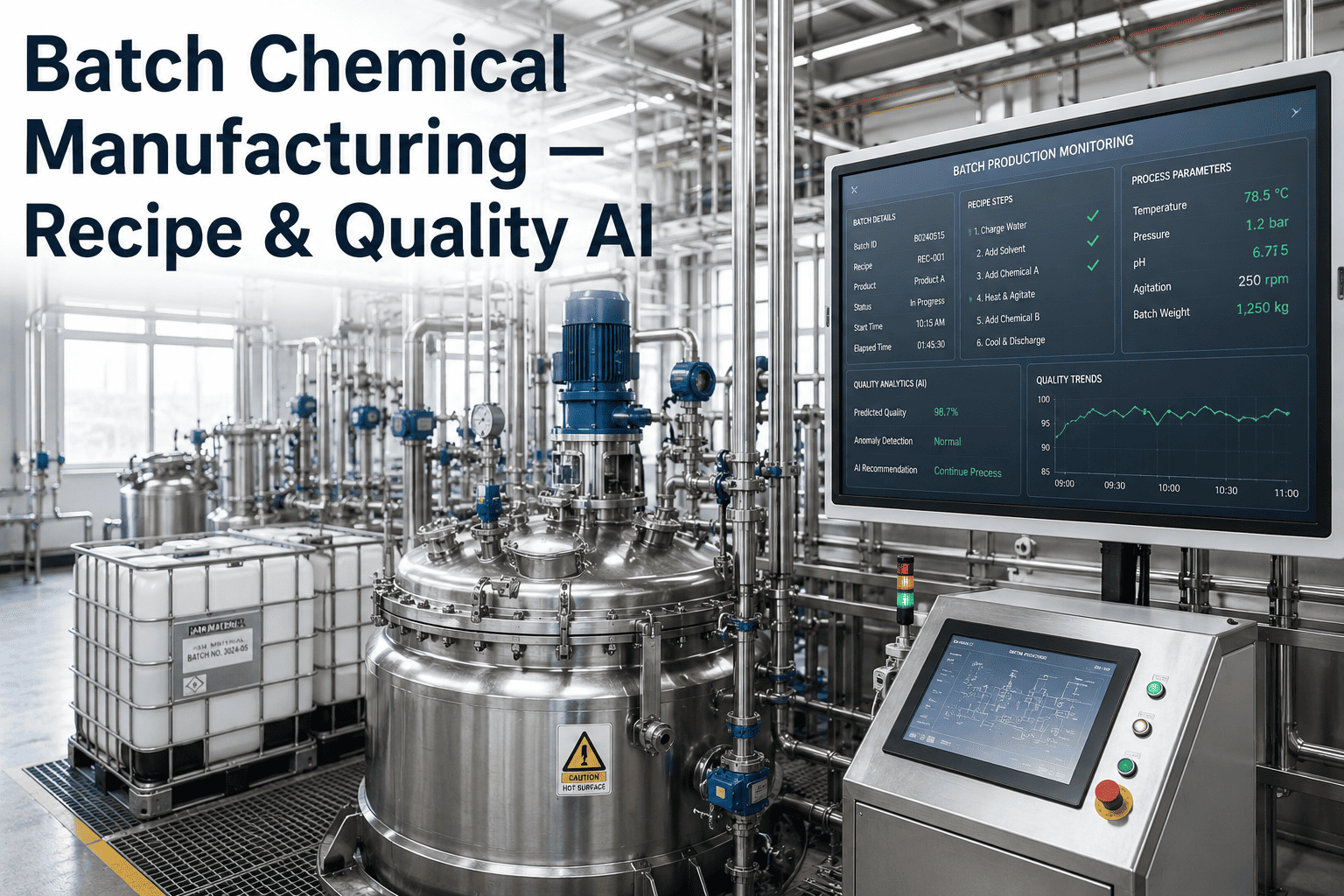
S88 recipes run as procedures, operations, and phases on validated units. State and mode management, interlocks, and parameter governance per phase. Each batch yields an eBR with full signatures.
Reactors · crystallizers · blenders
Continuous
Time-series execution against setpoint envelopes and run-based campaigns. Genealogy tracked by flow and timestamp rather than discrete charge, with the same parameter and deviation governance.
Distillation · reforming · compounding
Hybrid
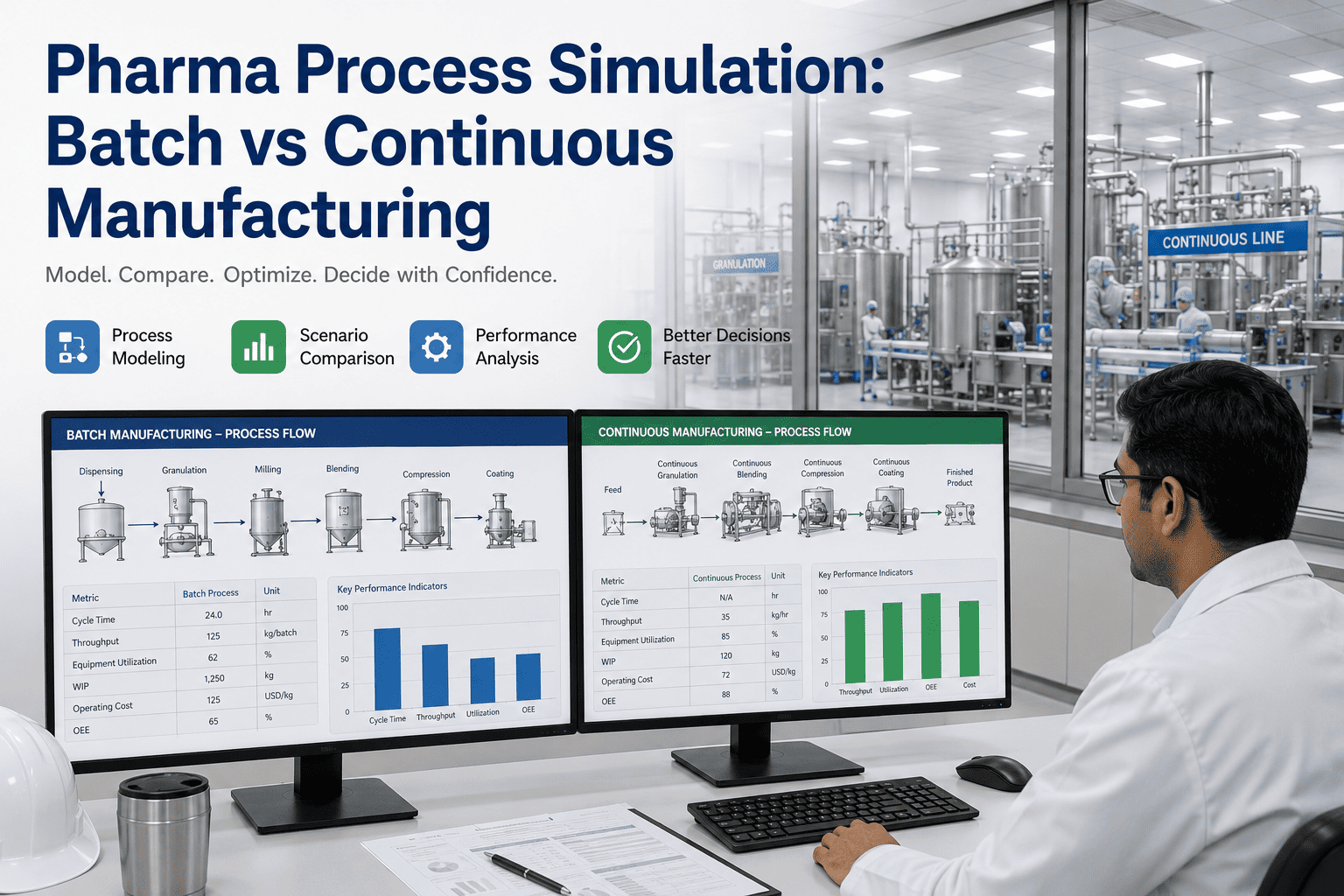
Continuous output charged into batch units, or batch product feeding a continuous line. One recipe model spans the handoff, so genealogy survives the change in material flow.
Continuous-to-batch · batch-to-pack
Mixed-mode plant? Get a turnkey AI quote and we'll map your batch, continuous, and hybrid units to one model in the pilot.
The S88 Hierarchy, As Built
S88 is structure, not slogans: the physical model and the procedural model bind to each other through governed recipes. iFactory MES Core implements the full hierarchy so phases attach to equipment, recipes version under change control, and execution produces regulated evidence — not a copy-paste of PLC logic.
Physical Model
Process Celllogical boundary of a production line
Unitreactor, blender — where steps execute
Equipment Modulepump trains, heat/cool circuits, skids
Control Modulevalves, drives, single devices
Procedural Model
Procedurethe full recipe workflow
Unit Procedureactivity on a single unit
Operationa major processing action
Phasethe smallest controlled step
Phases bind to equipment modules; recipes scale by basis and potency; formula and sequence changes stay inside governed recipe versions. No shadow spreadsheets, no hard-coded PLC edits — the structure is the evidence.
The Electronic Batch Record, By Mode
The eBR is where a mismatched MES falls apart. iFactory MES Core produces a complete record in every mode — charge-based for batch, run-based for continuous — with state transitions, signatures, and deviations captured at the phase level and rolled into genealogy that traces every lot back to its raw materials and forward to every product it touched.
Charge & run
eBR generation
batch charges and continuous runs in one record format
Phase-level
Signatures & deviations
e-signatures and exceptions captured where they happen
Bi-directional
Genealogy
trace backward to raw lots, forward to finished product
Review-by-exception
Release
deviations route to CAPA before a lot can be released
Validation Isn't an Afterthought
For a chemical plant under cGMP, the MES is a regulated system — S88 gives structure, but GMP is law. iFactory MES Core is built for the validation lifecycle: unique accounts and roles, immutable audit trails, governed retention, and IQ/OQ/PQ evidence that an auditor can follow end to end. The CSV burden is part of the product, not a project you run afterward.
GAMP 5 / CSV
Computer system validation lifecycle supported with documented IQ, OQ, and PQ evidence packages.
21 CFR Part 11 / Annex 11
Electronic records and signatures, immutable audit trails, and unique role-based accounts.
Recipe Change Control
Versioned recipes with formal change control; equipment held in qualified, calibrated status.
Deviation & CAPA
Exceptions route through deviation and CAPA workflows before release status is granted.
Bring your validation requirements. Start a 6-week pilot and we'll walk the IQ/OQ/PQ evidence on your own recipes.
Ask the Copilot
The MES answers plain language too — for the architect tracing a genealogy question or the QA lead checking a release gate.
Plant Copilot — MES Core
MES Architect
Lot CX-7741 is on a hybrid line — continuous feed into a batch reactor. Can we trace genealogy across the handoff?
Copilot
Yes — the handoff is in one model, so genealogy is continuous across it. CX-7741's reactor charge drew from continuous run R-2208 between 04:12 and 05:40; that run consumed feedstock lots FS-119 and FS-122, both released. Forward, CX-7741 split into three pack lots, PK-553/554/555. Two phases logged minor deviations, both closed via CAPA before release. The full eBR spans the run and the charge as a single record — I can surface it for review.
MES Architect
Is the recipe that ran the current validated version?
Copilot
It ran recipe RC-Alkylation v4.2, the current released version under change control, equipment all in qualified status at execution time. v4.3 is in draft but not approved, so no production used it. The audit trail shows who approved v4.2 and when, tied to each phase execution.
Turnkey: Hardware, Software, Live in 6-12 Weeks
iFactory ships a pre-configured NVIDIA AI server — racked, software pre-loaded. Rack it, plug in power and Ethernet, and the MES is live inside your firewall. The engagement covers cabling, network, PLC/DCS and historian integration, recipe modeling, operator training, validation support, and 24×7 remote monitoring. Your batch and continuous control systems are first-class inputs, not migration targets.
Phase 1 · Weeks 1-4
Ship & Model
Edge server on-prem; PLC/DCS, historian, and ERP connected. Physical and procedural models built for your cells.
Phase 2 · Weeks 5-8
Recipe & Pilot
Recipes authored under change control; eBR and genealogy run in shadow on a pilot cell while validation evidence builds.
Phase 3 · Weeks 9-12
Validate & Go Live
IQ/OQ/PQ executed, release workflows live, operator training, and 24×7 monitoring at 99.9% uptime.
1000+
clients running iFactory
6-12 wks
to live operation
On-prem
inside your firewall
What the MES Architect Gets
One model across batch, continuous, and hybrid means fewer integration seams, one validation package instead of several, and genealogy that holds across every material handoff in the plant.
One model
Across all modes
no separate products stitched at the seams
Unbroken
Genealogy
traces across continuous-to-batch handoffs
One pack
Validation evidence
IQ/OQ/PQ for the whole system, not per module
Air-gapped
On-prem deployment
records and recipes never leave your firewall
Frequently Asked Questions
Is it really one platform, or batch and continuous modules sold together?
One platform on a single ISA-95 / S88 object model. Batch and continuous are execution modes against the same recipe, eBR, and genealogy structures — which is what makes hybrid lines work without a custom integration. There are no two products meeting at a seam.
How does genealogy survive a continuous-to-batch handoff?
Continuous runs are tracked by flow and timestamp; when their output charges a batch unit, the charge references the run window and the lots that run consumed. The genealogy graph spans both, so a finished lot traces back through the batch charge into the continuous run and its feedstock, with no manual reconciliation.
Does it sit on top of our existing PLC/DCS and historian?
Yes. It operates at ISA-95 Level 3 above your control layer. Equipment phases continue to execute on your PLC/DCS; MES Core binds recipe phases to them and reads your historian. Existing control systems are inputs, not things to rip out and replace.
What does the validation effort actually look like?
The platform supports the GAMP 5 lifecycle with documented IQ/OQ/PQ, Part 11 / Annex 11 controls, immutable audit trails, and role-based accounts built in. Validation is executed against your recipes and equipment during the pilot and go-live phases, so the evidence package is part of deployment rather than a separate project afterward.
Where do our recipes and batch records live?
Entirely on-premise inside your firewall on the pre-configured NVIDIA server — read-only and inbound-only to connected systems. Recipes, eBRs, and genealogy never leave the plant, with 24×7 remote monitoring and 99.9% uptime. The deployment can be fully air-gapped where required.
ISA-95 / S88 Native. Batch, Continuous, Hybrid. On-Prem.
See One MES Run All Three Modes
Bring a batch recipe, a continuous campaign, and a hybrid handoff. We'll model them on one ISA-95 / S88 object model, show the eBR and genealogy spanning the handoff, and walk the GAMP 5 evidence — then scope the 6-to-12-week turnkey deployment, on-prem, inside your firewall.
1000+
clients · 99.9% uptime