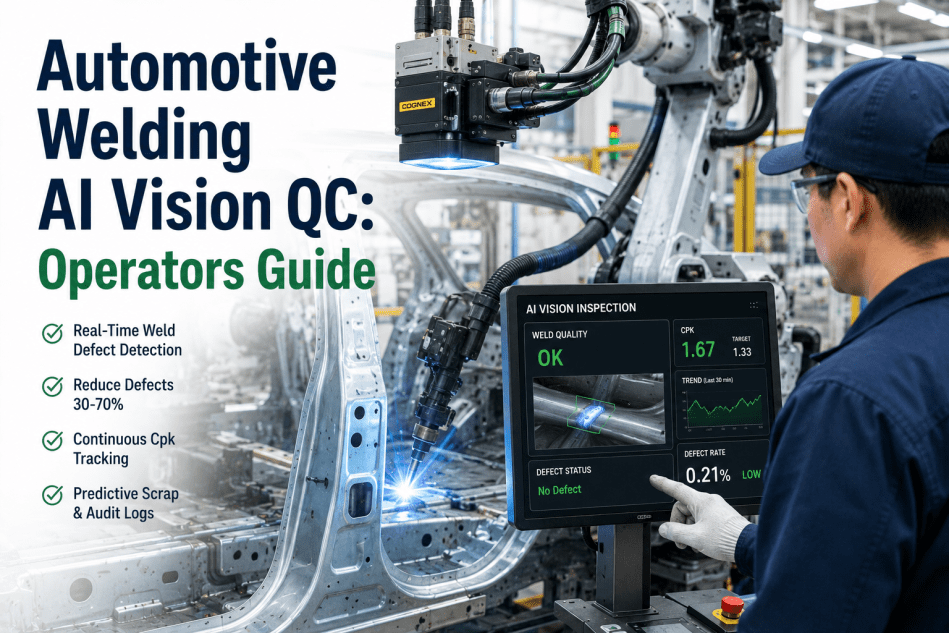
A single car body contains 3,000 to 5,000 resistance spot welds. At 1.5 seconds per welda robotic body shop produces over 4 million welds per day—and every single one is a structural promise to the person who will eventually sit inside that vehicle at 70 mph. Yet most body shops still rely on random destructive testing of 1-2% of welds after the body-in-white leaves the line, meaning 98% of welds are never individually verified. Research shows weld defects account for 50-80% of all structural failures in automotive manufacturing. When a defect escapes the body shop, it costs 10-50x more to fix downstream than catching it at the station. AI-powered weld quality monitoring changes this equation entirely—inspecting 100% of welds in real time, detecting defects at 97-99.8% accuracy, and generating traceable quality records for every joint on every vehicle.
Body Shop Weld Quality Challenge
5,000
97%+
Spot Welds Per Vehicle → AI Detection Accuracy
From 2% Sample to 100% Inspection
50-80%of structural failures trace back to weld defects
10-50xmore expensive to fix weld defects downstream vs. at station
150weld seams inspected in 40 seconds with AI vision systems
Manufacturers using to connect weld monitoring data with production execution create the complete digital thread that links every weld to its vehicle, station, robot, and process parameters—turning weld quality from a sample-based gamble into a data-driven certainty.
The 6 Weld Defects That Cost Body Shops Millions
Understanding what goes wrong is the first step to monitoring it right. These are the defect types that AI vision and in-process monitoring systems are trained to catch—each one a potential structural failure, recall trigger, or warranty claim.
01
Undersized Nuggets
Spot weld nugget diameter falls below the minimum 4√t specification. Caused by electrode wear, insufficient current, or poor sheet fit-up. Weakens crash performance.
28%Of All Spot Defects
HiddenNot Visible Externally
CriticalCrash Safety Impact
02
Expulsion & Splash
Molten metal expelled from the weld zone due to excessive current or contaminated surfaces. Creates voids inside the nugget, reduces strength, and causes surface blemishes.
22%Of All Spot Defects
20-30%Strength Reduction
VisibleSurface Evidence
03
Porosity
Gas pockets trapped inside weld nuggets or seam beads. Caused by contamination, coating off-gas, or shielding gas failures. Reduces fatigue life under cyclic loads.
Internal defectFatigue failure risk
04
Lack of Fusion
Incomplete bonding between weld and base metal. The joint appears intact but separates under load—particularly dangerous in multi-material EV body structures.
Catastrophic failure modeHard to detect visually
05
Cracks (Hot/Cold)
Solidification cracks or hydrogen-induced cracking in high-strength steel welds. Propagates under service loads, leading to sudden joint failure.
UHSS/AHSS pronePropagates under load
06
Seam Irregularities
Laser and MIG weld seams with inconsistent width, undercut, or misalignment. Cosmetic on visible seams, structural on load-bearing joints. AI vision catches sub-mm deviations.
Sensors capture current, voltage, resistance, force, displacement, and electrode tip condition for every spot weld in real time—creating a digital signature for each joint.
2
AI Classification
97-99.8% Accuracy
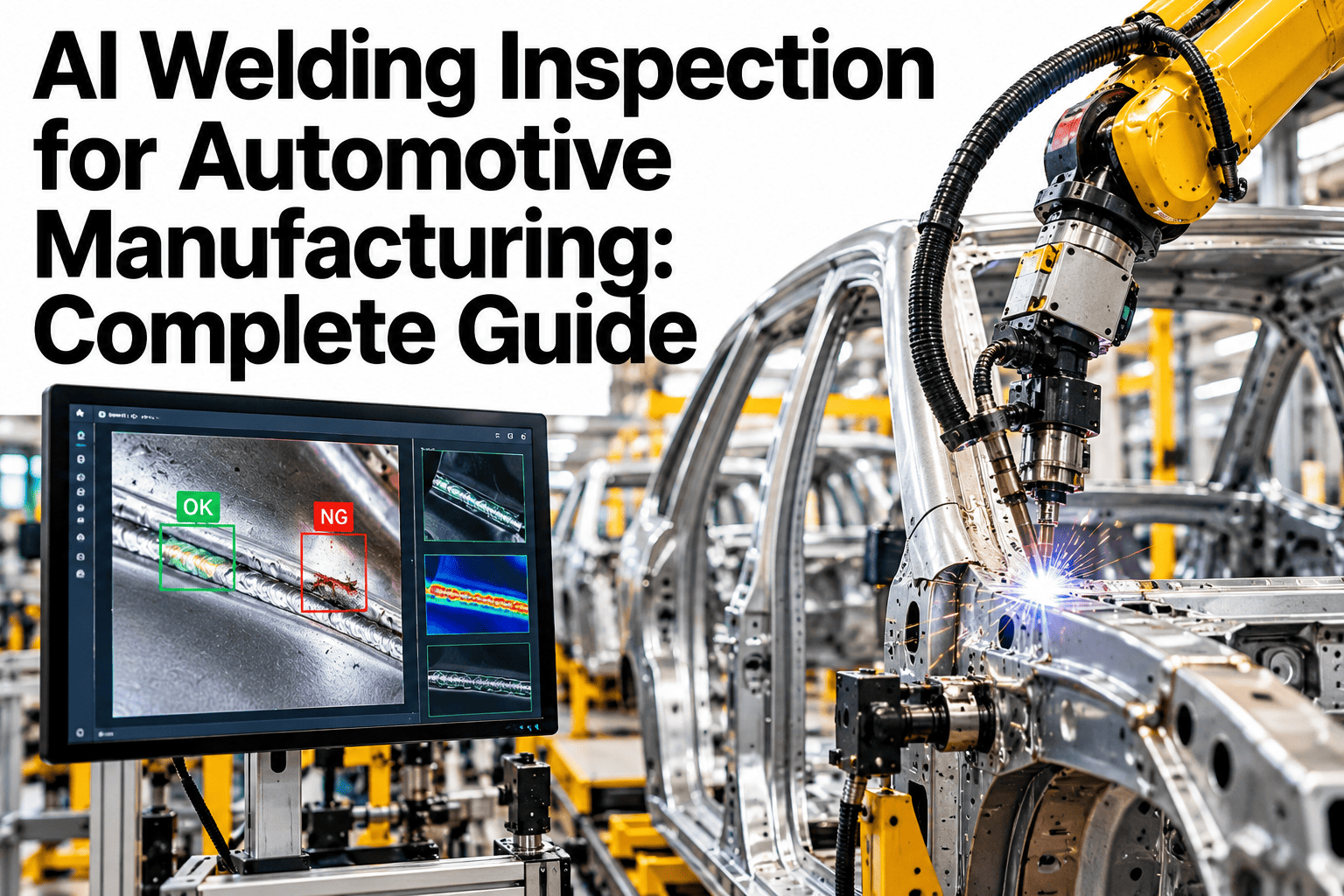
Machine learning models (XGBoost, CNN, anomaly detection) analyze weld signatures against trained quality models. Each weld gets a pass/fail/suspect classification instantly.
3
Vision Verification
150 Seams in 40 Seconds
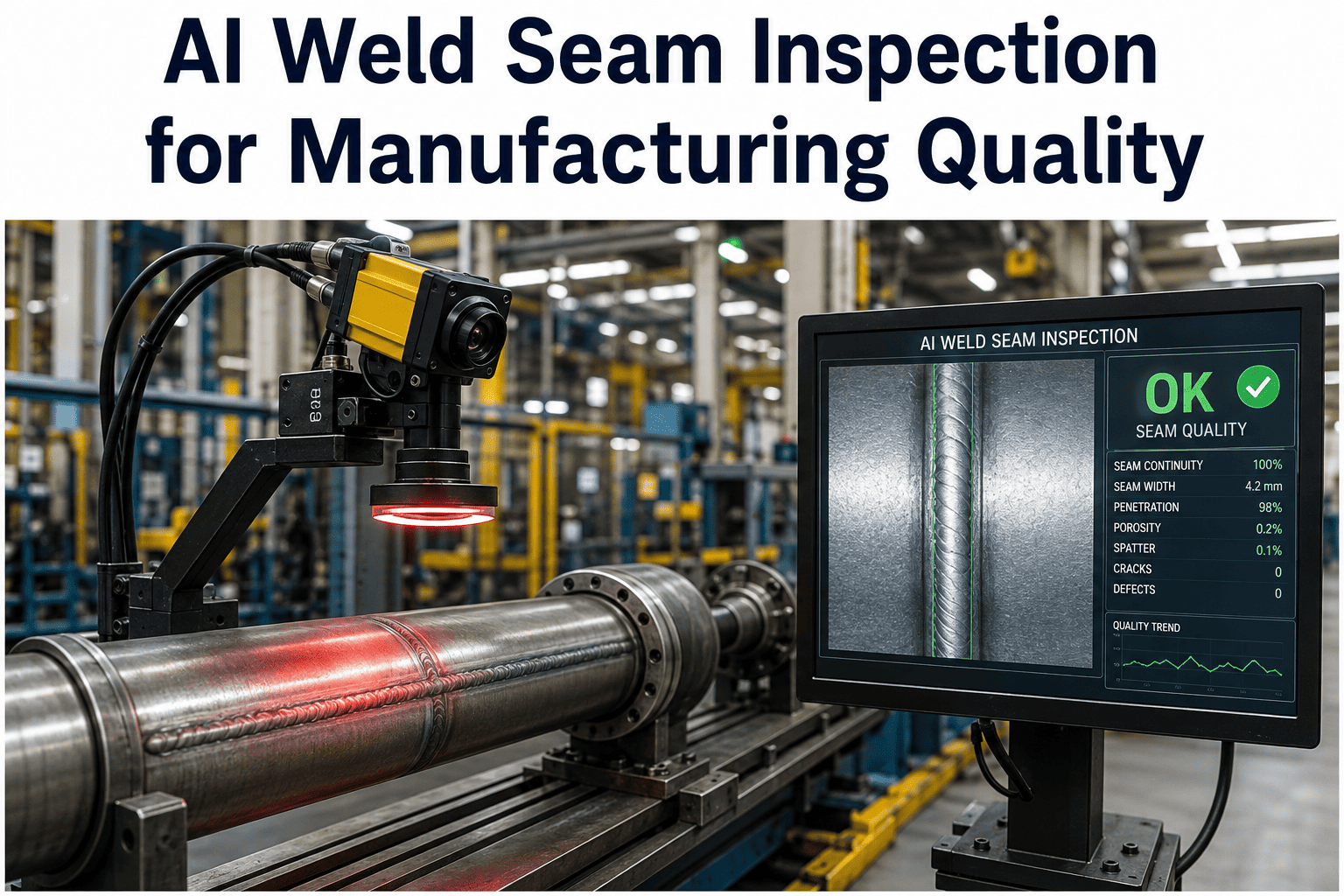
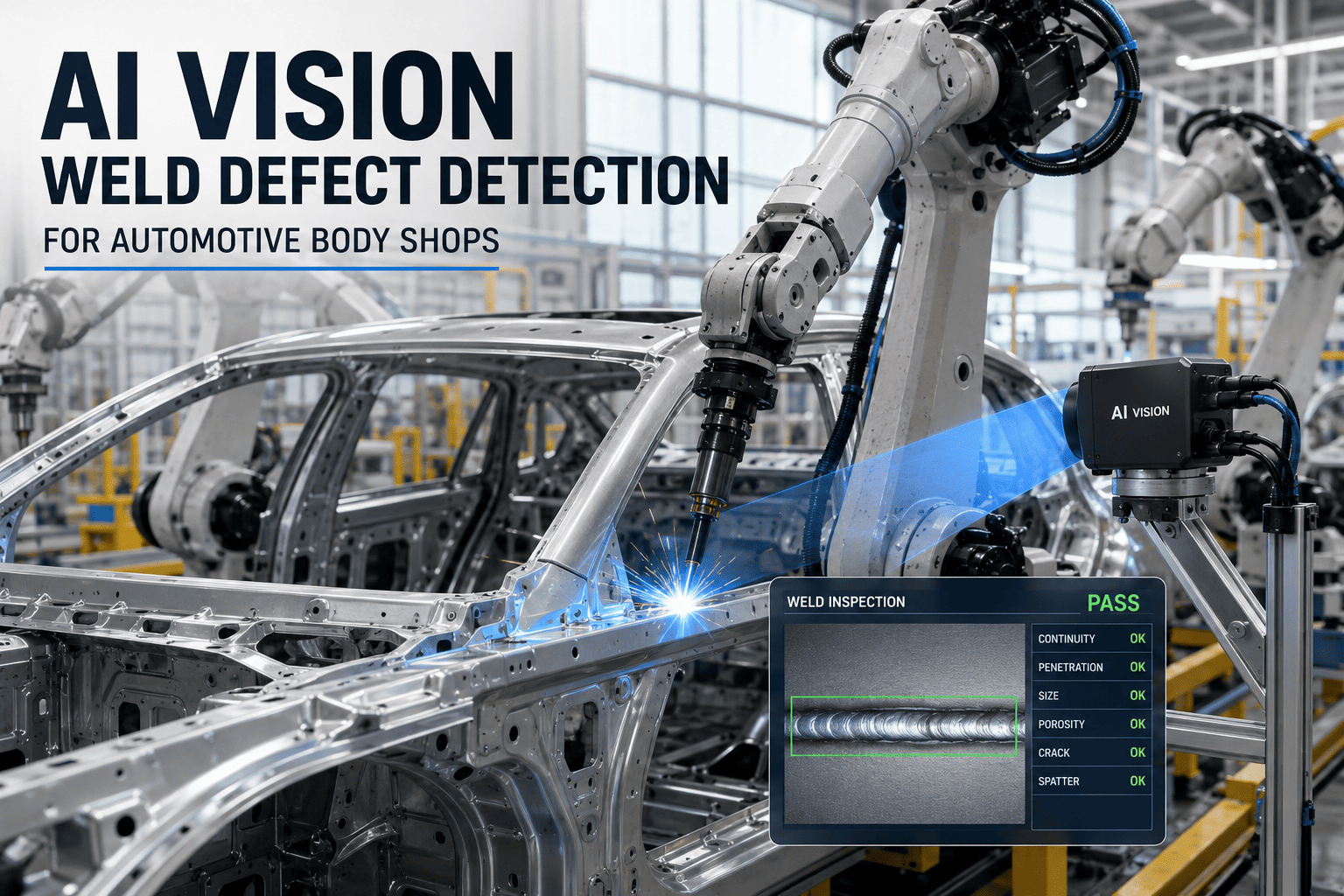
Post-weld camera systems with semantic segmentation inspect weld seam geometry, surface quality, and dimensional accuracy. 3D laser profilers measure throat thickness and leg length.
4
MES Traceability
VIN-Level Records
Every weld result links to body serial number, station, robot, electrode tip count, and process parameters—creating an audit-ready digital thread for recalls and compliance.
ROI: Sample Checking vs. 100% Monitoring
Defect Detection Rate
97-99.8%
Rework Cost Reduction
60-83%
Quality Escape Reduction
Up to 83%
Recall Scope Narrowing
90%+ Narrower
Electrode Life Optimization
20-40% Longer
See Weld Quality Monitoring in Action
iFactory connects in-process weld data, AI classification, and VIN-level traceability into one MES platform—giving your body shop 100% visibility into every weld on every vehicle.
The EV Factor: Why Multi-Material Bodies Demand More Monitoring
Traditional Steel BIW
Conventional Body-in-White
Primarily RSW with established parameters
Well-understood weld quality windows
Standard electrode life: 2,000-3,000 welds
Mature destructive test protocols
Challenge: Volume and consistency at speed
Multi-Material EV Body
EV & Mixed-Material Structure
Steel-to-aluminum requires 2-3x current
Laser welding for battery packs (tight tolerances)
Dissimilar metal joining = new failure modes
Thermal expansion mismatch creates new stress
Challenge: New defect types humans can't assess
Building EV or multi-material bodies? Schedule a consultation to discuss monitoring strategies for your specific joining processes.
Implementation Path: From Pilot to Full Body Shop
1
Baseline Audit
Week 1-2
Map all welding stations, weld types, critical joints, and current inspection methods. Identify top defect types and rework cost drivers from existing quality data.
2
Pilot Station
Week 3-6
Deploy in-process monitoring on 3-5 highest-impact stations. Train AI models on OK/NOK weld signatures. Validate against destructive test results.
3
MES Integration
Week 7-10
Connect weld quality data to MES for VIN-level traceability, SPC dashboards, and automated rework routing. Integrate with electrode management systems.
4
Full Body Shop
Month 3+
Scale to all stations. Activate predictive electrode wear alerts, process drift detection, and automated compliance documentation across the entire body shop.
Expert Perspective
"Current inspection methods, reliant on random checks after cars leave the Body-in-White, often lead to significant time losses. The transition from random checks to 100% inspection using data analysis and machine learning achieves prediction accuracy of 97.1% on unseen data—transforming RSW evaluation, improving quality control, reducing costs, and boosting efficiency."
— ScienceDirect: ML for Predicting RSW Quality in Automotive Manufacturing (2024)
Want to learn how leading OEMs are implementing weld monitoring? Connect with our team for industry insights.
Stop Gambling on 2% Sample Checks
iFactory gives your body shop 100% weld visibility—AI-powered defect detection, VIN-level traceability, real-time SPC, and automated rework routing that catches every bad weld before it leaves the station.
A typical automotive body-in-white (BIW) contains 3,000 to 5,000 resistance spot welds, with some larger SUV and truck bodies exceeding 5,000. Over 90% of assembly joining in a car body is completed by resistance spot welding, performed by industrial robots at approximately 1.5 seconds per weld. Each of these joints is a structural element that must meet minimum nugget diameter specifications (typically 4√t to 5√t, where t is sheet thickness in mm) to provide crash energy absorption and structural integrity. AI monitoring systems verify every single weld against these specifications in real time.
What accuracy can AI weld inspection systems achieve?
Current AI weld quality monitoring systems achieve 97-99.8% detection accuracy depending on the technology and defect type. In-process monitoring using dynamic resistance curves and force-displacement analysis reaches 97.1% prediction accuracy (XGBoost models). Post-weld AI vision systems using semantic segmentation inspect 150 weld seams in 40 seconds with accuracy between 97-100% for supported defect types. These systems surpass human inspectors who typically miss 15-30% of defects during manual checks, and they operate continuously without fatigue or subjective judgment variation.
How does weld monitoring reduce recall costs?
Without weld-level traceability, a defect discovered post-production requires recalling every vehicle from the suspect production period—potentially tens of thousands of units. With MES-integrated weld monitoring, every weld is linked to a specific body serial number, station, robot, electrode tip count, and process parameters. When an investigation identifies a defect pattern (e.g., a specific robot with electrode wear), the system isolates exactly which vehicles were affected, narrowing recall scope by 90%+ and saving millions per incident in warranty costs, logistics, and dealer labor.
What's different about monitoring welds in EV body shops?
EV body structures introduce multi-material joining challenges that traditional monitoring can't address. Aluminum-to-steel joints require 2-3x the welding current and produce different weld signatures than standard steel-to-steel RSW. Laser welding for battery pack assembly demands sub-mm precision with tolerances 35% tighter than conventional BIW joints. New joining methods like resistance rivet spot welding (RRSW) and adhesive-weld bonding create failure modes that didn't exist in traditional body shops. AI monitoring systems trained on these new joint types can detect defects that human inspectors and conventional NDT methods simply cannot assess.
How long does it take to implement AI weld monitoring?
A focused pilot on 3-5 critical welding stations can show validated results in 4-6 weeks. Full body shop deployment with MES integration, VIN-level traceability, and SPC dashboards typically takes 10-16 weeks depending on the number of stations and robot controllers. Cloud-based MES platforms like iFactory accelerate this because the traceability framework, analytics engine, and compliance archive are pre-built—implementation focuses on station-level sensor integration and AI model training rather than building infrastructure from scratch.