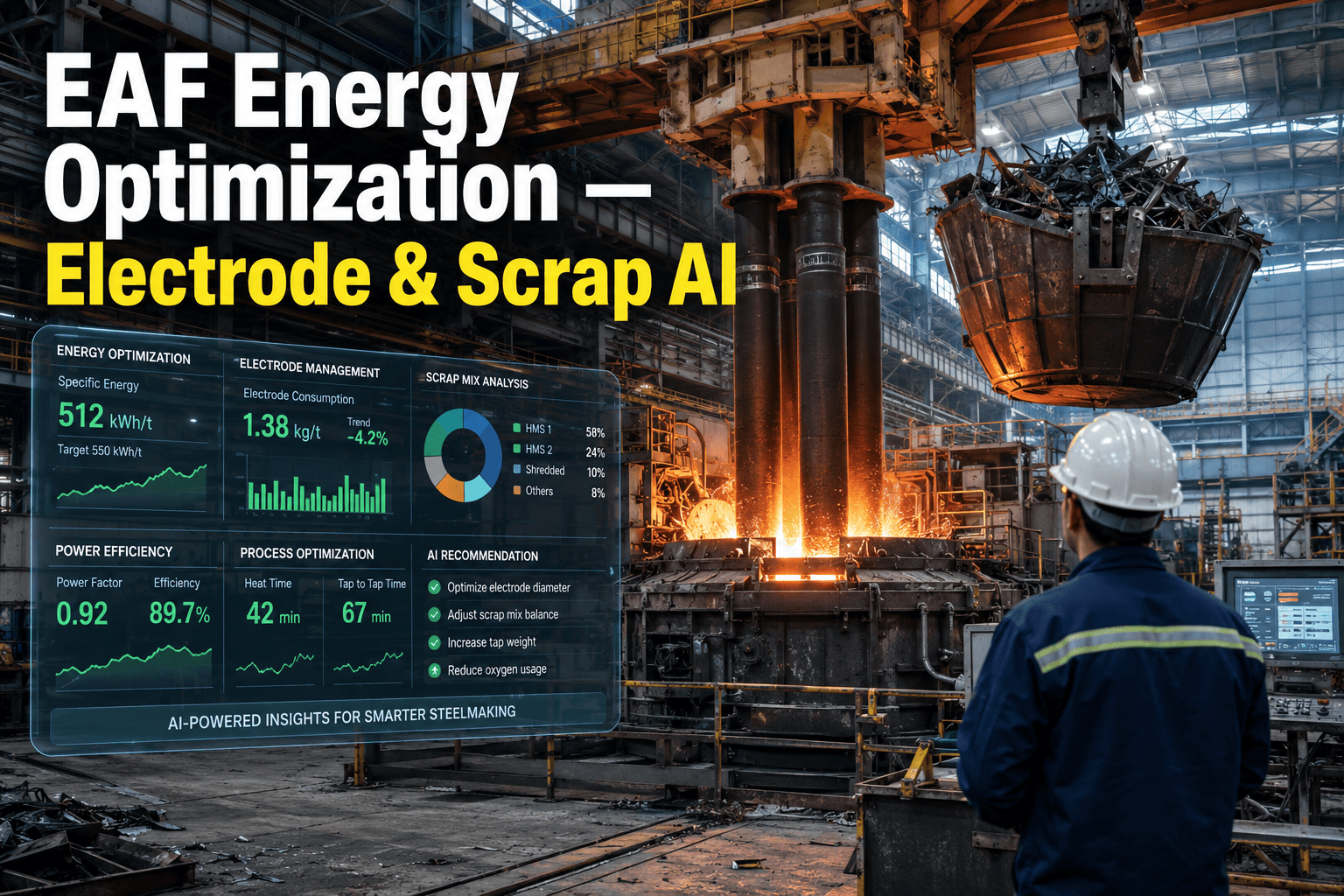
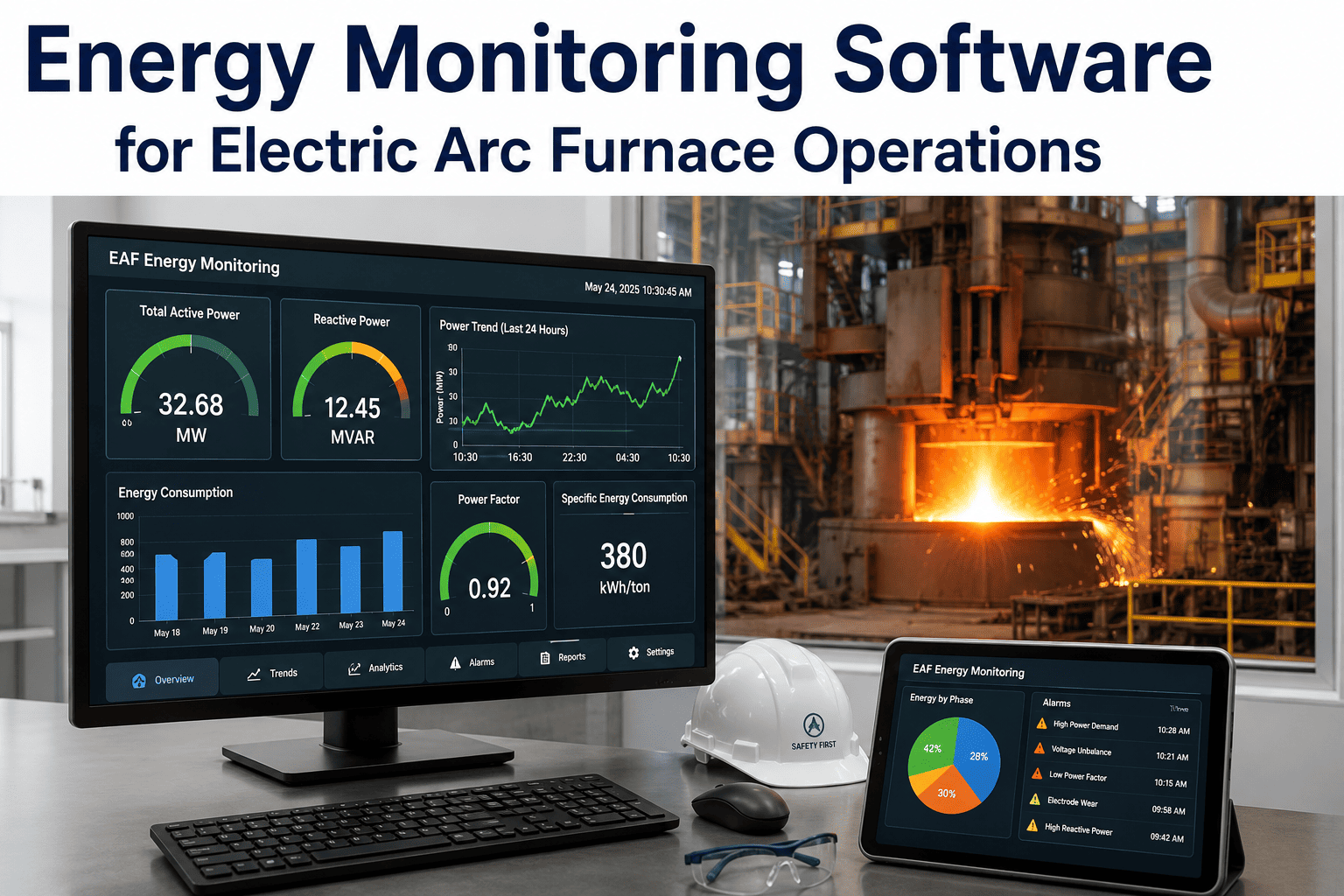
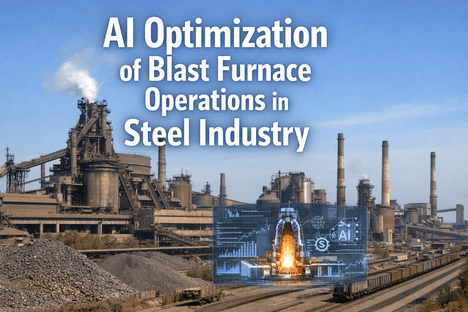
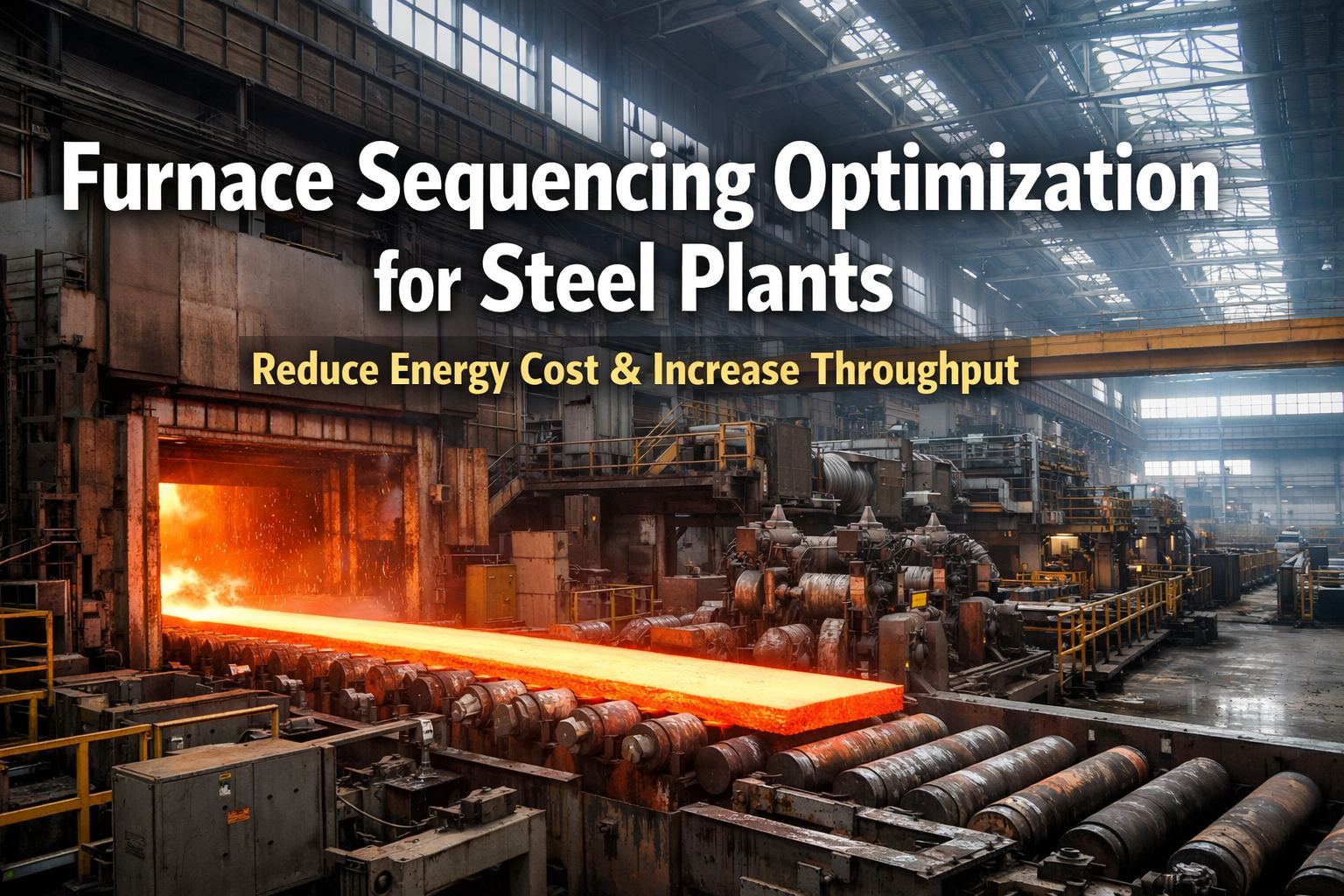
Electric arc furnaces (EAFs) are the backbone of modern steelmaking, yet they remain one of the most energy-intensive processes in heavy industry. On average, EAFs consume between 350 and 700 kWh per ton of liquid steel, with electricity representing up to 30% of total production costs. The challenge is not just the raw energy cost — it is the inefficiency buried in scrap charging decisions, electrode consumption patterns, oxygen injection rates, and power profile management. Traditional rule-based controls cannot adapt to the real-time variability of scrap quality, electrode wear, and slag conditions. This is where artificial intelligence (AI) steps in. By analyzing thousands of data points per heat — from transformer tap settings to off-gas composition — AI models can predict optimal operating parameters, reducing electricity consumption by 10–18% and electrode consumption by 12–15%. For a 1-million-ton-per-year melt shop, that translates to millions in annual savings. Book a demo to see how iFactory transforms your EAF data into energy savings.
Steel Plant AI
Cut EAF Energy Costs 18% with AI
Real-time optimization of scrap mix, electrode control, oxygen lancing and power profiles for electric arc furnaces.
Key Energy Savings with AI in EAF
AI-driven optimization targets the four main energy consumers in the EAF: electricity, electrodes, oxygen, and chemical energy from carbon/lime. The table below shows average reductions observed across multiple installations.
10-18%
Electricity cost reduction per ton
12-15%
Electrode consumption decrease
8-12%
Oxygen usage optimization
5-8%
Tap-to-tap time reduction
EAF Energy Consumption Breakdown
Understanding where energy goes is the first step. The composition bar below shows the typical share of energy sources in EAF steelmaking and the potential for AI to shift the balance toward lower-cost energy.
Electrical energy (60%) — primary target for AI power profile optimization
Chemical energy from oxy-fuel burners (25%) — optimized via oxygen lance and carbon injection AI
Electrode arc energy (15%) — reduced through electrode control AI and scrap mix optimization
AI Optimization Methods for EAF
Each method targets a specific energy loss mechanism. The grid below outlines the four core AI-driven techniques proven in industrial trials.
Scrap Charge Optimization
AI predicts the optimal mix of scrap types (shredded, heavy, briquettes) to minimize melting time and energy consumption. Models analyze scrap chemistry, bulk density, and melting point in real time.
10-15% energy reduction
Electrode Control AI
Machine learning models adjust electrode position and current based on arc stability, slag foaming level, and off-gas temperature. This reduces electrode breakage and consumption by 12-15%.
12-15% electrode savings
Oxygen Lance Optimization
AI controls oxygen flow rate and lance position to maximize decarburization efficiency while minimizing post-combustion losses. Real-time slag analysis feedback improves results.
8-12% oxygen reduction
Power Profile Management
AI selects the optimal transformer tap and reactance setting for each phase of the heat, reducing flicker and harmonics while maintaining high power factor. Tap-to-tap time drops 5-8%.
5-8% time reduction
Foaming Slag Practice
AI models recommend carbon and lime injection rates to maintain an optimal foaming slag height, shielding the arc and reducing radiant heat losses. Slag foaming index improves by 20%.
20% slag index improvement
Ladle Furnace Coordination
AI synchronizes EAF tap temperature with ladle furnace heating requirements, minimizing reheat energy. This reduces secondary metallurgy energy consumption by up to 10%.
10% secondary energy cut
AI Workflow for EAF Energy Optimization
Implementing AI in an EAF melt shop follows a structured workflow. The steps below show how data flows from sensors to actionable recommendations.
1
Data Collection
Real-time data from transformer, electrode regulators, oxygen lance, scrap scale, and off-gas analyzers is streamed to the AI platform at 100ms intervals.
2
Model Training
Historical heat data (over 10,000 heats) is used to train deep learning models that predict energy consumption for different scrap mixes and operating conditions.
3
Recommendation Engine
During operation, the AI engine recommends scrap charge adjustments, electrode setpoints, oxygen flow rates, and transformer tap positions in real time.
4
Closed-Loop Control
With operator approval, recommendations are sent directly to the PLC/DCS for automatic execution, creating a closed-loop optimization cycle.
Ready to Optimize Your EAF?
Deploy AI in your melt shop within weeks, not months.
Common Mistakes in EAF Energy Management
Avoid these pitfalls that drain energy and increase costs. Each mistake is based on real-world observations from hundreds of melt shops.
Ignoring Scrap Variability
Using a fixed scrap recipe regardless of incoming scrap quality leads to longer melting times, higher electrode consumption, and unstable arcs. AI adapts the mix dynamically.
Over-Oxygenating the Bath
Excessive oxygen injection wastes chemical energy and increases iron oxide formation in slag. AI optimizes lance position and flow to match decarburization needs precisely.
Poor Electrode Control
Manual electrode regulation causes arc instability, leading to energy spikes and electrode breakage. AI-based electrode control reduces consumption by 12-15%.
Neglecting Slag Foaming
A flat slag layer exposes the arc, increasing radiant heat loss to the furnace shell. AI-driven carbon/lime injection maintains optimal foaming, cutting energy use by 5%.
Frequently Asked Questions
How quickly can AI reduce EAF energy consumption?
Most melt shops see measurable energy savings within the first 30 days of deployment. The AI models require a learning period of approximately 500 to 1,000 heats to calibrate to the specific scrap mix, furnace geometry, and operating practices of your plant. After this initial phase, the system continuously improves its recommendations through reinforcement learning. In one case study, a 1.5-million-ton-per-year EAF plant achieved a 14% reduction in electricity consumption within the first quarter. The key is to start with a solid data infrastructure — including real-time sensors for power, electrode position, oxygen flow, and off-gas composition — which iFactory can help integrate with your existing DCS.
Book a demo to discuss your plant's specific timeline.
What is the ROI of AI-based EAF optimization?
The return on investment is typically realized within 6 to 12 months. For a typical 1-million-ton-per-year EAF, a 12% reduction in electricity consumption (from 550 kWh/t to 484 kWh/t) at an average electricity cost of $0.08/kWh results in annual savings of approximately $5.28 million. Additional savings from reduced electrode consumption (12-15%) and oxygen usage (8-12%) add another $1-2 million. The total software and integration cost for an AI platform like iFactory is usually between $200,000 and $500,000, depending on the scope of sensors and automation.
Contact support for a detailed ROI calculation tailored to your plant's data.
Does AI work with all types of EAF transformers?
Yes, iFactory's AI platform is transformer-agnostic and can interface with any make or model — including ABB, Siemens, Tamini, and local manufacturers. The system reads tap position, current, voltage, and power factor through standard communication protocols like OPC-UA, Modbus, or MQTT. For older transformers without digital outputs, we can install retrofit sensors that capture the necessary electrical parameters. The AI models do not require any modifications to the transformer hardware; they simply use the data to optimize the operating point within the transformer's safe operating area.
Schedule a demo to see how we connect to your existing equipment.
How does AI handle scrap quality fluctuations?
The AI system uses a combination of near-infrared (NIR) scrap sorting data, weighbridge records, and historical melting profiles to predict the energy required for each scrap batch. Before charging, the AI recommends adjustments to the scrap mix — for example, increasing the proportion of heavy melting scrap if the shredded scrap has low bulk density. During melting, the AI continuously updates its predictions based on real-time power consumption and off-gas temperature, adapting the power profile and oxygen injection accordingly. This dynamic approach compensates for scrap variability that static recipes cannot handle.
Talk to our experts to learn more about scrap characterization.
Can AI reduce environmental emissions from EAF?
Absolutely. By reducing electricity consumption, AI directly lowers the carbon footprint of steelmaking, especially in regions where the grid relies on fossil fuels. Additionally, optimized oxygen and carbon injection reduces CO and CO2 emissions from incomplete combustion. Electrode consumption reduction also means fewer graphite particles in the baghouse dust, simplifying waste management. In one installation, the AI system reduced total CO2 emissions by 12% per ton of steel produced.
Book a demo to see how iFactory can help you meet your sustainability targets.
Transform Your Melt Shop Today
Start saving millions on energy and electrodes with AI.