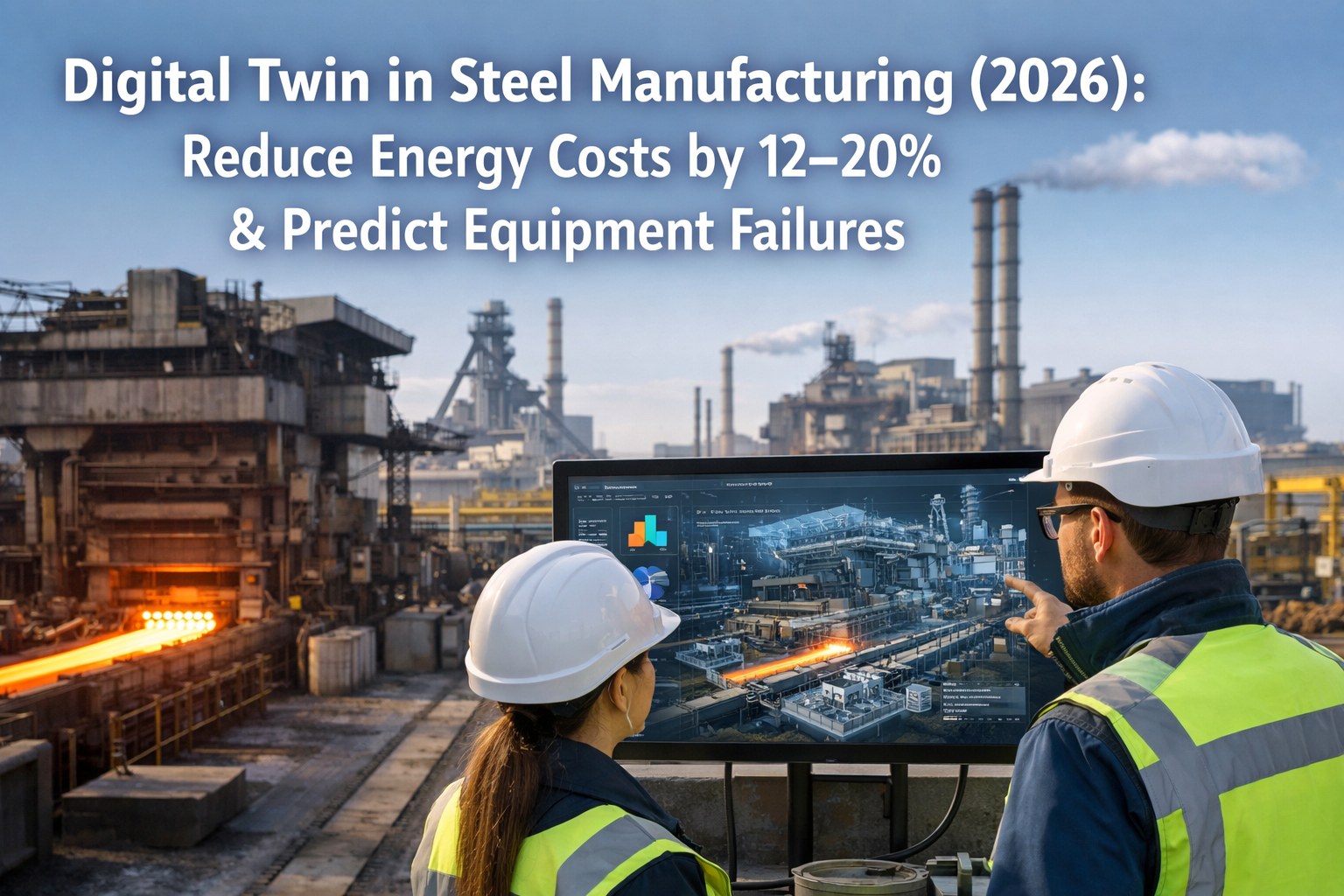
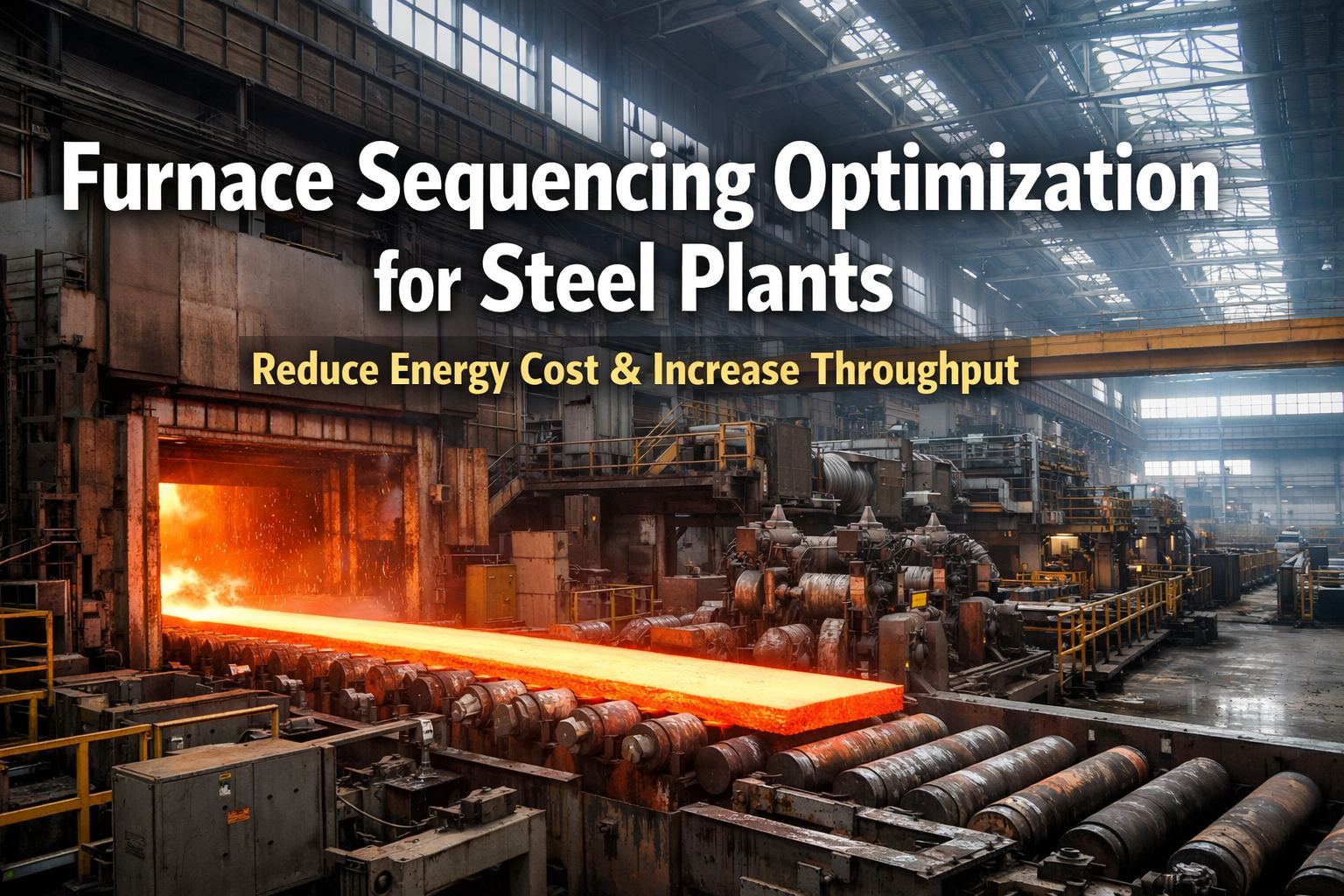
Steel plants lose millions annually to yield fluctuations, energy waste, and unplanned downtime — problems that traditional PID controllers and manual tuning cannot solve at scale. AI-powered process control uses model predictive control, reinforcement learning, and real-time sensor analytics to stabilize every variable from blast furnace temperature to rolling mill thickness — continuously, autonomously, and with measurable ROI. Book a Free AI Process Control Assessment to discover what AI optimization can unlock for your steel operations.
AI Process Control Optimization for Steel Manufacturing
Increase Yield, Stabilize Quality, Cut Energy Costs, and Maximize Throughput with Intelligent Process Control Across Every Stage of Steelmaking
Why Traditional Process Control Falls Short
Steel plants generate thousands of process variables every second — but legacy systems only react to what already went wrong.
How AI Process Control Works in Steel Plants
From raw sensor data to autonomous optimization — the complete AI control loop.
Data Ingestion
Thousands of sensors across blast furnaces, BOF converters, casters, and rolling mills stream temperature, pressure, chemistry, vibration, and visual data into the AI platform at sub-second intervals via OPC-UA and MQTT.
Feature Engineering
Raw signals are cleaned, normalized, and transformed into process features — lagged correlations, rolling statistics, spectral components — that capture the true physics of steelmaking beyond what individual readings reveal.
Model Predictive Control
MPC models predict process behavior 5–30 minutes ahead, computing optimal setpoints for temperature, flow rates, alloy additions, and rolling speeds that satisfy quality, yield, and energy constraints simultaneously.
Closed-Loop Execution
Approved setpoints flow back to DCS/PLC systems via secure industrial protocols. Every adjustment is logged, auditable, and reversible — operators retain full override authority at all times.
Continuous Learning
Reinforcement learning agents analyze outcomes of every control action, continuously refining models as raw material quality, equipment wear, and seasonal conditions change — the system gets smarter with every heat.
AI Optimization Across the Steelmaking Process
Every stage of steel production has specific AI optimization opportunities with measurable impact.
Blast Furnace / EAF
AI models optimize burden distribution, hot blast parameters, and injection rates to minimize fuel consumption while maintaining stable thermal profiles. Tata Steel reported 20% reduction in unplanned downtime using AI-driven predictive control on their furnace operations.
BOF / Secondary Metallurgy
Real-time chemistry prediction models calculate optimal alloy additions, blowing parameters, and ladle treatments. AI anticipates endpoint carbon and temperature with high precision — reducing re-blows, trimming alloy costs, and hitting first-aim chemistry targets consistently.
Continuous Casting
AI controls mold level, casting speed, spray cooling, and tundish operations to prevent breakouts, surface cracks, and internal segregation. Computer vision systems inspect strand surfaces in real time, feeding defect data back into process models for immediate correction.
Hot and Cold Rolling
Model predictive control optimizes roll gap, speed, and cooling to achieve target thickness, flatness, and mechanical properties within tight tolerances. ArcelorMittal's AI systems autonomously adjust temperature and rolling parameters, reducing energy consumption by 5% while improving output.
Still Tuning Furnaces Manually? There is a Better Way.
iFactory connects AI process control models with your existing DCS, SCADA, and CMMS — turning thousands of sensor readings into optimized setpoints and automated work orders without ripping out your current infrastructure.
What Leading Steel Companies Have Achieved with AI
Comprehensive AI implementation across manufacturing processes for real-time decision-making, predictive maintenance, and operational efficiency at scale.
AI autonomously adjusts temperature and chemical mix parameters in smelting operations with real-time analysis of blast furnace data, improving production output.
AI-driven computer vision for quality control with high-resolution cameras inspecting steel surfaces for micro-cracks and anomalies across final products.
The AI Technology Stack Behind Smart Steel
Multiple AI techniques work together to optimize different aspects of the steelmaking process.
Model Predictive Control (MPC)
Multivariable optimization that predicts process behavior and computes optimal control moves across dozens of interacting variables simultaneously — the backbone of advanced process control in continuous steelmaking operations.
Reinforcement Learning
AI agents learn optimal control policies through trial-and-error interaction with process simulators and live operations. Particularly effective for blast furnace optimization where traditional models struggle to capture complex non-linear dynamics.
Computer Vision + Deep Learning
Convolutional neural networks analyze high-speed camera feeds to detect surface defects, measure dimensions, and verify markings in real time — achieving inspection accuracy that exceeds human capability by orders of magnitude.
Digital Twin Simulation
Physics-informed AI models create virtual replicas of blast furnaces, casters, and rolling mills. Test optimization strategies in simulation before deploying to production — eliminating risk while accelerating improvement cycles.
Predictive Maintenance ML
Machine learning models analyze vibration, thermal, and acoustic sensor data to predict equipment failures 2–4 weeks before they occur — reducing unplanned downtime by up to 30% and saving millions in emergency repair costs.
Energy Management AI
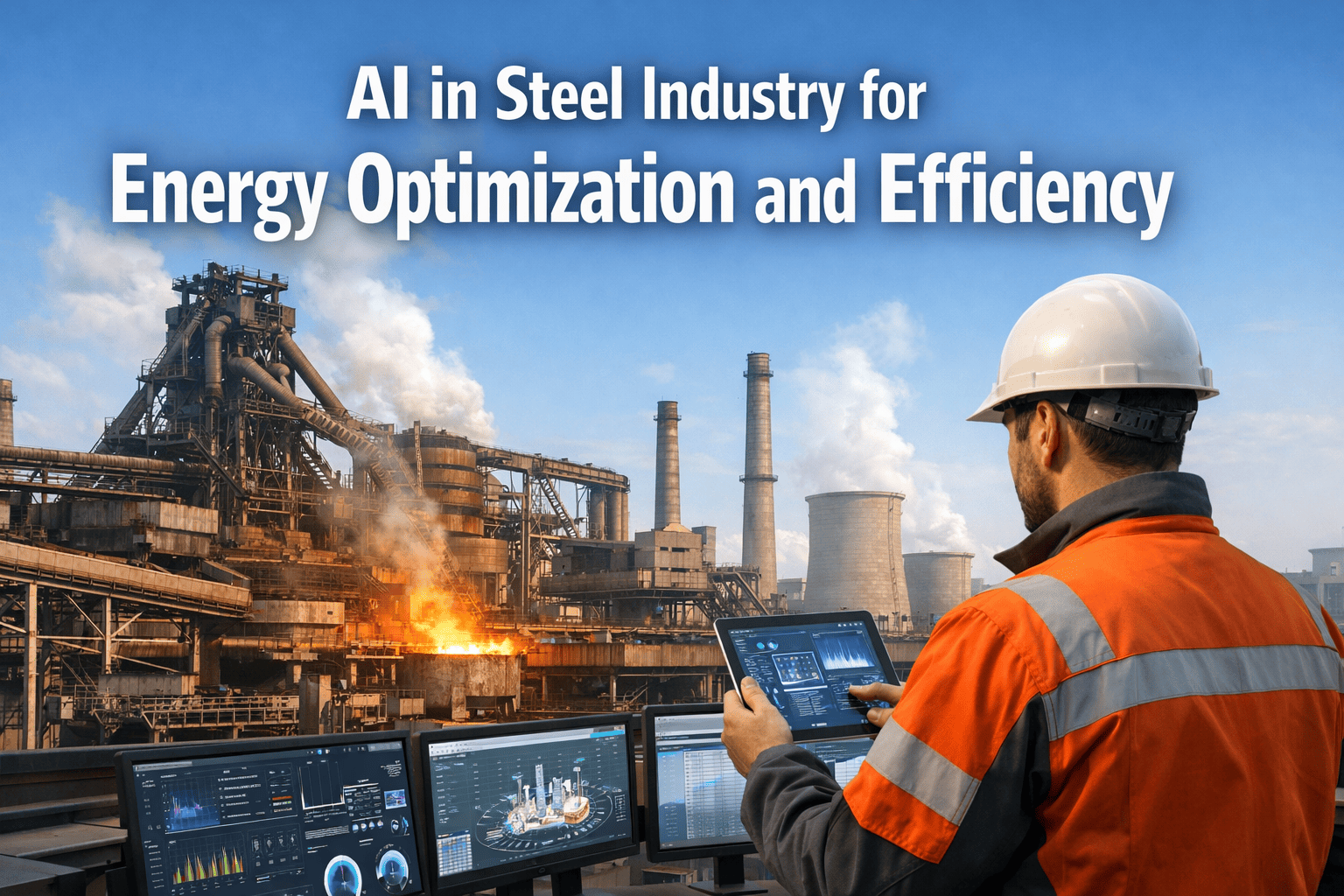
Neural networks optimize furnace firing cycles, compressed air systems, and electrical load scheduling to reduce total energy consumption. AI-driven energy management delivers 5–7% savings that translate directly to the bottom line.
How iFactory Connects AI to Your Existing Systems
No rip-and-replace. AI optimization layers on top of your current infrastructure.
DCS / SCADA Integration
iFactory connects to your existing DCS and SCADA systems via OPC-UA, Modbus, and native industrial protocols. AI-optimized setpoints are delivered as advisory recommendations or closed-loop control outputs — configurable per zone.
CMMS Work Order Automation
When AI detects an equipment anomaly or process deviation, iFactory CMMS automatically generates prioritized maintenance work orders with location, severity, sensor evidence, and recommended actions — zero manual data entry.
MES and Quality Systems
Process optimization data, quality predictions, and production metrics flow directly into your Manufacturing Execution System. Real-time quality grades, yield calculations, and SPC charts update automatically from AI analysis.
SAP / ERP Financial Integration
AI-driven process improvements reflect directly in SAP Plant Maintenance and cost accounting. Energy savings, yield improvements, and maintenance cost reductions are tracked automatically — giving leadership real-time visibility into AI ROI.
Measurable Business Impact of AI Process Control
Conservative estimates based on published results from global steel manufacturers.
AI optimizes furnace firing, rolling schedules, and utility load balancing continuously. For a mid-size steel plant spending $50M annually on energy, this represents $2.5–3.5M in direct annual savings.
Tighter process control reduces off-spec production, cobble rates, and material waste. A 1% yield improvement on a 2M-ton annual operation recovers millions in otherwise lost steel value.
Predictive maintenance catches bearing failures, refractory wear, and cooling system degradation weeks in advance. Scheduling repairs during planned outages avoids production losses of $50K–$500K per hour.
AI-powered quality prediction catches deviations at the source — not at final inspection. European steel plants using AI quality systems report up to 40% fewer customer quality complaints within one year of deployment.
Your AI Process Control Roadmap
A proven phased approach that delivers quick wins while building toward full autonomous optimization.
Phase 1: Assessment and Foundation
Audit your current process control maturity, data infrastructure, and integration points. Identify highest-ROI optimization zones — typically energy management or quality prediction — and deploy initial sensor data pipelines into iFactory's AI platform.
Phase 2: Advisory Mode Deployment
Deploy AI models in advisory mode — operators receive real-time optimization recommendations on their existing HMI screens. Models prove their accuracy against actual outcomes while building operator trust and refining predictions with live production data.
Phase 3: Closed-Loop Optimization
Transition proven models to closed-loop control where AI setpoints flow directly to DCS/PLC systems. Expand optimization scope to additional process areas. Full CMMS integration generates automatic work orders from AI-detected anomalies.
Phase 4: Plant-Wide Intelligence
Scale AI optimization across all production stages. Reinforcement learning agents continuously improve. Digital twin simulation enables risk-free testing of new strategies. Enterprise dashboards provide real-time AI ROI tracking across the entire operation.
Frequently Asked Questions
Does AI process control require replacing our existing DCS and SCADA?
No. iFactory's AI platform layers on top of your existing infrastructure via standard industrial protocols (OPC-UA, Modbus, MQTT). Your current DCS, PLCs, and SCADA systems remain the execution layer — AI provides the intelligence layer.
How long before we see measurable ROI?
Most steel plants see initial energy and quality improvements within 3–6 months of deployment. Advisory mode typically delivers measurable value within weeks as operators act on AI recommendations. Full closed-loop ROI compounds over 6–12 months.
Can operators override AI recommendations?
Always. Human override authority is built into every level of the system. AI operates in advisory or closed-loop mode with configurable guard rails — operators can accept, modify, or reject any recommendation at any time.
What data infrastructure is required?
If your plant has a modern DCS or SCADA system with historian data, you have enough to start. iFactory handles data ingestion, cleaning, feature engineering, and model training. No dedicated data science team required on your side.
Is this proven at scale in steel production?
Yes. Global leaders including Tata Steel (260+ AI algorithms), ArcelorMittal (real-time blast furnace AI), POSCO (deep learning production lines), and Nippon Steel (precision AI manufacturing) have all deployed AI process control at industrial scale with published results.
How does iFactory CMMS connect to AI process control?
iFactory CMMS ingests AI anomaly detections and automatically generates maintenance work orders, spare part requisitions, and compliance reports. It bridges the gap between AI-detected issues and actionable maintenance operations — no manual handoff needed.
Ready to Optimize Your Steel Plant with AI?
See how iFactory connects AI process control, predictive maintenance, and enterprise systems into one intelligent platform purpose-built for steel manufacturing operations.