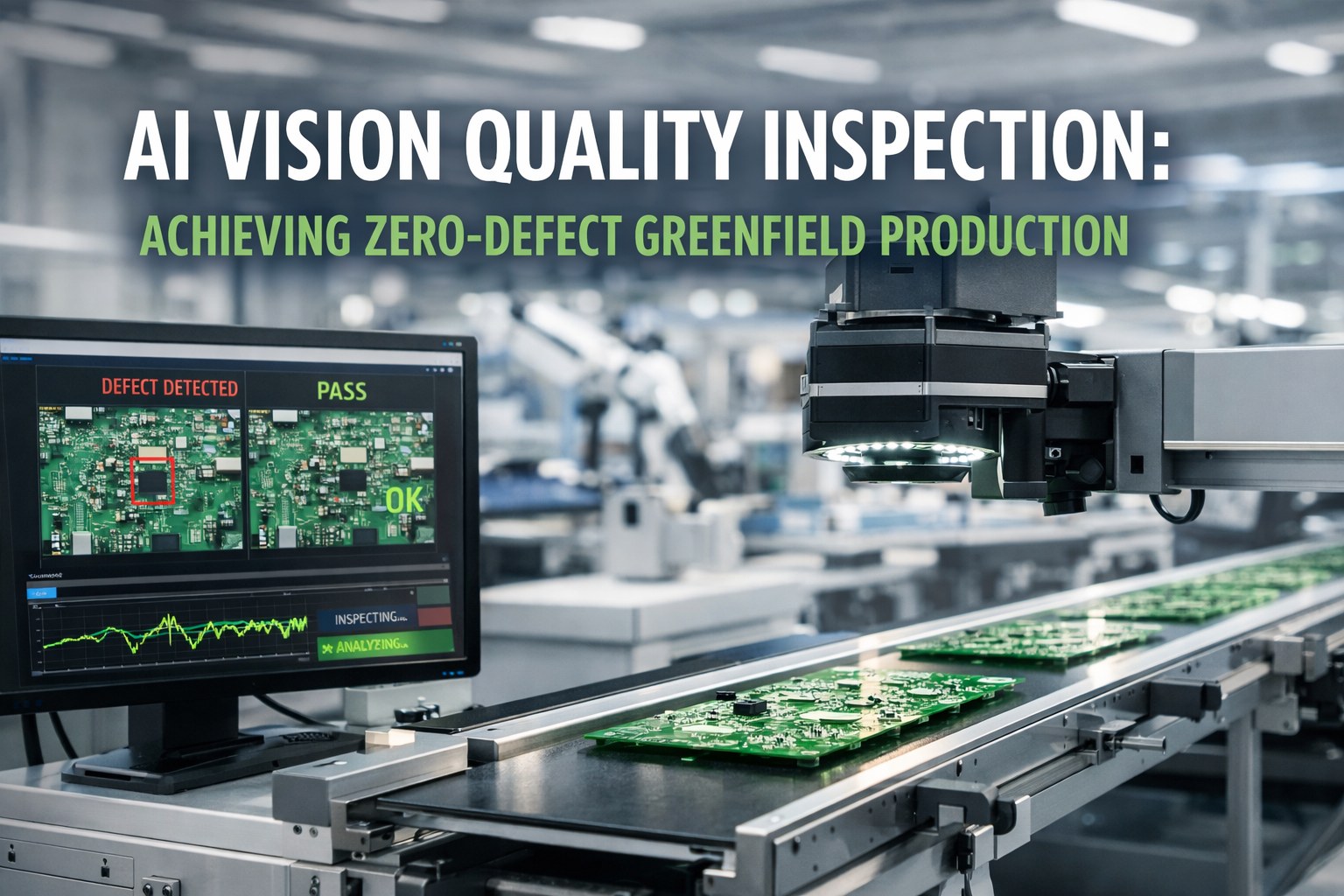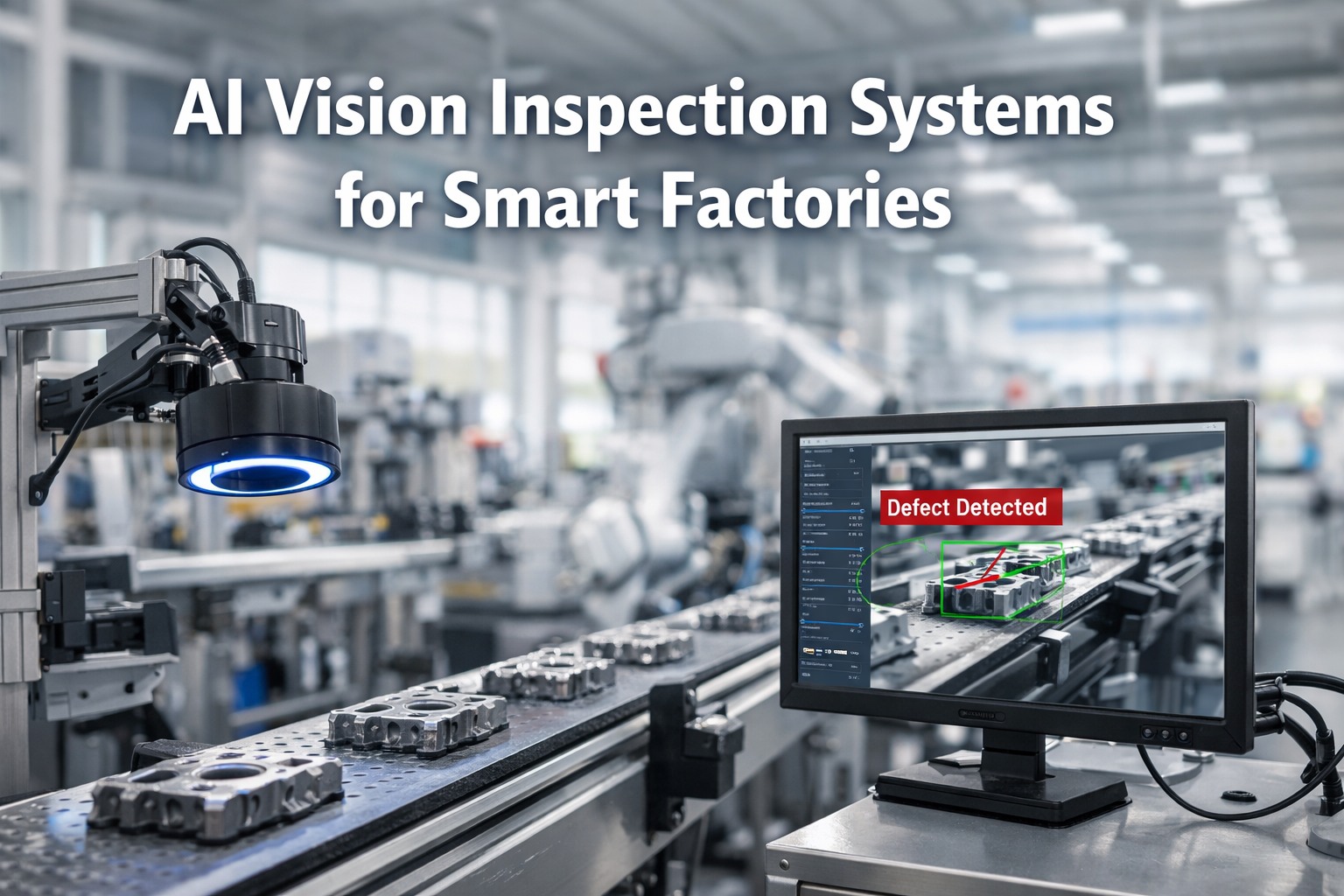
Your production line runs at 600 units per minute. Your best inspector catches 80% of defects on a good day. By lunchtime, fatigue drops that to 70%. By end of shift, costly defects are slipping through — reaching customers, triggering recalls, and eroding margins. AI vision inspection changes that equation permanently. These systems detect defects at 99%+ accuracy, run 24/7 without fatigue, and pay for themselves within 6–12 months. This guide covers how AI vision inspection works, where it delivers the highest ROI, and how smart factories are deploying it today. Book a free demo to see AI vision inspection in action.
The Problem: Why Manual Inspection Is Failing Modern Manufacturing
The average cost of poor quality in manufacturing is approximately 20% of total revenue. For a $50M factory, that is $10M per year lost to scrap, rework, warranty claims, and recalls. Manual inspection is the weakest link in this chain — not because inspectors lack skill, but because human vision has hard biological limits that no amount of training can overcome.
Still relying on manual inspection for quality control? Book a free demo — see how AI vision catches what human eyes miss.
How AI Vision Inspection Works
AI vision inspection combines industrial cameras, specialized lighting, edge computing, and deep learning models to analyze every product on the line in real time. Unlike traditional rule-based machine vision that requires hand-coded parameters for every defect type, AI systems learn from examples — making them far more adaptable to natural product variation and complex defect patterns.
High-resolution industrial cameras (5–45+ megapixels) capture product images from multiple angles. Specialized lighting — backlighting, diffuse dome, photometric stereo — reveals different defect types that standard lighting misses.
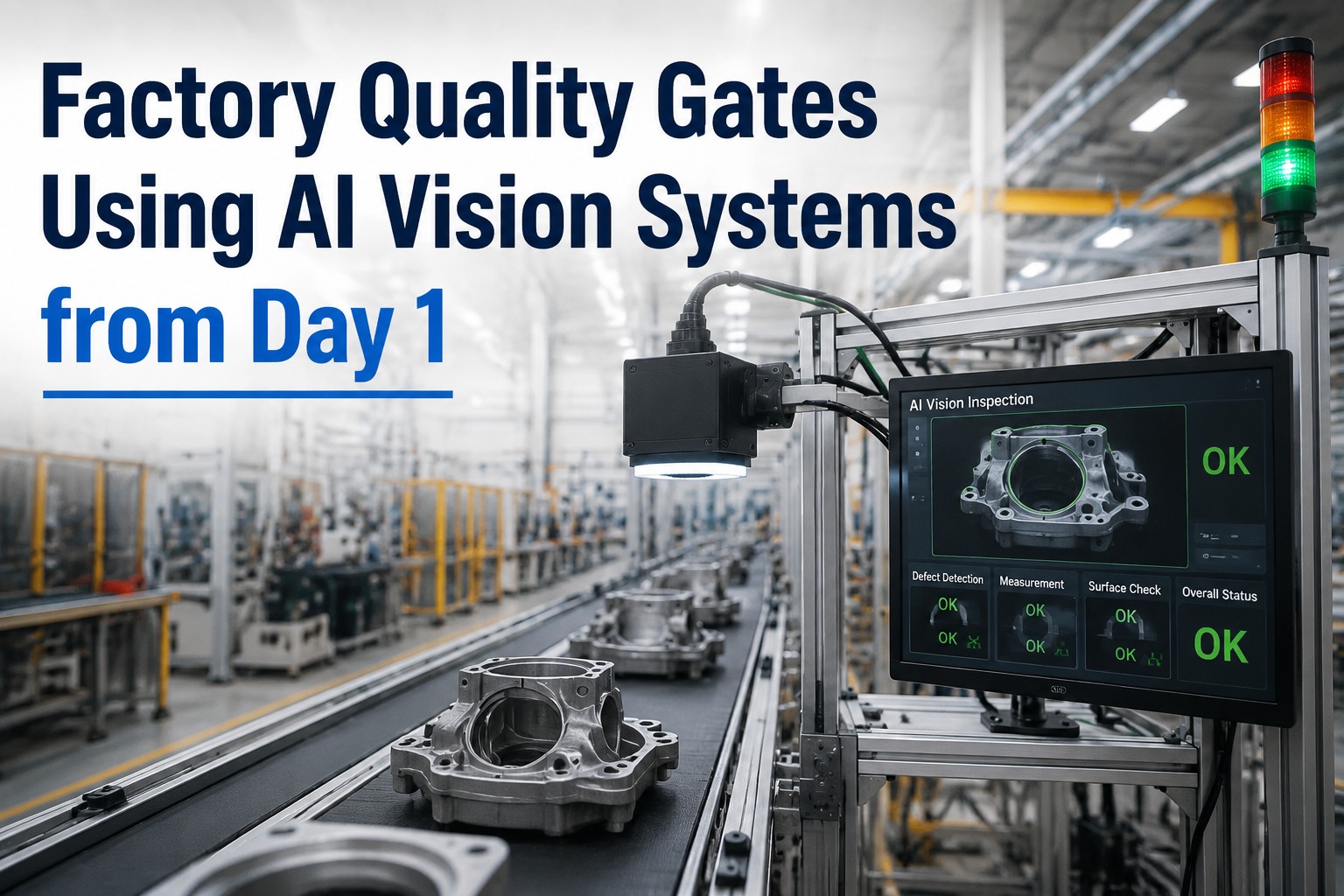
Deep learning models (CNNs, vision transformers) running on edge GPUs analyze each image in milliseconds. The AI classifies defects, measures dimensions, verifies assembly, and flags anomalies — all without cloud latency.
Pass/fail decisions trigger automated reject mechanisms in real time. Every inspection result feeds into the quality analytics dashboard — building a living dataset that makes the system smarter over time.
What AI Vision Detects on the Production Line
Modern AI vision systems can identify defects as small as 0.1mm with over 99% accuracy — well beyond what human inspectors can reliably catch. Here are the defect categories that deliver the highest ROI when automated.
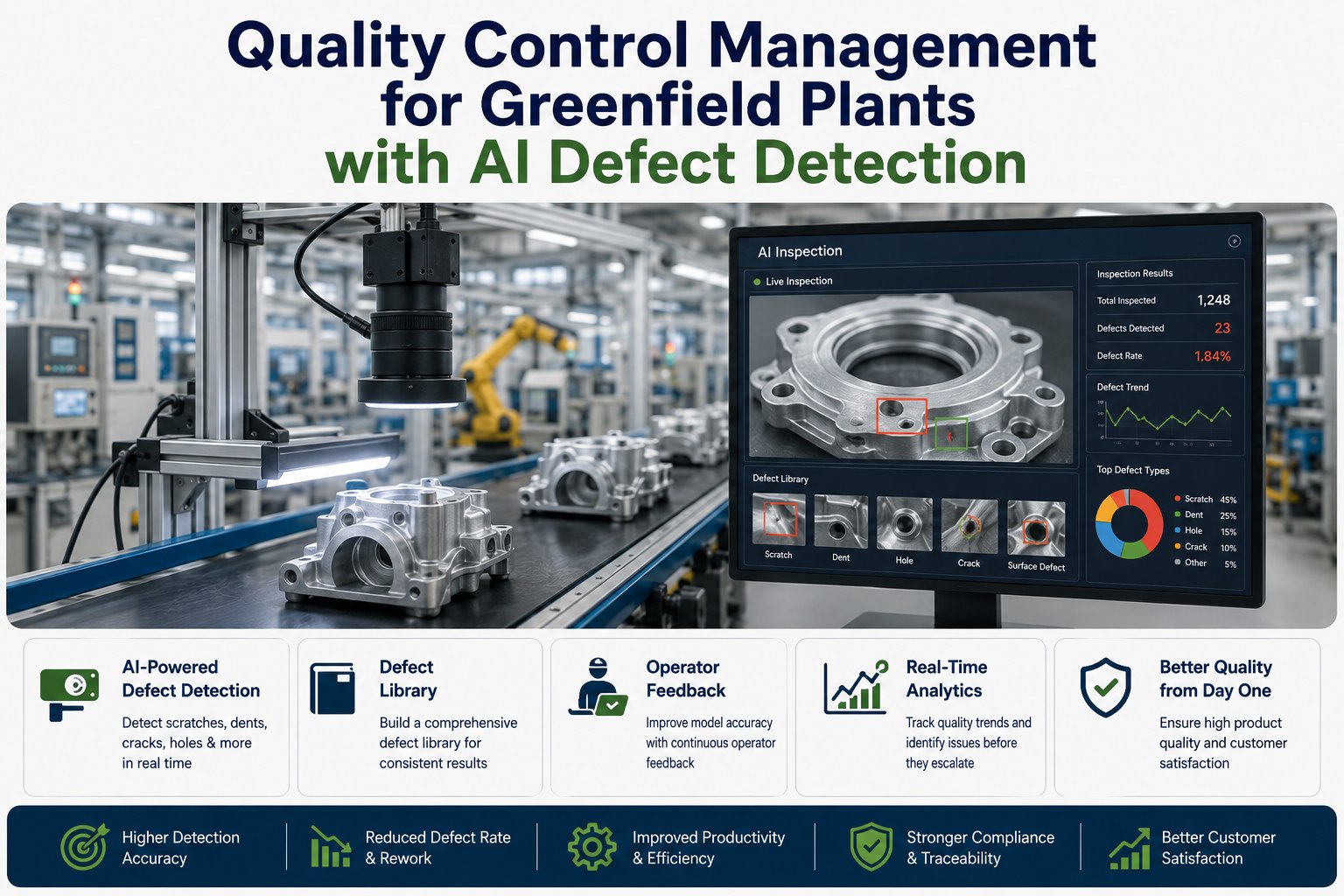
Micro-scratches on metal, glass, or painted surfaces. Sub-millimeter cracks in castings and welds. Paint flaws invisible to the naked eye.
Components not seated correctly. Missing screws, clips, or seals. Connector misalignment that causes downstream failures.
Metal shavings, plastic fragments, dust contamination in food, pharma, and electronics manufacturing. Critical for regulatory compliance.
Non-contact measurement of critical dimensions. Gap analysis. Warpage detection. Tolerance verification at production speed.
OCR verification. Barcode and QR readability. Label placement accuracy. Packaging seal integrity. Expiry date validation.
Solder joint defects on PCBs at 99.97% accuracy. Weld bead consistency. Cold joint detection. Critical for electronics and automotive.
ROI: The Business Case for AI Vision
AI vision inspection is not a cost center — it is one of the fastest-returning investments in manufacturing automation. Industry data consistently shows payback within the first year, with compounding returns as the system learns and scales.
Full AI vision infrastructure delivers 200–300% return through defect reduction, faster inspection cycles, and improved yield.
Most manufacturers recover their full investment within 6–12 months through reduced scrap, fewer returns, and labor redeployment.
Leading manufacturers report $2M+ per year in savings from scrap avoidance, reduced warranty claims, and eliminated rework.
Automotive component manufacturers using AI inspection report 37% fewer defects and a 22% increase in OEE within the first year.
Industry Applications
AI vision inspection delivers measurable results across every manufacturing sector. The technology adapts to each industry's unique defect types, regulatory requirements, and production speeds.
Paint defect detection, weld quality verification, assembly validation, dimensional measurement. 37% defect reduction and 22% OEE improvement reported.
PCB solder joint inspection at 99.97% accuracy. Die-level defect detection at 98.5%. Component placement verification at production speed.
Foreign object detection, fill-level monitoring, label accuracy, packaging seal integrity. Real-time oven temperature correction from visual feedback.
Pill quality verification, dosage accuracy, packaging integrity, regulatory compliance documentation. Hundreds of medications inspected per minute.
Surface defect classification, crack detection in castings, dimensional gauging, coating uniformity. 1900% ROI reported in steel production.
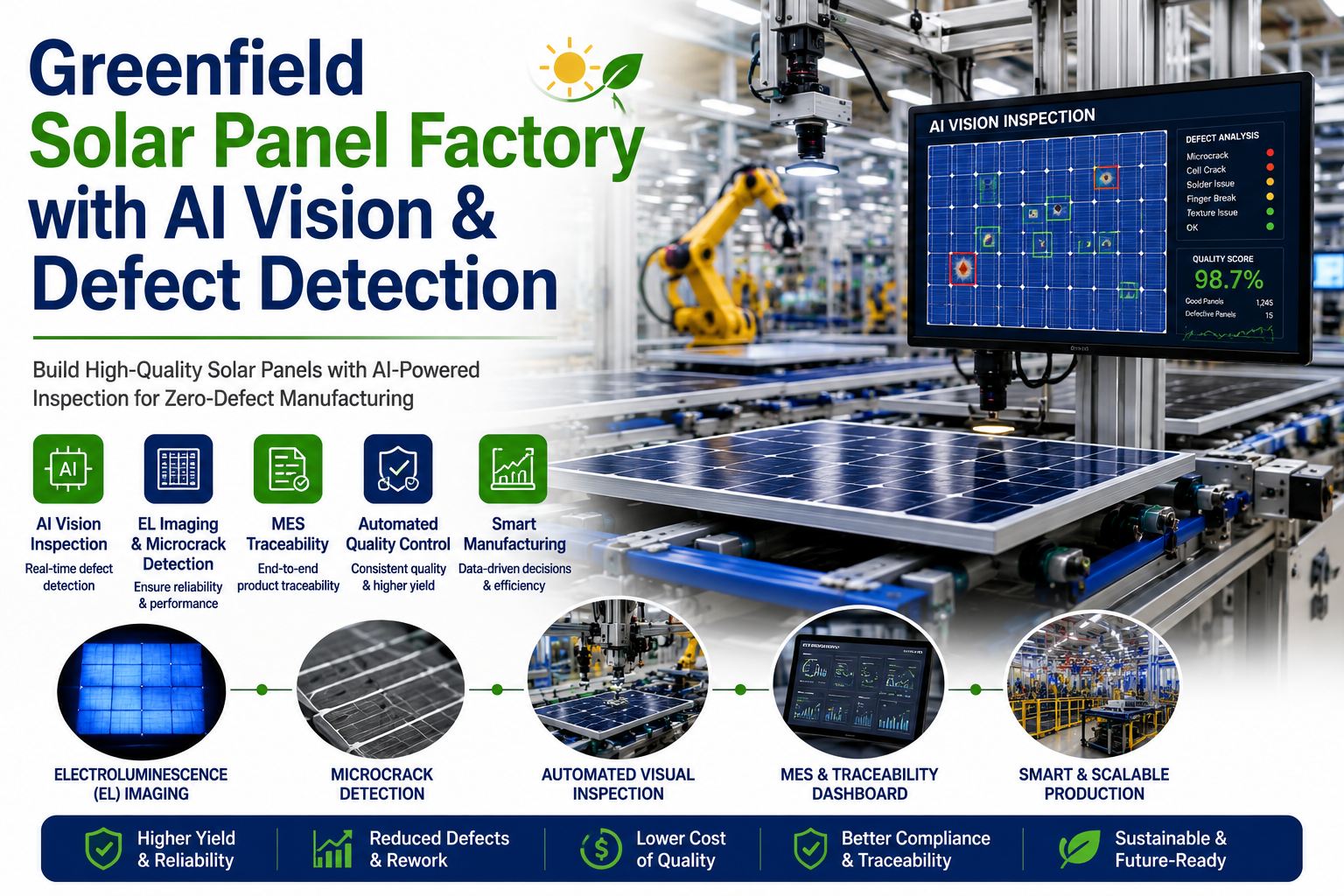
Microcracks in solar panels, cell alignment, coating defects. Sub-millimeter measurement accuracy enabling higher yield and reduced waste.
Which inspection points would deliver the highest ROI for your production line? Book a free consultation — our engineers will map your highest-impact opportunities.
How iFactory Deploys AI Vision Inspection
iFactory integrates AI vision inspection as part of the complete smart factory architecture — connected to your UNS, CMMS, and digital twin from day one. This is not a standalone camera bolted onto a line. It is an intelligent quality system that feeds real-time data into your entire manufacturing intelligence stack.
We audit your production line, identify the highest-impact inspection points, define defect categories, and calculate expected ROI before any hardware is purchased.
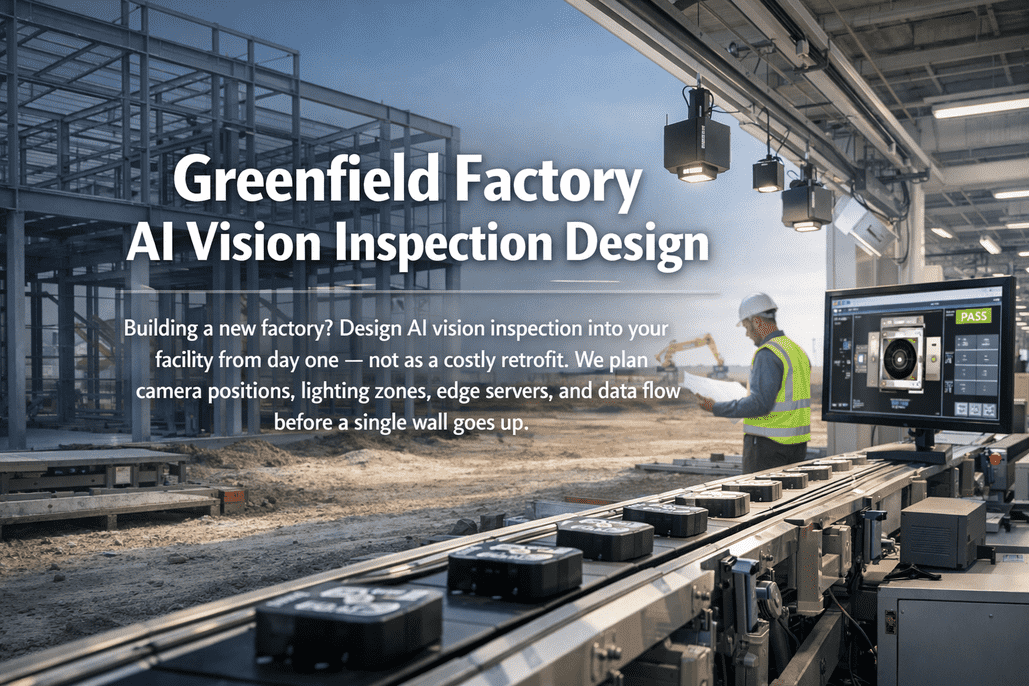
Camera selection, lighting design, edge compute sizing, and AI model architecture — all specified to your product geometry, line speed, and defect requirements.
We train deep learning models on your actual production data, validate with blind samples, and iterate until accuracy targets are met — typically 99%+ detection rate.
PLC integration, reject mechanism configuration, UNS data publishing, and CMMS work order triggers — the AI vision system becomes a live node in your factory nervous system.
Ongoing model retraining, accuracy monitoring, new defect category addition, and production data analytics. The system gets smarter every week.
Stop Shipping Defects. Start Shipping Confidence.
iFactory deploys AI vision inspection that integrates with your UNS, CMMS, and digital twin — catching defects at 99%+ accuracy, 24/7, from day one.
Frequently Asked Questions
Your Best Inspector Never Blinks, Never Tires, Never Misses.
AI vision inspection at 99%+ accuracy, integrated into your smart factory architecture. See it working on your products.