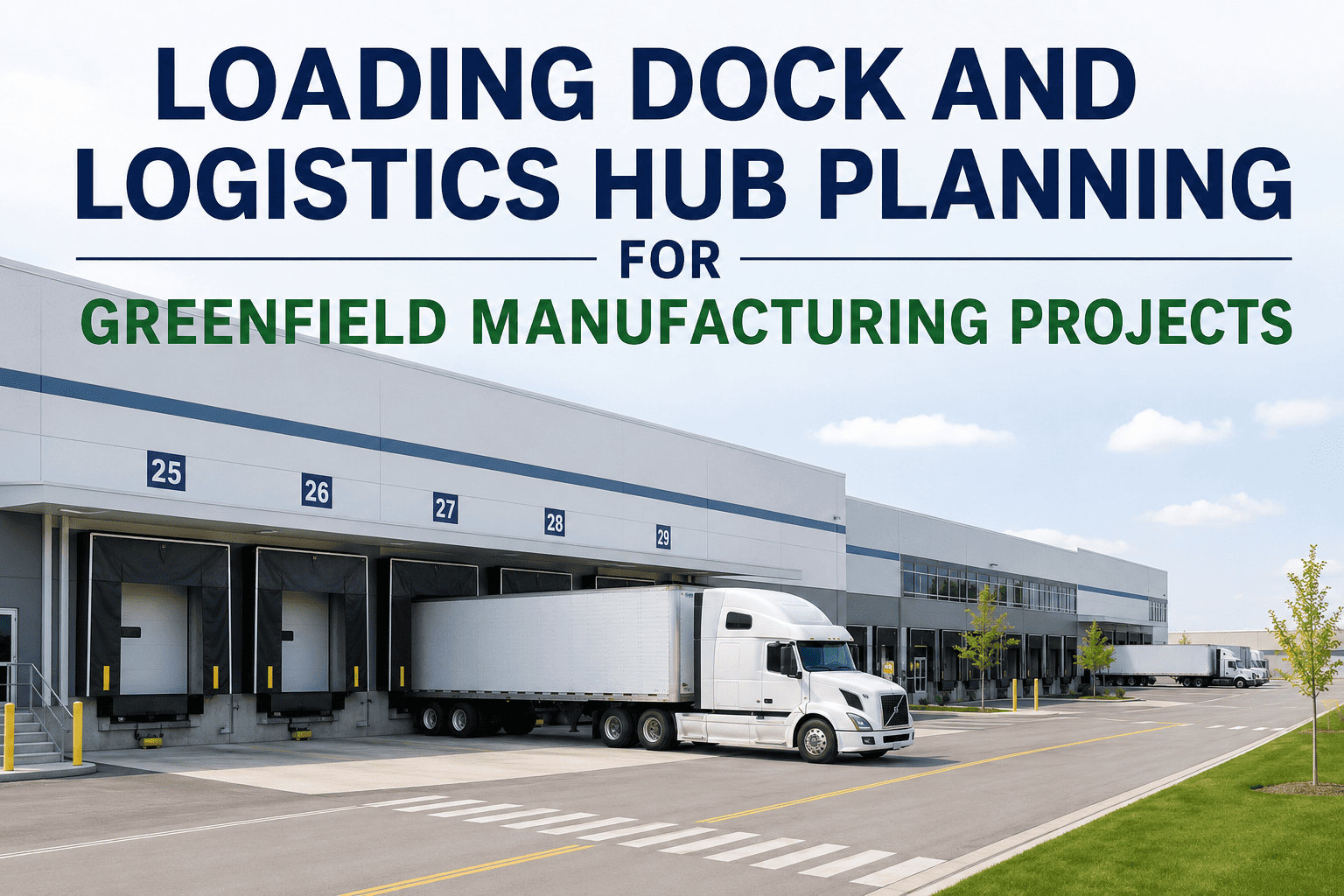
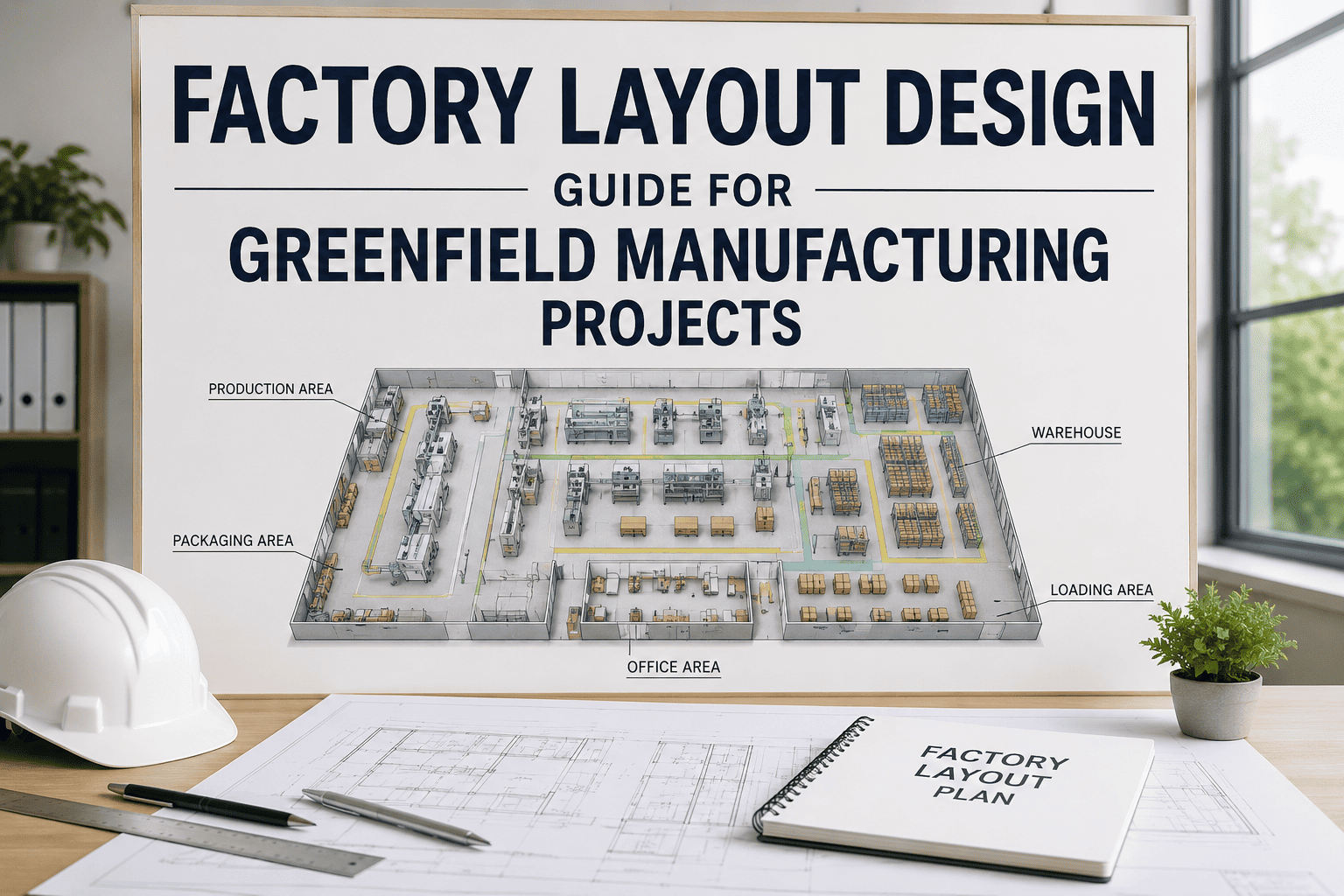
Your loading dock is the first and last touch point for every raw material entering your factory and every finished product leaving it. In greenfield manufacturing, where you're designing from scratch, dock decisions made during planning determine truck cycle times, material flow velocity, and logistics labor costs for the next 20–30 years. Undersized docks create permanent bottlenecks. Poor yard layout causes truck queuing, detention fees, and safety incidents. Missing automation locks you into manual processes that can't scale. This guide covers dock sizing, yard design, equipment selection, automation systems, and AI-powered scheduling strategies that turn your loading dock from a chokepoint into a competitive advantage. iFactory's greenfield consulting team designs logistics hubs that handle day-one volumes and scale to full capacity without rework.
Greenfield Logistics Guide
Dock-to-Floor Flow Architecture
Every zone must connect seamlessly — from truck arrival to production delivery
Yard
Gate check-in, staging lanes, trailer parking, maneuvering apron
Dock
Levelers, seals, doors, vehicle restraints, dock management
Staging
Inbound QC, cross-dock sorting, kitting, outbound marshaling
Production
Point-of-use delivery, WIP storage, finished goods buffer
Dock Sizing: How Many Doors Do You Actually Need
The most common greenfield mistake is undersizing the dock—and it's the most expensive to fix post-construction. Adding a dock door after the building is complete costs 5–10x more than including it in the original design. The sizing formula depends on daily truck volume, average dwell time, peak surge multipliers, and whether you separate inbound from outbound operations.
48–52 in
Standard dock height
Adjust for trailer types you'll receive most frequently
9 × 10 ft
Minimum door opening
9 ft wide × 10 ft tall accommodates standard 8.5 ft trailers
12 ft
Door center spacing
Minimum centerline-to-centerline for simultaneous loading
75+ ft
Drive approach depth
For 53 ft trailers: 75 ft × 2 + 15 ft per door spacing
Not sure how many dock doors your facility needs? Book a dock sizing analysis with our greenfield logistics team.
Get Your Dock Design Right the First Time
iFactory's greenfield consultants simulate truck traffic, dock utilization, and material flow before you pour concrete—so every dock door earns its construction cost.
Yard Layout: Designing for Truck Flow, Not Just Parking
Your yard isn't a parking lot—it's a logistics system. Every minute a truck idles in your yard waiting for a dock assignment costs money in detention fees, driver frustration, and upstream supply chain delays. Greenfield projects have the advantage of designing one-way traffic flow, dedicated staging lanes, and separated inbound/outbound paths from day one.
01
130 ft
min turning radius for 53 ft trailers
Maneuvering Apron
The apron is the space directly in front of dock doors where trucks back in. For 53-foot trailers with 12-foot door spacing, you need a minimum 165-foot approach depth. Undersized aprons are the single most common yard design failure—and the most expensive to fix after paving.
02
1-Way
traffic flow eliminates conflicts
One-Way Circulation
Design counterclockwise one-way traffic flow around the facility. Trucks enter at one gate, proceed to staging, back into assigned docks, pull forward after loading, and exit through a separate gate. This eliminates head-on conflicts and reduces yard accidents by up to 60%.
03
Split
inbound / outbound separation
Inbound / Outbound Separation
Dedicate specific dock doors and yard lanes to inbound receiving versus outbound shipping. Separation prevents cross-traffic between incoming raw materials and outgoing finished goods, reduces staging confusion, and allows independent scheduling of each operation.
04
+20%
extra trailer spots for peak
Surge Staging Area
Reserve trailer parking positions for peak-season overflow, drop trailers awaiting unload, and pre-staged outbound loads. Plan for 20% more spots than your average daily volume requires. Without surge capacity, peak days force trucks to queue on public roads—creating safety hazards and community complaints.
Dock Equipment and Automation Stack
The right equipment at each dock position determines loading speed, product protection, energy efficiency, and worker safety. In greenfield design, you specify equipment before construction—so leveler pits, electrical rough-ins, and structural supports are built into the slab from day one rather than retrofitted later at 3–5x the cost.
Dock Levelers
Hydraulic levelers are the standard for high-traffic manufacturing. Specify leveler pits to exact manufacturer dimensions—never guess. Air-powered levelers work for lower-volume positions.
Spec hydraulic for 25+ trucks/week per door
Vehicle Restraints
Wheel chocks alone are insufficient for manufacturing. Specify automatic vehicle restraints (AVRs) that lock the trailer's rear impact guard and integrate with dock interlock systems to prevent early departure.
AVRs reduce dock accidents by up to 70%
Dock Seals and Shelters
Foam compression seals for tight trailer fits; fabric shelters for varied trailer sizes. Climate-controlled facilities need full-perimeter seals to maintain temperature zones and prevent energy loss.
Full seals save 15–20% on HVAC energy
Dock Doors
High-speed insulated sectional doors for temperature control. Specify fire-rated doors where required by code. Include vision panels for safety visibility and powered operation for high-cycle positions.
High-speed doors cycle in under 30 seconds
Yard Management System (YMS)
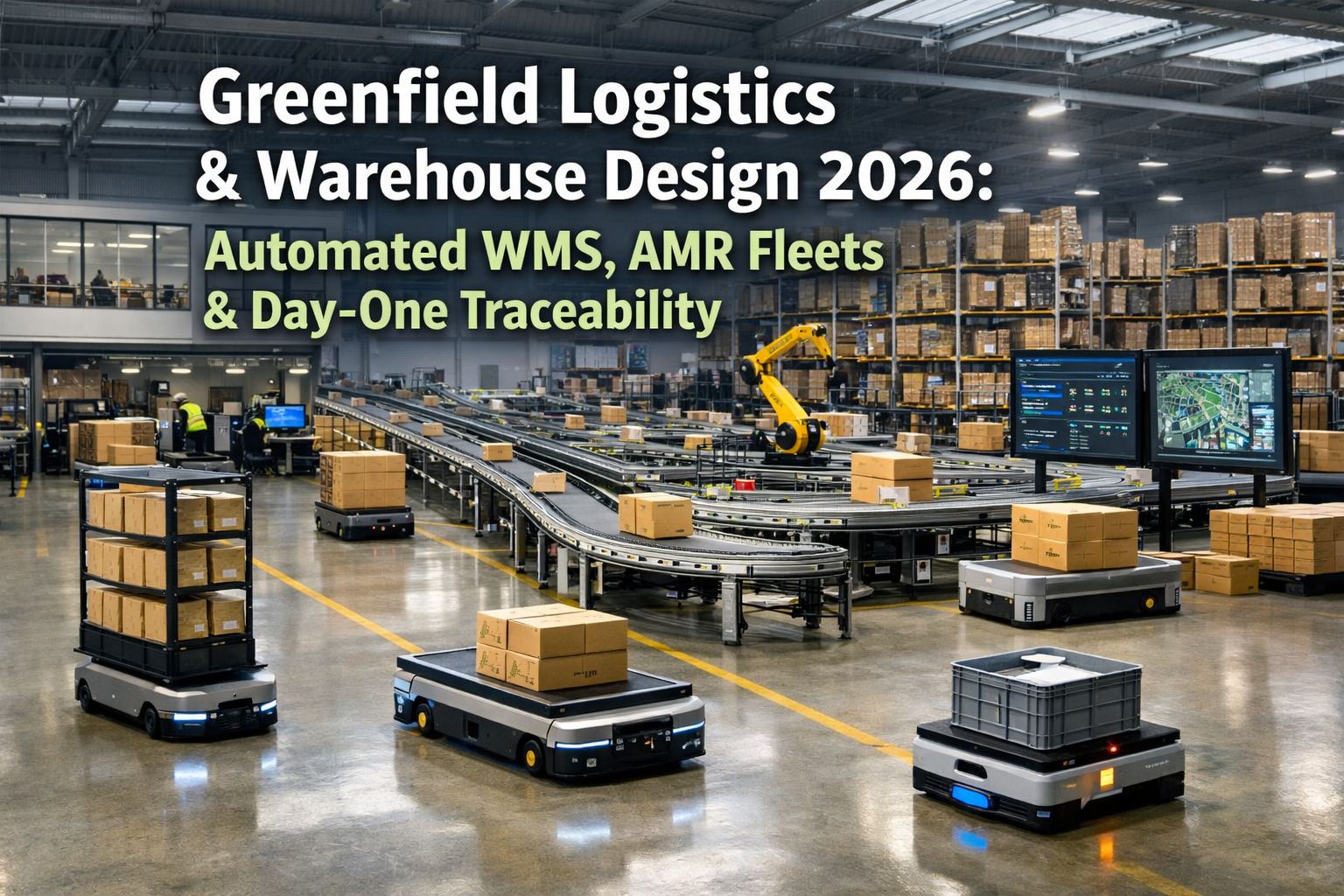
Real-time tracking of every trailer, container, and vehicle in your yard. Automates gate check-in/out, dock door assignments, and yard driver dispatch. Integrates with WMS and TMS for end-to-end visibility.
ROI typically within 6 months
Dock Scheduling Software
Appointment-based scheduling replaces first-come-first-served chaos. Carriers book time slots, the system assigns optimal dock doors, and warehouse teams get advance notification to pre-stage equipment and labor.
Reduces average dwell time by 30–40%
Need help specifying dock equipment for your greenfield project? Schedule an equipment planning session with our team.
Expert Perspective
"The dock is the beginning and the end of the material handling cycle. Subjected to heavy, continuous traffic, docks are vital to the smooth flow of raw materials and finished goods. Careful loading dock planning along with proper equipment selection can result in improved working conditions, increased safety, and employee productivity that compounds over the life of the facility."
— Loading Dock Design Best Practice
5–10x
cost to add a dock door post-construction vs. original design
30–40%
dwell time reduction with dock scheduling software
75%
YMS adoption projected for manufacturing facilities by 2026
Avoid the dock design mistakes that create permanent bottlenecks. Connect with our greenfield logistics team for a free dock assessment.
Conclusion: Build the Dock for the Factory You'll Operate, Not the One You're Commissioning
Your loading dock handles every inbound delivery and every outbound shipment for the life of your factory—it must be designed for peak capacity, not average throughput. The most successful greenfield manufacturers size docks for full production volumes, design one-way yard flow from day one, specify equipment before pouring concrete, and integrate digital systems that turn manual dock chaos into scheduled, optimized operations. Every dollar invested in dock planning during design saves five to ten dollars in post-construction modifications and ongoing operational friction. Your dock isn't just a building feature—it's the valve that controls the entire material flow pipeline.
Design Your Logistics Hub Before Breaking Ground
From dock sizing to yard simulation to equipment specification—iFactory's greenfield consultants help you build a logistics hub that handles day-one volumes and scales to full capacity.
Frequently Asked Questions
How do I calculate the number of loading dock doors for a greenfield factory?
Use the formula: Doors = (Daily Trucks × Average Dwell Time in Hours) ÷ Operating Hours × Peak Multiplier. For example, a facility receiving 40 trucks per day with 1.5-hour average dwell time across 16 operating hours needs a minimum of 5 doors (40 × 1.5 ÷ 16 × 1.3 peak factor). Always round up and add at least one spare door. Separate inbound and outbound doors when daily volume exceeds 30 trucks.
Book a consultation for a detailed dock sizing analysis.
What is the standard loading dock height for manufacturing facilities?
Standard dock heights for manufacturing facilities range from 48 to 52 inches, based on the most common trailer bed heights. However, the right height depends on the specific trailer types your facility will receive most frequently. Refrigerated trailers sit higher than dry vans, and container chassis have different heights than standard flatbeds. Analyze your expected trailer mix and set dock height to minimize the leveler range needed for most loads. Where trailer types vary significantly, consider adjustable-height docks or drive-through ramps for specialty equipment.
What is a Yard Management System and do manufacturing facilities need one?
A Yard Management System (YMS) is software that tracks trailers, containers, and vehicles within your facility's yard in real time. It automates gate check-in/out, optimizes dock door assignments, dispatches yard drivers, and integrates with your WMS and TMS for end-to-end logistics visibility. Any manufacturing facility receiving more than 15–20 trucks per day benefits significantly from a YMS. The ROI typically appears within six months through reduced detention fees, lower dwell times, and eliminated manual tracking processes. Cloud-based YMS adoption is projected to reach 75% by 2026.
How much yard space do I need for truck maneuvering at loading docks?
For standard 53-foot trailers with 12-foot dock door centerline spacing, you need a minimum drive approach of 165 feet (75 ft × 2 + 15 ft per door spacing). The maneuvering apron directly in front of dock doors must accommodate the turning radius of your largest expected vehicle. Plan for a minimum 130-foot turning radius. Additionally, reserve staging lane space for 20% more trailers than your average daily volume to handle peak-season surges without forcing trucks to queue on public roads.
Should I separate inbound and outbound dock operations?
Yes—separation is strongly recommended for any manufacturing facility processing more than 30 trucks per day. Dedicated inbound and outbound dock doors, yard lanes, and staging areas prevent cross-traffic between incoming raw materials and outgoing finished goods, reduce staging confusion, and allow independent scheduling of each operation. Separation also improves security by creating controlled zones where inbound quality inspections don't interfere with outbound loading, and it simplifies dock scheduling by eliminating conflicts between receiving and shipping teams.