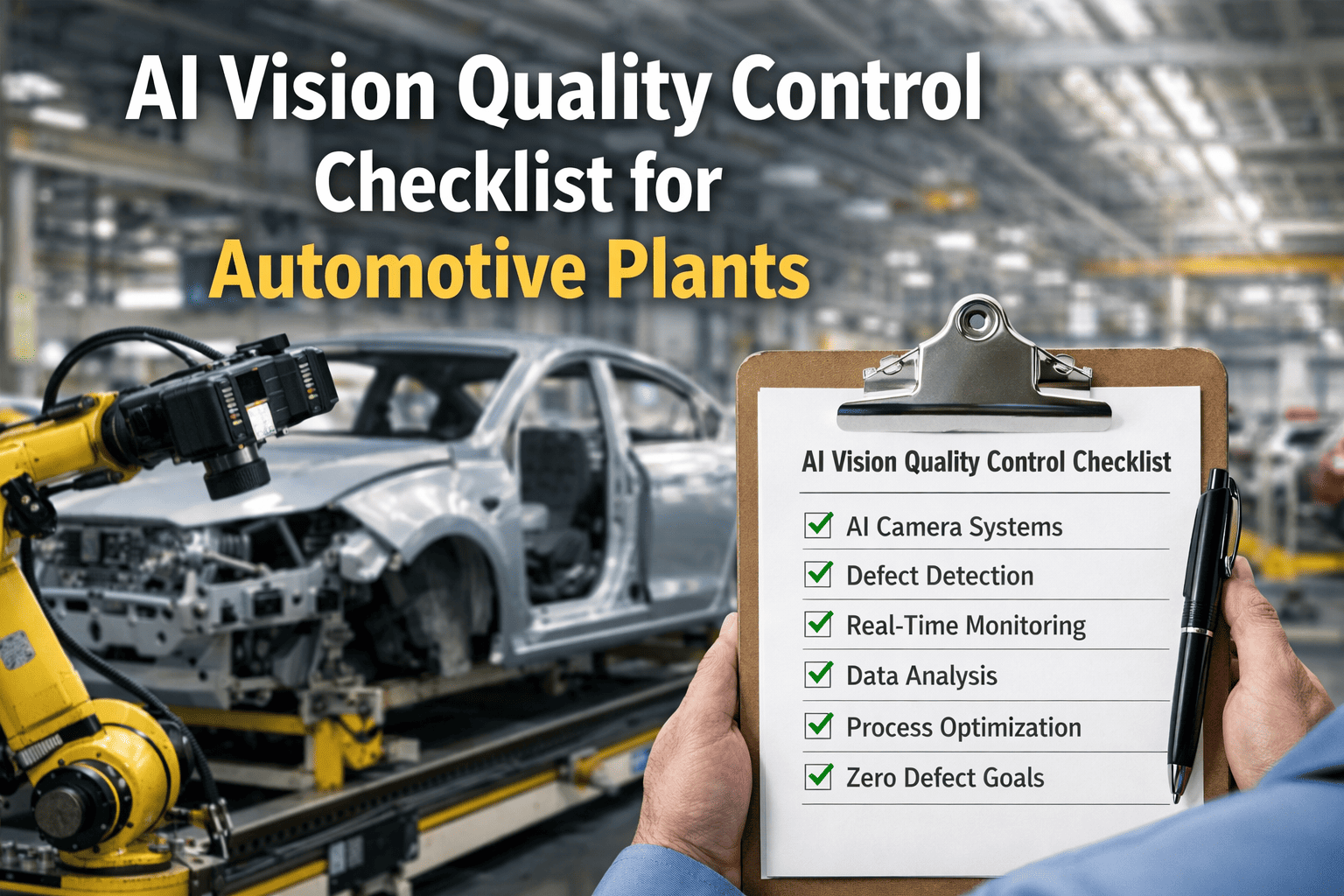
Most automotive AI initiatives stall not because the model is wrong, but because the data feeding it was never actually ready — inconsistent tag naming across plants, sensor drift nobody tracked, and gaps between MES, ERP, and historian systems that only surface once a model starts producing bad output. Data architects who run a structured readiness pass before any model work begins avoid the expensive cycle of retraining against data that should have been fixed first. The checklist below is the same one used to prepare automotive manufacturing data for AI, and you can walk through it in detail at ifactoryapp.com/support.
Why AI Projects Fail on Data Long Before They Fail on the Model
A data architect evaluating an AI pilot rarely gets to see the failure coming from the model side — accuracy metrics look reasonable in testing, then the model underperforms in production because the live data feeding it does not match the assumptions baked into training. In automotive manufacturing specifically, this usually traces back to one of four root causes: tag names that mean different things across plants, sensor readings with undetected drift or unit mismatches, blind spots where no data exists at all, and an architecture that cannot scale past the pilot's original scope. None of these are model problems. All of them are fixable before a model is ever trained, which is exactly what a readiness checklist is for.
The Four-Part Data Readiness Checklist
Each category below includes the specific items a data architect should confirm before committing to an AI build. Treat an unchecked item as a project risk, not a minor gap.
Where Most Automotive Plants Actually Sit
Data readiness is rarely all-or-nothing — most plants land somewhere on a maturity scale, and knowing where honestly is more useful than assuming the pilot's data quality represents the whole operation.
Not Ready vs. Ready: What Actually Changes
| Readiness Area | Not Ready | AI-Ready |
|---|---|---|
| Tag Naming | Raw PLC tags, inconsistent across plants | Standardized hierarchy mapped to equipment and process context |
| Data Quality | Drift and gaps discovered after model deployment | Drift monitored continuously, gaps documented with handling rules |
| Coverage | Legacy equipment untagged, MES/ERP disconnected | Full equipment inventory instrumented, systems linked end to end |
| Architecture | Pilot-scale integration that breaks at plant two | Pipeline designed for multi-plant scale from the start |
The gap between these two columns is usually where an AI project's timeline and budget actually go, far more than the modeling work itself. Book a Demo to see this comparison run against your own plant's current data state.
What Getting This Right Saves
Building an Architecture That Scales Past the Pilot
A data architect's biggest long-term risk is not the pilot plant's data — it is designing a pipeline that only works for that one plant's specific quirks. Scalable architecture separates the concerns that change plant to plant, like tag naming and equipment hierarchy, from the concerns that should stay constant, like schema structure and governance rules. Below are the components that matter most when planning for multi-plant scale.
Frequently Asked Questions
A single-plant assessment covering tagging, quality, coverage, and architecture typically takes two to four weeks depending on how much documentation already exists versus needing to be reconstructed from PLC configurations directly. Multi-plant assessments scale roughly linearly per additional plant, though shared architecture findings from the first plant usually accelerate the review of subsequent ones. The output is a prioritized list of readiness gaps rather than a pass or fail grade, since most plants have a mix of strong and weak areas. ifactoryapp.com/support can scope a timeline specific to your plant count and current documentation state.
No, the checklist is meant to identify risk, not to gate all progress until perfection is reached, and many AI pilots proceed successfully while gaps are closed in parallel. What matters is knowing which gaps exist and whether they affect the specific model being built — a gauge control model may be unaffected by an ERP linkage gap that would be critical for a genealogy-based quality model. Prioritizing fixes based on what the specific AI use case actually depends on is more efficient than treating every checklist item as equally urgent. This triage is typically part of the readiness review itself.
Older plants rarely get retrofitted with entirely new tag names at the PLC level, since that risks disrupting existing control logic; instead, a mapping layer translates each plant's native tag names into a shared naming convention at the integration layer without touching the underlying control system. This approach lets each plant keep its existing PLC configuration while still presenting standardized data to any AI model or analytics platform built on top. The mapping itself becomes a documented, version-controlled asset that is maintained as equipment changes over time. This is generally faster and lower-risk than a plant-wide tag renaming project.
The most frequent gap is disconnected MES and ERP context — production line sensor data is often well historized, but linking that data to order genealogy, material lot, and quality disposition records in the ERP system is incomplete or manual. This matters enormously for automotive because traceability requirements mean a quality model often needs to connect a defect back to a specific material batch or supplier, not just a machine setting. Closing this gap usually involves both a technical integration project and an organizational effort to align MES and ERP data ownership. It is consistently one of the higher-effort but higher-value items on the checklist.
Existing historian and SCADA data is almost always reusable and forms the backbone of most AI training datasets, but it typically needs a cleanup pass to address inconsistent tag naming, unit mismatches, and gaps before it is suitable for model training. Recollecting data from scratch is rarely necessary and would forfeit valuable historical depth that many models actually need. The readiness process focuses on cleaning and standardizing what already exists rather than starting over, which is significantly faster and lower cost. A data audit early in the process identifies exactly how much of your existing historian data is usable as-is versus needing remediation.