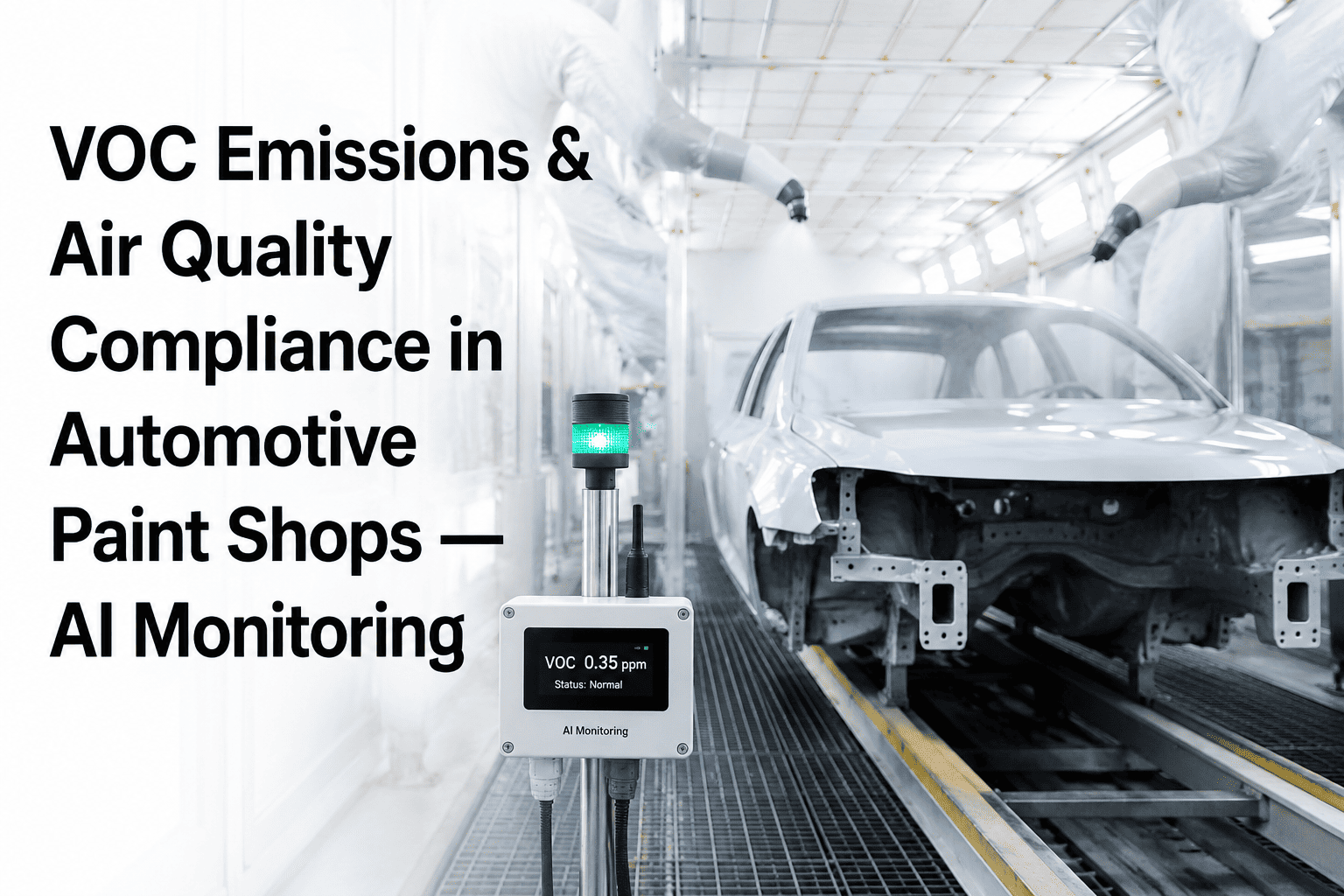
Automotive paint shops are among the most emission-intensive operations in manufacturing, releasing volatile organic compounds (VOCs) such as toluene, xylene, and methyl ethyl ketone during spray application, drying, and cleanup. For EHS managers, staying compliant with the Clean Air Act, RCRA, and state air permits while maintaining production throughput is a constant balancing act. Traditional weekly or monthly manual sampling leaves dangerous gaps, exposing facilities to non-compliance penalties and worker health risks. AI-powered continuous emissions monitoring now offers a transformative approach: real-time VOC detection, automated data logging, and predictive alerts that catch exceedances before they become violations. This article explores how modern monitoring systems integrate with paint shop workflows, optimize regenerative thermal oxidizer (RTO) performance, and streamline EPA reporting. Learn how to reduce fugitive emissions, improve air quality for painters, and build a data-driven compliance strategy that scales with production demands. Book a Demo to see how AI monitoring can transform your paint shop compliance.
Transform Your Paint Shop Compliance Today
Real-time VOC monitoring, automated EPA reporting, and RTO optimization in one platform. Reduce non-compliance risk by up to 70%.
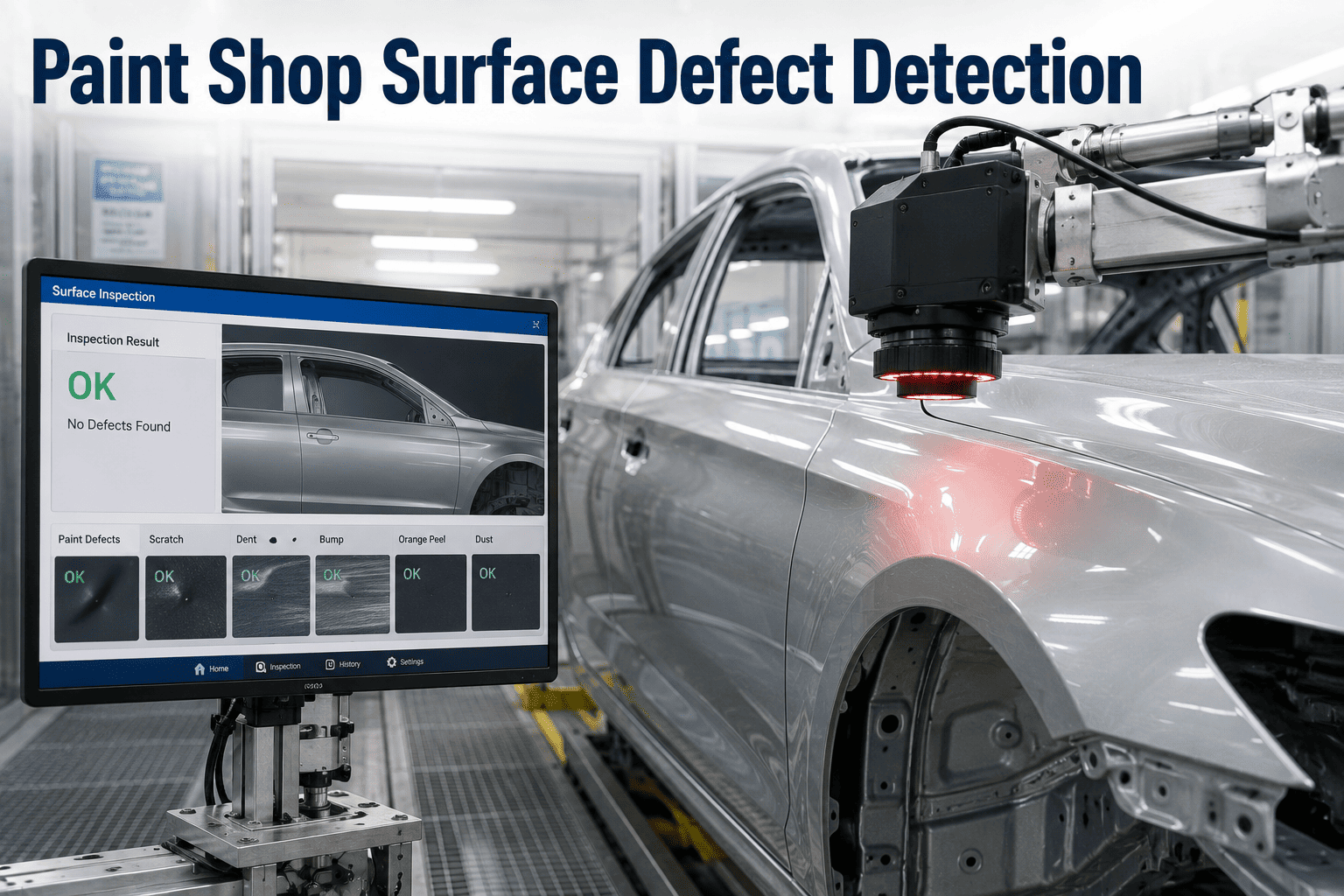
Real-Time VOC Detection Across Paint Booth Zones
AI-powered sensors placed at spray booths, curing ovens, and mixing rooms provide continuous VOC concentration data. Unlike periodic sampling, these systems detect spikes within seconds, triggering automatic ventilation adjustments or RTO load changes. For EHS managers, this means never missing a permit exceedance. The system logs every data point to a secure cloud dashboard, timestamped and geotagged for audit readiness. Alerts can be sent via SMS, email, or integrated with existing SCADA systems. This approach reduces manual inspection time by 80% and ensures compliance with 40 CFR Part 60 Subpart IIII and similar state rules. Real-time data also helps identify root causes of high emissions, such as improper gun settings or filter saturation, allowing immediate corrective action.
Key Compliance Metrics Tracked by AI
VOC Concentration (ppm)
Continuous monitoring of total VOC levels in exhaust streams, compared against permit limits. Automated alerts when approaching 80% of limit.
RTO Destruction Efficiency
Real-time calculation of VOC destruction percentage across thermal oxidizers. Alerts for efficiency drops below 95%, indicating maintenance need.
Fugitive Emissions
Detection of leaks from seals, valves, and connections using differential pressure and concentration gradients. Reduces fugitive emissions by up to 40%.
Air Permit Limit Tracking
Dashboard showing rolling 12-month emissions totals vs. permit caps. Predictive analytics forecast when limits may be exceeded based on production schedules.
Ready to Automate Your Emissions Reporting?
Eliminate manual data entry and spreadsheet errors. Generate EPA-ready reports in minutes with AI-verified data streams.
Implementation Roadmap for AI VOC Monitoring
Site Assessment
Evaluate paint booth layout, exhaust points, and existing sensors. Identify high-risk zones for fugitive emissions.
Sensor Installation
Deploy IoT-enabled VOC sensors at key points: spray booths, curing ovens, mixing rooms, and RTO inlet/outlet. Calibrate to local permit thresholds.
AI Model Training
Train predictive algorithms on historical emissions data and production schedules. Enable anomaly detection for unexpected spikes.
Dashboard & Alert Setup
Configure real-time dashboard, automated email/SMS alerts, and integration with existing CMMS or SCADA systems.
Go Live & Audit
Begin continuous monitoring. Generate first automated emissions report for EPA or state agency. Review and optimize alert thresholds.
VOC Emission Limits for Common Paint Shop Compounds
| Compound | Permit Limit (ppm) | AI Alert Threshold | Health Hazard |
|---|---|---|---|
| Toluene | 50 | 40 | Neurological effects |
| Xylene | 100 | 80 | Respiratory irritation |
| Methyl Ethyl Ketone | 200 | 160 | Eye/skin irritation |
| Isopropyl Alcohol | 400 | 320 | Drowsiness |
Frequently Asked Questions
How does AI monitoring improve VOC compliance in paint shops compared to traditional methods?
Traditional VOC monitoring relies on periodic grab samples sent to labs, which can take days to return results. This delay means exceedances are often discovered after the fact, leading to fines and retroactive reporting. AI-powered continuous monitoring uses real-time sensors that measure VOC concentrations every second, instantly flagging any reading above permit thresholds. The system automatically logs all data with timestamps and metadata, creating an audit trail that satisfies EPA and state requirements. Predictive algorithms can forecast emission trends based on production schedules, allowing EHS managers to proactively adjust operations. For example, if the system detects a gradual rise in toluene levels, it can alert the paint booth operator to check filter saturation or gun pressure before a violation occurs. This shift from reactive to proactive compliance reduces non-compliance incidents by up to 70%. Book a Demo to see how AI monitoring works in your paint shop.
What are the key factors affecting RTO destruction efficiency and how can AI help?
Regenerative thermal oxidizer (RTO) efficiency depends on combustion temperature, residence time, and inlet VOC concentration. If the temperature drops below 815°C or if the VOC load exceeds design capacity, destruction efficiency falls below the required 95%, risking non-compliance. AI monitoring continuously tracks inlet and outlet VOC concentrations, calculating real-time destruction efficiency. When efficiency drops, the system can automatically adjust combustion temperature or airflow, or alert maintenance to inspect ceramic media or valves. Additionally, predictive models can forecast RTO performance based on upcoming production runs, allowing preemptive maintenance scheduling. This reduces unplanned downtime and ensures consistent compliance. Contact Support for integration details with your existing RTO system.
How does AI monitoring help with state-specific air permit requirements?
Each state has unique air permit conditions, including emission limits, monitoring frequency, and reporting formats. For example, California's South Coast AQMD requires quarterly emissions reports with specific data formats, while Texas Commission on Environmental Quality (TCEQ) mandates continuous monitoring for certain facilities. AI monitoring platforms can be configured to match each permit's requirements, automatically formatting data for submission. The system tracks rolling emission totals against permit caps and sends alerts when approaching limits. For multi-state operations, a single dashboard can consolidate data from all facilities, ensuring uniform compliance. Automated report generation reduces manual effort by 90% and eliminates transcription errors. Book a Demo to see how we handle multi-state compliance.
What is the ROI of implementing AI VOC monitoring in an automotive paint shop?
The return on investment from AI VOC monitoring comes from multiple sources: avoidance of EPA fines (which can exceed $100,000 per violation), reduced manual labor for emissions reporting (saving up to 40 hours per month), optimized RTO operation (lower natural gas consumption by 15-20%), and improved worker health outcomes (reducing lost workdays from respiratory issues). A typical mid-size paint shop can expect payback within 8-12 months. Additionally, the data collected can be used to negotiate lower insurance premiums by demonstrating proactive risk management. The system also supports sustainability reporting for ESG initiatives, which can improve brand reputation and customer contracts. Contact Support for a customized ROI analysis for your facility.
How does AI monitoring integrate with existing paint shop control systems?
AI monitoring platforms are designed to integrate seamlessly with common industrial control systems via OPC-UA, Modbus, or MQTT protocols. They can pull data from existing PLCs, SCADA systems, and building management systems. The sensors themselves are wireless and can be installed without disrupting production. The platform provides REST APIs for custom integrations with CMMS, ERP, or data lakes. For facilities with legacy systems, edge gateways can translate older protocols. The dashboard is accessible via web browser or mobile app, allowing EHS managers to monitor compliance from anywhere. Data encryption and role-based access ensure security. Book a Demo to discuss your specific integration needs.
Stay Ahead of Emissions Regulations
AI-powered monitoring gives you real-time visibility, automated reporting, and predictive insights. Protect your facility, your workers, and your bottom line.