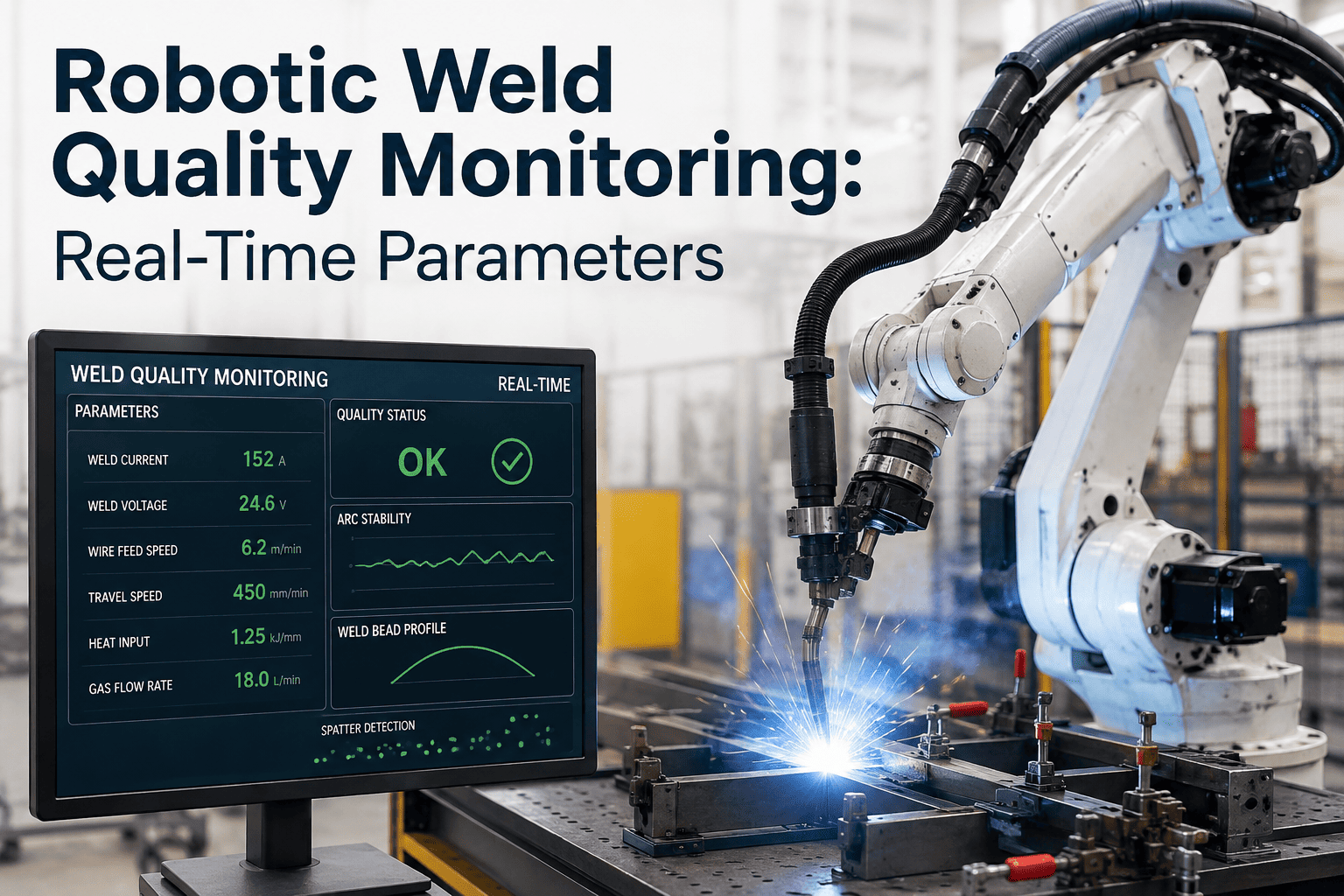
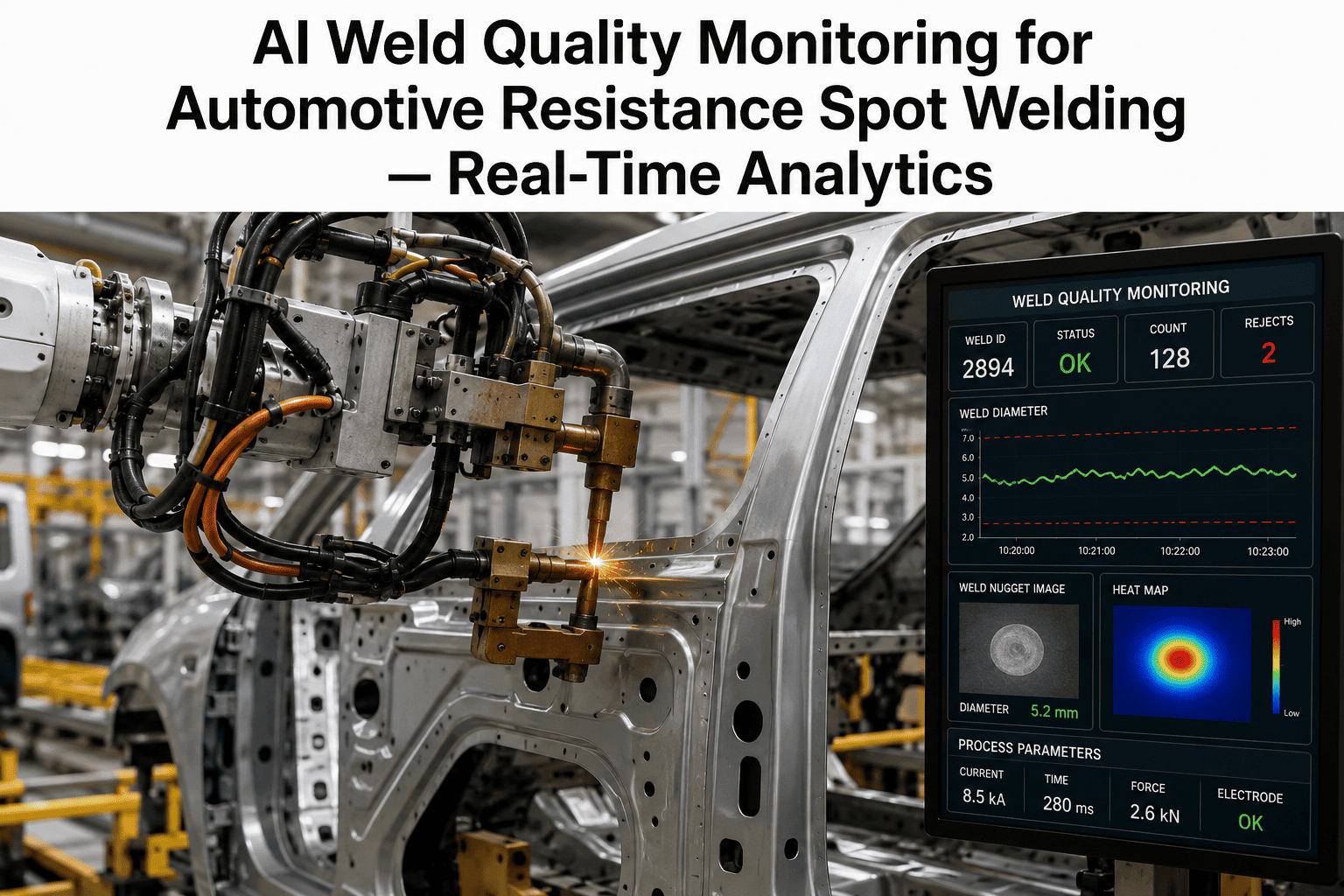
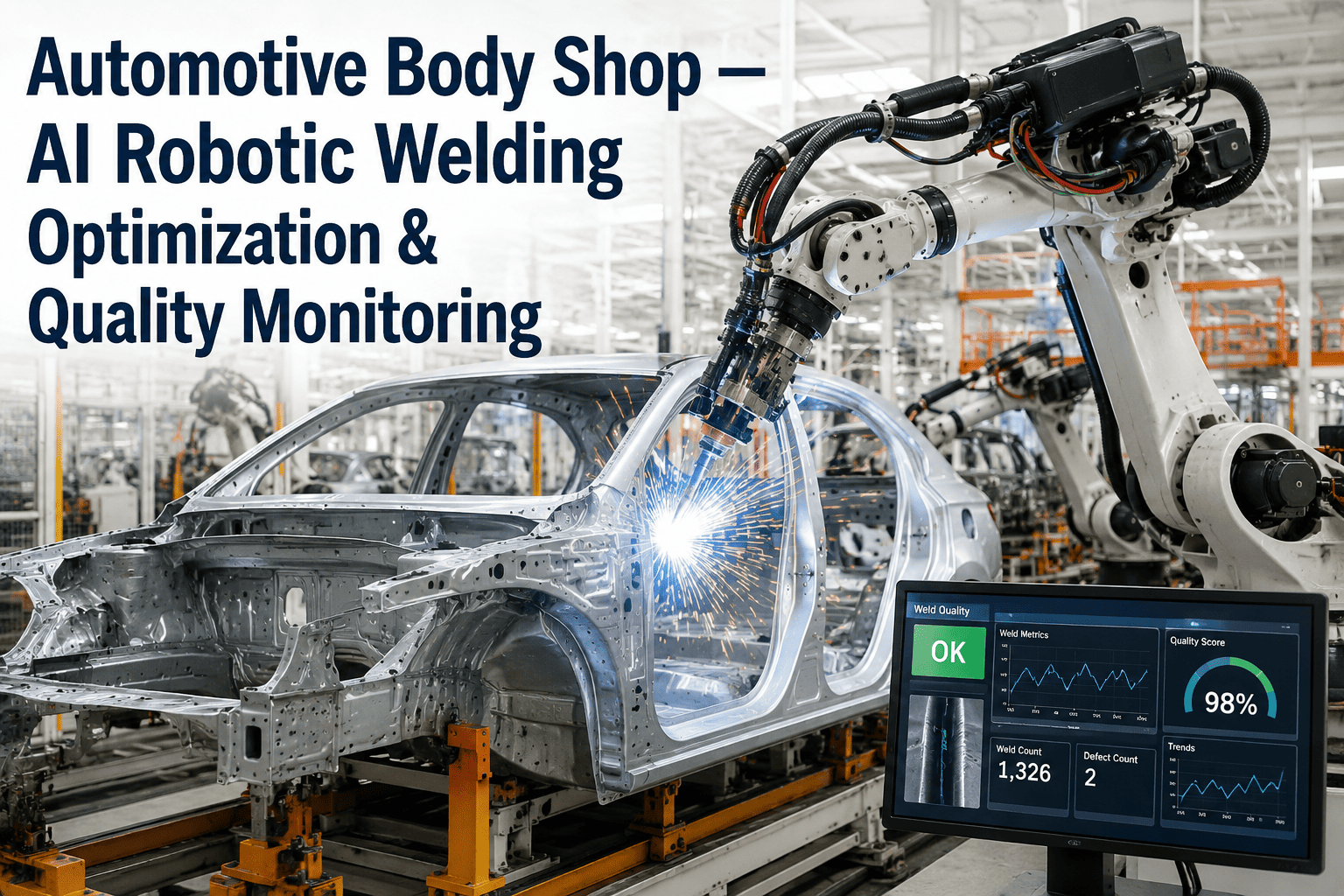
A robotic weld cell can run the same program flawlessly a thousand times in a row and still produce a defective weld on the thousand-and-first cycle, because the weld quality is not really determined by the robot's motion path — it is determined by current, voltage, wire feed speed, and gas flow staying inside a narrow acceptable window during the arc itself. These four parameters drift for reasons that have nothing to do with the robot program: a worn contact tip, a kinked gas line, a partially depleted wire spool. Post-weld visual inspection catches the defect after the fact, but real-time parameter monitoring catches the drift while the arc is still burning, which is the difference between reacting to a bad weld and preventing one. Seeing your own weld cell's parameter data visualized is usually the fastest way to spot a drift pattern that has been quietly building for weeks.
Real-Time Monitoring · Robotic Welding · Process Parameters
Tracking Current, Voltage, Wire Feed & Gas Flow on Every Weld Cycle
Real-time parameter monitoring catches process drift while the arc is burning, verifying quality on every single weld instead of relying on sampled visual checks after the fact.
Four Parameters That Matter
What Real-Time Monitoring Actually Watches
Each parameter tells a different part of the story, and a defect is rarely caused by just one drifting alone — it is usually a combination that pushes the weld outside its qualified process window.
Current
Drives penetration depth. Too low leaves incomplete fusion, too high risks burn-through or excessive spatter.
Voltage
Controls arc length and bead shape. Instability here often shows up as inconsistent bead width along the seam.
Wire Feed Speed
Must stay matched to current and travel speed — mismatches cause stubbing, burn-back, or an underfilled joint.
Gas Flow
Shields the weld pool from contamination. A drop from a kinked line or low cylinder pressure is a leading cause of porosity.
Why Drift Happens
Common Root Causes Behind Parameter Drift
01
Contact Tip Wear
A worn contact tip changes electrical contact resistance gradually, producing a slow current drift that is nearly invisible weld to weld but adds up over a shift.
02
Gas Line Kinks or Leaks
Physical damage to the gas delivery line reduces shielding coverage at the weld pool, often intermittently depending on cable routing during robot motion.
03
Wire Spool Condition
Tangles, inconsistent tension, or moisture absorption in the wire spool create feed speed inconsistencies that vary within a single weld pass.
04
Power Source Calibration Drift
Welding power sources can drift from their calibrated output over time, particularly under high duty cycle production schedules without scheduled recalibration.
Catch Drift Before It Produces a Bad Weld
iFactory monitors current, voltage, wire feed, and gas flow continuously, flagging process drift on the weld cell before it turns into a rejected part.
Post-Weld vs. Real-Time
Visual Inspection After the Fact vs. Parameter Monitoring During the Arc
Factor
Post-Weld Visual Inspection
Real-Time Parameter Monitoring
Detection timing
After the weld is complete and the defect already exists
During the arc, as the parameter drifts out of window
Root cause visibility
Shows the result, not the cause
Shows exactly which parameter drifted and when
Subsurface defects
Cannot see porosity or fusion issues below the surface
Parameter signature often correlates with subsurface quality
Preventive action
Limited to flagging the part for rework or scrap
Enables proactive maintenance before defects accumulate
Frequently Asked Questions
Real-Time Weld Parameter Monitoring — Common Questions
Does real-time monitoring replace the need for visual weld inspection?
No, the two work best together rather than as substitutes for one another. Parameter monitoring catches process drift and subsurface risk factors during the arc, while visual or camera-based inspection confirms the resulting bead geometry and surface condition after the weld is complete. Combining both gives a fuller picture than either approach alone, since some defects show up primarily in one signal type and not the other.
How is this data integrated with our existing welding equipment?
Monitoring hardware taps into the welding power source and wire feeder's existing signal outputs, which most modern robotic welding equipment already provides for this purpose.
Contact support to confirm compatibility with your specific power source and robot controller combination before a rollout begins.
What happens when a parameter drifts outside its acceptable window mid-weld?
The system can flag the specific weld cycle for review or, depending on configuration, trigger an alert to the cell operator or a stop condition if the drift is severe enough to indicate a likely defect. Every flagged event is logged with the exact parameter values and timing, giving maintenance teams the specific data needed to trace the drift back to its root cause rather than guessing.
Can this data help predict when maintenance is needed on a weld cell?
Yes, gradual trends in current or voltage that correlate with contact tip wear, for example, can be tracked over time to schedule tip replacement before quality degrades rather than waiting for a defect to appear. This shifts weld cell maintenance from a reactive schedule to one informed by actual process signal trends specific to each cell.
Is parameter data tracked per robot, per part number, or both?
Both, and typically per shift as well, which lets quality and maintenance teams isolate whether a quality issue traces back to a specific robot cell, a specific part geometry that stresses the process differently, or a shift-specific pattern tied to material lot changes.
Book a demo to see how this breakdown looks in a live dashboard.
Catch the Drift, Not Just the Defect It Eventually Causes
Real-time monitoring of current, voltage, wire feed, and gas flow verifies quality on every weld cycle, feeding proactive maintenance instead of reactive scrap review.