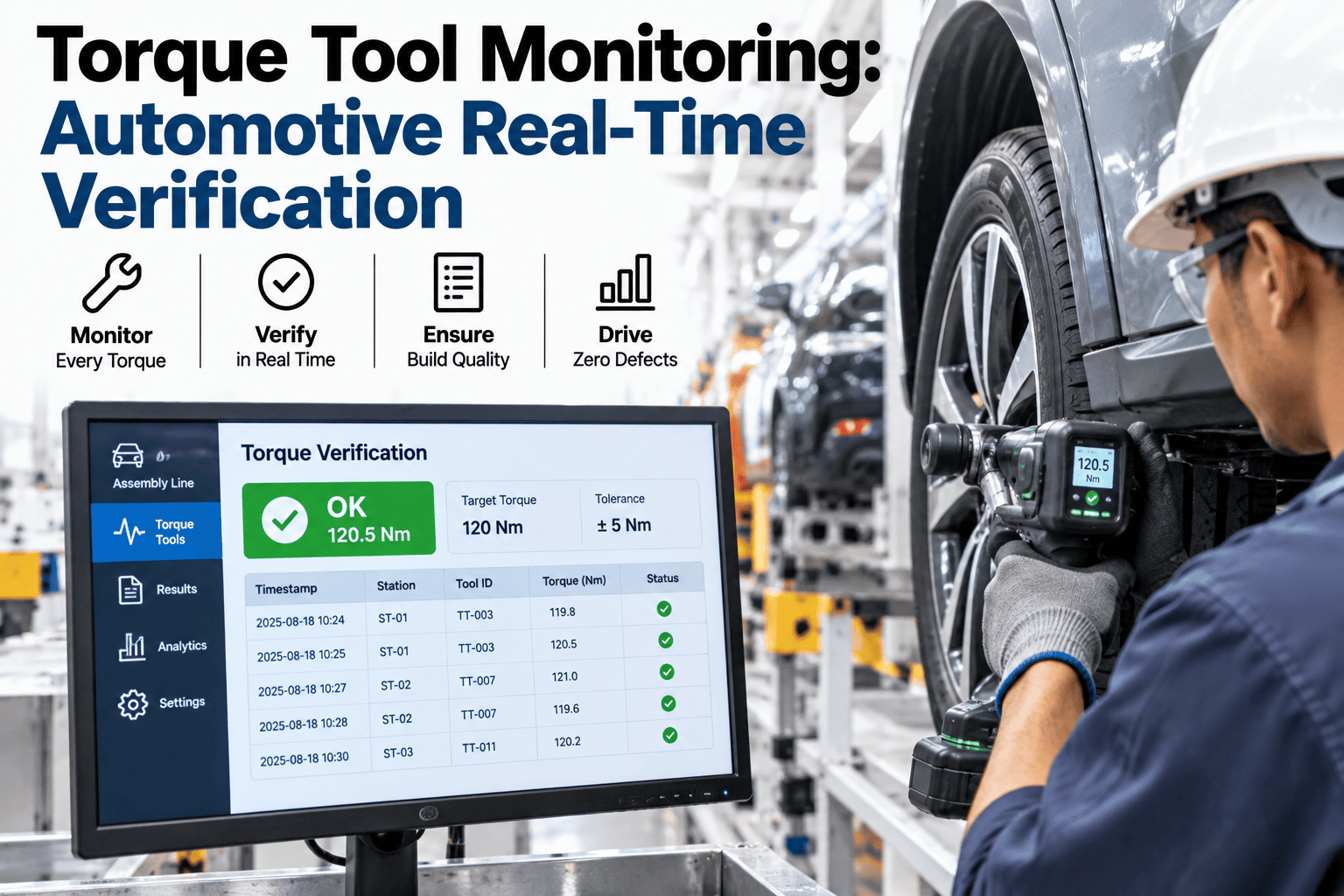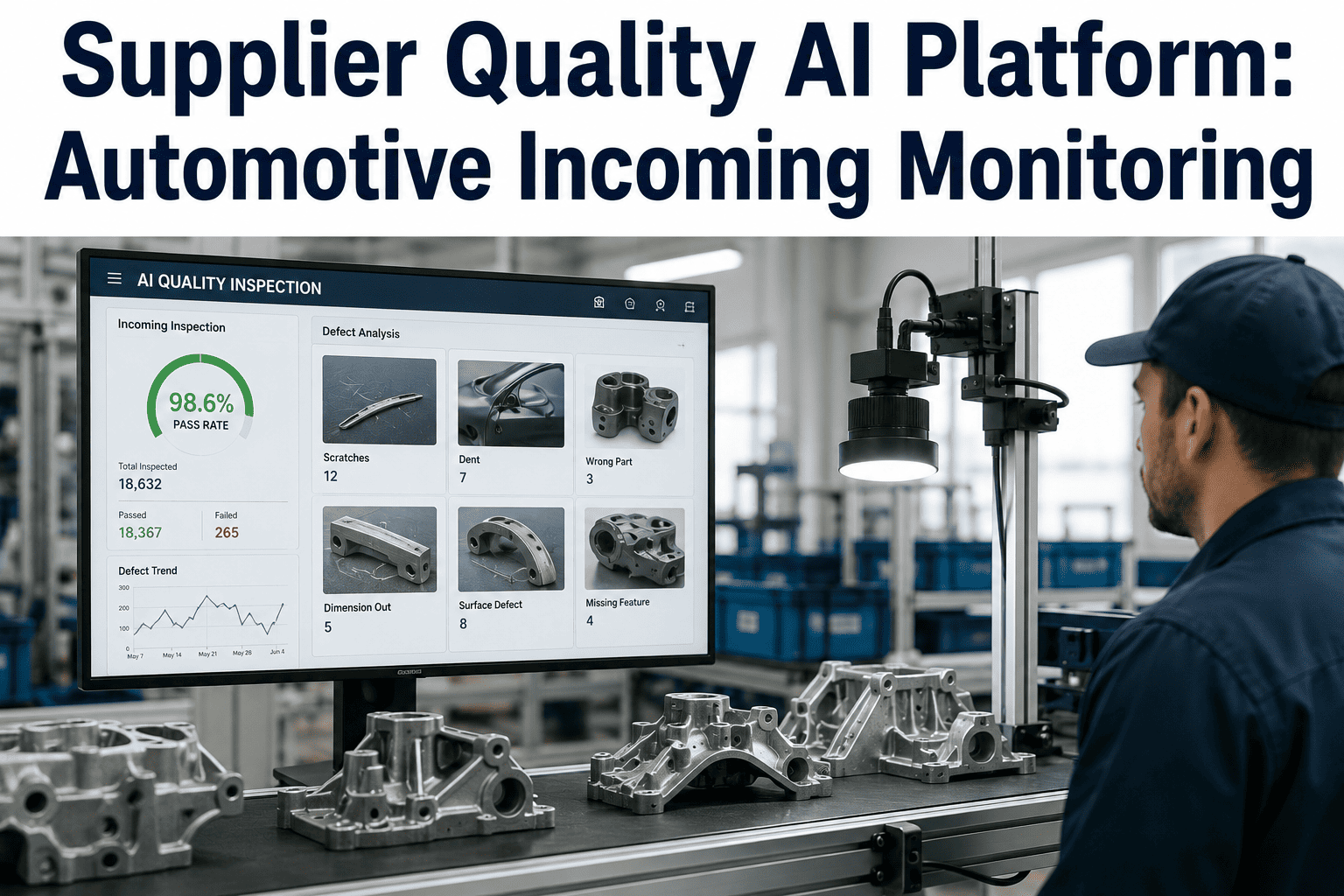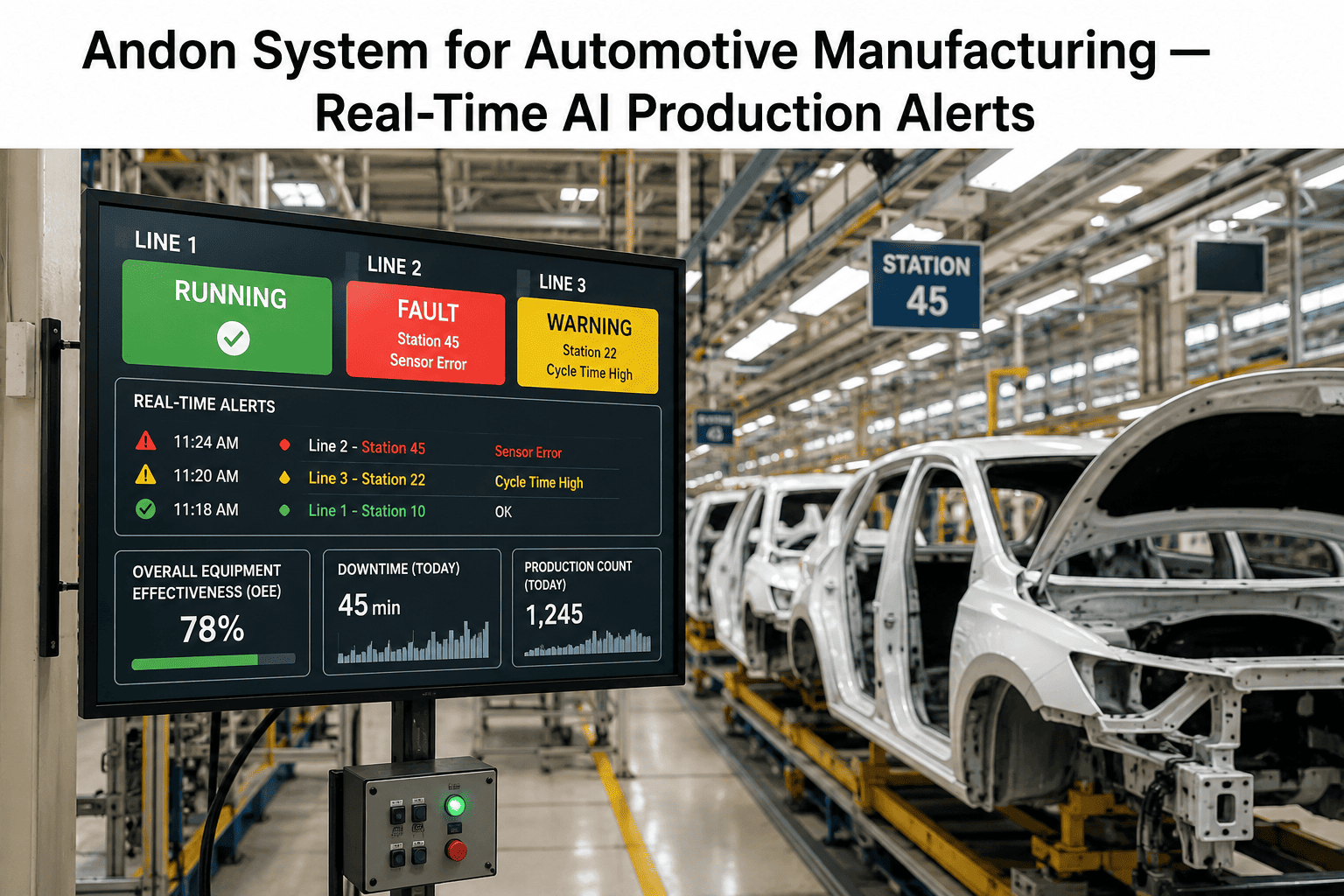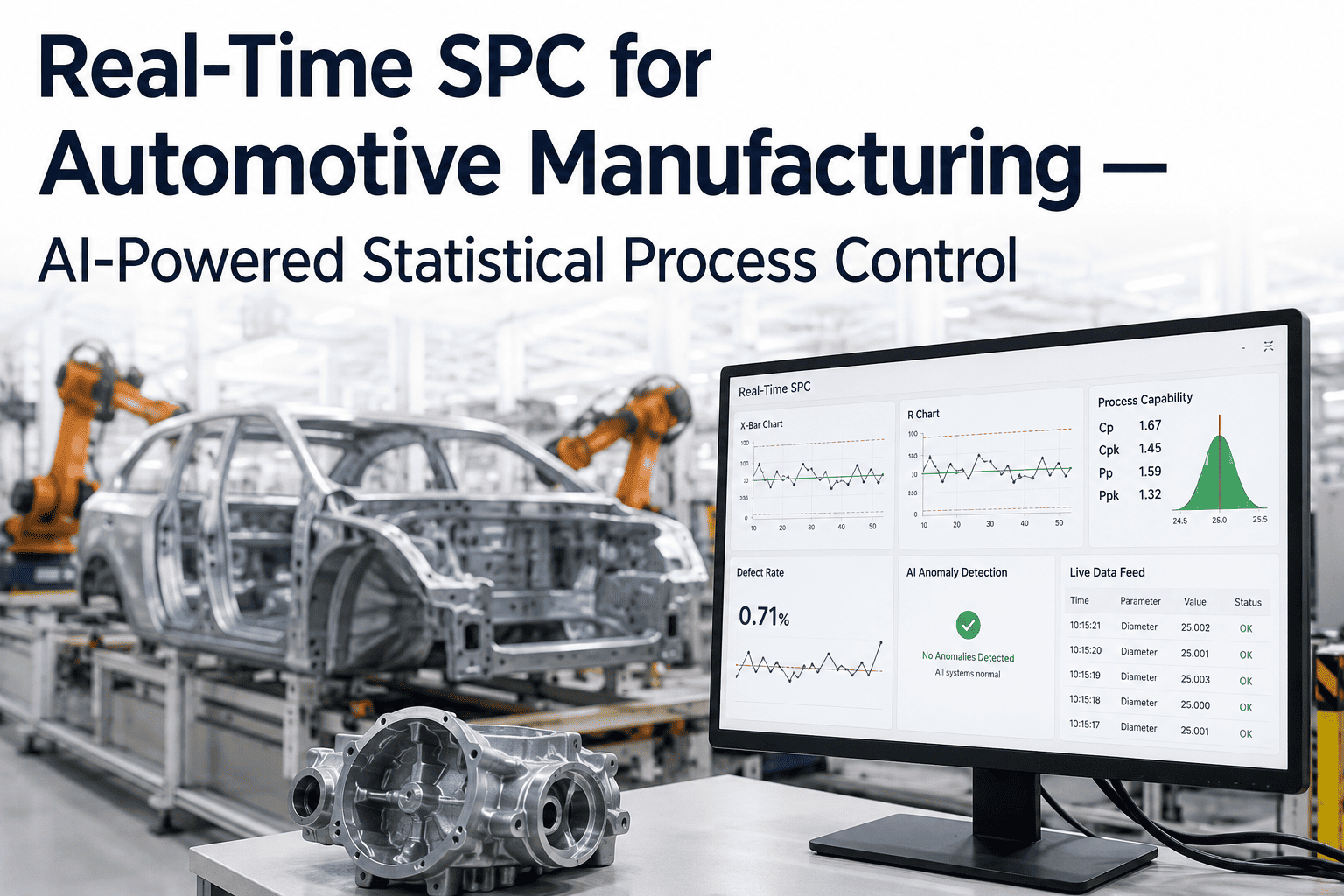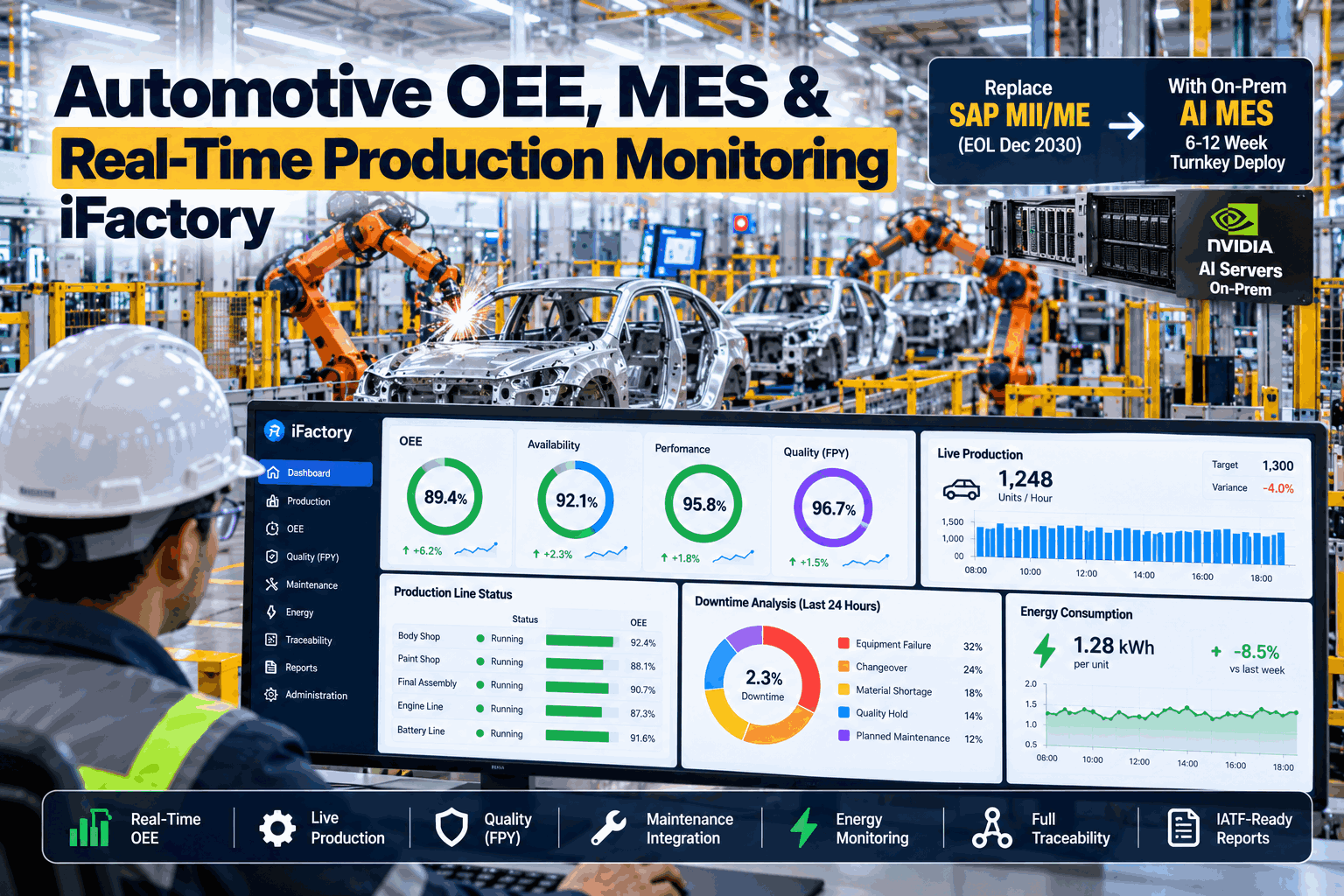
An automotive line loses money in minutes, yet most plants still learn their OEE the morning after — from a report built on SAP MII screens and SAP ME transactions that SAP will stop maintaining. Mainstream maintenance for both ends on 31 December 2027, and paid extended support runs out around the end of 2030. iFactory replaces them with an on-prem AI MES that shows OEE, first pass yield, throughput and energy for every line as the shift runs, on NVIDIA AI servers inside your plant, live in 6–12 weeks. To see it on a line like yours, book a live walkthrough.
Live OEE, FPY and Throughput on Every Line — on an MES You Own
iFactory is a full manufacturing execution system with AI built in: production execution, real-time OEE, quality, energy and maintenance on one plant-floor platform. It reads your PLCs and robots directly, runs beside SAP ERP, and gives OEMs and Tier 1 suppliers a supported path off SAP MII and ME without moving the shop floor to the cloud.
- OEE, FPY, JPH and kWh per unit, refreshed every cycle
- Runs on-prem — the line keeps reporting if the WAN goes down
- IATF 16949 evidence recorded as production happens
The SAP MII and ME Clock Is Already Running
SAP has confirmed that mainstream maintenance for SAP MII and SAP ME ends in December 2027, with extended maintenance available until about the end of 2030 for customers willing to pay for it. The successor, SAP Digital Manufacturing, is a cloud service on SAP's Business Technology Platform with no on-premise option — and the custom logic most automotive plants have built over fifteen years does not carry across. For a view of what your own estate involves, speak with our migration engineers.
Supported, but frozen
MII and ME still run and are still patched. New development effort at SAP goes to the cloud successor, and experienced MII engineers are getting harder to hire.
Mainstream maintenance ends
Routine fixes and security patches stop unless you buy extended maintenance — a real issue for systems that sit on the plant network next to PLCs.
Extended maintenance, at a premium
Reported at about two points on top of the standard 22% annual support rate. You pay more each year for a platform that gains no new capability.
Unsupported on the shop floor
No vendor patches, a shrinking skills pool, and an audit question every time a customer asks how production records are protected.
The arithmetic is tighter than the dates suggest. Integrators put a multi-site MES migration at 12 to 18 months from kick-off to go-live, plus three to six months for vendor evaluation and budget approval. From late 2026, fewer than 15 months remain to the mainstream deadline — so a conventional programme starting now finishes inside the paid extension, not ahead of it.
What a Live MES Shows That a Morning OEE Report Cannot
OEE is three ratios multiplied together, and the product hides more than it reveals. A line reporting 71.8% tells a plant manager almost nothing; the same line broken into its six losses tells a supervisor what to fix before the next break. Below is the hero's shift taken apart — 450 planned minutes, 323 of them fully productive. To have one of your own lines broken down the same way, book a loss review.
Two things stand out that a daily figure would bury. The largest single loss is minor stops — the two-minute faults nobody logs by hand, which only a system reading the PLC cycle by cycle can count. And performance loss is bigger than availability loss, although breakdowns are what the morning meeting talks about. Published automotive benchmarks put the median plant near 58–65% OEE and world-class at 82–85%, with first pass yield of 95–97% for average facilities and 99% or better for the leaders. Closing that gap starts with seeing it by cause, by station and by shift.
One Platform Across the Plant Floor
MII was built to move data between the shop floor and SAP; ME was built to execute orders. Plants then bolted OEE tools, SPC packages, energy meters and a maintenance system around them. iFactory covers those functions on one data model, so a micro-stop, a torque reject and a spike in compressed-air use on the same station are seen together. Our product team can map each module to what you run today.
Production execution
Orders, routings and sequence received out of SAP; dispatch to line and station; digital work instructions; serial and lot genealogy; confirmations posted back to ERP.
Real-time OEE
Availability, performance and quality calculated per cycle from machine signals, with every stop classified against the six big losses and no operator typing.
Live production
Jobs per hour against takt, cycle time by station, WIP and buffer levels, andon calls and response times — on line-side boards, in the control room and on a phone.
Quality
First pass yield by station and model, SPC on critical characteristics, AI vision inspection at line speed, rework loops and containment tied to the affected serial numbers.
Energy
Electricity, compressed air and gas per unit built, by line and shift. Idle load during breaks and weekends is separated out, so waste shows up as a number with an owner.
Maintenance
Condition monitoring on robots, presses and spindles, MTBF and MTTR per asset, and work orders raised straight out of a stop event with the fault history attached.
Put One Line on a Live OEE Board in Six Weeks
Pick the line that hurts most. We connect its PLCs and robots, run iFactory beside your existing MII screens, and hand back a six-loss breakdown, a first-pass-yield map by station and a costed list of the stops worth fixing first.
Where the AI Earns Its Place
A conventional MES records what happened. An AI MES is expected to say why, and what is likely to happen next. iFactory runs its models on a GPU server in the plant, close enough to the line to work at cycle speed, and puts the answers in front of the people who can act on them.
- Stop classification without clipboards. Fault codes, cycle timing and upstream starvation signals are combined to label each stop, including the micro-stops operators never record.
- Bottleneck that moves with the shift. The constraint station is recalculated continuously, so effort goes to the station limiting output right now, not last month's.
- Quality drift before the reject. Process signals — weld current, torque curves, cure temperature — are watched for the pattern that precedes a first-pass-yield fall.
- Shift summary written for you. At handover the AI drafts the losses, causes and open actions, ready for the supervisor to confirm.
Supervisors and engineers can also question the data in plain language, as in the exchange alongside. The AI advises; line control stays with your PLCs and your people. Try the same questions on your own line during a pilot call.
IATF 16949 Evidence, Recorded as You Build
Certification auditors and customer quality engineers ask for the same things: proof that process performance is measured, that maintenance has objectives, and that any part can be traced. When those records are a by-product of running the line, audit preparation stops being a project. The clauses below are the ones a production MES touches most directly; iFactory supports the evidence — your quality system and your certification body still decide conformity. Our quality specialists can review your clause map with you.
Three Roads After SAP MII and ME
There is no neutral option: staying put is a decision with a rising price. SAP Digital Manufacturing is a credible route for plants that want everything inside the SAP cloud and can accept a rebuild. iFactory is for plants that want the execution layer on site, AI included, and a short programme. Compare the three against your own priorities on an options call.
The wider market is moving the same way. Analysts value manufacturing execution systems at about USD 16 billion in 2025, rising to nearly USD 26 billion by 2030 at roughly 10% a year, led by Siemens, Dassault Systèmes, SAP, Rockwell Automation and Honeywell — with hybrid deployment, which keeps execution on site and analytics flexible, the fastest-growing model.
Delivered as a Turnkey AI System — Hardware and Software Together
iFactory ships as a complete bundle: a pre-configured NVIDIA AI server, racked and ready, with the MES, OEE engine and AI models pre-loaded. Rack it, plug in power and Ethernet, and the AI is live on your plant network. Our team handles cabling, network setup, PLC, SCADA and robot-controller integration, the SAP interface, operator training and 24×7 remote monitoring — so your controls engineers stay on the line instead of on a software project. For a scoped proposal, speak with our deployment team.
Ship, network and data
Server delivered and racked. PLCs, robots and line controllers connected over OPC UA and native drivers. Orders, routings and master data brought across out of SAP; MII left running as a parallel source.
Model training and pilot
Stop classification, cycle-time and quality models trained on your own signals. Live boards run on the pilot line while figures are reconciled against existing reports with your supervisors.
Go-live and training
Remaining lines switched over, confirmations posting to ERP, operators and team leaders trained on every shift, and the IATF evidence pack reviewed with quality.
Connects to the Line You Already Have
Nothing on the floor is replaced. iFactory reads controllers and devices through native drivers and open protocols, and exchanges orders and confirmations with SAP through standard interfaces. Check your own equipment list with us on an integration review.
What Each Team Gets
Plant manager
One live view of every line against plan, the three losses costing the most today, and a clear answer on the SAP deadline.
Supervisors and team leaders
Line-side boards, stop reasons captured automatically, and a shift summary drafted before handover.
Quality and maintenance
First pass yield and capability by station, genealogy for containment, and MTBF and MTTR without a spreadsheet.
IT, OT and SAP teams
A supported platform on your own network, standard SAP interfaces, and no dependence on scarce MII skills.
Frequently Asked Questions
When do SAP MII and SAP ME reach end of life?
SAP has stated that mainstream maintenance for both products ends on 31 December 2027. Extended maintenance is available until around the end of 2030 at additional cost. After that the products are unsupported. SAP's strategic successor is SAP Digital Manufacturing, a cloud service — so remaining on-prem means choosing a different MES.
Can iFactory replace both MII and ME, or only the dashboards?
Both. iFactory covers execution — dispatch, work instructions, genealogy and confirmations — as well as the integration and visibility role MII plays. Many plants begin with real-time OEE and live production on one line while ME continues to execute, then move execution across line by line once the figures are trusted.
How is OEE calculated in real time?
Availability comes from run and stop states read off the PLC, performance from actual cycle time against ideal cycle time, and quality from good count over total count at each station. The three are multiplied and refreshed every cycle. Because stops are timestamped by the machine, micro-stops of a few seconds are counted, which manual logging misses.
Why on-prem instead of a cloud MES?
Three reasons come up in automotive plants: the line must keep executing and reporting when the WAN is unavailable; cycle-level data and vision images are large and latency-sensitive; and many OEM contracts and corporate policies restrict where production data may be held. iFactory processes everything on a server in the plant and can still share summaries with corporate systems.
Does iFactory work with SAP ECC and S/4HANA?
Yes. Production orders, routings, materials and sequence are received through standard SAP interfaces, and confirmations, goods movements and quality results are posted back. SAP stays the system of record for planning and finance; iFactory runs the plant floor.
Is iFactory IATF 16949 certified?
Certification applies to your quality management system, not to software. iFactory is built to produce the records the standard expects from production — OEE, MTBF and MTTR objectives, process monitoring, traceability and rework control — so that evidence is available on demand. Conformity is still assessed by your certification body.
How long does deployment take, and what do we need to provide?
A typical plant is live in 6–12 weeks. You provide rack space, power, an Ethernet connection, access to PLC and robot networks, an SAP interface contact and a production lead for each line. iFactory supplies the pre-configured NVIDIA AI server, software, integration, training and 24×7 remote monitoring. To scope your plant, book a scoping call.
Leave SAP MII and ME on Your Schedule, Not SAP's
One turnkey system — NVIDIA AI server, full MES, integration and training — delivered and live inside 12 weeks per plant. Start with one line, prove the numbers, then roll across the site before the 2027 deadline.
- 1iFactory connects to the line and reads beside MII
- 2Live OEE and production boards go up; figures are reconciled
- 3Execution moves across during a planned changeover
- 4Confirmations post to SAP; MII and ME retire for that line