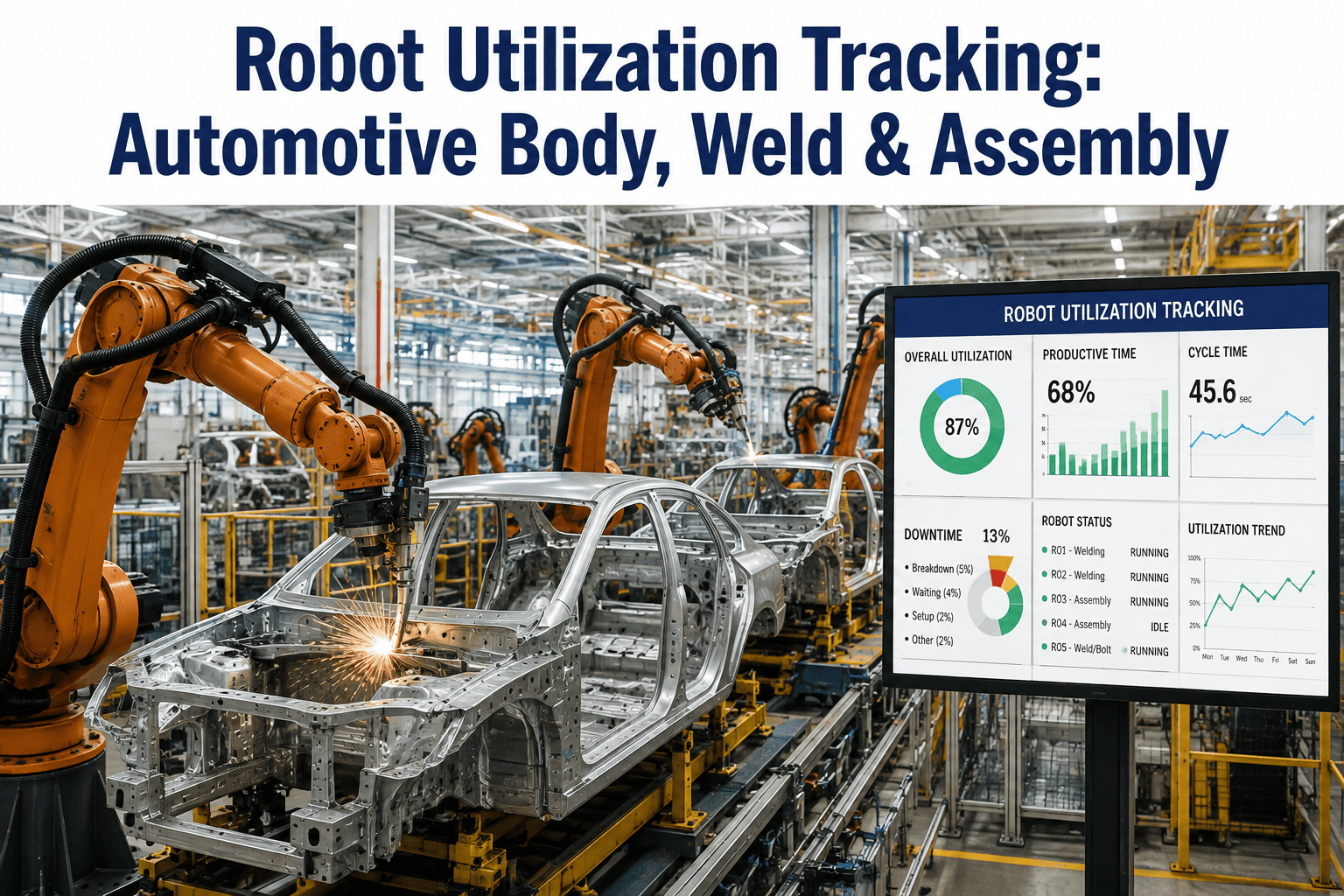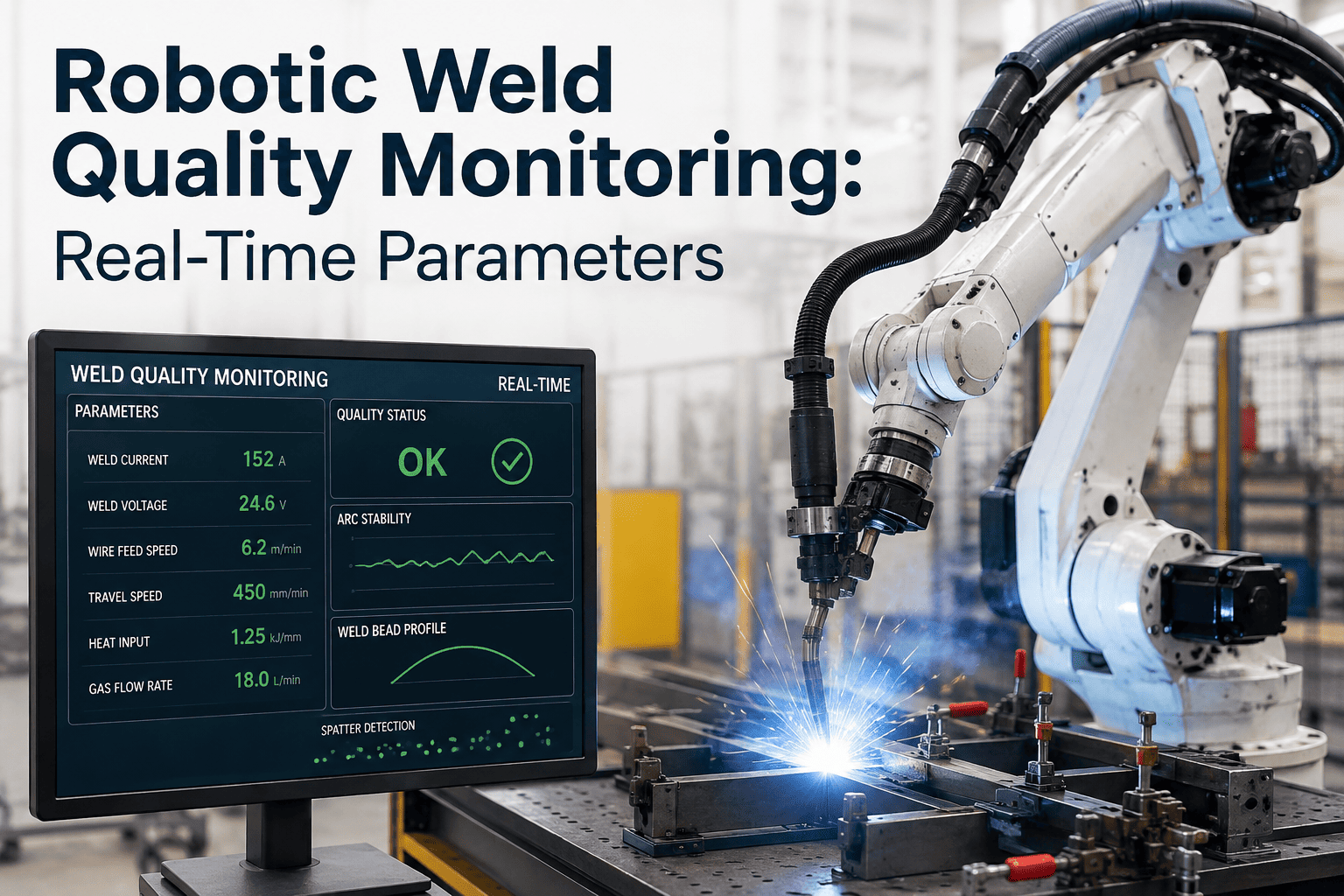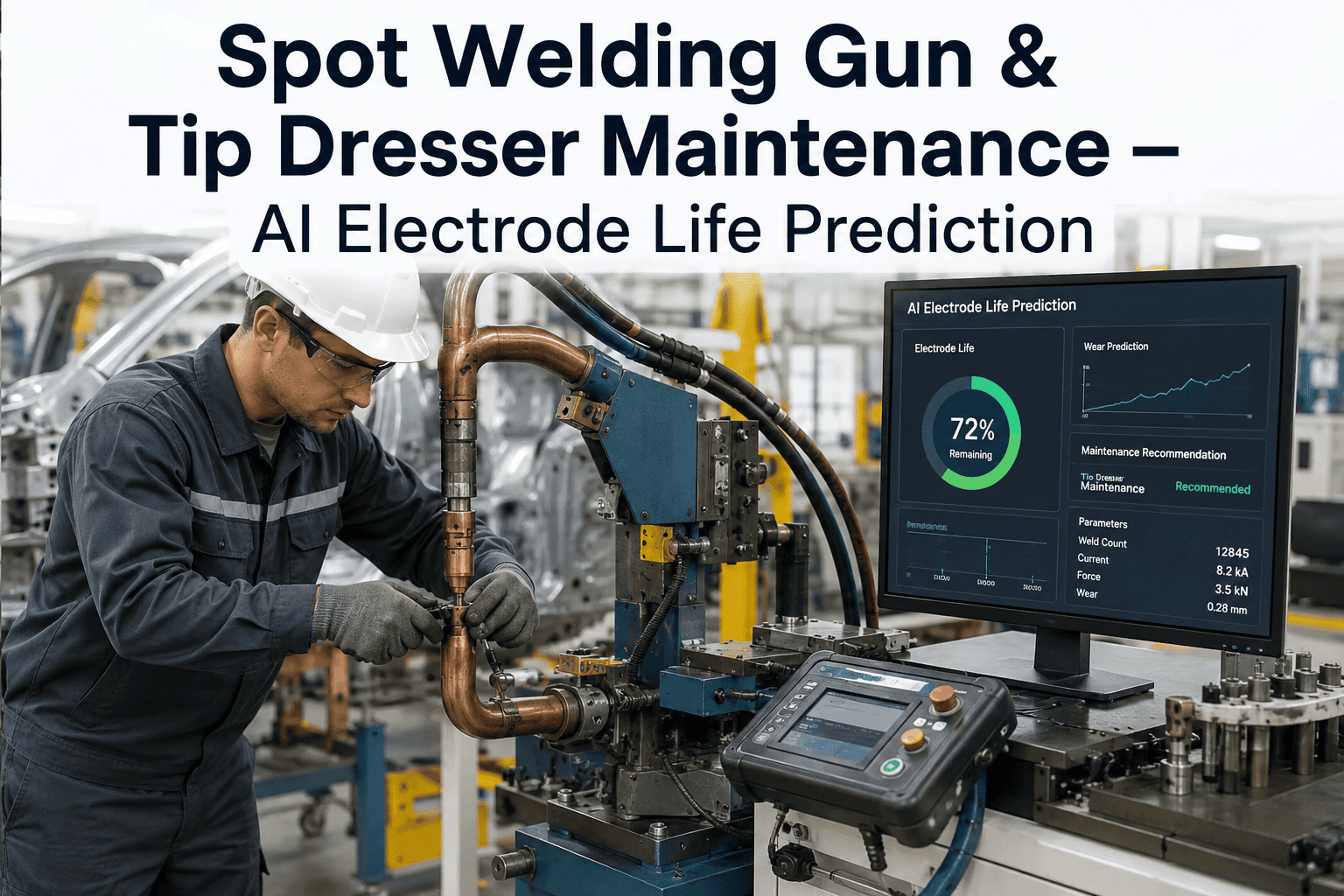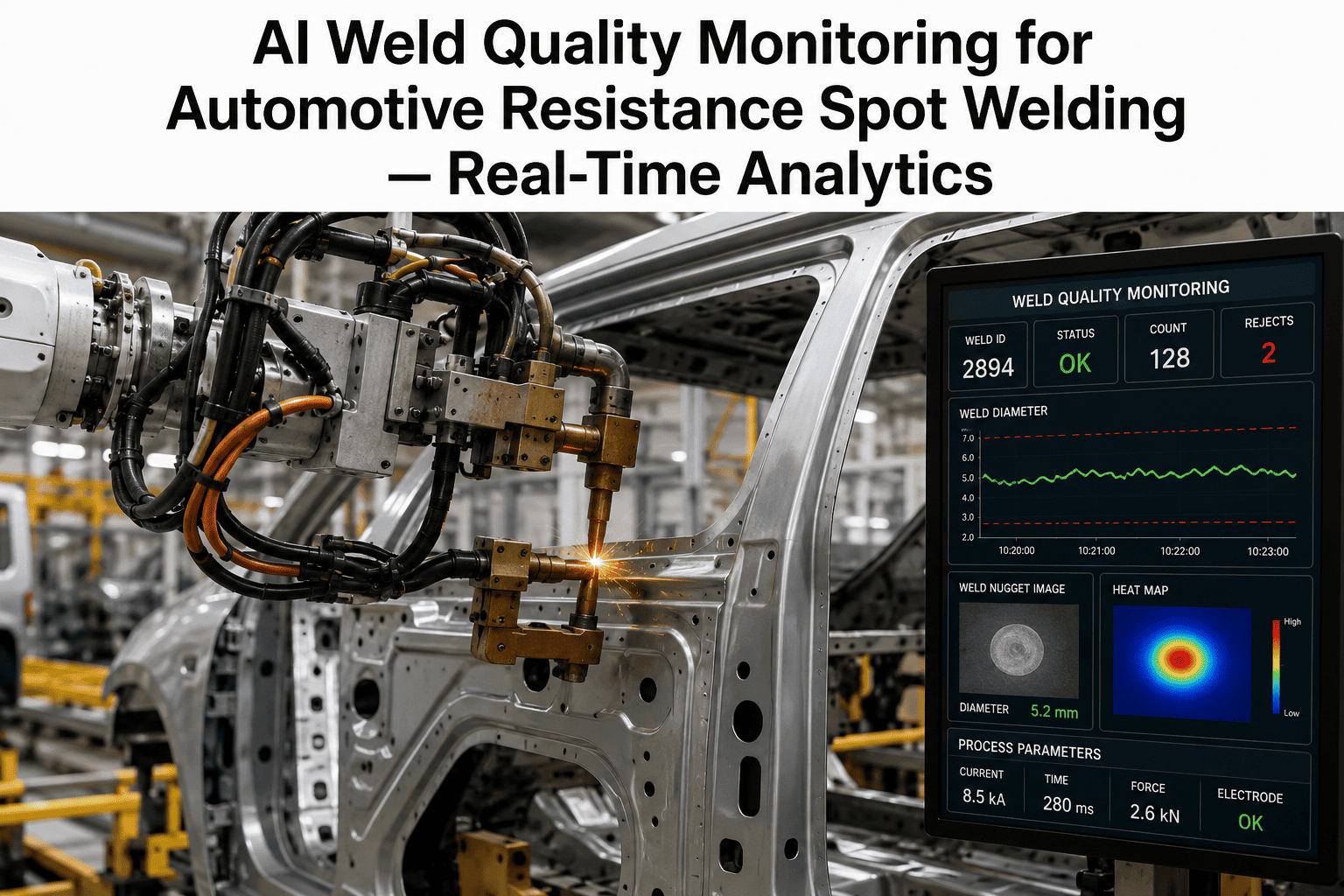
A body-in-white passes through more than four thousand spot welds before it ever reaches the paint shop, and every one of those welds is a small opportunity for electrode wear, misaligned tip dress timing, or a weld schedule that drifted slightly out of tune. Body shop engineers have traditionally managed this through fixed maintenance intervals and periodic destructive testing, which either over-services healthy weld guns or misses a gun that's degrading faster than the schedule assumes. AI-driven weld optimization tracks every weld gun's performance in real time, tunes schedules automatically, and predicts electrode wear before it produces an undersized nugget. Body shop engineers can book a demo to see weld quality monitoring running across a live production cell.
BODY SHOP · AI ROBOTIC WELDING OPTIMIZATION
Every Spot Weld, Monitored and Tuned in Real Time
AI-driven welding optimization tunes weld schedules, times tip dress intervals, and predicts electrode wear across every gun on the line, protecting body-in-white quality without slowing throughput.
4,000+
Spot welds monitored per body-in-white across a typical automotive body shop
Live
Weld current, voltage, and electrode force tracked on every single weld cycle
Predictive
Electrode wear forecast ahead of tip dress schedule to prevent undersized nuggets
Why Fixed Tip Dress Schedules Leave Quality Gaps
A fixed tip dress interval assumes every electrode wears at the same rate, but material thickness variation, gun angle, and even ambient conditions all change how fast a tip actually degrades. Dressing too early wastes consumables and cycle time; dressing too late risks an undersized nugget that passes visually but fails a peel test months later. AI weld monitoring tracks the actual electrical signature of each weld cycle, so tip dress timing adjusts to real wear instead of a calendar assumption.
Relative consumable use and undersized nugget rate by tip dress strategy, based on body shop benchmark data
What Gets Monitored on Every Weld Gun
1
Weld Current & Voltage Signature
Every weld cycle's electrical signature is captured and compared against the expected profile for that joint configuration.
2
Electrode Force Consistency
Force tracking flags guns drifting outside acceptable pressure range before it affects nugget formation.
3
Tip Wear Trend Analysis
Cumulative weld count and electrical drift patterns predict remaining electrode life ahead of failure.
4
Weld Schedule Auto-Tuning
Schedules adjust automatically within approved process windows to compensate for material and gun variation.
What Body Shop Managers Are Saying
We used to schedule tip dress by shift count, full stop, no matter what the data showed. Now we get an alert when a specific gun is actually drifting, and the destructive test failures on that gun's welds have dropped noticeably since we switched over. Our tooling budget has room to breathe for the first time in years.
Body Shop Manager, Automotive OEM Assembly Plant
Where the Cost Savings Actually Come From
Body shop managers tend to focus tip dress optimization purely on consumable spend, but the bigger line item is usually unplanned downtime avoided. A gun that fails mid-shift because a tip wore out faster than the schedule assumed forces a changeover that stops the cell, not just that one station, and cascading stoppages on a synchronized body line are far more expensive than the consumable itself. Predictive tip dress timing converts those unplanned stops into planned changeovers scheduled during natural line gaps, which protects throughput in a way that raw consumable savings numbers alone don't capture. Combined with fewer destructive test failures and less rework on marginal welds, the total cost impact typically runs well beyond the electrode budget line.
Signs Your Body Shop Is Ready for This
Not every body shop needs to start with a full-line rollout, and knowing where your biggest exposure sits helps target the pilot cell for the fastest payoff. Shops running high-mix production with frequent gauge and material changes tend to see the largest gains first, since fixed schedules struggle hardest under that kind of variability. Shops with a documented history of destructive test failures or NVH-related warranty claims traced back to specific weld guns also make strong pilot candidates, since the connection between weld data and downstream cost is already established.
High-Mix Production Schedules
Frequent material or gauge changes make fixed tip dress intervals especially inaccurate.
Documented Destructive Test Failures
A known pattern of test failures on specific guns points to a strong pilot candidate.
Modern Weld Controllers Installed
Digital output from existing controllers speeds up initial data integration considerably.
Frequently Asked Questions
No, the monitoring system typically connects to the data output already produced by modern weld controllers, reading current, voltage, and force signals without requiring a controller replacement. For older analog controllers without digital output, a retrofit sensor kit can capture equivalent data during the pilot phase. A quick equipment audit during rollout determines exactly what each gun needs before any commitment is made, and specifics can be reviewed through book a demo.
Auto-tuning operates strictly within the process parameters already approved in your weld schedule documentation, making only small adjustments within that validated window rather than introducing new, unvalidated settings. Any adjustment outside the approved range requires manual engineering sign-off, so process control ownership stays with your team at all times. This keeps the system compliant with existing PPAP and process validation requirements.
Depending on the weld application and material stack, electrode wear trends typically become detectable hundreds of weld cycles before the tip would produce an out-of-spec nugget, giving enough lead time to schedule tip dress or replacement during a planned changeover rather than as an unplanned stop. Prediction accuracy improves over the first several weeks of monitoring as the model learns the specific wear pattern for each gun and application.
Many body shops use continuous electrical signature monitoring as supporting evidence alongside their existing destructive test program, and some are able to work with their quality system to adjust sampling frequency once monitoring has demonstrated consistent correlation with test results. This is a plant-specific decision that typically involves your quality engineering team, and questions on how other customers have approached it can be directed to support.
For most body shops, avoided unplanned downtime from converting reactive tip failures into planned changeovers ends up being a larger contributor to total savings than the direct consumable cost reduction, since a single mid-shift gun failure on a synchronized line can stop far more than just that one station. Consumable savings are easier to measure and often quoted first, but the throughput protection tends to be the larger number once a plant tracks both over a full quarter. A cost breakdown specific to your cell layout can be built during a demo.