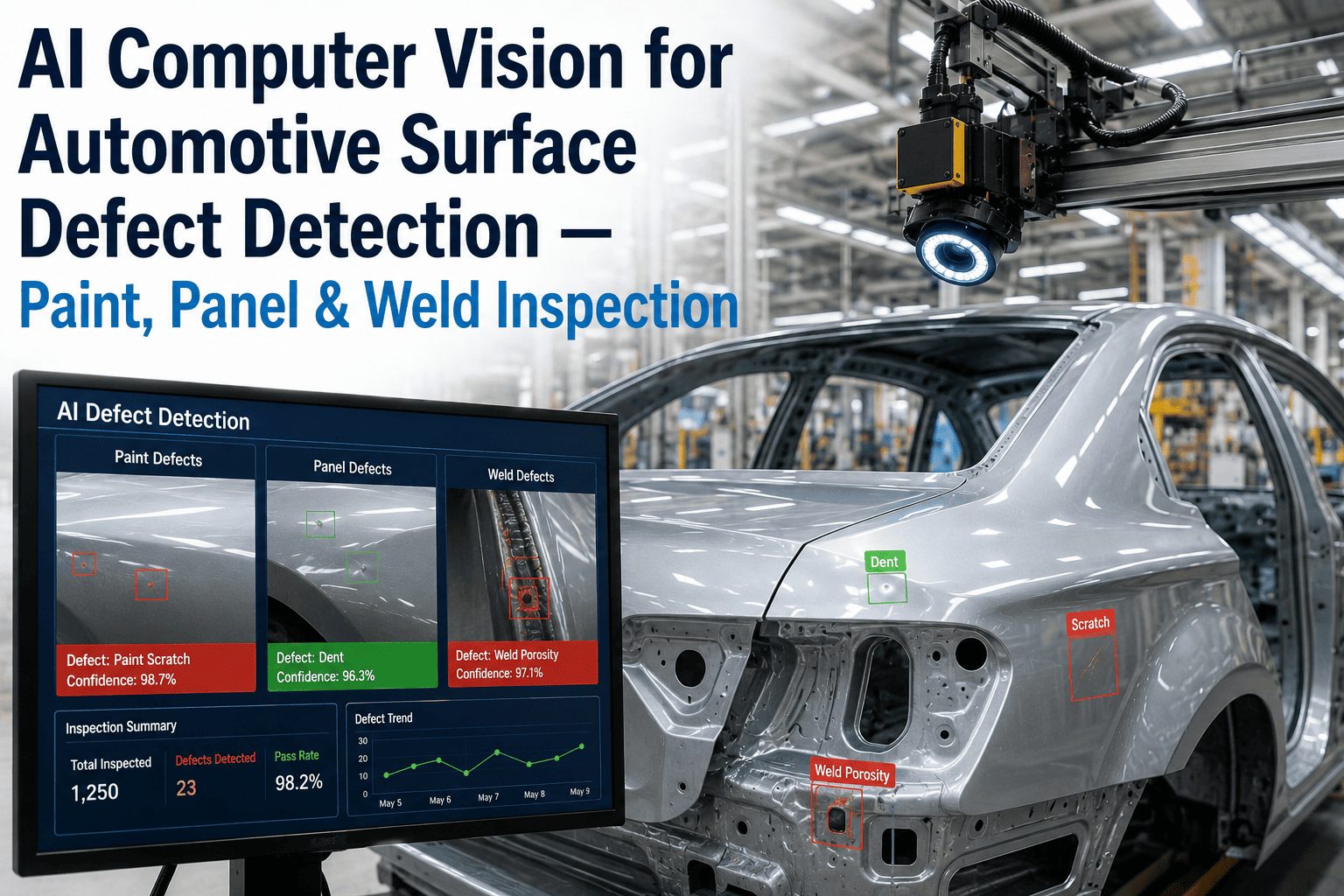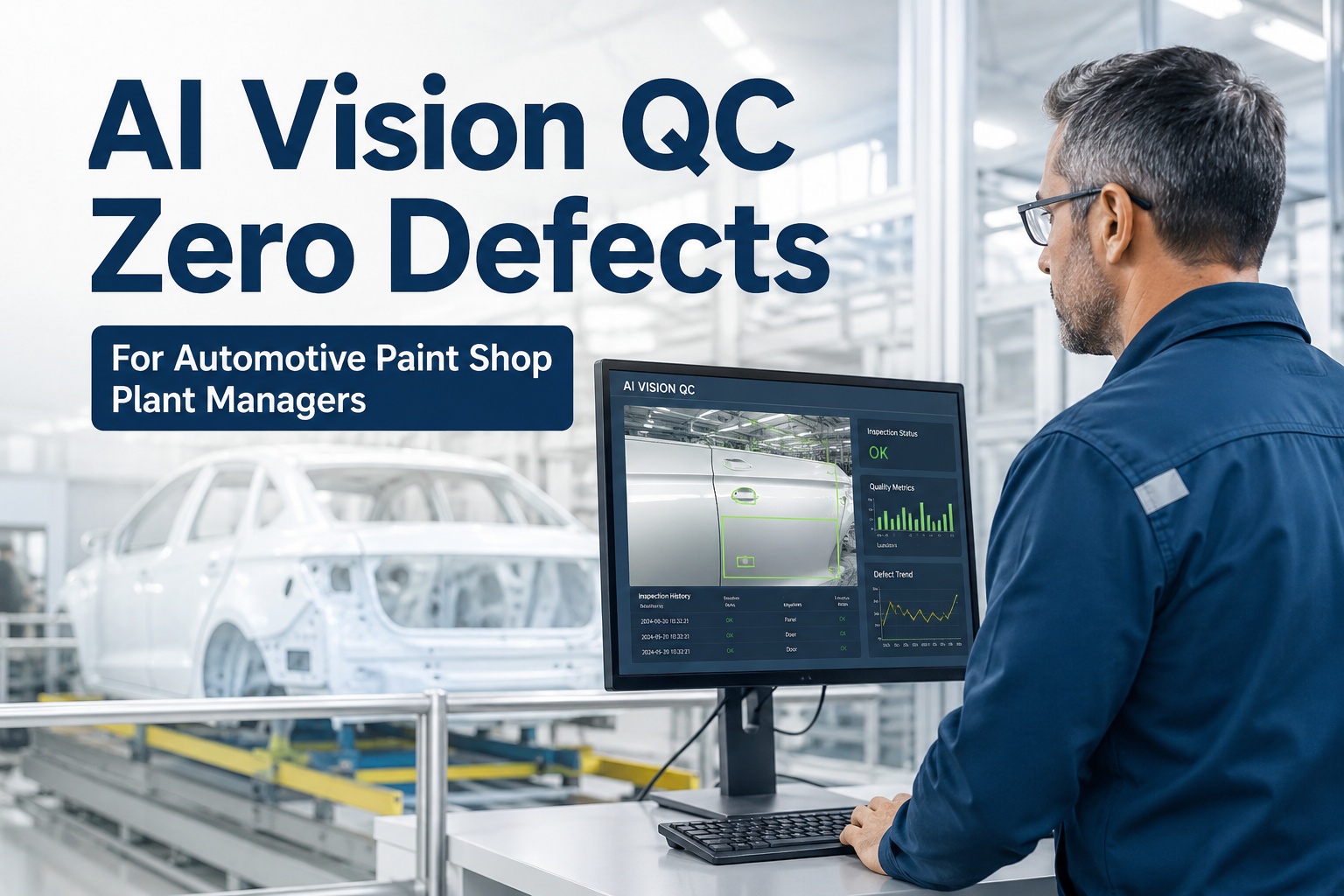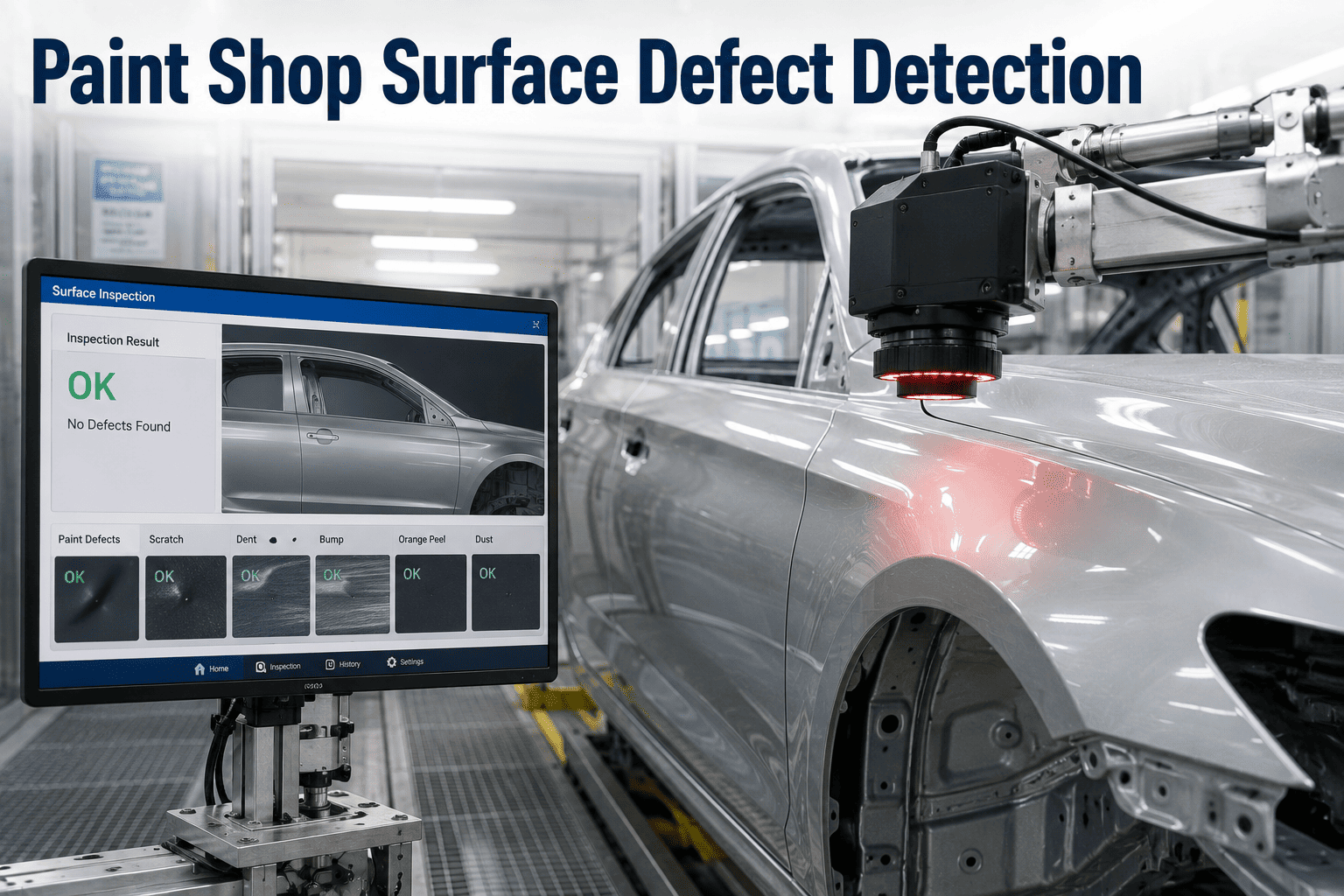
The automotive paint shop is the most quality-sensitive zone in any vehicle assembly plant. A single dirt nib, solvent pop, or clear coat run can cascade into hours of rework, scrapped bodies, and costly production delays. For decades, paint defect detection relied on human inspectors under intense booth lighting — a process that is both fatiguing and inconsistent. Today, Industry 4.0 technologies, specifically AI-driven vision systems, are transforming how paint surface defects are identified, classified, and acted upon. These systems deploy high-resolution cameras, structured light, and deep learning models to inspect every painted body at the booth exit, before it moves to final assembly. The result is a dramatic reduction in rework, improved first-run quality, and a measurable boost in overall equipment effectiveness (OEE). If you are responsible for paint shop quality, Book a Demo to see how iFactory automates defect detection.
Eliminate Paint Rework at the Source
AI-powered inspection catches defects in milliseconds. Stop defects before they reach assembly. Schedule a personalized demo today.
The True Cost of Paint Defects in Automotive Manufacturing
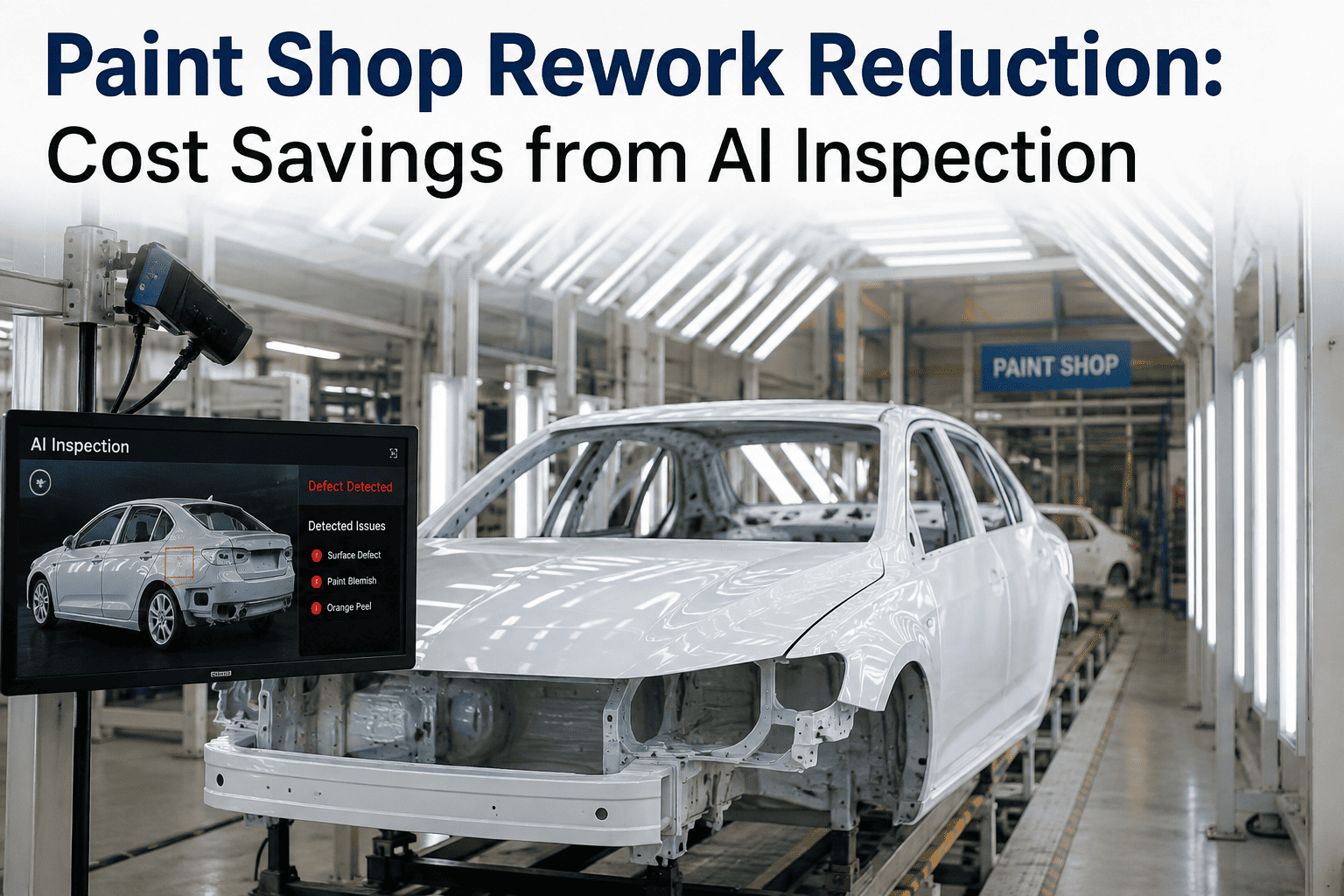
Paint defects are not just cosmetic — they represent massive financial losses. A single dirt nib on a hood can trigger a 45-minute rework cycle, including sanding, cleaning, masking, and repainting. In a high-volume plant producing 60 bodies per hour, even a 2% defect rate translates to over 25,000 rework hours annually. Beyond labor, rework consumes paint materials, energy, and booth time, while increasing the risk of secondary defects. For luxury or electric vehicle brands, where surface finish is a key differentiator, the cost of a single returned vehicle can exceed $10,000. AI-driven defect detection eliminates these inefficiencies by catching issues instantly at the booth exit, enabling immediate corrective action before the body leaves the paint environment.
Comprehensive Classification of Paint Surface Defects
Modern AI vision systems can identify over 20 distinct defect types. The table below lists the most common defects found in automotive paint shops, their root causes, and the typical rework cost per defect.
| Defect Type | Root Cause | Rework Cost (USD) | Detection Difficulty |
|---|---|---|---|
| Dirt Nib | Airborne particles in booth | $45 | Medium |
| Paint Run / Sags | Excessive film build / viscosity | $65 | High |
| Solvent Pop | Flash-off too rapid | $35 | Low |
| Crater / Fish-eye | Contamination (oil, silicone) | $70 | High |
| Orange Peel | Improper atomization / flow | $30 | Low |
| Blistering | Moisture in paint system | $85 | High |
| Scratches / Marring | Mechanical handling damage | $55 | Medium |
| Clear Coat Haze | Humidity / curing issue | $40 | Medium |
Each defect type requires a specific corrective action. AI systems not only detect but also classify the defect, providing operators with actionable insights to adjust process parameters in real time.
AI Vision Architecture for Paint Defect Detection
A robust paint defect detection system integrates multiple hardware and software layers. The core components include:
High-Resolution Cameras
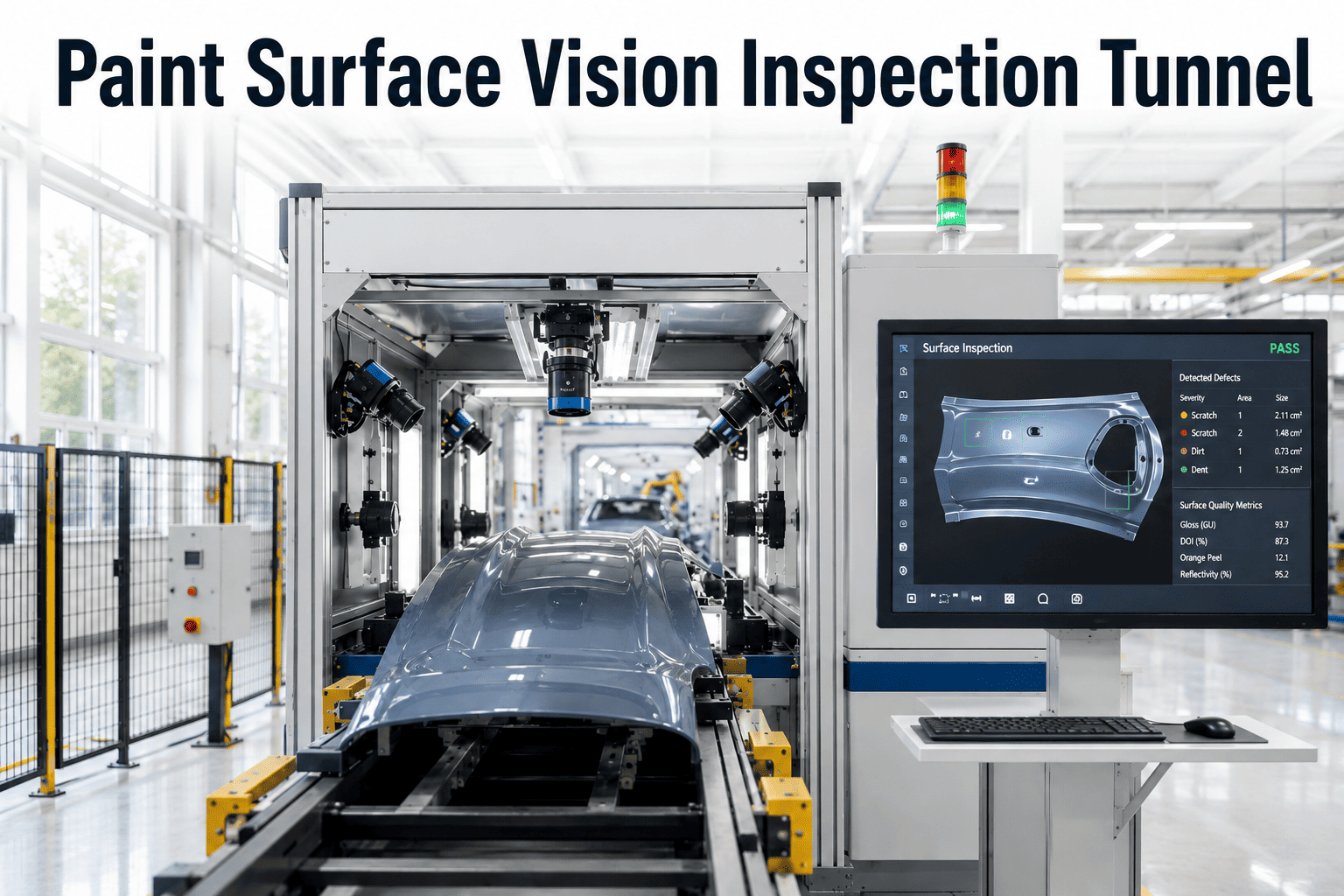
Multiple 12MP+ cameras positioned at the booth exit capture the entire painted surface — hood, roof, side panels, and doors — under controlled LED lighting. Structured light patterns enhance defect contrast.
Edge AI Processing
On-premise GPU servers run convolutional neural networks (CNNs) optimized for defect segmentation. Inference times are under 50 milliseconds per image, enabling real-time detection at line speed.
Defect Classification Engine
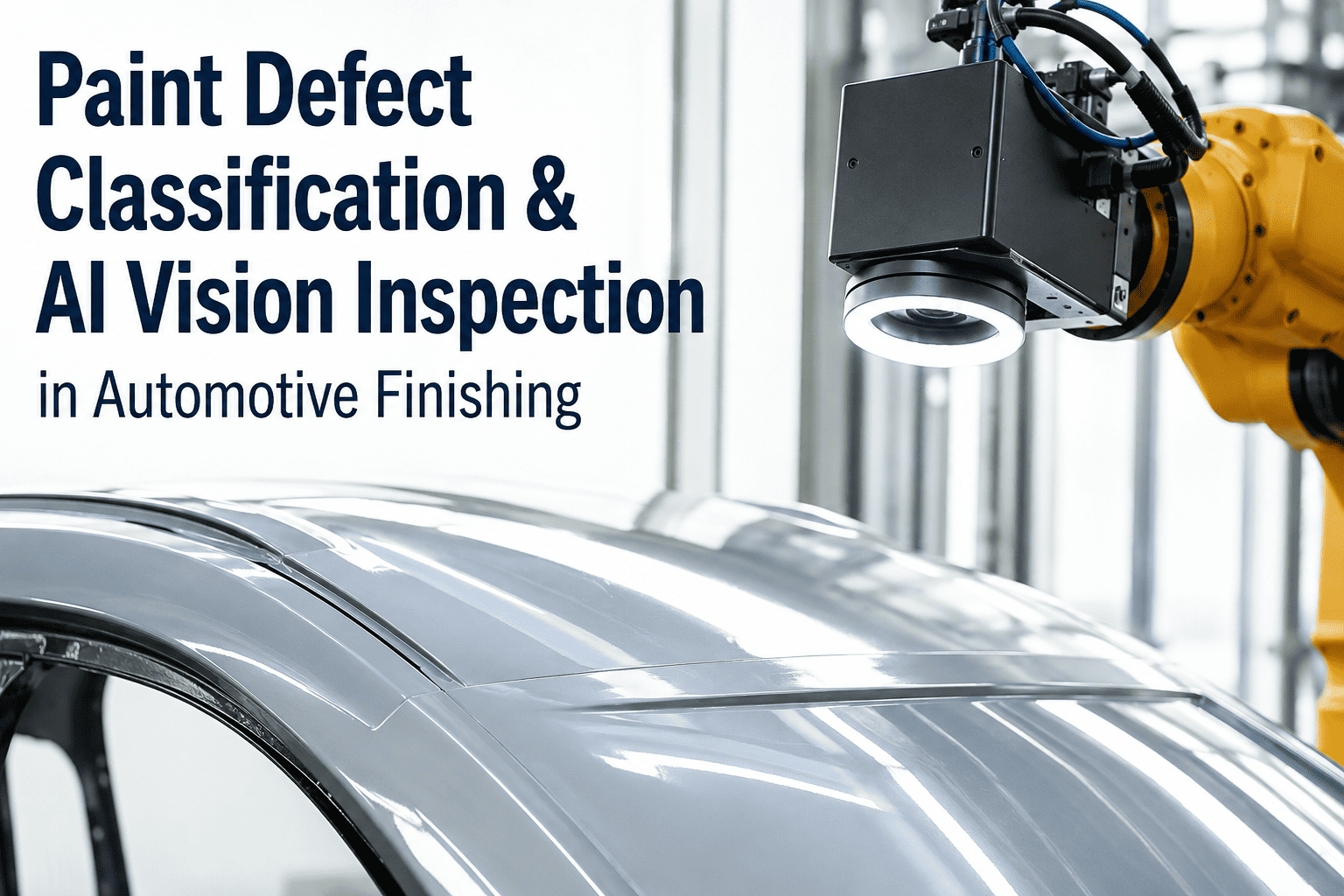
A multi-label classifier trained on over 100,000 annotated images distinguishes between dirt nibs, runs, craters, and other defects with >98% accuracy. The model continuously learns from new data via active learning.
Integration with MES
Defect data is automatically pushed to the Manufacturing Execution System (MES), triggering rework workflows, updating quality dashboards, and feeding root cause analysis modules for process improvement.
Deployment Strategies for Existing Paint Lines
Retrofitting AI vision into legacy paint shops is a common challenge. iFactory's modular solution can be deployed in three configurations:
- Booth Exit Gantry: A standalone gantry with cameras and lights is installed immediately after the final clear coat booth. This is the most common and least intrusive option.
- In-Booth Integration: For greenfield installations, cameras are embedded into the booth walls and ceiling, providing 360-degree coverage without additional floor space.
- Mobile Inspection Station: A cart-mounted system that can be wheeled to any point in the paint line for spot checks or process validation. Ideal for low-volume or pilot runs.
All configurations connect to the same AI backend and provide consistent defect reporting. The system can be operational within two weeks of installation, with minimal disruption to production.
Measurable Impact: Before and After AI Inspection
Plant data from a Tier 1 automotive supplier shows the following improvements after deploying AI-based paint defect detection:
These metrics are not outliers. Across multiple installations, iFactory customers consistently achieve first-run quality improvements of 15–25 percentage points, directly impacting OEE and reducing warranty claims.
Ready to Transform Your Paint Shop Quality?
Join leading automotive OEMs that have already eliminated paint rework. Our AI solution is proven in production environments worldwide.
Root Cause Analysis: From Defect Detection to Process Optimization
AI defect detection is not just about catching bad parts — it is a gateway to continuous process improvement. By aggregating defect data over time, plant engineers can identify patterns that point to root causes. For example, a spike in solvent pops on the right rear quarter panel may indicate a clogged nozzle on robot #4. A recurring dirt nib pattern on the hood could signal a leak in the booth's HEPA filter. iFactory's analytics platform correlates defect data with process parameters (temperature, humidity, paint viscosity, robot speed) to generate actionable recommendations. This closed-loop feedback system enables proactive adjustments, reducing defect occurrence by up to 60% within six months.
Meeting Automotive Quality Standards with AI
Automotive paint quality standards, such as those from OEMs like Toyota, VW, and Tesla, require defect-free surfaces with strict limits on size, count, and location. AI vision systems are designed to comply with these standards by providing:
- Granular Defect Reporting: Each defect is recorded with its type, size (in microns), location (x,y coordinates on the body), and timestamp.
- Audit Trail: Every inspection result is stored in an immutable database, supporting traceability for quality audits and warranty investigations.
- Customizable Thresholds: OEM-specific acceptance criteria can be configured per vehicle model, ensuring that only defects exceeding the limit are flagged for rework.
This level of detail is impossible to achieve with manual inspection, making AI an essential tool for meeting the most stringent quality requirements.
The Future of Paint Defect Detection: Predictive Quality
The next frontier is predictive quality — using AI to forecast defects before they occur. By analyzing real-time data from paint robots, environmental sensors, and material batch records, predictive models can alert operators to conditions that historically lead to defects. For instance, if the booth humidity rises above 65% and the paint viscosity is at the upper spec limit, the system might predict a 70% probability of orange peel on the next 10 bodies. Operators can then adjust parameters proactively, maintaining zero-defect production. iFactory is already piloting this capability with select customers, and early results show a 40% reduction in defect occurrence beyond what reactive detection achieves.
Implementation Roadmap: From Pilot to Plant-Wide Rollout
Adopting AI defect detection is a structured process. iFactory recommends a phased approach to minimize risk and maximize learning:
- Phase 1 – Pilot (4 weeks): Install a single gantry system on one paint line. Train the AI model on 5,000 images of that line's specific defects. Validate accuracy and rework reduction.
- Phase 2 – Optimization (8 weeks): Fine-tune the model with active learning. Integrate defect data with MES and set up dashboards for shift supervisors. Achieve >95% detection accuracy.
- Phase 3 – Scale (12 weeks): Deploy systems on remaining paint lines. Standardize defect classification across all lines. Train operators on data-driven process adjustments.
- Phase 4 – Predictive (ongoing): Enable predictive quality models. Establish continuous improvement cycle using aggregated defect analytics.
Throughout the rollout, iFactory provides on-site support and remote monitoring to ensure seamless operation.
Frequently Asked Questions
What types of paint defects can AI vision detect?
AI vision systems can detect a wide range of surface defects including dirt nibs, paint runs, solvent pops, craters, orange peel, blistering, scratches, clear coat haze, and more. The system is trained on thousands of annotated images to recognize subtle variations in texture, reflectivity, and geometry. For a detailed list, refer to the defect classification table above. To see how iFactory's AI handles your specific defect types, Book a Demo and we will run a sample test on your painted bodies.
How accurate is AI compared to human inspection?
AI consistently achieves >98% detection accuracy for common defects, compared to human inspectors who average 70–85% due to fatigue and environmental factors. More importantly, AI provides 100% inspection coverage — every body, every surface, every shift — while humans typically sample only 10–20% of production. This comprehensive coverage eliminates the risk of defective bodies reaching assembly. For a deeper dive into accuracy metrics, contact our support team for a technical white paper.
Can the system be integrated with my existing MES or ERP?
Yes. iFactory's AI platform includes standard connectors for major MES and ERP systems, including SAP, Siemens, Rockwell, and custom APIs. Defect data is pushed in real time, enabling automatic rework order creation, quality dashboard updates, and traceability. Integration typically requires less than two weeks of engineering effort. For a detailed integration guide, visit our support page.
What is the typical ROI for an AI paint defect detection system?
Customers typically achieve ROI within 9–12 months. The primary savings come from reduced rework labor (up to 78% reduction), lower material consumption, decreased energy usage in rework booths, and fewer warranty claims. For a high-volume plant with 60 bodies per hour and a 2% defect rate, the annual savings can exceed $2 million. To calculate your specific ROI, Book a Demo and our team will provide a customized financial analysis.
How long does it take to train the AI model for a new paint line?
The initial model training takes approximately 2–3 weeks, using a dataset of 3,000–5,000 images captured from the target line. After deployment, the model continues to improve through active learning — operators can flag missed defects or false positives, and the model retrains overnight. This continuous improvement cycle ensures that accuracy increases over time. For a detailed timeline, contact our implementation team.
Stop Paint Defects Before They Cost You Millions
AI-powered inspection is no longer a luxury — it is a competitive necessity. iFactory's proven solution is trusted by global automotive brands to deliver defect-free painted bodies, every time.