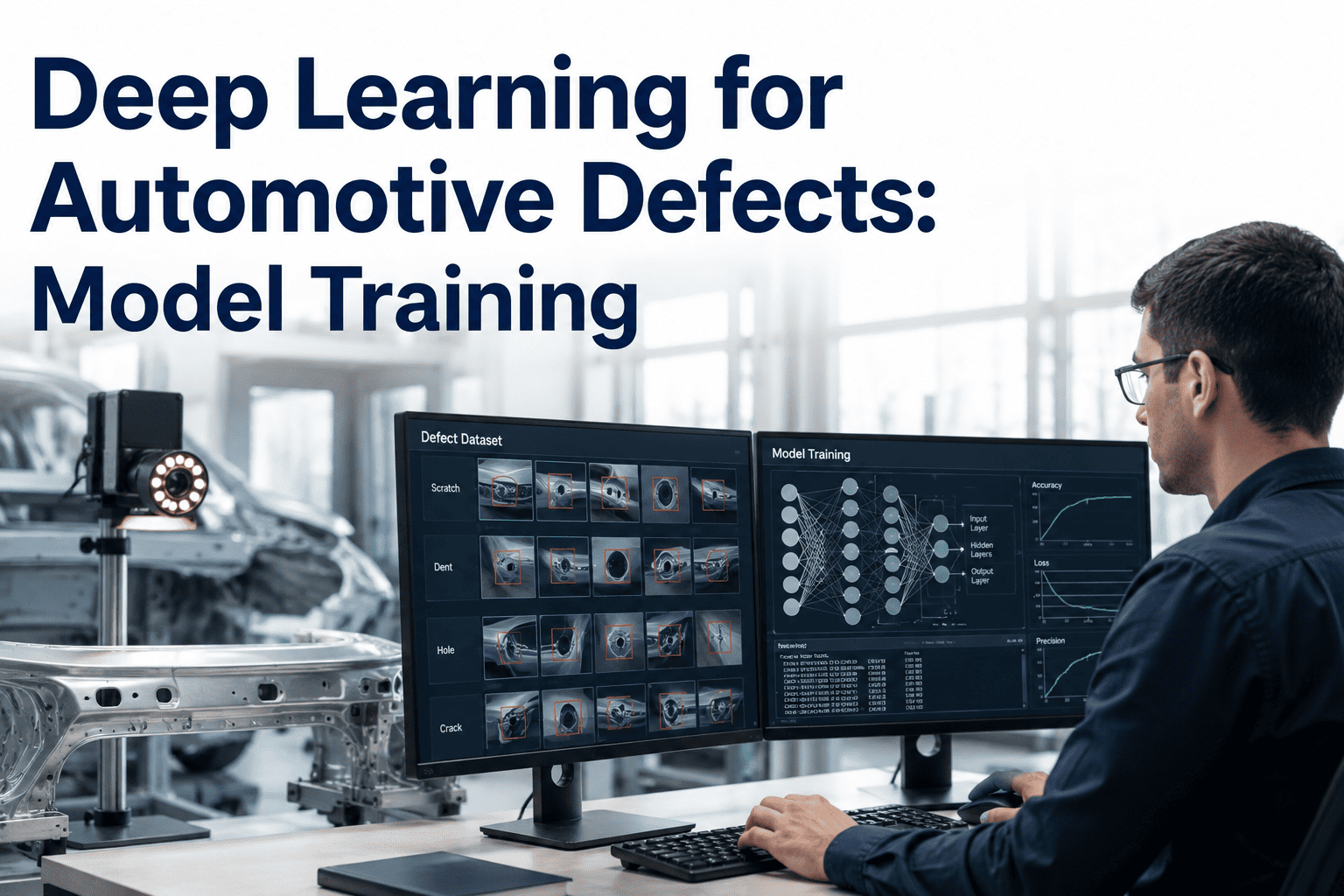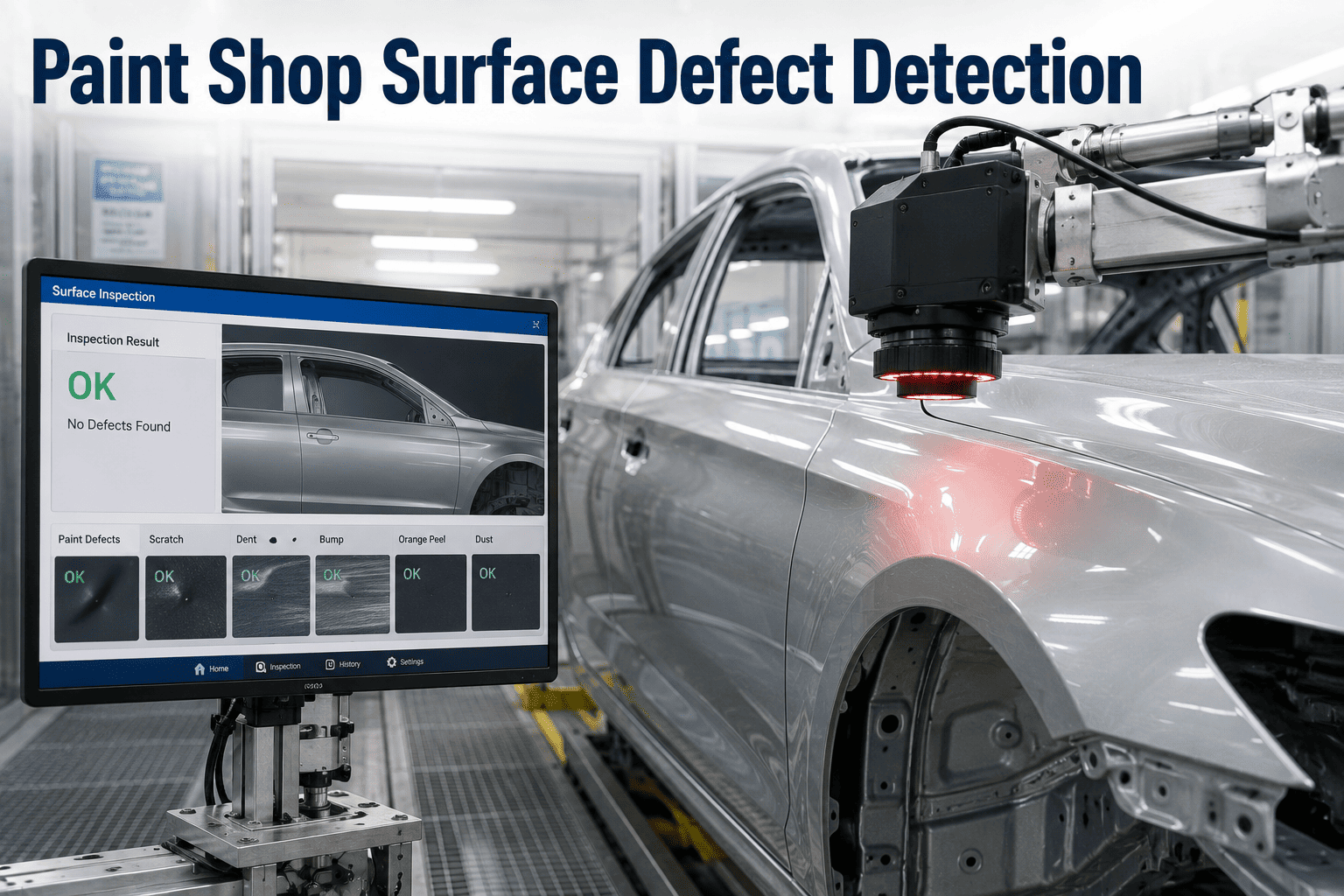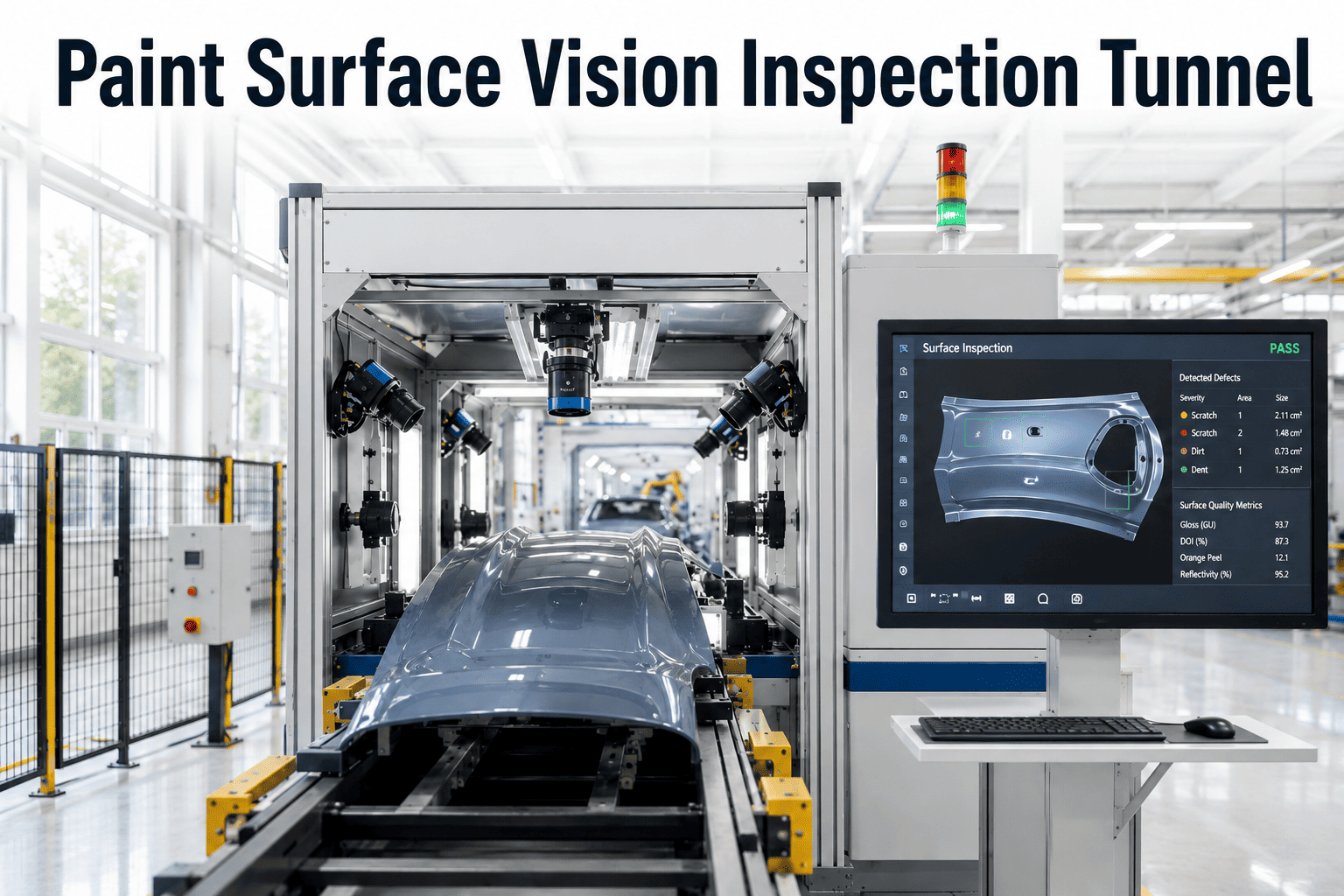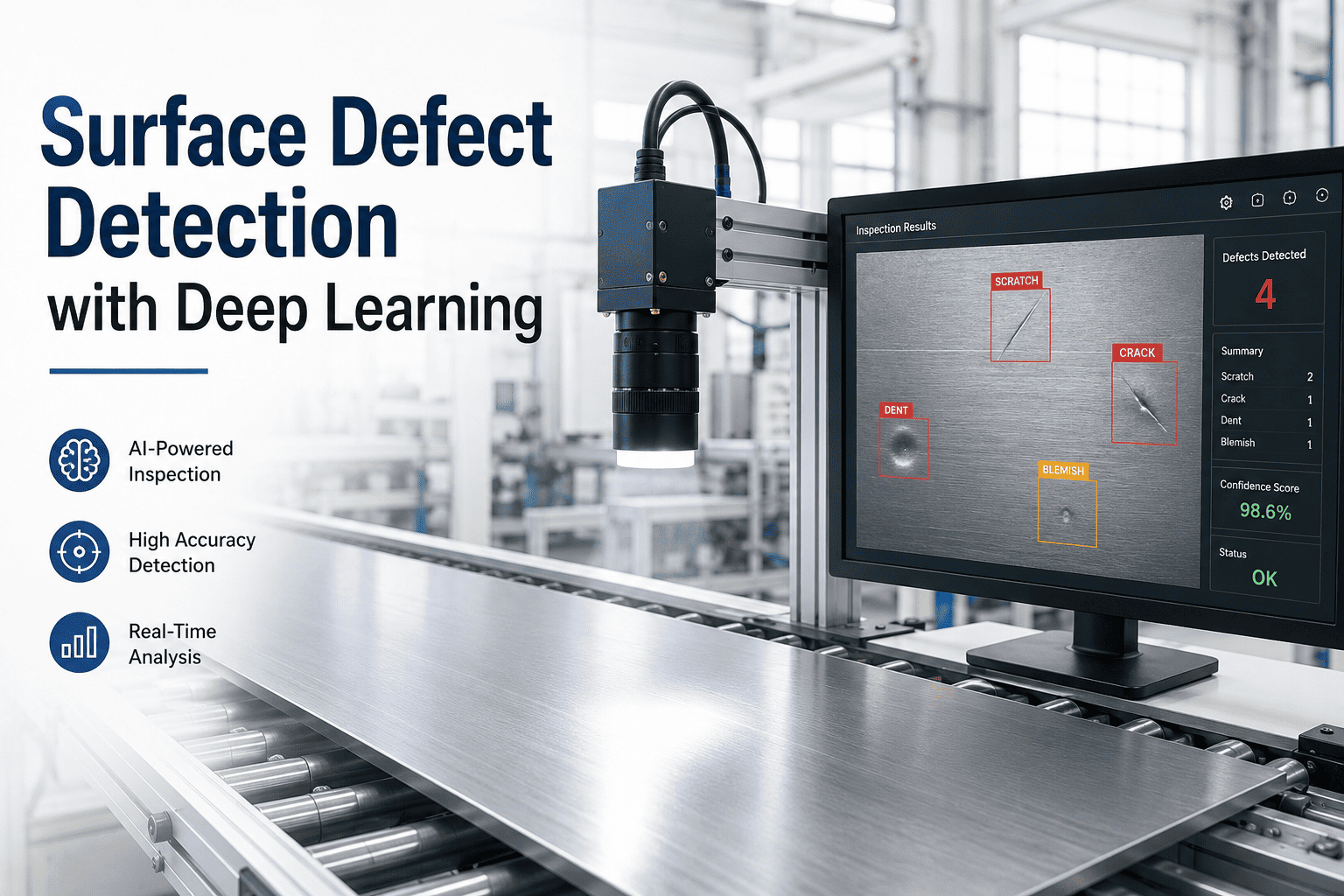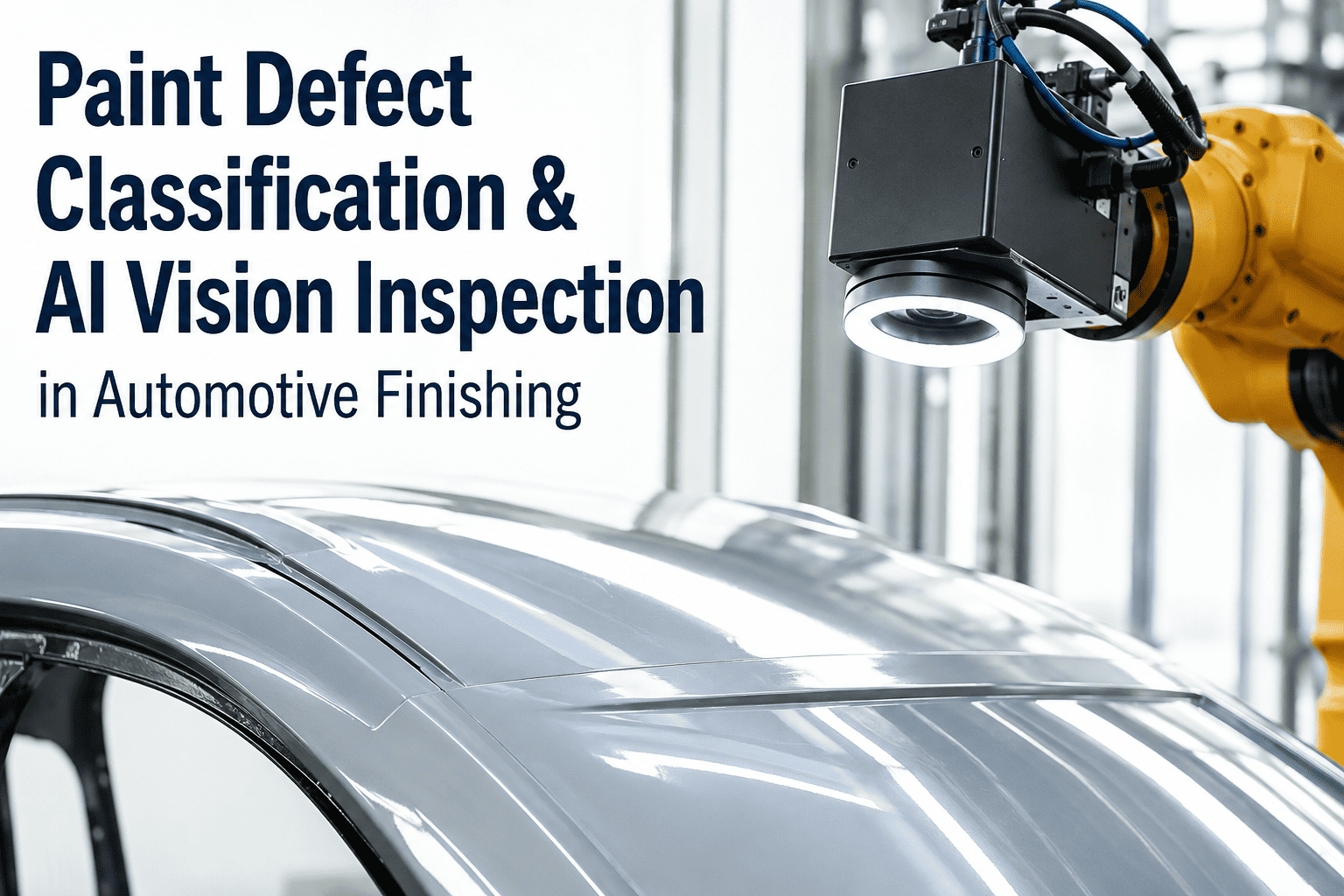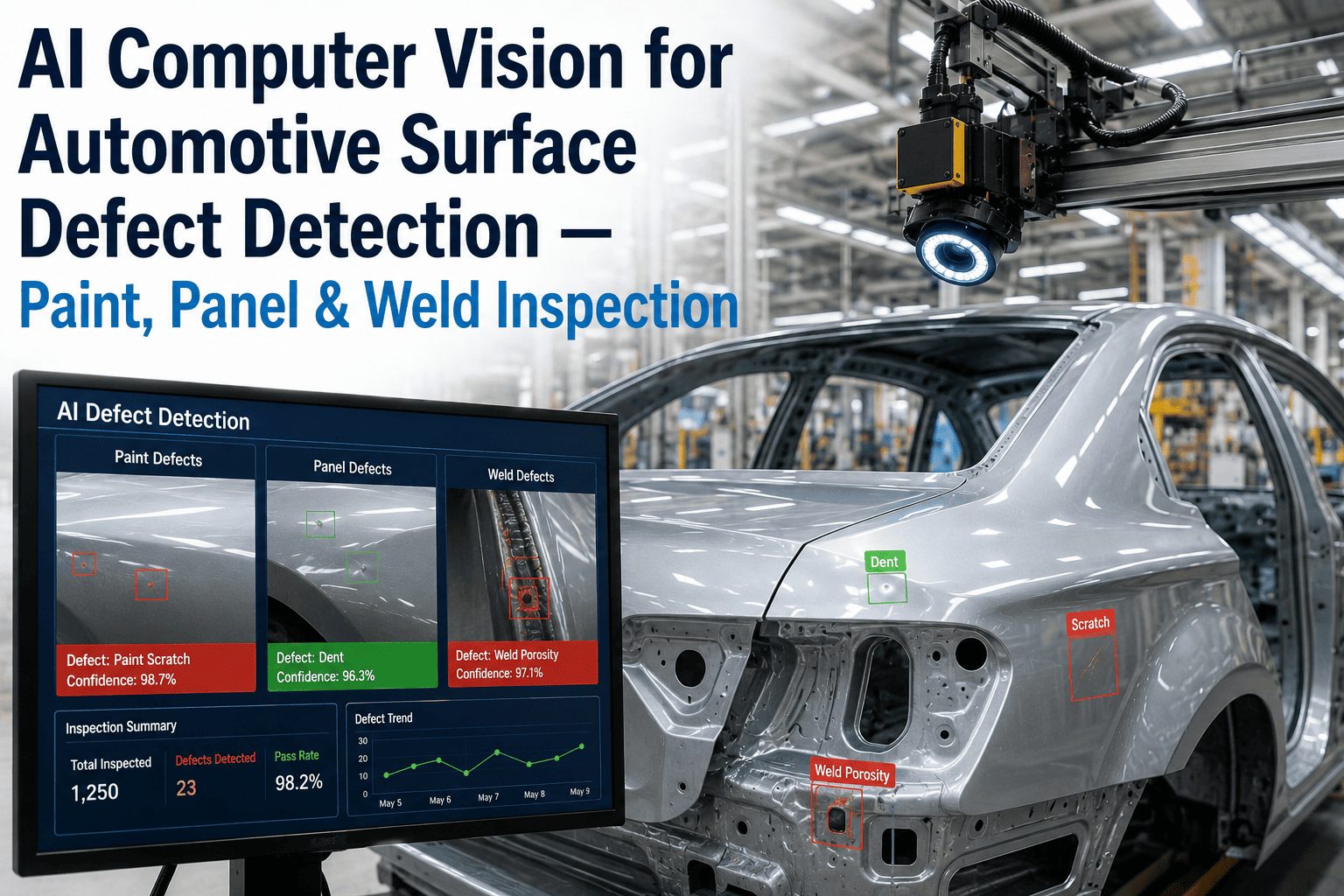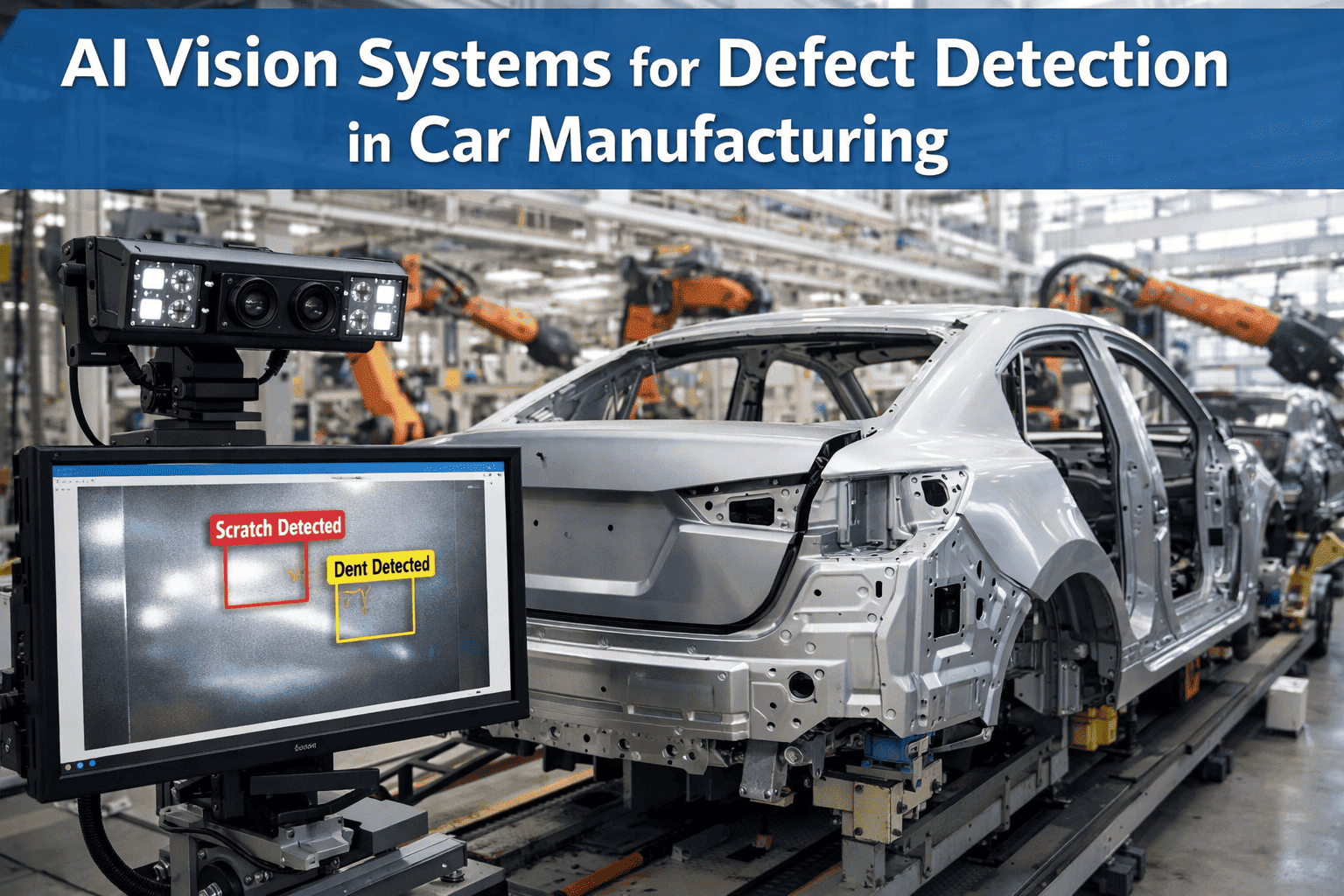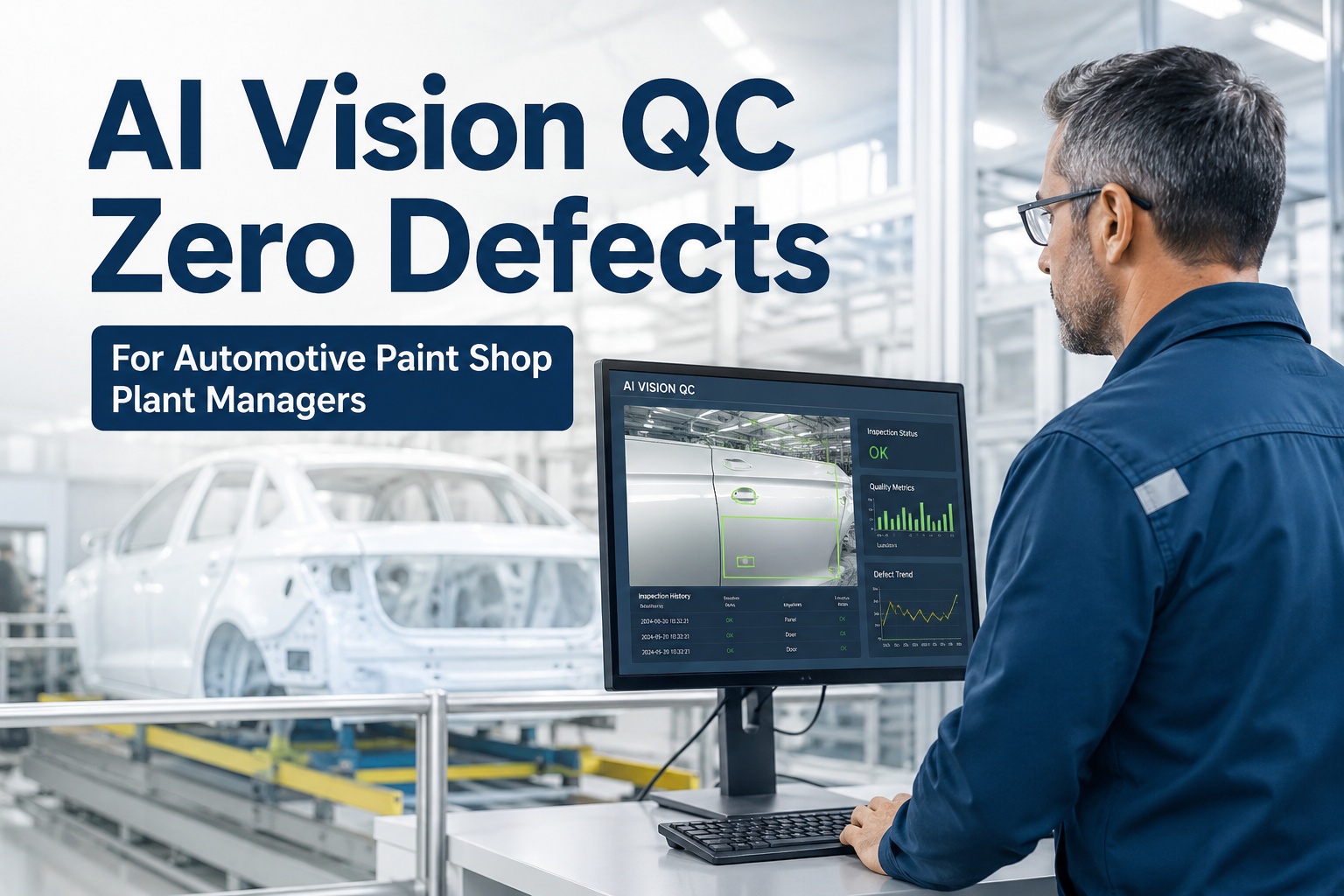
Plant managers running automotive paint shops in 2026 are working against a customer expectation curve that has bent toward zero — premium OEM customers measure paint quality at the level of individual defect counts per body, automotive OEM scorecards penalize escapes that the dealer or end customer sees, and the cost of every dirt nib, sag, fisheye, or color mismatch that reaches a paint repair line is measured in dollars per body, labor hours, and customer scorecard movement. The traditional response — rule-based machine vision systems coupled with manual visual inspection by trained operators — hit its ceiling years ago. Rule-based vision systems detect what they were programmed to find, miss new defect patterns the program writer never anticipated, and require constant rework when models, colors, or booth conditions change. Manual visual inspection has its own well-known failure modes — operator fatigue, defect drift, and inter-inspector variance. The zero defect manufacturing target plant managers are now committing to requires AI Vision QC built on deep learning defect detection — convolutional neural networks trained on the actual defect taxonomy of the specific plant, edge-deployed for sub-50ms inference at line speed, continuously retrained as defect categories evolve, integrated with the predictive SPC and process intelligence layers, and surfaced in plant manager dashboards that show actual quality movement rather than retrospective inspection counts. The math is decisive — AI Vision QC built on deep learning delivers paint shop defect reduction of 30–70% within the first twelve months of deployment, plus IATF 16949 SPC evidence strengthened continuously and a sustainable path toward the zero defect manufacturing target. This page is the automotive paint shop plant manager's guide to AI Vision QC — what deep learning defect detection actually does, how it compares to traditional machine vision, the defect taxonomy it covers, the plant manager KPI view that emerges, and how the platform deploys in an automotive paint shop.
AI Vision QC Zero Defects | Automotive Paint Shop Plant Managers
The automotive paint shop plant manager's guide to AI Vision QC — deep learning defect detection, machine vision quality control, AI-native SPC, predictive analytics, and adaptive control on one platform. Cuts paint shop defects 30–70% within 12 months toward the zero defect manufacturing target. NVIDIA appliance, sub-50ms inference, IATF 16949 SPC evidence strengthened.
AI Vision QC Architecture for Automotive Paint Shop
AI Vision QC for paint shop is not a single camera or a rule-based image processing system — it is a layered architecture that runs deep learning defect detection across multiple cameras, multiple stations, and multiple inspection passes, with edge inference at sub-50ms latency and integration with the predictive SPC, process intelligence, and plant manager KPI layers. The architecture below shows what the iFactory AI Vision QC platform actually is in a paint shop deployment.
The structural insight is that a real AI Vision QC platform requires all five layers working together. Cameras provide the visual data. Edge compute runs the deep learning models locally at sub-50ms. The CNN-based models are trained on the actual defect taxonomy of the specific plant rather than pre-canned generic models. The quality decision layer routes bodies to pass, rework, or escalation. The plant manager KPI layer surfaces actual quality movement against the zero-defect target. Each layer has to perform for the whole platform to deliver. Most legacy machine vision systems stop at Layer 2 plus rule-based processing — which is structurally why they hit a capability ceiling.
Want this AI Vision QC architecture mapped to your specific paint shop? Schedule the AI Manufacturing Transformation Workshop — iFactory's automotive team will diagram the deployment for your paint shop and demonstrate deep learning defect detection on representative body images. Sessions available this week.
AI Vision QC vs Traditional Machine Vision — The Capability Comparison
The shift from rule-based machine vision to AI Vision QC built on deep learning is the same kind of architectural leap as the shift from reactive to predictive SPC. The plant manager comparison below shows what actually changes — for the inspection system, for the operations team, and for the zero defect program trajectory.
Every row of the comparison represents a structural improvement for the zero defect manufacturing program. Detection moves from rule-based to learned. Adaptation moves from manual reprogramming to continuous retraining. False call rate drops from high (with associated alert fatigue) to low (with confidence-scored detections). Defect taxonomy depth expands from 10–20 coarse categories to 200+ granular categories — which is what makes automatic root cause analysis actually work. The cumulative effect is a system the plant manager can trust as the foundation for the zero defect target.
Defect Detection Coverage Across Every Paint Shop Station
What AI Vision QC actually catches at each paint shop inspection point
AI Vision QC coverage extends across every paint shop station that has visual inspection requirements. The map below shows what defect categories the deep learning models actually detect at each inspection point, with confidence-scored output feeding both the line-speed disposition decision and the plant manager KPI layer.
The seven inspection points work as a single connected system, not as isolated stations. A pattern that emerges at clearcoat exit is automatically correlated back to basecoat color application, which is in turn correlated to upstream primer booth conditions. The deep learning models share knowledge across stations, so a precursor signature in primer feeds the prediction model for clearcoat defects. This is what closes the gap from reactive defect catching to truly predictive zero-defect operations.
Five AI-Native Capabilities on the AI Vision QC Platform
Deep Learning
CNN-based defect detection trained on plant-specific data
Edge Vision
Sub-50ms inference at line speed on NVIDIA appliance
200+ Categories
Granular defect taxonomy with automatic classification
Predictive SPC
Vision results feed multivariate predictive SPC layer
IATF Evidence
Continuous quality records strengthen audit posture
The Plant Manager Quality KPI View
What the plant manager actually sees on the AI Vision QC dashboard
Defects per Body
Rolling trend with zero-defect target line and movement vs baseline
Escape Rate
Defects reaching final inspection or customer per 1000 bodies
Defect Category Mix
Top 10 active defect categories with movement vs prior period
First Time Through (FTT)
Bodies passing without rework, by station and overall
DOI & Color Scoring
Customer-spec scoring vs target with intervention forecast
Cpk on CTQs
Continuous Cpk on critical-to-quality features for IATF evidence
The plant manager dashboard is fundamentally different from what traditional QC reporting delivers. Every metric is live rather than retrospective. Every metric is tied to actionable adjustment paths (defects per body falling means the predictive intervention is working; defects per body climbing means specific categories are emerging and the operations team needs to focus). The zero-defect target is visible on the same dashboard, with measurable progress against it tracked continuously. Plant managers running the AI Vision QC platform typically describe the dashboard as the first time the quality KPIs aligned with the program targets the leadership team committed to.
Want a plant manager dashboard preview built against your paint shop data? Send your current defect taxonomy and quality KPI definitions to iFactory support and the automotive team will return a customised dashboard preview — typically within 3 business days, no obligation.
Six Paint Shop Applications Where AI Vision QC Pays Back Fastest
Final Inspection Deck
Highest-leverage AI vision deployment. Replaces manual inspection with consistent deep learning detection across the full defect taxonomy.
Clearcoat Surface QC
Deep learning detection of clearcoat surface defects coupled with spectrophotometric DOI measurement. Customer-visible quality dimension.
Color Match QC
Spectrophotometry plus deep learning catches color drift between body and bumper, mirror, door handle components. Premium quality dimension.
Repair Verification
Verifies repair effectiveness before bodies leave the repair line. Reduces rework cycles where repairs don't fully address the defect.
Edge & Complex Geometry
Deep learning catches defects that rule-based vision misses on complex geometry — door edges, A/B/C pillars, panel joints, recessed areas.
EV Paint Shop Operations
EV-specific paint shop operations — battery enclosure paint quality, charge port surrounds, EV-specific trim. New capability vs ICE legacy.
Want station-specific projections for your paint shop? Send your paint shop layout, defect categories, and current vision system setup to iFactory support and the automotive team will return a customised projection — typically within 3 business days, no obligation.
IATF 16949 SPC & Automotive Quality Standards — Native to the Platform
Pre-built workflows for automotive quality and customer requirements
- IATF 16949 — automotive QMS & SPC requirement
- PPAP — Production Part Approval Process
- APQP — Advanced Product Quality Planning
- MSA — Measurement Systems Analysis on AI vision
- Process Capability (Cpk / Ppk) — auto-computed by feature
- Control Plans — paint shop CTQs with live evidence
- FMEA — defect modes mapped to AI vision detections
- OEM customer-specific paint requirements (CSRs)
The IATF 16949 SPC evidence becomes a byproduct of running AI Vision QC continuously — not a separate workstream. Cpk on critical paint features assembles automatically. Every AI vision detection is logged with confidence score, severity rating, disposition, and traceable audit chain. Auditors typically respond favorably to the granular continuous evidence base produced by AI Vision QC compared to manual inspection records.
Two Real Automotive Paint Shop AI Vision QC Outcomes
Premium OEM committing to zero defect manufacturing in the paint shop
A premium OEM running a high-volume assembly plant committed to a zero defect manufacturing program in the paint shop following a customer scorecard slide. The plant manager team faced a hard target — reduce defect-per-body counts by 50% within twelve months while maintaining throughput. Existing rule-based machine vision was catching only a fraction of actual defects; manual inspection variance between operators was a known issue. The plant manager team needed AI Vision QC with deep learning defect detection plus the predictive SPC layer feeding upstream interventions.
High-volume assembly plant cutting paint shop defect rate to release line capacity
A high-volume vehicle assembly plant running paint shop near capacity ran into a constraint — high paint repair line utilization was limiting body throughput, with the repair line absorbing the consequences of upstream paint shop defects. The plant manager team's business case targeted defect rate reduction to recover repair line capacity, increase first-time-through (FTT), and unlock additional plant throughput. The mix of complex platform variants and frequent color changes had made traditional rule-based vision systems effectively useless.
Neither scenario matches your situation? Send your paint shop configuration, current defect rates, and quality program targets to iFactory support and the automotive team will return a customised analysis with 12-month roadmap — typically within 3 business days, no obligation.
AI Vision QC for zero defect manufacturing in automotive paint shop.
Deep learning defect detection, 200+ defect categories, sub-50ms edge AI inference, AI-native SPC, predictive analytics, and adaptive control on one platform — for the automotive paint shop plant manager driving the zero defect program. Cuts defects 30–70% within 12 months. Strengthens IATF 16949 SPC evidence continuously. The AI Manufacturing Transformation Workshop sizes the deployment for your specific paint shop.
FAQ: AI Vision QC for Automotive Paint Shop
What makes AI Vision QC actually "AI" and not just better machine vision?
The structural difference is the underlying detection model. Traditional machine vision uses pre-programmed rules — thresholds on pixel intensity, edge detection patterns, template matching. AI Vision QC uses convolutional neural networks (CNNs) trained on the actual defect taxonomy of the specific plant, with continuous retraining as new defect patterns emerge. The CNN learns to recognize defect categories that rule-based vision cannot anticipate — including subtle defects, complex geometry edges, and color subtleties that human inspectors catch but rule-based systems miss. The detection accuracy and breadth shift fundamentally as a result. Book a demo to see deep learning defect detection on representative paint shop data.
How is the zero defect manufacturing target actually achievable?
Zero defect manufacturing in the absolute sense is the asymptote — the practical target is sustained progress toward it. AI Vision QC delivers 30–70% defect reduction within the first 12 months of deployment, with continued improvement in years 2 and 3 as the deep learning models accumulate more plant-specific training data and the upstream predictive SPC interventions cut off defect categories at root cause. Customers typically describe the zero defect program as a continuous progression rather than a destination, with each annual review showing further reduction against the prior baseline.
How does the deep learning model handle new defect categories that emerge?
The continuous retraining loop is the answer. Plant operations and quality teams flag new defect patterns through the platform interface — typically when manual inspectors catch defects the AI Vision QC initially missed. These flagged examples feed back into the training data set, and the deep learning model retrains on the expanded data set on a regular cadence (typically weekly or as needed). New defect categories that emerge typically reach acceptable detection accuracy within 2–4 weeks of being flagged. The closed-loop training is what makes the platform continuously improve rather than degrade as paint shop conditions change.
What does the plant manager actually see on the AI Vision QC dashboard?
The plant manager dashboard surfaces six core live KPIs — defects per body with rolling trend and zero-defect target line; escape rate to final inspection or customer; defect category mix with top-10 active categories; first time through (FTT) percentage by station and overall; DOI and color scoring vs customer targets; and Cpk on critical paint features for IATF evidence. Every metric is live (not retrospective) and tied to actionable adjustment paths. The dashboard is configurable so plant managers can prioritize specific KPIs relevant to their plant's quality program targets.
Can AI Vision QC integrate with our existing machine vision and inspection systems?
Yes. iFactory's AI Vision QC integrates with existing inspection camera infrastructure (most camera makes and models) — preserving the camera investment while replacing the rule-based image processing layer with deep learning inference. The integration can also include spectrophotometric color measurement systems, 3D structured light scanners, and existing inspection conveyor systems. Where new cameras are needed for additional coverage, the deployment includes camera selection, mounting, and configuration as part of the standard scope.
How does this integrate with predictive SPC and the broader paint shop platform?
AI Vision QC outputs feed directly into the predictive SPC layer running on the same platform. A defect detection at clearcoat exit, for example, triggers an immediate update to the multivariate ML model tracking clearcoat process variables — refining the prediction model for the next bodies coming through. The platform's autonomous RCA capability automatically correlates defect patterns to upstream process conditions across stations. This integration is what makes the platform predictive rather than just descriptive — each detected defect becomes training data for preventing the next one.
How does AI Vision QC strengthen IATF 16949 SPC audit posture?
The platform produces a richer evidence base than manual inspection or rule-based vision can deliver. Every AI vision detection is logged with confidence score, severity rating, disposition decision, defect category, and traceable chain back to body identification and process state. Cpk on critical paint features assembles continuously rather than being computed periodically. Control plan execution becomes verifiable from the audit log. Auditors typically respond favorably to the granular continuous evidence — particularly the ability to trace any specific body through its complete inspection history.
Do I have to buy NVIDIA servers separately?
No. iFactory's on-premise appliance ships fully loaded — pre-configured NVIDIA AI server with GPU-accelerated inference, automotive paint shop AI Vision QC models pre-installed, network gear, cabling, edge devices for line-side inference, integration adapters for SAP and major plant systems. You provide rack space, line power, Ethernet, and integration points. The deployment team handles installation, validation, and configuration across the 6–12 week window. The platform's full bill of materials is transparent up front — no separate procurement.
Zero defect manufacturing for automotive paint shop. AI Vision QC. Plant manager-led.
Deep learning defect detection, 200+ category coverage, sub-50ms edge inference, AI-native SPC, predictive analytics, and adaptive control on one platform — built for the automotive paint shop plant manager committed to the zero defect target. Cuts defects 30–70% within 12 months. Strengthens IATF 16949 SPC evidence continuously. The Workshop is the fastest way to size the deployment — sessions available this week.