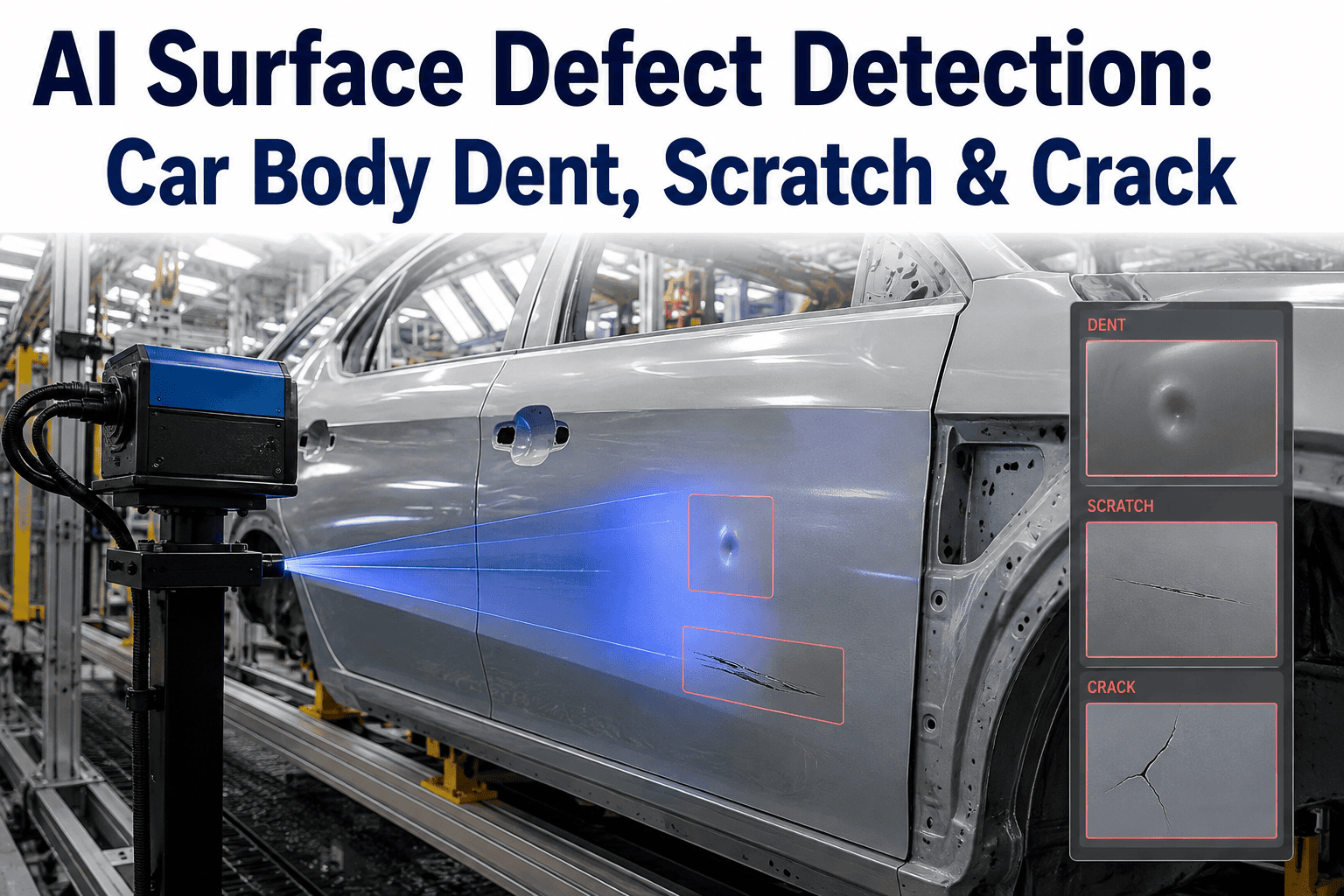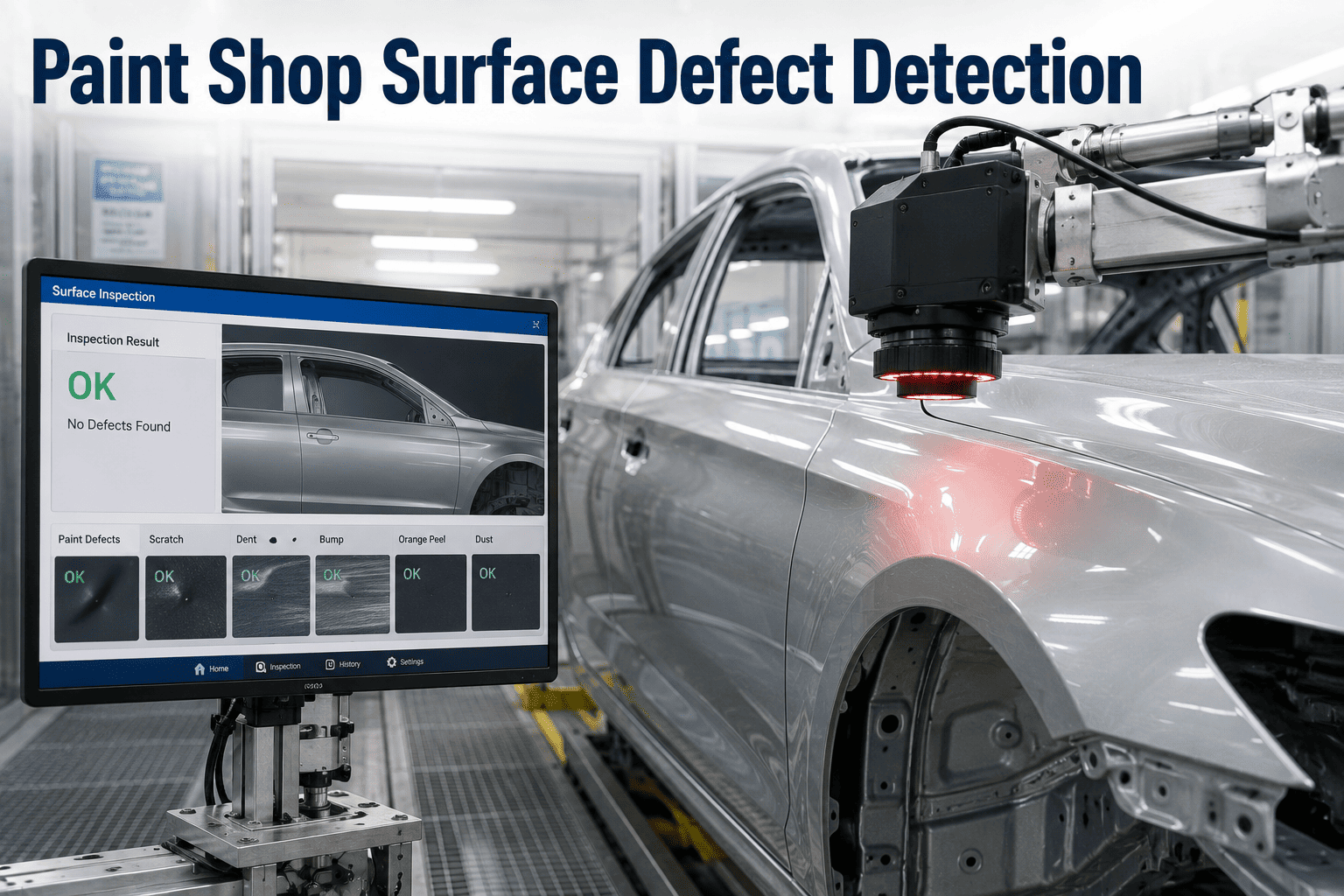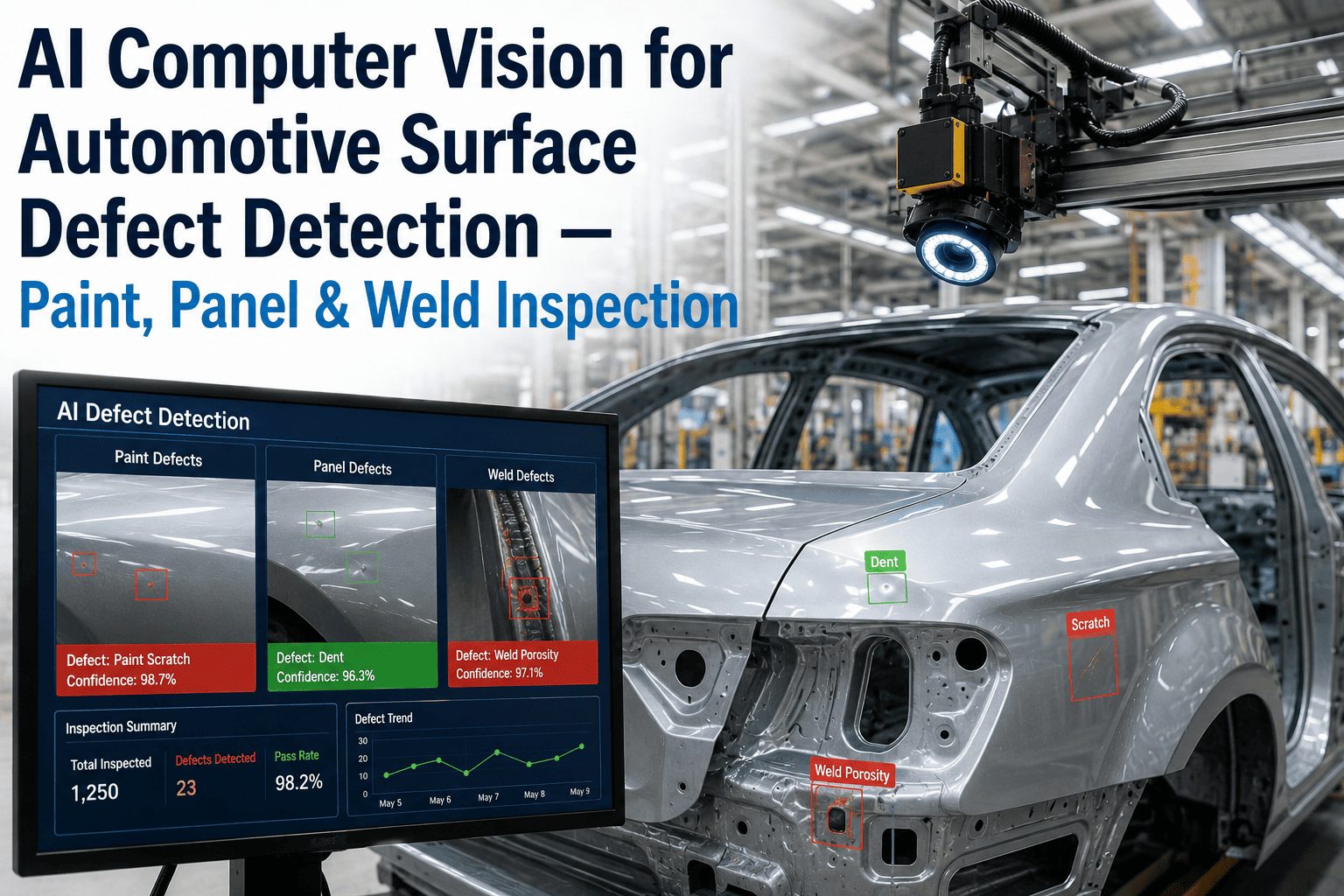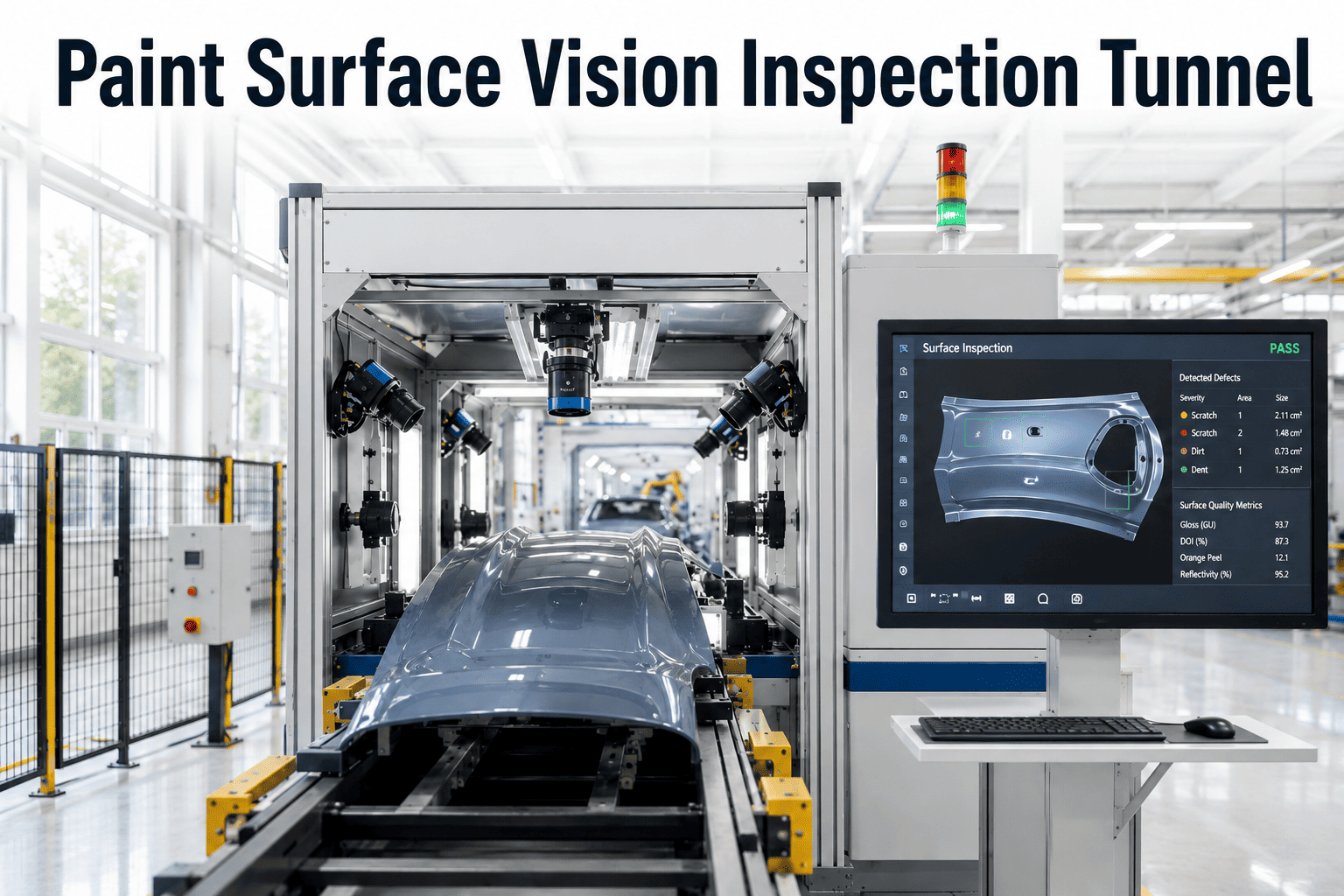
In modern automotive and industrial manufacturing, the paint surface is the final signature of quality—a flawless, high-gloss Class-A finish that defines brand prestige. Yet, even the most advanced painting robots leave behind micron-level defects: orange peel, pinholes, craters, dirt inclusions, and sag marks that escape human visual inspection. Traditional manual inspection under harsh lighting is subjective, slow, and inconsistent, leading to costly rework or, worse, warranty claims. Enter the AI-powered paint surface vision inspection tunnel—a transformative system that combines high-speed deflectometry with deep learning analytics to detect, classify, and map every surface anomaly in real time. This guide provides an authoritative, deep-dive technical analysis of how a paint vision tunnel operates, its core technologies, integration strategies, and the measurable ROI it delivers for Industry 4.0 factories. For a personalized demonstration of how iFactory can deploy a custom paint inspection tunnel at your facility, Book a Demo today.
Precision Deflectometry Meets AI: The Future of Paint Surface Inspection
Eliminate subjective manual checks with a fully automated, data-driven tunnel that grades every painted body for Class-A quality in under 60 seconds.
The Anatomy of a Paint Vision Inspection Tunnel
A paint surface vision inspection tunnel is a fully enclosed, conveyor-fed station that combines structured light deflectometry, high-resolution cameras, and AI inference engines. Unlike traditional machine vision that relies on intensity-based imaging, deflectometry projects a sinusoidal fringe pattern onto the reflective paint surface. The camera captures the distorted reflection—any deviation from the perfect pattern indicates a surface defect. The tunnel typically includes multiple camera heads arranged around the vehicle body or component to cover all complex geometries: hoods, fenders, roof panels, and door skins. Each camera operates at 4096 x 3072 pixel resolution, capturing fringe images at 30 frames per second. The AI model—a convolutional neural network trained on over 500,000 annotated defect images—processes these patterns in real time to classify anomalies with sub-millimeter accuracy.
Deflectometry Principle
Fringe projection + camera capture = phase map analysis. Any phase distortion reveals depth or slope changes as small as 5 microns.
Multi-Axis Camera Array
12–18 cameras positioned at 30° increments ensure full coverage of double-curvature surfaces without blind spots.
AI Inference Engine
On-premise GPU server running TensorRT-optimized YOLOv8x model delivers sub-200ms inference per frame.
Real-Time Feedback Loop
Defect coordinates are sent to the paint robot controller to adjust parameters dynamically for the next part.
How Deflectometry Outperforms Traditional Machine Vision
Traditional vision systems rely on diffuse lighting and contrast thresholds to detect defects. However, painted surfaces are highly reflective and non-Lambertian—they act like mirrors. Intensity-based imaging fails to capture subtle slope variations such as orange peel (waviness with 0.1–0.5 mm wavelength) or pinholes (10–50 μm diameter). Deflectometry overcomes this by measuring the gradient of the surface rather than its absolute intensity. The fringe pattern acts as a carrier signal; any surface imperfection modulates the fringe phase. By applying a phase-shifting algorithm (typically 4-step or 8-step phase shifting), the system reconstructs a high-resolution gradient map. This gradient map is then fed into a deep learning classifier that distinguishes between allowable texture (e.g., intentional matte finish) and true defects. The result: a repeatable, objective grade for every painted body that aligns with OEM Class-A standards.
Implementation Roadmap: From Pilot to Full Production
Site Survey & Integration Planning
Engineers assess conveyor layout, cycle time, and existing PLC infrastructure to design the tunnel footprint.
Defect Library Creation
Collect 10,000+ images from your production line; annotate with defect type, severity, and location. iFactory's AI team augments dataset with synthetic defects.
Model Training & Validation
Train a custom YOLOv8 segmentation model on your defect library. Validate against 1,000 hand-graded parts to achieve >99% precision.
On-Site Installation & Calibration
Mount cameras, calibrate fringe projectors, align conveyor triggers, and integrate with MES via OPC UA.
Continuous Learning Loop
Edge AI retrains weekly with newly labeled false positives to adapt to paint formulation changes.
Ready to Transform Your Paint Shop?
Achieve zero-defect Class-A surfaces with AI-driven inspection. Our experts will design a tunnel tailored to your production volume and defect profile.
Defect Classification & Severity Mapping
| Defect Type | Size Range | Severity Level | AI Detection Rate |
|---|---|---|---|
| Pinhole | 10–50 μm | Critical | 99.2% |
| Orange Peel | 0.1–0.5 mm | Major | 98.7% |
| Dirt Inclusion | 50–200 μm | Critical | 99.5% |
| Sag Mark | 1–5 mm length | Major | 97.8% |
| Crater | 100–500 μm | Critical | 99.1% |
| Solvent Pop | 0.5–2 mm | Minor | 96.4% |
Measurable Business Impact: ROI Analysis
Deploying a paint vision inspection tunnel delivers tangible financial returns within 12 months. Direct savings come from reduced rework (typically 8–12% of painted parts require rework in manual lines), lower scrap rates, and elimination of costly downstream warranty claims. Indirect benefits include increased throughput (no bottlenecks from manual inspection stations), consistent quality metrics for OEM audits, and data-driven paint process optimization. A tier-1 automotive supplier reported a 73% reduction in rework labor costs and a 2.4x increase in first-pass yield after integrating iFactory's AI tunnel. The system pays for itself in under 14 months, with ongoing annual savings exceeding $1.2M for a line producing 200,000 parts per year.
System Architecture: Edge AI & Cloud Analytics
The paint inspection tunnel operates on a hybrid edge-cloud architecture. At the edge, a ruggedized industrial PC (Intel Xeon W-2295, NVIDIA RTX A6000) runs real-time inference using TensorRT-optimized models. The edge node communicates with the PLC via Profinet for conveyor synchronization and defect marking. Every defect image, along with its metadata (timestamp, part ID, defect class, severity, coordinates), is streamed via MQTT to the iFactory cloud platform. There, dashboards aggregate global defect trends, enable root-cause analysis by correlating defects with paint batch parameters, and trigger automatic retraining of the AI model when concept drift is detected. This closed-loop architecture ensures continuous improvement without manual intervention.
Frequently Asked Questions
How does the paint vision tunnel handle complex curved surfaces like door handles or side mirrors?
The multi-camera array is strategically positioned to cover all surface normals. For highly curved features, additional cameras with narrower fields of view capture the geometry from multiple angles. The AI model is trained on synthetic data that simulates extreme curvature, ensuring robust detection even on concave or convex areas. For a detailed discussion on custom camera placement for your specific part geometries, Book a Demo and our application engineers will provide a tailored solution.
What is the typical cycle time for a full vehicle body inspection?
For a standard sedan-sized body, the tunnel completes the inspection in 45–60 seconds. This includes conveyor positioning, fringe projection, image capture (12 frames per camera), AI inference, and defect reporting. The cycle time can be reduced to under 35 seconds by using higher-speed cameras and parallel GPU processing. Contact our support team to discuss specific throughput requirements for your production line.
Can the system be retrofitted into an existing paint line without major modifications?
Yes, iFactory's tunnel modules are designed for retrofit. The self-contained unit includes its own conveyor section, shielding from ambient light, and a standard industrial interface (EtherNet/IP, Profinet, or OPC UA). Installation typically requires 3–5 days of line downtime. A pre-installation site survey ensures seamless mechanical and electrical integration. For a feasibility assessment, Book a Demo and receive a detailed integration plan.
How does the AI model handle different paint colors, gloss levels, and metallic flakes?
The deflectometry principle is inherently color-agnostic because it measures surface gradients, not color intensity. However, gloss level and metallic flake orientation can affect fringe contrast. The training dataset includes over 50 paint formulations—solid, metallic, matte, and clear coat—to ensure model robustness. Additionally, the system uses adaptive fringe intensity to maintain optimal signal-to-noise ratio across varying reflectivity. For more details on paint type compatibility, visit our support knowledge base.
What is the maintenance requirement for the inspection tunnel?
Routine maintenance is minimal: weekly cleaning of camera lenses and fringe projector windows with compressed air, and quarterly calibration verification using a certified reference artifact. The AI model requires no manual tuning—the continuous learning loop automatically adapts to process drifts. iFactory offers a remote monitoring service that proactively alerts your maintenance team to any performance degradation. For a service agreement tailored to your plant, Book a Demo.
Elevate Your Paint Quality to Class-A Standards
Join industry leaders who have transformed their paint shops with AI-driven deflectometry. Achieve zero-defect surfaces, reduce rework by 85%, and gain full traceability for every painted part.