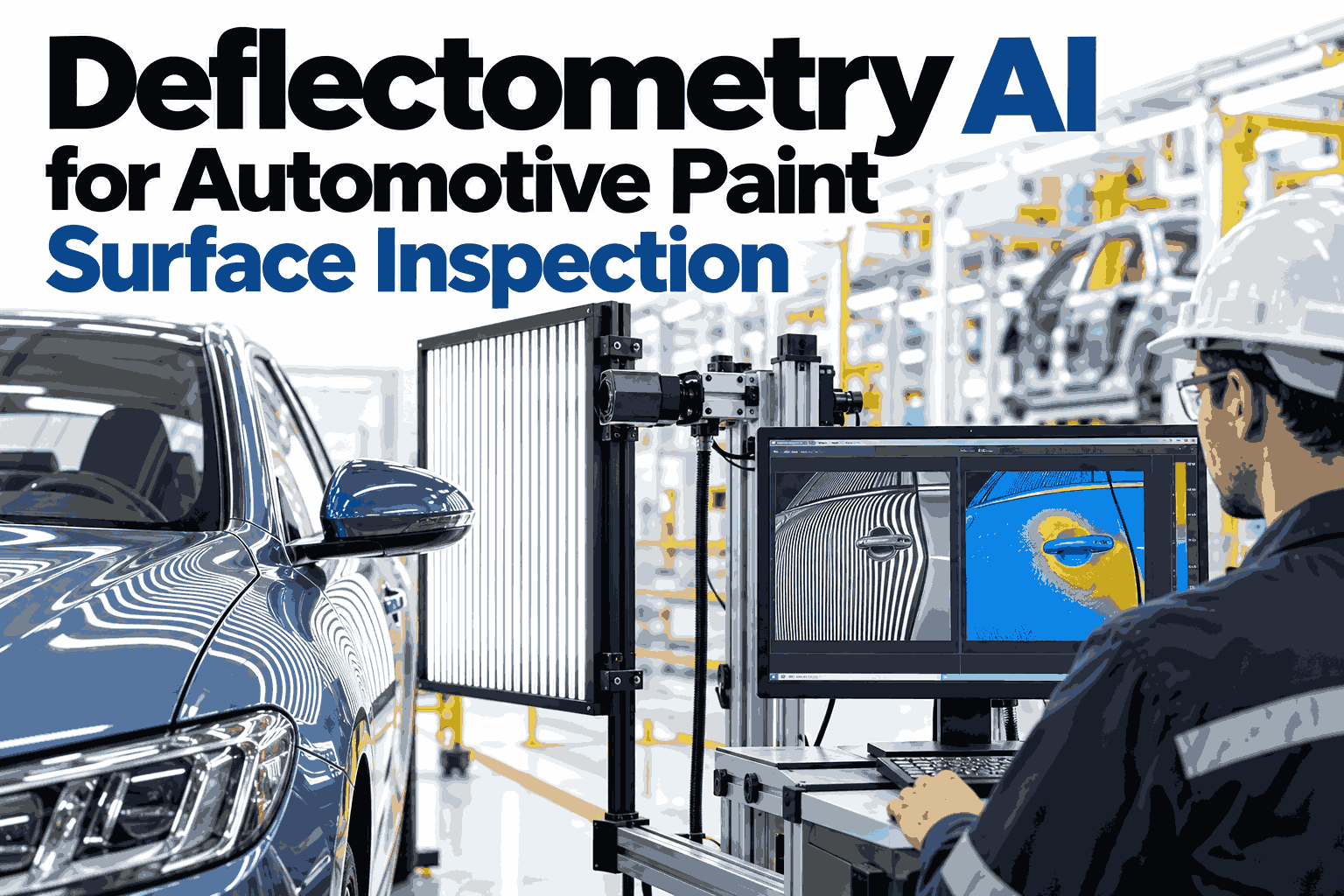
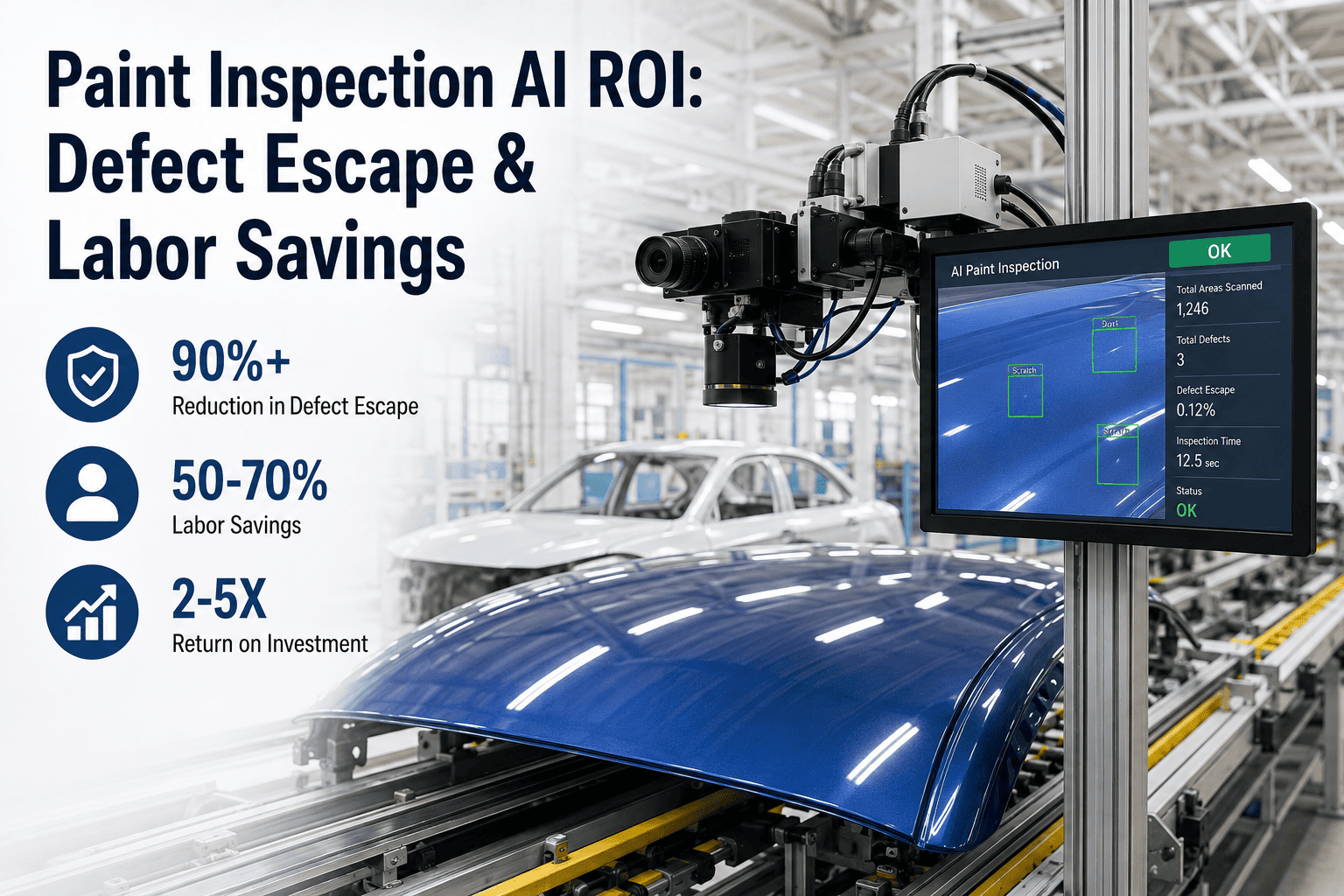
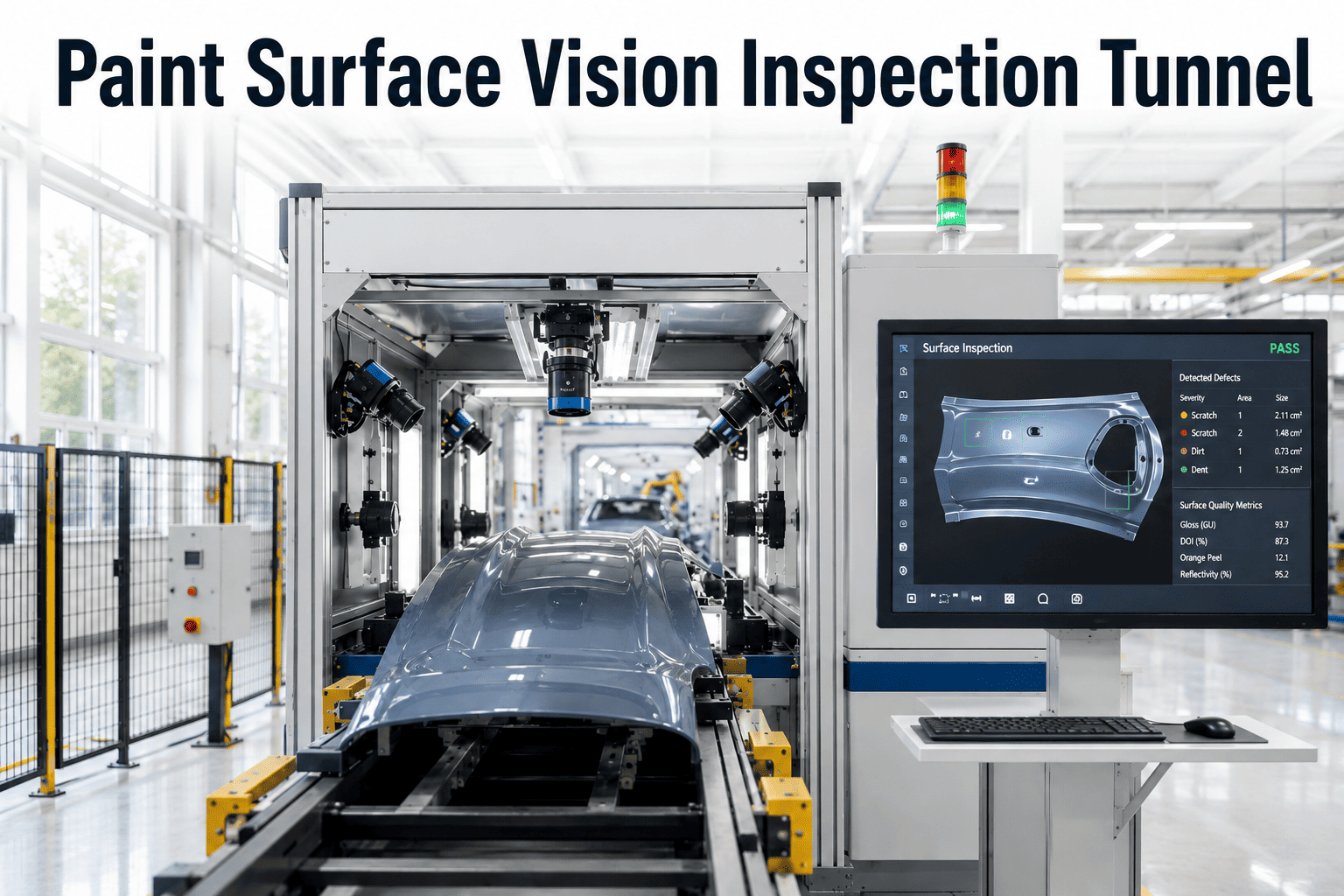
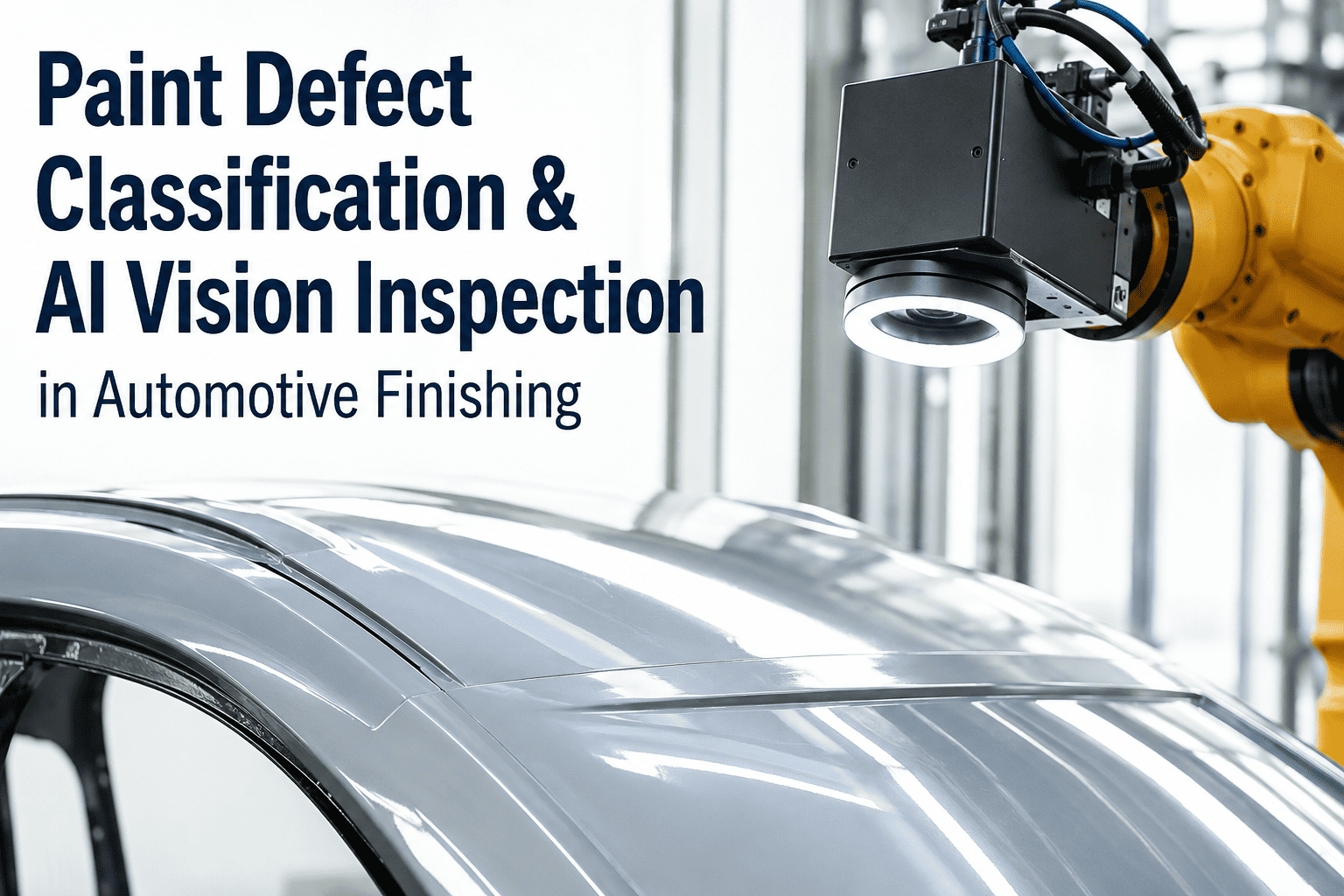
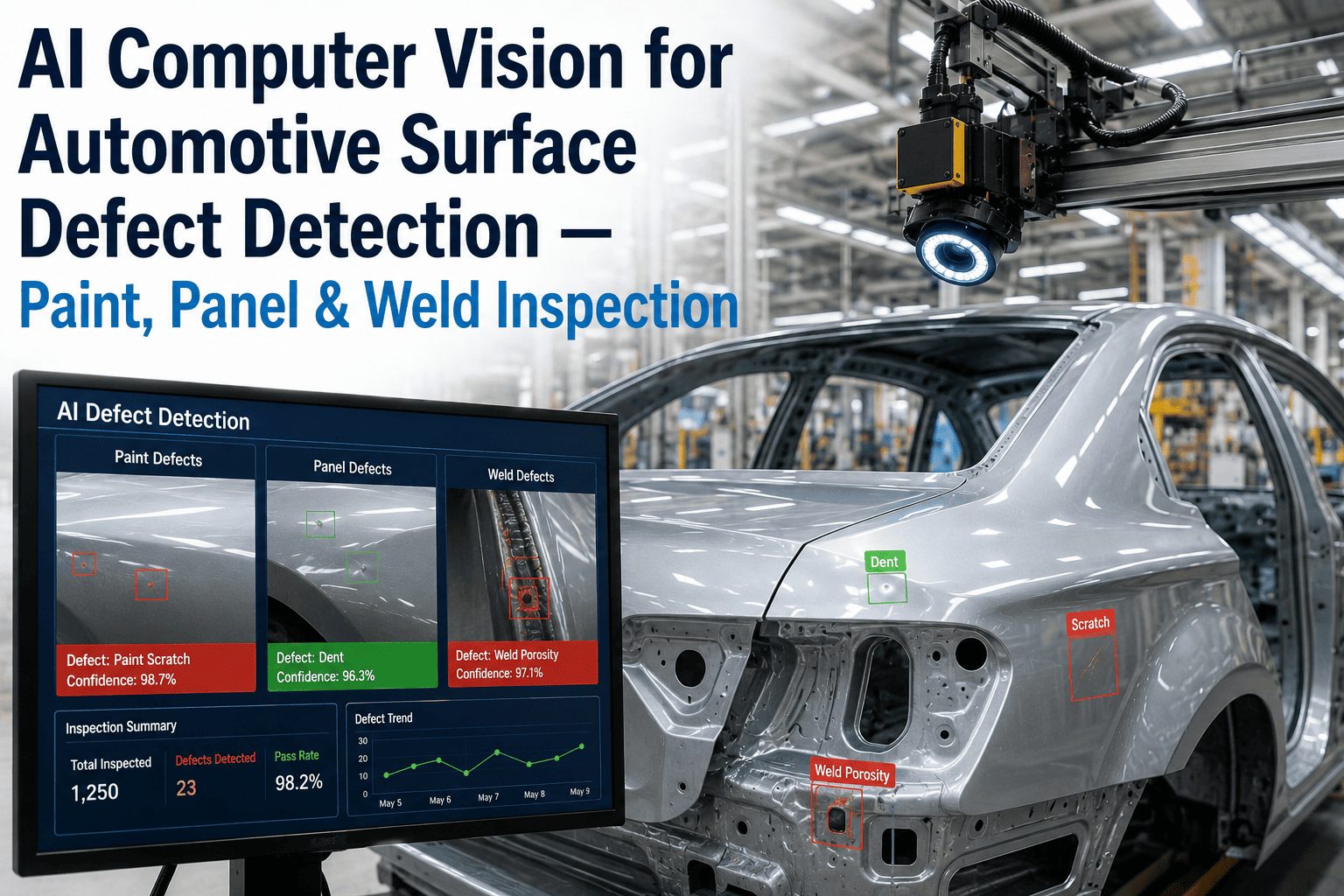
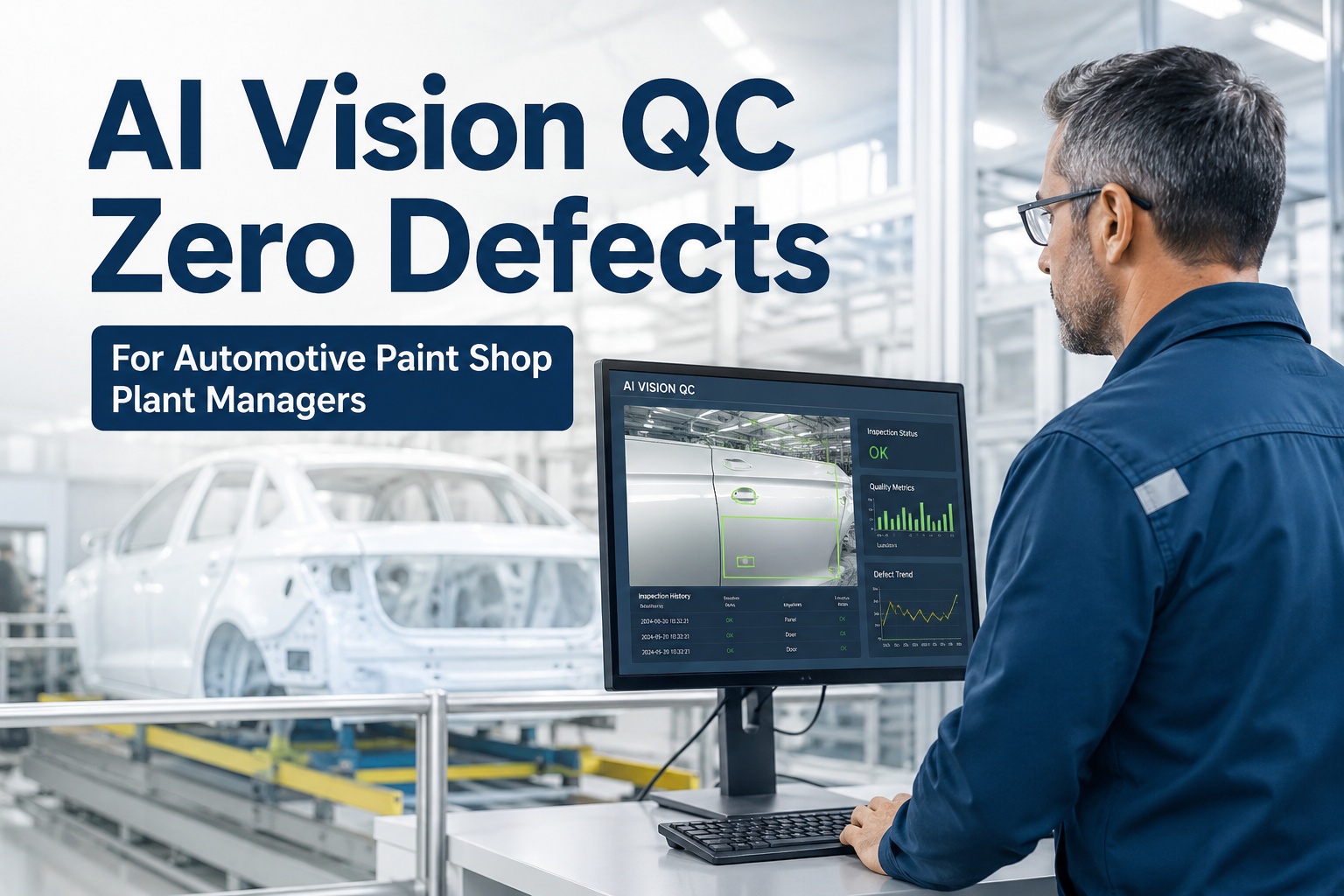
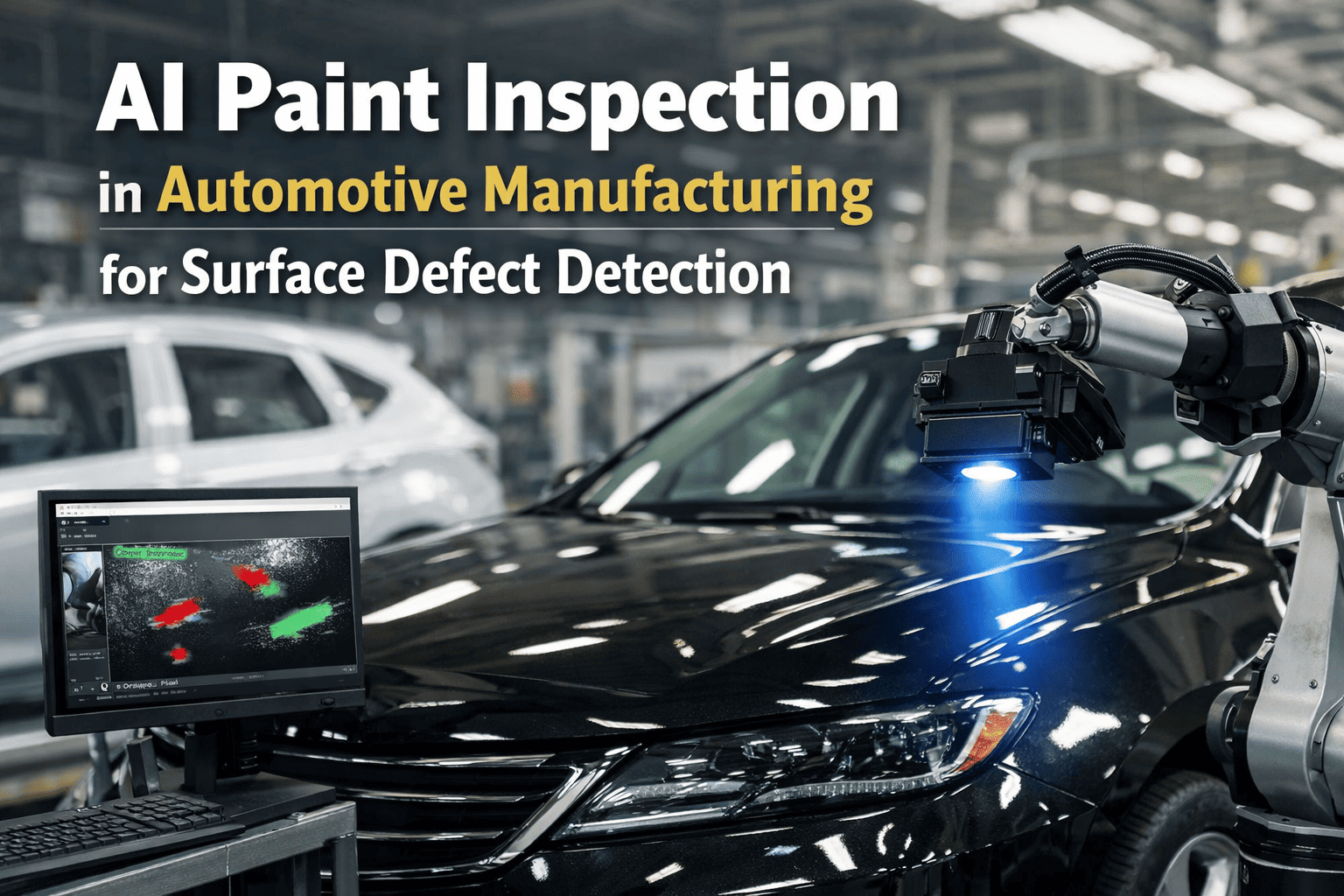
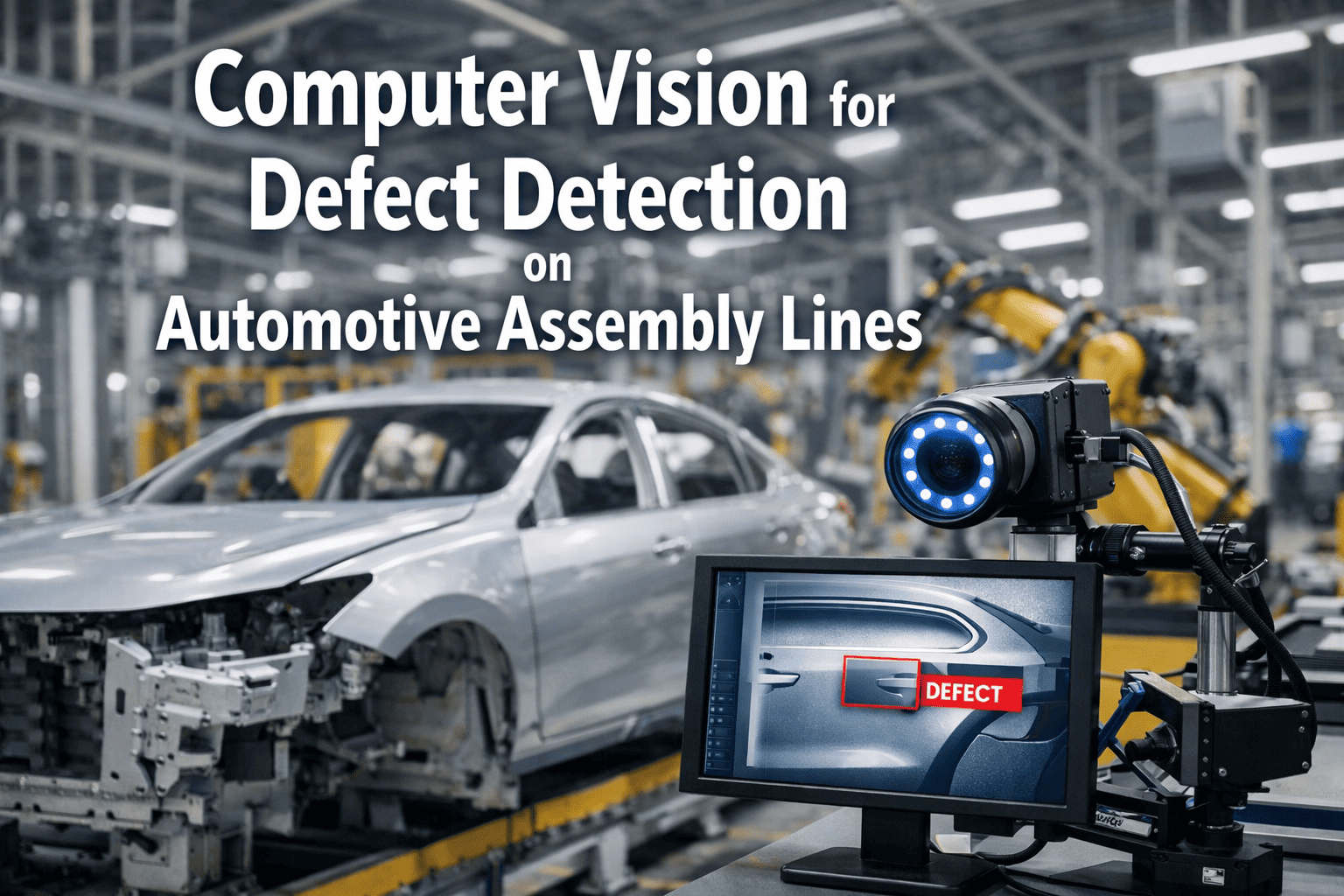
Automotive paint shops produce surface defects invisible to RGB cameras and human inspectors including subsurface contamination, coating thickness variations, adhesion failures, and spectral color mismatches causing 4.8% of painted bodies to reach final assembly with hidden flaws triggering $3.4M annual warranty claims at tier-1 suppliers, yet iFactory deploys hyperspectral imaging cameras capturing 200+ wavelength bands from ultraviolet through visible to near-infrared detecting microscopic surface anomalies, orange peel texture variations below 0.3mm amplitude, paint layer delamination risks, and color metamerism issues with 98.2% accuracy preventing customer escapes. The AI computer vision platform analyzes spectral signatures across body panels, bumpers, and trim components at production line speeds processing 85 painted parts per hour identifying defects requiring rework versus acceptable cosmetic variations reducing manual inspection labor 82% while eliminating subjective human judgment inconsistencies between shifts. System integrates with automotive MES, PLC paint booth controllers, and SCADA environmental monitoring providing real-time quality feedback enabling immediate process adjustments when defect rates exceed thresholds. Book a demo to see hyperspectral imaging.
AI Quality Inspection
Prevent Warranty Claims Before Defects Reach Customers
iFactory hyperspectral imaging detects microscopic surface defects invisible to manual inspection including subsurface contamination, coating adhesion failures, and spectral mismatches preventing $3.4M annual warranty claims while reducing inspection labor 82%.
98.2%
Defect Detection Accuracy
100%
Parts Inspected Inline
$3.4M
Warranty Claims Prevented
82%
Reduction Inspection Labor
The Critical Challenge: Automotive Paint Defects Cost $18K Per Escaped Part
Automotive manufacturers face escalating quality challenges as paint systems become more complex with multi-layer basecoat-clearcoat applications, metallic and pearlescent pigments, and water-based formulations requiring precise application control. Industry data shows downtime costs rose 113% since 2019 with paint line stoppages costing $47,000 per hour at high-volume assembly plants producing 240 units daily. Global automotive industry loses $42 billion annually from quality defects with paint and surface finish issues representing 28% of warranty claims totaling $11.8 billion. Tier-1 suppliers experience average 180 hours lost monthly from paint quality incidents including rework loops, color matching delays, and customer quality holds. Facilities report 14-18 paint quality incidents monthly requiring root cause investigation, process adjustment, and batch repainting affecting production schedules.
Equipment Failure & Line Stoppage
Paint booth atomizer failures, electrostatic application system malfunctions, and conveyor tracking errors cause unplanned line stoppages averaging 4.2 hours weekly at automated paint facilities. Robot paint applicator programming drift creates coverage gaps and overspray requiring recalibration halting production. Spray gun clogging from contaminated paint or improper viscosity control stops automated lines until maintenance resolves blockages.
Supply Chain Dependencies & Material Quality
Paint chemistry batch variations from suppliers create color matching inconsistencies requiring rework when spectrophotometer measurements fall outside tolerance. Substrate contamination from stamping press oils, welding spatter residue, or pretreatment chemical carryover causes adhesion failures discovered only after bake oven cure. Just-in-time delivery schedules mean paint formulation changes or supplier switches cannot be thoroughly validated before production runs.
Hidden Defects Escaping Manual Inspection
Human visual inspection under paint booth lighting misses subsurface defects, micro-contamination particles, and spectral color variations that become visible under dealership showroom LED lighting or outdoor sunlight conditions. Inspector fatigue, inconsistent training, and subjective acceptance criteria create shift-to-shift variation in defect detection rates. Orange peel texture below 0.4mm wave amplitude appears acceptable to inspectors but triggers customer complaints requiring dealer repainting at $1,800-$3,200 per panel.
Warranty Claims & Customer Escapes
Paint defects discovered post-delivery generate warranty claims averaging $18,000 per vehicle including dealer repainting, parts replacement, rental car costs, and customer goodwill gestures. Metallic color mismatch between replacement fenders and original body panels creates visible differences requiring blend panel repainting expanding repair costs. OEM quality audits finding paint defects at pre-delivery inspection trigger customer quality holds stopping shipments until root cause corrected and containment measures validated.
What Modern Automotive Paint Shops Need
100% Inline Surface Inspection
Every painted body, bumper, and trim component requires automated inspection at production line speed detecting defects before parts reach final assembly. Hyperspectral imaging captures spectral signatures across 200+ wavelength bands from ultraviolet through visible to near-infrared revealing subsurface contamination, coating thickness variations, and adhesion risks invisible to RGB cameras. System must process 85+ parts per hour matching automated paint line throughput without creating bottlenecks.
Required: UV-VIS-NIR spectral analysis, inline integration, 85 PPH throughput
Real-Time Process Feedback & Adjustment
Paint booth conditions including temperature, humidity, airflow velocity, and electrostatic charge directly impact coating quality requiring continuous monitoring with automated adjustment when parameters drift outside specification. Integration with PLC booth controllers and SCADA environmental systems enables closed-loop quality control where defect detection triggers immediate process investigation. MES integration links defect data to specific paint batches, robot programs, and operator shifts enabling root cause analysis.
Required: PLC/SCADA/MES integration, automated alerts, process control feedback
Objective Quality Documentation & Traceability
IATF 16949 automotive quality management requires complete inspection records linking defect findings to vehicle identification numbers enabling targeted recalls if systemic issues discovered post-delivery. AI classification provides objective defect severity scoring eliminating subjective human judgment. Spectral data archives enable retrospective analysis when warranty claims emerge months after production identifying whether defect existed at paint shop or developed during service life.
Required: IATF 16949 compliance, VIN traceability, spectral data archival
How Hyperspectral Imaging Detects Invisible Surface Defects
iFactory deploys line-scan hyperspectral cameras positioned at paint line exit stations capturing spatial-spectral image cubes containing 200+ wavelength channels from 380nm ultraviolet through 700nm visible spectrum to 1000nm near-infrared. Each pixel location contains complete spectral signature rather than RGB three-channel data enabling detection of chemical composition variations, coating layer structure, and subsurface anomalies invisible to conventional imaging. Neural networks trained on 1.2 million labeled defect examples classify spectral patterns into defect categories including contamination, orange peel, color mismatch, thickness variation, adhesion risk, and surface texture issues.
Defect Detection Across Spectral Wavelength Bands
UV: 380-400nm
Ultraviolet imaging reveals fluorescent contamination from oils, greases, and organic residues invisible under visible light. Paint booth environment cleanliness verified through UV inspection detecting airborne particle deposition on wet paint film before bake oven cure. Substrate pretreatment chemical residues fluoresce under UV illumination indicating inadequate rinsing or conversion coating application issues causing future adhesion failures.
VIS: 400-700nm
Visible spectrum captures color accuracy, gloss uniformity, orange peel texture, and surface smoothness. Spectral color matching identifies metamerism where painted parts appear color-matched under paint booth D65 illumination but show visible differences under dealership LED or outdoor sunlight spectra. Multi-angle spectroradiometry measures effect pigment orientation in metallic and pearlescent coatings detecting flop inconsistencies requiring process adjustment.
NIR: 700-1000nm
Near-infrared penetrates paint layers revealing subsurface structure, coating thickness variations, and delamination risks. Different pigment chemistries exhibit unique NIR absorption spectra enabling detection of paint batch variations or contamination from previous color changeovers. Moisture trapped between coating layers creates NIR spectral anomalies predicting future blistering or delamination before defects become visible requiring complete repaint.
How iFactory Solves Automotive Paint Quality Challenges
1
Hyperspectral AI Vision
200+ wavelength channels detect subsurface defects, contamination, coating thickness variations invisible to RGB cameras
2
Real-Time Process Control
Integration with PLC booth controllers, SCADA environmental monitoring enabling immediate adjustments when defect rates increase
3
MES Integration & Traceability
Complete inspection records linked to VIN numbers, paint batches, robot programs meeting IATF 16949 requirements
4
100% Inline Inspection
Every painted part inspected at production speed 85+ PPH eliminating manual sampling and human inspection variability
5
Automated Work Orders
AI defect detection triggers rework work orders with defect images, severity classification, recommended corrective actions
6
Mobile Plant Floor Operations
Quality technicians receive defect alerts on mobile devices with part location, defect type, historical trends enabling rapid response
Platform Capability Comparison
| Platform |
AI Vision |
Hyperspectral |
PLC/MES |
Work Order Auto |
IATF 16949 |
Automotive Fit |
| iFactory |
✔ Advanced |
✔ Native |
✔ Full |
✔ Yes |
✔ Complete |
✔ High |
| QAD Redzone |
No |
No |
Partial |
Basic |
Manual |
Medium |
| Evocon |
No |
No |
Basic |
No |
No |
Low |
| Mingo Smart Factory |
No |
No |
Partial |
Basic |
Limited |
Medium |
| IBM Maximo |
Partial |
No |
Custom |
✔ Yes |
Partial |
Medium |
| SAP EAM |
No |
No |
Custom |
Basic |
Manual |
Low |
Regional Automotive Manufacturing: Challenges & Solutions
| Region |
Key Challenges |
Compliance |
How iFactory Solves |
| US |
High labor costs, skilled technician shortage, aging equipment, paint rework waste |
IATF 16949, EPA VOC limits, OSHA safety |
AI inspection reduces labor 82%, predictive maintenance extends equipment life 35%, automated IATF documentation |
| UAE |
Desert dust contamination, extreme heat affecting paint cure, skilled workforce development |
IATF 16949, ESMA standards, OSHAD safety |
Hyperspectral detects contamination invisible to manual inspection, climate-controlled quality monitoring, 24/7 Arabic support |
| UK |
Brexit supply chain complexity, sustainability pressure, EV production ramp-up |
IATF 16949, UKCA marking, HSE regulations |
Real-time material traceability, carbon footprint tracking from quality data, EV battery production monitoring |
| Canada |
Cold climate paint application challenges, bilingual documentation, US market dependency |
IATF 16949, CSA standards, Environment Canada |
Temperature-compensated spectral analysis, bilingual French/English interface, seamless US plant integration |
| Europe |
Strict emissions regulations, circular economy requirements, EV transition mandate |
IATF 16949, EU ELV Directive, REACH compliance |
VOC emissions reduction through first-pass quality, material compliance tracking, automated EU reporting |
Implementation Workflow & Deployment Roadmap
1
Week 1-2: Data Integration
Connect hyperspectral cameras to paint line exit, integrate PLC booth controllers, link MES system for VIN traceability, configure SCADA environmental monitoring
2
Week 3-4: AI Model Setup
Train neural networks on facility-specific paint defect examples, configure spectral signatures for contamination types, establish defect severity thresholds, validate against manual inspection
3
Week 5-6: Alert Configuration
Setup automated work order generation for rework requirements, configure mobile alerts to quality technicians, establish process control feedback to booth PLCs, enable IATF documentation
4
Ongoing: Scaling & Optimization
Expand to additional paint lines and trim component inspection, refine AI models from actual warranty data, optimize spectral thresholds based on customer feedback, quarterly performance reviews
Measured Results From Production Deployment
98.2%
Defect Detection Accuracy vs Manual Inspection
$3.4M
Annual Warranty Claims Prevented Per Facility
82%
Reduction in Manual Inspection Labor Hours
4.8% to 0.6%
Paint Defect Escape Rate Reduction
100%
Parts Inspected vs 2-5% Manual Sampling
6-8 wks
Deployment Time From Contract to Production
Advanced Surface Inspection
See Defects Invisible to Human Eyes & RGB Cameras
iFactory hyperspectral imaging captures 200+ wavelength bands detecting subsurface contamination, coating adhesion risks, and spectral color mismatches preventing $3.4M annual warranty claims while integrating seamlessly with PLC booth controllers and MES traceability systems.
Frequently Asked Questions
QHow does hyperspectral imaging detect defects invisible to RGB cameras and human inspectors?
Hyperspectral cameras capture 200+ wavelength bands from UV through visible to NIR revealing spectral signatures invisible to three-channel RGB imaging. UV detection shows fluorescent contamination, NIR penetrates paint layers detecting subsurface structure and adhesion risks, visible spectrum multi-angle measurement identifies color metamerism and effect pigment orientation issues.
Book Demo to see spectral imaging.
QWhat throughput speed can hyperspectral inspection achieve at automotive production lines?
System processes 85+ painted parts per hour matching automated paint line speeds without creating bottlenecks. Line-scan hyperspectral cameras capture spatial-spectral image cubes as parts move through inspection station on conveyor. GPU-accelerated neural networks analyze spectral data in real-time generating pass/fail decisions within 180ms per part enabling immediate rework diversion before final assembly.
QHow does platform integrate with existing PLC paint booth controllers and MES systems?
iFactory connects via OPC-UA to PLC booth controllers pulling environmental parameters including temperature, humidity, airflow, electrostatic voltage correlating defect occurrences with process conditions. MES integration via REST API enables VIN-level traceability linking defect images to specific vehicles meeting IATF 16949 requirements. When defect rates exceed thresholds system sends alerts to booth PLCs triggering process investigation.
QWhat ROI can automotive paint shops expect from AI hyperspectral inspection deployment?
Typical tier-1 suppliers achieve $3.4M annual savings from prevented warranty claims plus 82% reduction manual inspection labor costs. Facilities report 12-18 month payback from eliminating customer quality escapes averaging $18K per defective vehicle including dealer repainting, parts, rental cars, goodwill gestures. First-pass quality improvement reduces paint rework from 4.8% to 0.6% eliminating material waste and production delays.
QCan system detect paint defects on complex surfaces like bumpers and trim components?
Yes. Multi-angle hyperspectral imaging captures spectral data from curved surfaces, complex geometries, and textured trim. Robotic part positioning or multi-camera arrays ensure complete surface coverage detecting defects on bumper fascia curves, door handle recesses, grille textures. AI trained on part-specific geometry accounts for normal reflectance variations versus actual defects preventing false positives.
Book Demo for complex surface inspection.
Deploy AI Hyperspectral Inspection Across Automotive Paint Operations
iFactory provides complete AI platform for automotive manufacturing with hyperspectral surface inspection, predictive maintenance, work order automation, and MES integration. Prevent warranty claims before defects reach customers with 98.2% detection accuracy capturing subsurface contamination, coating adhesion risks, and spectral color mismatches invisible to manual inspection. Seamless integration with PLC booth controllers, SCADA environmental monitoring, and MES traceability systems meeting IATF 16949 requirements for US, UAE, UK, Canadian, and European automotive facilities.
200+ Wavelength Bands
98.2% Accuracy
100% Parts Inspected
IATF 16949 Compliant
PLC/MES Native Integration