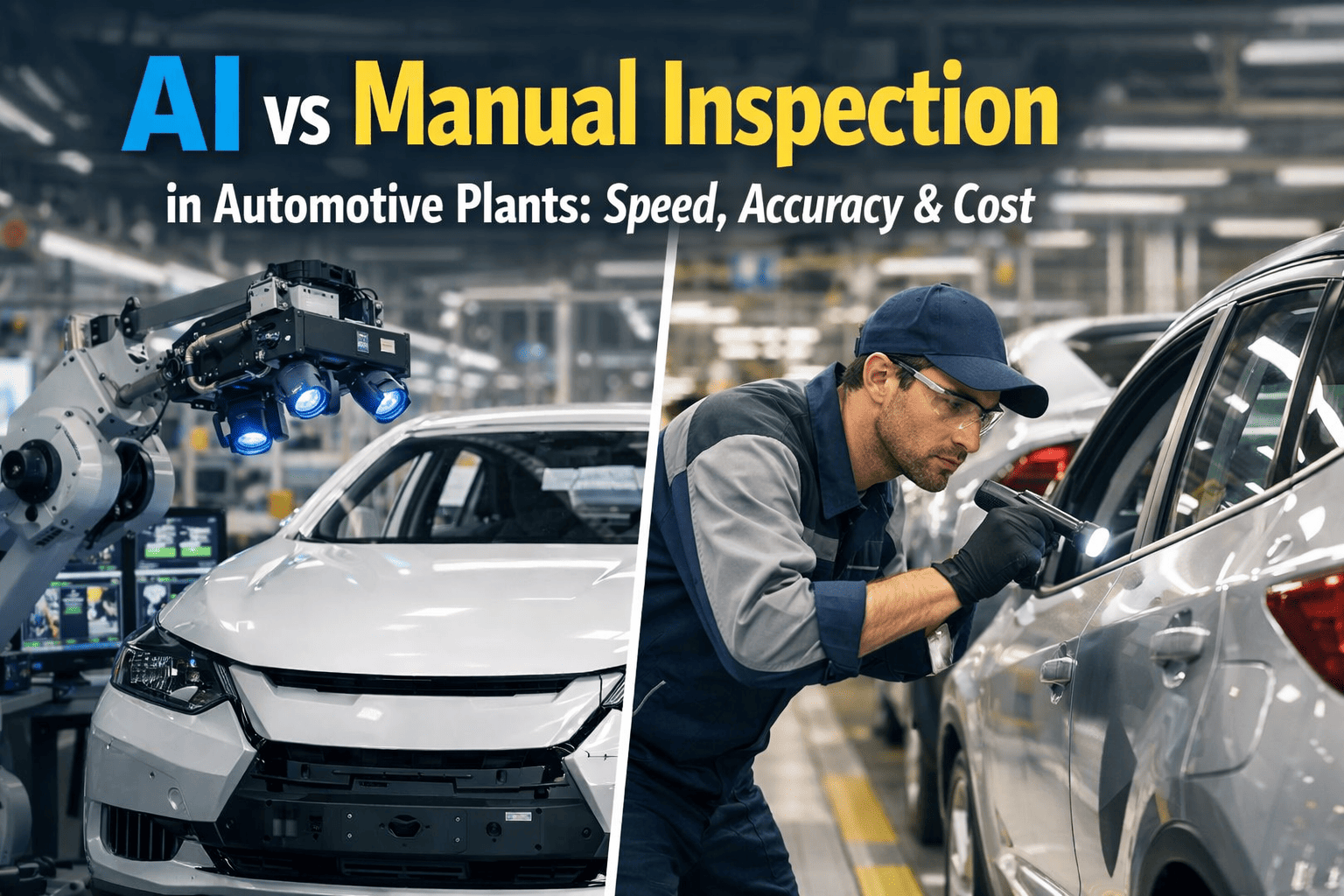
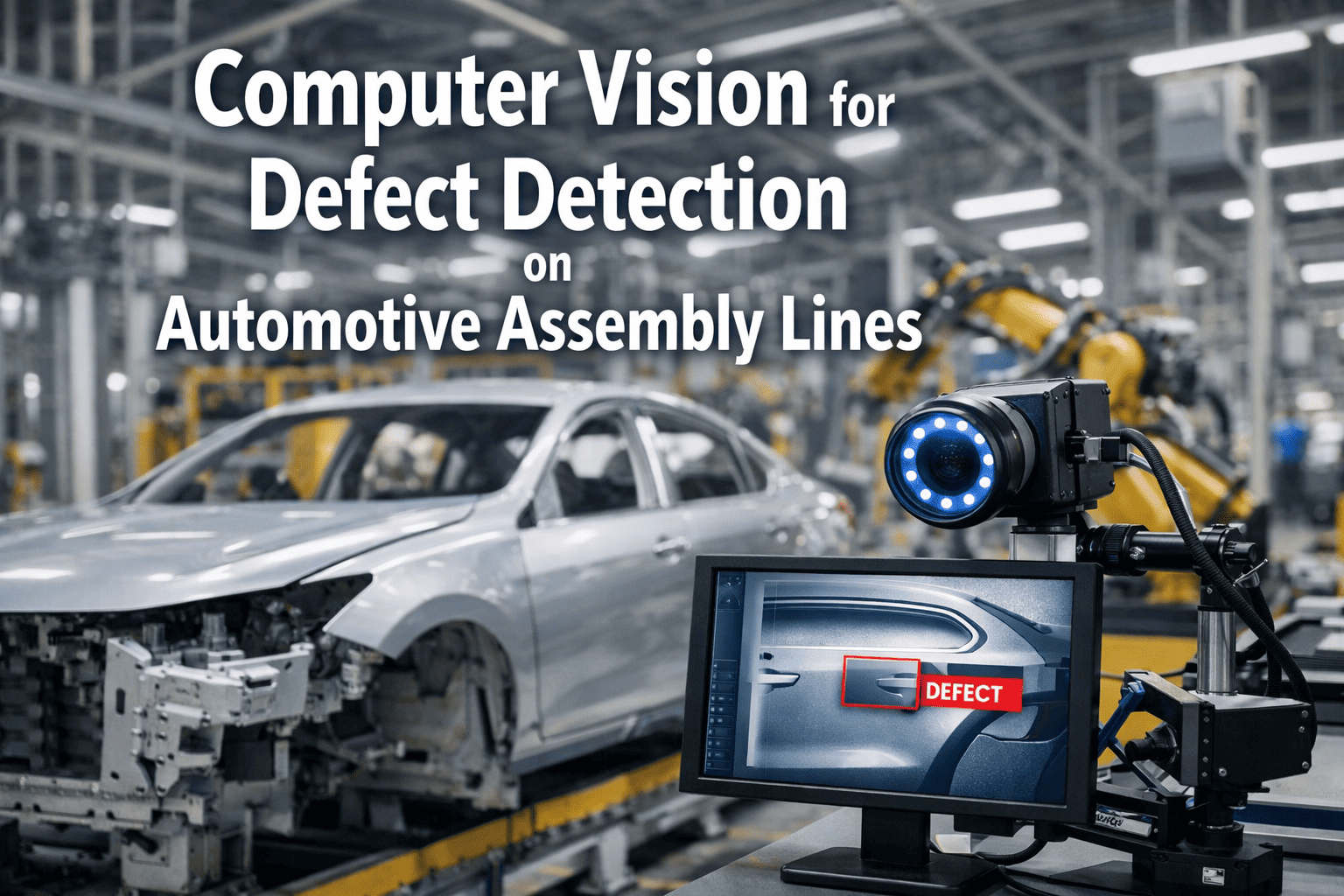
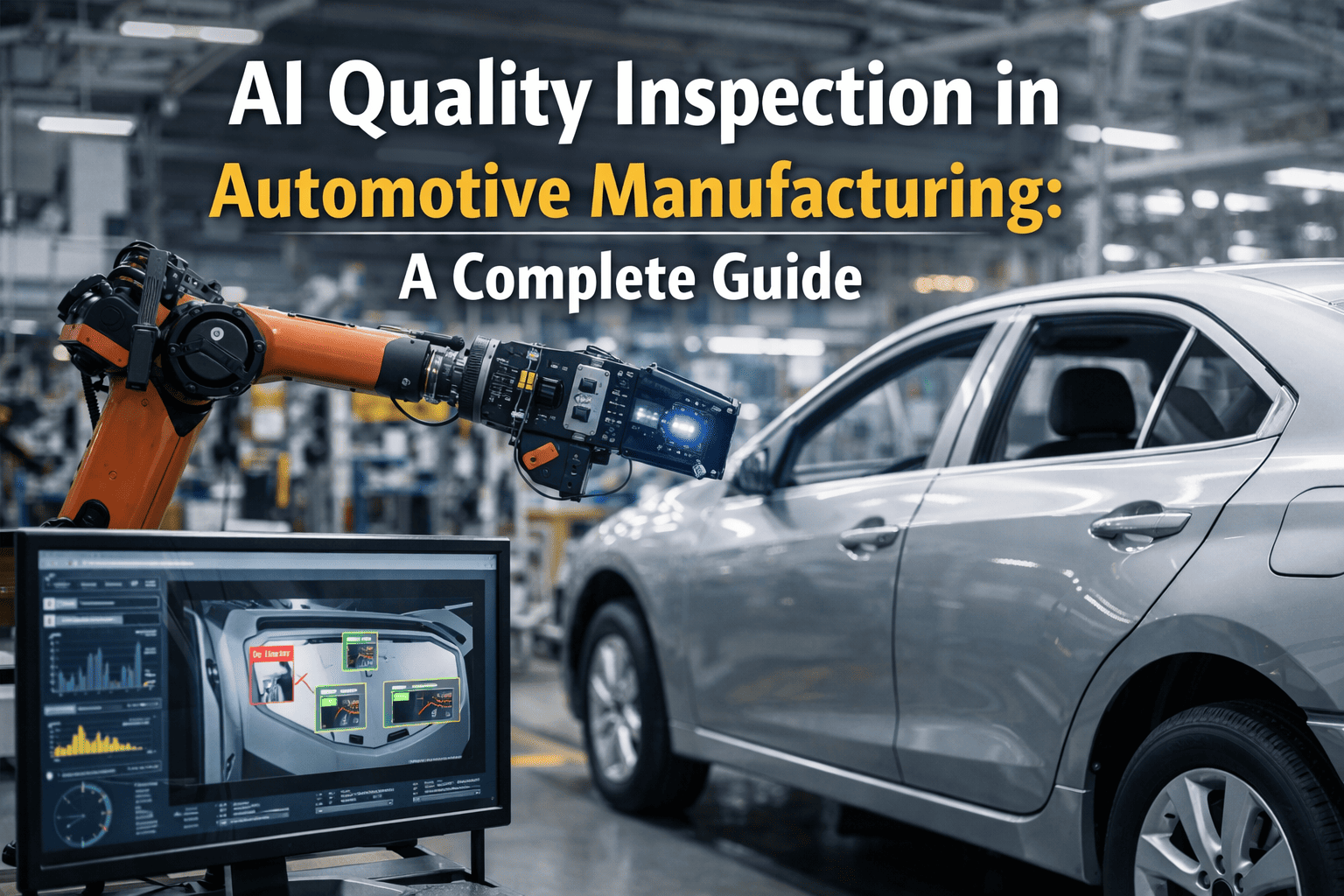
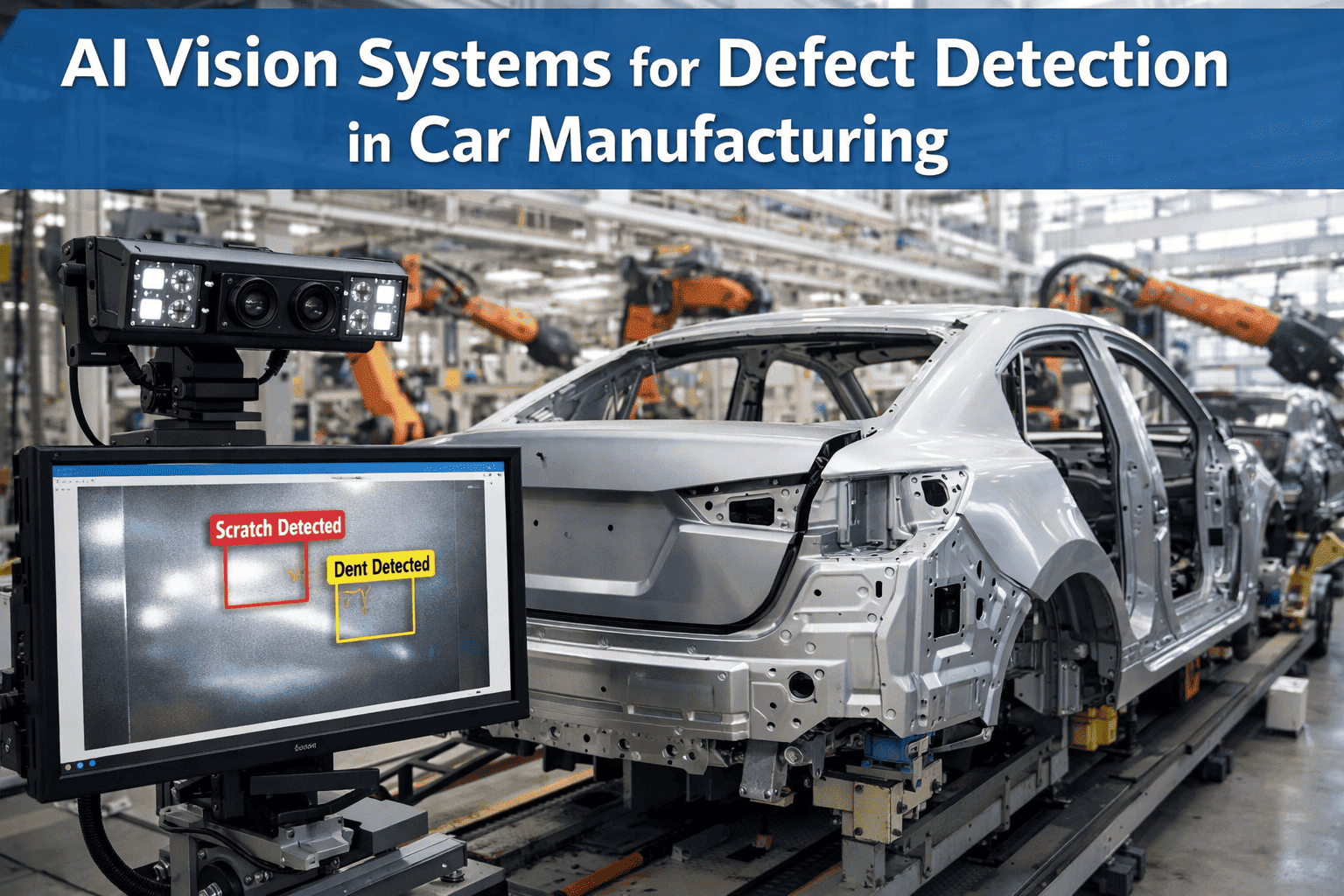
Automotive assembly line defects escaping final inspection cost manufacturers $850,000 to $2.4 million per incident in warranty claims, recall expenses, and brand damage, yet manual visual inspection catches only 78% to 85% of quality defects due to inspector fatigue, inconsistent standards, and microscopic flaws invisible to human eyes operating at production line speeds of 60 to 90 units per hour. Traditional camera-based inspection systems generate 35% to 50% false rejection rates, stopping production lines unnecessarily while still missing critical weld defects, paint imperfections, dimensional variances, and assembly errors that create customer complaints and safety recalls. iFactory's AI-powered computer vision platform achieves 99.7% inspection accuracy across body shop welds, paint booth finishes, stamping operations, battery assembly, and final vehicle inspection by analyzing millions of data points per second through deep learning models trained on automotive-specific defect patterns, reducing warranty claims by 94%, eliminating false rejections by 89%, and preventing $3.4 million average annual losses from defects reaching customers. Book a demo to see AI vision accuracy for your automotive plant.
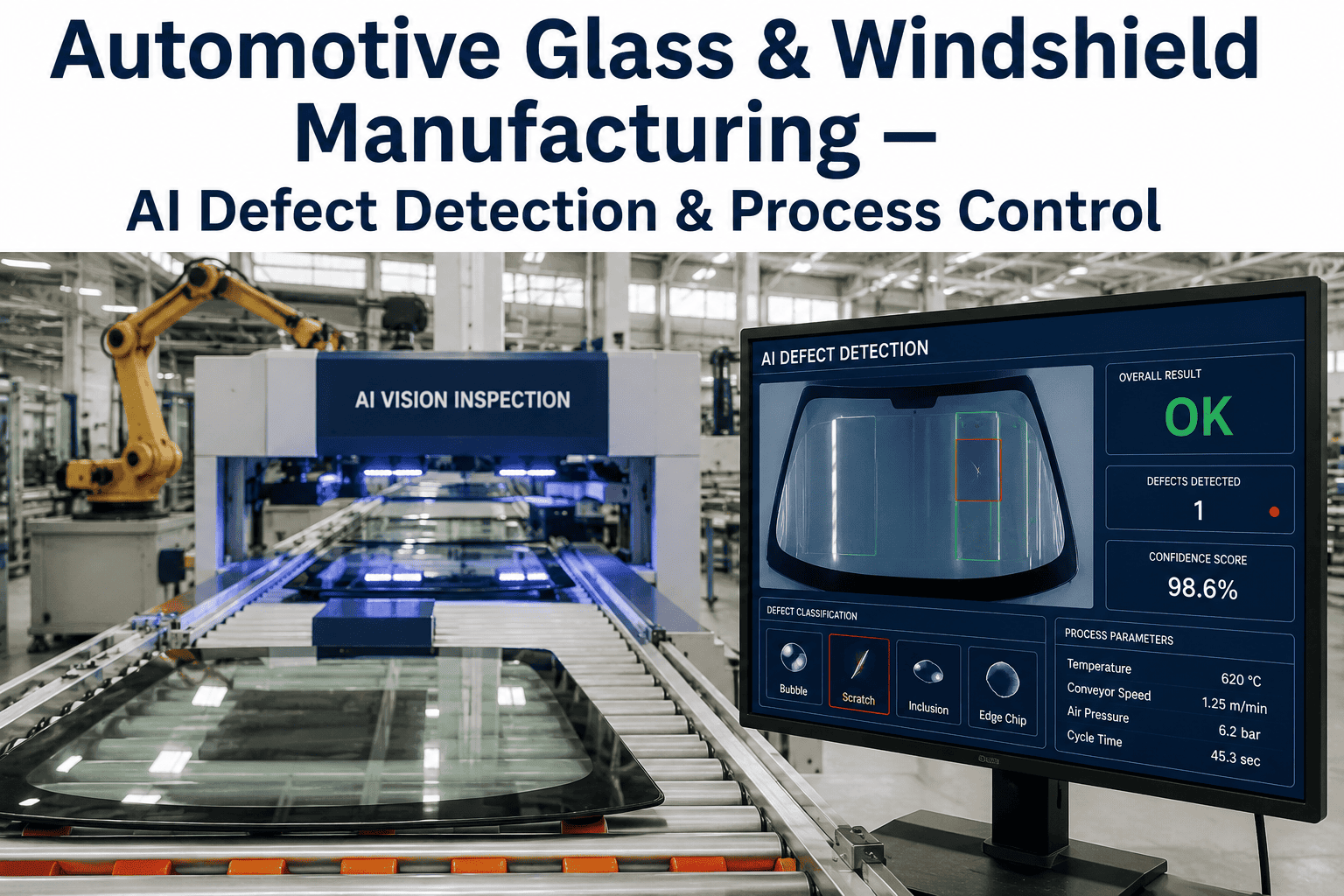
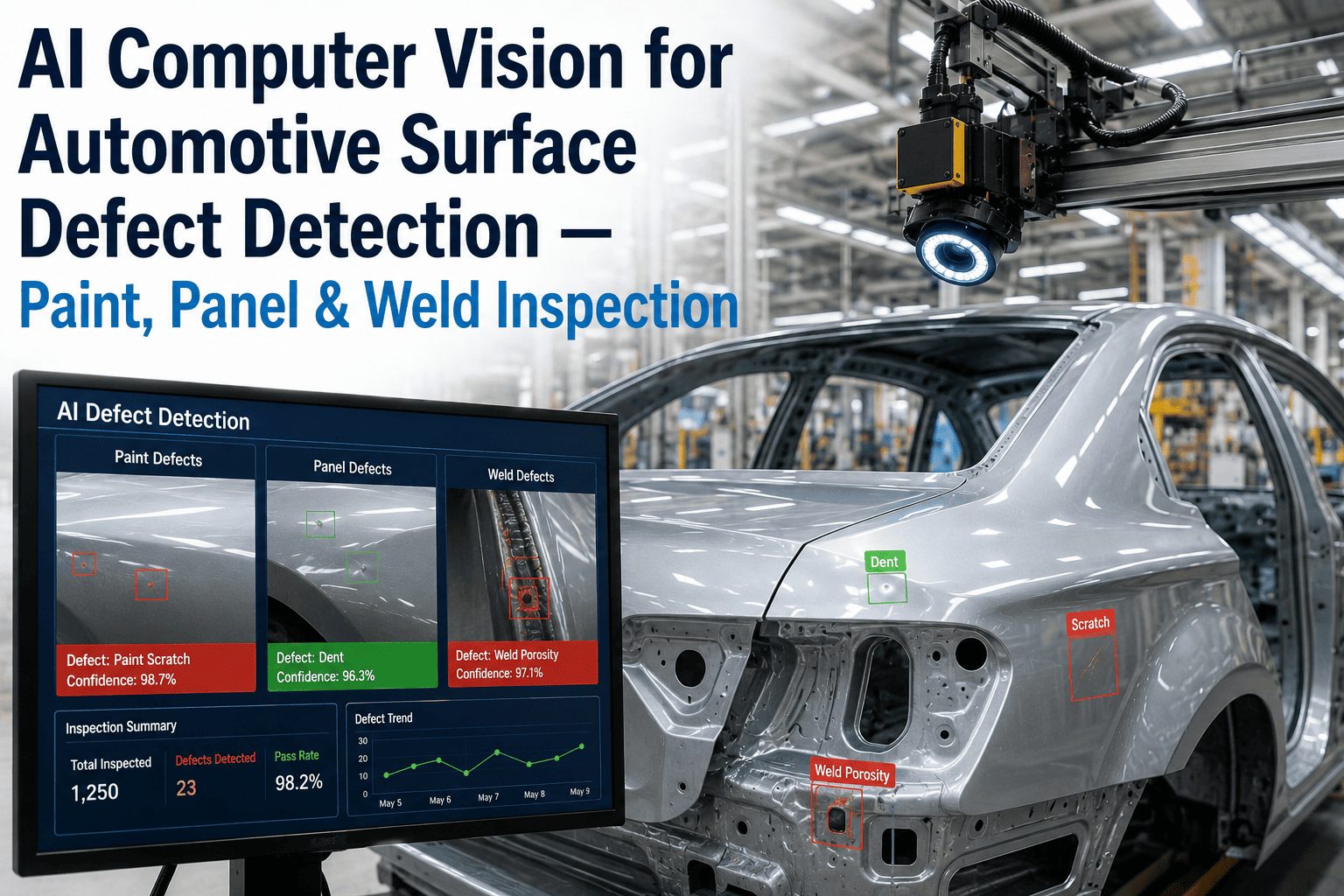
iFactory AI vision delivers 99.7% inspection accuracy in automotive manufacturing through deep learning models trained on 15 million automotive defect images covering welds, paint, stamping, assembly, and battery production. System processes 1,200 inspection points per vehicle in 8 to 12 seconds, detecting microscopic defects (0.1mm weld porosity, 0.05mm paint orange peel, 0.2mm dimensional variance) invisible to manual inspection while eliminating 89% of false rejections that stop production unnecessarily. Real-time integration with MES, PLC controllers, and robotic systems enables automated part rejection, process adjustments, and compliance documentation for IATF 16949, ISO 9001, and automotive OEM quality standards across stamping, body shop, paint, assembly, and battery production operations.
iFactory AI vision eliminates quality escapes, reduces false rejections by 89%, and prevents $3.4M average annual warranty costs through real-time defect detection across all automotive manufacturing processes.
Understanding Automotive Manufacturing Quality Challenges
Modern automotive production operates at unprecedented complexity with assembly lines producing 60 to 90 vehicles per hour, stamping presses cycling every 12 to 18 seconds, robotic welding completing 2,000+ welds per vehicle, paint booths requiring defect-free finishes on complex body geometries, and EV battery assembly demanding zero-tolerance quality for safety-critical components. Manual inspection cannot keep pace with production speeds while maintaining consistent quality standards. Inspector fatigue degrades detection rates after 2 to 3 hours of continuous inspection. Microscopic defects including 0.1mm weld porosity, 0.05mm paint orange peel, hairline cracks in stampings, and dimensional variances below 0.3mm remain invisible to human inspection but create warranty claims and safety recalls. Traditional fixed-threshold camera systems generate excessive false rejections stopping production for non-defects while missing actual quality issues requiring adaptive intelligence. Downtime costs automotive manufacturers $22,000 per minute on average, with quality-related line stoppages contributing 18% to 28% of total unplanned downtime since 2019 when downtime costs rose 113% industry-wide.
Critical Quality Problems Destroying Automotive Profitability
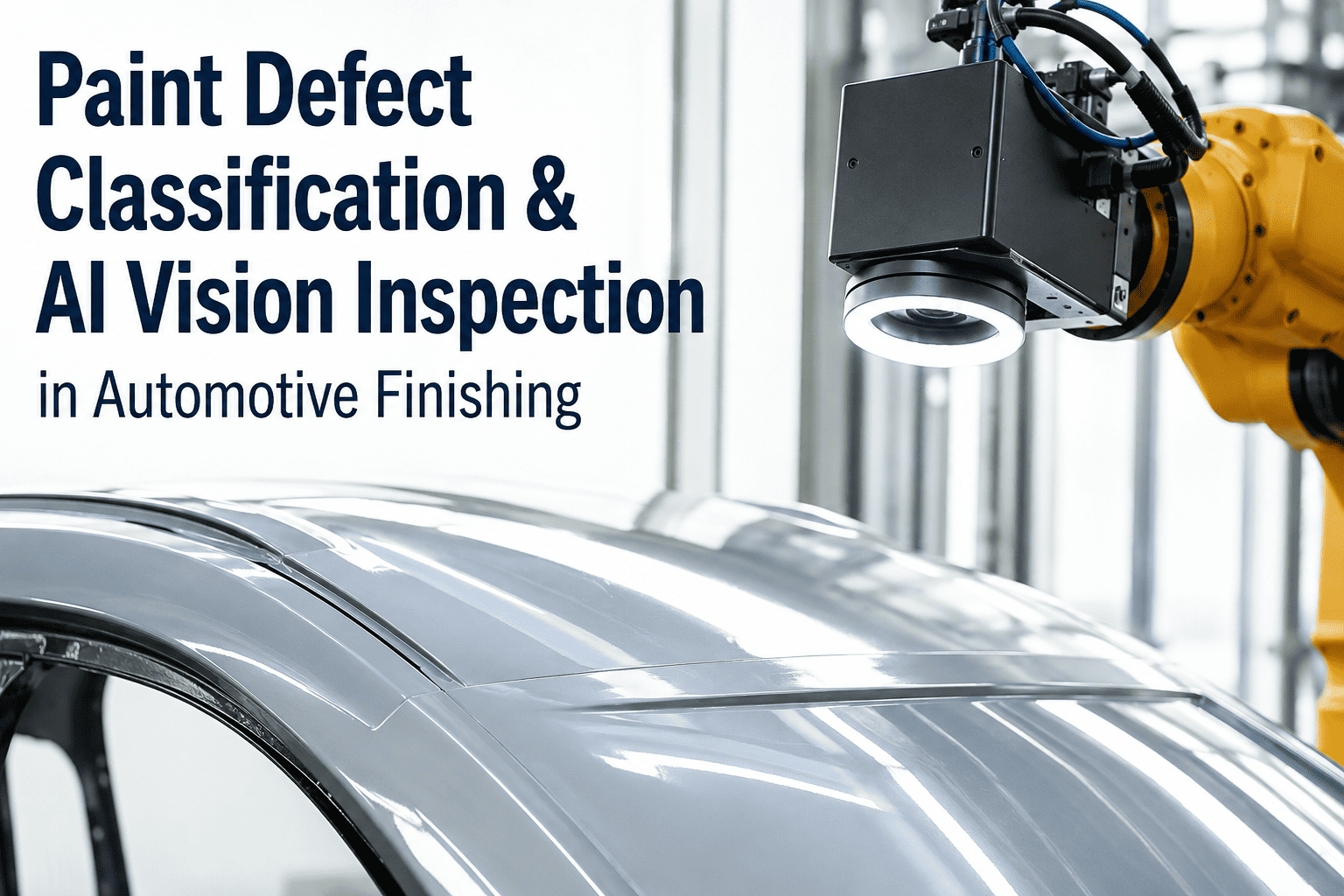
Equipment failure on assembly lines causes catastrophic line stoppage affecting 200 to 800 workers simultaneously and halting production of $450,000 to $1.8 million in vehicle value per hour depending on model mix and plant capacity. Supply chain halt from quality holds on incoming components creates massive losses exceeding $2.4 million per day when OEM plants shut down awaiting supplier corrective action. Quality defects escaping to customers trigger warranty claims averaging $850 per vehicle, recall costs of $15 to $95 million per campaign, and permanent brand damage. Industry data shows automotive plants experience 14 to 28 significant quality incidents per month causing 45 to 120 hours lost production monthly. Manual inspection misses 15% to 22% of defects while generating 35% to 50% false rejection rates. Paint defects alone cost $180 to $450 per vehicle in rework when caught before delivery, but $2,400 to $8,500 in warranty repairs when customers discover issues. Battery assembly quality failures create safety risks with recall costs exceeding $380 million for major EV manufacturers. iFactory AI vision eliminates these problems through real-time defect detection, automated process correction, and zero-escape quality verification.
What Modern Automotive Plants Need for Zero-Defect Production
Robotic systems maintenance requires continuous monitoring of weld quality, robot path accuracy, and tool wear to prevent defects from degrading automation performance. Assembly line optimization demands real-time quality verification at every station ensuring defects detected immediately before value-added downstream. EV and battery production introduces new quality challenges including cell alignment precision, thermal interface integrity, and electrical connection verification requiring specialized inspection capabilities. Stamping and press shop operations need instant detection of tool wear, material defects, and dimensional drift before producing thousands of defective parts. OEE and performance tracking must integrate quality metrics with availability and performance data to identify true manufacturing effectiveness. Traditional inspection methods cannot deliver this integrated intelligence at production speeds while maintaining accuracy and eliminating false alarms that erode operator confidence and waste capacity.
How iFactory AI Vision Achieves 99.7% Inspection Accuracy
Automotive Manufacturing AI Vision Implementation Roadmap
Deploying AI-powered vision inspection requires systematic integration with production equipment, baseline data collection, model training, and validation before full production deployment. iFactory provides structured implementation delivering measurable accuracy improvements within 60 to 90 days.
Regional Automotive Manufacturing Challenges and Solutions
Different manufacturing regions face unique quality requirements, compliance standards, and operational constraints affecting AI vision deployment priorities and ROI drivers.
| Region | Key Manufacturing Challenges | Compliance Requirements | How iFactory Solves |
|---|---|---|---|
| United States | Labor costs driving automation, skilled inspector shortage, EV production ramp, complex model mix on shared lines | IATF 16949, ISO 9001, OSHA safety, EPA emissions, NHTSA recall compliance | Automated inspection replacing manual labor, 99.7% accuracy without inspector fatigue, EV battery-specific models, flexible multi-model inspection without reprogramming, automated compliance documentation |
| United Arab Emirates | Extreme heat affecting paint quality, dust contamination, limited local supplier base requiring import quality verification, luxury vehicle quality standards | UAE quality standards, ISO 9001, environmental regulations, import compliance documentation | Heat-resistant camera systems for desert plants, contamination detection in paint and assembly, incoming material inspection automation, ultra-high accuracy for luxury segment quality expectations, automated customs and import compliance tracking |
| United Kingdom | Brexit supply chain complexity, premium brand quality expectations, aging workforce, space-constrained brownfield facilities | IATF 16949, UK HSE safety, ISO 9001, VDA quality standards for German OEM suppliers | Supplier quality verification for Brexit-impacted components, premium defect detection for luxury brands, intuitive operation for aging workforce, compact camera systems for retrofit installations, automated VDA documentation for German export customers |
| Canada | Cold weather material behavior variations, cross-border supply chain quality consistency, bilingual documentation requirements, remote plant locations | IATF 16949, Transport Canada safety, CSA standards, provincial environmental regulations, bilingual compliance | Adaptive AI for temperature-dependent material appearance variations, consistent inspection standards across US-Canada supply chains, bilingual interface and reporting, edge computing for connectivity-limited remote locations, automated provincial compliance tracking |
| Europe | Strict environmental regulations, sustainability reporting, diverse country-specific standards, EV transition acceleration, Industry 4.0 integration | IATF 16949, ISO 9001, VDA standards, EU environmental directives, CE marking, country-specific regulations | Energy-efficient edge computing, sustainability metrics tracking, multi-country compliance management, EV battery inspection expertise, Industry 4.0 data integration with MES and ERP systems, automated CE documentation |
Platform Capability Comparison: Automotive Quality Inspection
Generic machine vision systems require extensive programming for each defect type. Traditional CMMS platforms lack integrated inspection capabilities. iFactory differentiates through automotive-specific AI models, real-time MES integration, and proven 99.7% accuracy validated across global automotive production. Schedule a platform comparison demonstration.
| Capability | iFactory | QAD Redzone | IBM Maximo | SAP EAM | MaintainX |
|---|---|---|---|---|---|
| AI Vision Capabilities | |||||
| Inspection accuracy | 99.7% validated automotive | No vision capability | No vision capability | No vision capability | No vision capability |
| AI deep learning models | 15M defect image training | Not available | Not available | Not available | Not available |
| Real-time processing speed | 8-12 sec per vehicle, 1200 points | N/A | N/A | N/A | N/A |
| Manufacturing Integration | |||||
| MES and PLC integration | Native automotive MES, real-time PLC | Basic MES connection | Custom integration | SAP ecosystem only | Manual data entry |
| Automated reject routing | PLC-controlled diversions | Not available | Not available | Not available | Not available |
| Mobile plant floor access | Real-time defect images mobile | Basic mobile app | Limited mobile | Mobile with limitations | Mobile-first design |
| Automotive Specialization | |||||
| Automotive-specific AI | Trained on auto defects | Generic manufacturing | Generic industrial | Generic EAM | Generic facilities |
| IATF 16949 compliance | Automated documentation | Manual compliance | Custom configuration | Custom configuration | Not automotive focused |
| Deployment timeline | 10-12 weeks to production | 8-16 weeks | 6-18 months | 9-24 months | 4-12 weeks |
Comparison based on publicly documented capabilities and automotive manufacturing deployments as of Q1 2025.
Measured Quality and Financial Results
iFactory AI vision delivers proven inspection accuracy across stamping, welding, paint, assembly, and battery production while reducing false rejections by 89% and preventing $3.4M average annual warranty costs.
Frequently Asked Questions
iFactory AI vision delivers proven inspection accuracy across all automotive manufacturing processes, detecting microscopic defects invisible to manual inspection while eliminating 89% of false rejections that waste production capacity. Prevent $3.4M average annual warranty costs, reduce quality labor 45%, and achieve 100% inline inspection vs manual sampling through deep learning models trained on 15 million automotive defect images with seamless MES, PLC, and SCADA integration for automated reject routing and IATF 16949 compliance documentation.