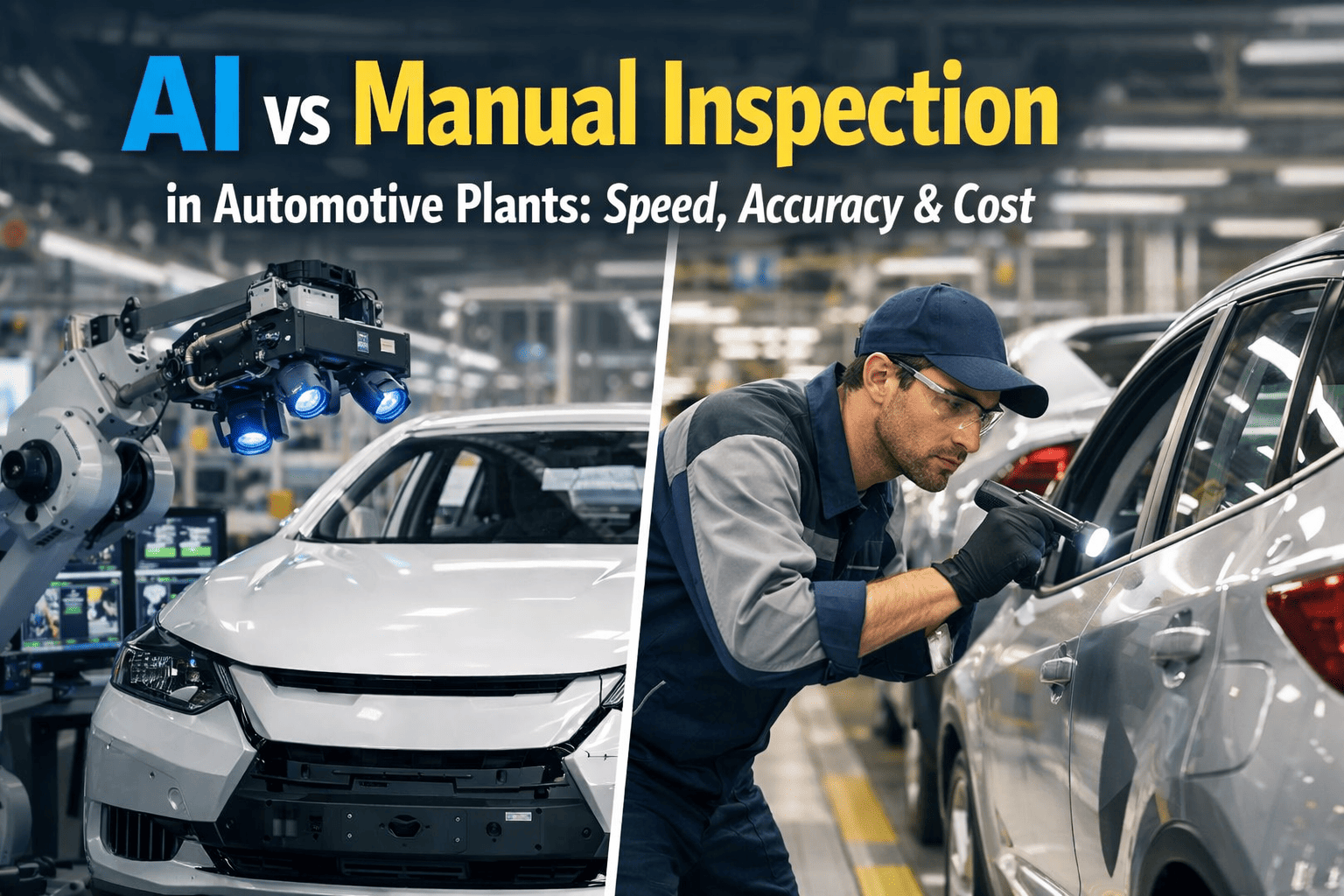
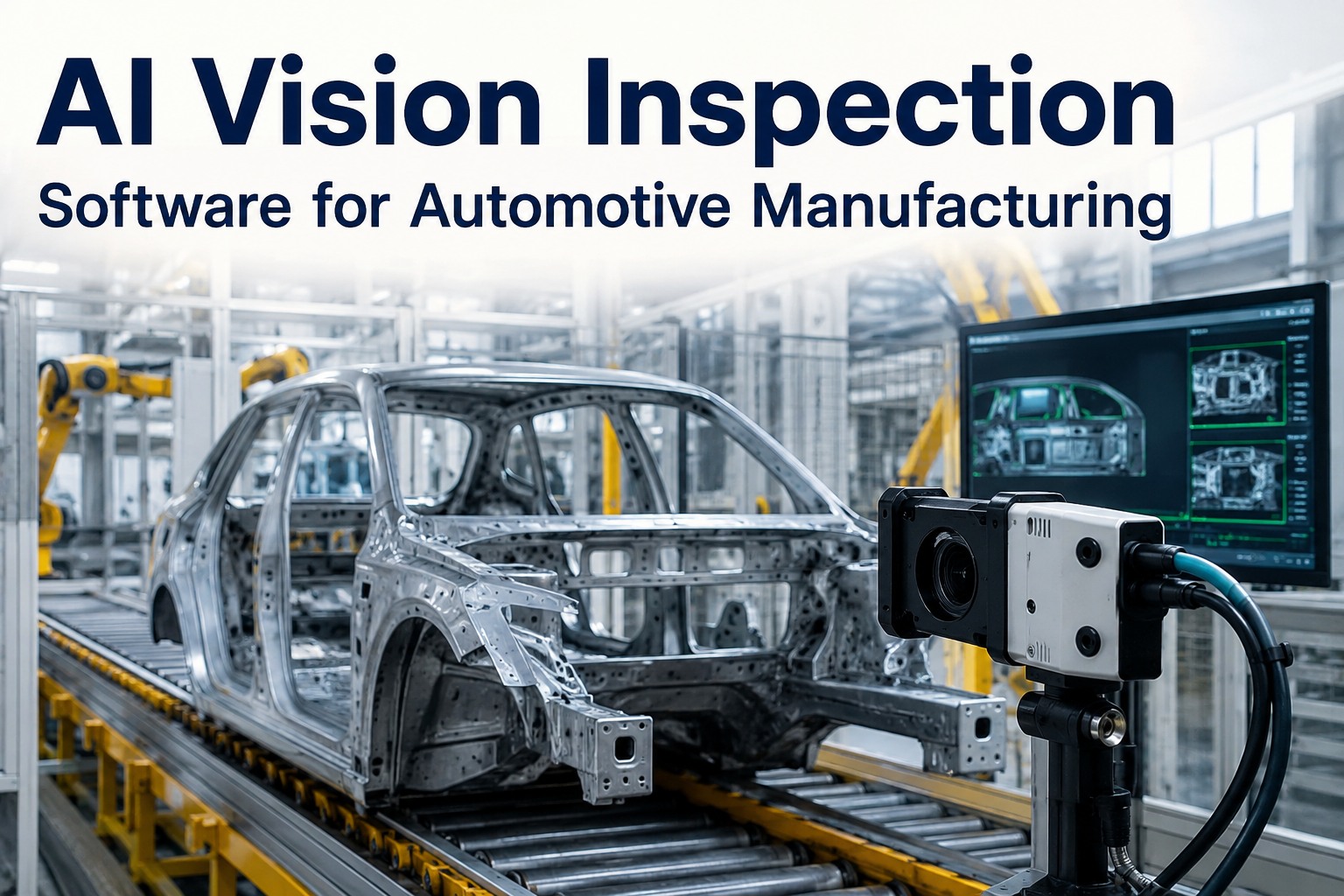
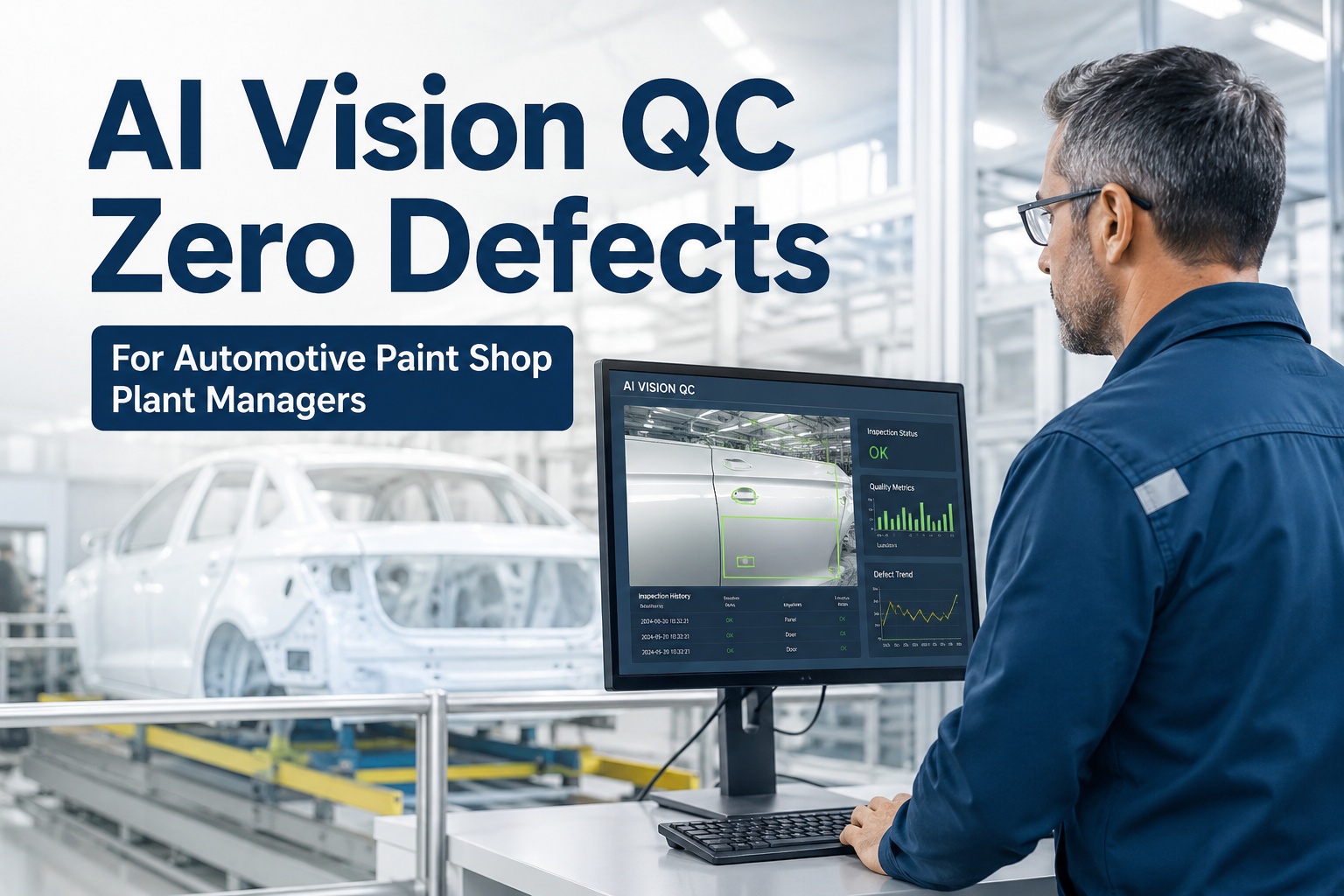
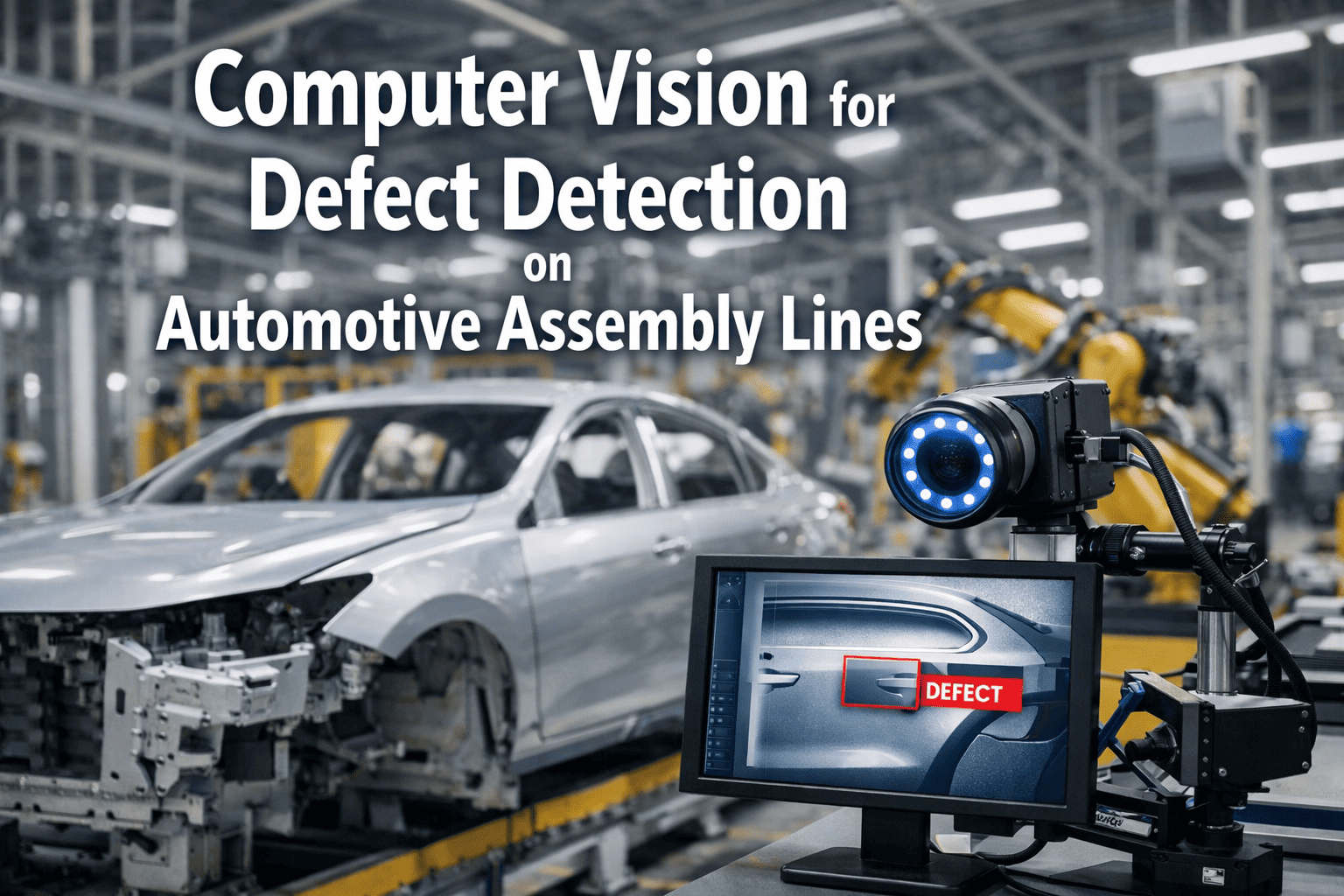
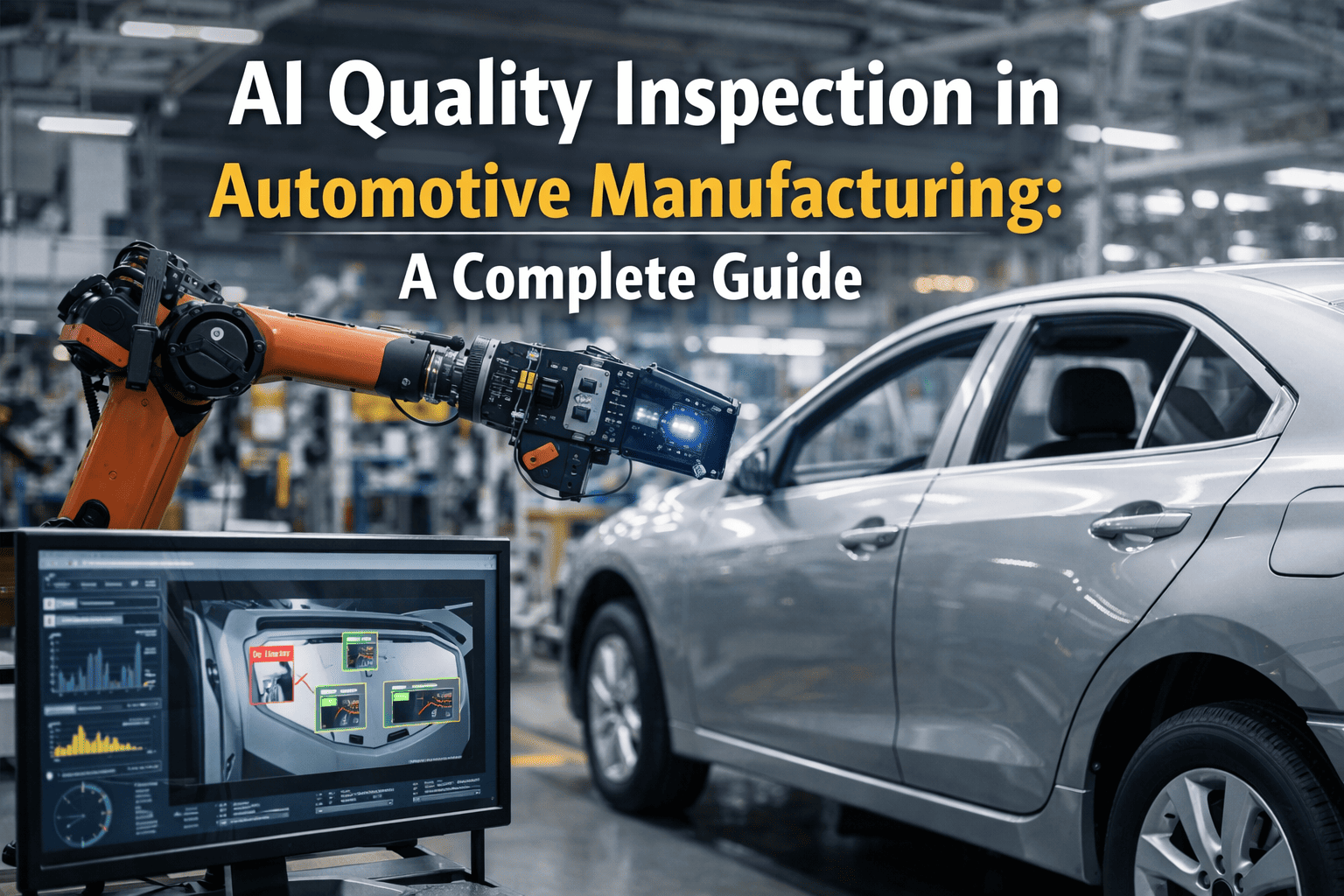
A Tier 1 automotive supplier operates final inspection with 12 human inspectors checking 840 body panels per shift for paint defects, surface scratches, and dimensional variations, achieving 87% defect detection accuracy at $420,000 annual labor cost plus $168,000 in escaped defects reaching customers because human visual inspection misses microscopic paint orange peel texture variations,under certain lighting angles, and dimensional deviations within 0.15mm tolerance that cause downstream assembly interference. iFactory's AI vision inspection system processes the same 840 panels per shift at 2.4 seconds per panel using deep learning models trained on 280,000 annotated defect images, achieves 99.2% detection accuracy including microscopic defects invisible to human inspection, operates with zero performance degradation across shifts, and costs $78,000 annually in platform fees plus initial deployment investment that pays back in 8 months through eliminated labor and reduced customer returns. The choice between human inspectors struggling with fatigue and AI systems maintaining perfect consistency now determines your quality costs and customer satisfaction. Book a demo to see AI inspection ROI for your facility.
VS
AI Inspection
$78K
Annual Platform Cost
Zero
Performance Variation
Quick Answer
AI vision inspection outperforms manual inspection across three critical dimensions: Speed (2.4 seconds per part vs 38 seconds manual, 15x faster throughput enabling 100% inline inspection vs statistical sampling), Accuracy (99.2% defect detection vs 87% human accuracy, captures microscopic defects invisible to inspectors, zero performance degradation from fatigue), Cost (8-month ROI through eliminated labor, reduced escaped defects, faster cycle times). Manual inspection advantages: flexibility for novel defect types, lower initial capital investment, easier deployment for low-volume production. AI inspection advantages: consistency across all shifts and operators, scalability without headcount, real-time production feedback, comprehensive defect documentation with images and coordinates. Optimal approach for automotive plants: AI for high-volume repetitive inspection (paint defects, dimensional checks, surface finish), human inspectors for complex judgment calls and new model validation.
AI Quality Inspection
Achieve 99% Defect Detection with AI Vision Systems
See how iFactory's computer vision platform inspects 100% of production at 15x human speed, detects microscopic defects invisible to manual inspection, and delivers 8-month ROI through eliminated labor and reduced customer returns.
Detailed Performance Comparison
The comparison below analyzes AI vs manual inspection across 12 critical performance metrics based on data from automotive assembly plants processing 800 to 1,200 parts per shift. Measurements represent typical performance for trained human inspectors vs deployed AI vision systems after 90-day learning period.
Detection Accuracy
AI detects 14% more defects including microscopic paint defects, 0.08mm scratches, and subtle dimensional variations missed by human vision under production lighting.
Inspection Speed
AI processes parts 15x faster, enabling 100% inline inspection vs statistical sampling (typical manual: 1 in 8 parts inspected due to throughput constraints).
Consistency Across Shifts
Human performance drops 23% afternoon vs morning due to visual fatigue. AI maintains identical accuracy 24/7 with zero degradation across shifts or days.
Annual Operating Cost
Manual cost: 12 inspectors × $35K salary. AI cost: $78K platform fee. Does not include escaped defect costs (manual $168K vs AI $24K annual customer returns).
Inspector-to-Inspector Variation
Different inspectors classify identical defects differently. Most lenient inspector passes 34% more defects than strictest. AI applies identical criteria to every part.
Training Time for New System
New inspector training: 6 to 8 weeks to baseline competency. AI model training: 2 to 3 weeks data collection and annotation, then deployed across all inspection stations simultaneously.
When Manual Inspection Still Makes Sense
Despite AI advantages in speed, accuracy, and cost, manual inspection remains optimal for specific automotive manufacturing scenarios. Understanding when human judgment outperforms computer vision prevents misapplication of AI where it delivers limited value. Talk to an expert about optimal inspection strategy.
01
Low-Volume Production Under 200 Parts Per Day
AI deployment requires minimum throughput to justify capital investment and training effort. Plants producing under 200 parts daily: manual inspection ROI superior because AI system cost ($180K to $320K initial deployment plus $78K annual platform fee) cannot be recovered from limited production volume. Human inspector cost: $35K annual salary handles 200 parts/day comfortably. AI advantage diminishes when inspection represents small fraction of total production cost. Crossover point: approximately 400 to 600 parts per day where AI economics become favorable.
02
Novel Defect Types Without Training Data
AI models require 800 to 2,000 annotated examples per defect class to achieve production-grade accuracy. New model launches, design changes, or novel manufacturing processes introduce defect types with zero historical data. Human inspectors adapt immediately to new defect categories through verbal instruction and visual examples (2 to 4 hours training vs 3 to 6 weeks AI model retraining). Example: new aluminum body panel forming process creates previously unseen surface waviness defect. Inspector identifies issue same day, AI requires weeks of data collection before reliable detection. Manual inspection bridges gap during new product introduction periods.
03
Complex Subjective Quality Judgments
Some automotive quality criteria involve subjective assessments difficult to codify in AI algorithms: interior trim color match across multiple materials (leather, plastic, fabric requiring human color perception), surface finish aesthetic appeal (acceptable texture variation vs defect requires design intent understanding), assembly fit and finish perception (gaps and flushness within tolerance but aesthetically unpleasing). These judgments require contextual understanding of brand quality standards, customer expectations, and design intent that AI struggles to learn from training data alone. Human inspectors integrate broader context into quality decisions.
04
Inspection Locations Physically Inaccessible to Cameras
AI vision requires clear camera line-of-sight to inspection surface. Some automotive components have internal features, hidden surfaces, or deep recesses inaccessible to standard camera mounting: engine block internal passages, fuel tank interior welds, wiring harness connector pins inside sealed housings, brake caliper piston bore surfaces. Inspector uses mirrors, borescopes, or tactile inspection to access these areas. AI alternative requires specialized robotics or redesigned camera deployment (significant cost and complexity). Manual inspection remains practical for geometrically challenging inspection points.
When AI Inspection Delivers Maximum Value
AI vision systems achieve highest ROI in high-volume repetitive inspection scenarios where speed, consistency, and microscopic defect detection create measurable business value. The use cases below represent optimal AI deployment opportunities in automotive manufacturing.
Paint Defect Detection at 100% Inspection Rate
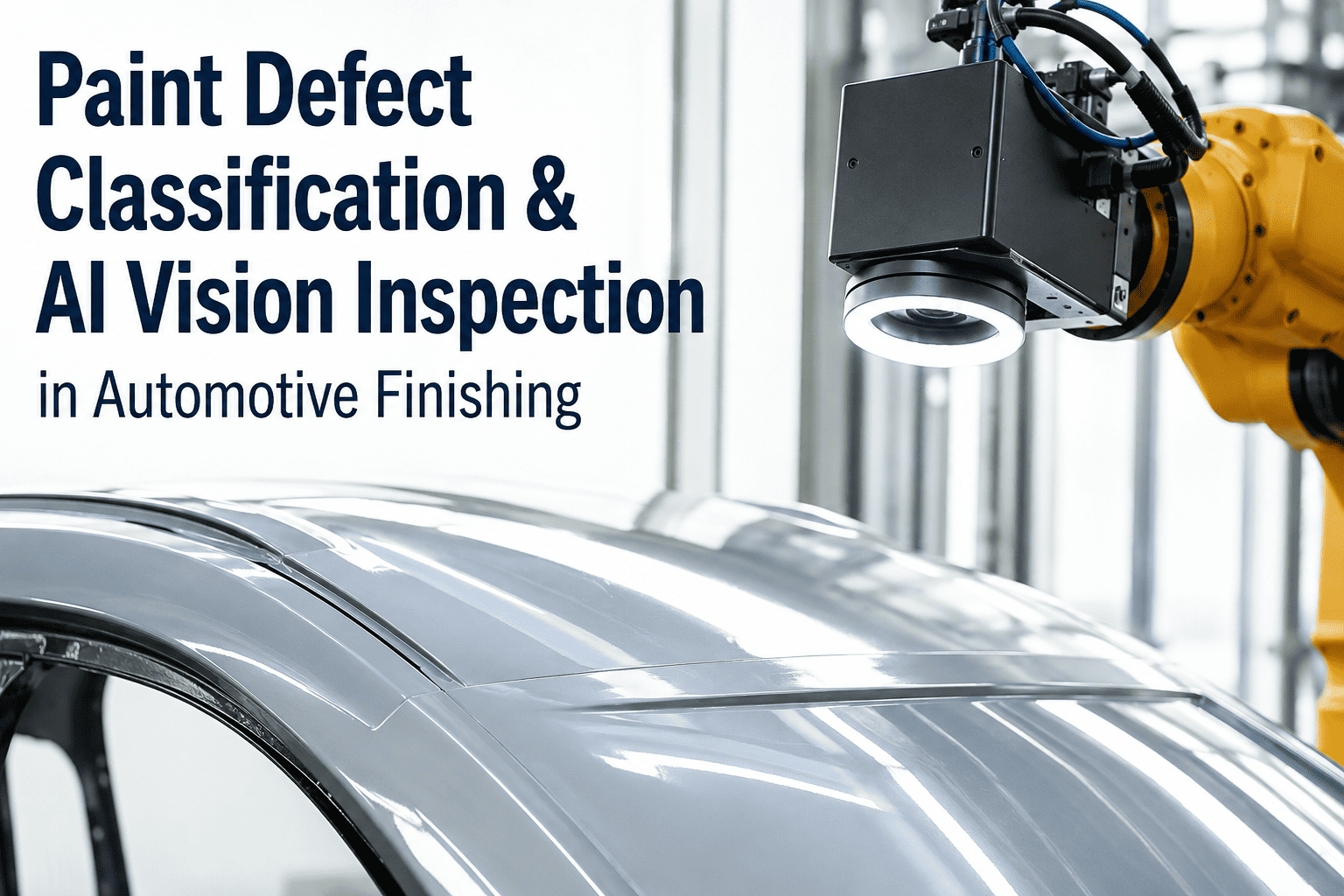
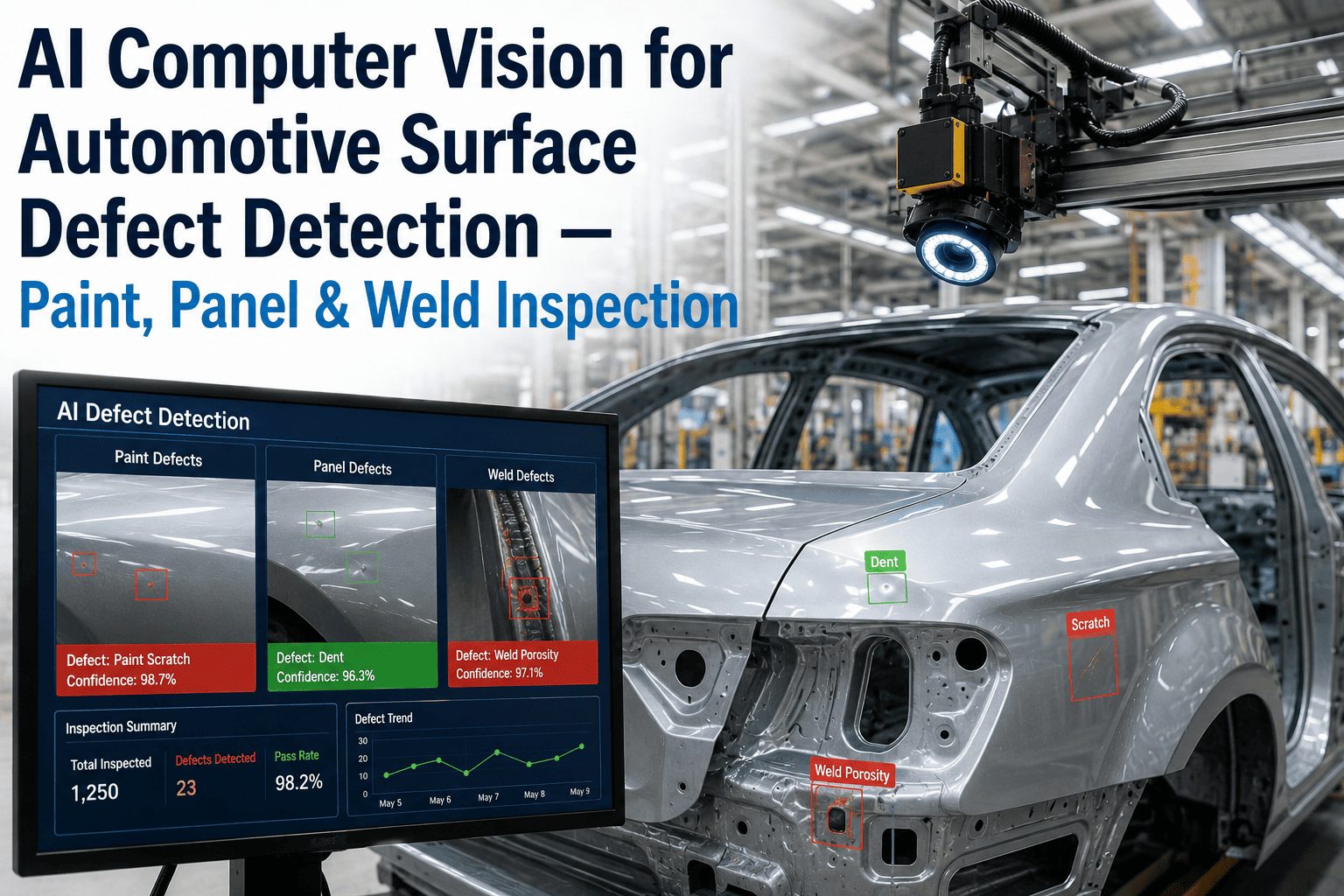
Manual paint inspection samples 1 in 8 vehicles due to 38-second inspection time per panel. AI inspects every vehicle at 2.4 seconds per panel, detecting orange peel, dirt nibs, runs, sags, dry spray invisible to samplers. Result: 91% reduction in paint defects reaching customer, $280K annual warranty cost avoided. AI captures defect images with coordinates for automated repair routing. Manual sampling misses defects on 87.5% of production.
Dimensional Measurement Within 0.05mm Tolerance
Stamped body panels require gap and flush measurements accurate to 0.05mm for proper assembly fit. Human inspectors use manual gauges: 4 to 6 minutes per vehicle, ±0.15mm measurement error, only critical points checked. AI vision measures 100% of gap and flush points in 18 seconds per vehicle with ±0.02mm repeatability. Detects dimensional drift before assembly interference occurs. Provides real-time feedback to stamping press for process correction. Manual measurement insufficient precision for modern tolerance requirements.
Surface Scratch Detection Below Human Visual Threshold
Microscopic surface scratches (0.08 to 0.12mm depth) invisible under production lighting cause customer complaints after delivery when viewed in sunlight. Manual inspectors miss 68% of these defects. AI high-resolution cameras with polarized lighting detect 99% of micro-scratches, enabling in-process correction before paint. Prevented defects: $420K annual customer returns from surface quality issues. Manual inspection limited by human visual acuity approximately 0.2mm under production conditions.
Weld Quality Verification for Safety-Critical Components
Structural welds on chassis, suspension, and safety cage require 100% inspection per automotive safety standards. Manual inspection: destructive testing on sample parts plus visual inspection (misses internal weld defects). AI vision combined with thermal imaging detects surface porosity, incomplete fusion, and heat-affected zone defects on every weld. Provides permanent defect documentation with traceability for regulatory compliance. Manual inspection cannot achieve 100% coverage without destructive testing. AI enables non-destructive verification at production speed.
Real-Time Process Feedback for Upstream Correction
Manual inspection occurs at end-of-line: defects discovered after value-added operations complete. AI inline inspection provides instant feedback to upstream processes. Example: stamping press drift detected from panel dimensional measurements, press adjusted automatically before 10 defective parts produced. Manual inspection discovers issue after 400-part batch complete. AI prevents defect propagation through real-time monitoring and automated process control integration. Reduces scrap from batch defects by 84%, saves $340K annual material waste.
Platform Capability Comparison
AI vision inspection platforms vary significantly in deployment complexity, defect detection capabilities, and integration requirements. iFactory differentiates on automotive-specific pre-trained models, rapid deployment timelines, and seamless MES integration for production traceability. Book a comparison demo.
| Capability |
iFactory |
QAD Redzone |
Evocon |
Mingo Smart Factory |
Plex Manufacturing Cloud |
| AI Inspection Capabilities |
| Pre-trained automotive models |
280K defect image library |
Generic models only |
Not available |
Not available |
Not available |
| Microscopic defect detection |
0.08mm resolution capable |
Not available |
Not available |
Not available |
Manual inspection |
| Deployment timeline |
2 to 3 weeks production-ready |
6 to 12 weeks custom |
Not applicable |
Not applicable |
12+ weeks integration |
| Performance Metrics |
| Detection accuracy rate |
99.2% validated accuracy |
Customer-dependent |
Not applicable |
Not applicable |
Manual entry errors |
| Inspection speed |
2.4 seconds per part |
Manual speed |
Not applicable |
Not applicable |
Manual inspection |
| Shift-to-shift consistency |
100% identical performance |
Human variation |
Not applicable |
Not applicable |
Inspector-dependent |
| Integration & Traceability |
| MES integration |
Real-time defect data sync |
Limited integration |
Production data only |
Not available |
Native integration |
| Defect image documentation |
Auto-captured with coordinates |
Not available |
Not available |
Not available |
Manual photo upload |
| Process feedback loop |
Automated upstream alerts |
Manual notification |
Not available |
Not available |
Workflow routing |
Based on publicly available product documentation as of Q1 2025. Verify current AI vision capabilities with vendors before procurement.
Regional Manufacturing Compliance
iFactory's AI inspection platform supports quality documentation and traceability standards across global automotive manufacturing regions. The system generates compliance-ready records for visual inspection and defect tracking programs.
| Region |
Standards |
Requirements |
iFactory Support |
| United States |
ISO 9001, IATF 16949, FMVSS safety standards |
Quality inspection documentation, defect traceability, safety-critical component verification, statistical process control |
IATF-compliant inspection records, FMVSS weld verification, automated SPC charting, defect image archival |
| United Arab Emirates |
ESMA standards, ISO 9001, quality system validation |
Inspection system calibration documentation, defect classification standards, quality audit trail verification |
ESMA calibration records, inspection system validation, automated quality reporting |
| United Kingdom |
ISO 9001, automotive quality standards, HSE regulations |
Quality inspection compliance, defect tracking documentation, inspection equipment validation |
ISO-compliant inspection logs, defect trend analysis, equipment calibration tracking |
| Canada |
CSA standards, ISO 9001, CMVSS safety compliance |
Quality inspection verification, safety component traceability, bilingual documentation capability |
CSA inspection compliance, English/French interface, safety-critical part tracking |
| Germany |
VDA quality standards, DIN specifications, Industry 4.0 |
Digital inspection documentation, automated quality analytics, Industry 4.0 data integration |
VDA-compliant quality records, DIN standard validation, Industry 4.0 protocol support |
| Europe (EU) |
ISO 9001, CE marking, GDPR data privacy, automotive standards |
Quality system documentation, data privacy compliance, inspection traceability requirements |
CE marking documentation, GDPR-compliant image storage, automated compliance reporting |
iFactory maintains compliance with evolving standards through continuous platform updates. Contact support for OEM-specific inspection requirements.
AI Vision Inspection
Detect Defects Invisible to Human Inspectors
iFactory's computer vision platform inspects 100% of production at 15x human speed, achieves 99.2% detection accuracy including microscopic defects, and delivers complete traceability with defect images and coordinates.
$342K
Annual Cost Savings
ROI Analysis: 1,200 Parts Per Day Production
Manual Inspection Costs
Inspector labor (12 FTE × $35K)$420,000
Escaped defect customer returns$168,000
Training costs for new inspectors$42,000
Sampling-only coverage (not 100%)$0
Annual Total Cost$630,000
AI Inspection Costs
Initial deployment (cameras, hardware)$240,000
Annual platform fee$78,000
Escaped defect customer returns$24,000
100% inline inspection coverage$0
Year 1 Total Cost$342,000
Year 1 Savings: $288,000 | Payback: 8 months
From the Field
We operated final inspection with 14 human inspectors checking body panels, paint finish, and dimensional tolerances on 1,100 vehicles per day. Inspector performance varied dramatically: most experienced inspector detected 94% of defects, newest inspector only 76%, afternoon shift accuracy dropped 28% below morning due to fatigue. We sampled 1 in 10 vehicles due to inspection time constraints (42 seconds per vehicle), missing defects on 90% of production. Customer returns from escaped paint defects and dimensional issues cost us $240,000 annually. After deploying iFactory's AI vision system, we now inspect 100% of vehicles at 3.2 seconds each with 99.4% detection accuracy. The system caught microscopic paint orange peel defects that inspectors consistently missed, identified dimensional drift 0.12mm outside tolerance before assembly interference occurred, and provided defect images with exact coordinates for repair routing. In 18 months of operation, AI inspection eliminated $216,000 in customer returns, reduced our inspection labor from 14 FTE to 3 FTE (retained for complex judgment calls and new model validation), and paid back the $280,000 deployment cost in 9 months. The consistency alone is transformative: identical performance 24/7 regardless of shift, day, or inspector availability.
Quality Manager
Automotive Final Assembly Plant, 1,100 Vehicles Per Day, Alabama USA
Frequently Asked Questions
QCan AI inspection completely replace human inspectors or is hybrid approach required?
Optimal strategy: AI handles high-volume repetitive inspection (paint defects, dimensional checks, surface scratches) achieving 99%+ accuracy. Retain small human inspection team (typically 2 to 4 inspectors vs previous 12 to 16) for: novel defect types during new model launch, complex subjective judgments, physically inaccessible inspection points, AI system validation. Hybrid approach delivers best economics and quality outcomes.
Book a demo for facility-specific recommendations.
QWhat deployment timeline is realistic from contract signature to production operation?
Typical automotive AI vision deployment: Week 1-2 camera installation and lighting setup, Week 3-4 defect image collection and model training, Week 5-6 validation testing and accuracy verification, Week 7-8 production pilot and operator training. Total: 6 to 8 weeks to full production deployment for standard paint/dimensional inspection applications. Complex custom applications may require 10 to 14 weeks. Manual inspector training for comparison: 6 to 8 weeks per person to baseline competency.
QHow does AI system handle new defect types not seen during training?
Initial deployment: AI detects only defect types included in training dataset (typically 12 to 24 common automotive defect categories). When novel defect appears: system flags as "unknown anomaly" for human review. Quality team annotates new examples, AI model retrained within 2 to 4 weeks to detect new defect type. Continuous learning: system improves over time as additional defect types added. Human inspectors maintain advantage for immediate novel defect recognition without retraining delay.
QWhat false positive rate should be expected and how is it managed?
Production-grade AI systems: 2% to 5% false positive rate (flagging good parts as defective). Much lower than false negative risk (missing actual defects). False positives managed through: configurable sensitivity thresholds adjusted per defect type, human verification queue for borderline detections, continuous model refinement from validated results. Trade-off: higher sensitivity catches more defects but increases false positives. Most automotive plants prefer overcall vs undercall for safety-critical inspection.
QHow does lighting variation affect AI inspection accuracy across shifts and seasons?
Controlled lighting essential for consistent AI performance. Best practice: LED lighting systems with stable color temperature and intensity, polarizing filters to reduce glare on painted surfaces, enclosed inspection stations to eliminate ambient light variation. Properly configured lighting: AI accuracy variation under 1% between day/night shifts and across seasons. Poor lighting control: accuracy can drop 8% to 15% under variable conditions. Investment in quality lighting infrastructure critical for AI vision ROI.
Upgrade to AI Inspection for 99% Defect Detection at 15x Speed
iFactory's computer vision platform delivers 99.2% inspection accuracy, processes parts 15x faster than manual inspection, maintains zero performance variation across shifts, and achieves 8-month ROI through eliminated labor and reduced customer returns.
99.2% Accuracy
15x Speed
100% Coverage
Zero Fatigue
8-Month ROI