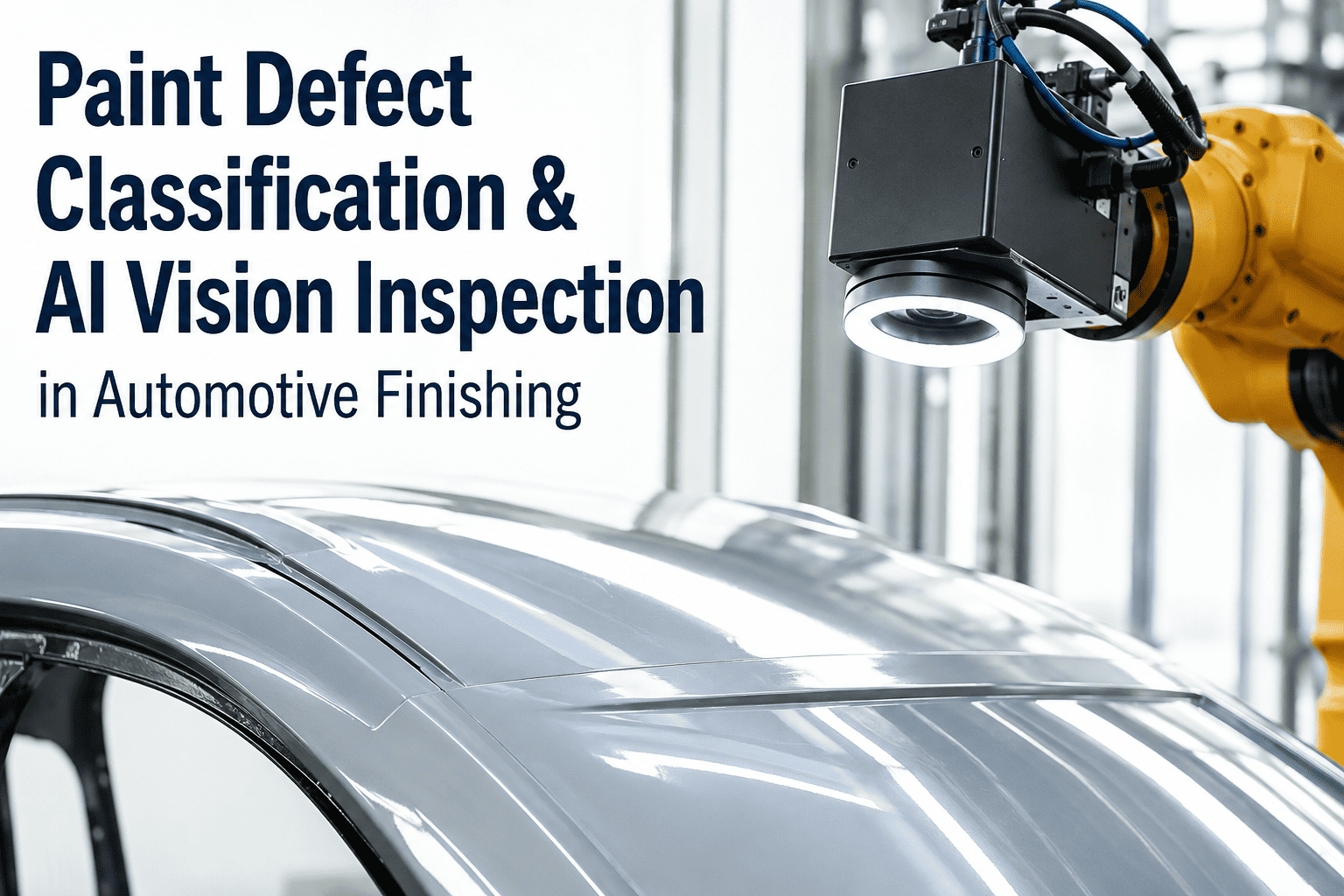
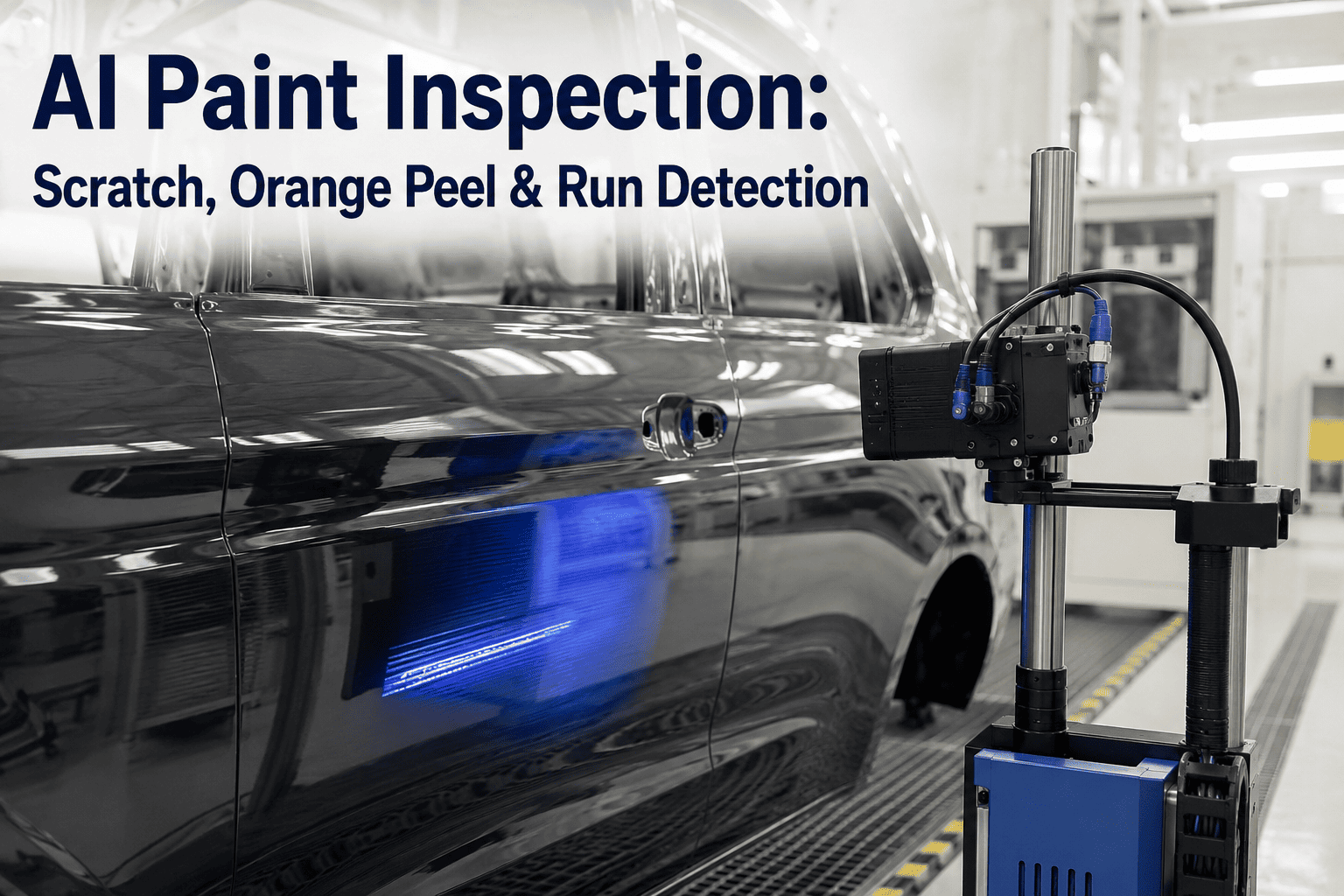
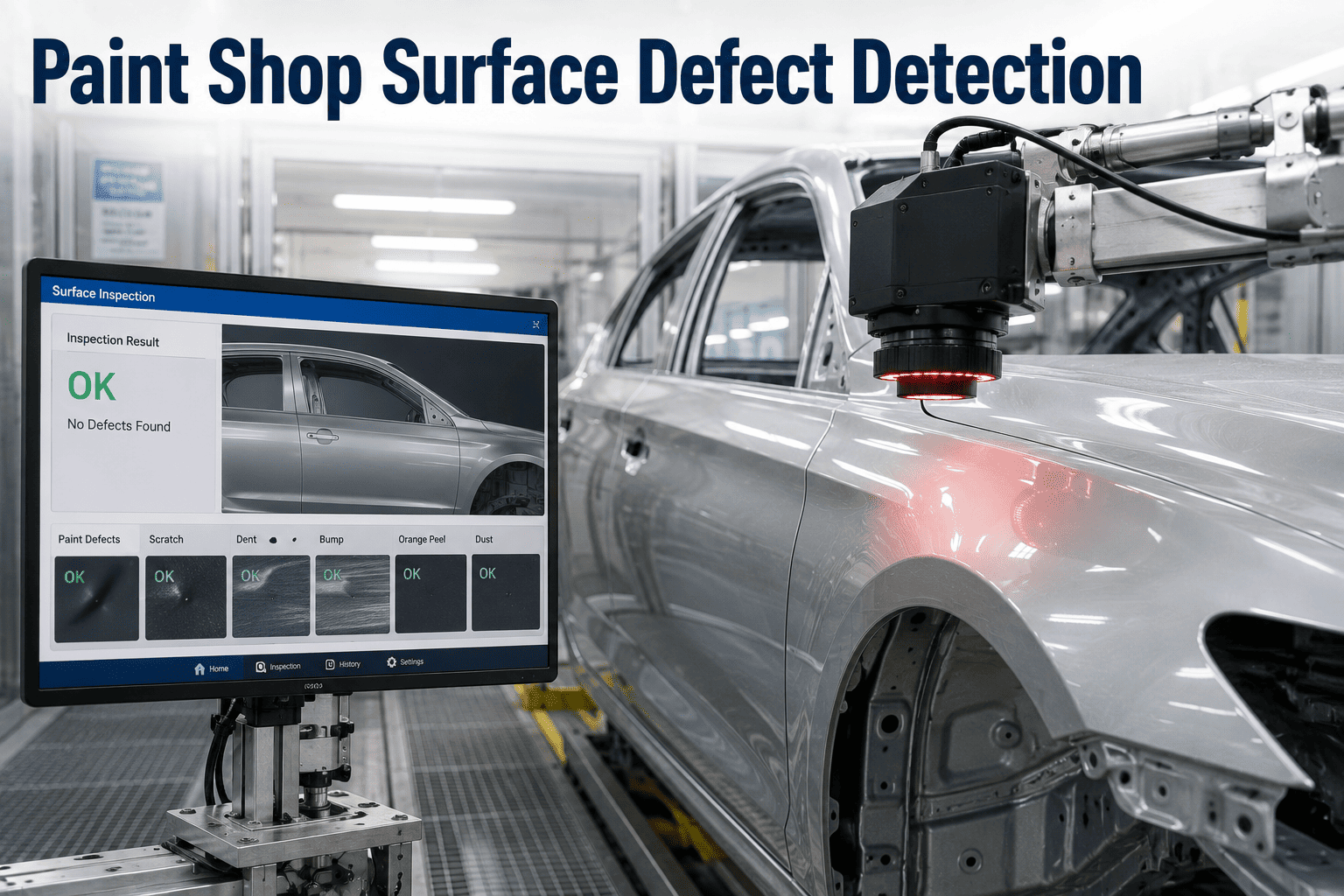
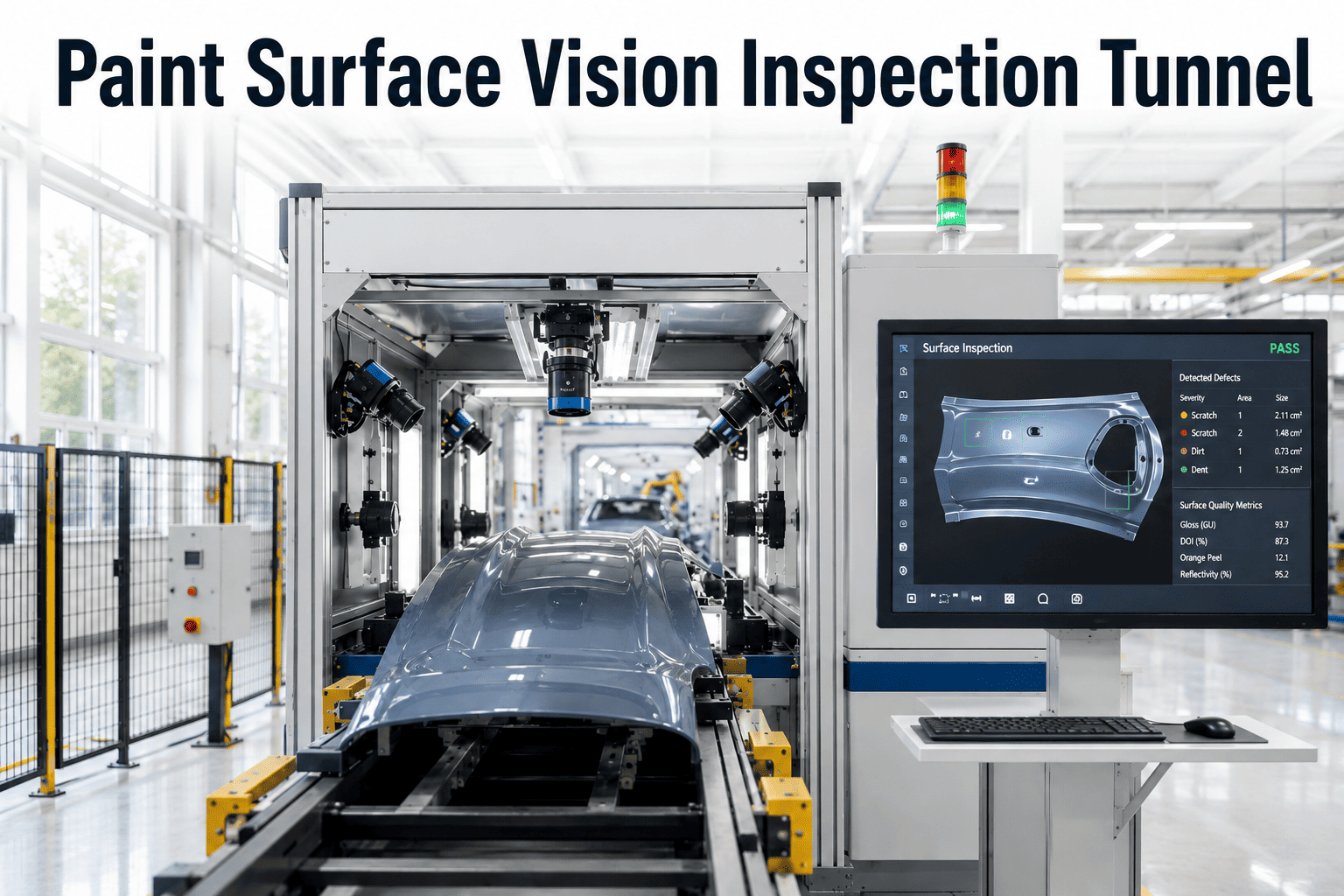
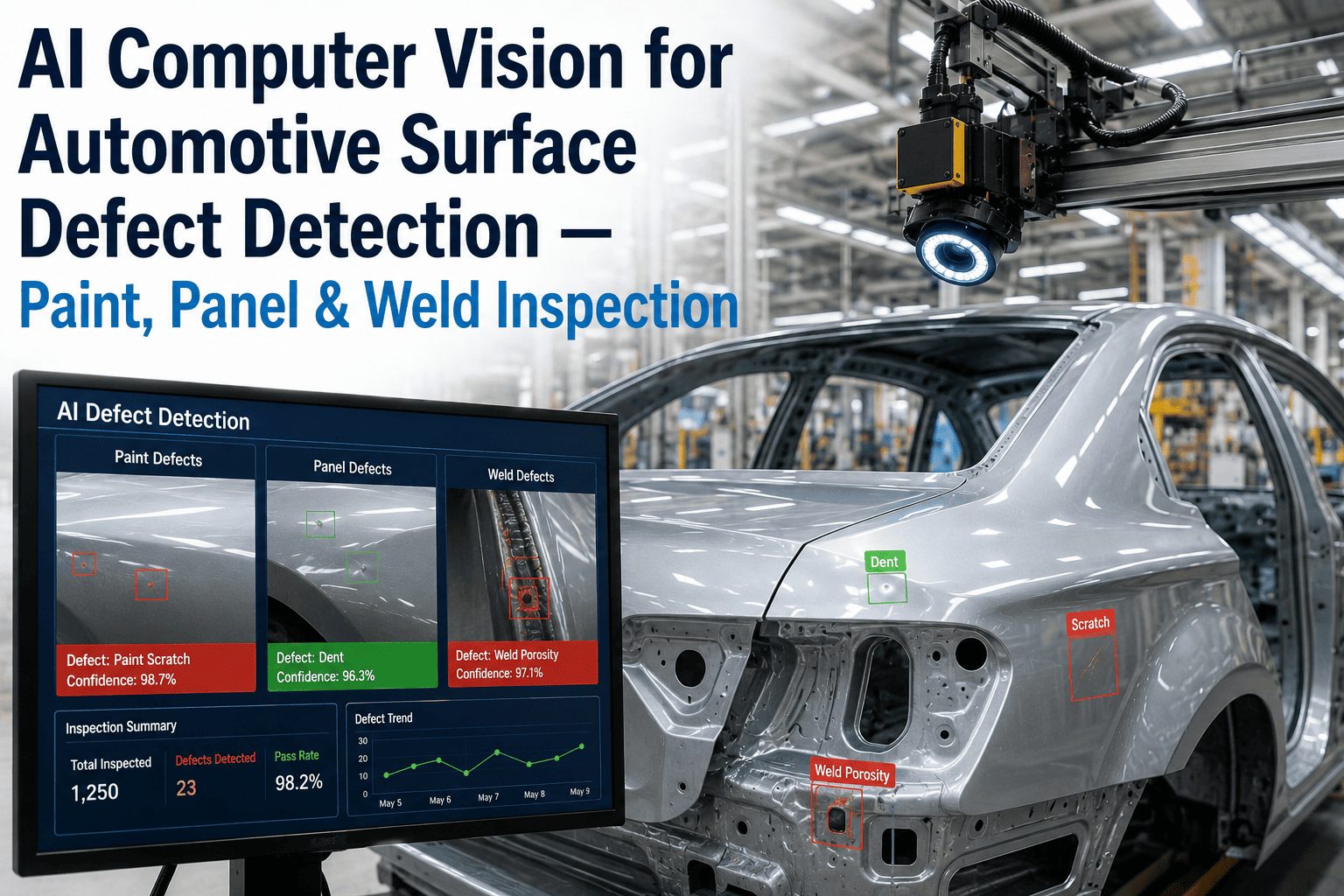
Paint defect inspection has always been one of the most subjective steps in automotive finishing, where two experienced inspectors can look at the same panel under the same booth lighting and disagree on whether a mark is a buffable dirt nib or a rework-worthy defect. That subjectivity gets expensive fast, since over-classification sends good panels to unnecessary rework while under-classification lets real defects slip through to final inspection or the customer. AI vision classification removes the guesswork by scoring every defect against a consistent, trained standard covering dirt, runs, sags, orange peel, craters, and mapping, all in the time it takes the panel to pass under the camera. Finishing quality managers can book a demo and see live classification against their own paint defect standard.
PAINT DEFECT CLASSIFICATION · AI VISION INSPECTION
Consistent Paint Defect Calls, Every Panel, Every Shift
AI vision classifies dirt, runs, sags, orange peel, craters, and mapping automatically, cutting manual inspection labor while catching more defects across every classification category.
Dirt Nibs
Paint Runs
Sags
Orange Peel
Craters
Mapping
Why Two Inspectors Rarely Agree on the Same Panel
Paint defect grading depends heavily on lighting angle, inspector experience, and even how tired someone is by hour seven of a shift. A subtle case of orange peel that one inspector waves through might get flagged as rework-worthy by another, and that inconsistency creates real cost whether it swings toward unnecessary rework or toward defects reaching the customer. AI vision applies the exact same trained classification standard to every panel under controlled multi-angle lighting, removing the shift-to-shift and inspector-to-inspector variability that makes paint grading so hard to standardize.
70%
Reduction in manual paint inspection labor reported after AI vision deployment
6 Categories
Distinct defect classifications trained and scored on every panel automatically
Full Line Speed
Classification happens inline without slowing the paint finishing process
PAINT DEFECT CLASSIFICATION · AI VISION
See Every Defect Category Classified Live
Walk through AI classification running against real panel images from your finishing line.
How Each Defect Category Gets Classified
| Defect Category |
Visual Signature |
Typical Root Cause |
| Dirt Nibs |
Small raised particles trapped under clear coat |
Booth contamination or airborne particulate |
| Runs & Sags |
Uneven paint film flow on vertical surfaces |
Excess film build or incorrect gun distance |
| Orange Peel |
Textured, uneven surface resembling citrus skin |
Viscosity, spray pressure, or booth temperature |
| Craters |
Small circular depressions in the finish |
Silicone or oil contamination on the surface |
| Mapping |
Underlying substrate pattern visible through paint |
Substrate texture or inconsistent primer coverage |
What Finishing Quality Managers Are Saying
Consistency was our biggest headache. The same panel could pass on nights and get flagged on days depending on who was inspecting. Since moving to AI classification, our rework rate has actually dropped even though we're catching more real defects, because the calls are finally consistent across every shift.
Finishing Quality Manager, Automotive Paint Shop
The Real Cost of Inconsistent Paint Grading
Inconsistent defect grading pulls cost from both directions at once. Over-classification sends visually acceptable panels into unnecessary buff and polish rework, consuming labor and booth time on parts that never needed it. Under-classification lets real defects through to final inspection or, worse, to the customer, where a comeback vehicle or a dealer-reported paint issue costs far more to resolve than catching it inline ever would. Because AI classification applies one trained standard regardless of shift or inspector, plants typically see both failure modes shrink at the same time, which is unusual since most quality improvements trade one type of error for the other rather than reducing both.
Getting Your Defect Standard Ready for Training
The accuracy of the classification model depends heavily on the quality and consistency of the defect standard it's trained against, so a bit of preparation before kickoff pays off significantly during the shadow mode period. Plants with a documented severity scale, even an informal one built from years of inspector judgment, give the model a much clearer target than plants where grading decisions live entirely in individual inspectors' experience. Pulling together a sample set of images across each defect category and severity level before training begins is usually the single highest-leverage step in the entire rollout.
Documented Severity Scale
Even an informal buffable-versus-rework standard gives the model a clear training target.
Sample Images Per Category
A representative image set across all six defect categories speeds up initial accuracy significantly.
Color & Finish Mix Documented
Knowing your production color mix upfront helps plan the calibration sequence for the pilot phase.
Frequently Asked Questions
PAINT DEFECT CLASSIFICATION · AI VISION
Bring Consistency to Every Paint Inspection Call
Get a personalized walkthrough of AI classification running against your own defect standard.